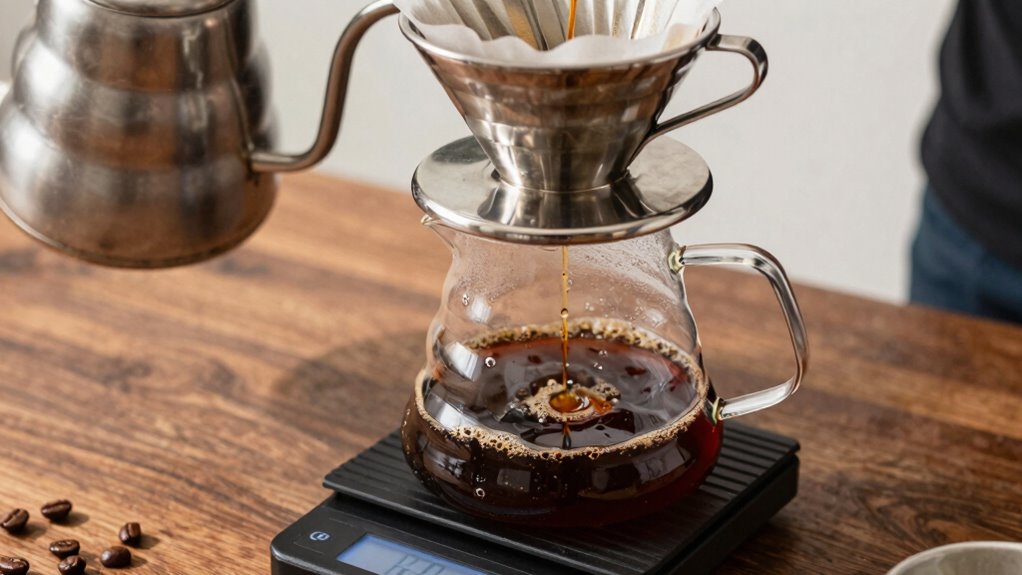

The SCA Coffee Brewing Standards offer you a framework for brewing the perfect cup, ensuring quality and consistency in every sip. By emphasizing precise brew ratios, you can balance flavor and strength. Choosing the best water with the right mineral content is essential for extraction. Pay attention to grind size, brew time, and temperature to enhance flavors. Avoid common mistakes, like incorrect temperature and inconsistent grind size, and you’ll discover even more tips for a superior coffee experience.
Key Takeaways
- SCA Coffee Brewing Standards ensure consistency and quality across various brewing methods, enhancing the overall coffee experience.
- Brew ratios directly influence flavor and strength, with specific ratios creating distinct profiles from bright to full-bodied.
- The best brewing water has balanced mineral content and neutral pH, significantly impacting extraction quality and flavor.
- Grind size and brew time are crucial for optimal extraction, affecting the intensity and profile of the coffee’s flavor.
- Common mistakes include incorrect water temperature and inconsistent grind size, which can lead to poor extraction and flavor outcomes.
pour-over coffee maker with precise brew control
As an affiliate, we earn on qualifying purchases.
As an affiliate, we earn on qualifying purchases.
What Are SCA Coffee Brewing Standards?
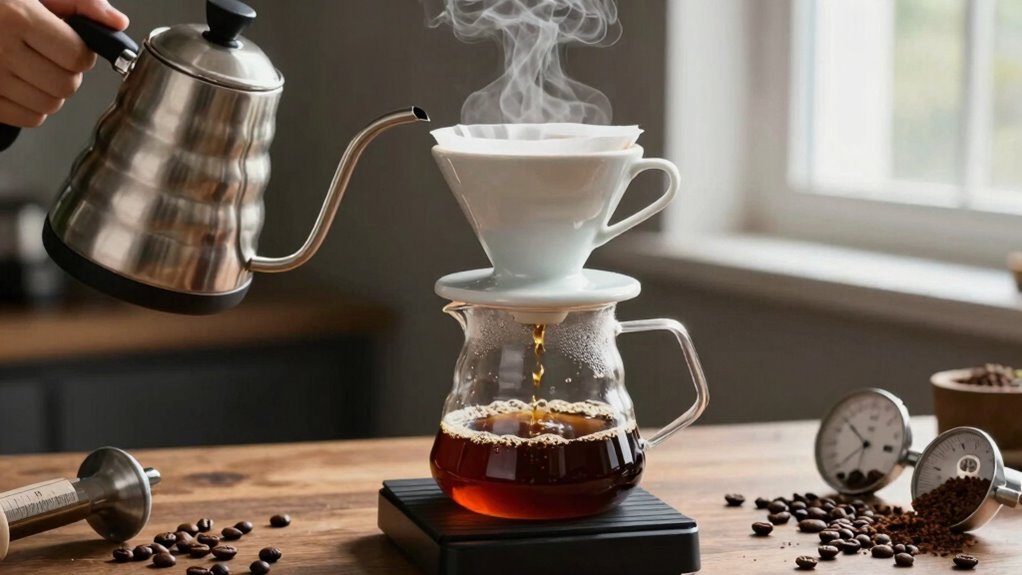
When you immerse yourself in the world of coffee brewing, understanding SCA Coffee Brewing Standards can elevate your experience. These standards provide a framework for various brewing methods, ensuring consistency and quality in every cup. By following these guidelines, you can explore different coffee origins and appreciate their unique flavors more deeply. The SCA emphasizes the importance of precise measurements, water quality, and brew times, which are essential for extracting the best taste from your beans. Whether you’re using a pour-over, French press, or espresso machine, adhering to these standards helps you achieve the perfect balance. Ultimately, SCA standards enhance your brewing skills and enrich your coffee journey, making each sip a delightful discovery. Additionally, mastering coffee brewing techniques can significantly improve your overall coffee experience.
water filtration system for coffee brewing
As an affiliate, we earn on qualifying purchases.
As an affiliate, we earn on qualifying purchases.
Why SCA Brew Ratios Matter for Quality Coffee
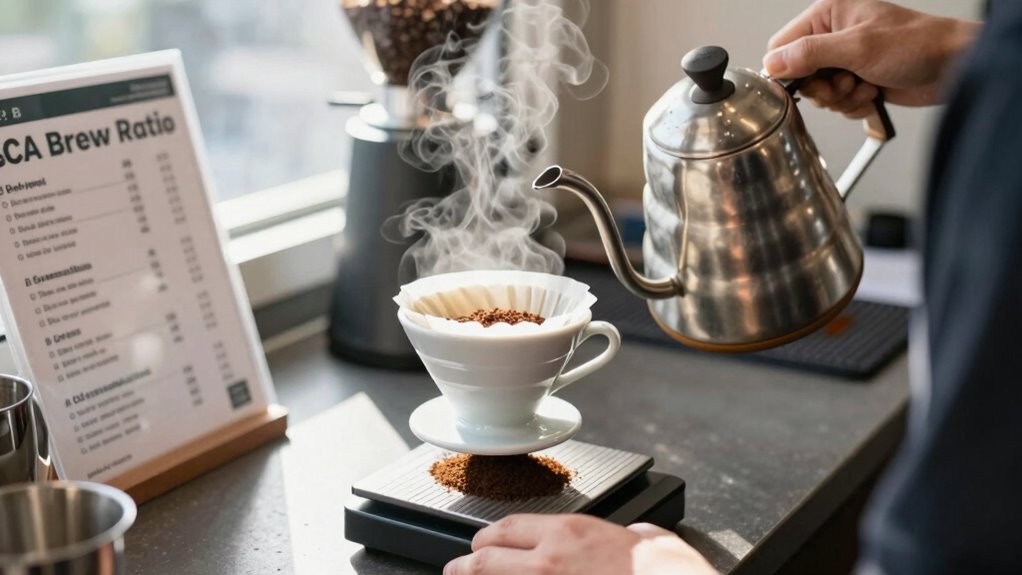
Understanding SCA brew ratios is essential for crafting quality coffee, as these ratios directly influence flavor and strength. By grasping brew ratio significance, you can enhance the overall quality of your cup. A consistent brew ratio helps you achieve balanced extraction, ensuring you don’t miss out on the coffee’s potential.
Here’s a quick reference:
| Brew Ratio | Flavor Profile |
|---|---|
| 1:15 | Bright, fruity notes |
| 1:16 | Balanced, medium body |
| 1:17 | Mellow, smooth finish |
| 1:18 | Rich, full-bodied taste |
coffee grinder with adjustable grind size
As an affiliate, we earn on qualifying purchases.
As an affiliate, we earn on qualifying purchases.
Choosing the Best Water for Brewing
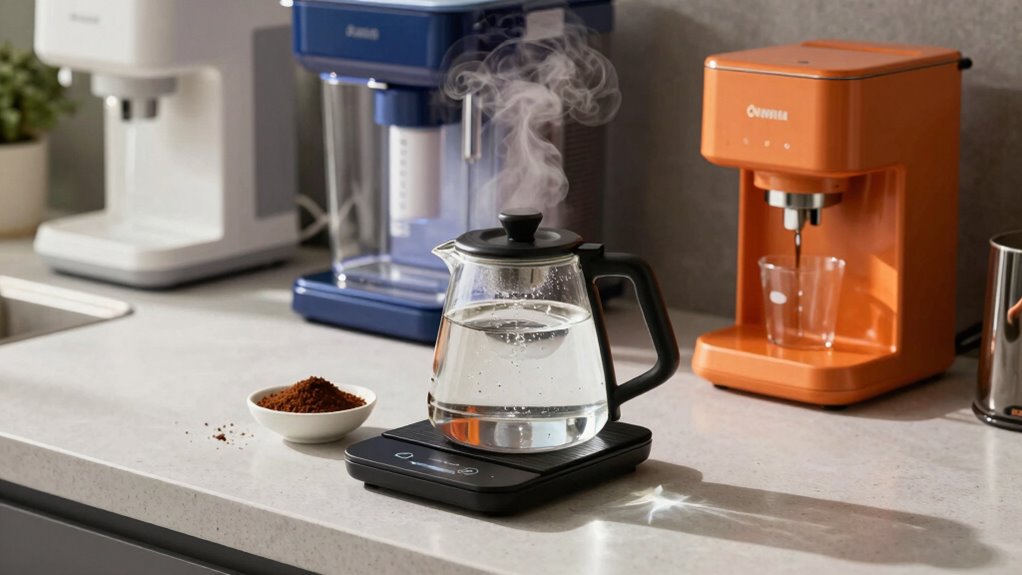
Quality coffee isn’t just about the beans and brew ratios; the water you use plays a significant role too. Start by considering water hardness, as it affects extraction. Ideally, you want water with moderate hardness to enhance flavor without overpowering it. Next, look at mineral content; a balanced mix of calcium and magnesium can bring out the best in your brew. Pay attention to pH balance, too; aim for a neutral pH around 7 for ideal extraction. Finally, choose effective filtration methods to remove impurities that could alter taste. Additionally, consider how the right water**** can elevate your coffee experience, making it smoother and more enjoyable. So, invest some time in selecting the best water for your perfect cup!
digital coffee thermometer for brewing
As an affiliate, we earn on qualifying purchases.
As an affiliate, we earn on qualifying purchases.
Getting Better Flavor Through Extraction Techniques
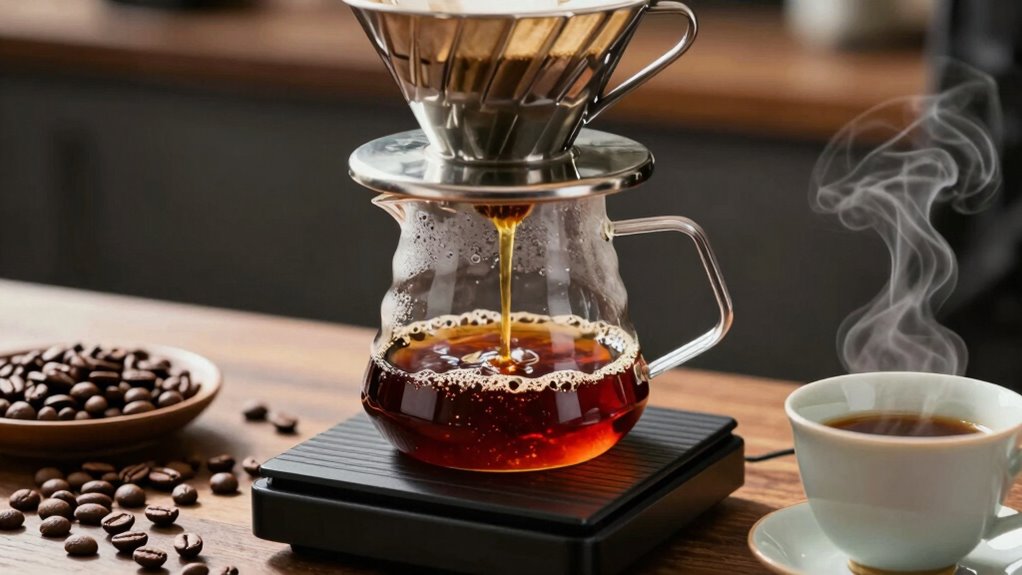
To get the most out of your coffee, mastering extraction techniques is essential. Different extraction methods can greatly impact the flavor enhancement of your brew. For instance, the grind size affects how quickly water extracts oils and compounds from the coffee grounds. Finer grinds lead to faster extraction, which can intensify flavors, but be careful not to over-extract, as this may introduce bitterness. Conversely, coarser grinds slow down extraction, resulting in a milder taste. You should also pay attention to brew time; longer steeping can deepen flavor profiles while shorter times can yield brighter notes. Experimenting with these extraction techniques will help you discover the perfect balance that suits your palate, enhancing your overall coffee experience.
Consistent Brewing: Temperature and Timing
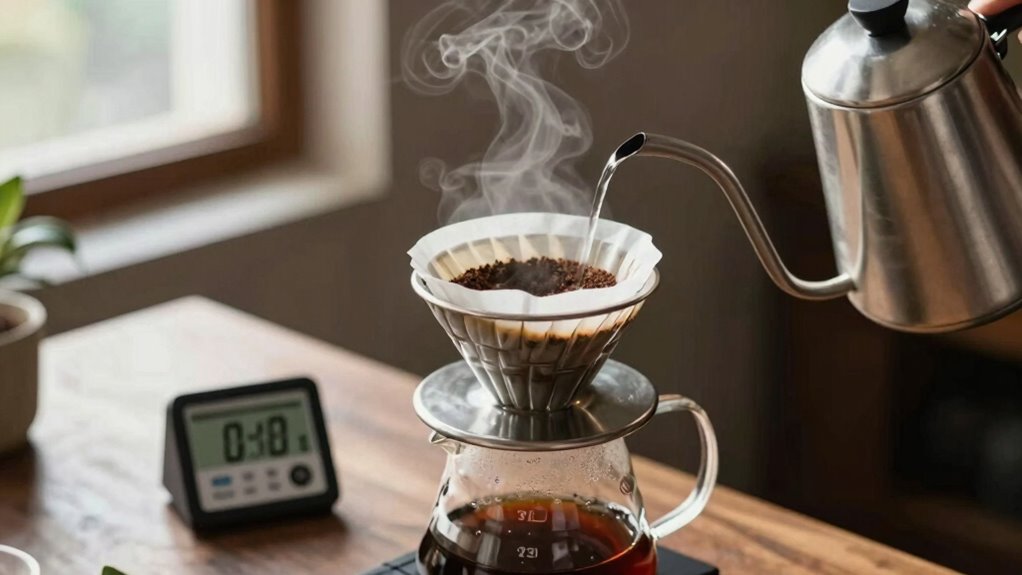
When brewing coffee, maintaining the right temperature and timing is essential for a consistent flavor. You’ll want to aim for an ideal brewing temperature to guarantee proper extraction. Precision in timing also plays a key role in achieving that perfect cup every time.
Optimal Brewing Temperature
Finding the ideal brewing temperature can make a significant difference in your coffee’s flavor profile. The right brew temperature, typically between 195°F and 205°F, helps extract the essential oils and flavors without over-extracting bitter compounds. If your brew temperature is too low, you’ll miss out on the rich, nuanced flavors that define your coffee. Conversely, brewing at too high a temperature can lead to a harsh taste, disrupting the flavor balance you’re aiming for. By staying within this preferred range, you guarantee a smoother, more enjoyable cup. Experiment with slight adjustments within this temperature range to discover how it affects your favorite beans, leading to that perfect balance of sweetness and acidity you love.
Precision Timing Importance
While brewing coffee, timing is just as essential as temperature in achieving a consistently excellent cup. You’ll want to master a few timing techniques to elevate your brewing game. Using precision tools can help you monitor extraction time accurately, ensuring each brew is just right.
- Experiment with bloom time to enhance flavor extraction.
- Stick to recommended steeping times for different brewing methods.
- Adjust grind size based on brew duration for best results.
- Use a timer to avoid over-extraction or under-extraction.
- Keep notes to refine your technique and preferences.
- Consistent brewing relies on precision tools that help maintain optimal conditions for extraction. Understanding how gear works can lead to more effective brewing practices. Additionally, keeping an eye on extraction rates allows you to fine-tune your brewing process for optimal flavor.
Common Coffee Brewing Mistakes to Avoid
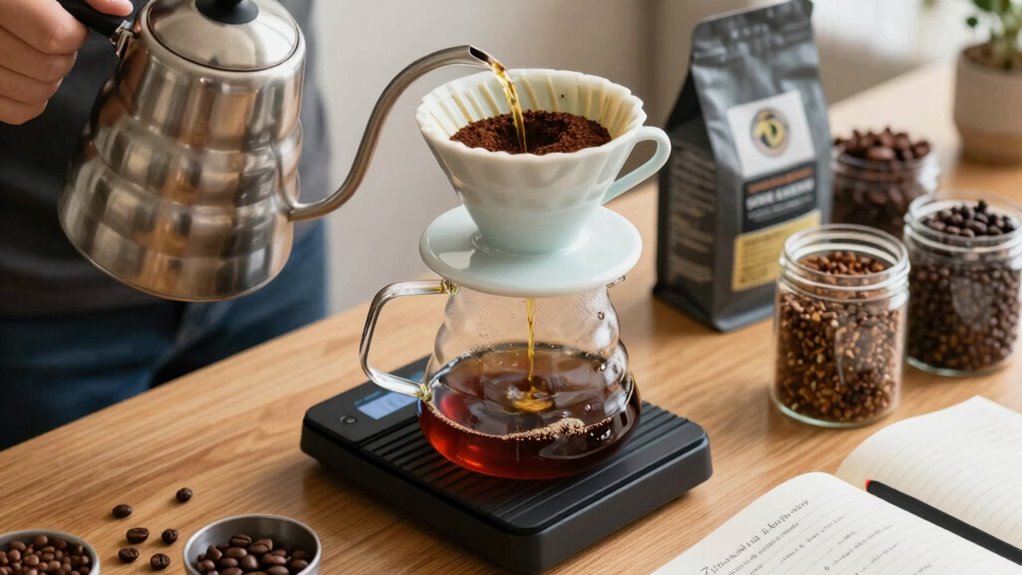
When brewing coffee, you might not realize how essential water temperature and grind size are to the final taste. Using water that’s too hot or cold can lead to bitter or underwhelming flavors. Similarly, inconsistent grind sizes can throw off extraction, making your coffee less enjoyable.
Incorrect Water Temperature
Many coffee enthusiasts underestimate the impact of water temperature on their brewing process, but using the wrong temperature can lead to disappointing results. Ideal water temperature is essential for extracting the right flavors and aromas. Here are some common mistakes to avoid:
- Brewing with water that’s too hot can scorch your coffee.
- Using water that’s too cold may under-extract, leaving your brew weak.
- Ignoring the specific requirements of different coffee beans.
- Not using a thermometer to check your water temperature.
- Brewing in extreme temperatures—hot or cold—can ruin the balance.
Inconsistent Grind Size
Inconsistent grind size can greatly affect your coffee’s flavor and strength, leading to a brew that’s either too bitter or weak. When your grind uniformity is off, some particles may over-extract while others under-extract, resulting in a muddled taste. To achieve the best flavor, you need to make grind adjustments based on your brewing method. For instance, espresso requires a fine grind, while French press calls for a coarser one. Investing in a quality grinder can help maintain that consistency, ensuring each cup delivers the intended taste. Remember, the right grind size is key to revealing your coffee’s full potential. Prioritize grind uniformity, and you’ll notice a significant improvement in your daily brew.
Frequently Asked Questions
What Equipment Is Recommended for Following SCA Standards?
To follow SCA standards, you’ll need equipment like a reliable brewer (pour-over or automatic), a grinder that allows for precise grind sizes, and a thermometer for temperature control. Make certain your water quality’s excellent, aiming for a balanced mineral content. Pay attention to extraction time and brewing ratios to achieve that perfect cup. With the right setup, you can elevate your coffee experience and enjoy rich, flavorful brews every time.
How Do SCA Standards Compare to Other Coffee Brewing Methods?
SCA standards emphasize precise brew time and water temperature, setting them apart from other methods. While some techniques may vary widely in these parameters, SCA guidelines recommend a brew time of 4 to 6 minutes and a water temperature between 90-96°C (194-205°F). This consistency aims to enhance flavor extraction, ensuring you get the best from your coffee. So, if you want a superior cup, adhering to these standards is key.
Can I Use Pre-Ground Coffee With SCA Standards?
Sure, you can use pre-ground coffee with SCA standards, but it’s a bit like using a flip phone in the age of smartphones. The benefits of pre-ground coffee are convenience and speed, but you might lose some grind consistency. A consistent grind is essential for ideal extraction and flavor. If you’re aiming for the best cup, consider investing in a grinder to achieve that perfect balance and enhance your brewing experience.
Are SCA Standards Applicable to Espresso Brewing?
Yes, SCA standards are applicable to espresso brewing. When you focus on espresso extraction, these guidelines help guarantee consistency and quality. By adhering to SCA standards, you can enhance your flavor profiling, making it easier to identify and appreciate the nuances in your coffee. So, whether you’re tweaking your grind size or adjusting your brew time, applying these standards will elevate your espresso experience and keep your brews on point.
How Often Should I Calibrate My Brewing Equipment?
You wouldn’t trust a chef who never tasted their own soup, right? Similarly, you should calibrate your brewing equipment every few weeks to maintain that perfect cup. Think of calibration frequency as your equipment’s spa day—keeping it fresh and functional. Regular equipment maintenance guarantees you’re not brewing a sad, bitter cup that sends your taste buds into hiding. So, treat your gear well, and it’ll reward you with delicious coffee!
Conclusion
In your pursuit of the perfect cup, embracing SCA coffee brewing standards isn’t just a guideline—it’s a gateway to flavor nirvana. By mastering brew ratios, selecting the right water, and perfecting extraction techniques, you elevate your coffee experience. Remember, every brew is a journey, not just a destination. Avoid common mistakes, and you’ll reveal a world of taste that transforms your daily ritual into an extraordinary experience. After all, great coffee is worth every sip!