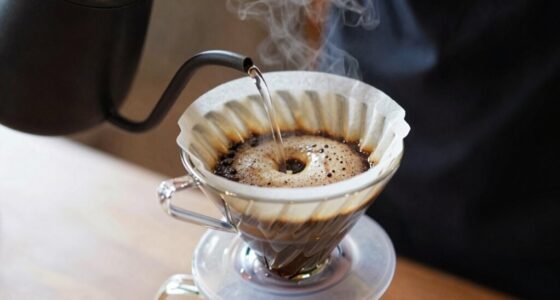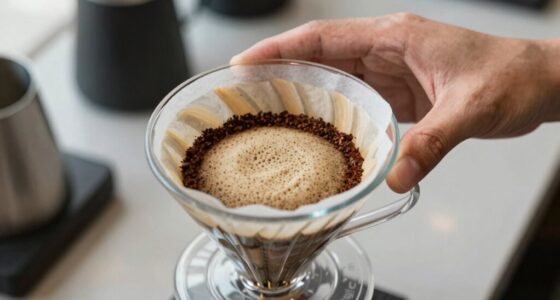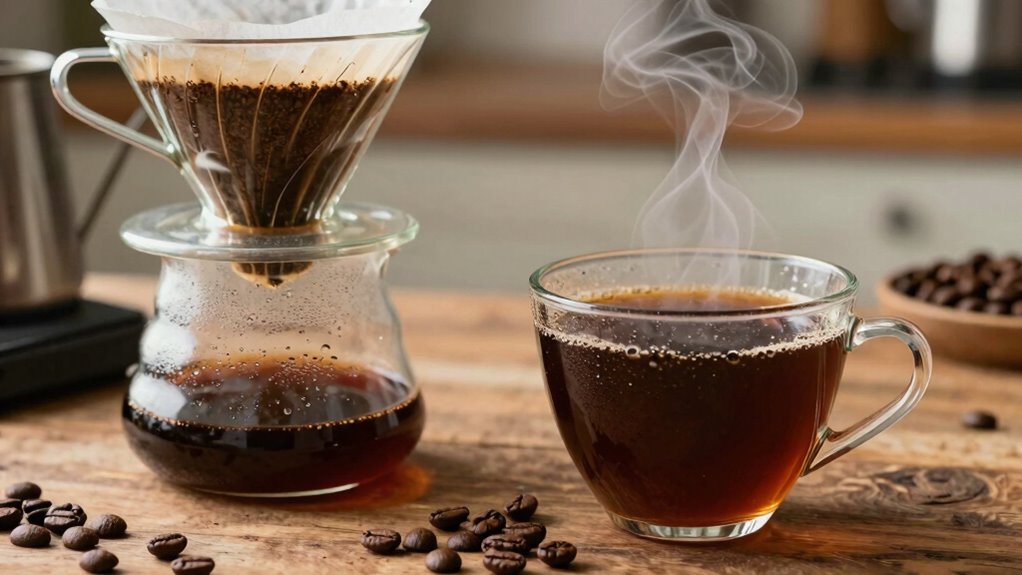

If your drip coffee tastes bitter, it’s likely from over-extraction, stale beans, or poor brewing techniques. Start by perfecting your coffee-to-water ratio—use one to two tablespoons of coffee per six ounces of water. Adjust your grind size and maintain a brewing temperature between 195°F and 205°F. Shorten the brew time slightly if bitterness persists. Consider adding spices or sweeteners to enhance flavor. Keep experimenting, and you’ll discover more methods to perfect your brew.

Get coffee and tea gear delivered free with Prime
- Fast, free delivery on millions of items
- Prime Video, Amazon Music and more included
- Member-only deals all year
Key Takeaways
- Adjust your coffee-to-water ratio to one to two tablespoons of coffee per six ounces of water to balance flavor and reduce bitterness.
- Use a consistent grind size; coarse for French press and fine for espresso, ensuring even extraction and enhanced flavor.
- Brew at optimal temperatures between 195°F and 205°F to avoid over-extraction and undesirable bitter compounds.
- Shorten brew time by 30 seconds to 1 minute if coffee tastes bitter, continuously taste-testing for your preferred profile.
- Enhance flavor by adding spices like cinnamon, natural sweeteners like honey, or experimenting with creamers to mask bitterness.
As an affiliate, we earn on qualifying purchases.
Why Is Your Coffee Bitter? Common Causes Explained
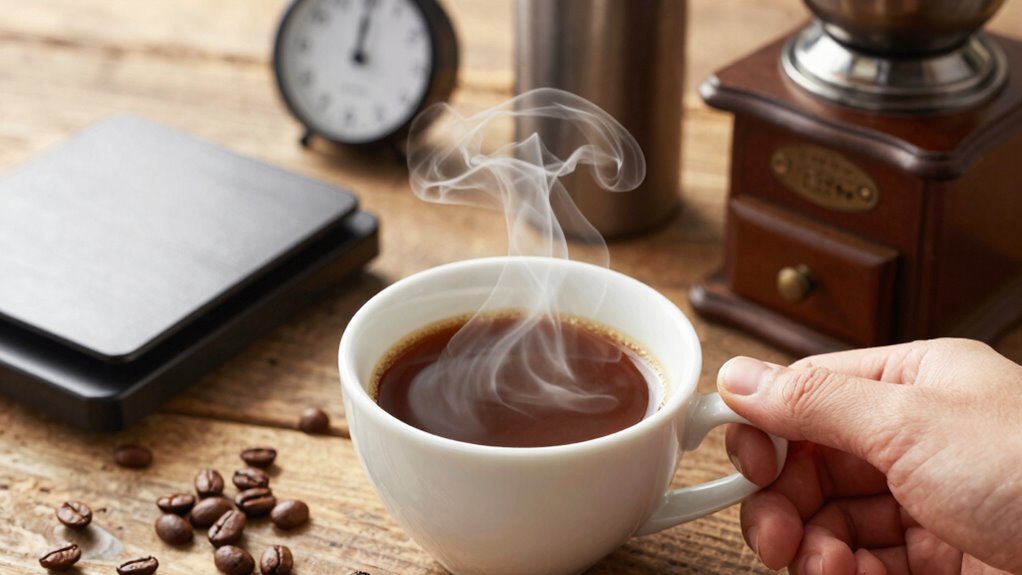
Have you ever wondered why your coffee tastes bitter? One common culprit is over-extraction, which happens when water extracts too many flavors from the coffee grounds. This often leads to heightened coffee acidity and a harsh taste. If you’re using older beans, their lack of freshness can also contribute to bitterness, as stale coffee loses its vibrant flavors. Additionally, the quality of your beans plays a significant role; lower-quality beans can introduce undesirable bitter notes. To improve your brew, consider using fresher, high-quality beans and adjusting your brewing time to avoid those over-extraction causes. By focusing on these factors, you can enjoy a smoother, more balanced cup of coffee. Additionally, understanding brewing science can help you further refine your coffee-making skills, especially when considering the impact of caffeine content on flavor. Remember, grinding technique can also influence extraction, making it essential to choose the right grind size for your brewing method.
As an affiliate, we earn on qualifying purchases.
Perfect Your Coffee-to-Water Ratio
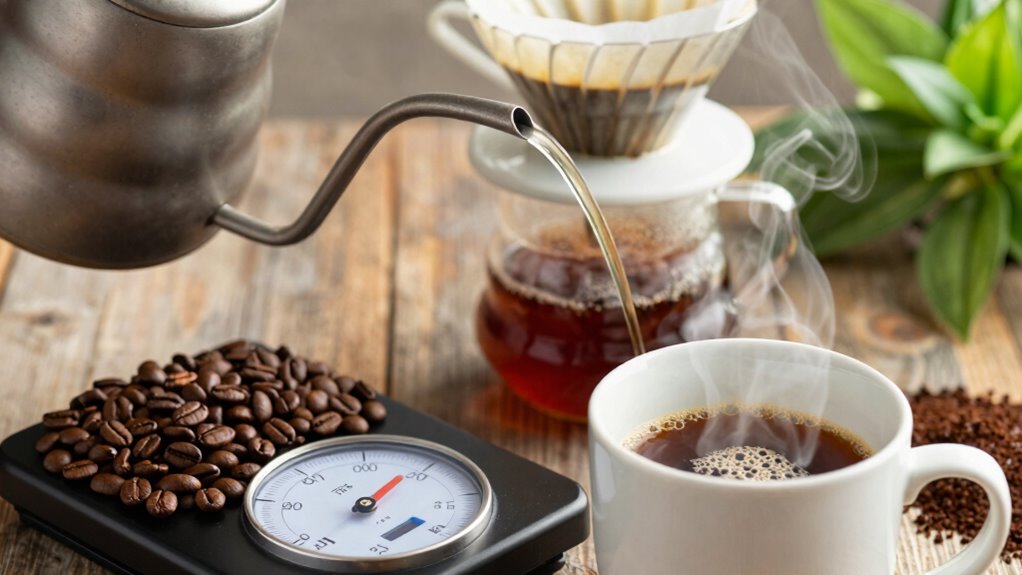
To achieve a balanced cup of coffee, perfecting your coffee-to-water ratio is key. Start by determining your ideal coffee strength, which varies based on personal preference and brewing method. A common guideline is to use one to two tablespoons of coffee for every six ounces of water. Experiment with this ratio to find what suits your taste best. If your coffee tastes weak, increase the coffee amount; if it’s too strong, reduce it. Remember, different brewing methods might require adjustments. For instance, a French press might need a coarser grind and a slightly different ratio than a drip brewer. By fine-tuning this ratio, you’ll enhance flavor and reduce bitterness, leading to a more enjoyable cup.
As an affiliate, we earn on qualifying purchases.
How Grind Size Affects Your Brew
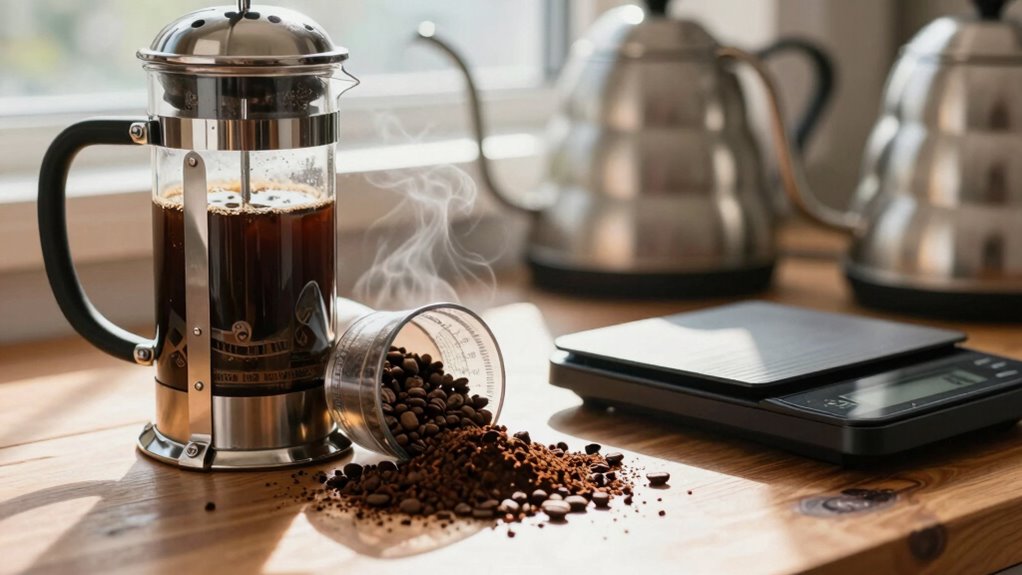
While many overlook grind size, it greatly impacts your coffee’s flavor and bitterness. A coarse grind works best for methods like French press, allowing for a longer extraction time without over-extracting. In contrast, a fine grind is ideal for espresso, where quick extraction is key. Your brewing equipment and water quality also play significant roles in achieving your desired flavor profile. Additionally, understanding investment strategies can help you allocate resources more effectively, just as the right grind size can enhance your brew.
| Grind Size | Brew Method | Extraction Time |
|---|---|---|
| Coarse | French Press | 4-5 minutes |
| Medium | Drip Coffee | 4-6 minutes |
| Fine | Espresso | 25-30 seconds |
| Extra Fine | Turkish Coffee | 20-30 seconds |
| Medium-Fine | AeroPress | 2-3 minutes |
Choose wisely!
As an affiliate, we earn on qualifying purchases.
Find the Perfect Brewing Temperature for Your Coffee

Grind size isn’t the only factor influencing your coffee’s flavor; brewing temperature plays a significant role too. Different coffee types require specific temperatures to release their ideal taste. Generally, aim for a brewing temperature between 195°F and 205°F. This range guarantees you extract the rich flavors without drawing out bitterness.
Make certain your brewing equipment, whether it’s a drip coffee maker or a French press, can maintain this temperature consistently. If your equipment lacks temperature control, consider investing in a model that does. Experiment with different temperatures to see how they affect your coffee’s flavor profile, and don’t hesitate to adjust based on your preferences. Finding the right temperature can transform your bitter brew into a delicious cup.
Adjust Brew Time to Reduce Bitterness
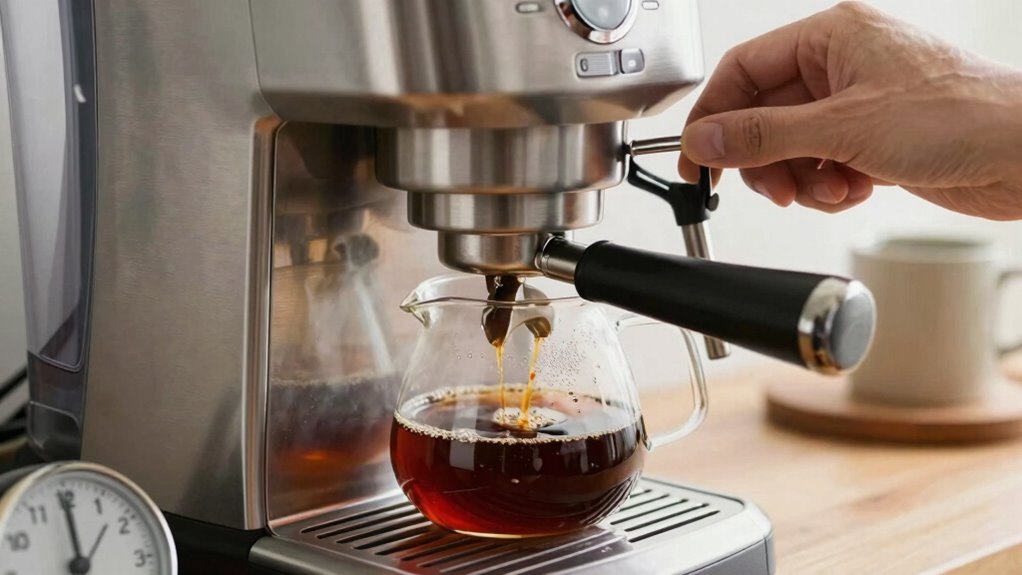
To reduce bitterness in your drip coffee, adjusting the brew time is essential. A longer brew time can extract unwanted flavors, especially if your grind size is too fine or your water temperature is too high. Finding that sweet spot will help you enjoy a smoother cup. Additionally, understanding the importance of grind size can further enhance your brewing experience. The right brew time can also prevent over-extraction, leading to a more balanced flavor profile.
Optimal Brewing Time
If you’re struggling with bitter drip coffee, adjusting the brewing time can make a significant difference. Ideal brewing time varies depending on your chosen brewing methods, so it’s crucial to experiment with timing techniques. Here are four tips to help you fine-tune your brew:
- Start with a baseline: Aim for a brewing time of 4-5 minutes for standard drip coffee.
- Shorten the brew: If your coffee tastes bitter, reduce the time by 30 seconds to 1 minute.
- Taste as you go: Sample your coffee to find the sweet spot that suits your palate.
- Adjust water temperature: Make sure your water isn’t too hot, as this can over-extract flavors.
Additionally, using the right brewing equipment can significantly enhance your coffee experience. Fine-tuning these elements will help you enjoy a smoother cup!
Grind Size Impact
While you might not realize it, the grind size of your coffee beans plays an essential role in determining the flavor profile of your brew. If your grind is too fine, it can lead to over-extraction, resulting in bitterness. Aim for grind uniformity to guarantee even extraction; inconsistent sizes can cause some particles to over-extract while others under-extract. Adjust your grind size based on your brewing method: coarser for longer brews and finer for quicker ones. Additionally, grind freshness is important; coffee loses flavor rapidly after grinding. Always grind just before brewing for the best taste. By tweaking your grind size and maintaining freshness, you can greatly reduce bitterness and enhance your coffee experience. Using a super-automatic espresso machine can also help ensure a consistent grind for optimal extraction.
Water Temperature Effects
After addressing grind size, it’s important to contemplate how water temperature can affect your brew. Using water that’s too hot can extract undesirable bitter compounds, while cooler water might not extract enough flavor. Here’s how to adjust your process:
- Optimal Temperature: Aim for water between 195°F and 205°F (90°C to 96°C).
- Monitor Brew Time: Shorten brew time if using hotter water to prevent bitterness.
- Check Water Mineralization: Hard water can lead to over-extraction; consider using filtered water.
- Review Brew Equipment: Verify your equipment maintains stable temperatures for consistent results.
Enhance Your Coffee: Flavor Additions and Techniques
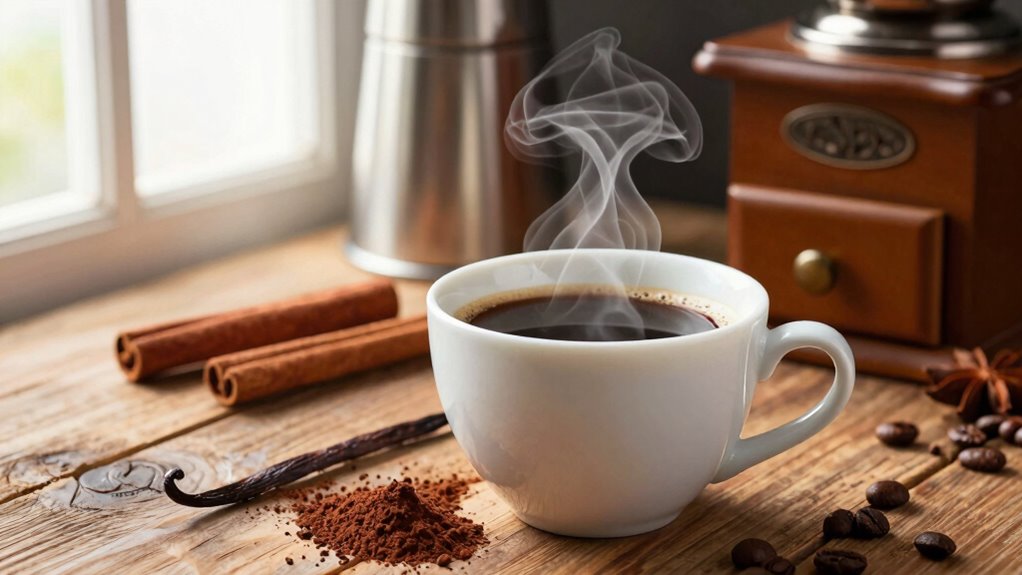
Ready to take your coffee to the next level? By adding spices, sweeteners, or creamers, you can transform your brew into a delightful experience. Let’s explore some simple techniques to enhance your cup! Adding a few drops of peppermint oil can provide a refreshing twist that complements your coffee beautifully. Additionally, using ingredients with low comedogenic ratings can help maintain your skin’s health while you enjoy your coffee. Consider also incorporating aroma diffusers into your routine, as they can help create an inviting atmosphere that enhances the overall coffee-drinking experience. Aromatherapy can play a significant role in traditional care, making your coffee moments not just a treat for your taste buds but also a benefit for your mood.
Spice It Up
Sure! Here’s your revised article subheading content with the requested changes:
—
Spicing up your coffee can transform a bitter cup into a delightful experience. By incorporating various spice blends and flavor infusions, you can elevate your brew considerably. Here are some easy ways to add flavor:
- Cinnamon: A classic choice, it adds warmth and sweetness without sugar. Additionally, color accuracy in your coffee preparation can enhance the visual appeal of your beverage. This increased attention to flavor can make your coffee routine more enjoyable. Studies show that spices like cinnamon can also offer health benefits, such as reducing inflammation.
- Cardamom: This aromatic spice brings a unique twist, perfect for exotic flavor lovers.
- Nutmeg: Just a pinch can give your coffee a cozy, comforting vibe.
- Cocoa Powder: Mix in a little for a rich, chocolatey depth. Regular use of spices can enhance the overall flavor profile of your coffee.
Additionally, using spices like turmeric can offer natural wellness benefits while enhancing flavor. Experiment with these additions to find your perfect blend. You’ll discover that spicing up your coffee not only masks bitterness but enhances your overall coffee experience.
—
Let me know if you need any further adjustments!
Sweeten Your Brew
Sure! Here’s the revised content with the requested modifications:
—
If you find your coffee still leaning towards the bitter side, adding sweetness can be a game changer. Try using natural sweeteners like honey or maple syrup to enhance the flavor profiles of your brew. These options not only add sweetness but also introduce unique notes that complement specific coffee origins. For instance, a fruity Ethiopian coffee can shine with a touch of honey, while a nutty Brazilian blend pairs well with maple syrup. You can also experiment with flavored syrups or even a sprinkle of cinnamon for added depth. Additionally, remember that coffee rich in antioxidants can further contribute to overall health, so choose quality beans. Regular consumption of antioxidants can support overall well-being, so it’s beneficial to incorporate them in your diet. In the context of Italian food culture, exploring these flavors can elevate your coffee experience. Furthermore, many coffee varieties have distinct flavor profiles that can be enhanced with the right sweeteners, so the key is to find the right balance. Start small and adjust until you achieve that perfect harmony in your cup. Enjoy your sweetened masterpiece! Essential oils for mood improvement can also be a delightful addition to your coffee routine, enhancing your overall experience.
—
Let me know if you need any further adjustments!
Experiment With Creamers
While sweeteners can elevate your coffee, experimenting with creamers opens up a whole new world of flavor possibilities. Your cream choices can profoundly enhance your brew, transforming bitter notes into a smooth, delightful experience. Here are some options to explore:
- Half-and-Half: Adds richness without overpowering the coffee’s flavor profiles.
- Flavored Creamers: Vanilla, hazelnut, or caramel can introduce exciting new tastes.
- Oat or Almond Milk: These plant-based options offer a unique twist and a hint of sweetness.
- Whipped Cream: A dollop can add a luxurious touch, perfect for a dessert-like coffee.
Additionally, consider how filtration/suction basics play a role in your coffee-making process, as they can impact the overall flavor. Using smart kitchen gadgets can also streamline your brewing methods. For optimal flavor, ensure your water is free of impurities by using a proper air purifier to maintain a clean brewing environment. Try different combinations and ratios to discover what makes your cup just right!
Frequently Asked Questions
Can Coffee Beans Expire or Go Stale?
Yes, coffee beans can expire or go stale. Proper bean storage is essential; keep them in an airtight container away from light and moisture. Freshness indicators include aroma and flavor intensity. Different roasting methods impact longevity, while grinding techniques can affect freshness after opening. To maintain quality, brew at the right temperature and control extraction time. If you notice a flat taste, it’s likely time to refresh your beans!
Does Water Quality Affect Coffee Taste?
Yes, water quality definitely affects coffee taste. You might think any water will do, but water hardness and mineral content play vital roles. Soft water can lead to a flat taste, while water with the right minerals enhances flavors. If you’re using tap water, consider its quality; impurities can make your coffee bitter or dull. Experimenting with filtered or bottled water might just elevate your brew to a whole new level.
How Often Should I Clean My Coffee Maker?
You should clean your coffee maker at least once a month to keep it in top shape. Regular cleaning helps prevent bitter flavors and buildup. If you use your machine daily, consider rinsing it with hot water after each use, and deep clean it every two weeks. These maintenance tips will enhance your coffee’s taste and prolong your machine’s life. Don’t forget to check the manufacturer’s guidelines for specific recommendations!
Is Dark Roast Coffee Inherently More Bitter?
Yes, dark roast coffee can be inherently more bitter due to its roasting process. For example, when you brew a dark roast like French or Italian, you might notice stronger flavor profiles, with deep, smoky notes. These dark roast characteristics often overshadow the coffee’s natural sweetness, leading to that bitter taste. However, this isn’t universal; some dark roasts balance bitterness with rich flavors, so it’s all about your personal preference and brewing method.
Can Additives Like Sugar Mask Bitterness?
Yes, additives like sugar can mask bitterness in coffee. When you add sugar or sugar alternatives, they can create a sweetness that balances the acidity and harsh flavors. This doesn’t eliminate the bitterness entirely, but it makes the coffee taste smoother and more enjoyable. Experimenting with different sugar alternatives can help you find the perfect balance for your taste, giving you a more pleasant coffee experience.
Conclusion
Now that you’ve unraveled the mystery behind bitter coffee, it’s time to put your newfound knowledge to the test. Like a master alchemist, you can transform your brew into a delightful potion by fine-tuning your coffee-to-water ratio, grind size, and brewing temperature. With just a few adjustments, you’ll awaken flavors that dance on your palate. So, grab your favorite mug and start on this flavorful journey—your perfect cup awaits!
Halloween Picks
halloween
As an affiliate, we earn on qualifying purchases.