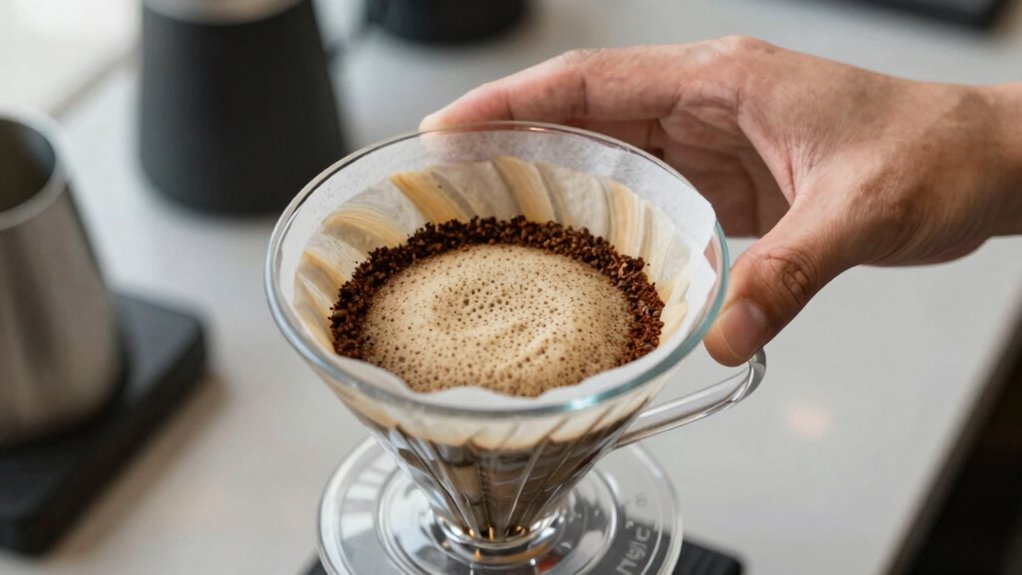

For light roasts in a V60, aim for a medium-fine grind, similar to table salt, to guarantee even water flow and ideal extraction of delicate flavors. Too fine, and you risk over-extraction, leading to bitterness; too coarse, and you’ll get under-extraction, making it sour or flat. Consistent, fresh grounds and small adjustments can help you perfect your brew. Keep exploring to uncover expert tips on fine-tuning your grind for the best light roast experience.
Listen free for 30 days with Audible
Thousands of audiobooks and originals — cancel anytime.
As an affiliate, we earn on qualifying purchases.
Key Takeaways
- Use a medium-fine grind, similar to table salt, for optimal extraction with a V60 pour-over of light roast coffee.
- Ensure uniform particle size to promote even water flow and prevent over- or under-extraction.
- Adjust grind size slightly coarser if the brew tastes sour or flat; make it finer if it’s overly bitter.
- Regularly clean your grinder to maintain consistent grind size and preserve coffee freshness.
- Experiment with small adjustments in grind and brew time to find the perfect balance for your light roast beans.
As an affiliate, we earn on qualifying purchases.
What Is the Ideal V60 Grind Size for Light Roasts?
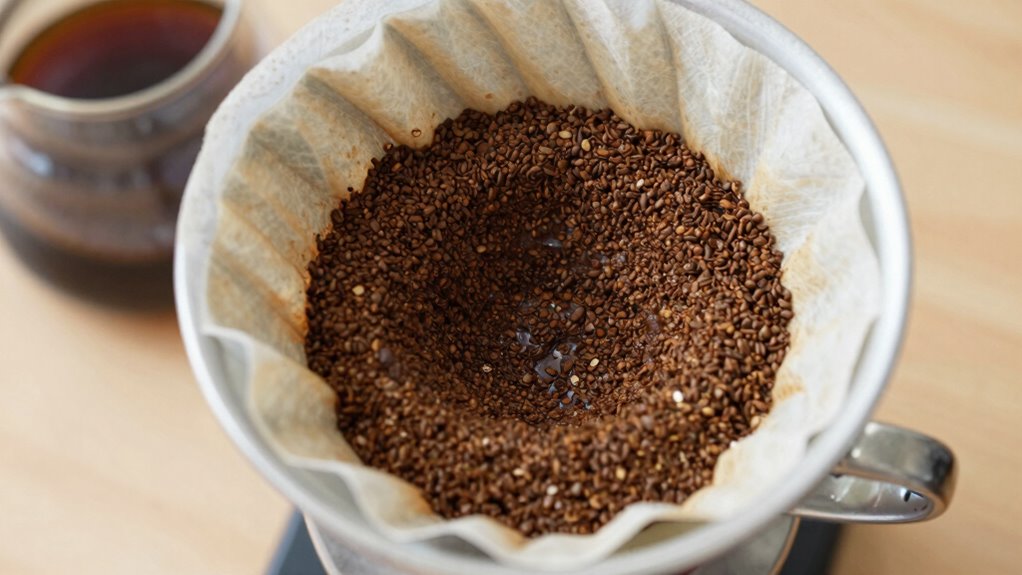
When brewing light roast coffee with a V60, using the right grind size is essential to extract the bright and nuanced flavors without over-extracting or under-extracting. For light roasts, a medium-fine grind material works best, similar to table salt. This size allows hot water to flow through the coffee evenly, highlighting the complex coffee flavor profile without causing bitterness or sourness. If your grind is too fine, you risk over-extraction, which dulls the delicate notes. Conversely, if it’s too coarse, under-extraction occurs, resulting in a weak and flat taste. Adjusting your grind size to a consistent medium-fine helps you achieve a balanced extraction, ensuring you capture the full spectrum of flavors that light roasts have to offer. Exploring digital content formats can also enhance your understanding of brewing techniques and flavor profiles.
medium fine coffee grind size for V60
As an affiliate, we earn on qualifying purchases.
As an affiliate, we earn on qualifying purchases.
How Does Grind Size Impact Light Roast Coffee Extraction?
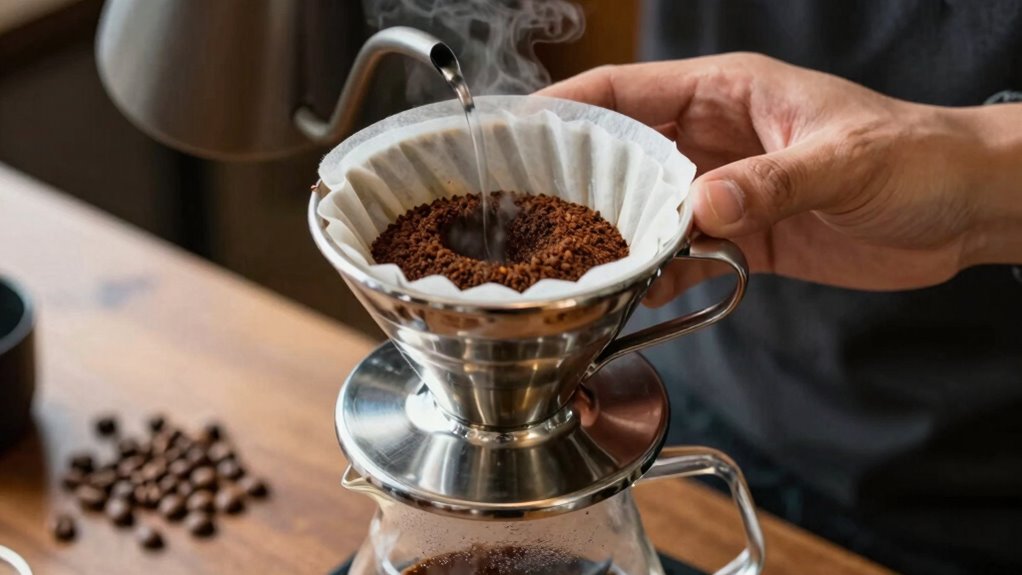
Grind size plays a crucial role in how light roast coffee extracts during brewing, directly influencing the flavor profile you experience. If your grind is too fine, the water struggles to flow through, leading to over-extraction and bitter flavors. Conversely, a grind that’s too coarse causes under-extraction, resulting in weak, sour notes. Since light roast coffees come from the coffee plant with denser beans, they often require a slightly coarser grind for best extraction. Eldercare decisions can feel overwhelming, much like finding the right grind size, as both require attention to detail for optimal results. Brewing temperature also interacts with grind size—higher temperatures can compensate for a coarser grind by extracting more flavors efficiently. Adjusting grind size based on your brewing temperature ensures the delicate flavors of the light roast are fully developed without bitterness or sourness, giving you a balanced cup. Additionally, early socialization and training can enhance your overall coffee brewing experience by encouraging patience and precision in your technique. Utilizing eucalyptus oil as a natural remedy can also help clear your senses, enhancing your enjoyment of the coffee’s aroma.
As an affiliate, we earn on qualifying purchases.
How to Identify a Proper Light Roast Grind
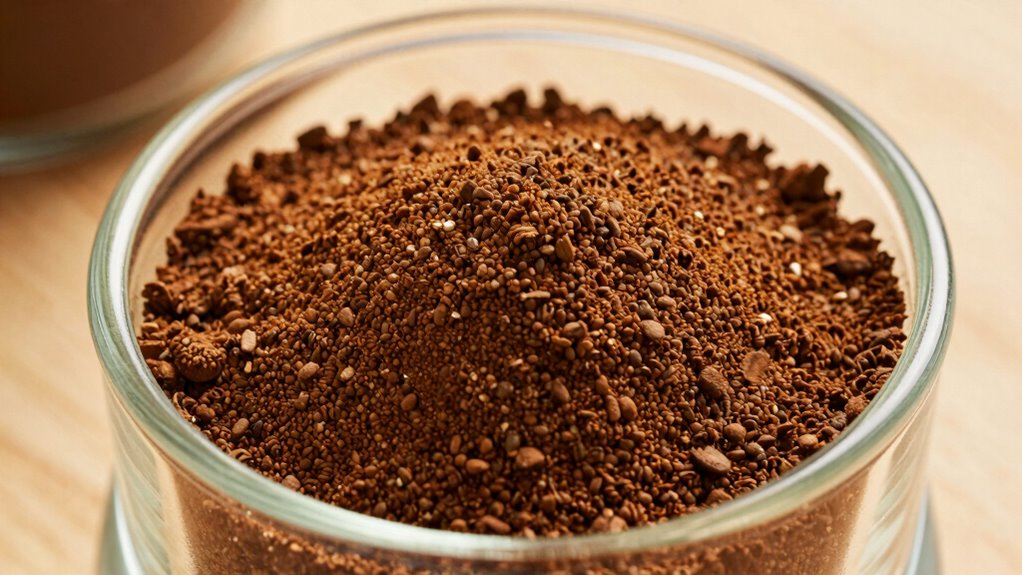
You can spot a fresh light roast by its vibrant aroma and slightly oily surface. To guarantee consistent extraction, your grind should be uniform in size, with no noticeable fines or coarse particles. Checking these visual cues helps you identify a proper grind that brings out the best flavors. Remember, media literacy can also enhance your appreciation for how different grind sizes affect taste. Additionally, understanding the Golden State’s essence can inspire you to explore various coffee blends that reflect California’s diverse culture. The right grind size can significantly impact extraction, much like the best rated pinball machines enhance gameplay experiences. Silly tantrums during family photoshoots can also remind us of the joy and unpredictability found in everyday moments. Electric dirt bikes, known for their strong resale value, can also serve as an interesting topic of discussion when considering sustainable practices in coffee production.
Visual Cues for Freshness
Freshness markedly influences the appearance of your light roast grind, making visual cues a reliable way to assess its quality. Freshly ground coffee tends to have a uniform, slightly oily look with a rich aroma. If your grind appears dull, dry, or uneven, it might be stale. Proper coffee storage is essential—keep beans airtight, away from light and moisture to maintain freshness. Regular grinder maintenance also plays a key role; a clean grinder prevents old grounds from mixing with new ones, which can affect grind quality. Fresh coffee grounds typically have a consistent size and minimal clumping. Additionally, high contrast ratios can enhance your brewing experience by ensuring that the flavors are vivid and well-defined. By paying attention to these visual cues, you guarantee your grind remains fresh, flavorful, and ideal for your V60 brewing. Moreover, feedback loops in your coffee preparation can lead to continuous improvement in flavor and technique. Furthermore, understanding urban traffic confidence can enhance your overall experience when seeking out the best beans from local roasters. Additionally, understanding Leave No Trace principles can enhance your overall coffee experience while camping. Many coffee enthusiasts also emphasize the importance of meal planning to ensure you have the right beans on hand for your brewing needs.
Consistency in Grind Size
Ensuring your grind size is consistent is key to extracting the best flavors from your light roast beans. When your grind size varies, it can lead to uneven extraction, resulting in sour or bitter notes. To identify a proper light roast grind, focus on uniformity—your grounds should have a similar size throughout. Using a quality grinder helps maintain this consistency, preventing clumps or uneven particles. Coffee freshness also plays a role; fresher beans tend to produce more consistent grinds because their structure remains intact. Regularly check your grind size by inspecting the grounds and adjusting your grinder if you notice inconsistencies. Remember, a stable, uniform grind size ensures proper extraction and brings out the delicate, bright flavors characteristic of light roasts. Additionally, paying attention to knife techniques can enhance your overall kitchen skills, allowing you to prepare your coffee ingredients with precision.
coffee grinder for consistent grind
As an affiliate, we earn on qualifying purchases.
As an affiliate, we earn on qualifying purchases.
Steps to Adjust Your V60 Grind for Light Roasts
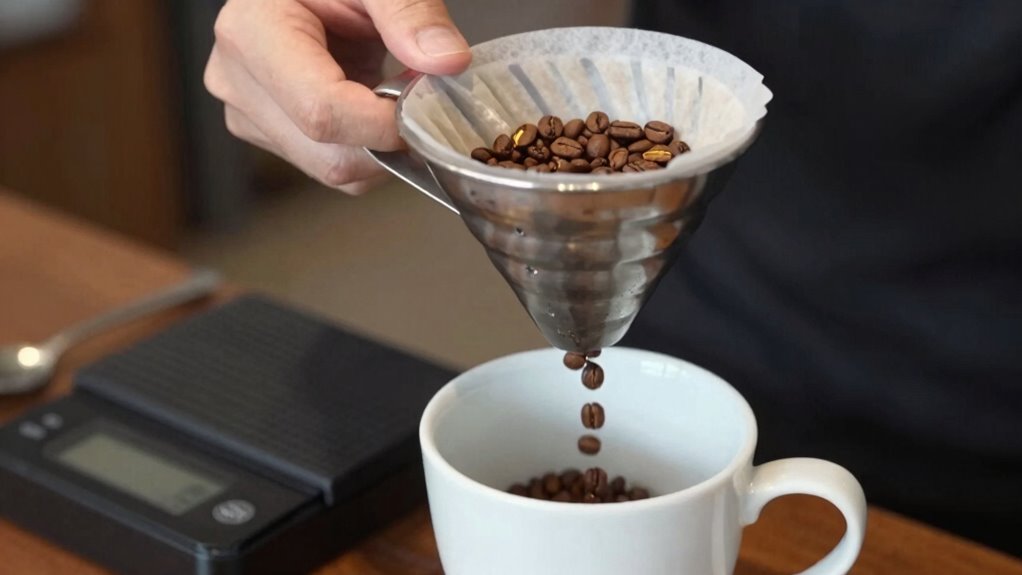
To adjust your V60 grind for light roasts, start by understanding the roast profile to anticipate how it will extract. Next, focus on maintaining consistent grind size to guarantee even extraction, then tweak your grind to fine-tune brew time. These steps help you optimize flavor and achieve the perfect cup. Additionally, using safe home products can enhance your overall brewing experience by ensuring a comfortable and clean environment.
Understanding Roast Profiles
Understanding roast profiles is essential when adjusting your V60 grind for light roasts because these profiles directly influence how the coffee extracts. Light roasts tend to be more acidic and complex, requiring careful attention to brewing temperature and grind size. Proper coffee storage helps maintain freshness, preserving the delicate flavors that need extraction. When considering roast profiles, note that lighter roasts often need a slightly finer grind to compensate for their denser structure. Adjusting your brewing temperature—aiming for slightly higher temperatures—can also help extract more nuanced flavors without over-extracting bitter notes. Recognizing these profiles allows you to fine-tune your grind size and brewing parameters, ensuring you get a balanced, flavorful cup from your light roast beans.
Adjusting Grind Consistency
Adjusting the grind consistency when brewing with a V60 for light roasts involves fine-tuning how uniform your grind particles are. Consistent grind size ensures even extraction, which is essential for bright, delicate flavors. To maintain this consistency, check your grinder regularly and perform grinder maintenance, like cleaning burrs and removing residue. Proper coffee storage helps prevent moisture and stale beans from affecting grind quality, similar to how proper water quality is crucial for a great waterpark experience. Additionally, music therapy can enhance focus while you brew. Understanding pool chemistry can also improve your overall approach to precision. Moreover, incorporating herbal baths into your routine can provide a calming atmosphere that enhances your brewing experience. If your grind feels uneven or inconsistent, adjust your grinder’s settings for a finer or coarser grind, depending on your results. Remember, a well-maintained grinder produces more uniform particles, making it easier to dial in the perfect grind size for light roasts. Consistent grind size results in better extraction and a more balanced cup. Additionally, understanding the importance of Consistent grind size can greatly enhance your brewing experience.
Tuning Brew Time
When brewing with a V60 for light roasts, tuning your brew time is essential to achieve the desired flavor balance. If your coffee tastes under-extracted or sour, consider adjusting your grind size or brewing temperature, and monitor brew time. A finer grind increases extraction time, so you may need to reduce brew time slightly, especially if your coffee is stored improperly or freshness declines. Conversely, a coarser grind shortens brew time, which can be beneficial if your extraction is too slow. Keep your coffee storage cool and airtight to preserve freshness, influencing brewing consistency. Use the table below to guide adjustments:
| Issue | Adjustment | Result |
|---|---|---|
| Under-extracted | Use finer grind, slow pour | Longer brew time, richer flavor |
| Over-extracted | Use coarser grind, quick pour | Shorter brew time, cleaner taste |
| Brew too long | Coarser grind, lower temp | Less extraction, milder flavor |
| Brew too short | Finer grind, higher temp | More extraction, fuller body |
| Coffee stale | Use fresh beans, store properly | Consistent, balanced brew |
Common Mistakes When Grinding Light Roast Coffee
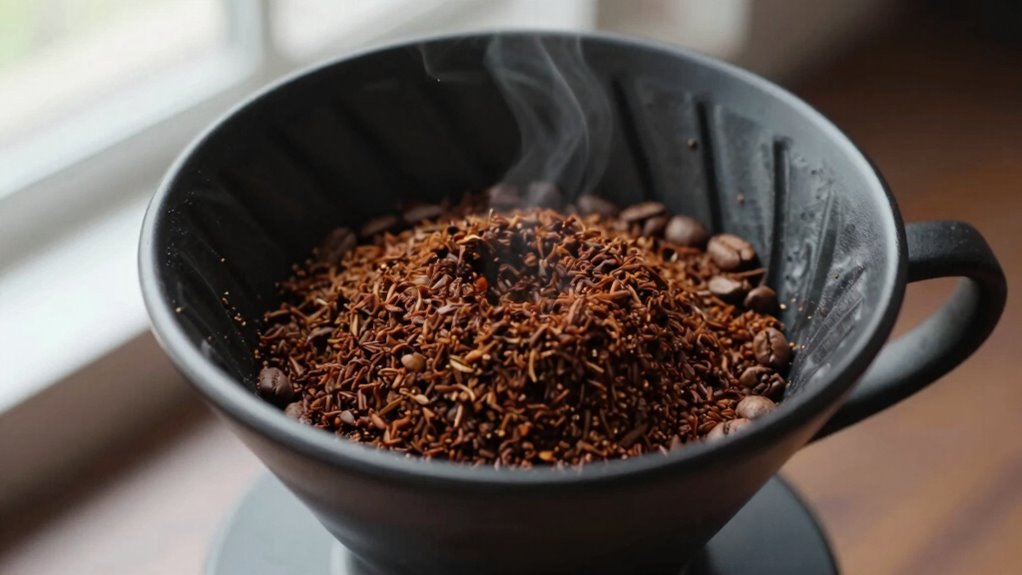
One common mistake is grinding light roast coffee too coarsely, which can lead to under-extraction and a weak, sour brew. When your grind is too chunky, the water flows too quickly, preventing the full development of the coffee’s aroma and flavor. Poor bean storage can also affect grind consistency and coffee aroma, making it harder to achieve the right extraction. To avoid these pitfalls, pay attention to your grind size and freshness.
- Using inconsistent grind sizes
- Not adjusting grind for different beans
- Ignoring the impact of bean storage on grind quality
- Overlooking the importance of freshly ground coffee
- Rushing the brewing process without proper grind calibration
Additionally, different brewing methods can significantly influence the extraction process, so it’s essential to calibrate your grind accordingly. Regularly checking and cleaning your air purifier filters can help maintain the overall quality of your brewing environment. Incorporating eco-friendly practices in your coffee preparation can also enhance the overall experience. Understanding the importance of grind size can also help you achieve a more balanced and flavorful cup.
How to Fine-Tune Your Grind for Different Light Roast Beans
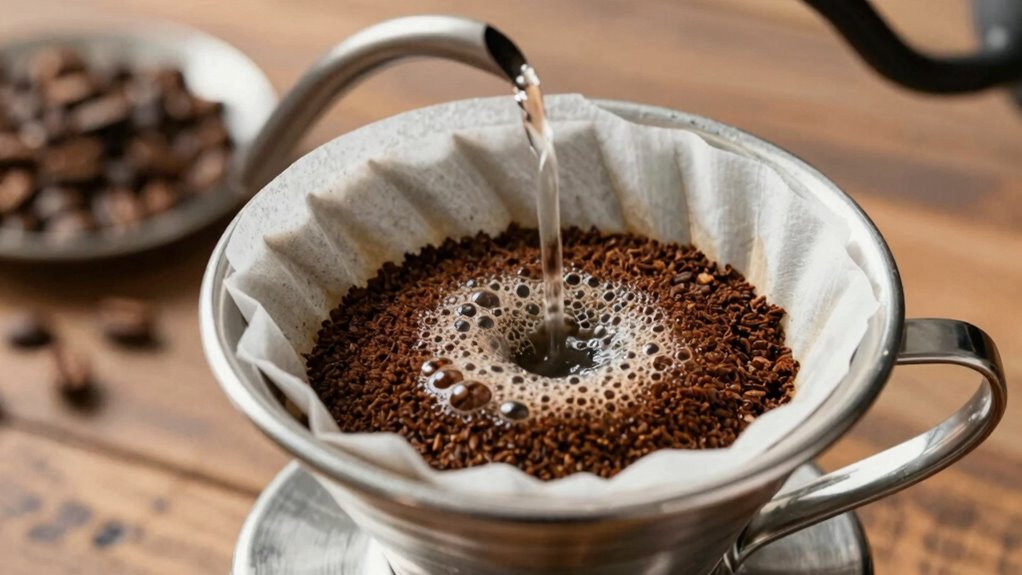
Since light roast beans tend to be more delicate and retain more of their original flavors, fine-tuning your grind is crucial for extracting the best taste. Start by adjusting your grind size slightly finer if your brew is under-extracted and tastes sour or weak. If it’s over-extracted, with a bitter or hollow flavor, make it coarser. Consistently store your coffee properly in an airtight container to preserve freshness, which helps in achieving consistent grind results. Regular grinder maintenance, like cleaning burrs and blades, ensures uniform grind size and maximum extraction. Experiment with small adjustments, tasting after each change. Fine-tuning your grind for different light roast beans is an ongoing process that requires attention to detail and proper equipment care.
Why Is My Light Roast Brew Under- or Over-Extracted?
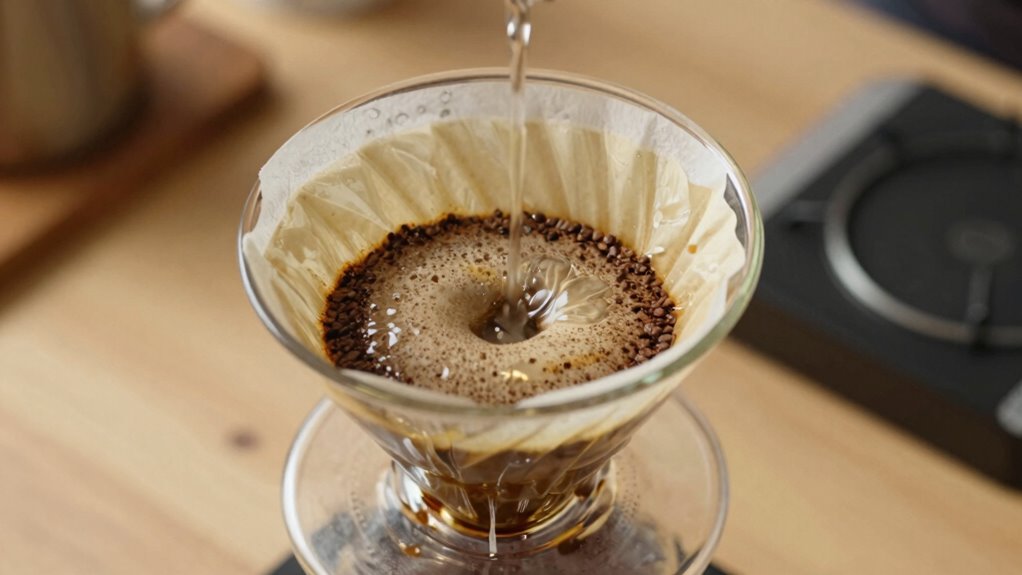
Under- or over-extraction often stems from inconsistencies in grind size, brewing time, or water temperature. If your light roast brew tastes flat or sour, it’s likely under-extracted, meaning the water didn’t draw out enough flavor. Conversely, a bitter or hollow taste suggests over-extraction, where too many compounds were pulled from the coffee. Adjusting your grind size is key—finer for under-extraction, coarser for over-extraction. Also, check your brewing temperature; too high can lead to over-extraction, while too low causes under-extraction. Keep an eye on these factors:
- Inconsistent grind size
- Incorrect brewing temperature
- Brewing time that’s too short or long
- Uneven water flow
- Poor extraction of delicate flavors
Fine-tuning these elements helps achieve a balanced coffee flavor.
Tips for Consistently Perfecting Your V60 Grind for Light Roasts
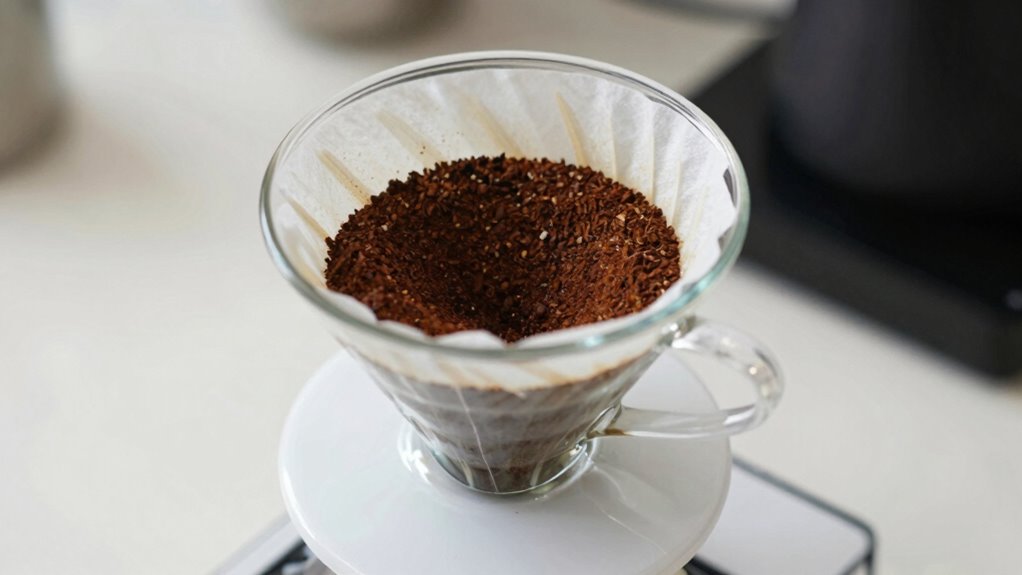
Achieving a consistent grind size for your V60 when brewing light roasts requires attention to detail and a few practical tweaks. Use high-quality brewing equipment that allows precise adjustments, and regularly calibrate your grinder. Keep your grinder clean to prevent uneven extraction, which impacts coffee sustainability by reducing waste. Experiment with small grind size changes, noting how each affects extraction. Maintain a steady pouring technique to ensure uniform extraction. Here’s a quick guide:
| Tip | Action | Benefit |
|---|---|---|
| Consistent settings | Stick to one grind size | Better control |
| Regular calibration | Adjust grinder frequently | Accurate grind size |
| Clean grinder | Remove residual coffee | Even grind size |
These steps help you achieve a balanced extraction, highlighting the importance of precision and care in your brewing process.
Frequently Asked Questions
Can I Use Pre-Ground Coffee for V60 Light Roast Brewing?
Yes, you can use pre-ground coffee for V60 light roast brewing, but it’s not perfect. Pre-ground coffee often loses freshness faster due to poor coffee storage, which can affect flavor. Additionally, grind consistency is less controlled, potentially leading to uneven extraction and a bitter or weak brew. For the best results, grind your beans just before brewing, ensuring freshness and ideal grind size for a smooth, flavorful cup.
How Often Should I Adjust My Grind Size?
You should adjust your grind size whenever you notice inconsistency in your brew or if your extraction time changes substantially. Keep an eye on grind size consistency, especially as your beans age, since stale beans may require a different grind. As beans become fresher or older, tweak your grind size to maintain ideal extraction. Regular adjustments help guarantee your light roast brew stays flavorful and balanced.
Does Altitude Affect the Ideal Grind Size for Light Roasts?
Sure, altitude impact definitely changes your brew. Higher elevations mean thinner air and faster water boiling, so you’ll need a finer grind size adjustment to compensate. Ironically, what works at sea level might be too coarse up high. You should experiment with your grind size, adjusting it based on altitude impact, to guarantee your light roast extraction is perfect. Don’t forget, small tweaks make a big difference!
What’s the Best Way to Clean My Grinder for Consistent Results?
To keep your grinder consistent, focus on regular grinder maintenance and cleaning routines. First, unplug your grinder and remove any remaining beans. Use a brush or compressed air to eliminate loose grounds. For a thorough clean, run grinder cleaner or rice through the burrs to absorb oils and residues. Wipe down exterior parts with a damp cloth. Regular cleaning guarantees your grind stays uniform and your coffee tastes fresh every time.
Can Different V60 Drippers Require Different Grind Sizes?
You might think all V60 drippers need the same grind size, but brewing techniques and individual dripper designs influence this. Different V60 models can require slight adjustments in grind size for ideal extraction, so grinder calibration becomes essential. Experiment with small changes to find what works best, ensuring your coffee brews consistently. Remember, tailoring your grind size to each dripper helps you achieve perfect flavor and extraction every time.
Conclusion
Mastering the V60 grind size for light roasts is like tuning a delicate instrument—you need the right pitch to uncover their true harmony. With patience and a keen eye, you’ll discover the perfect grind that transforms each brew into a symphony of flavors. Keep experimenting, fine-tuning, and savoring every cup. Before you know it, your coffee journey will be a vibrant tapestry of aromatic notes, crafted with the precision of a skilled artisan.
Flea & tick season Picks
flea and tick prevention
As an affiliate, we earn on qualifying purchases.