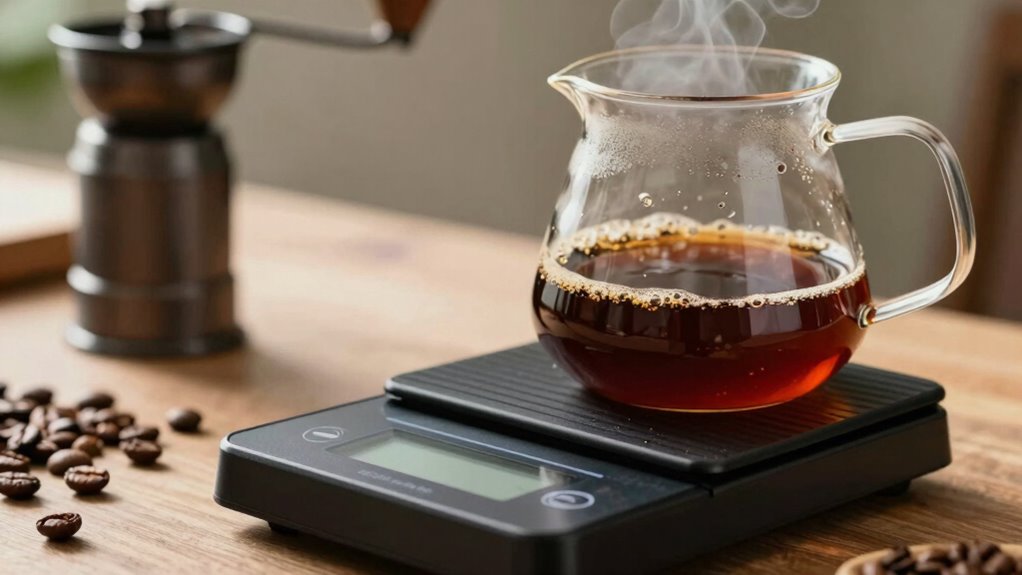

When it comes to brewing coffee, strength measures the concentration of flavors, while extraction pulls compounds from the grounds to enhance taste. You want to balance both for the perfect cup. If your brew is too strong, it might taste bitter; if it’s weak, it could be sour. Key factors like grind size, water temperature, and brew time affect both strength and extraction. Keep exploring to discover how to fine-tune your coffee-making process!
Key Takeaways
- Coffee strength measures solute concentration, affecting flavor intensity and aroma; stronger brews yield bold profiles, while lighter ones offer subtlety.
- The extraction process pulls flavors from coffee grounds, with methods like pour-over or French press impacting the final taste profile.
- Balance is essential; under-extraction leads to sourness, while over-extraction causes bitterness, so adjust grind size, water temperature, and brew time carefully.
- Brew ratio directly influences coffee strength; measuring TDS can help achieve the desired flavor balance without being too weak or overpowering.
- Factors like water quality, roast profile, and equipment calibration significantly affect both strength and extraction, ensuring a consistent and enjoyable coffee experience.

Coffee Brewing Control System – Coffee TDS Refractometer and Digital Scale with Timer, 0.02% Precision, 0.1g Resolution, Smart App, Rechargeable, Ideal for Pour Over and Espresso
Precision Brewing with Full Data Control: Combine a professional coffee TDS refractometer and high-precision digital coffee scale to…
As an affiliate, we earn on qualifying purchases.
As an affiliate, we earn on qualifying purchases.
What Coffee Strength Means for Your Brew

When you brew coffee, strength isn’t just about how dark or bold it tastes; it’s a measure of the concentration of coffee solubles in your cup. Coffee intensity directly influences your overall experience, affecting everything from aroma to aftertaste. A higher strength means more solubles, which can enhance your flavor profile, making it richer and more complex. If you prefer a vibrant cup, you might lean toward a stronger brew, packed with bold flavors. Conversely, a lighter brew may yield a milder taste, which some enjoy for its subtlety. Understanding coffee strength helps you tailor your brew to match your personal preferences, ensuring each cup is exactly how you like it, whether that’s a robust espresso or a smooth pour-over.
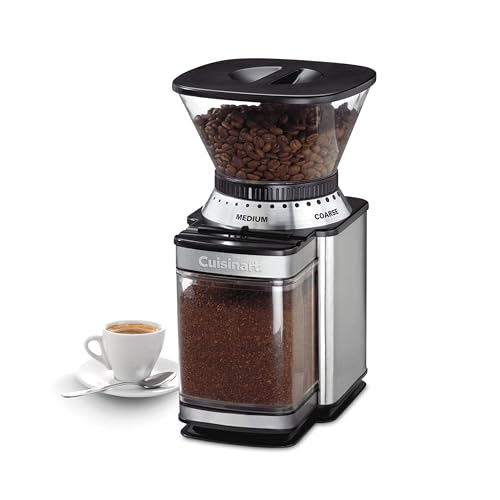
Cuisinart Coffee Grinder, Electric One-Touch Automatic Burr Coffee Grinder with 18-Position Grind Selector, Cup Size Selector for 4 – 18 Cups, DBM-8P1, Black Stainless
ENJOY OPTIMUM FLAVOR: The Cuisinart Coffee Grinder with 18-position slide-dial grind selector provides a uniform grind from ultra-fine…
As an affiliate, we earn on qualifying purchases.
As an affiliate, we earn on qualifying purchases.
What Is Extraction and Why Does It Matter?
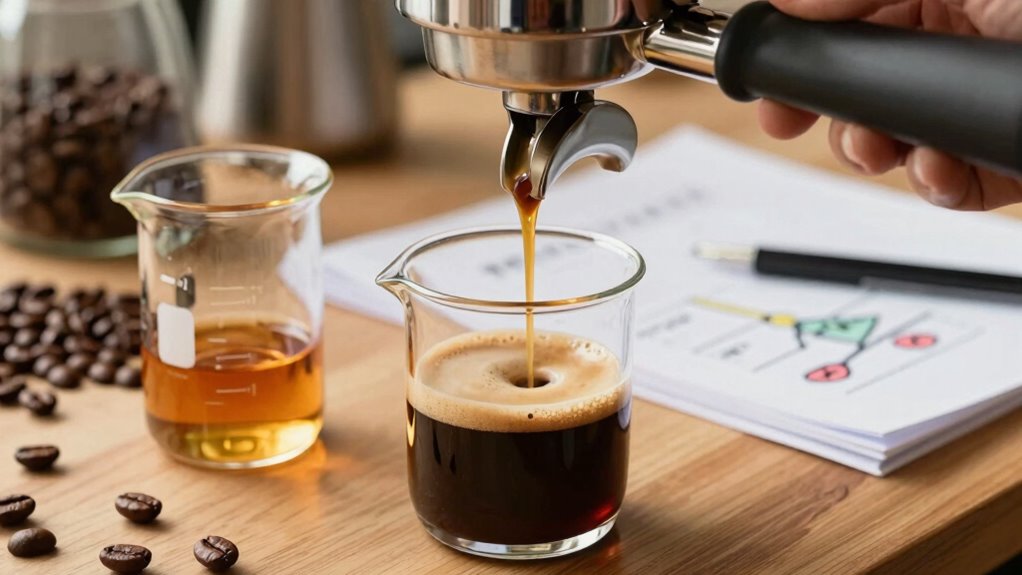
Extraction is the process that transforms water into a flavorful coffee experience. It’s all about how well you’re pulling out the compounds from your coffee grounds. Different extraction methods, like pour-over or French press, affect how those flavors come through. If you use too little time or the wrong temperature, you might end up with a sour or weak brew. On the other hand, over-extraction can lead to bitterness. The key is finding that sweet spot, as it directly influences your coffee’s flavor profile. Understanding extraction helps you tweak your brewing technique, ensuring each cup highlights the rich notes and aromas you love. So, pay attention to extraction—it matters more than you might think!

Bodum 34oz Pour Over Coffee Maker, High-Heat Borosilicate Glass with Reusable Stainless Steel Filter and Cork Grip – Made in Portugal
Pour Over Coffee: Manual Pour Over Coffee Maker allows you to brew an excellent cup of Coffee in…
As an affiliate, we earn on qualifying purchases.
As an affiliate, we earn on qualifying purchases.
Understanding the Relationship Between Strength and Extraction
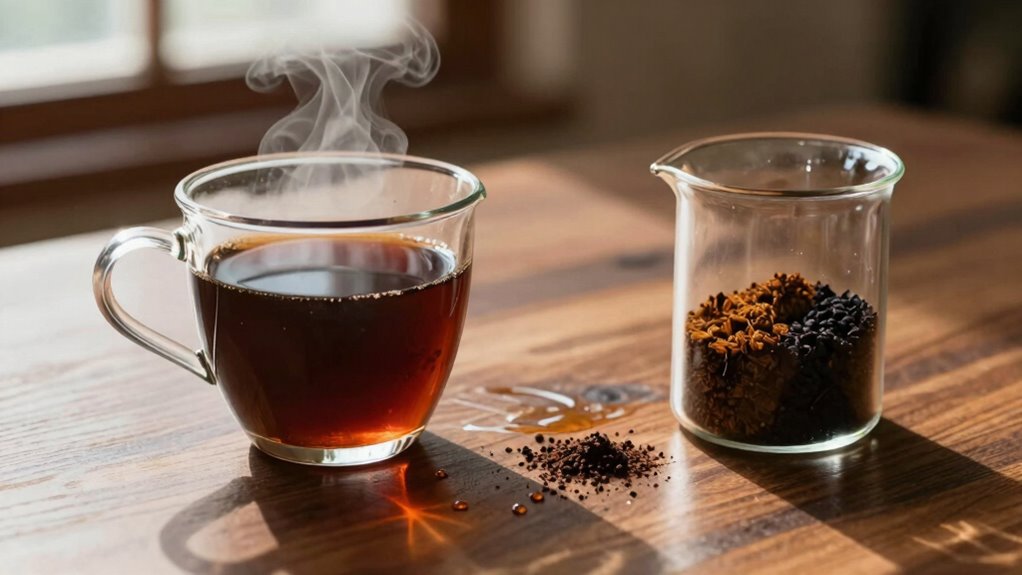
Understanding how strength and extraction interact can elevate your coffee experience. The right brewing techniques and extraction methods allow you to manipulate strength variations, enhancing your favorite flavor profiles. By grasping this relationship, you can fine-tune your brew to match your taste preferences. Additionally, understanding brewing science is essential for mastering the nuances of strength and extraction.
| Strength Level | Flavor Profile | Brewing Technique |
|---|---|---|
| Low | Light, Fruity | Cold Brew |
| Medium | Balanced, Rich | Pour Over |
| High | Bold, Intense | Espresso |
Experimenting with different extraction methods helps you discover the perfect balance. Whether you prefer a bright cup or a deep, robust flavor, understanding strength and extraction is key to crafting your ideal coffee.

Veken French Press Coffee Maker 34oz, No Plastic Touching Cafe,Thickened Glass Stainless Steel Brewer, Cold Brew Cafetera Tea pot for Kitchen Travel Camping, Gifts, Decor, Bar Accessories, Dark Pewter
No Plastic Touching Food: Made with 304 stainless steel and food-grade silicone, our French press keeps all brewing…
As an affiliate, we earn on qualifying purchases.
As an affiliate, we earn on qualifying purchases.
How to Measure Coffee Strength Effectively

When it comes to measuring coffee strength, understanding brew ratio is key. You can also use Total Dissolved Solids (TDS) measurement techniques to get a clearer picture of your brew’s strength. Let’s explore how these methods can help you achieve that perfect cup.
Brew Ratio Importance
To achieve the perfect cup of coffee, you need to pay close attention to your brew ratio, as it directly influences the drink’s strength and flavor profile. A well-balanced brew ratio guarantees that the coffee flavor is neither too weak nor overpowering, creating harmony in each sip. Different brewing methods, like pour-over or espresso, may require adjustments in your ratio to maintain strength balance. Don’t overlook water quality and coffee freshness; they play vital roles in the extraction process. Your equipment choice also impacts the effectiveness of your brew ratio. By fine-tuning these elements, you’ll enhance the overall experience, bringing out the best in your coffee and making every cup a delight. Understanding technical concepts can also help you make informed decisions when adjusting your brew ratio.
TDS Measurement Techniques
Achieving the right brew ratio sets the stage for measuring coffee strength accurately. To effectively gauge your brew’s strength, you’ll want to explore various TDS methods. Here are some essential TDS tools:
- Refractometers for precise measurements
- TDS meters for quick readings
- Calibration solutions to guarantee TDS accuracy
- Comparison charts to evaluate your findings
- Sample cups for consistent testing
Understanding TDS importance helps you recognize how variations in extraction can impact your coffee. Proper TDS calibration enhances your brew’s consistency and allows for better TDS comparison across different methods. With the right TDS applications, you can fine-tune your coffee experience, making sure every cup meets your desired strength.
Essential Factors That Impact Coffee Extraction Quality

To brew the perfect cup, you need to pay attention to three key factors: grind size, water temperature, and brew time. Each element plays a vital role in how well your coffee extracts, affecting flavor and strength. Adjusting these variables can make all the difference in your morning ritual.
Grind Size Adjustment
While you may enjoy a rich cup of coffee, the grind size plays an essential role in determining extraction quality. Adjusting your grind size can dramatically impact flavor, aroma, and body. Here are some grind factors to keep in mind:
- Fine grind for espresso’s intensity
- Medium grind for balanced drip coffee
- Coarse grind for smooth cold brew
- Grind consistency for uniform extraction
- Grind settings tailored to your brew method
Water Temperature Importance
Water temperature plays an essential role in coffee extraction, as it directly influences how flavors and compounds are released. If you’re brewing with too hot water, you might extract unwanted bitterness, while water that’s too cool can lead to flat, underwhelming flavors. Ideally, you want to aim for a temperature between 195°F and 205°F (90°C to 96°C) for ideal extraction. Different brewing methods, like pour-over or French press, have unique temperature requirements that can impact your final cup. It’s vital to experiment within this range to find what works best for your taste. Remember, the right water temperature not only enhances flavor but also guarantees a balanced cup of coffee that showcases the beans’ full potential.
Brew Time Considerations
After mastering water temperature, the next key element affecting your brew is the time spent in contact with the coffee grounds. Brew time directly influences the flavor profile and extraction quality of your coffee. Different brew methods and coffee types require varied extraction times to achieve the perfect strength balance. Here are some essential factors to take into account:
- The grind size of your coffee
- The brewing equipment you use
- Your desired strength and flavor notes
- The ideal extraction time for your chosen method
- Effective time management during the brewing process
Experimenting with brew time can lead to delightful discoveries, ensuring you get the most out of your coffee each time.
Practical Tips for Balancing Coffee Strength and Extraction

Balancing coffee strength and extraction can feel challenging, but with a few practical tips, you can master the art of brewing. Start by experimenting with different brewing methods; each one extracts flavors differently. For instance, a French press may yield a bolder cup, while pour-over methods can create a cleaner taste. Adjust your grind size—finer grinds usually result in stronger coffee, while coarser grinds promote lighter flavors. Pay attention to brew time; longer extraction can intensify strength but might compromise flavor balance. Ultimately, don’t forget to tweak your coffee-to-water ratio; a higher ratio generally enhances strength. By fine-tuning these elements, you’ll find the perfect harmony between strength and extraction, leading to a delightful cup every time.
How to Troubleshoot Strength and Extraction Issues
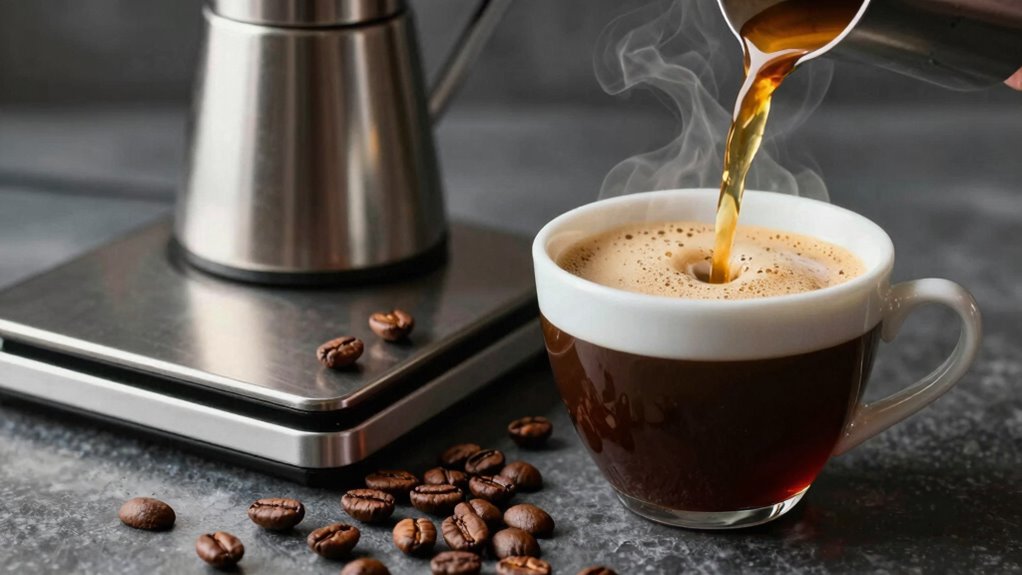
Even with the right techniques, you might still encounter issues with strength and extraction in your coffee. To troubleshoot effectively, consider these factors:
Even with proper techniques, you may face challenges with coffee strength and extraction; consider key factors to troubleshoot effectively.
- Water quality: Use filtered water to enhance flavor balance.
- Roast profile: Experiment with different roast levels to match your taste preferences.
- Equipment calibration: Regularly check your grinder and brewing method for consistency.
- Serving temperature: Serve your coffee at the ideal temperature to release its full flavor.
- Coffee origin: Try beans from various origins for unique flavor profiles.
Frequently Asked Questions
Can I Use Any Coffee Bean for Strong Brews?
You can use almost any coffee bean for strong brews, but the bean origin and roast level matter. Darker roasts typically deliver a bolder flavor, while lighter roasts might require more beans to achieve that intensity. If you prefer a specific origin, like Ethiopian or Colombian, try experimenting with different roast levels to find your perfect strength. Just remember, the brewing method also influences the final taste, so don’t hesitate to explore!
Does Grind Size Affect Caffeine Content?
Grind size affects caffeine content like a key fits a lock. A finer grind increases surface area, allowing for quicker extraction of caffeine during brewing. Depending on your brewing method, you’ll want to find the right grind consistency. For espresso, a fine grind is essential, while a coarser grind works better for methods like French press. Adjusting your grind can help you maximize caffeine extraction and enhance your coffee experience.
How Does Water Temperature Influence Extraction?
Water temperature plays an essential role in extraction. If you use a higher brew temperature, you’ll extract flavors and compounds faster, reducing extraction time. However, too high a temperature can lead to over-extraction, resulting in bitterness. Conversely, lower temperatures may extend extraction time, leading to under-extraction and a sour taste. Finding the right balance helps you brew a well-rounded cup, so experiment to discover what works best for your taste.
Is Stronger Coffee Always Better for Taste?
Stronger coffee can be like a bold canvas—inviting, yet overwhelming. It isn’t always better for taste. You want to find that flavor balance where the brew method enhances the experience. A rich espresso might delight, but a delicate pour-over can reveal intricate notes. If you focus solely on strength, you might miss the subtle layers that make each cup unique. So, embrace variety and savor the journey of flavors in your coffee.
What Equipment Is Best for Precise Extraction?
For precise extraction, you’ll want to evaluate espresso machines, manual brewers, and pour-over techniques. Espresso machines deliver consistent pressure and temperature, perfect for rich shots. Manual brewers like the Chemex or V60 allow you to control the pouring rate, enhancing flavors. Immersion methods, such as the French press, offer a full-bodied experience. Each option has its strengths, so experiment to find what suits your taste best!
Conclusion
In the world of coffee, striking the right balance between strength and extraction is essential for that perfect cup. By understanding how these elements interact, you can fine-tune your brew to suit your taste. Remember, it’s not just about throwing beans in a grinder; it’s about crafting an experience. So, don’t be afraid to experiment—after all, practice makes perfect! With a little patience and attention, you’ll brew up something truly special.