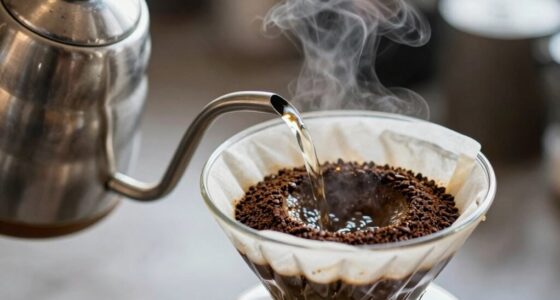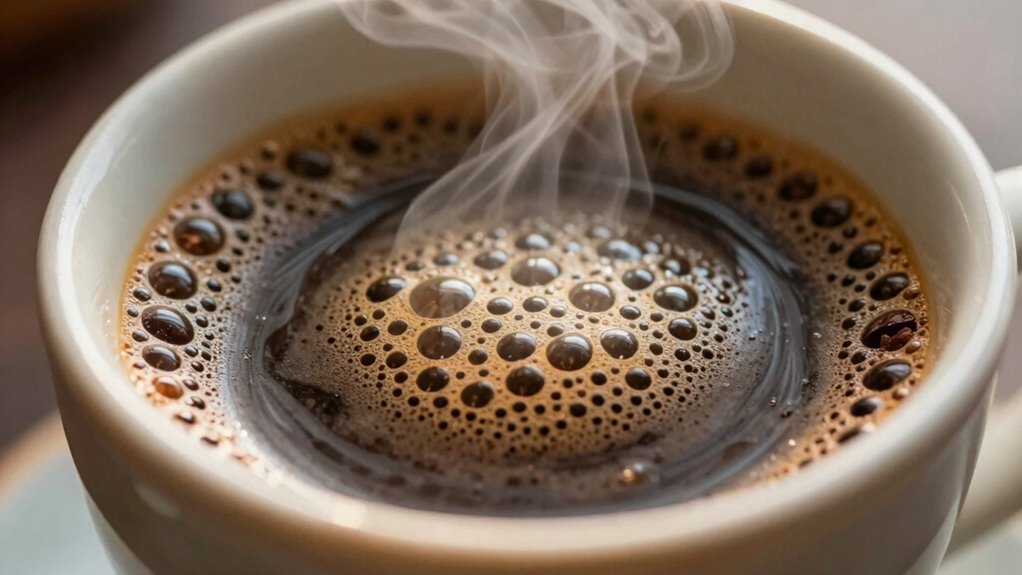

Coffee blooming is essential for enhancing your brew’s flavor and aroma. When you wet freshly ground beans, trapped CO2 escapes, preventing dull coffee and ensuring even extraction. For best results, use coarsely ground beans, add just enough hot water, and let it bloom for 30 to 45 seconds. This technique benefits various brewing methods, like pour-over and French press. Curious about how grind size and water temperature play a role? There’s more to explore!
Open a free Amazon Business account
Business pricing, bulk buying and tax-exempt orders.
As an affiliate, we earn on qualifying purchases.
Key Takeaways
- Blooming enhances coffee flavor and aroma by releasing trapped gases, improving freshness for better extraction.
- Use fresh, coarsely ground beans and saturate them for 30 to 45 seconds to optimize blooming.
- Various brewing methods, like espresso and pour-over, benefit from blooming for enhanced flavor clarity and richness.
- Grind size and water temperature significantly affect blooming; aim for a coarser grind and temperatures between 195°F to 205°F.
- Blooming is essential for uniform extraction, ensuring balanced flavors and preventing flat-tasting coffee.
As an affiliate, we earn on qualifying purchases.
How to Properly Bloom Your Coffee
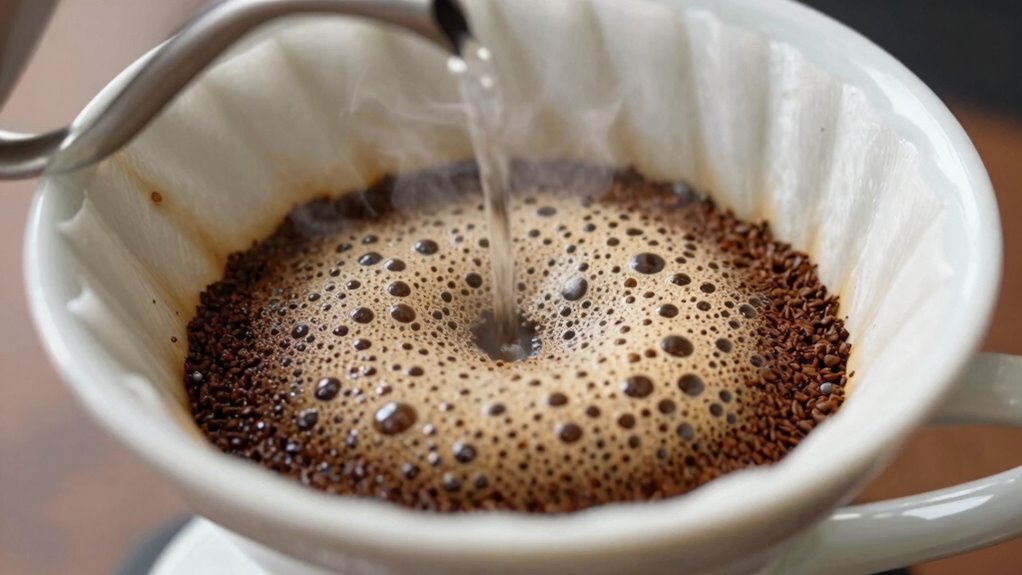
To properly bloom your coffee, start by using fresh, coarsely ground beans, as this maximizes the release of carbon dioxide during the blooming process. Begin by adding just enough hot water to saturate the coffee grounds without drowning them. Aim for a blooming duration of about 30 to 45 seconds; this allows the gases to escape, enhancing flavor extraction. You’ll notice the grounds swell and bubble, indicating the release of carbon dioxide. During this time, make sure the water evenly saturates the grounds for best results. Once the blooming is complete, continue brewing as usual. Following these steps not only elevates your coffee’s taste but also enriches the overall brewing experience. Enjoy the difference in flavor!
As an affiliate, we earn on qualifying purchases.
What Is Coffee Blooming?

What Is Coffee Blooming?
Coffee blooming is an essential step in the brewing process that enhances the flavor and aroma of your cup. This process allows trapped gases to escape and promotes better coffee freshness. When you bloom, you’re setting the stage for peak flavor extraction. Here’s what happens during blooming:
Coffee blooming enhances flavor and aroma, allowing trapped gases to escape for optimal freshness and peak extraction.
- Releases CO2: Freshly roasted coffee beans contain carbon dioxide, which can hinder extraction.
- Increases Surface Area: Wetting the grounds allows more water to interact with the coffee.
- Promotes Even Saturation: Proper blooming guarantees all grounds are evenly saturated, preventing uneven extraction.
- Enhances Aroma: You’ll notice a richer aroma as the gases escape, making your brewing experience more enjoyable. Additionally, understanding the mechanics of French press can further enhance your blooming technique.
As an affiliate, we earn on qualifying purchases.
Why Blooming Makes Your Coffee Taste Better?
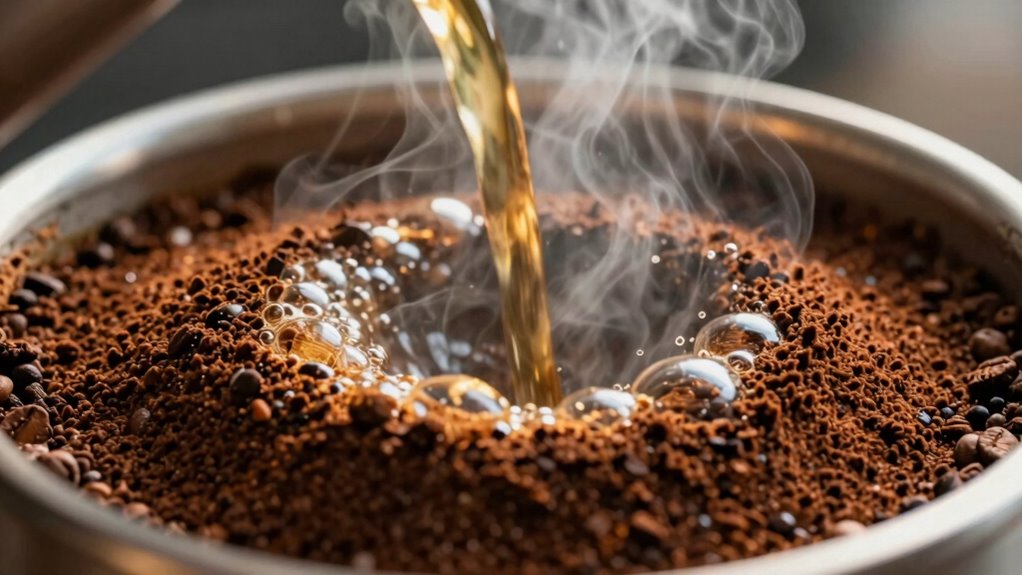
Although it might seem like a small step, blooming greatly enhances your coffee’s flavor profile. When you let your coffee grounds hydrate, you release trapped gases, allowing for a richer extraction. This process can transform the coffee flavor, making it more vibrant and nuanced.
Here’s how blooming impacts your brew:
| Benefit | Description |
|---|---|
| Enhanced Aroma | Releases trapped gases |
| Better Extraction | Consistent saturation of grounds |
| Improved Flavor | Brings out complex notes |
As an affiliate, we earn on qualifying purchases.
How Grind Size and Water Temperature Affect Blooming
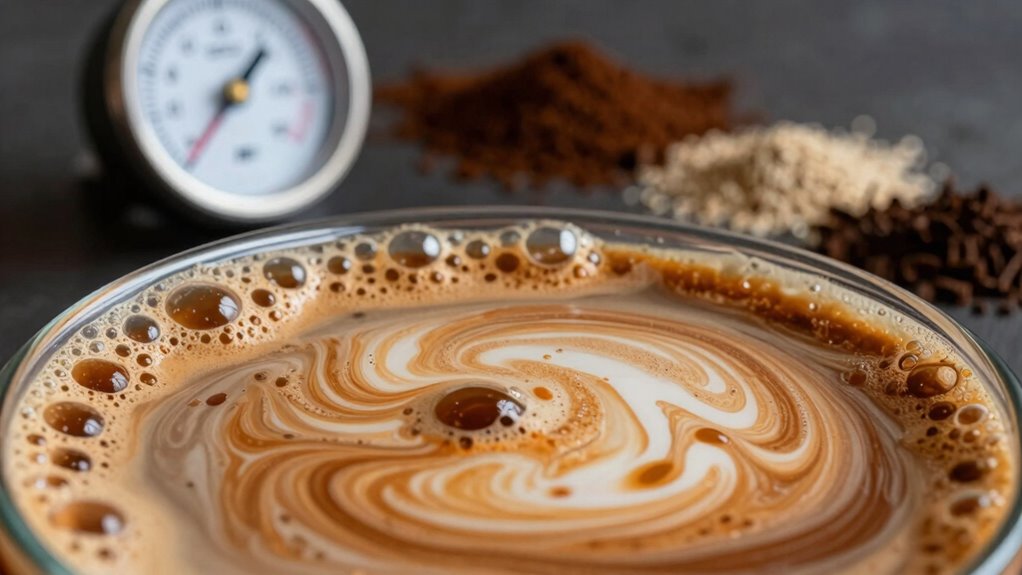
When brewing coffee, the grind size and water temperature play essential roles in the blooming process. A coarser grind can lead to uneven extraction, while the right water temperature guarantees ideal flavor release. Understanding these factors helps you make a richer, more aromatic cup.
Optimal Grind Size
To achieve the best bloom in your brew, understanding grind size and water temperature is essential. The right grind size affects how evenly your coffee expands during blooming. Here’s what to take into account:
- Grind Consistency: Guarantee your grind size is uniform; uneven particles can lead to uneven extraction.
- Grind Uniformity: Aim for a fine to medium grind for ideal bloom, as this allows water to interact evenly with coffee grounds.
- Brew Method: Different methods require specific grind sizes; adjust accordingly for the best results.
- Freshness: Use freshly ground beans for a more pronounced bloom, as stale coffee won’t expand as well.
Ideal Water Temperature
Grind size plays a noteworthy role in how your coffee blooms, but water temperature is just as important. The right temperature guarantees peak extraction, enhancing flavors while controlling bitterness. Aiming for 195°F to 205°F usually gives the best results. If your water temperature’s too low, you might end up under-extracting; too high, and you risk over-extraction.
Here’s a quick look at how water temperature impacts brew time and overall quality:
| Temperature Range | Effect on Blooming |
|---|---|
| Below 195°F | Under-extraction |
| 195°F – 205°F | Ideal extraction |
| Above 205°F | Over-extraction |
| Varies by Grind | Adjust accordingly |
Always consider water quality, as it can greatly influence the final cup.
Debunking Common Myths About Coffee Blooming

You might think that blooming only indicates freshness or that only dark roasts experience this phenomenon. In reality, blooming occurs across various roast levels and isn’t a direct measure of quality. Plus, while it can influence flavor, it doesn’t solely determine your coffee’s taste profile.
Blooming Equals Freshness
While many believe that blooming coffee guarantees freshness, this isn’t always the case. Blooming is a reaction to carbon dioxide release, but it doesn’t inherently indicate the coffee’s overall quality. Here are some better freshness indicators:
- Roast Date: Check for a recent roast date; ideally, use within two to four weeks.
- Storage Techniques: Keep your beans in an airtight container away from light and moisture.
- Aroma: Fresh coffee should have a strong, inviting aroma, not a dull scent.
- Taste: Ultimately, the flavor should be vibrant and complex, reflecting freshness. Additionally, understanding the science behind freshness can help you make informed choices about your coffee.
Only Dark Roasts Bloom
Many coffee enthusiasts mistakenly believe that only dark roasts exhibit blooming during brewing. This dark roast misconception overlooks the fact that all roast levels can bloom, depending on their freshness and the brewing method. When you pour hot water over freshly ground coffee, carbon dioxide escapes, creating the characteristic bubbling. This process benefits every roast, not just dark ones. Light and medium roasts can bloom just as impressively, enhancing extraction and flavor potential. By understanding that blooming isn’t exclusive to dark roasts, you can appreciate the full spectrum of your coffee’s flavors. So, don’t be swayed by myths; embrace the blooming benefits of all roast levels and elevate your brewing experience.
Blooming Affects Flavor Profile
Although some might think blooming doesn’t impact flavor, the reality is quite the opposite. When you allow your coffee to bloom, you reveal a range of flavors that elevate your cup. Here’s how blooming affects flavor profile:
- Carbon Dioxide Release: This gas can overshadow subtle flavors if not released.
- Flavor Complexity: Blooming helps uncover the nuanced tasting notes in your coffee, enhancing the overall experience.
- Aroma Enhancement: The blooming process intensifies aromatic compounds, making your coffee more fragrant.
- Even Extraction: A proper bloom leads to uniform extraction, ensuring balanced flavors throughout the brew. Additionally, super-automatic espresso machines can optimize the blooming process, allowing for a more consistent flavor profile.
Factors That Affect Blooming
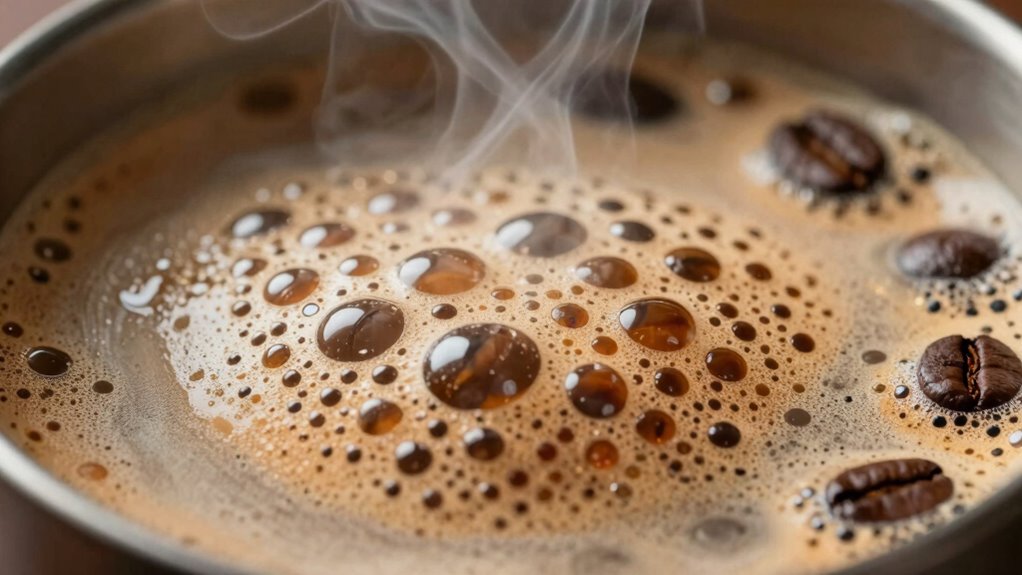
Several factors influence the blooming of coffee, and understanding them can greatly enhance your brewing experience. First, coffee freshness plays an essential role; freshly roasted beans release more carbon dioxide, resulting in a more pronounced bloom. If your beans are stale, you’ll notice less activity during blooming. Next, your brewing techniques matter too. Different methods, like pour-over or French press, affect how water interacts with the coffee grounds. For instance, a gentle pour can help achieve even saturation, promoting a better bloom. Additionally, water temperature can impact blooming; too hot or too cold may hinder the release of gases. By paying attention to these factors, you can optimize your brewing process and enjoy a richer cup of coffee.
Is Blooming Necessary for All Brewing Methods?
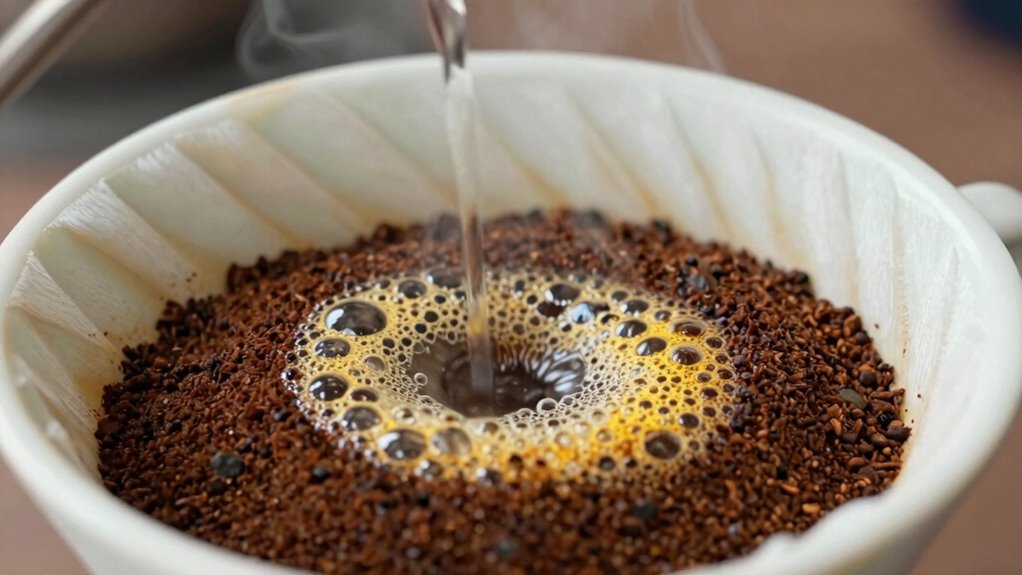
Blooming isn’t always necessary for every brewing method, but it can enhance the flavor profile in many cases. Here’s when you might consider it:
- Espresso Brewing: A quick bloom can help release gases for richer extraction.
- Pour Over: Blooming allows you to evenly saturate the grounds, enhancing flavor clarity.
- French Press: Letting it bloom gives you a fuller-bodied coffee, as it helps with extraction.
- Cold Brew: While blooming isn’t critical, it can still improve flavor by releasing trapped CO2, making your cold brew smoother.
Understanding the Science of Carbon Dioxide Release
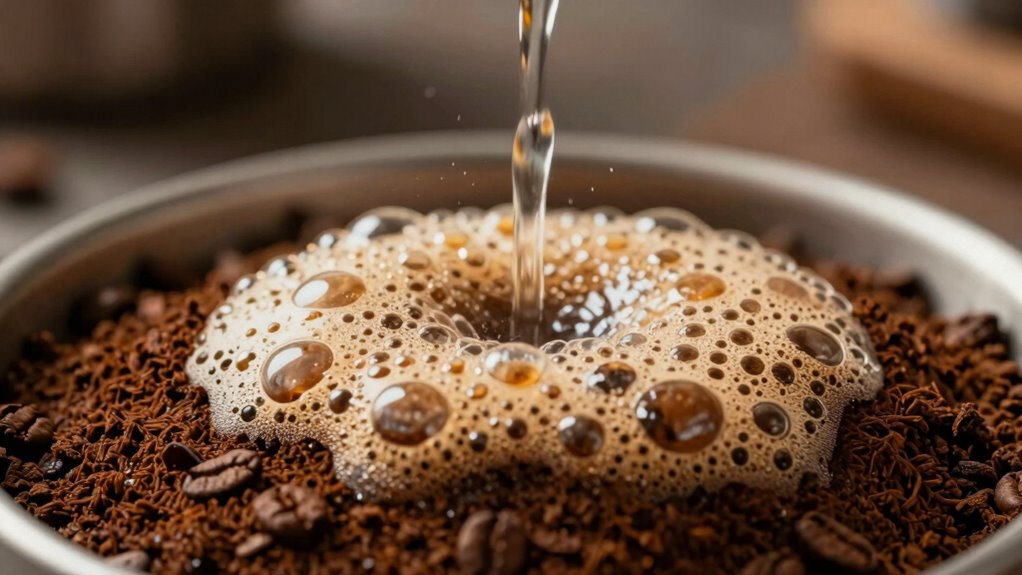
When coffee grounds are exposed to hot water, they release carbon dioxide (CO2), which can create a barrier that hampers extraction. This phenomenon is vital in brewing chemistry. As CO2 escapes, it can cause the grounds to bloat, leading to uneven saturation and limiting water’s ability to extract flavors effectively. If you skip the blooming phase, you might end up with a cup that tastes flat or under-extracted. Allowing the coffee to bloom for about 30 seconds lets CO2 dissipate, ensuring water interacts more evenly with the grounds. By understanding this process, you can greatly enhance your brewing outcomes, revealing the full potential of your coffee’s flavor profile. Additionally, mastering home coffee brewing techniques can further elevate your coffee experience. So, don’t overlook this essential step!
Frequently Asked Questions
Can I Bloom Pre-Ground Coffee?
Yes, you can bloom pre-ground coffee! While it’s best with freshly ground beans, blooming your pre-ground coffee can still enhance its flavor. Just add a small amount of hot water to the grounds and let it sit for about 30 seconds. This process releases gases trapped during grinding, which can improve the overall coffee flavor. So, give it a try and enjoy a richer taste in your cup!
How Long Should I Wait After Blooming?
After blooming, you should wait about 30 to 45 seconds for the ideal timing. This blooming duration allows the coffee to release carbon dioxide, enhancing flavor extraction. If you wait too long, the coffee can lose some freshness. Keep an eye on your brewing process; timing is essential for achieving the best taste. Enjoy your cup knowing you’ve given it the right care during blooming!
Does Blooming Affect Espresso Differently?
Yes, blooming does affect espresso differently. When you let your coffee breathe, it releases trapped gases, much like a flower unfurling its petals. This process enhances your espresso extraction, allowing flavors to emerge more vividly. You’ll notice a richer flavor profile, with subtle notes shining through. If you skip blooming, you might miss those delightful nuances, leaving your cup flat. So, embrace the bloom for a truly aromatic experience!
What Happens if I Skip Blooming?
If you skip blooming, you might miss out on ideal coffee extraction and flavor enhancement. The gases trapped in the coffee can lead to uneven brewing, resulting in a flat or bitter taste. Without blooming, the water can struggle to penetrate the grounds effectively, leaving some flavors under-extracted. You’ll likely end up with a less vibrant cup that doesn’t showcase the coffee’s full potential, so it’s worth considering incorporating that step.
Can I Use Cold Water for Blooming?
Using cold water for blooming isn’t like opening a flower in sunlight; it just won’t do the trick. Blooming needs hot water to release carbon dioxide effectively, enhancing flavors. If you’re making cold brew, you can skip the blooming step altogether, as the longer steep will extract flavors gradually. Just remember, the water temperature plays a crucial role in maximizing the coffee’s aroma and taste, especially during the blooming phase.
Conclusion
Just like a flower unfolds to reveal its beauty, blooming coffee transforms your brew into a symphony of flavors. By letting those trapped gases escape, you’re not just brewing coffee; you’re nurturing a masterpiece. While it’s not always essential, taking the time to bloom can elevate your experience, turning a simple cup into a delightful adventure. So, embrace the process, and let your coffee bloom—your taste buds will thank you for it!
Flea & tick season Picks
flea and tick prevention
As an affiliate, we earn on qualifying purchases.