Choosing between espresso and pour-over grind sizes depends on your coffee routine. For espresso, you want a fine, powdery grind to guarantee a rich, full-bodied shot. In contrast, pour-over needs a medium grind, similar to sea salt, for balanced extraction. The right grind size impacts flavor and extraction speed. If you want to optimize your brew and troubleshoot common issues, keep exploring how adjusting your grind can make a difference.

Get coffee and tea gear delivered free with Prime
- Fast, free delivery on millions of items
- Prime Video, Amazon Music and more included
- Member-only deals all year
Key Takeaways
- Espresso requires a fine, powdery grind for quick extraction and a rich, full-bodied flavor.
- Pour-over benefits from a medium grind, similar to sea salt, for balanced and consistent extraction.
- Adjust grind size based on your equipment and beans to optimize flavor and prevent over- or under-extraction.
- Consistent grind size is crucial for both methods to achieve desired flavor profiles.
- Regular calibration and proper storage help maintain optimal grind size and freshness for your routine.
Products Worth Considering

Ninja Luxe Café Premier 3-in-1 Espresso Machine, Drip Coffee & Cold Brew

Breville Barista Pro Espresso Machine with Grinder, Brushed Stainless Steel

Breville Bambino Espresso Machine, Brushed Stainless Steel
As an affiliate, we earn on qualifying purchases.
How Does Grind Size Affect Coffee Extraction and Flavor?
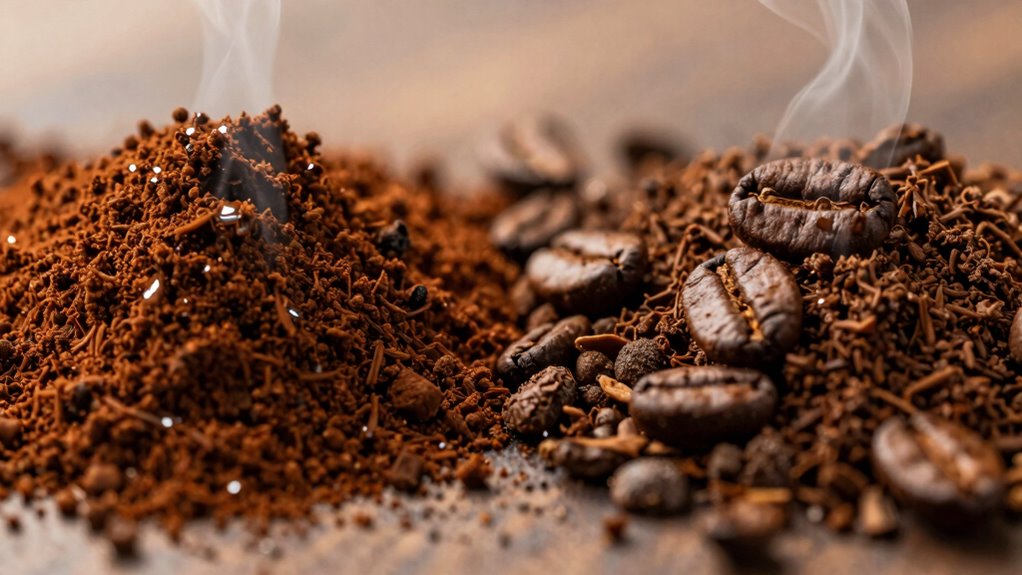
Grind size has a direct impact on how quickly and efficiently coffee extracts, which in turn influences the flavor profile of your brew. When your grind consistency is uneven, water flows unevenly through the coffee, leading to over-extraction or under-extraction, which skews the flavor balance. A uniform grind ensures consistent extraction, allowing the flavors to develop evenly. Finer grinds tend to extract more quickly, intensifying their flavors, but can also result in bitterness if overdone. Coarser grinds extract more slowly, producing a milder, more balanced taste. Proper grind size helps you control extraction time, making it easier to achieve the desired flavor profile. Ultimately, the right grind consistency is key to a well-balanced, flavorful cup of coffee. Additionally, understanding ethical consumerism can enhance your ability to experiment with different brewing methods.
What’s the Best Grind Size for Espresso?
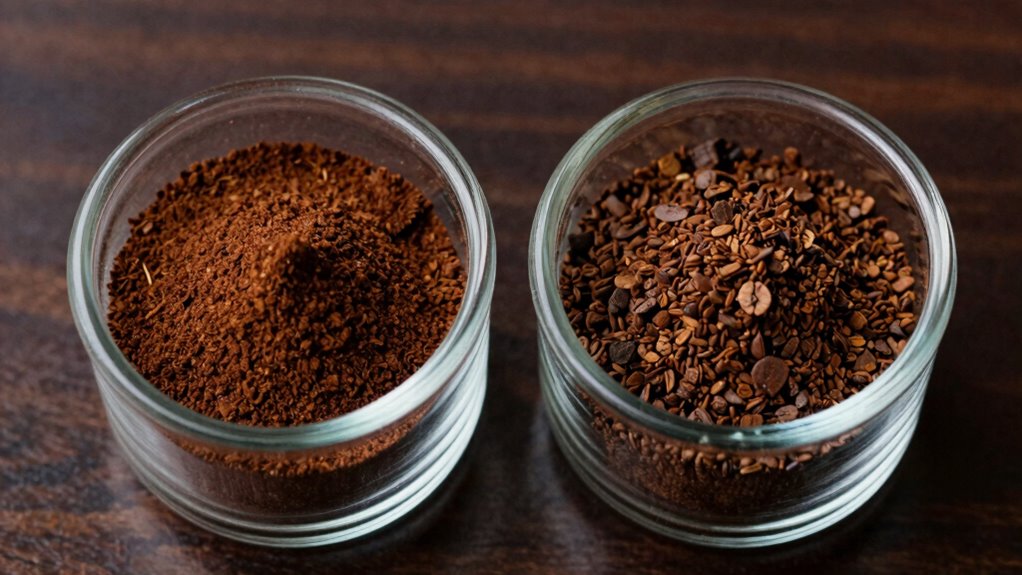
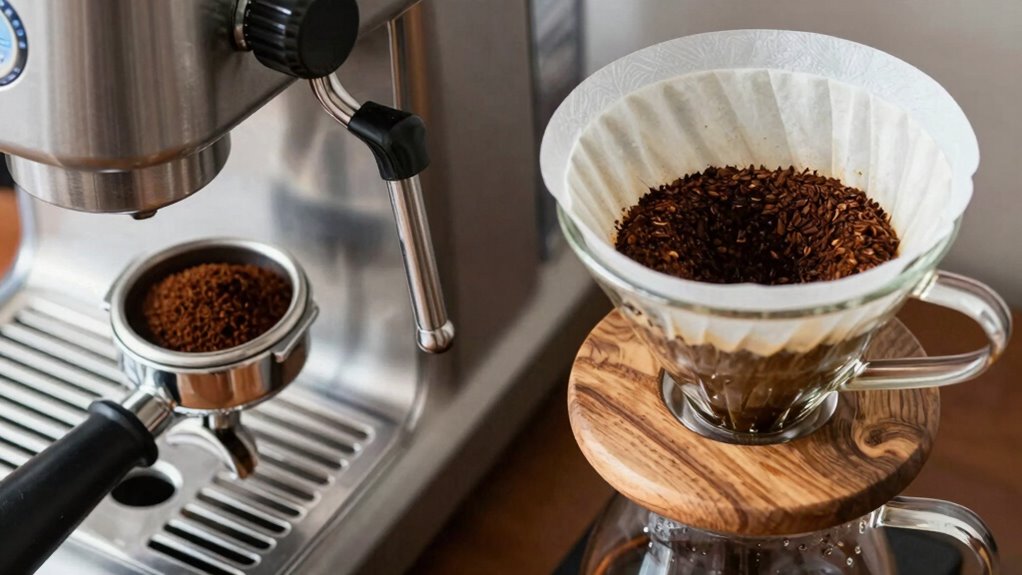
Ever wonder what makes the perfect espresso grind? It’s all about the right consistency to optimize flavor extraction. For espresso, you want a fine grind—almost powdery—so water can pass through the coffee evenly. Coffee bean freshness plays a huge role; fresher beans often need a slightly coarser grind because their oils can clog the brew. Additionally, the intersection of art and culture can inspire unique coffee experiences that elevate your brewing ritual. Equally important is brewing temperature, usually around 195–205°F. This temperature range helps extract the best flavors from the finely ground coffee without over-extracting bitter compounds. Adjusting grind size slightly can help if your shot pulls too quickly or slowly. The goal is to balance extraction for rich, full-bodied flavor, and that fine grind is your starting point for a perfect espresso shot. Additionally, understanding bank SWIFT codes can enhance your coffee purchasing experience by ensuring secure transactions when buying your favorite beans online. Carefully managing color accuracy in your brewing process can also elevate your overall coffee experience.
What’s the Right Grind Size for Pour-Over Coffee?
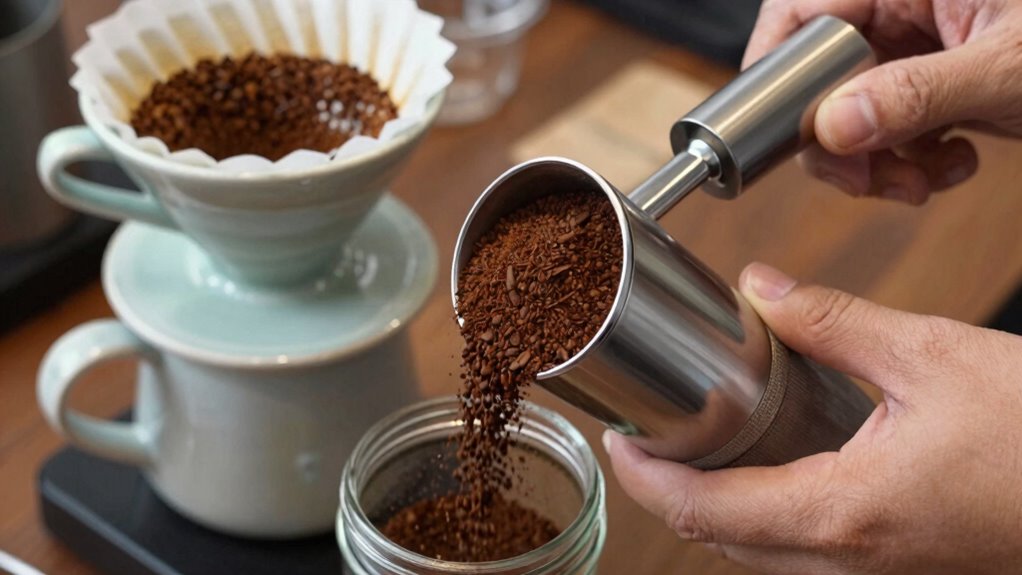
Finding the right grind size for pour-over coffee is essential to achieving balanced extraction and ideal flavor. You want a medium grind, similar to sea salt, which allows water to flow evenly through the coffee grounds. Consistent grind size is vital because it impacts extraction; uneven grinds can lead to over- or under-extraction, resulting in a less desirable cup. Proper coffee storage helps preserve freshness and flavor, ensuring your grounds stay consistent over time. Keep your beans in an airtight container away from light and heat. Grind consistency allows you to dial in your brew, preventing uneven extraction. Remember, adjusting your grind size slightly can make a big difference in flavor, so stay attentive to your brewing process and storage methods to perfect your pour-over.
How to Adjust Your Grind Size for Equipment and Beans
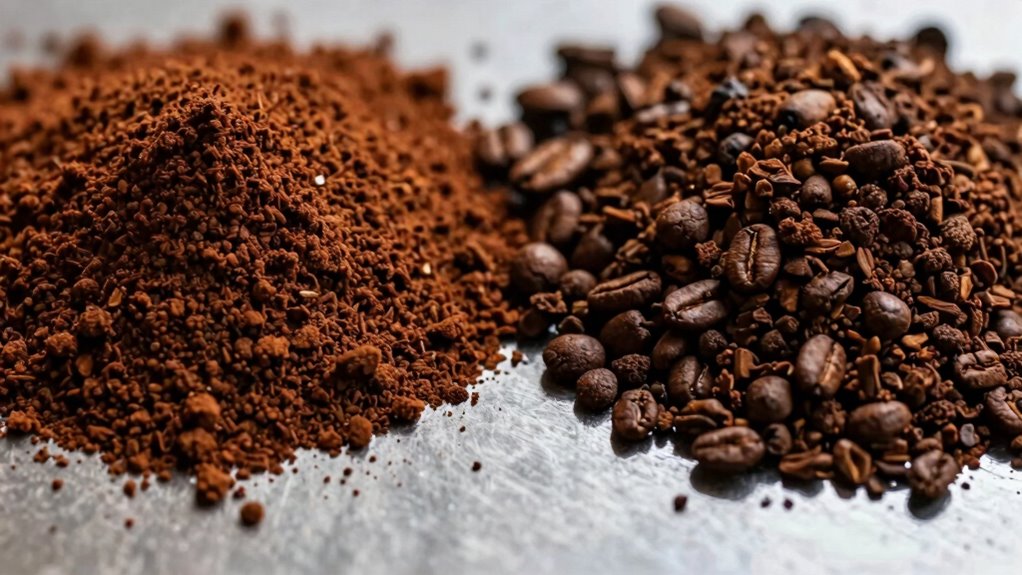
Adjusting your grind size effectively depends on both your equipment and the beans you’re using. To achieve consistent extraction, focus on maintaining grind consistency, which directly influences flavor and strength. If your grinder produces uneven particles, your brew will taste inconsistent. Experiment gradually by adjusting the grind in small increments until you find the right balance. Storing your beans properly using airtight storage solutions to preserve freshness, as stale beans can affect grind quality. Additionally, understanding technical concepts can help you identify the right grind size for your specific brewing method. When switching between equipment—for instance, from pour-over to espresso—adjust the grind size accordingly, making it finer or coarser as needed. Remember, small adjustments make a big difference; always note your settings to replicate your ideal grind for future brews. Understanding ergonomics and layout in your workspace can also enhance your coffee routine by creating a more comfortable brewing environment. Incorporating various types of tights into your coffee setup can provide added comfort during long brewing sessions. Furthermore, knowing the ideal brew temperature can significantly impact extraction and flavor in your coffee routine. Consider enhancing your setup with seating areas that allow for relaxation while brewing, making your coffee routine even more enjoyable.
Troubleshooting Common Grind Size Issues?
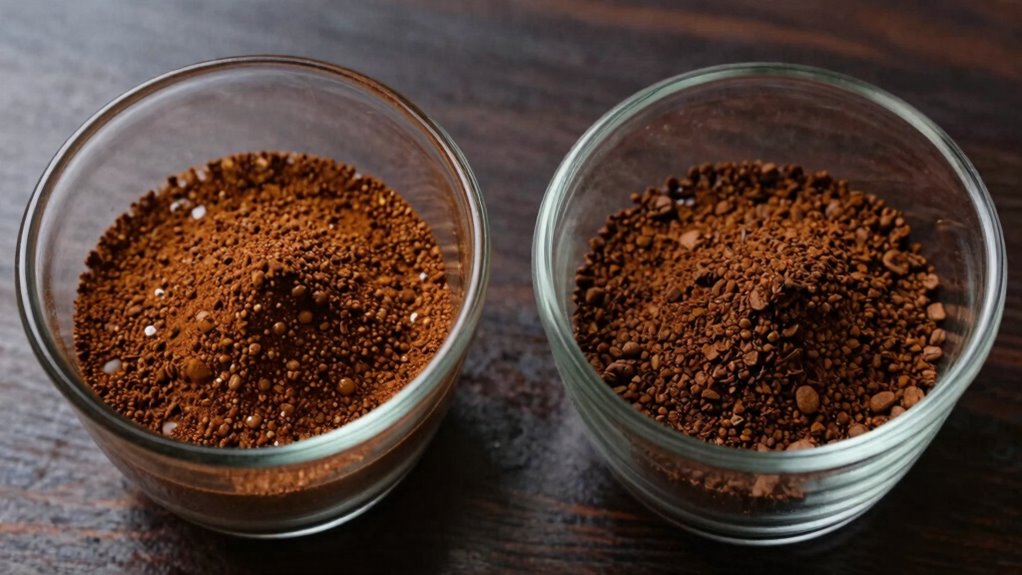
When your brew tastes off—either too bitter, sour, or weak—it’s often a sign that your grind size isn’t quite right. Inconsistent grind size can cause uneven extraction, so focus on grind consistency. Also, consider how you store your coffee; poor coffee storage can affect freshness, leading to inconsistent grind results. To troubleshoot:
- Check your grinder for wear, and calibrate if needed.
- Store beans in an airtight container away from sunlight.
- Adjust your grind size gradually, testing after each change.
- Clean your grinder regularly to prevent buildup affecting grind consistency.
Additionally, understanding regional flavors can enhance your brewing technique, ensuring you get the most out of your coffee experience. Moreover, using filtered water can improve the overall quality of your brew by reducing impurities that may impact flavor.
Frequently Asked Questions
Can Grind Size Influence Brewing Time Significantly?
Yes, grind size greatly influences brewing time. When your grind size isn’t consistent, extraction becomes uneven, affecting brewing duration. You’ll notice that a finer grind, especially for espresso, speeds up extraction, while a coarser grind for pour-over takes longer. To guarantee predictable results, regularly calibrate your grinder and maintain grind size consistency. Proper calibration helps you achieve the desired brewing time and ideal flavor, making your coffee routine more reliable.
How Does Grind Size Impact Coffee Crema?
Essential for coffee connoisseurs, grind size greatly influences coffee crema. A finer grind promotes robust coffee extraction, encouraging luscious crema formation that adds flavor and visual appeal. Conversely, a coarser grind results in lighter, thinner crema, affecting overall taste and texture. By fine-tuning your grind size, you control extraction and craft mesmerizing crema, elevating your espresso experience and ensuring each cup is a compelling, creamy masterpiece.
Is a Medium Grind Suitable for All Pour-Over Methods?
A medium grind isn’t suitable for all pour-over methods because coffee bean density and grind consistency vary. For delicate, precise brews like Chemex, you’ll want a coarser grind for ideal extraction. For more robust methods like V60, a medium grind may work, but you’ll need to adjust based on grind consistency to guarantee even extraction. Experimenting helps, so adapt your grind size to match your specific pour-over setup and bean characteristics.
Should Grind Size Vary With Different Coffee Roasts?
Yes, grind size should vary with different coffee roasts to optimize flavor. Lighter roasts often need a slightly coarser grind, while darker roasts benefit from a finer grind for better extraction. To maintain grind consistency, store your coffee properly in a sealed container away from light and moisture. This helps preserve freshness, ensuring your grind size remains uniform and your brewing process stays smooth, regardless of the roast level.
How Often Should I Adjust My Grind Size?
You should adjust your grind size whenever your coffee’s flavor shifts or your brew time changes—think of it as fine-tuning your own personal espresso machine! Regular equipment maintenance keeps your grinder in top shape, and paying attention to brewing temperature helps you dial in the perfect grind. Typically, check and tweak your grind weekly or after any noticeable flavor or extraction issues to guarantee every cup’s perfection.
Conclusion
Choosing the right grind size might seem tricky at first, but it’s worth the effort to release your perfect cup. Don’t get discouraged if it takes some tweaking — every adjustment brings you closer to that rich, flavorful brew you crave. Remember, your coffee routine should bring joy, not frustration. Trust your senses, experiment confidently, and soon you’ll savor every sip, knowing you’ve personalized your brew just for you.