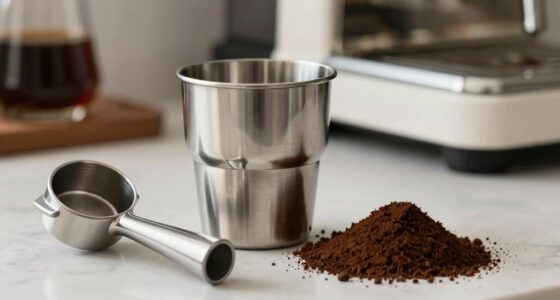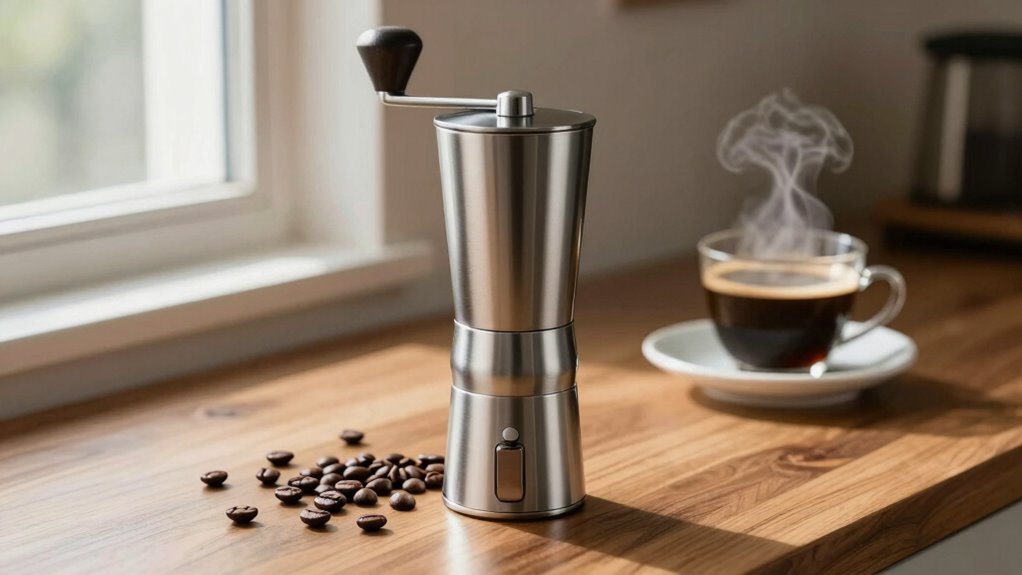

The Ross Droplet Technique (RDT) is your go-to solution for coffee grinding issues like static and clumping. By lightly misting your beans before grinding, you reduce static, enhance grind consistency, and improve flavor extraction. This method is simple and effective for both home and professional brewers. You’ll notice smoother grinds and better coffee. Want to refine your technique even further? There’s plenty more to discover that can elevate your coffee experience.

Get coffee and tea gear delivered free with Prime
- Fast, free delivery on millions of items
- Prime Video, Amazon Music and more included
- Member-only deals all year
Key Takeaways
- The Ross Droplet Technique (RDT) reduces static and clumping in coffee grinding, enhancing consistency and efficiency.
- Lightly misting coffee beans before grinding helps minimize static and break up clumps.
- Regular grinder maintenance and using high-quality beans contribute to optimal grind performance.
- Select appropriate grind sizes based on brewing methods for the best flavor extraction.
- Utilizing anti-static containers and precise measuring tools supports the RDT process for better coffee results.
As an affiliate, we earn on qualifying purchases.
What Is the Ross Droplet Technique (RDT)?

The Ross Droplet Technique (RDT) is a game changer for coffee grinding. Developed to tackle static and clumping issues, RDT enhances your grind’s efficiency and consistency. Its history dates back to a community of coffee enthusiasts who sought better results in their brewing process. RDT applications range from home brewing to professional settings, making it versatile for any coffee lover. While some misconceptions exist—like it being overly complicated—most users find it straightforward. Variations of RDT exist, adapting to different grinders and preferences. Understanding the science behind RDT helps you appreciate its benefits, allowing you to elevate your coffee experience. Embracing this technique connects you to a passionate community dedicated to perfecting the art of coffee grinding.
As an affiliate, we earn on qualifying purchases.
How Static and Clumping Impact Your Coffee Grind

When you grind coffee, static electricity can create unwanted clumping, affecting your brew’s consistency. These clumps not only hinder even extraction but can also lead to wasted grounds. Understanding how to manage these issues can greatly improve your coffee experience.
Understanding Static Electricity
Static electricity plays a subtle yet significant role in the coffee grinding process. As you grind, static buildup can lead to grind retention, causing coffee particles to cling to the grinder. To mitigate this, consider grounding techniques and moisture control; adding a bit of water can help reduce static. Pay attention to humidity effects on your environment and how they interact with different material types in your grinder. Regular grinder maintenance also plays a critical role in minimizing static issues. Proper coffee storage can further enhance your grind consistency by controlling moisture levels. By understanding static electricity, you can optimize particle size and improve your overall brewing experience, ensuring a more flavorful cup every time. Additionally, grinder maintenance is essential for reducing static and achieving consistent results with your coffee.
Effects Of Clumping
Clumping in coffee grounds often arises from static electricity, leading to uneven extraction during brewing. When your coffee grounds clump together, you compromise grind uniformity, which can affect the flavor profile of your brew. Larger clumps may resist water flow, causing some areas to over-extract while others under-extract. This inconsistency can result in a cup that’s less balanced and enjoyable.
To achieve ideal taste, focusing on clump reduction is essential. By minimizing clumping, you enhance the overall grind uniformity, ensuring that each particle interacts with water evenly. This approach helps you reveal the full potential of your coffee beans, making each brew a more satisfying experience. Additionally, understanding the caffeine content can further influence your brewing techniques and outcomes. Using tools like super-automatic espresso machines can also help you manage grind consistency effectively. So, keep an eye on clumping to elevate your coffee game!
Solutions For Grinding Issues
To tackle grinding issues effectively, it’s essential to understand how static and clumping affect your coffee grounds. These factors can disrupt grind uniformity, leading to inconsistent extraction time and poor flavor balance. Start by adjusting your grind size according to your brewing method—finer for espresso, coarser for French press. Ensuring bean freshness and using high-quality water can also minimize clumping and enhance flavor. Regular equipment maintenance, like cleaning your grinder, will reduce static and improve overall performance. If you notice persistent clumping, experiment with a dose of RDT (Ross Droplet Technique) to help mitigate static. Additionally, consider the benefits of natural remedies that can complement your grinding process. By addressing these elements, you’ll achieve a more consistent grind, optimizing your coffee experience. Maintaining your grinder’s performance is crucial for overall quality, as filter maintenance can significantly influence the outcome of your brew. Remember, proper filtration can also play a key role in reducing impurities that affect flavor. Understanding the effects of grind uniformity is vital for achieving the best extraction and flavor profile in your coffee. Furthermore, exploring economic impacts of coffee grinding technology can provide insights into how advancements may shape future coffee production and consumption.
anti-static coffee storage container
As an affiliate, we earn on qualifying purchases.
As an affiliate, we earn on qualifying purchases.
The Impact of RDT on Grind Consistency

When you grind coffee, achieving a consistent particle size is essential for ideal flavor extraction. RDT, or Retention Displacement Technique, plays an important role in enhancing grind uniformity. By reducing static charge, RDT helps you achieve a more consistent grind, which directly impacts extraction efficiency.
Here’s a quick overview of RDT’s benefits:
| Benefit | Description |
|---|---|
| Grind Uniformity | Creates more uniform particle sizes |
| Extraction Efficiency | Guarantees balanced and optimal flavor |
| Static Reduction | Minimizes clumping and enhances flow |
Implementing RDT can transform your coffee experience, making each cup richer and more flavorful. Embrace RDT to elevate your grinding game!
As an affiliate, we earn on qualifying purchases.
Steps to Implement RDT in Your Coffee Routine

Having explored the benefits of RDT for grind consistency, it’s time to put this technique into practice. Start by selecting your desired grind size based on your brewing method. For best results, weigh your coffee to verify you’re using the right amount. Next, lightly mist your coffee beans with water to enhance static reduction. As you grind, watch for clumping; RDT helps break it up, guaranteeing even extraction. Additionally, using proper grind settings can significantly impact the flavor profile of your brew. Incorporating essential oils for toothache relief may help if you experience discomfort while enjoying your coffee. Remember, maintaining grind consistency is key to achieving the best flavor in your cup. Prioritizing quality sleep can also enhance your overall coffee experience by keeping you alert and focused. After grinding, use your coffee immediately to maintain freshness. If you’re not brewing right away, store it in an airtight container. By incorporating RDT into your routine, you’ll not only improve grind consistency but also elevate the overall flavor of your coffee. Additionally, using a high refresh rate grinder can further optimize your grinding process. Enjoy the difference!
Tools Needed for Effective RDT

To get the most out of RDT, you’ll need some key tools in your arsenal. Understanding grinding method variations and mastering measuring and adjusting techniques will elevate your coffee experience. Let’s explore what you’ll need to make RDT effective and enjoyable.
Essential RDT Tools
Effective RDT (Random Dot Technology) for coffee grinding hinges on the right tools. To maximize your grinding experience, consider these essentials:
| Tool | Purpose |
|---|---|
| Anti-static container | Reduces clumping and static |
| Scale | Guarantees precise measurements |
| Brush | Cleans grinds and equipment |
These tools enhance RDT benefits, making your grinding process smoother and more efficient. Understanding RDT history and advancements helps you appreciate these essentials. Avoid common RDT misconceptions by diving into RDT tutorials and engaging with the RDT community. As you conduct RDT experiments, you’ll find that proper tools make all the difference in achieving peak results. With the right gear, you’ll elevate your coffee grinding game!
Grinding Method Variations
Grinding Method Variations (Tools Needed for Effective RDT)
While exploring grinding method variations, it’s essential to understand how different techniques can enhance your RDT experience. You’ll want to experiment with your grinding speed to find what works best for your preferred brew. A slower grind often leads to a more consistent grind size, which can improve extraction and flavor. On the other hand, if you’re in a hurry, a faster grind can still get the job done, but it might produce uneven particles. Each method has its pros and cons, so don’t hesitate to mix and match. Remember, the right grind size combined with the ideal grinding speed can elevate your coffee game, making each cup more enjoyable. Additionally, using innovative tools can significantly streamline your grinding process. Incorporating training concepts can also help you understand how to achieve the best results based on your brewing method and taste preferences. Moreover, exploring smart kitchen gadgets will allow you to find tools that enhance efficiency and sustainability in your coffee preparation. Understanding air systems can also improve your coffee-making environment by ensuring optimal humidity and temperature levels. Adjust accordingly based on your brewing method and taste preferences. Utilizing connected equipment can transform your coffee grinding experience by offering precise control and consistency.
Measuring and Adjusting Techniques
Having the right tools is vital when it comes to measuring and adjusting your RDT technique for coffee grinding. Start with a reliable scale to weigh your beans accurately. This guarantees consistency in your measuring techniques, giving you precise control over grind size and extraction. Next, consider a humidity meter; it helps you monitor your environment, allowing you to adjust methods according to moisture levels. Finally, a quality grinder with adjustable settings is key for fine-tuning your grind. Don’t forget to keep a notebook or app handy for tracking your adjustments and results. By combining these tools, you’ll enhance your RDT process, leading to a better cup of coffee every time. Incorporating consistent training habits can also improve your overall coffee brewing skills.
Avoid These Common Mistakes When Using RDT
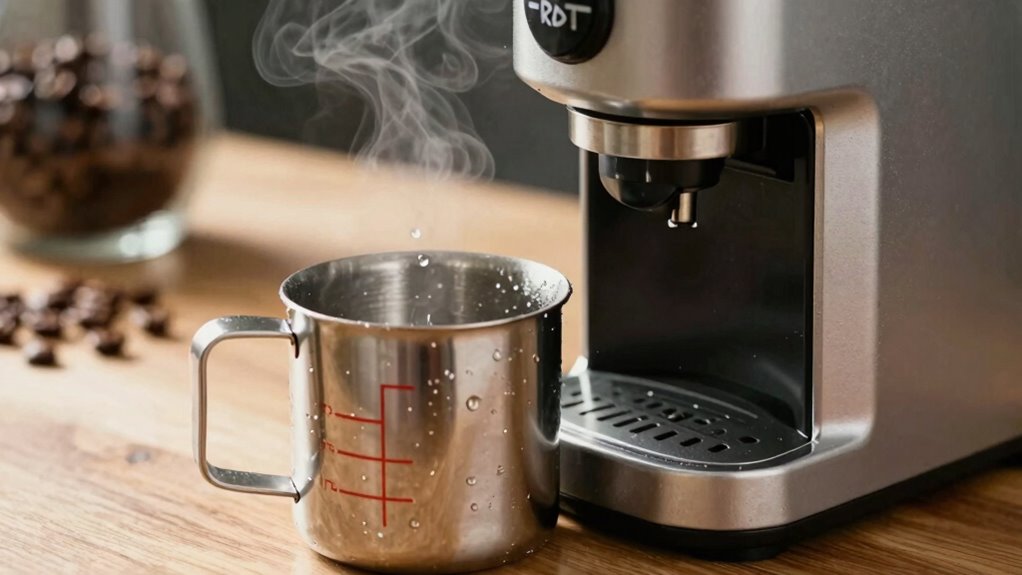
When using RDT (Ross Droplet Technique) for coffee grinding, it’s easy to overlook some common pitfalls that can affect your brew. To maximize RDT benefits and enjoy static reduction, keep these tips in mind:
- Choose the right equipment: Make sure your grinder is compatible with RDT for best results. Additionally, using energy-efficient appliances can enhance your overall coffee-making experience.
- Watch your grind settings: Incorrect settings can lead to inconsistent extraction and flavor.
- Experiment with technique variations: Don’t hesitate to tweak your approach based on user experiences.
- Stay aware of humidity: High humidity can impact the effectiveness of RDT, so adjust accordingly. Additionally, understanding the passion of Italian espresso can inspire you to refine your coffee-making process even further.
Best Grinders for RDT
Sure! Here’s the revised content following your instructions:
—
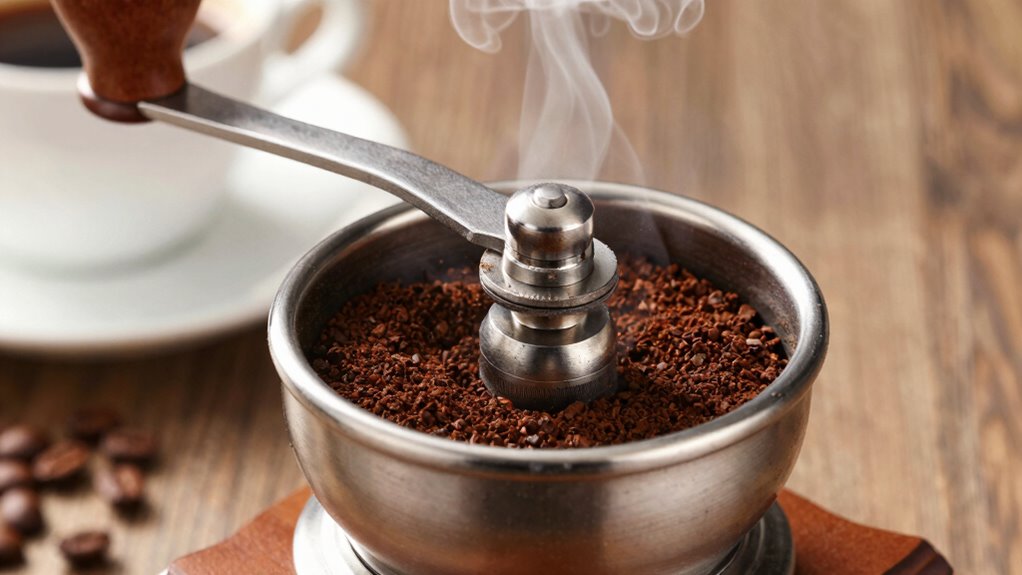
Choosing the right grinder can greatly enhance your RDT experience. Look for grinders with versatile grind settings, allowing you to tailor your coffee to your preferred brewing method. A grinder with consistent particle size is vital; it helps guarantee uniform extraction. Additionally, high-quality grinders often incorporate advanced features that can significantly improve your grinding process. Mastering kitchen knife techniques can also enhance your overall culinary skills, making you a more confident home cook.
Consider models that come with advanced grinder features, like dosers or timers, which can streamline your process. A flat burr grinder often provides better consistency compared to blade grinders. Moreover, using finely ground coffee can enhance the flavor profile of your brew.
Additionally, a grinder with low retention can minimize leftover coffee, making your RDT technique more effective. You’ll want a machine that fits your budget while delivering quality. Research options that balance performance and value, making sure your coffee experience is both enjoyable and efficient. Finding a grinder with consistent particle size is essential for optimal extraction.
—
Let me know if you need any more adjustments!
RDT’s Impact on Flavor Extraction
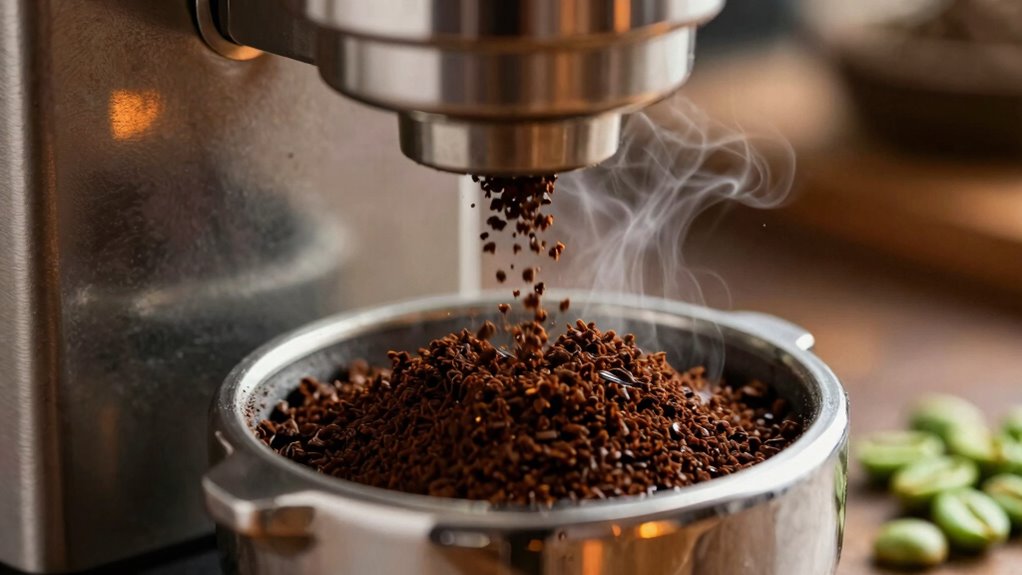
The right grinder not only sets the stage for your RDT process but also considerably influences flavor extraction. With RDT, you can enhance your coffee’s flavor profile by improving extraction efficiency. This technique helps reduce clumping and static, ensuring uniform particle size and distribution.
- Fine-tuned grind consistency boosts extraction efficiency.
- Enhanced flavor profile emerges from even saturation during brewing.
- The right moisture balance minimizes bitterness and acidity.
- Precision in grinding allows you to highlight specific tasting notes.
Tips for Perfecting Your RDT Technique

Although perfecting your RDT technique might seem challenging, a few key tips can make a significant difference. First, focus on humidity control; maintaining a consistent environment helps keep your coffee grounds static-free. If you’re in a humid area, consider using a dehumidifier or storing your coffee in a sealed container. Next, pay attention to grind size. Different brewing methods require specific grind sizes, so adjust accordingly to optimize your extraction. Experiment with slight adjustments to find what works best for you. Finally, don’t forget to shake your grinder gently while applying the RDT method; this guarantees even distribution of moisture and helps reduce clumping. With these tips, you’ll be well on your way to mastering RDT!
Frequently Asked Questions
Can RDT Be Used With All Types of Coffee Grinders?
Yes, RDT can be used with various grinder types, including blade and burr grinders. It helps reduce static, allowing for better particle size consistency. When you sprinkle a little water on the coffee grounds before grinding, you’ll notice improved flow and less clumping. This technique works well across different grinder types, ensuring you get a more uniform grind, which is essential for brewing delicious coffee. Give it a try and see the difference!
How Does Humidity Affect RDT Effectiveness?
Humidity can be a double-edged sword for RDT effectiveness. When it’s high, moisture can cling to coffee grounds, making them clump together and compromising coffee freshness. You might find that RDT isn’t as effective, as it struggles to break up those clumps. Conversely, in low humidity, RDT shines, enhancing your grind’s uniformity. So, keep an eye on the weather; it directly impacts your brewing experience and the quality of your cup!
Is RDT Suitable for Espresso Grinding?
Yes, RDT is suitable for espresso grinding. By adding a small amount of water to your coffee grounds, you can enhance grind consistency and reduce static. This helps you extract better espresso flavor, yielding a more balanced shot. When you keep your grind uniform, you’ll notice improved crema and overall taste. So, if you’re aiming for exceptional espresso, RDT can be a valuable tool in your grinding process.
Can I Use RDT With Pre-Ground Coffee?
You can use RDT with pre-ground coffee, but the benefits might not be as pronounced. RDT helps reduce static and clumping, making it more effective with freshly ground beans. When using pre-ground methods, you might notice some improvement in distribution and flow, but the overall impact will be limited. If you’re aiming for peak flavor, consider grinding your beans fresh to fully enjoy RDT’s advantages.
What Is the Ideal Moisture Level for RDT?
The ideal moisture level for RDT is around 30-50% relative humidity. To achieve this, you can use moisture measurement techniques like hygrometers or moisture meters. These tools help you guarantee your environment stays within the best humidity range, promoting better coffee grinding. If the humidity is too low, you might not see the benefits of RDT, while too high can lead to clumping. Adjust accordingly for the best results!
Conclusion
By embracing the Ross Droplet Technique, you’re not just grinding coffee; you’re crafting a symphony of flavor. Picture your beans dancing free, unburdened by static, as they release their rich essence. With each grind, you’re weaving a tapestry of aroma and taste, transforming your morning ritual into an art form. So, grab your grinder and let the magic unfold, turning ordinary coffee moments into extraordinary experiences that awaken your senses and ignite your passion for brewing.
Halloween Picks
halloween
As an affiliate, we earn on qualifying purchases.