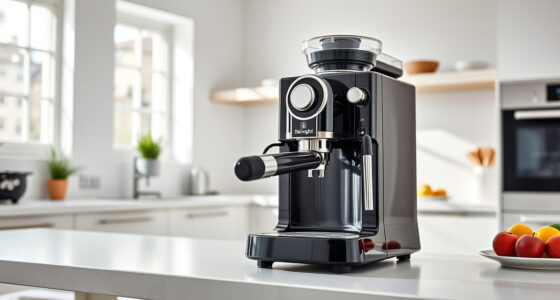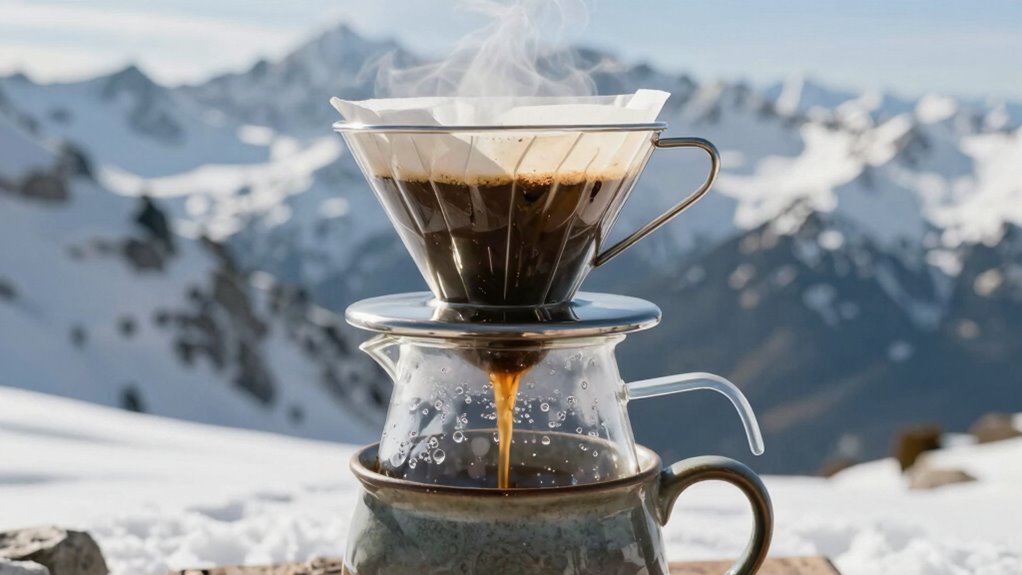

At high altitude, water boils at lower temperatures, which affects how your coffee extracts flavors. Simply increasing water temperature doesn’t always fix the issue, so you’ll need to adjust grind size, brew time, and coffee ratio. Coarser grind and longer brew times often help counteract weaker extraction. Using the right equipment and fresh beans also improve results. If you keep these tips in mind, you’ll master brewing in mountain conditions—more details await if you keep exploring.

Get coffee and tea gear delivered free — and shop member deals
- Fast, free delivery on millions of items
- Access to Prime Big Deal Days deals on October 6–7
- Prime Video, Amazon Music and more included
Key Takeaways
- Lower atmospheric pressure at high altitude reduces water’s boiling point, affecting extraction and flavor development.
- Adjust grind size, brew time, and coffee dose to compensate for altered extraction efficiency.
- Maintaining consistent water temperature is crucial, as lower boiling points impact heat transfer.
- Using fresh, high-quality beans and proper storage enhances flavor and extraction at altitude.
- Visual cues and process monitoring help optimize brewing despite environmental challenges.
As an affiliate, we earn on qualifying purchases.
How Does Altitude Change the Boiling Point of Coffee?

Have you ever wondered why your coffee takes longer to brew at higher altitudes? The answer lies in altitude effects on the boiling point. As you ascend, atmospheric pressure drops, which lowers the boiling point of water. Instead of boiling at 212°F (100°C), water at high altitudes boils at a lower temperature—sometimes as low as 198°F (92°C). This change impacts how your coffee brews, as less heat is transferred during extraction. You might notice your coffee isn’t as hot or flavorful as at sea level. The lower boiling point means water can’t reach the same temperature, affecting how thoroughly coffee grounds release their flavors. Understanding this helps you adjust your brewing process for better results at high elevations. Additionally, the choice of coffee beans can also influence flavor extraction and overall brew quality.
digital coffee brewing thermometer
As an affiliate, we earn on qualifying purchases.
As an affiliate, we earn on qualifying purchases.
Why Water Temperature Alone Isn’t Enough at High Altitude
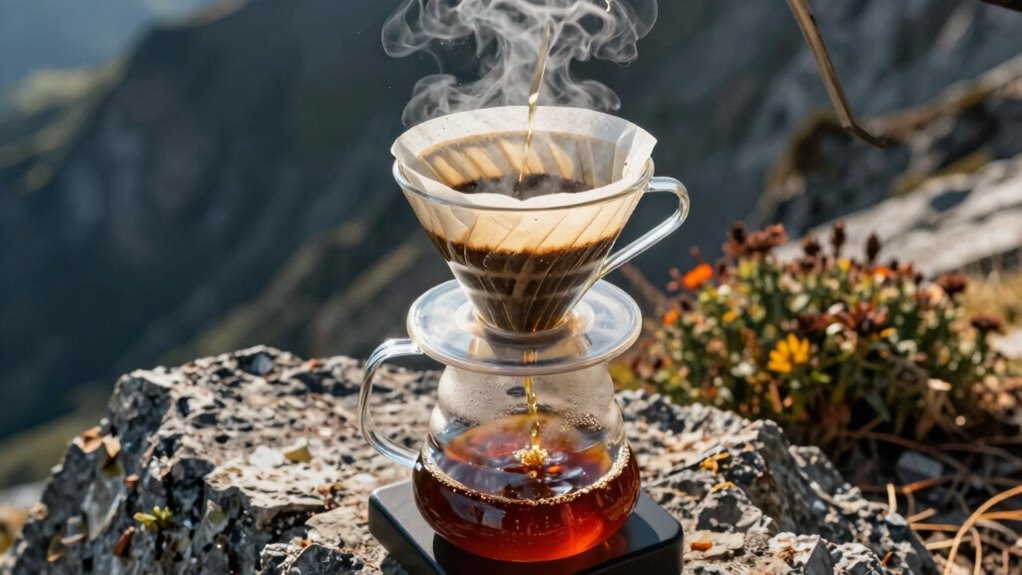
At high altitudes, water boils at lower temperatures, so simply adjusting the heat isn’t enough to optimize brewing. You also need to take into account how altitude affects extraction, as the lower boiling point can alter flavor and strength. Understanding these factors helps you make better coffee, regardless of the elevation. Additionally, maintaining requirements traceability throughout your brewing process can enhance the consistency and quality of your coffee. The impact of cutting-edge technology on brewing methods can also provide insights into achieving the best possible flavor profile. Moreover, exploring digital concepts can lead to innovative approaches in coffee brewing that adapt to the unique challenges of high-altitude environments. This is particularly relevant as digital publishing continues to influence how we share knowledge about brewing techniques. For instance, utilizing accessibility features can help ensure that brewing guides are usable by everyone, including those with different abilities.
Boiling Point Changes
Boiling Point Changes (Why Water Temperature Alone Isn’t Enough at High Altitude)
Why does boiling water at high altitude pose a challenge for coffee brewing? As you rise above sea level, the boiling point drops because of lower atmospheric pressure, meaning water boils below 212°F. This affects extraction, making it harder to reach ideal brewing temperatures. At high altitudes, lower oxygen levels can cause altitude sickness, which impacts your overall energy and focus during brewing. Additionally, maintaining proper brewing techniques becomes crucial for achieving a balanced cup. Visualize this temperature shift with the following:
| Altitude (feet) | Boiling Point (°F) | Effect on Coffee |
|---|---|---|
| 0 | 212 | Standard brewing |
| 5,000 | 203 | Faster boiling |
| 10,000 | 194 | Longer brew time |
| 15,000 | 185 | Reduced flavor extraction |
Understanding boiling point changes ensures you adapt brewing techniques effectively. Additionally, paying attention to color accuracy in your brewing process can enhance your overall coffee experience.
Altitude’s Impact on Extraction
While adjusting water temperature is crucial, relying solely on heat isn’t enough to guarantee ideal extraction at high altitudes. Altitude effects influence how water interacts with coffee grounds, often leading to under-extraction if you don’t adapt your approach. The flavor profile can become dull or overly acidic because lower boiling points at high elevations mean water doesn’t reach maximum temperatures for dissolving solubles. Simply increasing temperature may not fully compensate for these changes, as extraction also depends on factors like grind size and brew time. To enhance flavor, you need to tweak multiple variables rather than relying on temperature alone. Understanding altitude’s impact helps you craft a balanced, nuanced cup despite the environmental challenges. Additionally, stain removal techniques can help maintain your coffee brewing equipment, ensuring a clean and optimal brewing process. Moreover, urban traffic confidence can enhance your overall brewing experience by ensuring you can safely transport your gear to higher elevations. For those interested in sustainability, using a bike generator could provide a unique way to power your brewing devices with renewable energy.
As an affiliate, we earn on qualifying purchases.
What’s the Best Grind Size for High-Altitude Coffee?
Sure! Here’s the revised content:
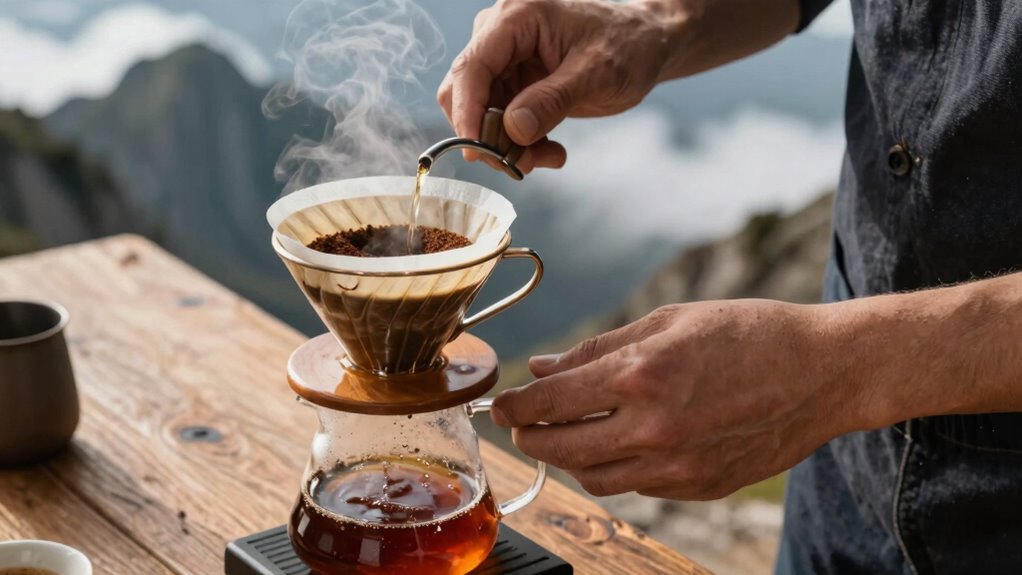
High altitude can profoundly influence how coffee grounds interact with water during brewing, making grind size a critical factor. At higher elevations, water boils at lower temperatures, which can slow extraction. To compensate, you’ll want a slightly coarser grind, especially for methods like pour-over or French press. A coarser grind allows water to flow more freely, ensuring proper extraction and preserving the coffee’s flavor nuances. Keep in mind that bean origin affects ideal grind size; lighter roasts and beans from different regions may respond differently. Additionally, incorporating outdoor ovens into your brewing setup can enhance the overall experience by allowing you to prepare complementary snacks while enjoying your coffee. Moreover, understanding Gold IRAs can provide financial insights that may complement your coffee experience through smart investment practices. Adjusting grind size helps maximize the coffee’s flavor profile despite altitude challenges. Additionally, maintaining indoor air quality is essential, as it can impact the overall freshness and taste of your brewed coffee. Always consider seasonal coffee trends to better understand how different beans might perform throughout the year. Experimenting with a slightly coarser grind at high elevation can lead to a more balanced, vibrant cup that highlights the unique characteristics of your beans. Additionally, using tools to detect passive voice in your writing can enhance clarity and engagement when sharing your brewing experiences.
adjustable coffee pour-over kettle
As an affiliate, we earn on qualifying purchases.
As an affiliate, we earn on qualifying purchases.
Does Brew Time Need Adjustment in Mountain Regions?

Adjusting brew time is often necessary when making coffee in mountain regions because lower boiling points and altered water dynamics can affect extraction. If you don’t modify your brew time, the coffee may be under-extracted, leading to weak flavor, or over-extracted, resulting in bitterness. Longer brew times can help compensate for reduced extraction efficiency caused by high altitude. Keep in mind, altitude sickness can also influence your perception of coffee flavor, making it seem dull or less vibrant. To get the best taste, experiment with slight adjustments to your brewing duration, aiming for a balanced extraction. This helps ensure your coffee retains its intended flavor profile despite the challenges posed by high elevation. Properly adjusted brew time makes a noticeable difference in flavor quality in mountain regions. Additionally, understanding standardized field programs can provide insights into optimizing brewing practices for unique environments like high altitudes.
Which Brewing Methods Are Most Reliable at High Elevation?
Sure! Here’s the revised content with the requested adjustments:
—
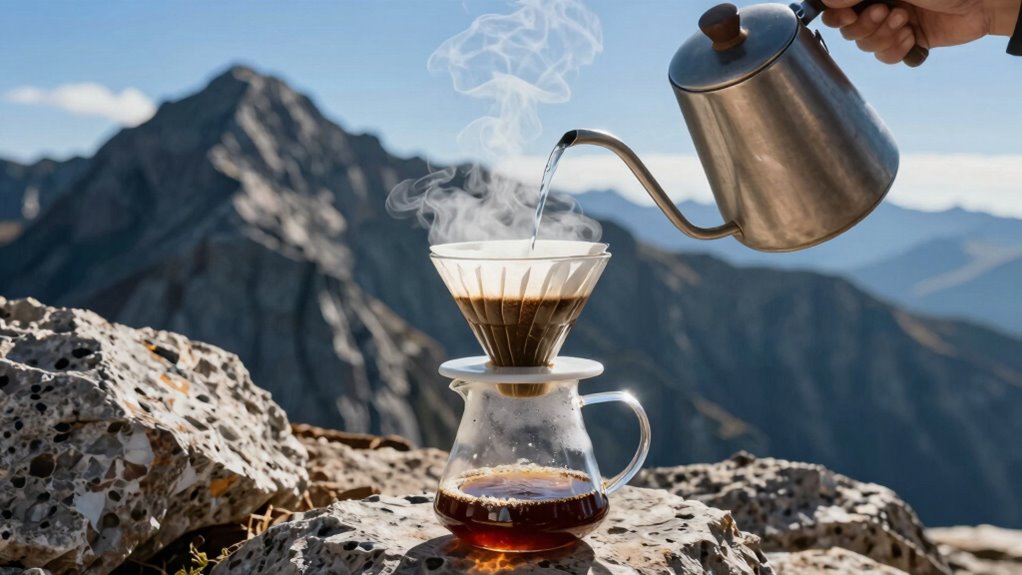
Choosing the right brewing method is essential for achieving consistent coffee flavor at high elevations, where environmental factors can disrupt standard extraction processes. Methods like AeroPress, pour-over, or French press are often more reliable because they allow better control over variables like water temperature and brew time, which are affected by altitude effects. These techniques help compensate for the thinner air and lower boiling points, ensuring proper extraction. Additionally, understanding field recording techniques can enhance your sensory experience by helping you appreciate the ambient sounds of the brewing environment. Moreover, using robot mowers in multi-unit setups can provide a consistent approach to lawn care, much like the consistency you seek in brewing coffee. Avoid methods that rely heavily on precise pressure or temperature control, as they may become less predictable at high altitude. The goal is to select brewing techniques that offer flexibility and consistency despite environmental changes, helping you preserve the nuanced coffee flavor you seek, regardless of elevation. Additionally, understanding how air pressure influences brewing can further enhance your high-altitude coffee experience. Regional flavors play a significant role in how beans are perceived and enjoyed, adding complexity to your brewing journey. Dogs, like the Border Collies, thrive on mental challenges, which can also apply to coffee brewing by encouraging experimentation with different methods.
—
Let me know if you need any more changes!
How Coffee Freshness and Roast Level Impact High-Altitude Brewing

The freshness of your coffee beans and their roast level considerably influence your brew’s success at higher elevations. Fresh beans deliver a vibrant coffee aroma, enhancing your overall experience. Proper bean storage is vital; keep beans airtight and away from light to preserve their freshness longer. Additionally, proper gear can enhance your brewing experience in challenging conditions. Understanding the importance of bean weight can also influence your brewing technique at high altitudes.
Here are three key points to keep in mind:
- Freshness Matters: Use beans within a few weeks of roasting for optimal flavor and aroma.
- Roast Level Impact: Darker roasts can handle higher extraction variability, but lighter roasts preserve more complex flavors at altitude.
- Bean Storage: Store beans properly to prevent staling, which diminishes aroma and flavor, especially when brewing at high altitude where extraction is affected.
Common Mistakes When Brewing Coffee in Thin Air
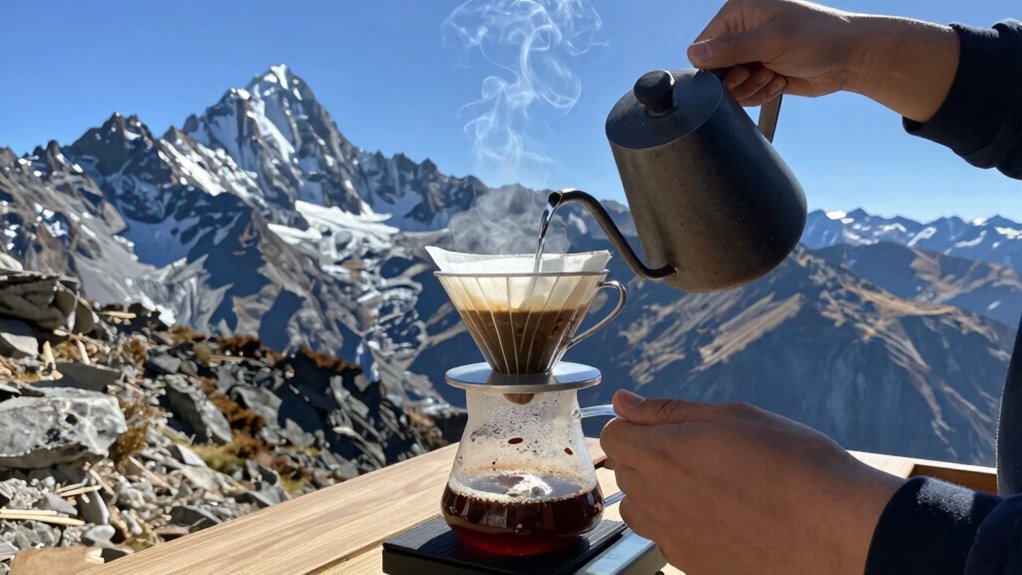
When brewing coffee at high altitude, using the wrong grind size can lead to over- or under-extraction. Ignoring water temperature or brew time also causes weak or bitter flavors. Paying attention to these details helps you avoid common mistakes and get a better cup. Additionally, understanding auditory feedback techniques can improve your concentration while brewing in challenging conditions.
Using Incorrect Grind Size
Brewing coffee at high altitude often leads to mistakes, and one of the most common is using the wrong grind size. An incorrect grind affects extraction, making your coffee either underwhelming or bitter. When particle size isn’t suited to your brewing method, it can cause issues like over-extraction or under-extraction.
Here are 3 key points to watch for:
- Using too fine a grind results in slow extraction, leaving your coffee bitter.
- A too coarse grind speeds up brewing, causing weak, underdeveloped flavors.
- Not adjusting grind size for altitude’s lower pressure hampers proper extraction.
Choosing the correct particle size is essential for balanced flavor. Pay attention to your grind to improve your high-altitude brewing results.
Ignoring Water Temperature
Adjusting your grind size is just one part of optimizing your coffee at high altitude; water temperature plays an equally essential role. Ignoring the importance of brewing temperature can lead to under-extracted or over-extracted coffee, affecting flavor and aroma. At high elevations, water chemistry changes due to lower boiling points, making it critical to tweak your brewing temperature accordingly. Using water that’s too cool won’t extract enough flavor, while overly hot water can over-extract bitter compounds. Maintaining the right temperature ensures proper extraction of oils and solubles, highlighting the coffee’s nuanced flavors. Don’t overlook the impact of altitude on water chemistry—adjust your brewing temperature to compensate for these changes to achieve a balanced, flavorful cup.
Overlooking Brew Time
Since altitude affects the rate at which coffee extracts, overlooking brew time can quickly lead to over- or under-extraction, spoiling your cup’s flavor. At high elevations, the overlooked brew time or ignored grind size can cause drastic differences in taste.
Here are three common mistakes to avoid:
- Rushing the brew process, resulting in under-extraction and weak flavor.
- Over-brewing due to too fine an grind size, leading to bitterness.
- Ignoring adjustments needed for brew time based on altitude, which can cause over-extraction and a harsh taste.
Always monitor your brew time carefully, especially at high altitude, and adjust your grind size to ensure proper extraction. Proper timing prevents over- or under-extraction, delivering a balanced, flavorful cup.
How to Adjust Coffee Ratios for Better Results Up High
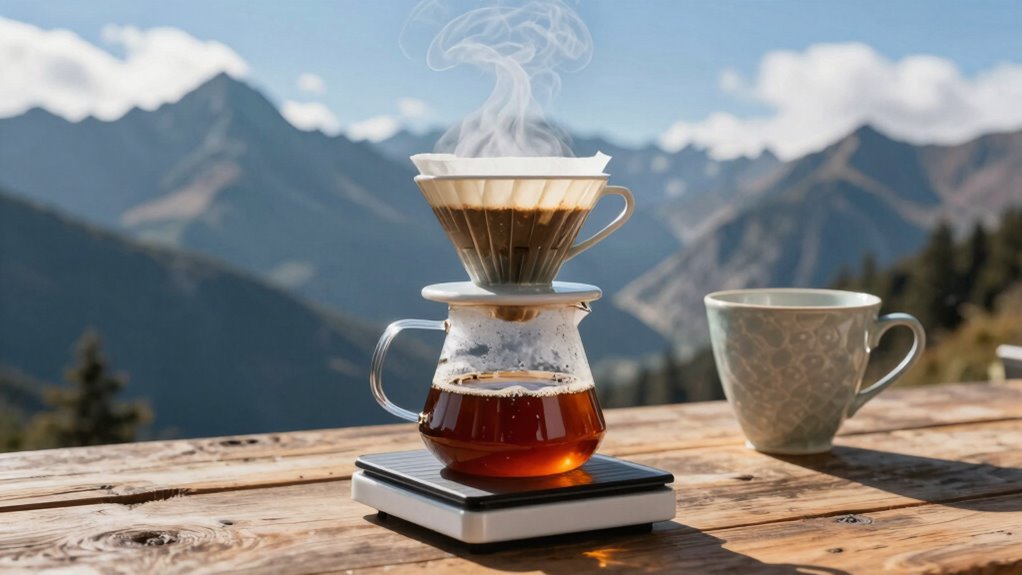
When you’re brewing coffee at high altitude, the lower atmospheric pressure means water boils at a lower temperature, which can lead to under-extraction and a weaker flavor. To counteract this, you should adjust your coffee-to-water ratio by using more coffee grounds. This compensates for the faster extraction process caused by the reduced boiling point. Keep in mind that different coffee bean origins and their flavor profiles respond uniquely; some may need a slightly stronger ratio to develop full character. Experiment with increasing your coffee dose by 5-10% and consider a slightly longer brew time. These adjustments help extract the desirable flavors, ensuring your brew maintains the richness and complexity typical of the coffee’s origin.
Do You Need Special Equipment for High-Altitude Coffee?
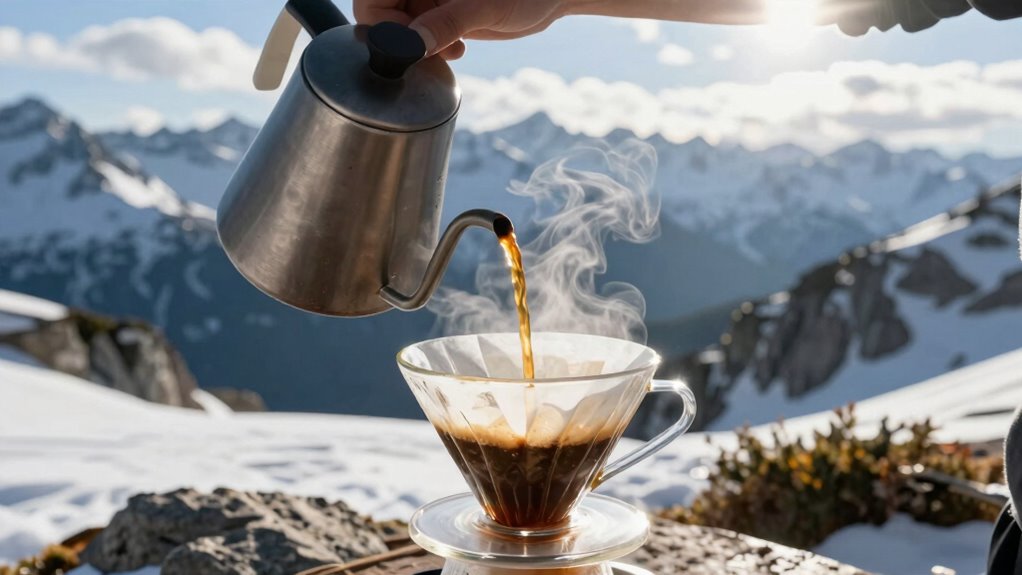
You don’t necessarily need special equipment to brew great coffee at high altitude, but a few adjustments can make a significant difference. While standard gear works fine, some tools can improve consistency and extraction. For example:
- Altitude sensors help you monitor environmental conditions and fine-tune brewing variables.
- Precision scales ensure accurate measurements, vital when water boils at lower temperatures.
- Temperature-controlled kettles maintain stable water temperatures, compensating for altitude-related boil point changes.
These tools aren’t mandatory but can simplify adjustments and improve your coffee quality. Generally, you can brew with regular equipment, but investing in some specialized gear or sensors enhances control and consistency, especially when altitude impacts brewing parameters.
Troubleshooting Weak or Over-Extracted Coffee at High Altitude

Adjusting your brewing process for high altitude can help prevent common issues like weak or over-extracted coffee. To boost flavor enhancement, consider tweaking your grind size—finer for weak brews, coarser to avoid over-extraction. Keep an eye on brew time; shorter times can prevent over-extraction, while longer ones help extract more flavor from your beans. Bean selection also matters—choose high-quality, fresh beans with a balanced roast to improve flavor at high altitude. Using fresh, well-stored beans enhances overall taste and can compensate for altitude-related extraction challenges. Experiment with these adjustments to find the right balance, ensuring your coffee isn’t weak or bitter. Proper bean selection and process tweaks will help you craft a richer, more satisfying brew despite the altitude.
Frequently Asked Questions
How Does Atmospheric Pressure at High Altitude Affect Coffee Extraction?
Atmospheric pressure at high altitude decreases, leading to pressure variations that affect coffee extraction. You’ll notice that lower pressure causes water to boil at a lower temperature, which means your coffee may taste under-extracted or weak. To counteract altitude effects, you might need to adjust grind size or brew time. Understanding pressure variations helps you optimize your brewing process and get a richer, more balanced flavor despite altitude challenges.
Are There Specific Coffee Bean Types Better Suited for High-Altitude Brewing?
You should choose coffee bean varieties specifically grown at high altitudes, as they’re naturally suited for the thinner air and lower pressure. These beans, often shade-grown and altitude-specific roasted, develop complex flavors that shine in high-altitude brewing. Think of it as finding the perfect puzzle piece—certain beans thrive under these conditions, revealing a richer, more vibrant cup. Don’t settle—your ideal brew depends on the right bean choice!
Can Altitude Impact the Longevity of Coffee Equipment?
Altitude can impact the longevity of your coffee equipment by affecting its brewing durability. Higher altitudes may cause equipment parts to wear faster due to thinner air and temperature fluctuations, which can stress components. You should choose altitude equipment designed for such conditions and perform regular maintenance to guarantee consistent performance. Properly maintained equipment resists wear better, helping you enjoy quality coffee even at high elevations.
What Adjustments Are Needed for Cold Brew at High Elevations?
At high elevations, you should extend your cold brew steeping time to reveal the full flavor potential. The thinner air influences extraction, so choosing beans with a richer, more robust profile becomes essential. Don’t overlook altitude flavor—it can make or break your brew. Adjust your bean selection accordingly, opting for darker roasts. With these tweaks, your cold brew will maintain its smoothness and depth, even at those lofty heights.
Does Humidity Influence Coffee Brewing Success in Mountain Regions?
Humidity levels do influence your coffee brewing success in mountain regions. High humidity can alter coffee flavor profiles by affecting bean moisture content and extraction during brewing, potentially leading to a muddier or less vibrant cup. Low humidity, on the other hand, might cause beans to dry out, impacting grind consistency and extraction. Adjusting your brewing variables, like grind size and brew time, helps you counteract humidity’s effects for a better tasting coffee.
Conclusion
Brewing great coffee at high altitude isn’t just about grinding finer or adjusting times—it’s about understanding how elevation impacts every step. Did you know that water boils at about 90°C (194°F) on Mount Everest, compared to 100°C (212°F) at sea level? By tweaking your approach, you can enjoy rich, balanced coffee even in the mountains. With a few adjustments, high-altitude brewing becomes not just possible, but also rewarding.
Fall Picks
fall essentials
As an affiliate, we earn on qualifying purchases.