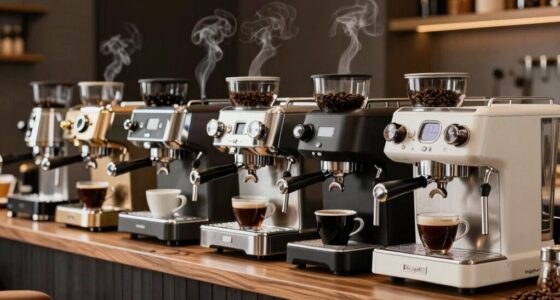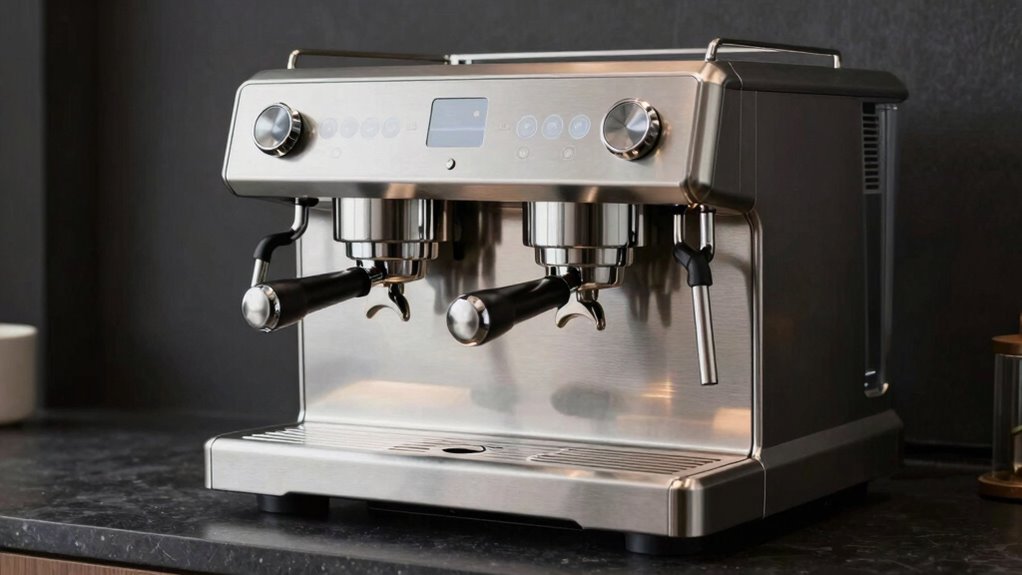

The quietest dual boiler espresso machine is not determined by boiler count alone: pumps, grinders, vibration, and counter setup all shape the noise you hear. My best overall pick is the Breville BES920XL Dual Boiler, which pairs separate brew and steam systems with hands-on control; the Diletta Alto is a strong alternative for buyers who want a focused dual-boiler setup, while the Breville Oracle suits people who value a more automated workflow. The main tradeoff is between quiet operation and convenience: integrated grinders and automatic features can save steps but add noise and complexity. Read on for the full comparison, buying advice, and picks by buyer type.

Get coffee and tea gear delivered free with Prime
- Fast, free delivery on millions of items
- Prime Video, Amazon Music and more included
- Member-only deals all year
Complete the kit


Key Takeaways
- The BES920XL leads this lineup for buyers prioritizing dual-boiler control; its separate brew and steam systems matter more to this comparison than bundled accessories or built-in automation.
- The Diletta Alto is the focused alternative for buyers who want a dual boiler with PID control, a shot timer, and adjustable OPV, without choosing a machine around an integrated grinder.
- Integrated grinders bring convenience, not guaranteed quiet. The Dynamic Duo, Oracle, Meraki, Chefman, and Gevi reduce separate equipment needs, but grinder noise remains part of the morning routine.
- Not every model here is a true dual boiler. The Barista Express is a single-boiler machine, so it belongs as a workflow and footprint comparison rather than a like-for-like dual-boiler pick.
- Noise depends on the full setup. Pump type, grinder use, countertop resonance, and maintenance can affect perceived sound as much as the machine’s boiler configuration.
| Breville Dynamic Duo Espresso Machine Bundle with Dual Boiler and Smart Grinder Pro |  | Best All-in-One Bundle | Boiler system: Dual boiler with PID temperature control | Grinder: Programmable precision conical burr grinder | Grinder settings: 60 | VIEW ON AMAZON | See Our Full Breakdown |
| Diletta Alto Espresso Machine | Dual Boiler | PID | Shot Timer | Adjustable OPV (White) |  | Best for Pressure and Shot Control | Boiler system: Dual boiler | Temperature control: PID | Pressure adjustment: Adjustable OPV | VIEW ON AMAZON | See Our Full Breakdown |
| Breville BES920XL Dual Boiler Espresso Machine, Brushed Stainless Steel |  | Best for Hands-On Brewing | Boiler configuration: Dual stainless steel boilers | Temperature control: PID, ±2°F | Portafilter: 58 mm | VIEW ON AMAZON | See Our Full Breakdown |
| Breville Oracle Fully Automatic Espresso Machine with Grinder, Brushed Stainless Steel |  | Best for Low-Effort Milk Drinks | Machine type: Fully automatic espresso machine | Boiler system: Dual boiler | Grinder: Integrated precision conical burr grinder | VIEW ON AMAZON | See Our Full Breakdown |
| Chefman Crema Deluxe Semi-Automatic Espresso Machine with Grinder and Dual Boiler |  | Best for a Built-In Grinder and Large Reservoir | Boiler system: Dual boiler | Grinder: Conical burr | Grinder settings: 30 | VIEW ON AMAZON | See Our Full Breakdown |
| Meraki Dual Boiler Espresso Machine with Grinder and Built-In Scales |  | Best Integrated Weighing Setup | Operation: Semi-automatic | Boiler capacities: 350 ml brew boiler; 550 ml steam boiler | Grinder: 45 marked settings with micro-adjustment | VIEW ON AMAZON | See Our Full Breakdown |
| Breville BES870XL Barista Express Espresso Machine, Brushed Stainless Steel |  | Best Compact Alternative for Smaller Kitchens | Machine type: Home espresso machine with built-in conical burr grinder | Temperature control: Digital temperature control | Bean hopper: 1/2 lb | VIEW ON AMAZON | See Our Full Breakdown |
| Gevi Dual Boiler Espresso Machine with Built-in Burr Grinder |  | Best for Grinder-and-Boiler Value Features | Operation: Semi-automatic | Coffee input: Ground coffee or whole beans | Grinder: Built-in burr grinder with adjustable gears, 0–30 | VIEW ON AMAZON | See Our Full Breakdown |
| Tuni E2 Gen3 Dual Boiler Espresso Machine with Super+ Steam Power, Ivory |  | Best for Milk-Drink Variety | Operation: Semi-automatic | Boiler system: Dual boilers | Brew head: 58 mm all-metal | VIEW ON AMAZON | See Our Full Breakdown |
| quietest dual boiler espresso machine | Portafilter | Dimensions | Weight | Boiler system |
|---|---|---|---|---|
| Breville Dynamic Duo Espresso | 58 mm stainless steel; holds a 22 g dose | 14.7 × 14.8 × 14.7 in (D × W × H) | 20.41 kg | Dual boiler with PID temperature control |
| Diletta Alto Espresso Machine | 58 mm | 19.75 × 12 × 14.5 in (D × W × H) | 40 pounds | Dual boiler |
| Breville BES920XL Dual Boiler | 58 mm | 14.7 × 14.8 × 14.7 in | 28.4 lbs | — |
| Breville Oracle Fully Automati | — | 14.7 × 16.1 × 17.8 in (D × W × H) | 35.5 lb | Dual boiler |
| Chefman Crema Deluxe Semi-Auto | 58 mm | 13.66 × 12.68 × 13.07 in (D × W × H) | 29.5 pounds | Dual boiler |
| Meraki Dual Boiler Espresso Ma | 58 mm, E61-compatible | — | — | — |
| Breville BES870XL Barista Expr | 54 mm stainless steel | — | — | — |
| Gevi Dual Boiler Espresso Mach | 58 mm | 18.85 × 15.66 × 18.85 inches | 15 lb | — |
| Tuni E2 Gen3 Dual Boiler Espre | — | — | — | Dual boilers |
More Details on Our Top Picks
Breville Dynamic Duo Espresso Machine Bundle with Dual Boiler and Smart Grinder Pro
For buyers seeking a quieter workflow through fewer separate appliances, the Dynamic Duo bundles a dual-boiler machine with a programmable grinder. Its separate boilers let you brew and steam at the same time, while PID control and a heated group head support steady brewing temperature. The grinder’s 60 settings and programmable dosing give it more adjustment than the Chefman Crema Deluxe’s 30-setting grinder, which may help when dialing in different beans. But this is still a semi-automatic setup: I’d choose it for hands-on espresso making, not push-button convenience. The supplied information doesn’t specify noise levels, so I can’t claim it runs quieter than the other machines. Its compact listed capacity and substantial weight also temper the appeal of an otherwise tidy bundle.
Pros:- Separate boilers allow espresso extraction and milk steaming at the same time.
- PID temperature control and a heated group head support stable brewing.
- Built-in grinder has 60 settings and programmable dosing.
- Includes a 58 mm portafilter and both single- and dual-wall filters.
Cons:- Semi-automatic operation requires the user to manage brewing.
- The listed 200 ml capacity may limit how much can be prepared at once.
- No operating-noise specification is provided, making quietness hard to compare.
Best for: Home espresso drinkers who want a matching dual-boiler machine and adjustable built-in grinder, and are comfortable controlling each shot.
Not ideal for: Buyers who want automatic drink preparation, minimal hands-on work, or a documented low-noise machine; noise data isn’t provided.
- Boiler system:Dual boiler with PID temperature control
- Grinder:Programmable precision conical burr grinder
- Grinder settings:60
- Portafilter:58 mm stainless steel; holds a 22 g dose
- Extraction pressure:9 bar
- Operation mode:Semi-automatic
- Dimensions:14.7 × 14.8 × 14.7 in (D × W × H)
- Weight:20.41 kg
Our verdict“Choose the Dynamic Duo if you want an adjustable grinder and dual-boiler workflow in one bundle, but not if verified low noise is your main requirement.”
Diletta Alto Espresso Machine | Dual Boiler | PID | Shot Timer | Adjustable OPV (White)
The Diletta Alto prioritizes manual control over bundled convenience: it has dual boilers, PID temperature adjustment, a shot timer, and an adjustable OPV for tailoring brew pressure. Those controls give experienced home baristas more room to tune extraction than the more automation-focused Breville Oracle, which grinds, tamps, and textures milk with less intervention. The Alto also lists a 3-liter capacity, a useful fit for repeated drinks without frequent refills. Its tradeoff is a slower, more deliberate routine: the stated warm-up time is about 22 minutes, and the machine is both wide and heavy. For a roundup focused on quietness, I can’t rank it above alternatives on sound alone because no operating-noise figure is supplied.
Pros:- Dual boilers support brewing and steaming at the same time.
- PID control, shot timer, and adjustable OPV offer meaningful brewing adjustments.
- 3-liter capacity reduces the need for frequent refills.
- 58 mm portafilter and pre-infusion support a traditional manual workflow.
Cons:- Approximately 22-minute warm-up time doesn’t suit quick, spontaneous use.
- At 19.75 inches deep and 40 pounds, it needs substantial counter space.
- No operating-noise specification is provided.
Best for: Experienced home baristas who want manual pressure adjustment, shot timing, and separate brew and steam boilers.
Not ideal for: People who want quick, automated drinks, have limited counter space, or need published evidence of low operating noise.
- Boiler system:Dual boiler
- Temperature control:PID
- Pressure adjustment:Adjustable OPV
- Shot timer:Yes
- Warm-up time:22 minutes
- Portafilter:58 mm
- Capacity:3 liters
- Dimensions:19.75 × 12 × 14.5 in (D × W × H)
- Weight:40 pounds
Our verdict“Pick the Alto if pressure and shot control matter more than speed or automation, and you have room for a large machine.”
Breville BES920XL Dual Boiler Espresso Machine, Brushed Stainless Steel
The BES920XL is the straightforward machine-first choice here: it offers dual stainless steel boilers, PID control rated to ±2°F, and manual or automatic shot options without adding a built-in grinder. That separation suits buyers who already own a grinder or want to choose one independently. Compared with the Breville Dynamic Duo, it gives up the bundled 60-setting grinder; compared with the Oracle, it asks the user to handle more of the preparation and milk work. Its manual steam wand is a better match for people who want to shape microfoam themselves. The 84-ounce tank helps with repeated drinks, but the large footprint and 28.4-pound weight make it less suitable for a small or frequently rearranged counter. No noise measurement is supplied, so quiet operation can’t be confirmed.
Pros:- Dual stainless steel boilers allow simultaneous extraction and steaming.
- PID control is specified within ±2°F.
- Manual steam wand supports hands-on milk texturing.
- 84-ounce water tank and included dosing and cleaning tools support regular use.
Cons:- Requires a separate grinder and ground coffee preparation.
- The 14.7 × 14.8-inch footprint and 28.4-pound weight take up counter space.
- No operating-noise specification is provided.
Best for: Home baristas who already have a grinder and want a dual-boiler machine with manual steaming and programmable shot options.
Not ideal for: Buyers who need an integrated grinder, compact dimensions, or sound-level data before choosing a machine.
- Boiler configuration:Dual stainless steel boilers
- Temperature control:PID, ±2°F
- Portafilter:58 mm
- Coffee dose:19–22 g
- Water tank capacity:84 oz
- Power:1700 W
- Operation modes:Manual or automatic
- Dimensions:14.7 × 14.8 × 14.7 in
- Weight:28.4 lbs
Our verdict“Choose the BES920XL if you want a capable dual-boiler base for your own grinder and brewing routine, rather than an all-in-one setup.”
Breville Oracle Fully Automatic Espresso Machine with Grinder, Brushed Stainless Steel
The Oracle reduces the hands-on steps more than any other machine in this group: its grinder grinds, doses, and tamps, while the programmable steam wand textures milk and cleans itself. Dual boilers still allow brewing and steaming at once, so convenience doesn’t come at the expense of parallel drink preparation. Compared with the BES920XL, the Oracle is far more automated; compared with the Dynamic Duo, it trades the latter’s 60 grinder settings for an integrated workflow and automatic tamping. That makes it a strong fit for households that value repeatable drinks over manual technique. The cost of that ease is a large, heavy footprint, plus less direct control over preparation. The product data gives no sound measurement, so its noise performance remains unverified.
Pros:- Dual boilers support simultaneous espresso extraction and steaming.
- Integrated grinder grinds, doses, and tamps coffee.
- Programmable automatic milk texturing includes a self-cleaning steam wand.
- One-touch Americano option dispenses espresso and hot water separately.
Cons:- At 35.5 pounds, it is heavy to move.
- Its 14.7 × 16.1 × 17.8-inch dimensions need substantial counter space.
- No operating-noise specification is provided.
Best for: Households making frequent espresso-and-milk drinks who want integrated grinding, tamping, and automatic milk texturing.
Not ideal for: Manual-focused baristas, small kitchens, or buyers who require verified noise-level comparisons.
- Machine type:Fully automatic espresso machine
- Boiler system:Dual boiler
- Grinder:Integrated precision conical burr grinder
- Coffee dose:22 g
- Bean hopper capacity:1/2 lb
- Water tank capacity:84 oz
- Milk texturing:Automatic and programmable; self-cleaning steam wand
- Dimensions:14.7 × 16.1 × 17.8 in (D × W × H)
- Weight:35.5 lb
Our verdict“Choose the Oracle for a highly automated dual-boiler milk-drink routine, not for compactness or hands-on control.”
Chefman Crema Deluxe Semi-Automatic Espresso Machine with Grinder and Dual Boiler
The Crema Deluxe combines a dual boiler, grinder, and removable 3-liter reservoir in a semi-automatic package, making it a practical alternative for buyers who want fewer separate pieces of equipment. Its 30 grinder settings offer useful adjustment, though fewer than the Breville Dynamic Duo’s 60; that difference matters more to users who frequently switch beans or fine-tune grind size. The 58 mm portafilter and included single- and double-shot baskets support familiar espresso routines, while separate boilers make simultaneous brewing and steaming possible. At 29.5 pounds, it is not an easy machine to move, and the supplied information doesn’t include a warm-up time or sound measurement. I’d shortlist it for its integrated setup and reservoir capacity, but not on any claim of quieter operation.
Pros:- Dual boilers allow espresso brewing and milk frothing at the same time.
- Built-in conical burr grinder has 30 settings and feeds into the portafilter.
- Removable 3-liter reservoir supports multiple drinks between refills.
- Includes a 58 mm portafilter, steam wand, milk pitcher, and shot baskets.
Cons:- At 29.5 pounds, it may be cumbersome to move.
- Its 30 grinder settings offer less adjustment than the Breville Dynamic Duo’s 60.
- No operating-noise specification is provided.
Best for: Home users who want an integrated grinder, dual boilers, and a large removable reservoir for making multiple drinks.
Not ideal for: Buyers who need a light machine to move, extensive grind adjustment, or published evidence of low noise.
- Boiler system:Dual boiler
- Grinder:Conical burr
- Grinder settings:30
- Pump pressure:15 bar
- Portafilter:58 mm
- Water reservoir:3 liters, removable
- Wattage:1500 W
- Dimensions:13.66 × 12.68 × 13.07 in (D × W × H)
- Weight:29.5 pounds
Our verdict“Choose the Crema Deluxe if you want an integrated grinder and large removable reservoir, but compare its more limited grind range with the Dynamic Duo.”
Meraki Dual Boiler Espresso Machine with Grinder and Built-In Scales
The Meraki earns its place for buyers who want dual-boiler workflow plus built-in measurement, rather than a simpler machine that leaves dosing and yield tracking to separate tools. Its rotary pump is a relevant point for a quiet-focused shortlist, but the supplied product details do not give a sound level, so I would not treat it as proof that this is quieter than the other options. Independent boilers let brewing and steaming happen together; the integrated scales measure dose and yield within 0.2 g, reducing guesswork between shots. Compared with the Gevi Dual Boiler, the Meraki specifies its scale accuracy and 45 grinder settings, making its workflow more explicit. The tradeoff is hands-on semi-automatic preparation, along with a substantial 15 kg build and a 2-liter tank that may call for refills in busy households.
Pros:- Independent brew and steam boilers support simultaneous shot-making and milk texturing.
- Built-in scales measure coffee dose and espresso yield within 0.2 g.
- Integrated grinder offers 45 marked settings with micro-adjustment.
- PID control and a heated grouphead support temperature consistency.
Cons:- No decibel or other measured noise figure is provided, so quietness is difficult to compare directly.
- Semi-automatic operation requires hands-on dosing, preparation, and extraction.
- At 15 kg, it is a substantial machine to move or reposition.
Best for: Home baristas who want simultaneous brewing and steaming, integrated dose-and-yield weighing, and fine grinder adjustment in one machine.
Not ideal for: Buyers who prioritize independently verified low operating noise, lightweight equipment, or push-button espresso with minimal preparation.
- Operation:Semi-automatic
- Boiler capacities:350 ml brew boiler; 550 ml steam boiler
- Grinder:45 marked settings with micro-adjustment
- Scale accuracy:Within 0.2 g
- Pump:Rotary pump; 9 bar
- Portafilter:58 mm, E61-compatible
- Water capacity:2 liters
- Dimensions and weight:14.57 × 14.57 × 16.33 inches; 15 kg
Our verdict“Choose the Meraki if you want dual-boiler speed with integrated weighing and grinder control, but skip it if proven low noise or minimal hands-on work is your priority.”
Breville BES870XL Barista Express Espresso Machine, Brushed Stainless Steel
The Barista Express makes this roundup as a space-conscious alternative, not as a true dual-boiler pick: the supplied specifications do not identify two boilers or independent brew and steam heating. That distinction matters for a quiet-focused comparison because it offers no stated dual-boiler workflow advantage, and the available details give no measured noise level. Its built-in conical burr grinder and PID temperature control combine core espresso steps in one home machine, while the manual steam wand gives users control over milk texture. Against the Meraki Dual Boiler, it gives up simultaneous brewing and steaming, but its 54 mm portafilter and compact-design positioning may suit buyers with less counter room. The learning curve is real, and the 67 oz tank can require refilling; choose it for an integrated setup, not for documented quietness or dual-boiler performance.
Pros:- Built-in conical burr grinder keeps grinding and espresso preparation in one machine.
- Digital temperature control supports more consistent extraction conditions.
- Manual steam wand allows control over milk texture and latte-art practice.
- Compact design is positioned for home use.
Cons:- The supplied product data does not specify dual boilers, unlike the Meraki, Gevi, and Tuni models in this batch.
- Manual extraction and microfoam preparation take practice.
- The 67 oz water tank may need frequent refilling during repeated drink preparation.
Best for: Home espresso newcomers with limited counter space who want a built-in grinder and are willing to learn manual extraction and milk texturing.
Not ideal for: Buyers who specifically need dual boilers for simultaneous brewing and steaming, or who need published noise measurements to compare quiet operation.
- Machine type:Home espresso machine with built-in conical burr grinder
- Temperature control:Digital temperature control
- Bean hopper:1/2 lb
- Water tank:67 oz
- Portafilter:54 mm stainless steel
- Power:1600 W
- Voltage:120 V
- Included accessories:Single and dual wall filter baskets, scoop, tamper, milk jug, cleaning tools, and water filter
Our verdict“Pick the Barista Express for an integrated grinder in a compact home setup, but choose a specified dual-boiler model if simultaneous brewing and steaming are must-haves.”
Gevi Dual Boiler Espresso Machine with Built-in Burr Grinder
The Gevi stands out for bringing a built-in burr grinder and dual-boiler positioning together, with pressure and temperature controls aimed at repeatable home espresso. Its NTC and PID systems are described as supporting temperature regulation, while pre-infusion and adjustable shot volume add control over extraction. Those details make it a more feature-led choice than the Breville Barista Express, whose supplied data does not specify dual boilers; unlike the Meraki, though, the Gevi listing gives no scale accuracy or detailed grinder-step count beyond adjustable gears from 0 to 30. For a quietest-machine roundup, the key limitation is that no noise measurement or pump type is specified. Its 58 mm portafilter and relatively heavy 15 lb body fit a more hands-on setup, but beginners may need time to dial in shots.
Pros:- Dual-boiler design is paired with a built-in burr grinder.
- NTC and PID temperature systems are specified for temperature regulation.
- Pre-infusion and adjustable shot volume provide extraction control.
- 58 mm portafilter supports a familiar, larger-format espresso workflow.
Cons:- No measured noise level or pump type is provided for quietness comparisons.
- Semi-automatic controls and espresso dialing-in may challenge beginners.
- The grinder specification gives an adjustable 0–30 gear range but limited detail about adjustment increments.
Best for: Home baristas seeking a semi-automatic machine with a built-in grinder, stated dual boilers, adjustable shot volume, and pre-infusion.
Not ideal for: Shoppers who need verified low operating noise, simple beginner controls, or a detailed grinder specification before choosing.
- Operation:Semi-automatic
- Coffee input:Ground coffee or whole beans
- Grinder:Built-in burr grinder with adjustable gears, 0–30
- Temperature control:NTC and PID systems
- Features:Pre-infusion, adjustable shot volume, auto shut-off, and cup warmer
- Portafilter:58 mm
- Dimensions:18.85 × 15.66 × 18.85 inches
- Weight:15 lb
Our verdict“Choose the Gevi for a grinder-equipped dual-boiler feature set, but favor the Meraki if detailed grinder adjustments and built-in weighing matter more.”
Tuni E2 Gen3 Dual Boiler Espresso Machine with Super+ Steam Power, Ivory
The Tuni E2 Gen3 is the most compelling pick here for people who value milk-drink capability and hot-and-cold brewing options alongside a dual-boiler design. Its 58 mm all-metal brew head, visible pressure gauge, and PID plus NTC temperature control give the operator useful feedback, while the stated Super+ Steam power targets milk texturing. Compared with the Meraki, it adds hot and cold brewing functions, but the Meraki provides more concrete workflow detail through its rotary pump, grinder settings, and built-in scales. The Tuni listing specifies a 20 bar pump pressure; that figure alone does not establish quieter operation, and no noise measurement or pump type is supplied. Its advanced controls and larger-space needs make it less approachable than the compact-design emphasis of the Barista Express, while buyers should weigh the extra versatility against a more involved setup.
Pros:- Dual boilers are paired with PID and NTC temperature control.
- Super+ Steam is aimed at powerful milk texturing for lattes and cappuccinos.
- Hot and cold brewing modes expand drink options beyond standard espresso.
- Visible pressure gauge and 58 mm all-metal brew head provide clear process feedback and a professional-format interface.
Cons:- No measured noise level or pump type is provided, so quietness cannot be confirmed from the listing.
- Advanced semi-automatic features may add complexity for beginners.
- The listing describes the machine as bulky but provides no dimensions for planning counter fit.
Best for: Experienced home baristas who make espresso and milk drinks, want hot and cold brewing modes, and have room for a feature-rich machine.
Not ideal for: Beginners seeking a simple workflow, buyers with tight counter space, or anyone choosing primarily on verified low noise.
- Operation:Semi-automatic
- Boiler system:Dual boilers
- Brew head:58 mm all-metal
- Temperature control:PID and NTC
- Pump pressure:20 bar
- Brewing modes:Hot and cold brewing
- Power:1500 W
- Material and finish:Stainless steel; matte ivory
Our verdict“Pick the Tuni if milk drinks and hot-or-cold brewing variety matter more than a documented quietness comparison or a beginner-friendly workflow.”

How We Picked
I compared each machine through the specific lens of a quieter home coffee routine, while separating confirmed design features from assumptions about sound. The ranking weighs whether a model is a genuine dual boiler, how much control it offers over brewing and steaming, whether a grinder is built in or bundled, and how much extra workflow noise that setup can introduce. I also considered usability, maintenance demands, versatility, and whether the product’s feature mix fits its likely buyer.
The BES920XL ranks first because it is a dedicated dual-boiler option with independent brew and steam functions, rather than relying on an integrated grinder or automation to make its case. The Diletta Alto follows for its targeted control features; the Dynamic Duo earns a place for pairing the Breville dual boiler with a grinder, with the tradeoff that grinding adds a separate noise source. The Oracle is ranked for convenience, while the Chefman, Meraki, Gevi, and Tuni are differentiated by their integrated features and stated dual-boiler designs. The Barista Express is included as a useful compact, lower-complexity comparison, but its single boiler prevents it from ranking alongside true dual-boiler machines for simultaneous brewing and steaming.
| quietest dual boiler espresso machine | Boiler system | Temperature control |
|---|---|---|
| Breville Dynamic Duo Espresso | Dual boiler with PID temperature control | — |
| Diletta Alto Espresso Machine | Dual boiler | PID |
| Breville BES920XL Dual Boiler | — | PID, ±2°F |
| Breville Oracle Fully Automati | Dual boiler | — |
| Chefman Crema Deluxe Semi-Auto | Dual boiler | — |
| Meraki Dual Boiler Espresso Ma | — | — |
| Breville BES870XL Barista Expr | — | Digital temperature control |
| Gevi Dual Boiler Espresso Mach | — | NTC and PID systems |
| Tuni E2 Gen3 Dual Boiler Espre | Dual boilers | PID and NTC |
Factors to Consider When Choosing Quietest Dual Boiler Espresso Machine
Choosing a quieter setup means looking beyond the word “dual boiler.” I’d first identify which sounds matter most in your kitchen, then weigh workflow, footprint, and upkeep against the benefits of separate brew and steam systems.
Separate machine noise from grinder noise
A grinder can be the loudest part of a home espresso routine, even when the espresso machine itself is restrained. If you already own a grinder you like, a machine without an integrated grinder may let you choose a quieter separate model or grind at a different time. Bundles and all-in-one machines save counter space and simplify setup, but they combine the grinder’s sound with the espresso workflow. Buyers often mistake fewer appliances for less noise; the two are not the same. If early-morning sound is the concern, assess grinder placement and use as carefully as the espresso machine.
Check whether you need two boilers
Dual boilers let a machine brew espresso and produce steam at the same time, which is useful when making milk drinks back to back. That capability does not automatically make a machine quieter or improve every shot. If you mostly drink straight espresso and make one cup at a time, a simpler machine may suit your routine better. A common mistake is paying for simultaneous brewing and steaming without using it. Choose a true dual boiler when speed and separate temperature control matter enough to justify the added size and complexity.
Think about vibration at the counter
Some perceived noise comes from vibration traveling through a countertop, cabinet, or nearby wall. A stable, level surface and a machine with enough clearance from hard surfaces can reduce rattling, though they cannot change the sound of a pump or grinder. Avoid placing a machine against a loose backsplash or on a hollow shelf if noise carries through your kitchen. A mat may help with surface vibration, but it should not block ventilation or make the machine unstable. Check your counter layout before choosing a larger dual-boiler model.
Match automation to the sounds you can tolerate
Automatic dosing, built-in scales, and guided controls can reduce hands-on steps, but those features do not guarantee a quieter cup-making process. An integrated grinder still runs, and automated workflows may involve more mechanical activity than a basic manual setup. If you value fewer decisions, prioritize controls that simplify the tasks you actually find inconvenient. If sound is the priority, a separate grinder and a simpler machine may offer more flexibility. Avoid assuming that a premium or highly automated design will be quieter by default.
Budget for cleaning and service access
Regular cleaning helps prevent residue, scale, and loose parts from contributing to poor performance or distracting rattles. Dual-boiler machines can involve more components and a larger maintenance routine than simpler appliances, so look at how accessible the drip tray, water tank, and cleaning cycle are. Hard water can increase scale buildup, making water treatment and descaling instructions relevant to long-term ownership. A machine that is difficult to maintain may become less pleasant to use even if its sound profile suits your kitchen. Check the maker’s care guidance before deciding that a feature-rich machine is the right fit.
Pay for capability you will use
Extra spending makes sense when it buys a feature tied to your routine, such as simultaneous milk steaming, adjustable brewing controls, or a grinder that fits your available space. It is less compelling when the added functions increase complexity without solving a real problem. Buyers making mostly milk drinks may value workflow speed more than fine-grained shot adjustments, while espresso-focused users may prefer control over built-in convenience. Compare the full equipment setup, including grinder and accessories, rather than judging the machine alone. This keeps a “quietest” shortlist from turning into a feature contest that ignores daily use.
Frequently Asked Questions
Does a dual boiler espresso machine run more quietly than a single-boiler machine?
Not by definition. A dual boiler describes the machine’s heating and brewing arrangement, not its pump or grinder noise. The BES920XL and Diletta Alto are true dual-boiler options in this lineup, while the Barista Express is a single-boiler comparison, but boiler count alone does not establish which one sounds quieter. Pump design, vibration, grinder use, and countertop placement all affect what you hear. Look for reliable noise measurements for the exact model if sound level is your deciding factor.
Which type of machine is the better choice if I make coffee before everyone wakes up?
Start by identifying whether the grinder or the espresso machine itself is the main source of disruption. A machine with a separate grinder gives you the option to choose a quieter grinder or prepare grounds ahead, while an all-in-one design keeps equipment together but still requires grinding when using fresh beans. The BES920XL or Diletta Alto can make sense if you already have a grinder and want to select it independently. If convenience matters more, an integrated setup may still fit, but do not assume integration means less noise. A trial in your own kitchen or a measured sound comparison is the safest way to judge.
Is it worth choosing a dual boiler if I only make one drink at a time?
It depends on how often your drink includes steamed milk and how much you value a fast workflow. A dual boiler can brew and steam concurrently, which is useful for a cappuccino or latte without waiting between tasks. For a single espresso or occasional milk drink, that advantage may not justify the larger footprint and added complexity. The Barista Express offers a simpler single-boiler comparison, though it does not provide the same simultaneous workflow. Choose around your usual drinks rather than the machine’s most advanced capability.
Can an integrated grinder make an espresso machine quieter overall?
It can make the setup more compact, but it does not remove grinder noise. Machines such as the Oracle, Meraki, Gevi, and Chefman combine grinding with espresso functions, so the grinder remains part of the routine. A separate grinder gives you more freedom to choose a model, position it differently, or grind ahead of time. On the other hand, a built-in grinder can reduce counter clutter and simplify setup. Decide whether your bigger concern is sound, space, or workflow convenience.
What should I check before buying a machine advertised as dual boiler?
Confirm that the machine has separate brew and steam boilers rather than a single boiler or a different heating arrangement described loosely in a listing. Then check whether it supports the workflow you want, including simultaneous brewing and steaming, and whether its controls suit your skill level. Review grinder configuration, cleaning requirements, water needs, and available counter space as well. In this roundup, the Barista Express is included for comparison but is not a dual boiler, so category labels deserve a close read. Manufacturer documentation is a better source for technical details than a short product title.
Conclusion
For the strongest match to the quietest dual-boiler search, I’d choose the Breville BES920XL as best overall: it is a dedicated dual-boiler machine with a clear focus on brew and steam control. The Diletta Alto is my best value-style pick for focused control if PID, a shot timer, and adjustable OPV matter more than an included grinder. For a more complete setup, the Breville Dynamic Duo pairs the dual boiler with a grinder, while the Breville Oracle is best for buyers who want a more automated premium workflow. The Chefman Crema Deluxe or Gevi may suit shoppers seeking integrated grinder features, but I would verify their specifications and support details before choosing them over established dedicated machines. For beginners who want a simpler entry point and can accept a single boiler, the Barista Express is the relevant comparison—not a true dual-boiler pick. If quiet operation is the deciding factor, prioritize documented sound information and grinder choice over boiler count alone.