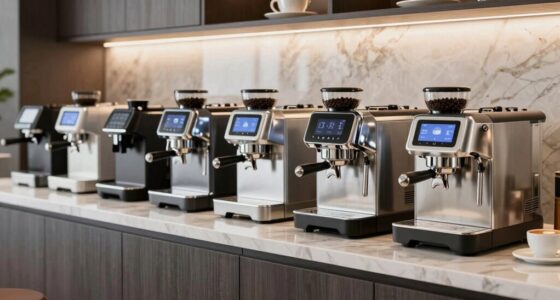
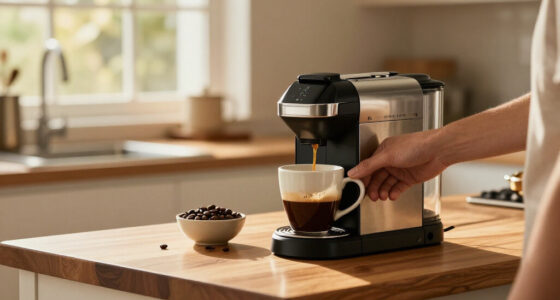
Choosing a compact espresso machine requires balancing footprint constraints with brewing capability. The Breville Bambino stands out as the best overall pick, offering professional-grade features in a surprisingly small frame. For those prioritizing budget efficiency, the Casabrews CM5418 delivers reliable performance without breaking the bank. The primary tradeoff in this category involves sacrificing advanced automation or steam power for physical size. Readers should continue reading to see how these models compare on heat-up time, workflow, and long-term maintenance.

Get coffee and tea gear delivered free with Prime
- Fast, free delivery on millions of items
- Prime Video, Amazon Music and more included
- Member-only deals all year
Complete the kit


Key Takeaways
- The Breville Bambino proves that small footprints do not require compromised shot quality, outperforming larger rivals in heat-up speed.
- Budget models like the Casabrews CM5418 often lack PID temperature control, leading to less consistent extraction but offering significant savings.
- Milk frothing quality varies wildly; manual wands on compact units require more technique than automatic systems found on larger, bulkier machines.
- Water tank capacity is the most common pain point in compact espresso machines, often requiring frequent refills during multiple-cup sessions.
- Build material matters more than brand prestige in this segment; plastic-heavy interiors in low-cost units can lead to durability issues over time.


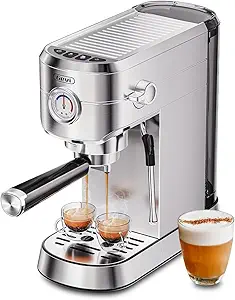


| compact espresso machine | Pump pressure |
|---|---|
| AERCANA 20-Bar Espresso Machin | 20 bar |
| SECPOEDR 20 Bar Compact Espres | — |
| Kismile 2-in-1 Espresso Machin | 20 bar |
| Breville BES870XL Barista Expr | — |
| AMZCHEF Compact Semi-Automatic | 20 bar |
| CASABREWS 3700 Essential Stain | 20 bar |
| CASABREWS CM5418 Compact Espre | 20 Bar |
| Breville Bambino Espresso Mach | — |
| Gevi 20 Bar Compact Espresso M | 20 bar |
| Aromaster 1400W Espresso Machi | — |
| MOEFO 20-Bar Espresso Machine | 20 bar |
More Details on Our Top Picks
AERCANA 20-Bar Espresso Machine with Milk Frother, 34 oz Removable Water Tank, Silver
At just 5.32 inches wide, the AERCANA is a strong fit when counter width matters more than extra water capacity or automated brewing. It combines a pressure gauge, steam wand, and hot-water dispensing in a narrow body, while the removable 34-ounce tank makes refilling less awkward in a tight kitchen. Compared with the SECPOEDR, it takes up less width but has a smaller tank and does not list PID temperature control or pre-infusion. The roughly 20-second preheat is handy for quick drinks, though the maker recommends preheating before brewing, and the machine needs time to cool after steaming milk. I’d choose it for a compact espresso setup with manual controls, not for a rapid sequence of milk drinks.
Pros:- Narrow 5.32-inch width suits crowded counters
- Pressure gauge provides a visual reference while brewing
- Steam wand and hot-water dispenser support more than straight espresso
- Removable 34-ounce tank and drip tray simplify refilling and cleanup
Cons:- Needs time to cool after steaming before brewing again
- Preheating before use adds a step despite the short stated warm-up
- Smaller tank than the SECPOEDR and AMZCHEF models
Best for: Apartment dwellers who have very little counter width and want a manual machine with a steam wand.
Not ideal for: Anyone who wants to make several milk drinks back to back or prefers temperature-control features like the SECPOEDR’s PID system.
- Operation:Semi-automatic
- Pump pressure:20 bar
- Power:1450 watts
- Preheating time:About 20 seconds
- Water tank:34 oz (1 liter), removable
- Dimensions:12.2 × 5.32 × 11.5 inches
- Coffee input:Ground coffee
- Features:Pressure gauge, steam wand, hot-water dispenser, cup warmer, auto shut-off
Our verdict“Choose the AERCANA if counter width is your main constraint and you are comfortable managing manual brew-and-steam timing.”
SECPOEDR 20 Bar Compact Espresso Machine with Pressure Gauge and Milk Frother
The SECPOEDR is the more feature-led choice for buyers who want extra control without moving to a larger, grinder-equipped machine. Its PID temperature control and pre-infusion are intended to support steadier, more balanced extraction, while the 180-degree rotating wand gives room to position a milk pitcher. Against the narrower AERCANA, it offers a larger 38-ounce tank and more specified brewing controls, but its 6.7-inch width takes up more counter space. The stainless-steel body is a practical step up from the plastic AMZCHEF, though the semi-automatic workflow still calls for practice. There is no built-in grinder, so fresh-bean brewing means adding separate equipment; this is best for someone who values control more than an all-in-one setup.
Pros:- PID temperature control and pre-infusion add brewing control
- Rotating steam wand can be positioned for milk frothing
- 38-ounce detachable tank reduces refill frequency versus the AERCANA
- Stainless-steel construction in a space-saving body
Cons:- Semi-automatic brewing takes practice to dial in
- No built-in grinder, so whole-bean brewing requires separate equipment
- Wider than the AERCANA and Kismile
Best for: Home espresso learners who want PID temperature control, pre-infusion, and a rotating steam wand in a compact stainless-steel machine.
Not ideal for: Buyers seeking a narrowest-possible machine, beginner-proof automation, or an integrated grinder.
- Operation:Semi-automatic
- Pressure:20 bar
- Power:1350 watts
- Water tank:38 fluid ounces, detachable
- Dimensions:13.2 × 6.7 × 12 inches
- Weight:7.7 pounds
- Material and color:Stainless steel, silver
- Steam wand:180° rotating
- Warranty:1 year
Our verdict“Pick the SECPOEDR if brewing control and a stainless-steel body matter more than the smallest footprint or an integrated grinder.”
Kismile 2-in-1 Espresso Machine with Milk Frother, 20 Bar Coffee Maker for Nespresso Pods & Ground Coffee, 1350W Fast Heating Cappuccino Maker with LED Display and 40oz Water Tank
The Kismile earns its place through input flexibility: it accepts Nespresso pods as well as ground coffee, so buyers can keep a quick, low-mess option alongside a more hands-on routine. Its footprint—5.12 inches wide—also makes it one of the narrowest choices here, close to the AERCANA but with a larger stated 40-ounce tank and an LED Fahrenheit display. That combination suits a small kitchen where convenience and compactness matter more than a built-in grinder. The tradeoff is a more involved feature set for a beginner to learn, and the machine may not accommodate larger mugs comfortably. Like the SECPOEDR, it includes a steam wand, but the Kismile’s strongest distinction is pod-or-ground versatility, not its milk setup.
Pros:- Brews with Nespresso pods or ground coffee
- 5.12-inch width fits narrow counter spaces
- 40-ounce removable water tank is larger than the AERCANA’s
- LED Fahrenheit display and steam wand add brewing and milk options
Cons:- Small body may not fit larger mugs
- Multiple features may take time for beginners to learn
- Tank capacity may still require frequent refills in heavier-use households
Best for: Small-household coffee drinkers who want the choice of Nespresso pods or ground coffee in a narrow machine.
Not ideal for: People who regularly use oversized travel mugs or want the simplest possible controls and workflow.
- Coffee input:Nespresso pods and ground coffee
- Pump pressure:20 bar
- Power:1350 watts
- Heating system:Thermoblock
- Display:LED Fahrenheit display
- Water tank:40 oz (1.2 liters), removable
- Dimensions:11.81 × 5.12 × 11.57 inches
- Steam wand:High-pressure, removable
Our verdict“Choose the Kismile if you want a narrow machine that can switch between Nespresso pods and ground coffee.”
Breville BES870XL Barista Express Espresso Machine, Brushed Stainless Steel
The Barista Express is the outlier in this compact-focused group: its appeal is the integrated grinder and adjustable grind settings, which let a home barista move from beans to espresso without buying a separate grinder. That makes it a more complete coffee station than the AERCANA or SECPOEDR, both of which use ground coffee. The larger 67-ounce tank also means fewer refills, but its 1/2-pound hopper and broader, more involved setup work against the roundup’s space-saving brief. Its accessory bundle supports hands-on preparation, yet that also means more steps and a learning curve. I’d rank it here for buyers willing to trade a compact footprint for an all-in-one workflow; anyone prioritizing a narrow counter fit should look at the Kismile or AERCANA instead.
Pros:- Integrated grinder and adjustable grind settings support bean-to-shot preparation
- 67-ounce water tank reduces refill frequency
- Stainless-steel construction
- Includes portafilter, tamper, milk jug, and cleaning accessories
Cons:- Larger, more involved setup is a poorer fit for a compact-counter roundup
- Requires barista skills and practice to use effectively
- More accessories and workflow steps than the simpler AERCANA
Best for: Home baristas who want an integrated grinder, adjustable grind settings, and a larger tank in one machine.
Not ideal for: Buyers with limited counter space or anyone who wants a simple, narrow machine with minimal setup.
- Model:BES870XL
- Bean hopper:1/2 lb
- Water tank:67 oz
- Power:1600 watts
- Voltage:120 volts
- Grind adjustment:Adjustable grind settings and grind amount
- Included accessories:Portafilter, filter baskets, tamper, milk jug, cleaning tools, water filter
- Finish:Brushed stainless steel
Our verdict“Choose the Barista Express if an integrated grinder matters more than a small footprint and a straightforward workflow.”
AMZCHEF Compact Semi-Automatic Espresso Machine with Milk Frother
The AMZCHEF suits buyers who want a 50-ounce removable tank and semi-automatic controls without stepping up to the Breville’s larger, grinder-based setup. PID temperature control, single- and double-cup options, and a rotating steam wand cover the basics for espresso and milk drinks, while its stated 30-second heat-up keeps the wait short. It is wider and taller than the slim Kismile and AERCANA, however, so “compact” here means a modest machine rather than an especially narrow one. The plastic construction is another clear compromise beside the SECPOEDR’s stainless-steel body. It uses ground coffee and has no built-in grinder, so this is most compelling for buyers who value tank capacity and straightforward button controls over premium materials or an all-in-one bean workflow.
Pros:- 50-ounce removable water tank is the largest stated capacity in this group
- PID temperature control is specified at ±2°C
- Rotating steam wand supports milk frothing
- Single- and double-cup options with button controls
Cons:- Plastic construction feels less substantial than the SECPOEDR’s stainless-steel body
- Uses ground coffee and has no built-in grinder
- Wider and taller than the Kismile and AERCANA
Best for: Households that want a removable, larger-capacity tank and button controls in a mid-sized semi-automatic machine.
Not ideal for: Buyers with very narrow counters, those who want stainless-steel construction, or anyone seeking a built-in grinder.
- Model:EM3131
- Machine type:Semi-automatic espresso machine
- Pump pressure:20 bar
- Power and voltage:1350 watts, 120 volts
- Temperature control:PID, ±2°C
- Heat-up time:About 30 seconds
- Water tank:50 oz, removable
- Dimensions and weight:12.5 × 7 × 14.4 inches; 8.2 pounds
- Coffee input and material:Ground coffee; plastic body
Our verdict“Pick the AMZCHEF if you want a larger removable tank and PID control, and can give up a very narrow footprint or metal construction.”
CASABREWS 3700 Essential Stainless Steel Espresso Machine
This model stands out for its generous 43.9-ounce water tank, which is significantly larger than the CASABREWS CM5418. That extra capacity means fewer interruptions for refilling, making it ideal for a shared office environment where multiple people pull shots throughout the day. The stainless steel build resists fingerprints and feels sturdy on a countertop. However, the lack of a pressure gauge is a notable omission compared to the Gevi 20 Bar, meaning users cannot visually confirm extraction quality. It requires a priming cycle before the first use, which adds a minor setup hurdle. While it handles milk frothing adequately, the steam wand lacks the precision found in higher-end Breville units.Pros:- Large 43.9-oz water tank reduces refill frequency
- Durable stainless steel exterior fits professional settings
- Includes both single and double cup filters
Cons:- No pressure gauge for monitoring extraction
- Requires initial priming cycle before first use
Best for: Office managers or households needing high-volume brewing without frequent refills
Not ideal for: Enthusiasts who want to monitor extraction pressure for dialing in grind size
- Pump Pressure:20 bar
- Water Tank Capacity:43.9 oz
- Wattage:1350 watts
- Material:Stainless Steel
- Operation Mode:Semi-Automatic
- Included Accessories:Portafilter, Tamper with Spoon, Filters
Our verdict“Choose this for its high capacity and durability in shared spaces, provided you don’t need pressure feedback.”
CASABREWS CM5418 Compact Espresso Machine
If footprint is your primary constraint, this unit is narrower than the CASABREWS 3700 and the Breville Bambino. Its 34-ounce tank is a tradeoff for the smaller chassis, requiring more frequent refills. The professional 20-bar pump delivers consistent pressure, but the machine enters an overheating protection mode if you froth milk and brew coffee back-to-back too quickly. This cooling delay disrupts workflow for busy mornings. Compared to the Aromaster 1400W, it lacks dual-circuit convenience, forcing a wait between tasks. It is a solid entry point for tight counters, but the thermal management limits its speed for milk drinks.Pros:- Smallest footprint among CASABREWS options
- Detachable tank simplifies cleaning
- Strong steam wand for microfoam
Cons:- Cooling time required between frothing and brewing
- Smaller 34-oz tank needs frequent refilling
Best for: Individuals with very limited counter space who brew one drink at a time
Not ideal for: Users who frequently make multiple lattes in quick succession
- Model:CM5418
- Pump Pressure:20 Bar
- Water Tank Capacity:34 oz
- Wattage:1350 W
- Material:Stainless Steel
- Operation Mode:Semi-Automatic
- Included Components:Removable Water Tank, Portafilter, Tamper
Our verdict“This is the go-to choice when every inch of counter space counts and you don’t mind waiting for the boiler to reset.”
Breville Bambino Espresso Machine
The Breville Bambino offers a level of convenience that budget competitors like the Gevi 20 Bar cannot match. Its ThermoJet heating system reaches brewing temperature in just 3 seconds, eliminating the warm-up wait common in other compact machines. The automatic steam wand textures milk with consistent temperature and quality, removing the manual skill barrier inherent in the CASABREWS models. While the price reflects this upgrade, the build quality and included accessories—such as the milk jug and tamper—make it a complete kit. It is slightly deeper than the Aromaster, but the speed and consistency justify the extra depth for serious home baristas who value time.Pros:- 3-second heat-up time for instant brewing
- Automatic steam wand simplifies milk texturing
- High-quality build with comprehensive accessories
Cons:- Higher price point than entry-level compact machines
- Still requires separate grinder for best results
Best for: Home baristas who want café-quality milk texture without manual steaming skills
Not ideal for: Budget-conscious buyers who prefer manual control over automated convenience
- Heating System:ThermoJet
- Heat-up Time:3 seconds
- Water Capacity:47 fluid ounces
- Dimensions:13.7 × 6.3 × 12 inches
- Warranty:1-year limited
- Portafilter Size:54 mm
- Included Accessories:Milk jug, Tamper, Cleaning tools
Our verdict“This is the best choice for those who prioritize speed and automated milk quality over manual tinkering.”
Gevi 20 Bar Compact Espresso Machine
Unlike the CASABREWS 3700 or Breville Bambino, this machine includes a visible pressure gauge. This feature is critical for beginners who want to understand how grind size and tamping affect extraction. The NTC temperature control aims for stability, though it lacks the 3-second speed of the Bambino. The pre-infusion feature helps improve shot consistency, a benefit not clearly highlighted in the Aromaster specs. It is a hands-on tool that rewards attention to detail. However, the stainless steel housing can feel less refined than the Breville, and the lack of a built-in grinder means you must manage coffee grounds separately.Pros:- Integrated pressure gauge for extraction monitoring
- Pre-infusion feature improves shot quality
- Intuitive controls for semi-automatic operation
Cons:- No built-in grinder requires separate purchase
- Learning curve for consistent manual steaming
Best for: Beginners who want to learn the mechanics of espresso extraction via visual feedback
Not ideal for: Users seeking a set-and-forget machine with automated milk steaming
- Pump Pressure:20 bar
- Control Type:Semi-automatic
- Temperature Control:NTC
- Key Features:Pre-infusion, Pressure Gauge, Hot Water
- Material:Stainless Steel
- Frothing System:Steam Wand
Our verdict“Pick this if you want to visualize your extraction pressure to improve your barista skills.”
Aromaster 1400W Espresso Machine
This machine distinguishes itself with a dual-circuit system, allowing for hot and iced coffee preparation without the thermal limitations seen in the CASABREWS CM5418. The PID + NTC temperature control offers finer stability than the basic thermostats in the Gevi or CASABREWS models. Its swivel steam wand provides flexibility for different pitcher sizes, though it still requires manual technique unlike the Breville Bambino. The 1400W power heats quickly, though not as instantly as the Breville. It includes a descaling function, which simplifies maintenance compared to some competitors that lack dedicated cleaning modes. This is a balanced option for those who want more control than a basic pump machine but less automation than a premium unit.Pros:- Dual-circuit system supports hot and iced drinks
- PID control offers better temperature stability
- Swivel steam wand increases usability
Cons:- No built-in grinder
- Manual steaming requires practice for latte art
Best for: Users who want temperature precision and iced/hot versatility in a compact form
Not ideal for: Those who prefer fully automated milk texturing or have zero interest in manual steaming
- Power:1400W
- Temperature Control:PID + NTC
- System Type:Dual-Circuit
- Steam Wand:Swivel
- Maintenance:Descaling Function
- Material:Stainless Steel
Our verdict“Choose this for its advanced temperature control and dual-use capability in a compact package.”
MOEFO 20-Bar Espresso Machine with Milk Frother and Touchscreen
This machine stands out for its touchscreen interface, offering a modern control experience rarely seen in budget-friendly compact units. Unlike the CASABREWS CM5418, which relies on traditional buttons and dials, the MOEFO uses digital presets for espresso, cold brew, and steam, reducing the learning curve for users accustomed to smartphone controls. The PID and NTC temperature control is a significant upgrade over basic thermoblock systems found in entry-level models like the SECPOEDR, helping maintain consistent extraction temperatures shot after shot. However, the semi-automatic nature still requires manual tamping and timing, so it does not offer the fully hands-off simplicity of super-automatic machines. The quick cold brew mode is a unique differentiator, appealing to those who want iced coffee without waiting hours, though the flavor profile may lack the complexity of traditional slow-brew methods.Pros:- Intuitive touchscreen controls simplify switching between brew modes
- PID temperature control ensures consistent extraction quality
- Includes a dedicated quick cold brew function
- Removable 40 oz water tank makes refilling and cleaning easier
Cons:- Requires ground coffee, meaning you must buy a grinder separately
- Semi-automatic operation demands manual tamping and shot timing practice
- Plastic touchscreen interface may feel less durable than stainless steel dials
Best for: Tech-savvy home baristas who prefer digital controls and want a quick cold brew option alongside traditional espresso.
Not ideal for: Users who prefer mechanical simplicity or whole-bean grinding, as this machine requires pre-ground coffee and manual operation.
- Pump Pressure:20 bar
- Water Tank Capacity:40 fluid ounces
- Dimensions:12.2 × 6.14 × 12.48 inches
- Weight:7.9 pounds
- Control Type:Touchscreen with PID/NTC
- Brew Modes:Espresso, Cold Brew, Steam, Hot Water, Clean
- Material:Stainless Steel
- Warranty:1 year
Our verdict“Choose the MOEFO if you value digital convenience and cold brew versatility over raw mechanical simplicity.”
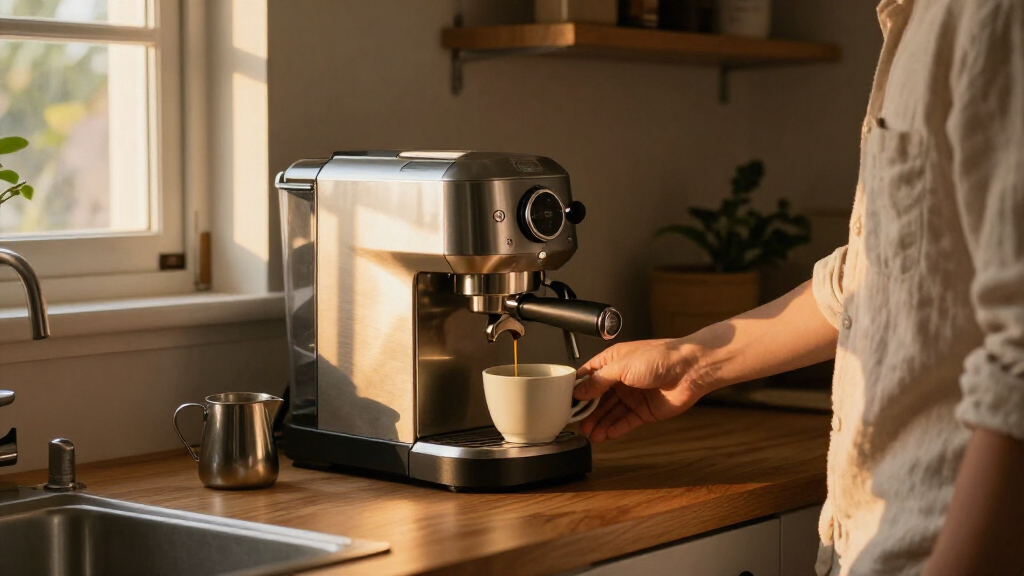
How We Picked
I evaluated these machines based on three core pillars: spatial efficiency, brew consistency, and workflow friction. Since the primary constraint is physical space, I prioritized units with slim profiles and integrated designs that minimize counter clutter. However, compactness cannot come at the cost of basic espresso integrity, so I compared pump pressure stability and thermal recovery times across all entries.
Rankings reflect a balance between entry-level accessibility and enthusiast capability. Machines that offered better temperature stability or faster steam readiness were ranked higher, even if they required slightly more counter depth. I also weighed the ease of cleaning, as small machines often have tighter tolerances that can make maintenance difficult if not designed with user access in mind.
Factors to Consider When Choosing Compact Espresso Machine
Selecting the right compact machine involves more than just measuring your counter space. You need to match the machine’s capabilities with your willingness to learn manual techniques and manage small-volume constraints.
Counter Footprint vs. Workflow Efficiency
Most buyers focus on width, but depth and height often determine if a machine fits under upper cabinets. A slim machine might still be too tall for standard cabinetry, forcing it onto a lower shelf or requiring cabinet modification. Furthermore, extremely narrow machines often lack a stable drip tray area, causing portafilter handling to feel cramped. I recommend measuring your available vertical clearance before width to avoid installation headaches.
Thermal Stability and Heat-Up Times
Compact units typically use smaller boilers or thermoblocks, which affects temperature stability. Smaller thermal masses heat up quickly but can lose heat rapidly between shots or when steaming milk. If you plan to make multiple drinks in a row, look for machines with larger internal boilers or advanced PID controllers, even if they consume slightly more power. Basic thermoblock models may require a cooling period between espresso extraction and milk steaming to prevent overheating.
Milk Frothing Capabilities on Small Units
Space constraints often limit the length and power of the steam wand. On many compact models, the wand may be shorter, requiring you to angle the pitcher differently or hold it at an awkward position. This can make creating microfoam for latte art more challenging compared to full-sized machines. If you drink mostly lattes, verify that the steam wand has sufficient reach and power before committing to a ultra-slim design.
Water Tank Accessibility and Capacity
A small footprint usually means a small water reservoir. Frequent refilling can become tedious if you brew several cups daily. Some models feature front-facing tanks that are easy to slide out, while others require lifting the entire tank off the top, which can be difficult if the machine is tucked under a cabinet. Assess your daily consumption volume against the tank size to determine if this minor inconvenience will become a major annoyance.
Grinder Integration vs. Separate Equipment
True compact espresso machines rarely include built-in grinders to save space. This means you must factor in the footprint of a separate grinder or decide to use pre-ground coffee. Pre-ground coffee loses freshness rapidly, impacting crema and flavor. If you cannot accommodate a separate grinder, consider pod-compatible hybrid machines, though they sacrifice some customization control for convenience and space savings.
Frequently Asked Questions
Do compact espresso machines produce lower quality shots than full-size models?
Not necessarily, but they often require more skill to operate consistently. Full-size machines typically have larger boilers that maintain temperature more steadily during extraction. Compact units with thermoblocks can fluctuate in temperature, leading to sour or bitter shots if not managed carefully. However, high-end compact models like the Breville Bambino use advanced heating systems to rival larger machines, so quality depends more on the specific technology than just the size.
Can I use a compact machine for latte art?
Yes, but it depends heavily on the steam wand design. Many budget compact machines have weaker steam pressure or shorter wands, making it difficult to create the swirling motion needed for microfoam. You should look for machines with powerful steam systems and articulated wands. If you are a beginner, expect a steeper learning curve with a compact unit compared to a larger machine with a more forgiving steam power.
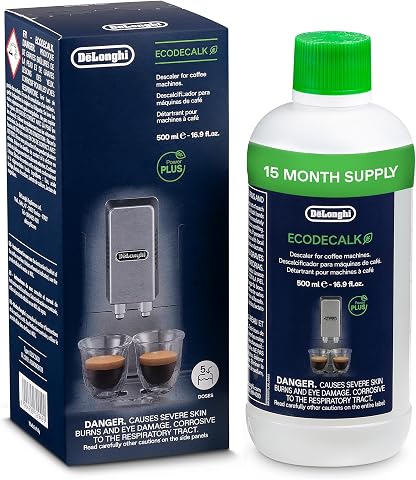
How often do I need to descale a compact machine?
Frequency depends on your water hardness and usage volume, but compact machines with smaller boilers can accumulate scale faster relative to their capacity. Generally, every 1-3 months is a safe benchmark. Because the internal pathways are smaller, blockages can impact performance more quickly than in larger units. Using filtered water is highly recommended to extend the time between descaling cycles and maintain pump health.
Is a built-in grinder worth the extra size and cost?
For most compact setups, a built-in grinder is rare and often compromises on grind quality to fit the small chassis. It is usually better to buy a dedicated compact espresso machine and a separate, high-quality small grinder. This allows you to place the grinder elsewhere in the kitchen, keeping the espresso station clean and allowing for better maintenance access for both components.
What is the biggest mistake people make when buying compact machines?
The most common mistake is ignoring the need for a separate grinder and accessories. A compact machine is just one part of the setup; you still need space for a grinder, tamp, and knock box. Buyers often purchase a slim machine only to realize their counter is still cluttered with the supporting equipment. Measure the entire workflow footprint, not just the machine itself, to ensure a tidy kitchen.
Conclusion
To summarize the options for your kitchen: Choose the Breville Bambino for the best balance of professional performance and small size. If you are on a tight budget, the Casabrews CM5418 offers the best entry-level value. For those who want convenience and pods, the Kismile 2-in-1 is a strong hybrid choice. Beginners should look toward the AMZCHEF for its straightforward interface, while enthusiasts needing premium build quality should stick with Breville models. Always prioritize your specific workflow needs—whether that is speed, milk quality, or simplicity—over sheer feature lists.