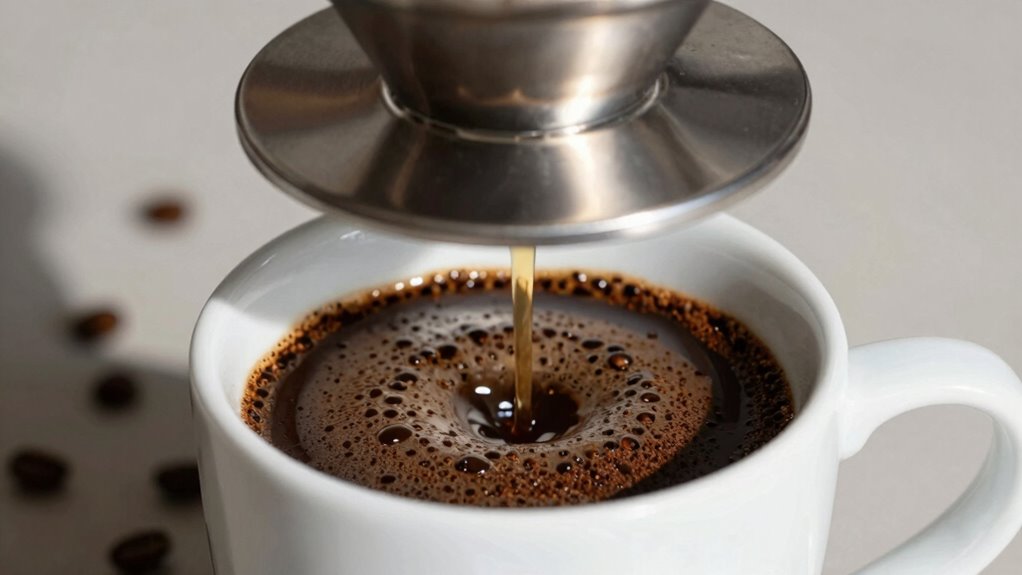

If your pour over grind size keeps failing, it’s likely you’re not adjusting it correctly for your brew time. A grind that’s too fine can lead to bitterness, while a coarse grind might result in a weak cup. Finding the right balance is key to achieving the flavors you want. Experiment with different sizes and pay attention to extraction times. Keep exploring techniques, and you’ll uncover more tips to enhance your brewing experience.
Listen free for 30 days with Audible
Thousands of audiobooks and originals — cancel anytime.
As an affiliate, we earn on qualifying purchases.
Key Takeaways
- Inconsistent grind size leads to uneven extraction; use a burr grinder for uniformity and optimal flavor balance.
- A grind that’s too fine can cause over-extraction, resulting in bitterness; adjust to a coarser grind for better results.
- Freshness matters; ensure beans are stored properly and used shortly after roasting to maintain flavor and aroma.
- Water quality affects extraction; use filtered water to avoid unwanted flavors and ensure balanced brewing.
- Regularly clean and calibrate your grinder to maintain consistent performance and prevent flavor retention issues.
burr coffee grinder for pour over
As an affiliate, we earn on qualifying purchases.
As an affiliate, we earn on qualifying purchases.
Why Your Grind Size Is Ruining Your Pour Over Coffee
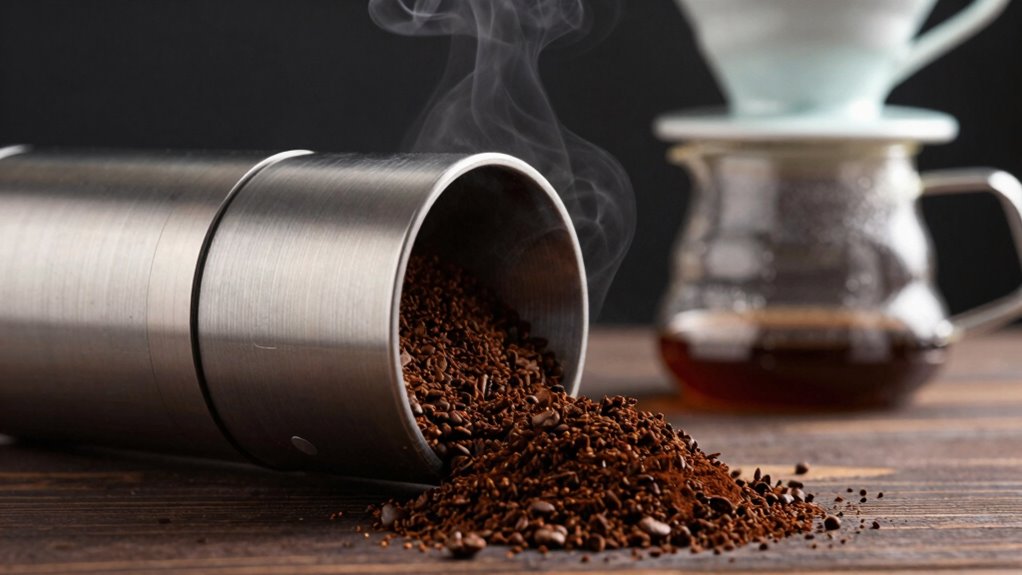
If you’re not paying attention to your grind size, you might be sabotaging your pour over coffee. The right grind texture is essential for a balanced extraction in this brewing method. A coarser grind allows water to flow freely, extracting flavors evenly, while a finer grind can lead to over-extraction, making your coffee bitter. If your grind isn’t suited for pour over, you’ll notice weak or overly strong brews. Experimenting with different textures helps you find that sweet spot where flavor shines. Remember, the grind size directly impacts how water interacts with the coffee grounds, so getting it right is key. Pay close attention, and you’ll elevate your pour over experience considerably.
As an affiliate, we earn on qualifying purchases.
What Happens When Your Grind Size Is Too Fine?
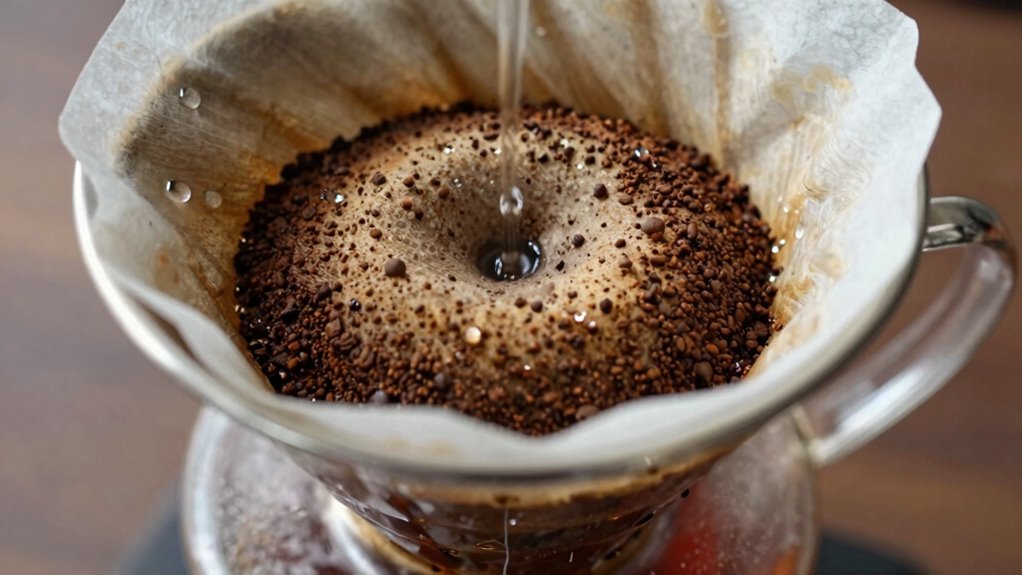
Using a grind size that’s too fine can drastically affect your pour over coffee. When your grind’s too fine, you risk over-extraction, leading to bitter flavors. It also disrupts grind consistency, making it hard to control brewing variables like water temperature and flow rate. This imbalance can create a muddy brew, leaving you frustrated.
Here’s a quick look at the impact of fine grind size:
| Issue | Effect on Coffee |
|---|---|
| Over-extraction | Bitter, harsh flavors |
| Muddy texture | Unpleasant mouthfeel |
| Slow extraction | Inconsistent brew |
| Increased sediment | Unappealing appearance |
As an affiliate, we earn on qualifying purchases.
How Coarse Grind Affects Your Flavor in Pour Over
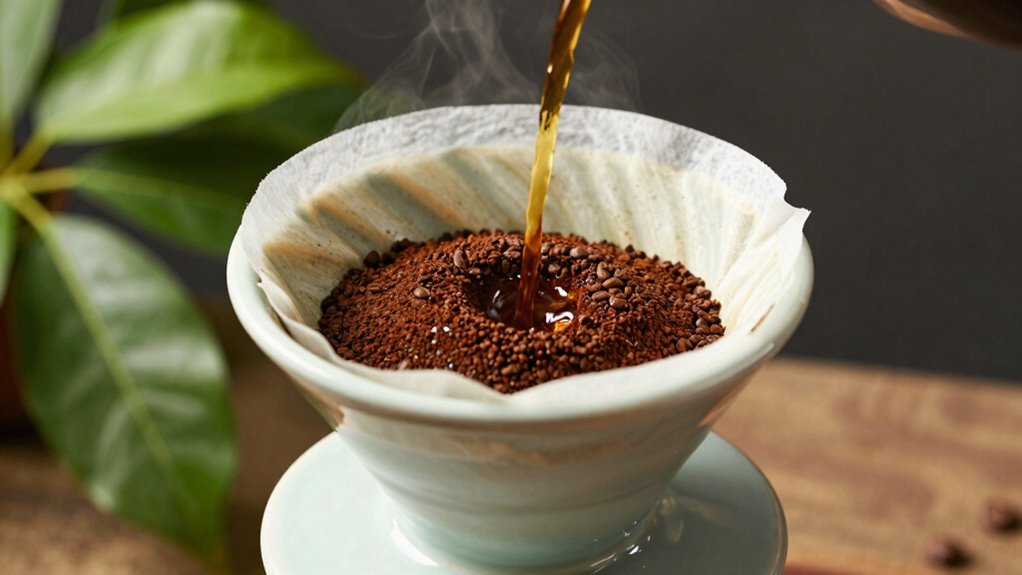
When you use a coarse grind for your pour over, you’re changing the extraction time dramatically. This can lead to a lighter, more delicate flavor profile that highlights different notes in your coffee. Understanding this helps you fine-tune your brewing for the best taste. Additionally, the caffeine content in your coffee can vary significantly based on the grind size and brewing method you choose. The grind size is crucial for achieving optimal extraction, as it directly influences the flavors and aromas released during brewing.
Extraction Time Impact
While a coarse grind might seem like a convenient choice for your pour over, it can considerably affect the extraction time and, consequently, the flavor of your coffee. A coarser grind tends to lead to under-extraction, as water flows too quickly through the grounds. This disrupts the extraction balance, resulting in a brew that may taste weak or sour. When you adjust brewing variables like water temperature and pour rate, you can mitigate some of this effect, but it’s essential to remember that grind size remains a key factor. Fine-tuning your grind size helps you achieve ideal extraction, allowing the rich flavors of your coffee to shine through. So, don’t underestimate the importance of getting it just right!
Flavor Profile Variations
A coarse grind can markedly alter the flavor profile of your pour over coffee. It often leads to a less balanced extraction, affecting aroma intensity and acidity levels. You might notice diminished body richness and sweetness notes, while aftertaste complexities can become muddled. Additionally, using quality water can significantly enhance the extraction process, ensuring a more flavorful brew. Maintaining indoor air quality is also important, as it can impact your overall coffee experience by affecting your senses. For instance, indoor pollutants can distract from the nuanced flavors of your brew. Creating a safe environment for your coffee setup can further enhance the sensory experience.
| Coarse Grind Effects | Flavor Characteristics |
|---|---|
| Low brew temperature | Reduced acidity and brightness |
| Poor water quality | Dull flavors and weak aroma |
| Stale coffee freshness | Flat body, less richness |
To achieve better flavor balance, focus on grind distribution. Use quality water and verify your coffee is fresh. Adjusting these elements can enhance your overall pour over experience. Additionally, understanding investment regulations can help you make informed choices about your coffee gear, just as it does in finance.
coffee grinder calibration tools
As an affiliate, we earn on qualifying purchases.
As an affiliate, we earn on qualifying purchases.
How Brew Time Affects Your Pour Over Grind Size?
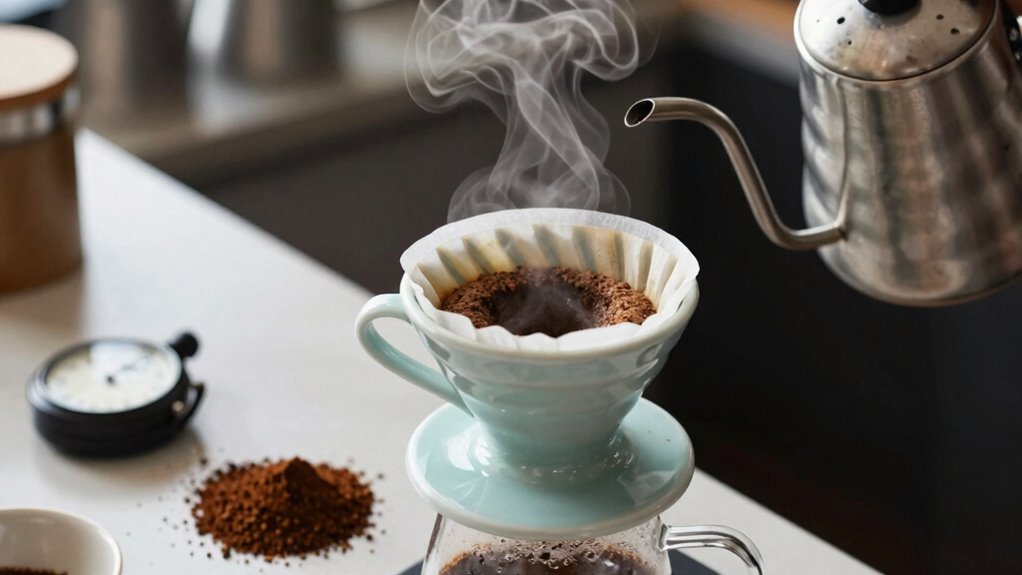
How Brew Time Affects Your Pour Over Grind Size?
Understanding how brew time affects your pour over grind size can make a significant difference in your coffee experience. If your brew time is too short, you may need a finer grind to extract those rich flavors. Conversely, a longer brew time calls for a coarser grind to prevent over-extraction and bitterness.
Consider these key points for successful grind adjustment:
- Short Brew Time: Use a finer grind to increase extraction speed.
- Long Brew Time: Opt for a coarser grind to control extraction and avoid bitterness.
- Consistency: Maintain consistent grind size for predictable brew time results. Additionally, achieving color accuracy in your brewing process can enhance the overall flavor profile of your coffee. Using the right grind size can also help you maximize extraction and make the most of your brewing efforts. Remember, the right grind size is crucial for achieving café-quality results at home.
Choosing Coffee Beans for the Best Grind
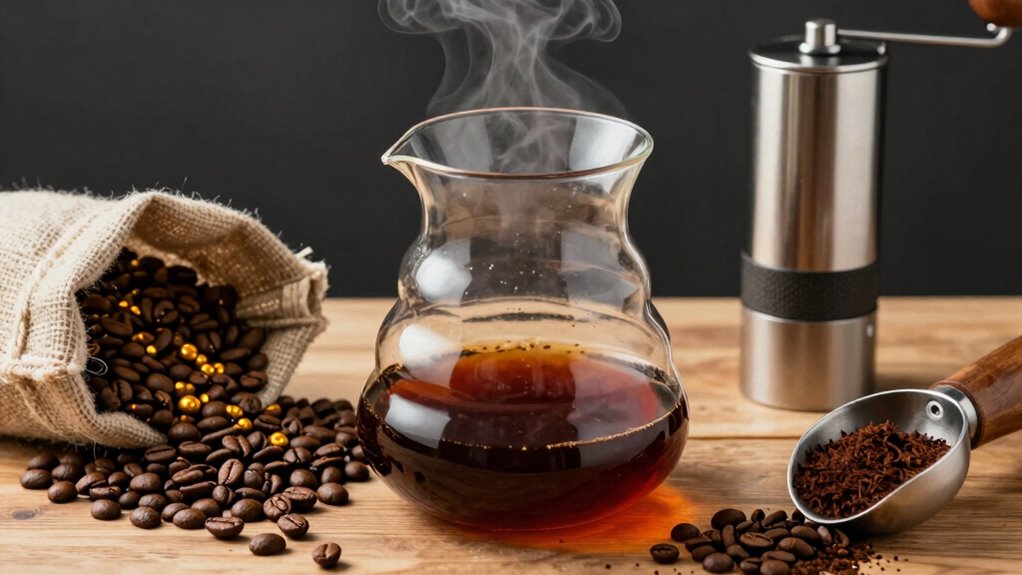
Choosing Coffee Beans for the Best Grind
Choosing the right coffee beans is essential for achieving the perfect grind. Start by considering bean origin and roast profile; these impact flavor notes notably. Freshness factors, like the roast date, also play a vital role in your brew’s quality. Additionally, understanding market trends can help you select beans that are not only flavorful but also in demand. Exploring Italian food culture can also inspire unique flavor pairings that enhance your coffee experience. The vibrant gelato culture can even provide insights into complementary flavors that elevate your coffee moments. Moreover, exploring halal coffee traditions can offer diverse brewing techniques that enrich your preparation process. Incorporating music therapy into your coffee routine can enhance your overall enjoyment and relaxation while brewing. Here’s a quick reference table to guide your selections:
| Bean Origin | Roast Profile | Flavor Notes |
|---|---|---|
| Colombia | Medium | Chocolate, Caramel |
| Ethiopia | Light | Floral, Citrus |
| Brazil | Dark | Nutty, Chocolate |
| Guatemala | Medium-Dark | Spice, Brown Sugar |
Additionally, think about your brewing methods and water quality. For ideal grind consistency, store your beans properly to maintain freshness.
How to Test and Adjust Your Grind Size
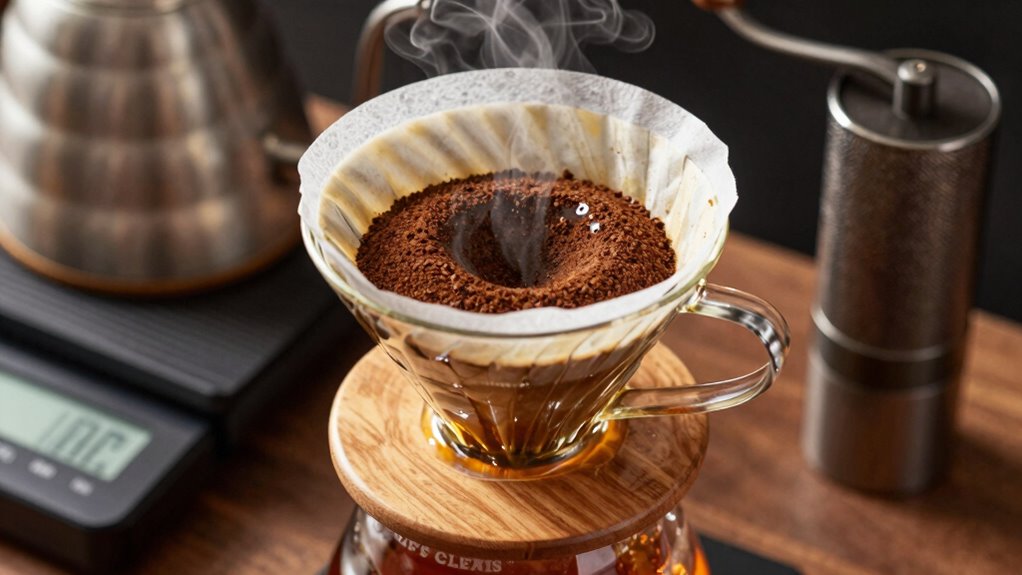
To achieve the perfect pour over, testing and adjusting your grind size is essential. Start by ensuring your equipment calibration is spot on. Then, focus on grind testing to check for consistency. Here are key factors to take into account:
- Brew ratio: Adjust the coffee-to-water ratio based on your grind size. A proper brewing ratio will enhance extraction and overall flavor. Additionally, understanding strength training fundamentals can help you apply systematic adjustments for optimal results.
- Water temperature: Use the right temperature for ideal extraction; typically between 195°F and 205°F. Maintaining the right water quality can also significantly impact your coffee’s flavor.
- Pour technique: Experiment with your pour speed and style to see how it affects flavor.
Additionally, understanding knife techniques can enhance your precision when preparing coffee ingredients.
Must-Have Tools for Your Perfect Grind
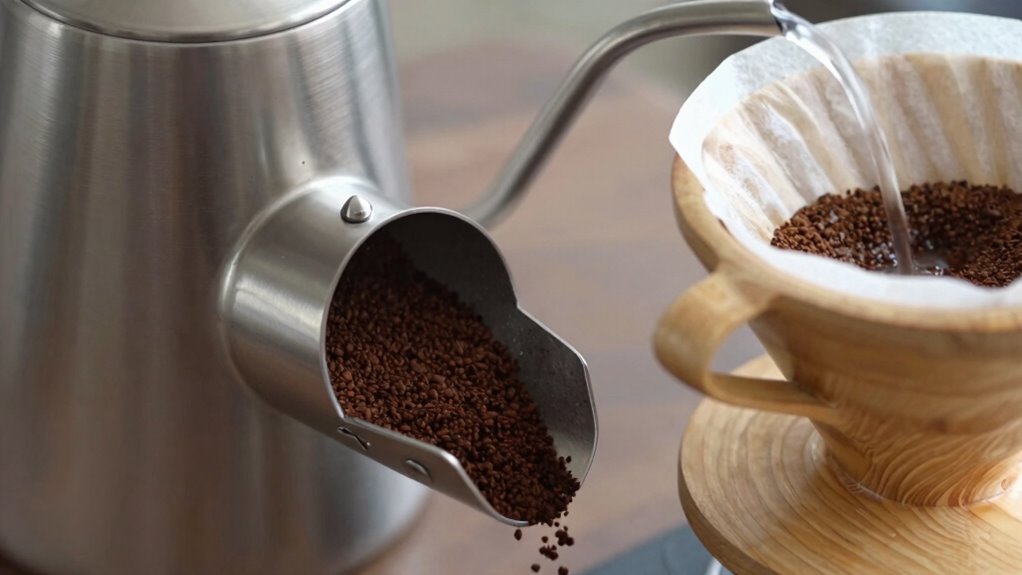
To achieve the perfect grind for your pour over, you need the right tools. Choosing the best grinder and keeping it well-maintained can make all the difference in your coffee’s flavor. Let’s explore the essential equipment that’ll elevate your brewing game. Additionally, investing in smart composters can help you reduce waste while enjoying your coffee brewing process. Proper kitchen ventilation is also crucial as it helps maintain a comfortable environment while you focus on perfecting your coffee technique. Understanding grind size impact can further enhance your brewing experience by allowing you to adjust extraction levels for optimal flavor. Regularly checking your filtration systems can also ensure that water quality is maintained, which is vital for brewing the best cup. Consider incorporating essential oils for relaxation to create a calming atmosphere as you brew your favorite coffee.
Essential Grinding Equipment
Achieving the perfect pour-over starts with the right grinding equipment. Your grind size directly influences extraction, so you need reliable tools that suit your brewing style. Here are some essentials to take into account:
- Burr Grinder: This type provides consistent grind size, vital for even extraction.
- Adjustable Grind Settings: Look for a grinder that offers various grind settings, allowing you to customize to your preferred coarseness.
- Scale: Weighing your coffee guarantees you’re using the right amount, enhancing flavor balance.
Investing in these essential tools helps you master your pour-over technique. With the right grinder types and attention to grind settings, you’ll be on your way to brewing that perfect cup every time. Additionally, ensuring a proper airflow around your setup can help maintain consistent brewing conditions.
Choosing The Right Grinder
Finding the right grinder is vital for elevating your pour-over experience. You’ll want to contemplate different grinder types, specifically blade vs burr. Burr grinders, known for their superior burr quality, offer more consistent grind settings, which is essential for flavor extraction. If you prefer electric grinders, they usually provide speed and ease, but can be noisy. On the other hand, manual grinders are portable and quieter, making them perfect for travel. Pay attention to grind retention, as it affects freshness. Whichever you choose, make sure it meets your consistency factors to perfect your brew. Ultimately, finding the right balance of noise levels and portability options will enhance your coffee-making ritual.
Maintenance For Optimal Performance
While you’ve invested in a quality grinder, regular maintenance is essential to confirm it performs at its best. Proper grinder maintenance guarantees brew consistency and enhances grind stability, leading to a better cup every time. To keep your grinder in top shape, focus on these key areas:
- Cleaning Techniques: Regularly clean your grinder to reduce retention and prevent old coffee oils from affecting flavor.
- Burr Alignment: Check burr alignment periodically to maintain grind uniformity and optimize performance.
- Moisture Control: Store your grinder in a dry place to avoid moisture interference, which can impact equipment longevity.
Don’t forget to adjust your grinder settings and perform regular calibration to confirm peak performance. Proper care makes all the difference!
Common Mistakes to Avoid When Grinding Coffee
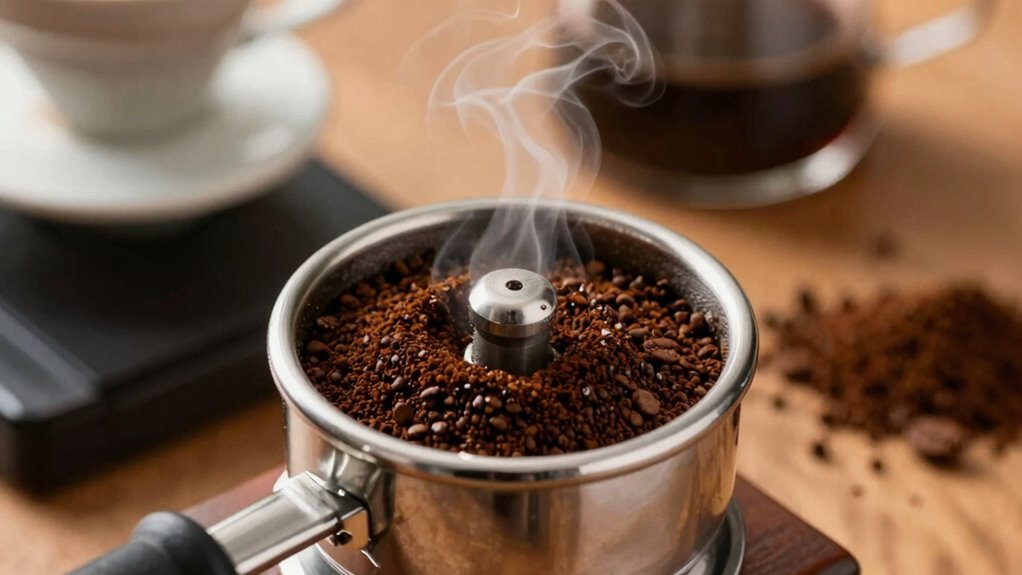
When you’re grinding coffee, it’s easy to overlook key factors that can affect your brew. One common mistake is not achieving proper grind consistency. If your grind size varies too much, it can lead to uneven extraction, resulting in a bitter or weak cup. Make sure your grinder is well-calibrated and suitable for pour-over methods.
Another pitfall is ignoring brew temperature. Grinding coffee just before brewing is essential, as it helps maintain the ideal temperature, ensuring the best flavor extraction. If you let your ground coffee sit too long, it can lose freshness and aroma, impacting your final cup. By focusing on grind consistency and brew temperature, you’ll elevate your pour-over coffee game greatly.
Fine-Tuning Your Technique for Consistency
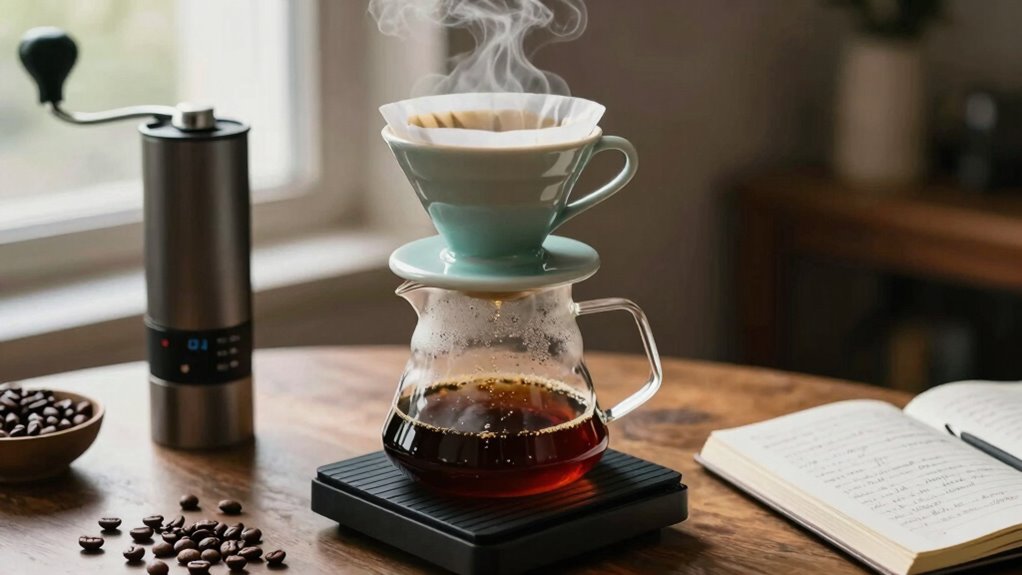
To achieve a consistently great pour-over, you need to refine your grinding technique. Focus on these key aspects to enhance your brew:
- Grind Uniformity: A consistent grind size guarantees even extraction, leading to better taste consistency.
- Water Quality: Use filtered water to avoid unwanted flavors that can affect extraction balance.
- Brew Temperature: Maintain an ideal brew temperature to extract the best flavors from your coffee.
Tips for Enjoying Café-Quality Pour Over at Home
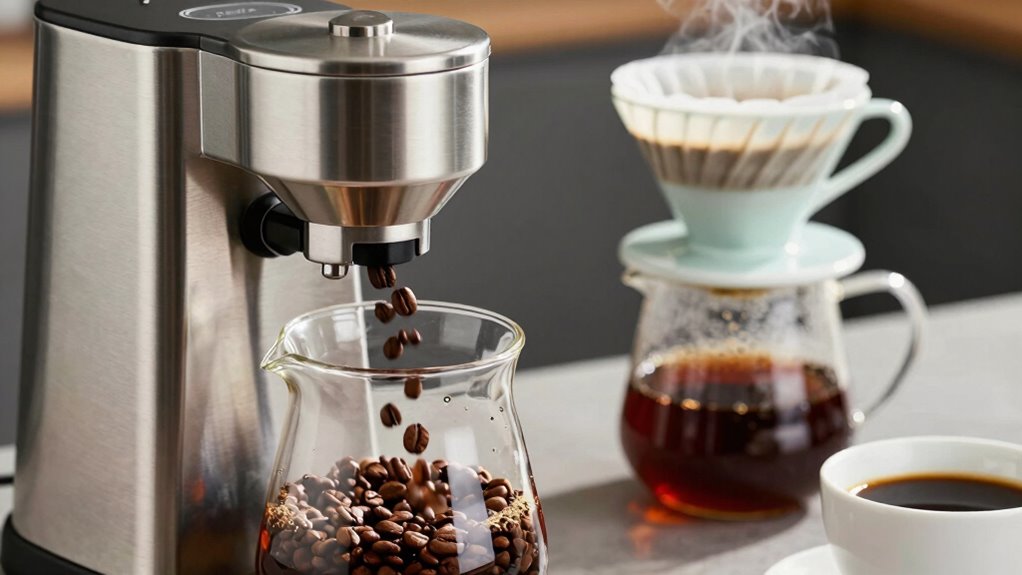
Creating café-quality pour-over coffee at home is easier than you might think, especially with a few key tips in your toolkit. Focus on grind consistency and bean freshness to enhance your cup quality. Experiment with water temperature and brewing ratios to achieve the perfect flavor balance. Your pour technique also plays a vital role—slow, circular motions yield better extraction.
| Aspect | Tips | Importance |
|---|---|---|
| Grind Consistency | Medium-coarse for balance | Affects extraction rate |
| Water Temperature | 195°F to 205°F | Influences flavor profile |
| Pour Technique | Even, controlled pours | Enhances brewing efficiency |
Frequently Asked Questions
How Does Water Temperature Impact Grind Size in Pour Over?
Water temperature markedly impacts grind size in pour over coffee. If you use hotter water, finer grinds enhance extraction efficiency, allowing more flavors to be pulled from the coffee. Conversely, cooler water can lead to under-extraction, especially with coarser grinds. Finding the right balance boosts brew consistency, ensuring each cup tastes just how you like it. Adjusting both temperature and grind size is key to perfecting your pour over experience.
What Type of Grinder Is Best for Pour Over Coffee?
For the best pour-over coffee, you’ll want a burr grinder. Burr grinders offer grind consistency, ensuring even extraction, while blade grinders often produce uneven results. With burr grinders, you’ll also enjoy less grind retention, meaning more fresh coffee in your cup. So, if you’re serious about your brew, invest in a quality burr grinder. It’ll elevate your coffee experience and make that perfect pour-over a reality every time.
Can Grind Size Affect Caffeine Extraction Levels?
Yes, grind size definitely affects caffeine extraction levels. Finer grinds increase the surface area, leading to a faster extraction time and higher caffeine concentration in your cup. If you’re brewing with a coarser grind, the extraction takes longer, resulting in lower caffeine levels. So, if you want a stronger cup, experiment with your grind size to find the balance that suits your taste and caffeine needs best.
How Often Should I Clean My Coffee Grinder?
You should clean your coffee grinder every few weeks, especially if you use it daily. Regular grinder maintenance keeps your coffee tasting fresh and prevents old coffee oils from affecting flavor. If you notice clumping or a change in taste, it might be time for a deeper clean. A quick brush or vacuum can do wonders, but a thorough cleaning every month guarantees peak performance and caffeine extraction. Enjoy your perfect brew!
Does Grind Size Change With Different Coffee Bean Origins?
Yes, grind size does change with different coffee bean origins. Each origin brings unique bean characteristics that affect how you should grind them. For instance, beans from Africa often have bright acidity, benefiting from a finer grind to enhance their flavor profile. In contrast, beans from South America might require a coarser grind to balance their richness. Experimenting with grind size helps you reveal the best flavors from each origin.
Conclusion
Mastering your pour over grind size is like fine-tuning a musical instrument; every adjustment can bring out the perfect flavor notes. By understanding how grind size impacts extraction and experimenting with different beans, you can transform your home brewing into a café experience. Avoid common pitfalls, embrace your tools, and fine-tune your technique. Soon, you’ll be savoring a cup of coffee that sings with rich, balanced flavors every time you brew. Enjoy the journey!
Flea & tick season Picks
flea and tick prevention
As an affiliate, we earn on qualifying purchases.