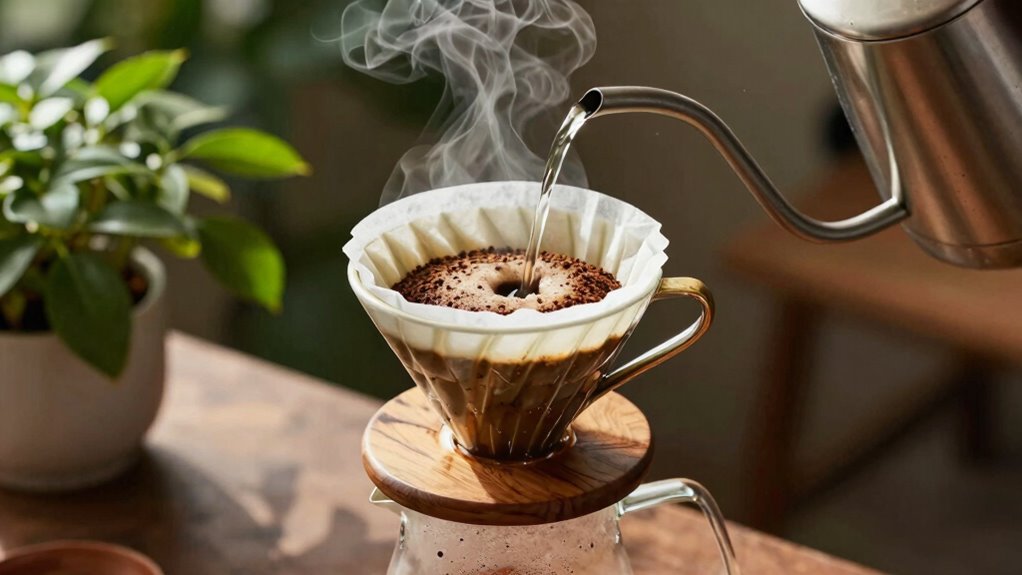

To brew perfect pour-over coffee, mastering bloom time is essential. Start by saturating your coffee grounds with a small amount of water, letting them bloom for 30 to 45 seconds. This process allows trapped CO2 to escape, enhancing flavor and aroma. The roast level affects bloom time; lighter roasts usually need longer. Pay attention to your water temperature and coffee grind size for consistent results. Want to reveal even more tips for an exceptional coffee experience?
Key Takeaways
- Blooming enhances flavor extraction by releasing trapped gases, preventing bitterness, and improving aroma during pour-over coffee brewing.
- Light roasts benefit from a bloom time of 30-45 seconds, while medium and dark roasts require shorter durations.
- Use the right coffee-to-water ratio and saturate grounds evenly with a small initial water amount for optimal blooming.
- Ensure water temperature is between 195°F to 205°F to achieve effective blooming and flavor extraction.
- Invest in quality brewing tools, including scales and a gooseneck kettle, to improve accuracy and consistency in your pour-over technique.

Gooseneck Kettle for Manual Drip Coffee & Tea 40oz Stainless Steel Pour Over Coffee Kettle with Thermometer Tea Kettle for Stovetop,1200ml,6 Cup,Silver,1Pack
ENJOY BETTER COFFEE AT HOME: The coffee pot is designed with a gooseneck spout. This kind of gooseneck…
As an affiliate, we earn on qualifying purchases.
As an affiliate, we earn on qualifying purchases.
Bloom Time: The Key to Perfect Pour-Over Coffee
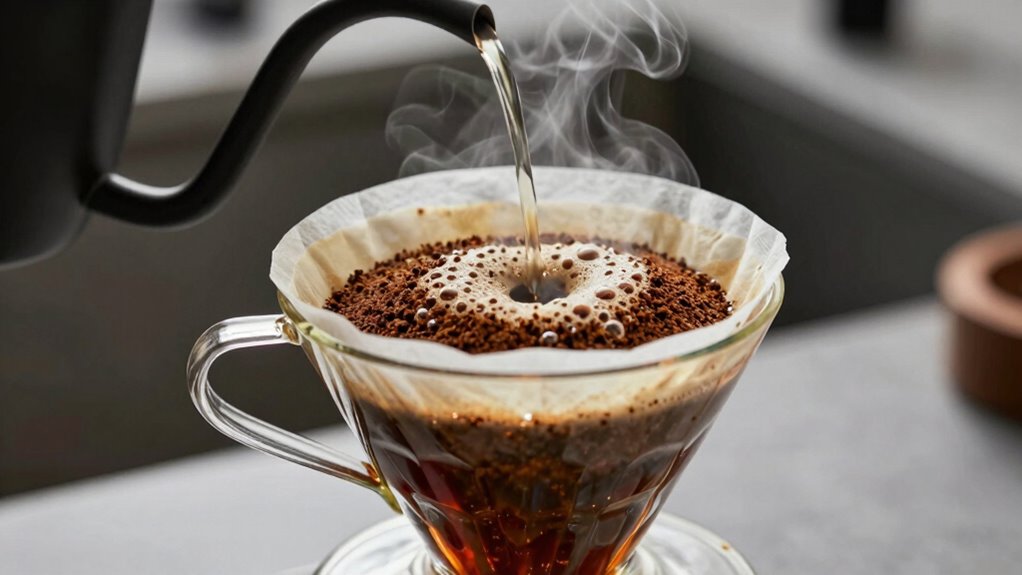
When you start your pour-over coffee, the bloom time is essential for releasing the full flavor potential of your beans. During this initial phase, you’re allowing carbon dioxide to escape, which enhances coffee extraction. To master blooming techniques, begin by pouring just enough hot water over your grounds to saturate them evenly. Let it sit for about 30 to 45 seconds. This short pause not only prepares the grounds but also helps in achieving a more balanced brew. As the coffee blooms, watch for bubbles forming—this indicates that the gas is escaping. By paying attention to bloom time, you’ll guarantee your final cup is rich and flavorful, making all the effort worthwhile. Enjoy the process!

Maestri House Mini Coffee Scale with Timer, USB-C Rechargeable Espresso Scale, 2kg/0.1g Accurate Scale for Espresso and Pour-Over Coffee, Portable Digital Kitchen Scale with Auto Timer (Black&Silver)
【Ultra Small, Yet Professional】The Espresso Scale is small enough to fit in your palm. It measures 4.13*4.13*0.78 inches…
As an affiliate, we earn on qualifying purchases.
As an affiliate, we earn on qualifying purchases.
Getting the Bloom Just Right

Getting the Bloom Just Right
Getting the bloom just right is all about precision and timing. To achieve that perfect bloom, start with the right amount of coffee and water. Use blooming techniques like saturating the grounds evenly with a small amount of water, letting it rest for about 30 seconds. This allows the CO2 to escape, enhancing flavor extraction. If you notice a weak or uneven bloom, make timing adjustments. Experiment with the duration of your initial pour; a longer bloom time can sometimes yield a richer taste. Remember, consistency is key. Keep track of your measurements and timing so you can replicate that delicious cup every time. Additionally, understanding what matters when choosing coffee gear can significantly impact your overall brewing experience. For instance, the coffee grind size can drastically affect the extraction process and flavor profile. Higher contrast ratios in your brewing setup can also enhance your overall enjoyment of brewing, as clean air enhances your senses and can make the process more enjoyable. With practice, you’ll master the art of blooming in no time!
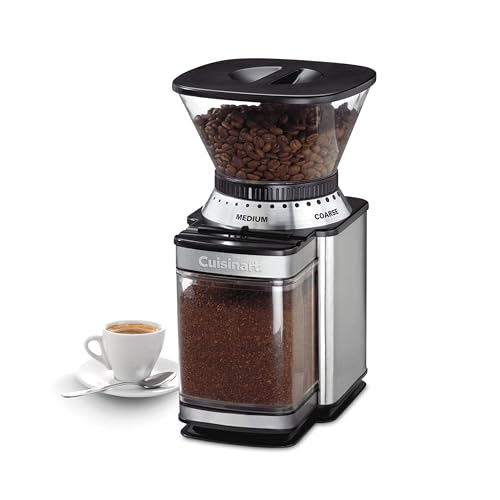
Cuisinart Coffee Grinder, Electric One-Touch Automatic Burr Coffee Grinder with 18-Position Grind Selector, Cup Size Selector for 4 – 18 Cups, DBM-8P1, Black Stainless
ENJOY OPTIMUM FLAVOR: The Cuisinart Coffee Grinder with 18-position slide-dial grind selector provides a uniform grind from ultra-fine…
As an affiliate, we earn on qualifying purchases.
As an affiliate, we earn on qualifying purchases.
The Science Behind Coffee Blooming
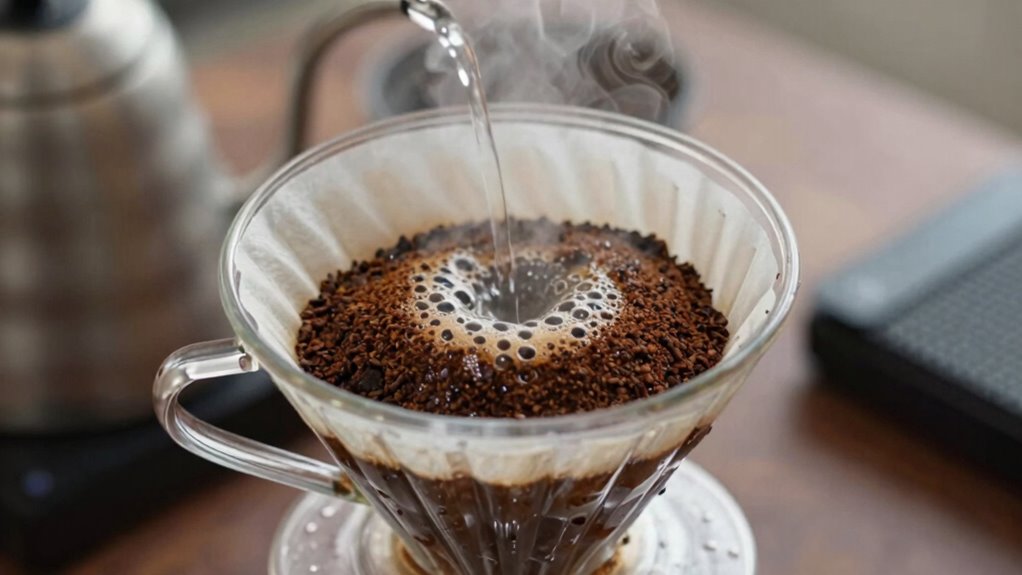
When you brew coffee, you might notice it puffing up—this is called coffee blooming. It’s not just a visual cue; it triggers chemical reactions that can greatly change your coffee’s flavor profile. Understanding this process can help you make a more delicious cup.
What Is Coffee Bloom?
Coffee bloom is a fascinating phenomenon that occurs during the brewing process, particularly in pour-over methods. When you first add hot water to your coffee grounds, they release carbon dioxide trapped during roasting. This release creates bubbles and causes the coffee to expand, known as blooming.
Blooming is essential for ideal coffee extraction, as it preps the grounds for better water interaction. Allowing the coffee to bloom enhances flavor development, ensuring you capture all those rich, nuanced tastes. If you skip this step, you might miss out on a vibrant cup, as the water won’t extract flavors evenly. So, take a moment to let your coffee bloom; it’s a simple step that makes a significant difference in your brew!
Chemical Reactions Explained
As you watch the coffee bloom, you’re witnessing a series of fascinating chemical reactions at play. When hot water meets coffee grounds, it triggers different chemical reaction types, primarily involving the release of carbon dioxide trapped in the beans. This gas escapes, creating bubbles and a rich foam. Simultaneously, water extracts flavor compounds from the grounds, enhancing the brewing process. The blooming phase allows for a more even extraction, as it preps the coffee for ideal flavor release. You might notice how the aroma intensifies during this stage; that’s those flavor compounds coming to life. Understanding these reactions not only enriches your brewing experience but also helps you appreciate the science behind your favorite cup of coffee. Additionally, knowing how brewing methods affect caffeine content can further enhance your appreciation of the coffee experience. Using the right grinding technique can also impact the quality of extraction during this crucial stage. Moreover, mastering milk steaming techniques can elevate your overall coffee enjoyment and presentation. Incorporating mobility and recovery practices, such as proper posture while brewing, can enhance your overall experience and comfort in the kitchen. The right extraction time is essential for achieving the best flavor profile in your coffee.
Impact On Flavor Profile
While the blooming process may seem simple, it plays an essential role in shaping the flavor profile of your brew. When you pour hot water over coffee grounds, you’re activating oils and gases, which leads to remarkable effects:
- Flavor Complexity: The release of gases allows for a fuller extraction of flavors, enhancing the overall richness of your coffee.
- Aroma Enhancement: As the coffee blooms, aromatic compounds escape, elevating the sensory experience and making your cup more inviting.
- Even Extraction: Proper blooming guarantees uniform saturation of the grounds, leading to a balanced flavor without any bitter notes.

Bodum 34oz Pour Over Coffee Maker, High-Heat Borosilicate Glass with Reusable Stainless Steel Filter and Cork Grip – Made in Portugal
Pour Over Coffee: Manual Pour Over Coffee Maker allows you to brew an excellent cup of Coffee in…
As an affiliate, we earn on qualifying purchases.
As an affiliate, we earn on qualifying purchases.
Choosing the Right Coffee Beans for Blooming
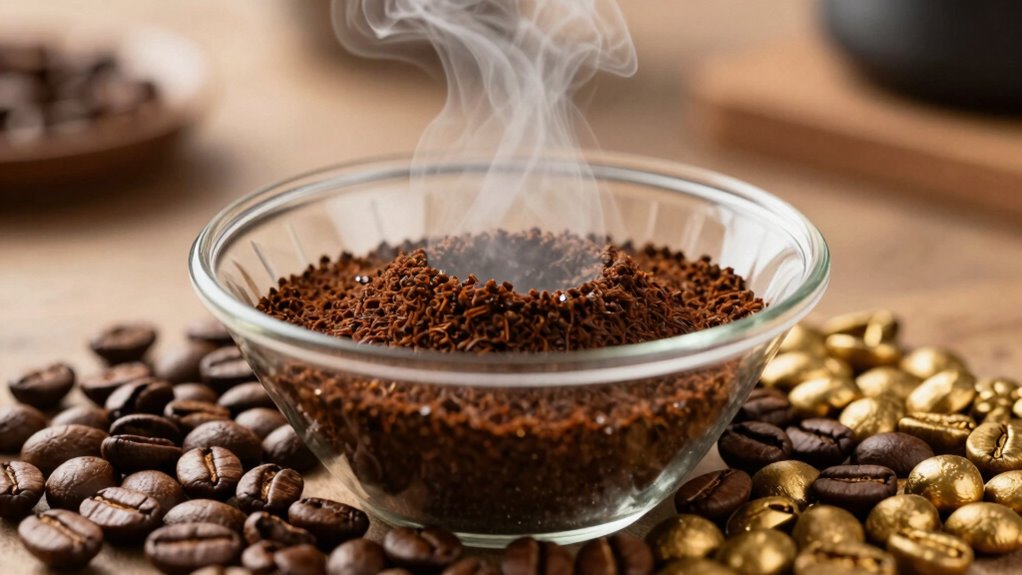
What makes some coffee beans ideal for blooming? It all comes down to their bean origins and roast levels. Freshly roasted beans from regions like Ethiopia or Colombia often have higher acidity and complex flavors, making them perfect for a good bloom. Light to medium roasts are particularly effective, as they retain more carbon dioxide, which is released during blooming. This process enhances the flavors and aromas, leading to a more vibrant cup. Additionally, chemical reactions during the blooming process can significantly impact the extraction of flavors. Notably, understanding cold medications can help you appreciate how different brewing techniques affect the taste and aroma of your coffee. Furthermore, studies suggest a correlation between astrological signs and perceived beauty, which can enhance your coffee experience by making it more enjoyable in a social setting. On the other hand, darker roasts tend to have less gas left, resulting in a less pronounced bloom. Therefore, exploring the ethics of AI can provide insights into the ways technology might influence our coffee preferences and brewing methods. So, when you’re choosing beans, opt for those with bright profiles and suitable roast levels to maximize your blooming experience and enjoy a richer pour-over. Additionally, incorporating global flavors into your brewing process can further elevate your coffee experience.
Adjusting Bloom Time for Various Beans
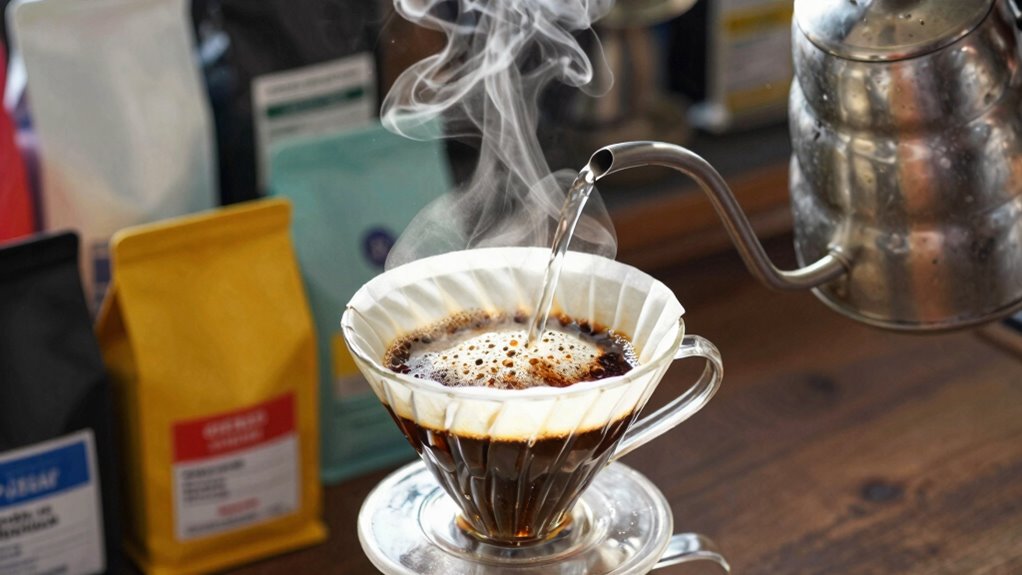
To achieve the best flavor extraction during brewing, you’ll need to adjust the bloom time based on the type of coffee beans you’re using. Different bean varieties and roast levels can impact how quickly the flavors develop. Here are three key adjustments to take into account:
Adjust bloom time for optimal flavor extraction based on your coffee bean’s roast level for a richer brewing experience.
- Light Roasts: Use a longer bloom time (30-45 seconds) to allow for full flavor nuances to emerge. This is similar to how essential oils for toothache relief can help target specific issues in a focused manner. Additionally, using self-watering planters can help maintain optimal moisture levels for your coffee plants. Ensuring correct posture while brewing can also enhance your overall comfort and experience. Consider that inadequate maintenance of your brewing equipment can also impact the consistency of your coffee.
- Medium Roasts: A bloom time of 20-30 seconds works well, balancing extraction methods with brewing ratios.
- Dark Roasts: Shorten the bloom to 10-15 seconds; this helps prevent over-extraction due to their grind consistency and stronger flavors.
Always verify your water quality is high for the best results, enhancing your brewing techniques and overall experience. Additionally, ensuring proper airflow around the unit can enhance both your coffee brewing setup and air quality for a better environment.
Frequent Errors in Coffee Blooming and How to Fix Them
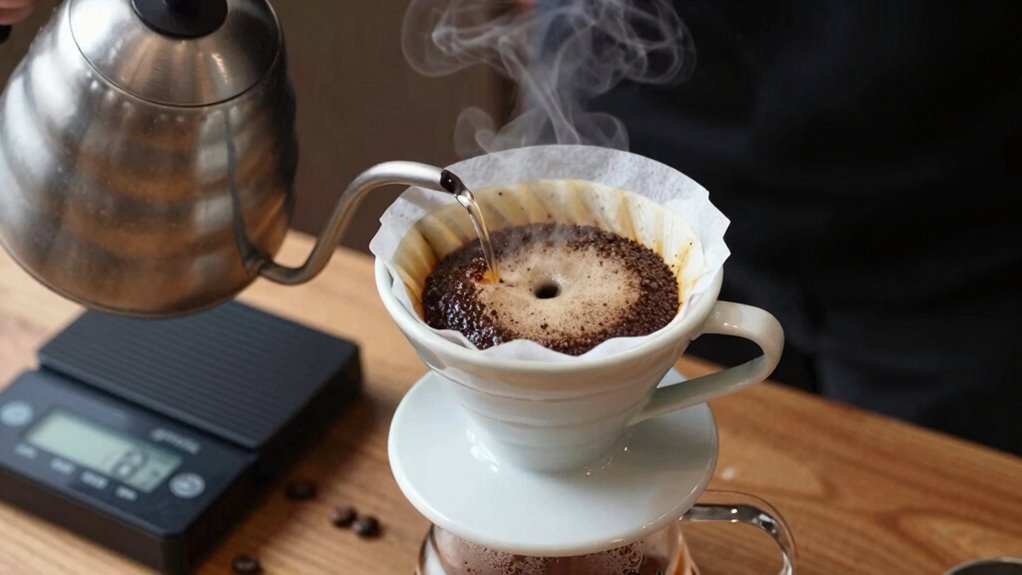
When brewing coffee, you might run into a couple of common pitfalls during the blooming process. Incorrect water temperature and inconsistent grind size can throw off your extraction. Let’s explore how to spot these errors and fix them for a better cup.
Incorrect Water Temperature
If you’re not careful about your water temperature, you might find your coffee blooming poorly, leading to a flat cup. The ideal brewing technique involves using water between 195°F and 205°F. Here are three tips to guarantee ideal water temperature:
- Use a thermometer: This helps you accurately measure the temperature, preventing overheating or underheating.
- Preheat your equipment: Rinse your pour-over gear with hot water to maintain consistent temperature throughout the brewing process.
- Monitor your water quality: Impurities can affect not just taste but also how your coffee blooms. Clean, filtered water enhances flavor extraction. Additionally, maintaining filtration basics can significantly improve not just the water quality but also the overall brewing experience.
Inconsistent Coffee Grind Size
Inconsistent coffee grind size can wreak havoc on your brewing experience, leading to uneven extraction and a lackluster flavor profile. Achieving grind consistency is essential for getting the best flavors from your beans. Proper kitchen ventilation can also help maintain the freshness of your coffee by reducing humidity and odors in the air. Additionally, understanding brewing fundamentals will empower you to make informed adjustments to your grind size. Using wellness technology can enhance your coffee experience by tracking your brewing parameters for optimal results. Investing in quality power tools can also streamline your coffee brewing setup, ensuring a more enjoyable process.
| Grind Size | Impact on Flavor | Recommended Use |
|---|---|---|
| Coarse | Under-extracted, weak | French press, cold brew |
| Medium | Balanced, smooth | Pour-over, drip coffee |
| Fine | Over-extracted, bitter | Espresso, AeroPress |
| Extra Fine | Harsh, overly bitter | Turkish coffee |
| Variable | Inconsistent flavors | Avoid this! |
To fix uneven grind size, invest in a quality grinder. Experiment with different settings until you find the perfect grind size that enhances your coffee’s flavor. Happy brewing!
Benefits of Proper Blooming for Better Coffee
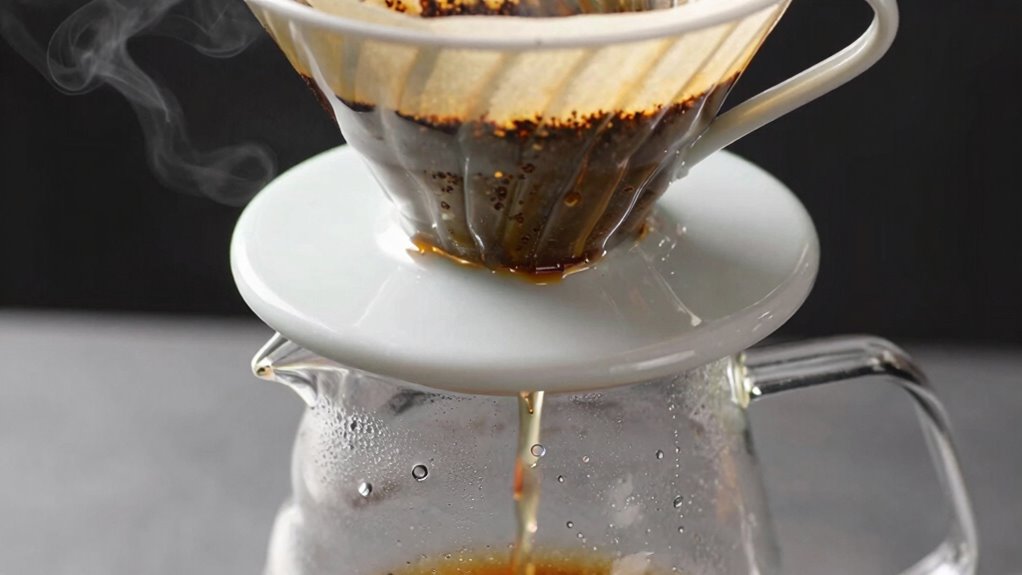
Proper blooming is essential for extracting the full potential of your coffee, as it allows gases trapped in the grounds to escape before brewing. This simple step enhances your brew techniques and leads to better flavor extraction. Here are three key benefits of proper blooming:
- Improved Flavor: By releasing CO2, blooming helps prevent bitterness, allowing the coffee’s natural flavors to shine.
- Even Saturation: Proper blooming guarantees all coffee grounds are evenly saturated, leading to a consistent extraction.
- Enhanced Aroma: As gases dissipate, the rich aromas of your coffee become more pronounced, making your brewing experience more enjoyable.
Incorporating blooming into your routine can transform your pour-over game and elevate your coffee enjoyment!
Essential Equipment for Effective Blooming
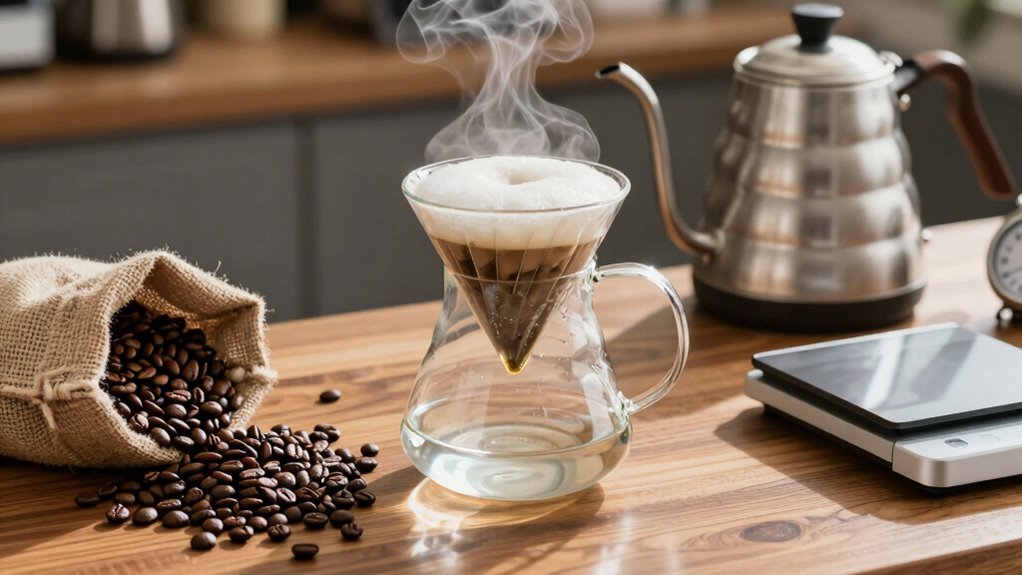
To achieve the perfect bloom, you need the right tools and the right coffee. Start by selecting a high-quality coffee that suits your taste, then gather essential equipment like a kettle and a scale. With these in hand, you’re ready to enhance your brewing experience.
Essential Tools Needed
A few essential tools can make all the difference in achieving a perfect pour-over coffee. With the right equipment, you’ll master grind settings, brewing ratios, and pour techniques that highlight coffee freshness and water quality. Here are three must-have tools:
- Coffee Scales: Precision is key. Use scales to measure your coffee and water accurately, ensuring consistent brewing ratios.
- Kettle Types: A gooseneck kettle allows for precise pouring control, essential for optimizing bloom time and extraction.
- Filter Types: Choose the right filter for your coffee; it affects flavor and clarity.
Investing in these tools elevates your brewing experience, making it easier to achieve that perfect cup every time.
Choosing The Right Coffee
While selecting the right coffee beans might seem challenging, it’s essential for achieving an effective bloom and enhancing flavor extraction. Your choice of coffee origins and roast levels can greatly impact your pour-over experience.
Here’s a quick guide to help you choose:
| Coffee Origin | Roast Level |
|---|---|
| Colombia | Medium |
| Ethiopia | Light |
| Brazil | Dark |
| Guatemala | Medium-Dark |
| Costa Rica | Light-Medium |
Mastering Bloom Time for Perfect Pour-Over Coffee
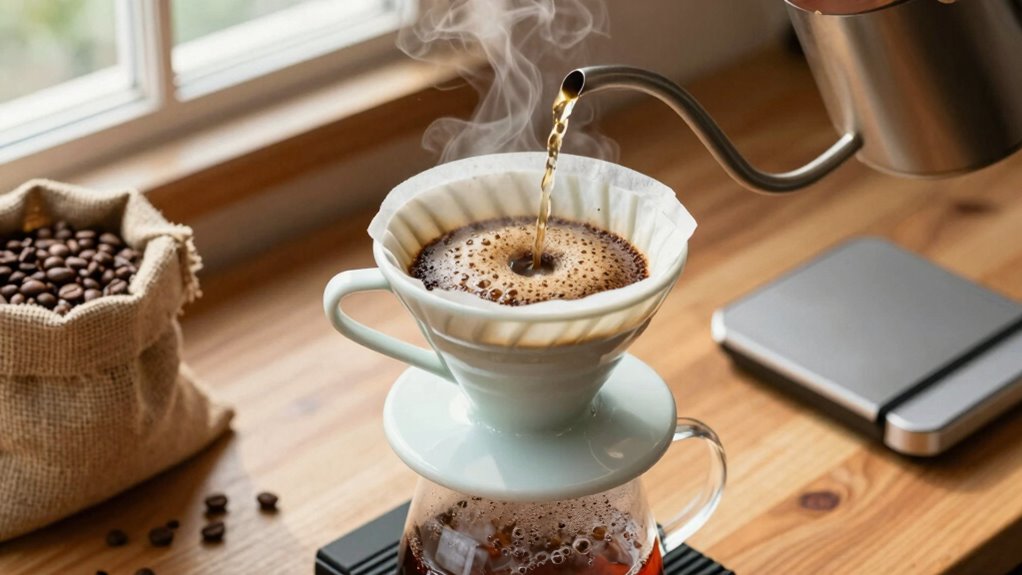
Mastering the bloom time in pour-over coffee can elevate your brewing experience greatly. Proper blooming techniques help release carbon dioxide, allowing for a fuller extraction of flavors. Here are three key points to take into account:
- Coffee Ratios: Use a 1:15 coffee-to-water ratio for ideal extraction. Adjust based on your taste preferences.
- Bloom Duration: Let your coffee bloom for 30 to 45 seconds. This time allows the gases to escape, enhancing flavor.
- Water Temperature: Use water between 195°F and 205°F. This range guarantees you extract the best flavors without scalding the coffee.
Enjoying the Flavor Boost From Proper Blooming
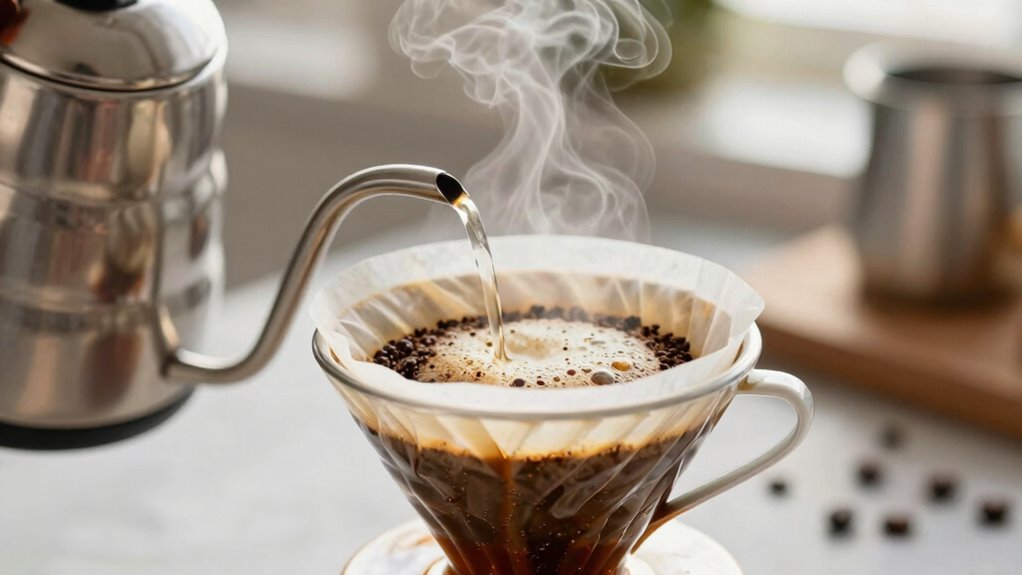
Proper blooming not only sets the stage for extraction but also greatly enhances your overall coffee experience. When you pour hot water over your coffee grounds, the initial release of carbon dioxide creates an aromatic release that’s essential for flavor enhancement. This step allows the coffee to breathe, revealing its full potential.
Frequently Asked Questions
How Do I Store Coffee Beans for Optimal Freshness?
To store coffee beans for ideal freshness, keep them in an airtight container away from light, heat, and moisture. A dark, cool pantry works best. Don’t store your beans in the fridge; that can introduce moisture and odors. Instead, buy in small batches to guarantee you use them quickly. Remember, the fresher the beans, the better the flavor, so prioritize proper coffee storage to maintain that delicious bean freshness you love.
Can I Bloom Coffee With Flavored or Decaf Beans?
Yes, you can bloom coffee with flavored or decaf beans! Blooming helps release carbon dioxide, enhancing the flavor, regardless of the bean type. When you’re decaf brewing, just make sure you use fresh beans for the best results. For flavored coffee, the blooming process can help the added flavors meld better during extraction. So, don’t skip this step; it’ll improve your overall brew experience and make your cup even more enjoyable!
What Water Temperature Is Best for Blooming?
The ideal water temperature for blooming coffee is between 195°F and 205°F (90°C to 96°C). This range helps extract the flavors effectively while ensuring the water quality remains high. If you go too hot, you risk over-extracting and creating bitterness; too cool, and you won’t extract enough. So, stick to this temperature range for the best results, and you’ll enjoy a delicious cup every time you pour over.
How Does Grind Size Affect Blooming?
If you think grind size doesn’t matter, you’re missing a key point. The grind consistency directly affects how your coffee blooms. Finer grinds tend to release carbon dioxide more quickly, leading to a more vigorous bloom, while coarser grinds might result in a slower, less pronounced bloom. Experiment with different blooming techniques by adjusting your grind size to discover what brings out the best flavors in your pour-over coffee.
Is Blooming Necessary for All Coffee Brewing Methods?
Blooming isn’t necessary for all coffee brewing methods, but it can enhance your coffee extraction. In techniques like pour-over, blooming helps release gases trapped in the grounds, leading to a more flavorful cup. For methods like French press, it’s less critical since you’re steeping the coffee longer. Experiment with different brewing techniques to see how blooming affects your coffee’s taste, and you’ll discover what works best for your preferences.
Conclusion
Incorporating bloom time into your pour-over routine isn’t complicated—it just takes a bit of practice. You might think it’s an extra step, but trust me, it’s worth it for the flavor boost. By allowing your coffee to bloom, you’re revealing richer, more complex notes that can elevate your experience. So don’t skip this step; embrace it! Your taste buds will thank you, and soon, you’ll wonder how you ever brewed without it. Happy brewing!