
Choosing between agitation and no agitation in your French press depends on your preferences and routine. Agitation speeds up extraction, boosting aroma and flavor strength, perfect if you want a bold, complex cup. No agitation keeps things smooth and clean, ideal for delicate or light roasts. You can even combine both techniques for a tailored brew. Keep exploring to discover how adjusting your method can truly elevate your coffee experience.

Get coffee and tea gear delivered free with Prime
- Fast, free delivery on millions of items
- Prime Video, Amazon Music and more included
- Member-only deals all year
Key Takeaways
- Agitation speeds up extraction, intensifying aroma and flavor, ideal for bolder, fuller-bodied coffees in shorter brew times.
- No agitation produces a cleaner, subtler cup, highlighting delicate flavors and minimizing sediment, suitable for light roasts.
- Routine constraints influence choice: agitation enhances flavor clarity quickly, while no agitation offers easier cleanup and consistent results.
- Combining both methods can balance flavor complexity with smoothness, allowing customization based on preferences.
- Troubleshooting tips—adjust grind size and brew time—help optimize either method for your specific taste and routine.
French press coffee maker with agitation mechanism
As an affiliate, we earn on qualifying purchases.
As an affiliate, we earn on qualifying purchases.
What Are the Main Differences Between Agitation and No Agitation in French Press Brewing?
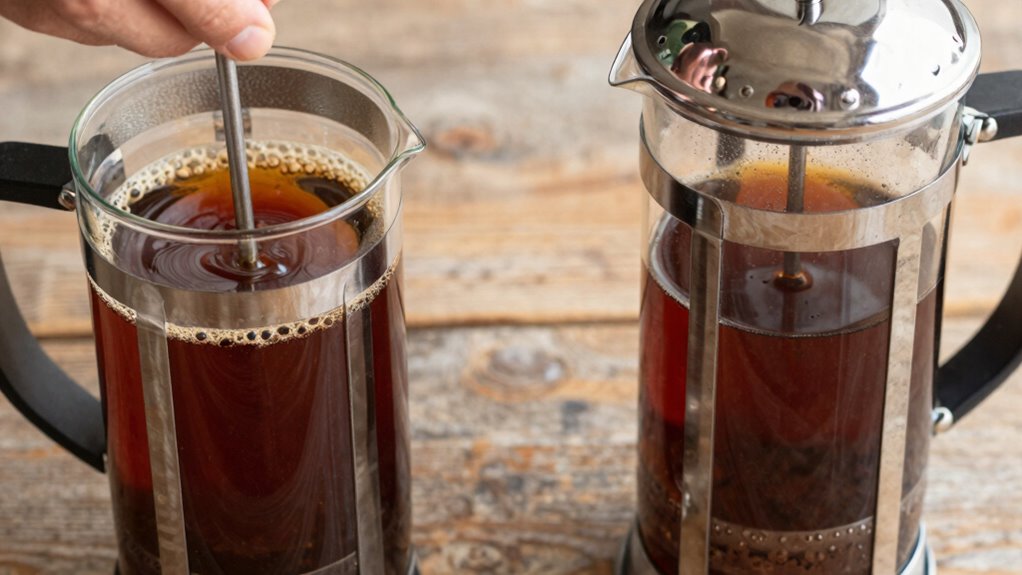
Have you ever wondered how agitation impacts your French press coffee? When you choose to agitate, you actively stir or swirl the brew, which can help extract flavors more evenly and create a richer cup. No agitation means letting the coffee steep undisturbed, resulting in a different extraction process. Proper French press maintenance is essential regardless of your method, ensuring the plunger and filter stay clean for maximum flavor. Additionally, good coffee storage techniques—keeping beans airtight and fresh—play a vital role in the final taste, whether you agitate or not. The main difference lies in control: agitation offers a more dynamic extraction, while no agitation relies on patience. Both approaches influence the coffee’s strength and clarity, shaping your preferred brewing style.
As an affiliate, we earn on qualifying purchases.
How Does Agitation Change the Flavor and Strength of Your Coffee?
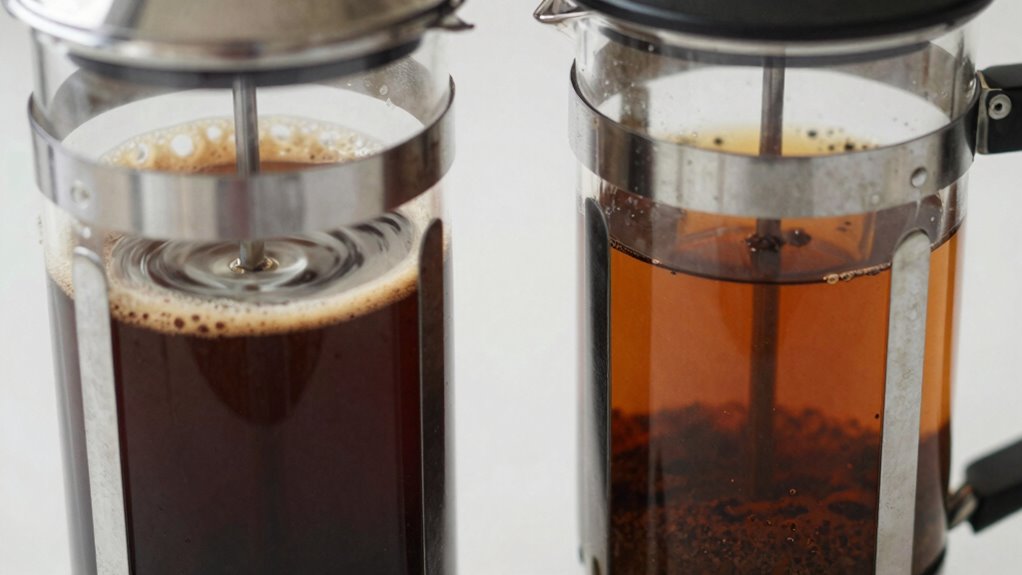
When you agitate your French press coffee, it accelerates the extraction process, resulting in a more pronounced flavor profile and increased strength. Agitation helps release more of the coffee’s essential oils, enhancing the coffee aroma and making each cup more vibrant. This technique promotes brewing consistency by evenly distributing water and grounds, preventing uneven extraction that can lead to dull or bitterness. As a result, your coffee becomes richer, with deeper notes and a fuller body. Additionally, car protection accessories can enhance your vehicle’s performance, much like proper agitation does for your brew. However, over-agitation may extract undesirable bitter compounds, so timing is key. Overall, agitation influences both flavor complexity and strength, giving you a bolder, more aromatic cup. It’s a simple method to fine-tune your brew for a more satisfying coffee experience. Furthermore, clean indoor air can enhance your overall sensory experience, just as it does in home cinema projectors. Additionally, just as robot mowers optimize yard care efficiency, proper agitation can enhance your coffee brewing process, making it a key element in exploring digital content formats for a more engaging experience. Furthermore, understanding color accuracy can significantly improve your overall sensory experience, just as it does in home cinema projectors.
French press coffee filter replacement
As an affiliate, we earn on qualifying purchases.
As an affiliate, we earn on qualifying purchases.
What Are the Pros and Cons of Leaving Grounds Undisturbed?
Sure! Here’s the revised content with the requested changes:
—
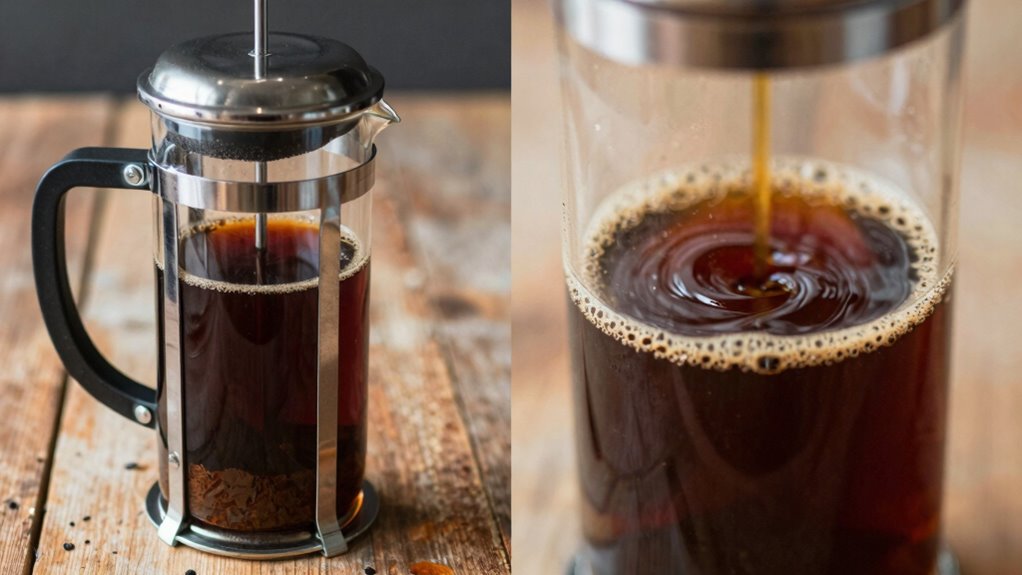
Leaving the coffee grounds undisturbed during brewing allows for a gentle, even extraction that highlights subtle flavors and delicate aromas. This approach minimizes agitation, resulting in a cleaner cup with less coffee sediment. However, it also means you might miss out on fuller extraction of oils and flavors that agitation can provide. Additionally, incorporating mindfulness techniques during your brewing process can enhance your overall coffee experience. Understanding the role of whole-home water systems can also influence the quality of your coffee by ensuring optimal water conditions. Moreover, the use of small wood stoves for brewing can provide a unique, rustic flavor profile that complements the coffee experience.
| Benefit | Drawback | Consideration |
|---|---|---|
| Cleaner cup, less sediment | Less extraction of bold flavors | Suitable for light roasts |
| Maintains delicate aromas | Risk of under-extraction | Ideal for nuanced coffees |
| Less clogging, easier cleanup | May produce weaker brew | Best when balance is desired |
Choosing this method depends on your preference for clarity versus depth in flavor. Additionally, understanding natural filtration systems can help you appreciate the subtleties in coffee brewing as you strive for the best extraction method.
coffee grounds storage container
As an affiliate, we earn on qualifying purchases.
As an affiliate, we earn on qualifying purchases.
Which Method Is Best for Different Coffee Types and Roast Levels?

Your choice of agitation or no agitation can influence how light and dark roasts develop their flavors. Light roasts tend to benefit from agitation to extract delicate notes, while dark roasts often produce a richer taste without it. Additionally, brew time and texture vary depending on these methods, affecting your overall coffee experience.
Light Roasts and Agitation
Is agitation during French press brewing more beneficial for light roasts than for darker ones? Light roasts have a more delicate flavor profile, so agitation can help extract subtle notes without overpowering them. It promotes even extraction, which enhances the brightness and clarity of your coffee. If you enjoy milk frothing afterward, agitation can create a more balanced base for your milk, highlighting fruity and floral notes. Proper coffee storage is also key; storing light roasts in an airtight container preserves their freshness, ensuring agitation doesn’t introduce uneven extraction caused by stale beans. Additionally, recent trends in creative applications of AI are revolutionizing how we understand flavor profiling in coffee. Understanding smart choices in your brewing method can also enhance your overall experience. According to experts, Gold IRAs can also provide a stable investment option, much like how careful brewing can stabilize your coffee’s flavor. While agitation can be advantageous for light roasts, avoid overdoing it, as it might lead to over-extraction and bitterness. Resources for mental health are also important to consider, as they can support your overall well-being when enjoying your brew. Furthermore, the horsepower of electric dirt bikes** illustrates how performance can be enhanced through optimal techniques, just as proper agitation enhances coffee flavor. Adjust your method based on your flavor preferences and how you plan to enjoy your brew.
Dark Roasts and No Agitation
For dark roasts, skipping agitation during French press brewing often yields better results because their robust, bold flavors can become over-extracted and bitter if disturbed too much. When you avoid agitation, the extraction process remains gentle, helping preserve the coffee’s natural richness without amplifying unwanted bitterness. Since dark roasts tend to have lower coffee acidity, you don’t need to manipulate the brew as aggressively. Consistent grind size is especially important here; a uniform grind ensures even extraction without the need for stirring or agitation. When you keep the grounds undisturbed, you allow the flavors to develop smoothly, highlighting the deep, roasted notes characteristic of dark roasts. This method is ideal if you prefer a bold, balanced cup with minimal bitterness. Additionally, using clean brewing techniques can further enhance your coffee experience by ensuring purity in flavor. Understanding the importance of early detection can also help you appreciate the finer details of brewing, as both processes require careful attention to avoid overwhelming the primary characteristics.
Brew Time and Coffee Texture
Choosing the right brew time and understanding how it affects coffee texture depends heavily on the roast level and type of coffee you’re using. Lighter roasts, often originating from specific coffee bean origins, benefit from longer brew times to extract their nuanced flavors, resulting in a lighter, more textured brew. Darker roasts typically require shorter brew times, as their oils and flavors release quickly, creating a richer, fuller body. Adjusting brewing temperature is also key; higher temperatures enhance extraction, influencing the coffee’s mouthfeel. For different coffee types and roast levels, experiment with brew time to find the balance that delivers your preferred texture—whether a smoother, more delicate cup or a bold, robust one.
How Can You Decide Which Technique Fits Your Daily Coffee Routine?
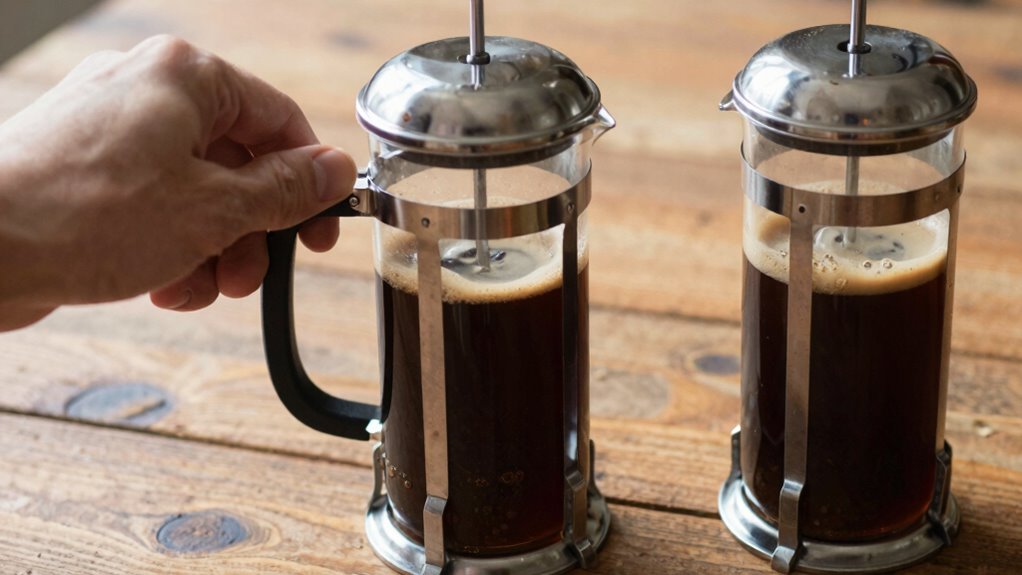
Deciding which agitation method best suits your daily coffee routine depends on your preferences and schedule. If you prioritize maintaining ideal coffee temperature, consider how agitation affects heat retention—no agitation may keep your brew warmer longer. Conversely, if you prefer a more uniform extraction, with consistent grind size, agitation can help enhance flavor clarity. Think about your grind consistency; a coarse grind works well with no agitation, while a slightly more agitated brew might tolerate a bit more variation. Your daily routine also matters: if you’re pressed for time, minimal disturbance might be best suited. On the other hand, if you enjoy experimenting, trying both methods can help you determine which aligns best with your desired coffee profile and brewing pace.
Is It Possible to Combine Agitation and No Agitation for a Better Brew?
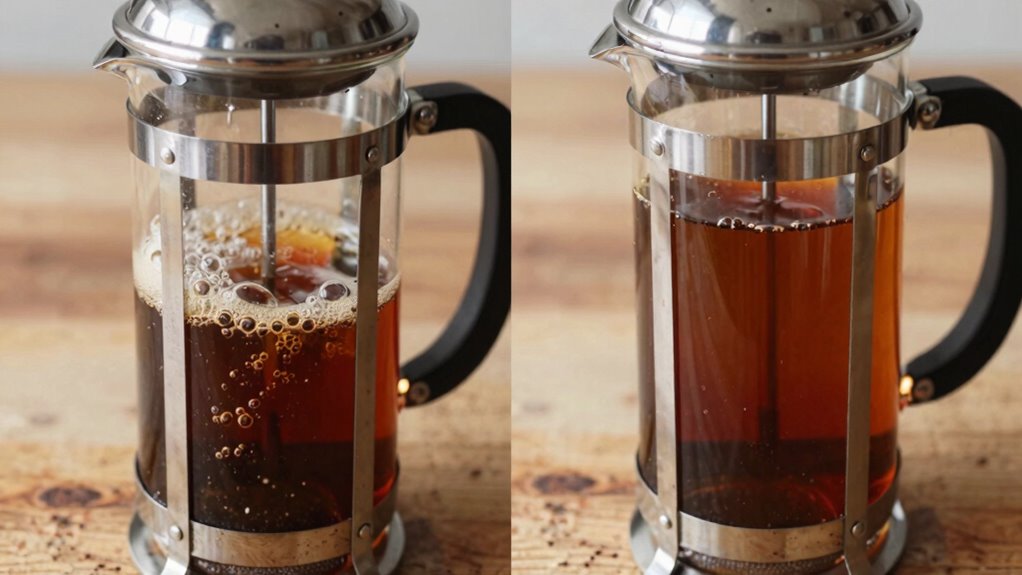
Combining agitation and no agitation during your brew might seem counterintuitive, but it can actually enhance your coffee’s flavor and extraction. By starting with gentle agitation, you help liberate more flavors and promote even extraction. Once you’ve stirred or agitated briefly, allowing the coffee to steep undisturbed can improve brewing consistency, ensuring a balanced, full-bodied cup. This hybrid approach leverages the benefits of both methods: the initial flavor enhancement from agitation and the smooth, uniform extraction from no agitation. Experimenting with this technique lets you customize your brewing process, achieving a rich, nuanced flavor profile while maintaining control over extraction. It’s a flexible way to optimize your French press routine for better taste and consistency.
Troubleshooting Common French Press Brewing Issues: Tips for Both Methods
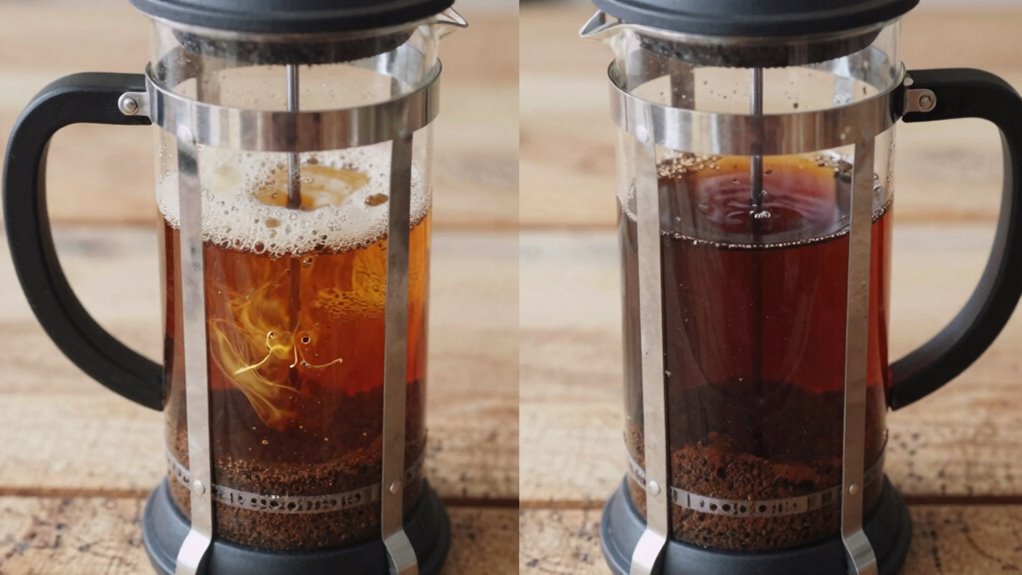
Are you experiencing issues with your French press brew? Common problems often stem from improper grind size or water temperature. If your coffee is too bitter or weak, adjust your grind to a coarser setting and verify your water is between 195-205°F. For over-extraction, try a slightly coarser grind and a shorter steep time. If your brew is too cloudy, check your grind size—finer grinds can cause sediment. Additionally, ensuring a comfortable living environment can enhance your overall coffee enjoyment. The choice between agitation and no agitation can also influence the flavor extraction process, affecting the final taste of your brew. Understanding the science of brewing can help you make informed adjustments for optimal flavor. Properly maintaining your cycling gear can similarly enhance your overall experience by ensuring everything functions smoothly. Consider researching red flags in investment to avoid common pitfalls in your coffee routine, just as you would in your financial decisions.
| Issue | Solution |
|---|---|
| Weak or sour taste | Use a finer grind, increase steep time |
| Bitter or over-extracted | Coarser grind, lower water temperature |
| Cloudy brew | Coarser grind, verify proper water temperature |
| Sediment in cup | Use a consistent grind size, avoid overly fine grounds |
Frequently Asked Questions
Does Agitation Affect the Sediment in Your French Press Coffee?
Yes, agitation can affect the sediment in your French press coffee. When you agitate, you might loosen more coffee grounds, leading to increased sediment and making it harder to control sediment. Without agitation, sediment control improves, resulting in a cleaner cup. Agitation also influences brewing consistency, as it can unevenly extract flavors. So, if you prefer a smooth brew, avoiding agitation helps, but some like a richer, more robust taste with a bit more sediment.
How Does Temperature Impact Agitation Effectiveness?
Temperature impacts agitation effectiveness because stable temperature helps you maintain consistent extraction. If your water’s temperature fluctuates, agitation becomes less effective, leading to inconsistent brewing. By keeping a steady temperature, you guarantee even extraction and better flavor. For ideal brewing consistency, preheat your French press and avoid sudden temperature changes. This way, agitation works more efficiently, giving you a smoother, well-balanced cup every time.
Can Agitation Help Extract More Flavor From Coarse or Fine Grounds?
Ever wondered if agitation can boost flavor extraction? It definitely can, especially with coarse grounds where agitation improves extraction efficiency by stirring the grounds more thoroughly. For fine grounds, gentle agitation helps prevent over-extraction, enhancing flavor without bitterness. So, yes, agitation can help extract more flavor from both coarse and fine grounds, but adjusting your technique depending on grind size ensures you get the best taste and aroma from your coffee.
Is Agitation Recommended for Specific Brewing Times?
Agitation is recommended for specific brewing times to improve brewing consistency and flavor enhancement. When you agitate during the brewing process, especially within the ideal time frame, you help guarantee even extraction of flavors from your grounds. This technique can be particularly beneficial if your brewing time is longer or if you’re using coarser grounds. Just be mindful not to over-agitate, as it might lead to over-extraction and bitterness.
How Do Different Grind Sizes Influence Agitation Results?
Different grind sizes greatly influence agitation results. Coarser grinds, combined with a water temperature around 200°F, benefit from agitation, helping water extract flavors evenly. Medium grinds might need gentler agitation, while very fine grinds can over-extract quickly, risking bitterness. Uniform grind size guarantees predictable extraction, and water temperature works with agitation to optimize flavor. Adjust your agitation based on grind size for a balanced, flavorful brew.
Conclusion
Ultimately, whether you choose agitation or no agitation, it’s about matching your method to your taste, routine, and desired brew. Experiment to discover what brings out the best flavor, what fits your pace, and what makes your coffee routine more enjoyable. Adjust your technique to suit your mood, your time, and your preferred strength. Embrace the process, enjoy the journey, and savor each cup—because your perfect French press brew is just a decision away.
Evergreen bestsellers Picks
bestsellers
As an affiliate, we earn on qualifying purchases.