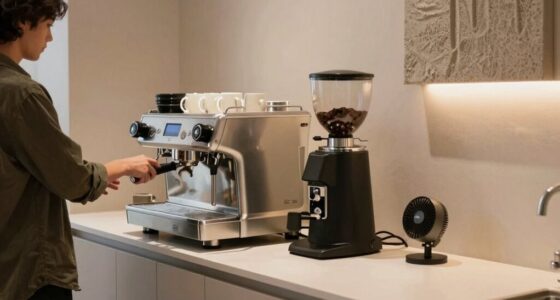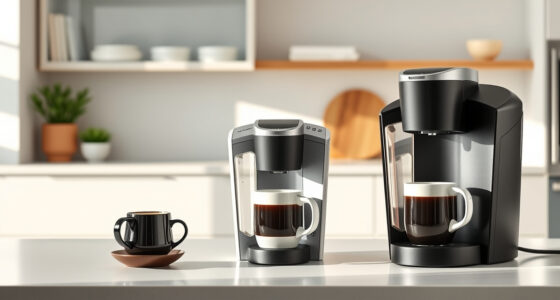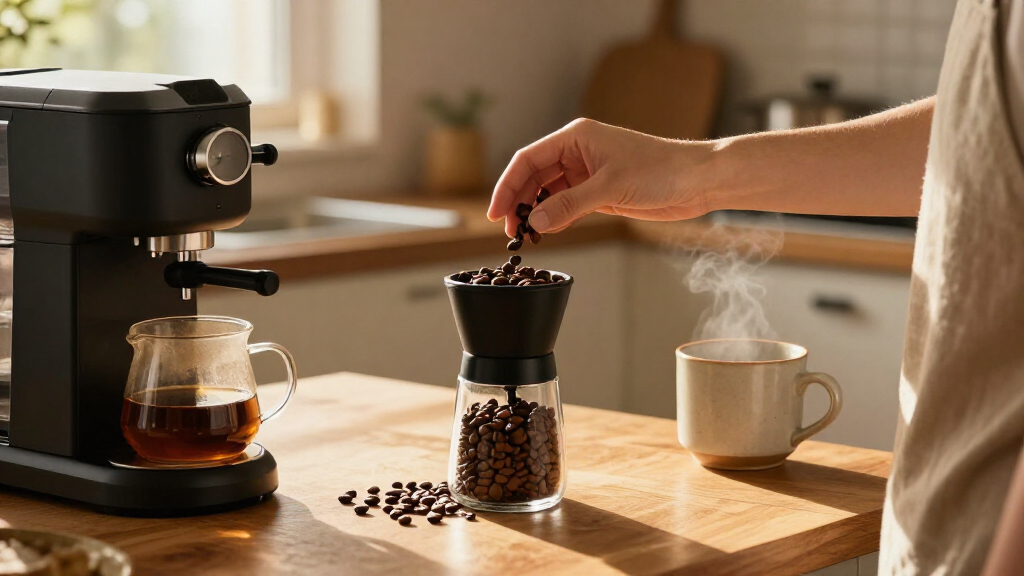

Choosing a coffee maker with a built-in grinder is really a choice between two daily routines: brewing a pot with minimal attention or making espresso drinks with more control and effort. Drip machines grind beans and brew a larger amount at once; espresso machines grind for each shot and use pressure to produce concentrated coffee. Both save the step of buying a separate grinder, but they serve different cups and expectations. Choose drip if you want reliable coffee for a household or several cups through the morning. Choose espresso if you prefer shots, cappuccinos, or lattes and are willing to learn a more involved process.

Get coffee and tea gear delivered free with Prime
- Fast, free delivery on millions of items
- Prime Video, Amazon Music and more included
- Member-only deals all year
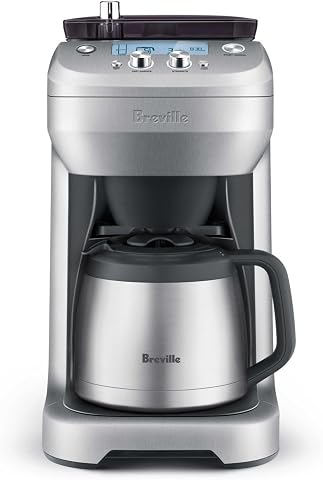
Breville Grind Control Drip Coffee Maker with Thermal Carafe
- ✔ Coffee maker type: Automatic drip
- ✔ Grinder: Integrated adjustable stainless steel burr grinder
- ✔ Strength settings: 8

Cuisinart DGB-400NAS 12-Cup Automatic Grind & Brew Coffee Maker
- ✔ Coffee maker type: Automatic drip
- ✔ Grinder: Built-in blade grinder
- ✔ Capacity: 12 cups, approximately 5 oz per cup

Horavie Single-Serve Coffee Maker with Built-In Grinder
- ✔ Model: CGM521
- ✔ Brew types: Whole beans, ground coffee, K-Cup pods
- ✔ Grind-time settings: 6 settings, 6–16 seconds
At a Glance
| Criteria | Drip coffee makers with built-in grinders | Espresso machines with built-in grinders | Winner |
|---|---|---|---|
| Best for | Batch coffee and multiple drinkers | Espresso and espresso-based drinks | Depends |
| Typical output | Several cups per brew cycle | One or two concentrated shots at a time | A |
| Ease of use | Generally simple, often programmable | More steps and hands-on preparation | A |
| Control and learning curve | Limited tuning; forgiving routine | More adjustment and practice for consistent shots | A |
| Milk drinks | Usually requires separate milk frother | Often includes a steam wand or milk system | B |
| Cleanup and upkeep | Carafe and brew basket cleanup; grinder maintenance | Portafilter, brew group, wand, and grinder need regular care | A |
| Value | Strong value for people who drink regular coffee | Worth the higher cost for frequent espresso drinkers | Depends |
Breville Grind Control Drip Coffee Maker with Thermal Carafe
For buyers who choose a grinder-in-brewer because they want to shape the cup, the Breville Grind Control makes the most complete case. Its integrated stainless steel burr grinder has adjustable grind settings, and eight strength settings let us tune the brew beyond simply choosing how much coffee to make. That makes it more configurable than Cuisinart’s blade-grinder setup and gives it a stronger claim as a coffee maker with a genuinely adjustable grinding system.Its versatility extends to serving: the machine can brew into a carafe, cup, or travel mug, and the dual-wall thermal carafe is designed to retain heat without relying on a warming plate. A half-pound bean hopper and 60-ounce water tank support repeated brewing. It also accepts pre-ground coffee, which is useful when we want decaf or have beans already ground.That control comes with a substantial footprint. At 16.3 inches tall and 16.1 pounds, it deserves a deliberate counter-space check; Horavie is much narrower and built for single servings. The Breville also has a one-year limited warranty, shorter than Cuisinart’s stated three-year limited warranty. Choose it for adjustable grinding and batch flexibility, but skip it if compactness or a longer stated warranty is your main priority.
Pros:
- Adjustable stainless steel burr grinder gives more grind control than the Cuisinart blade grinder.
- Eight strength settings offer additional control over the brewed cup.
- Thermal carafe and cup or travel-mug brewing suit different serving routines.
- Accepts pre-ground coffee as well as whole beans.
Cons:
- Its 16.3-inch height and 16.1-pound weight require substantial counter space.
- The listed one-year limited warranty is shorter than Cuisinart’s stated three-year limited warranty.
Best for: Coffee drinkers who want an adjustable burr grinder, multiple strength settings, and the option to brew into a carafe, cup, or travel mug.
Not ideal for: Anyone with limited vertical counter clearance, or buyers who mainly want a compact single-serve machine with pod compatibility.
Bottom line: We rank the Breville first for buyers who want the most control over grinding and strength in a versatile drip machine, provided its size fits their kitchen.
“We rank the Breville first for buyers who want the most control over grinding and strength in a versatile drip machine, provided its size fits their kitchen.”
Cuisinart DGB-400NAS 12-Cup Automatic Grind & Brew Coffee Maker
The Cuisinart is the practical pick for households that want to load beans, set a timer, and brew a pot. Its 24-hour programmability and 12-cup glass carafe make it better suited to planned batch brewing than Horavie, which is designed around individual cups. A 1–4 cup setting also gives smaller batches their own mode, so this is not strictly a full-pot machine.For a built-in grinder, the tradeoff is simplicity: this model uses a blade grinder, rather than the Breville’s adjustable burr system. Buyers who care about dialing in grind size should favor Breville. Cuisinart does, however, offer a grind-off setting for pre-ground coffee, plus a reusable gold-tone filter and charcoal water filter. Brew Pause and auto shutoff add everyday convenience without requiring pod-specific accessories.Be precise about what “12 cups” means here: the stated capacity uses cups of approximately 5 ounces each, so it does not correspond to twelve large mugs. The glass carafe also differs from Breville’s thermal one, and the supplied specs do not promise the same heat retention. This is a sensible choice when scheduled carafe brewing matters more than fine grinder adjustment; skip it if a burr grinder or insulated carafe is essential.
Pros:
- 24-hour programmable timer supports scheduled batch brewing.
- Grind-off option accommodates pre-ground coffee.
- 1–4 cup setting adds flexibility for smaller batches.
- Reusable gold-tone filter and charcoal water filter are included.
Cons:
- Blade grinder offers less grind adjustment than the Breville burr grinder.
- The stated 12-cup capacity counts approximately 5-ounce cups, not full-size mugs.
- Glass carafe lacks the thermal format specified for the Breville.
Best for: Households that want a programmable drip brewer with a carafe, small-batch mode, and the option to use whole beans or pre-ground coffee.
Not ideal for: Buyers seeking adjustable burr grinding, a thermal carafe, or single-serve pod compatibility.
Bottom line: We recommend the Cuisinart for straightforward, scheduled drip brewing with a grinder built in, as long as its blade grinder and small-cup capacity suit your expectations.
“We recommend the Cuisinart for straightforward, scheduled drip brewing with a grinder built in, as long as its blade grinder and small-cup capacity suit your expectations.”
Horavie Single-Serve Coffee Maker with Built-In Grinder
The Horavie earns its place by handling three different inputs: whole beans, ground coffee, and K-Cup pods. That combination is unusual among these picks. Where Breville and Cuisinart focus on drip brewing, Horavie lets us make one cup and switch formats when convenience, available coffee, or household preferences change. Six brew sizes, from 6 to 16 ounces, make it easier to match the serving to a smaller cup or travel mug.Grinding happens inside the single-serve workflow, with six grind-time settings ranging from 6 to 16 seconds. This offers a degree of adjustment, but it is a different kind of control from Breville’s adjustable burr grinder: the supplied specifications describe grind time, not a broad burr grind-size range. Buyers prioritizing precision should look to Breville. Horavie is better understood as a flexible mug brewer with fresh grinding built in.A 47-ounce removable tank and drip tray that accommodates cups up to 6.89 inches tall reduce the need to refill after every serving and help with taller cups. Still, its footprint is compact in width rather than tiny in every dimension: listed measurements are 12.5 inches deep by 6.02 inches wide by 13.38 inches high. The product description’s compact measurements differ from the listed dimensions, so check available space against the listed figures. Choose it for one-at-a-time versatility; skip it if you need a carafe or detailed grind control.
Pros:
- Brews whole beans, ground coffee, and K-Cup pods.
- Six brew sizes cover servings from 6 to 16 ounces.
- Removable 47-ounce water tank supports multiple servings between refills.
- Removable drip tray accommodates cups up to 6.89 inches tall.
Cons:
- Timed grinding from 6 to 16 seconds offers less described grind control than Breville’s adjustable burr grinder.
- The product description’s compact measurements differ from the listed dimensions.
- Single-serve format does not replace a multi-cup carafe for group brewing.
Best for: Single-serve drinkers who want to alternate between freshly ground beans, pre-ground coffee, and compatible K-Cup pods.
Not ideal for: Households that regularly serve multiple people from a carafe, or coffee drinkers who want the grind control of an adjustable burr grinder.
Bottom line: We’d choose Horavie for flexible one-cup brewing across beans, grounds, and pods, while accepting less grinder precision and no carafe.
“We’d choose Horavie for flexible one-cup brewing across beans, grounds, and pods, while accepting less grinder precision and no carafe.”
As an Amazon Associate we earn from qualifying purchases.
Key Differences
The biggest difference is the drink and workflow. A drip machine with a grinder is built to make a pot of coffee: add beans and water, select a setting, and let the machine brew. An espresso machine with a grinder is built around individual shots. You may adjust the grind, dose, tamp, and extraction, then steam milk if you want a latte or cappuccino. The espresso setup offers more drink variety, but its extra control comes with a steeper learning curve and more cleanup.
Capacity and value follow from that distinction. Drip is the practical choice when several people want coffee or one person wants more than a shot at a time. Espresso is the better fit for concentrated drinks and milk-based café favorites, but a built-in grinder does not make the process automatic or guarantee consistent results. Pay more for espresso only if you will use its shot-making and milk features often. If you mainly want a straightforward cup or pot, a grinder-equipped drip machine is usually the better buy.
Detailed Comparison
Best for (major difference)
Drip wins for households, shared kitchens, and people who want regular coffee ready with little effort. Espresso wins for people whose usual order is a shot, latte, or cappuccino. This is a major difference: the machines make distinct styles of coffee, so start with the drink you actually want each day.
Typical output (Drip coffee makers with built-in grinders wins — major)
Drip machines win on volume, brewing several cups in one cycle. Espresso machines make a concentrated shot or a small number of drinks at a time. The gap is major for families or guests, while espresso’s smaller output suits single drinks and shot-based recipes.
Ease of use (Drip coffee makers with built-in grinders wins — moderate)
Drip wins by a clear margin. Many models let users add water and beans, choose a brew size, and start; programmable models can handle timing as well. Espresso asks for more preparation and attention. The difference is moderate to major depending on how much you enjoy a hands-on morning routine.
Control and learning curve (Drip coffee makers with built-in grinders wins — moderate)
Espresso offers more room to adjust grind and extraction, which can help users tune a shot to their beans and taste. It also takes practice to get consistent results. Drip offers fewer variables and is more forgiving. Espresso wins for control; drip wins for repeatable simplicity. This is a moderate tradeoff, not a reason to choose espresso if you do not want to experiment.
Milk drinks (Espresso machines with built-in grinders wins — major)
Espresso machines win because many include a steam wand or milk system for lattes and cappuccinos. Drip coffee makers generally do not froth milk, so a separate device may be needed for milk drinks, and the result is not espresso-based. This is a major advantage only if those drinks are part of your routine.
Cleanup and upkeep (Drip coffee makers with built-in grinders wins — moderate)
Drip usually wins: users empty the grounds and clean the carafe and brew basket, while grinder care depends on the model. Espresso can involve cleaning the portafilter and brew group and wiping or purging a steam wand, along with grinder maintenance. The gap is moderate, and actual upkeep varies by machine and frequency of use.
Value (major difference)
Neither category wins for every buyer. Drip is better value when the goal is everyday black coffee and batch convenience. Espresso can justify a higher outlay for people who regularly make espresso drinks and value having the grinder and brewing equipment together. If you will rarely use the milk features or make shots, the extra cost buys capability you may not need.
Drip coffee makers with built-in grinders: Pros and Cons
Pros:
- Brews several cups in one cycle
- Simple routine for everyday coffee
- Often programmable for scheduled brewing
- Usually better value for batch coffee drinkers
Cons:
- Does not make true espresso shots
- Usually lacks an integrated milk steaming system
- Offers less control over extraction than espresso equipment
Espresso machines with built-in grinders: Pros and Cons
Pros:
- Makes espresso shots for drinks such as lattes and cappuccinos
- Often pairs the grinder with a steam wand or milk system
- Allows more adjustment for users who enjoy dialing in shots
Cons:
- Requires practice and more hands-on preparation
- Makes smaller servings rather than a pot
- Needs more frequent cleaning of brewing and milk components
Who Should Choose What
Choose Drip coffee makers with built-in grinders if:
- You want a pot or multiple cups of regular coffee with minimal morning effort.
- Several people share the machine or you often serve guests.
- You value programming and straightforward operation more than espresso drinks.
Choose Espresso machines with built-in grinders if:
- You regularly drink espresso, cappuccinos, or lattes and will use the machine’s milk features.
- You enjoy adjusting grind and extraction to suit different beans.
- You accept a more involved routine and higher purchase cost for espresso capability.
Skip both if: You want both effortless batch coffee and consistently refined espresso but do not want two routines or equipment. Consider choosing the style you drink most, or comparing separate grinder and brewer setups.
Value for Money
Drip machines with built-in grinders tend to make more financial sense for people who mainly drink brewed coffee: they combine grinding and batch brewing without charging for espresso features. Espresso machines cost more because they add pressure-based brewing and often milk preparation. That premium is worthwhile for frequent espresso and milk-drink drinkers who will use those features. If you mostly want a quick mug or a full pot, paying extra for espresso is poor value; if café-style drinks are a daily habit, the added capability can be worth the cost.
Final Verdict
For most people who want a built-in grinder for everyday coffee, choose a drip coffee maker. It is easier to use, brews more at once, and offers better value when your preferred drink is a regular cup or pot. Choose an espresso machine with a built-in grinder if espresso shots and milk drinks are the point of the purchase and you are ready for more practice and cleanup. The deciding factor is not the grinder: it is whether you want batch coffee or espresso-based drinks.
Frequently Asked Questions
Can a drip coffee maker with a built-in grinder make espresso?
No. It brews coffee by passing water through grounds rather than forcing water through a compact coffee puck under espresso pressure. It can make strong coffee, but that is not the same as an espresso shot.
Is an espresso machine with a built-in grinder easier than buying separate equipment?
It can save counter space and simplify setup by combining two functions. It does not remove the need to learn shot preparation, adjust the grind, or clean the brewing and milk components.
Which type is better for a household with several coffee drinkers?
A drip machine is usually the more practical choice because it makes several cups per cycle. An espresso machine suits a household better when members specifically prefer espresso drinks and are comfortable making them individually.
Is the higher cost of an espresso machine worth paying?
It is worth paying when you regularly make espresso or milk drinks and value the ability to adjust shots. For mostly plain coffee, a grinder-equipped drip machine usually delivers better value.