
To reduce static when grinding coffee, you can try dampening the beans slightly with a few drops of water. Choose a stainless-steel grinder and grind in smaller batches to minimize buildup. Using glass containers instead of plastic can help too. Regularly clean your grinder to prevent residue that adds to static. Finally, managing your indoor humidity can keep static at bay. Stick around to discover more tips for a smoother coffee grinding experience.

Get coffee and tea gear delivered free with Prime
- Fast, free delivery on millions of items
- Prime Video, Amazon Music and more included
- Member-only deals all year
Key Takeaways
- Dampen coffee beans slightly with water before grinding to reduce static cling during the process.
- Choose stainless steel grinders over plastic to minimize static buildup.
- Grind coffee in smaller batches to prevent excess static accumulation.
- Maintain a regular cleaning schedule for your grinder to avoid residue-related static issues.
- Adjust indoor humidity levels to 30-50% for optimal static control while grinding.
As an affiliate, we earn on qualifying purchases.
How to Reduce Static Cling When Grinding Coffee
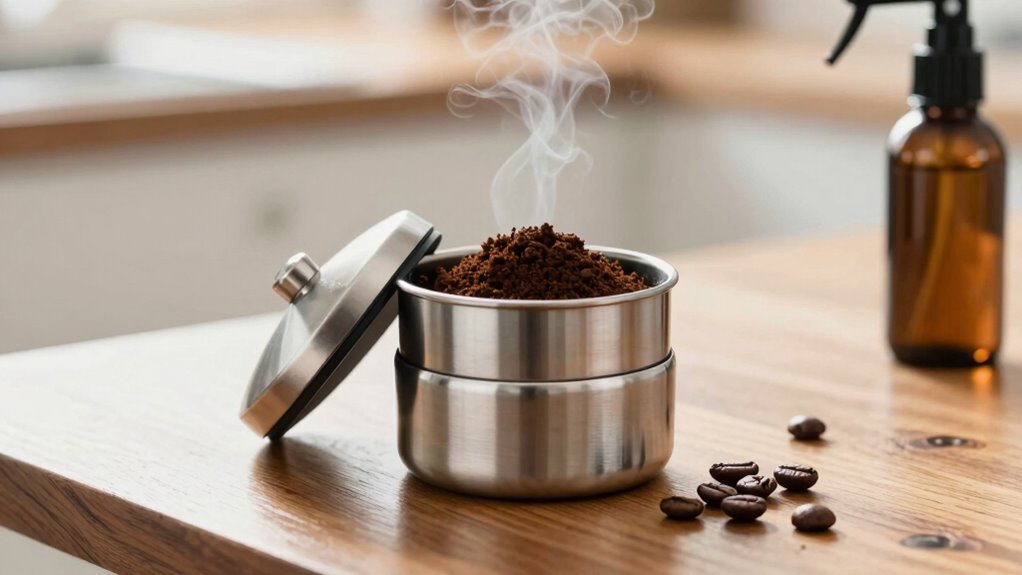
Static cling can be a frustrating issue when grinding coffee, but there are simple ways to minimize it. One effective method is to slightly dampen your coffee grind. Just add a few drops of water to the beans before grinding; this can reduce static electricity substantially. Another trick is to use a grinder with a stainless-steel bowl, as it tends to generate less static compared to plastic. You can also try grinding in smaller batches, which helps prevent a buildup of static. Finally, consider using a grinder with a built-in anti-static feature, if available. By implementing these tips, you’ll enjoy a smoother coffee grind experience, free from the annoying cling of static.
As an affiliate, we earn on qualifying purchases.
What’s up With Static Cling in Your Coffee Grinder?
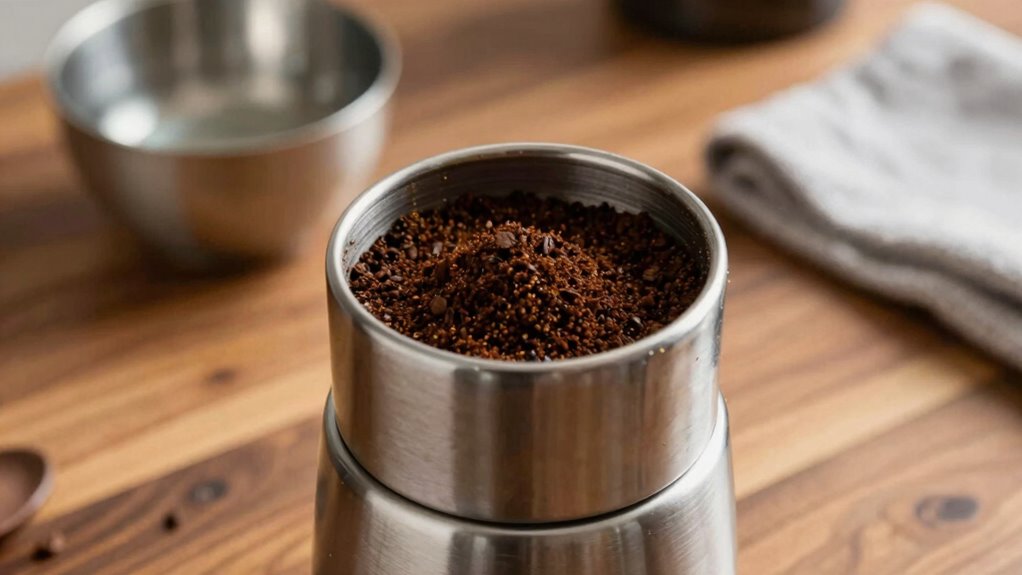
If you’ve ever wondered why your coffee grounds seem to cling to everything in sight, you’re not alone. This pesky issue often stems from the grinding mechanics of your coffee grinder. As the beans break down, they generate static electricity, which causes the fine particles to stick to the grinder’s walls and each other. The more finely you grind, the more static builds up. This results in a messy encounter every time you try to pour out your freshly ground coffee. Factors like humidity and the type of beans can also influence static cling. Understanding these mechanics can help you tackle the issue, making your coffee experience much smoother and less frustrating.
coffee grinder with moisture control
As an affiliate, we earn on qualifying purchases.
As an affiliate, we earn on qualifying purchases.
Moistening Coffee Grounds to Reduce Static
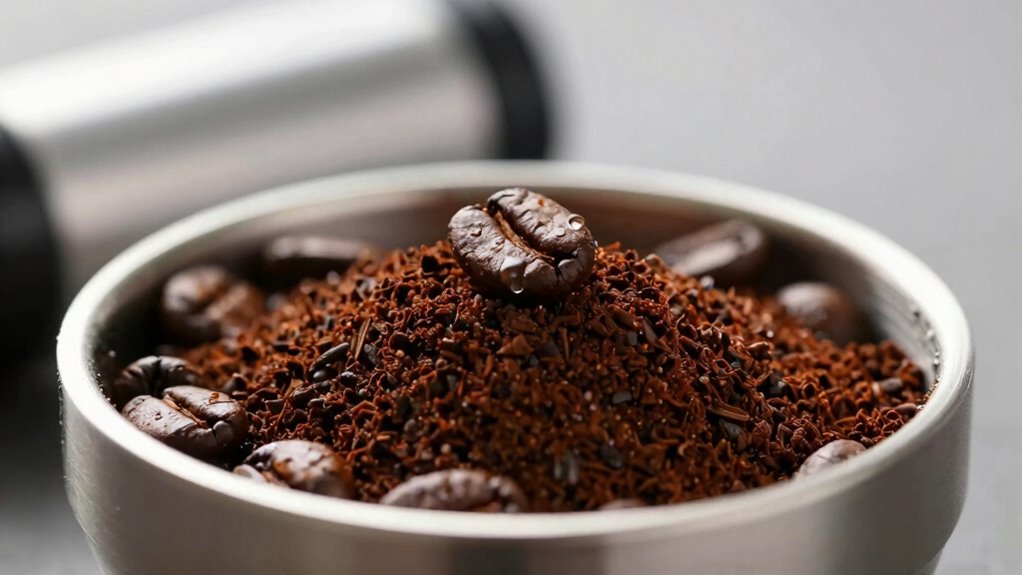
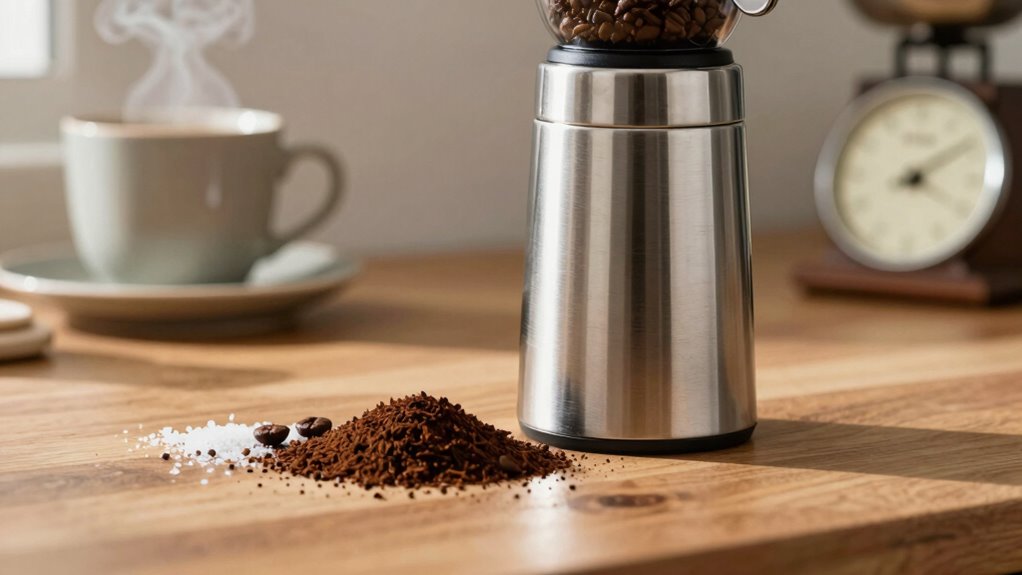
One effective way to combat the static cling of coffee grounds is by slightly moistening them before grinding. By adjusting moisture levels, you can greatly reduce the static electricity that builds up during the grinding process. Just a few drops of water on the grounds can make a big difference. Be careful not to overdo it; too much moisture can affect your coffee’s flavor and extraction. You can experiment with different grinding techniques, like pulsing the grinder in short bursts, to find what works best for you. This approach not only minimizes mess but also helps achieve a more consistent grind. Additionally, understanding kitchen appliance science can further enhance your grinding experience. Say goodbye to static cling and enjoy a cleaner, more efficient coffee-making experience!
As an affiliate, we earn on qualifying purchases.
Grinder and Container Materials Matter
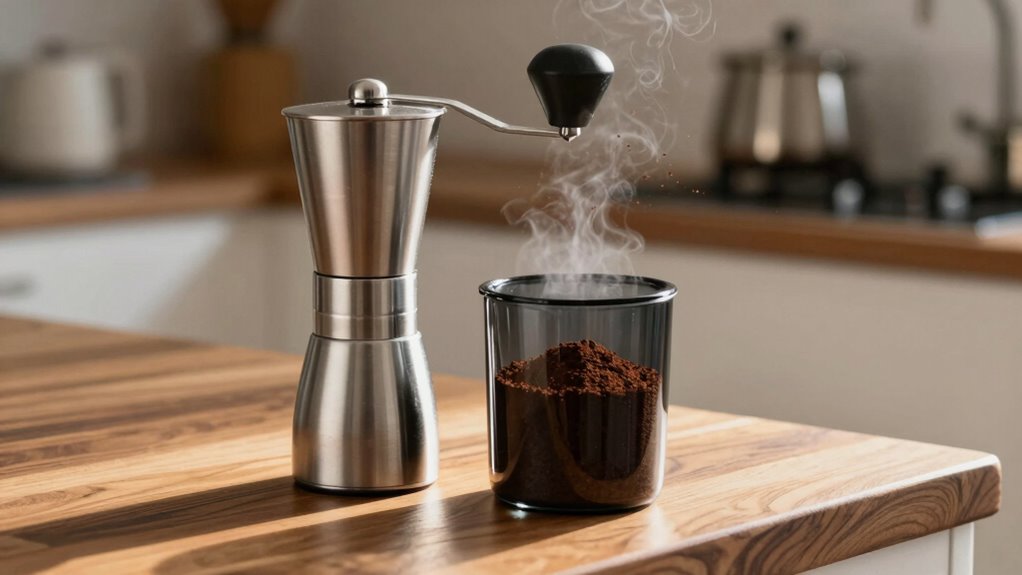
When selecting a grinder and container, the materials can greatly impact static electricity levels during the coffee grinding process. Choosing the right grinder materials can reduce static build-up. For instance, stainless steel grinders tend to produce less static than plastic ones. If you prefer a glass container, it can help minimize static as well, while plastic containers often exacerbate the problem.
When considering container types, opt for those with a smooth interior surface. This helps prevent coffee grounds from clinging and generating static. Remember, both grinder materials and container types play an essential role in your coffee experience. By being mindful of what you choose, you can enjoy a smoother grinding process and less mess to clean up afterward.
Optimize Your Grinding Technique to Minimize Static
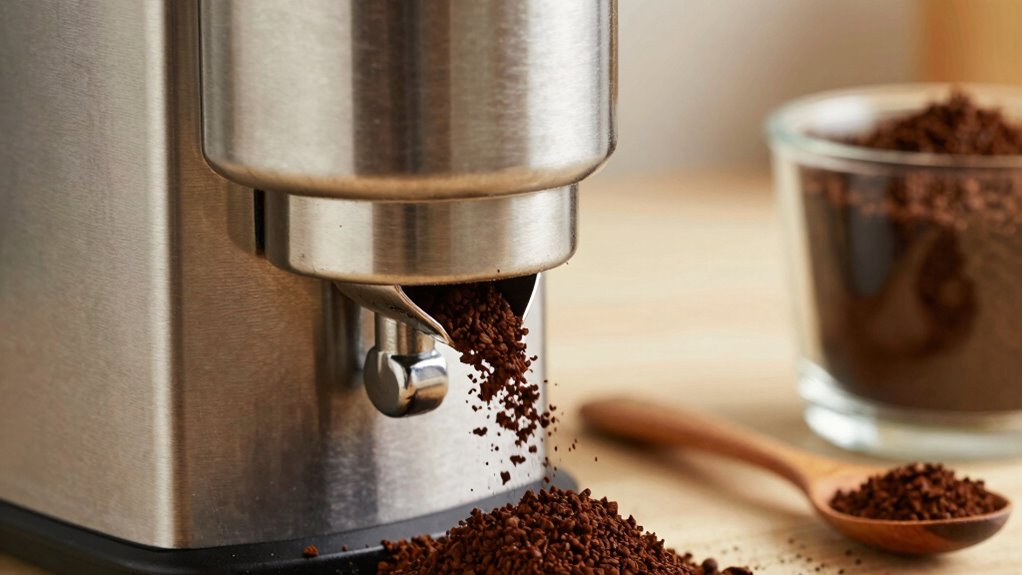
To minimize static during coffee grinding, you can fine-tune your technique for better results. Start by adjusting your grind speed; a slower grind can reduce friction and, consequently, static buildup. Experiment with different speeds to find what works best for your grinder and beans. Additionally, make certain your beans are fresh. Stale beans tend to produce more static due to their dryness, as fresh beans retain moisture better. Using super-automatic espresso machines can also help achieve consistent grind results. Incorporating strength training fundamentals into your daily routine can enhance your overall focus and precision, which is beneficial when grinding coffee. Proper maintenance of your grinder can also significantly impact performance and reduce static buildup, as maintenance routines ensure optimal functionality. If you notice excessive static, consider lightly moistening the beans before grinding—just a few drops of water or using a humidity-controlled container can help. Finally, avoid overfilling your grinder, as this can lead to uneven grinding and increased static. With these adjustments, you’ll enjoy a smoother grinding experience and less static interference. Incorporating wellness technology in your kitchen can also enhance your overall coffee-making experience.
Cleaning Your Grinder for a Static-Free Experience

To keep your coffee grinding experience static-free, regular maintenance is key. You’ll want to clean your grinder properly to prevent any residue buildup that can contribute to static. By following a consistent cleaning schedule, you can enjoy a smoother grind every time.
Regular Maintenance Schedule
Sure! Here’s the revised content with the requested changes:
—
Although many overlook it, a regular maintenance schedule is essential for keeping your coffee grinder free from static buildup. Consistent grinder upkeep not only enhances performance but also minimizes mess. Additionally, good air quality in your kitchen can help reduce the likelihood of static electricity. Implementing smart home automation features can also assist in maintaining optimal humidity levels, further reducing static. A clean and organized space can also contribute to overall comfort, making your coffee experience even more enjoyable. Regular cleaning helps ensure that your grinder’s lifespan is maximized, allowing you to enjoy excellent coffee for years to come. Stick to a maintenance frequency that suits your usage; for daily grinders, weekly checks are ideal, while occasional users can clean monthly. Additionally, maintaining a clean environment can significantly improve overall indoor air quality, making your coffee experience even more enjoyable.
| Maintenance Task | Frequency |
|---|---|
| Emptying the Grounds | After Each Use |
| Deep Cleaning | Weekly |
| Inspecting Blades | Monthly |
—
Let me know if you need any further modifications!
Proper Grinder Cleaning Techniques
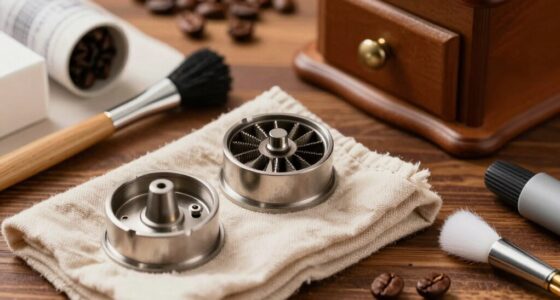
Keeping your coffee grinder clean is essential for minimizing static and ensuring a smooth grinding experience. Different grinder types require varying cleaning techniques, but the goal remains the same: a residue-free chamber. For blade grinders, a quick wipe with a dry cloth after each use is often enough. For burr grinders, aim to clean them every few weeks, depending on your usage. Disassemble the grinder, and use a soft brush to remove coffee grounds from hard-to-reach areas. You can also run a small amount of uncooked rice through to absorb oils and static. Regular cleaning not only helps reduce static but also enhances the flavor of your coffee, making each cup a delight. Additionally, using HEPA filters in your kitchen can further help reduce airborne particles that may contribute to static buildup. Understanding the mechanics of French press can also improve your overall coffee brewing experience. Moreover, maintaining essential DIY tools can help ensure that your coffee preparation process is both efficient and enjoyable. Using a high refresh rate grinder can also minimize the static generated during the grinding process. Investing in anti-fatigue mats can also create a more comfortable standing experience while you grind, reducing overall strain during the process.
Avoiding Residue Buildup
Cleaning your grinder regularly is just the start; avoiding residue buildup is key to a static-free grinding experience. Residue types like oil and coffee grounds can cling to your grinder materials, causing static and impacting flavor. Here’s how to keep your grinder clean and efficient:
- Use a brush to sweep away coffee particles.
- Check for oil residue regularly, especially with oily beans. This is particularly important as clean equipment can enhance overall coffee quality. Additionally, maintaining a clean grinder can improve your investment returns by ensuring you get the best flavor from your beans.
- Consider your grinder materials; some attract more static than others. Regular maintenance can help prevent cross-contact risks, which are often overlooked in kitchen equipment. Additionally, using eco-friendly cleaning solutions can further improve your grinder’s performance without harming the environment.
- Deep clean every few weeks to maintain peak performance.
- Regular maintenance helps prevent residue buildup, which can exacerbate static issues.
Troubleshooting Persistent Static Issues
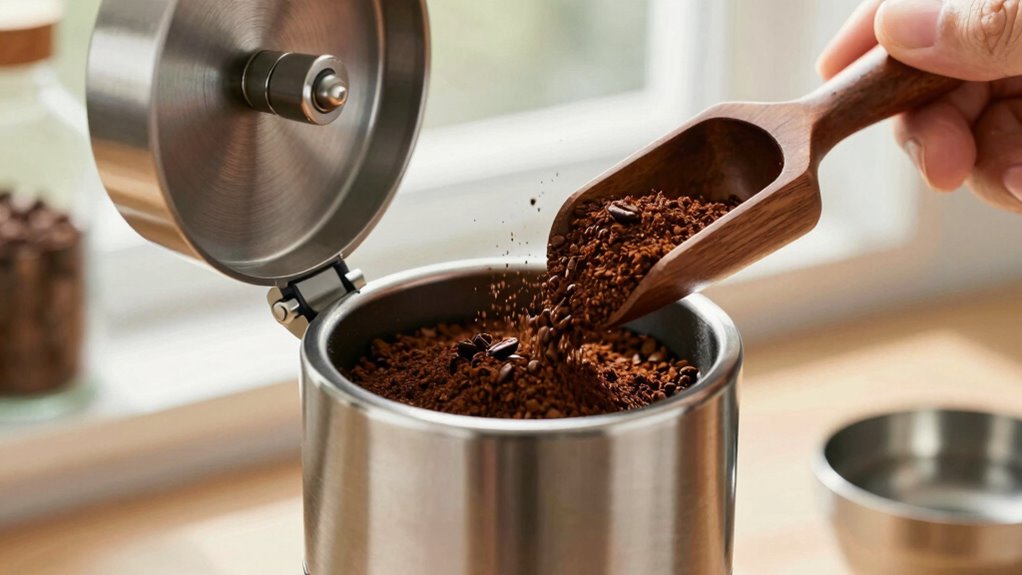
If you’re still battling static when grinding coffee, it’s time to troubleshoot. Start by identifying your grinder type, as different models can react differently. You might also want to adjust humidity levels or experiment with grind size to see what works best for you.
Identify Your Grinder Type
Understanding your grinder type is essential because each model can behave differently when it comes to static buildup. Here’s what you should consider:
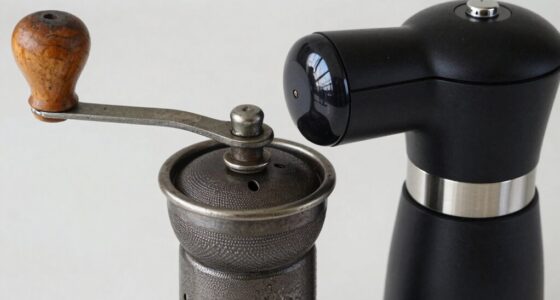
- Manual grinders often produce less static but require more effort.
- Electric grinders can vary widely—burr vs blade makes a big difference in grind consistency.
- Grinder settings impact how finely you grind, which can affect static levels.
- Portability factors and price ranges can influence your choice too, balancing convenience and budget.
Adjust Humidity Levels
While humidity might not be the first thing you think of when tackling static issues with your coffee grinder, adjusting it can make a significant difference. Maintaining proper humidity control helps achieve the right moisture balance in your coffee grounds, reducing static cling. Additionally, using acoustic drum shields can help create a more controlled environment in your studio, which may assist in managing static levels. Proper indoor air quality is essential for reducing static in various settings, including your kitchen, as it contributes to focused environments that enhance overall well-being.
| Humidity Level | Likely Effect | Recommended Action |
|---|---|---|
| Low (0-30%) | High static | Use a humidifier |
| Ideal (30-50%) | Balanced static | Maintain current levels |
| High (50%+) | Clumpy grounds | Decrease humidity |
Experiment With Grind Size
Adjusting your grind size can greatly impact static cling in your coffee grinder. When you experiment with different sizes, you’ll notice changes in grind consistency and particle distribution that can help reduce static. Here are some tips to take into account:
- Finer grinds often create more static due to increased surface area.
- Coarser grinds may lead to less static but can affect extraction.
- Aim for a balance that suits your brewing method.
- Keep track of your adjustments to find what works best for you.
Choosing the Right Grinder for Minimal Static
Choosing the Right Grinder for Minimal Static
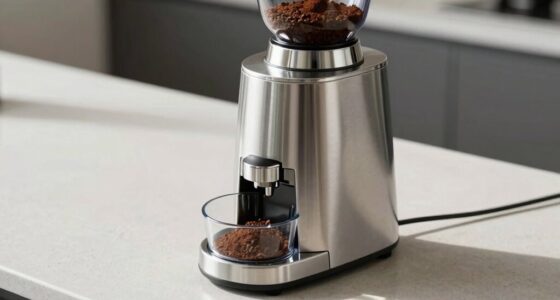
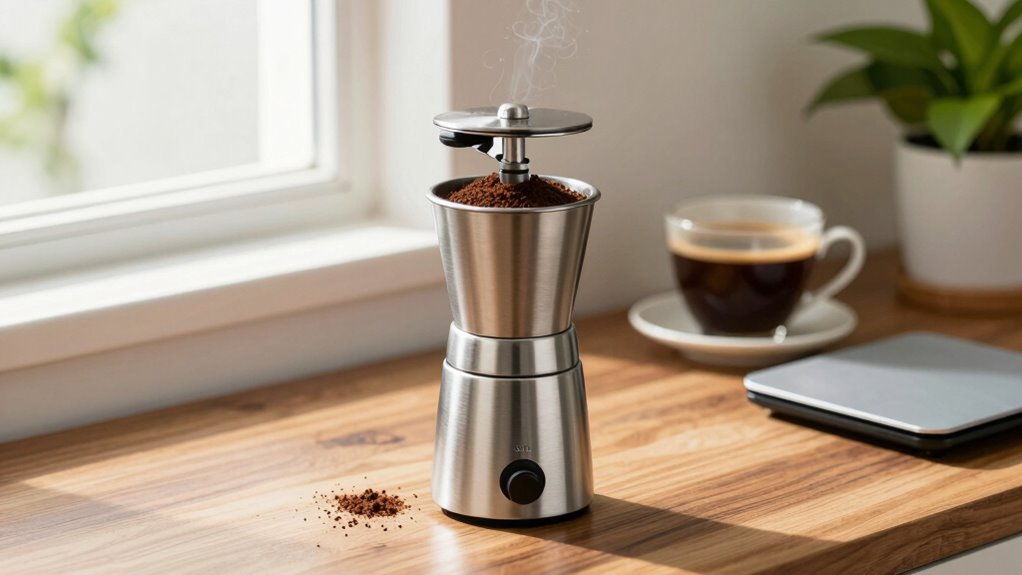
Choosing the right grinder can greatly reduce static, making your coffee experience smoother. Burr grinders are typically your best bet for minimal static. Their design grinds coffee beans evenly, reducing grind retention and static electricity. Opt for grinders made from materials that promote static reduction, like stainless steel.
Be cautious with blade grinders; they can create more static due to their high grinding speed and uneven grind size. Additionally, verify your grinder is properly electrically grounded to minimize static buildup. Remember, the right grinder design plays an essential role in your coffee preparation, enhancing flavor while keeping the mess at bay. With these tips, you’ll enjoy a cleaner, more satisfying grind every time. Incorporating training concepts into your coffee grinding routine can further enhance your overall preparation experience.
Frequently Asked Questions
Can Static Cling Affect the Flavor of My Coffee?
Yes, static cling can affect your coffee’s flavor. When static builds up, it can cause grounds to cling to your grinder or filter, leading to uneven extraction. This unevenness can dull the flavor intensity and alter the aroma profile, making your brew less enjoyable. By minimizing static, you guarantee more consistent grounds, enhancing your coffee’s overall taste and aroma. You’ll appreciate the difference in every cup you make!
How Does Humidity Impact Static During Grinding?
Humidity levels play a vital role in your coffee grinding experience, like the weather influencing a sunny picnic. When humidity’s high, it can help reduce static charge, allowing your grounds to fall gracefully instead of dancing around like confetti. Use grinding techniques that account for this, ensuring your coffee freshness remains intact. Conversely, low humidity can lead to an electrifying mess, so keep an eye on the weather for the best brews!
Is There a Specific Grind Size That Reduces Static?
A coarser grind size can help reduce static during grinding. When you maintain grind consistency, larger particles create less friction and static buildup compared to finer grinds. If you’re looking for static prevention, experiment with various grind sizes to find what works best for your grinder. Also, consider grinding in shorter bursts to minimize static and improve your overall coffee experience. You’ll be enjoying smoother coffee in no time!
Do Different Coffee Beans Produce Varying Levels of Static?
Yes, different coffee beans do produce varying levels of static due to their unique bean characteristics. For instance, oily beans might generate less static compared to drier ones. Your grinding techniques also play a role; using a burr grinder can help minimize static more effectively than a blade grinder. Experimenting with various beans and adjusting your grind size can help you find the perfect balance to reduce static while enjoying your coffee.
Can I Use a Regular Kitchen Grinder for Coffee?
Yes, you can use a regular kitchen grinder for coffee, but it might not give you the best results. Different coffee grinder types, like blade and burr grinders, affect the grind’s consistency. Blade grinders chop unevenly, which can lead to bitterness. If you try grinding techniques specific to coffee, like pulse grinding, you might improve the outcome. Investing in a dedicated coffee grinder is worth considering for a better brewing experience.
Conclusion
In the end, tackling static cling while grinding coffee is like tuning a guitar—small adjustments lead to a harmonious brew. By moistening your grounds, choosing the right materials, and refining your technique, you’ll create a smoother grinding experience. Remember, even the best musicians occasionally hit a sour note, but with patience and practice, you’ll enjoy a static-free cup of coffee that hits all the right notes. Cheers to your perfect brew!
Halloween Picks
halloween
As an affiliate, we earn on qualifying purchases.