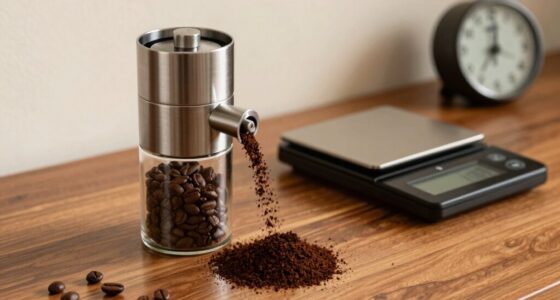

Using reverse osmosis (RO) water for your coffee can boost flavor clarity and brewing consistency. It removes impurities and allows for mineral enhancement, but too low mineral content may dull your brew. You’ll face some initial and ongoing costs for the system and maintenance. Regular upkeep is essential to keep your machine running effectively. If you’re keen on brewing the best cup possible, there’s more to discover about maximizing RO water’s impact on your coffee.

Get coffee and tea gear delivered free — and shop member deals
- Fast, free delivery on millions of items
- Access to Prime Big Deal Days deals on October 6–7
- Prime Video, Amazon Music and more included
Key Takeaways
- Reverse osmosis enhances water quality by removing impurities, improving coffee flavor and brewing consistency.
- Balanced mineral content is crucial; RO water may require remineralization to optimize flavor extraction.
- Initial setup and maintenance costs for RO systems can be significant, impacting long-term value.
- Regular maintenance, including filter replacements, is essential for optimal RO system performance.
- Taste tests reveal flavor differences between RO and tap water, influencing brewing method effectiveness.
reverse osmosis water filter for coffee
As an affiliate, we earn on qualifying purchases.
As an affiliate, we earn on qualifying purchases.
What Is Reverse Osmosis and How Does It Work?
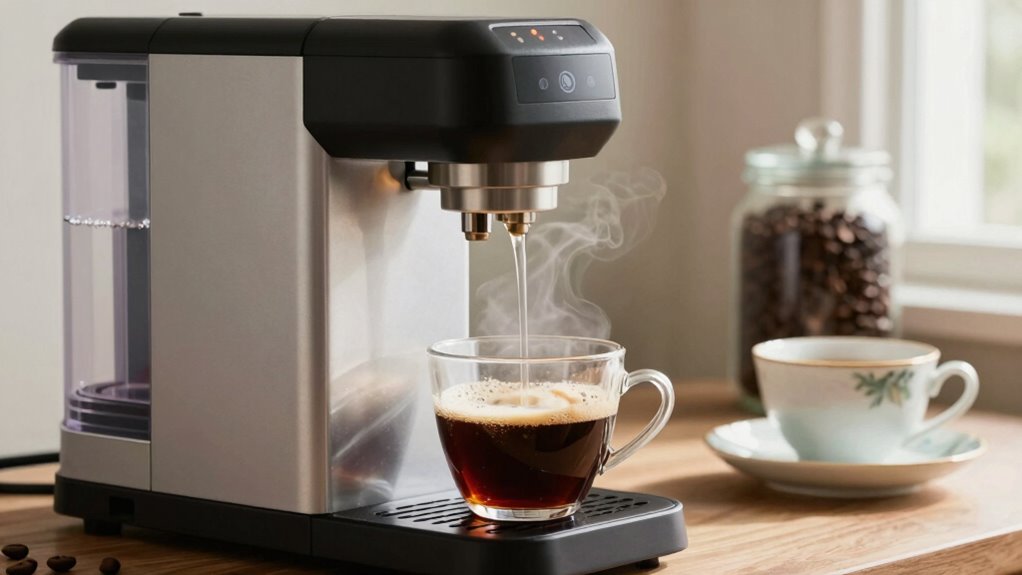
Reverse osmosis is a filtration process that can transform your water quality considerably. By employing reverse osmosis basics, this technique pushes water through a semi-permeable membrane, removing impurities and contaminants. You’ll find that it effectively filters out harmful substances like chlorine, lead, and other unwanted elements.
Using reverse osmosis in your setup means you’re benefiting from one of the most efficient filtration techniques available. The process not only improves taste but also enhances the overall purity of your water. If you’re serious about brewing quality coffee, understanding how reverse osmosis works can be a game-changer. It guarantees you start with the best possible water, allowing the rich flavors of your coffee to shine through.
coffee mineral re-mineralization system
As an affiliate, we earn on qualifying purchases.
As an affiliate, we earn on qualifying purchases.
Why Water Quality Matters for Coffee Brewing
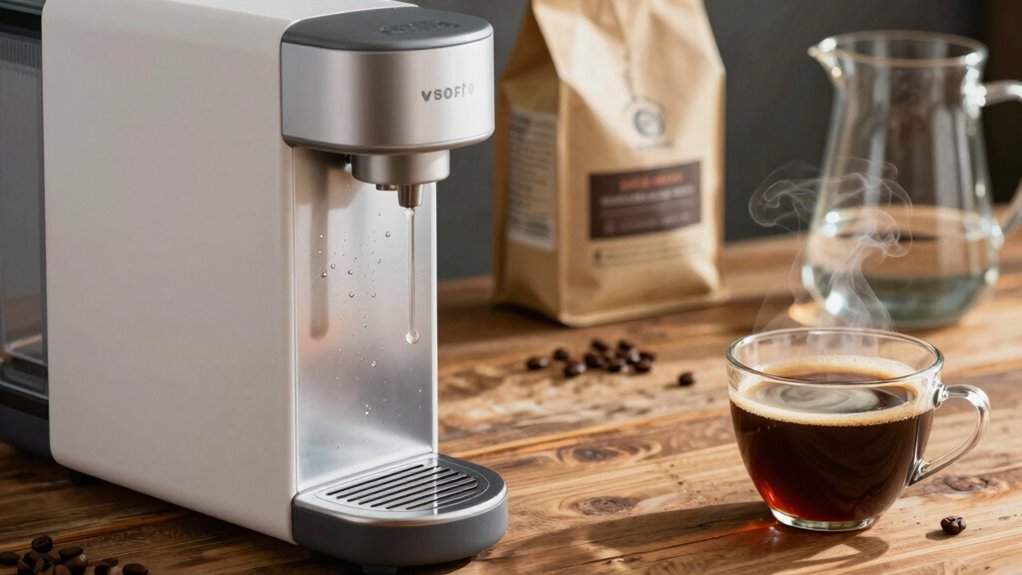
Water quality plays an essential role in brewing the perfect cup of coffee. If you want to enhance your coffee experience, you need to pay attention to water hardness and mineral content. Hard water can lead to bitter flavors and scale buildup in your equipment, while soft water may lack the essential minerals that enhance taste. Understanding the brewing methods that best suit your water quality can further optimize your results. Balanced mineral content helps extract the coffee’s natural flavors, providing a richer and more aromatic cup. Kitchen ventilation is also important to consider, as it can impact the overall brewing environment by reducing humidity and odors. Additionally, poor indoor air quality can introduce microplastics in dust, which may affect your health and, indirectly, your coffee enjoyment. Too many minerals can overpower your brew, while too few can make it flat. By understanding water quality, you can adjust your brewing process to achieve a consistently delicious cup that highlights the unique characteristics of your favorite beans. Additionally, using smart composters can help reduce your kitchen waste, promoting an eco-friendly environment that complements your coffee brewing ritual. Incorporating a filtration system can ensure that your water maintains the ideal balance of minerals. Remember, great coffee starts with great water!
RO water filtration system for kitchen
As an affiliate, we earn on qualifying purchases.
As an affiliate, we earn on qualifying purchases.
Benefits of Using Reverse Osmosis for Coffee
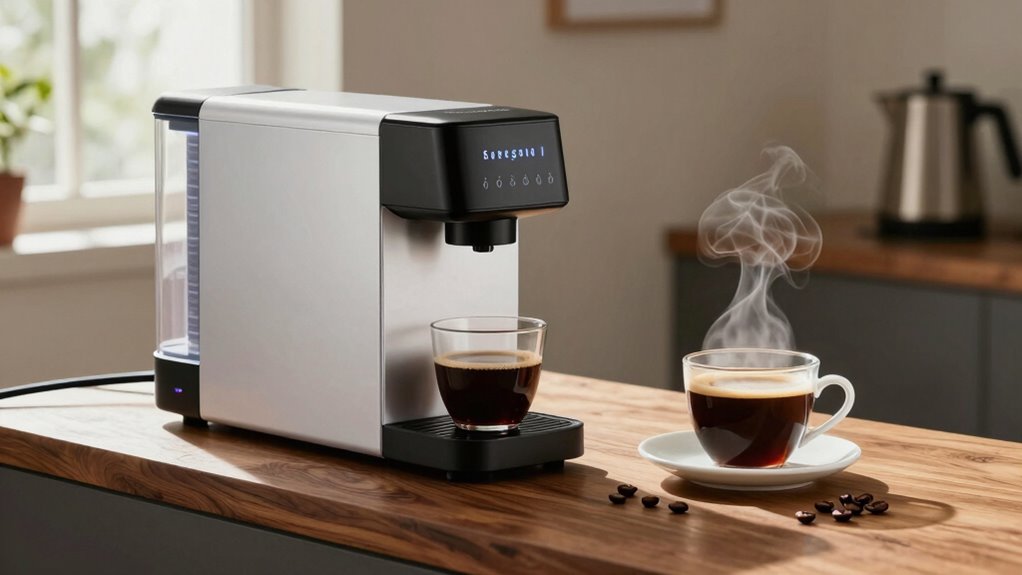
When you choose reverse osmosis for your coffee, you’re investing in a brewing method that guarantees consistent quality. This process enhances flavor clarity and taste balance, allowing you to enjoy every sip. By controlling water temperature and minimizing impurities, you improve extraction efficiency and brew strength. The result? A cup with better acidity and a well-defined profile.
Here’s a quick overview of how reverse osmosis impacts your coffee:
| Aspect | Benefit |
|---|---|
| Brew Strength | Consistent intensity |
| Extraction Efficiency | Superior flavor extraction |
| Flavor Clarity | Enhanced taste profile |
| Cup Consistency | Reliable results every time |
With careful attention to brew time and grind size, you’ll achieve mineral enhancement that elevates your coffee experience. Additionally, using ergonomics for brewing can further improve your overall coffee-making experience, making it more enjoyable and efficient.
As an affiliate, we earn on qualifying purchases.
Common Issues With Reverse Osmosis Water for Coffee
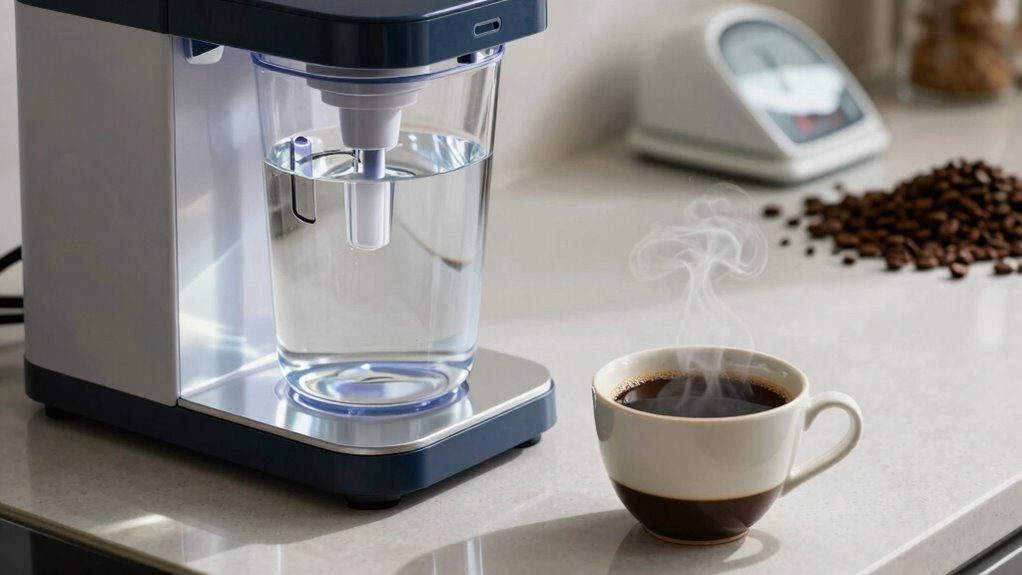
When using reverse osmosis water for coffee, you might face some challenges with mineral imbalance and pH levels. These issues can affect the flavor and overall quality of your brew. Let’s explore what you need to know to get the best results.
Mineral Imbalance Challenges
While reverse osmosis (RO) effectively removes impurities from water, it can also lead to mineral imbalances that affect your coffee’s flavor. The lack of essential mineral types, such as calcium and magnesium, can result in low water hardness, which negatively impacts extraction efficiency. This means you might not achieve the desired brewing consistency or taste balance in your cup. Without these minerals, flavor enhancement is limited, and you could experience a dull brew lacking complexity. Additionally, prolonged use of mineral-deficient water might raise health implications over time. To guarantee ideal coffee extraction, consider reintroducing minerals to your RO water, striking the right balance between purity and flavor for a consistently satisfying cup.
pH Level Concerns
Although reverse osmosis water is known for its purity, it often comes with pH level concerns that can impact your coffee brewing. The lack of mineral content can lead to issues with pH balancing and acidity control, affecting flavor enhancement and brewing consistency. If your water is too acidic or alkaline, it can result in undesirable taste profiling, making your coffee less enjoyable. Additionally, health considerations arise when you rely solely on RO water without proper water remineralization. To achieve the best cup, consider adding minerals back into your water. This can help maintain the right pH level, ensuring a balanced brew while enhancing the overall flavor. Don’t overlook these factors—they’re essential for consistently better coffee. Furthermore, maintaining the right air quality considerations is crucial, as it can also influence the overall experience of your coffee brewing environment.
Impact of Reverse Osmosis on Coffee Flavor?
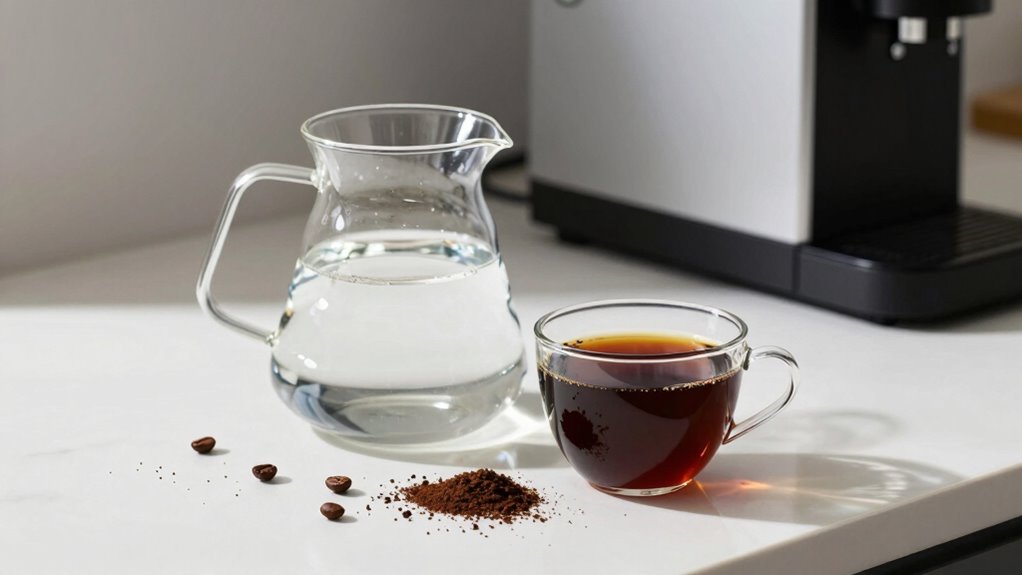
The impact of reverse osmosis on coffee flavor can be significant, especially since it removes many minerals and impurities from water. This purification process can alter your coffee extraction, leading to a different flavor profile than what you might expect. While some may enjoy the clean taste, others might find it lacks complexity.
Here’s a quick comparison of how reverse osmosis affects flavor:
| Factor | Before RO | After RO |
|---|---|---|
| Mineral Content | High | Low |
| Flavor Complexity | Rich | Milder |
| Extraction Efficiency | Good | Variable |
Ultimately, the choice depends on your flavor preference and how you like your coffee to taste.
How Does RO Stack Up Against Other Filtration Methods?
Sure! Here’s the revised content with the addition:
—
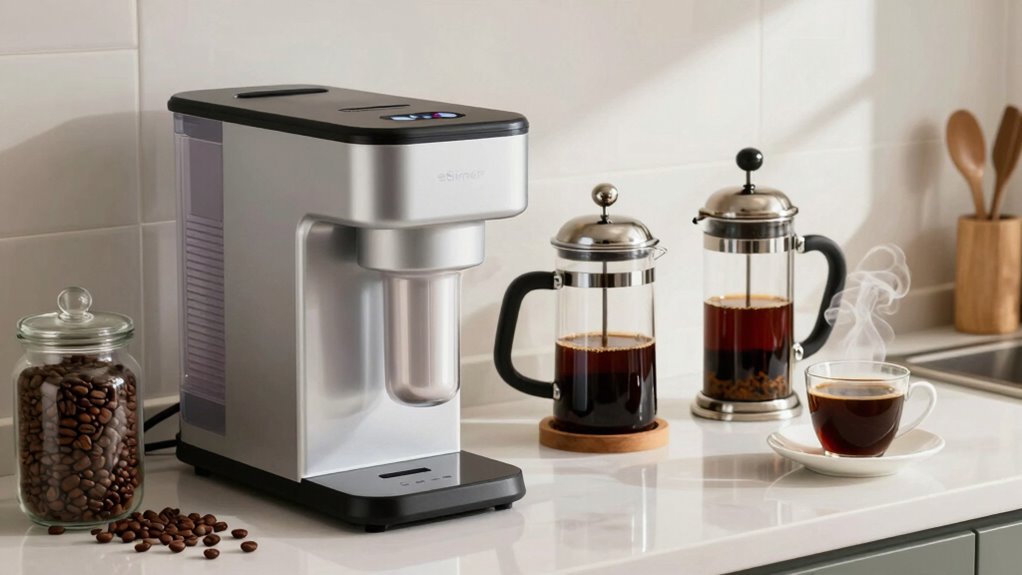
How does reverse osmosis compare to other filtration methods when it comes to coffee? In a filtration comparison, RO stands out for its ability to remove impurities and minerals that can negatively affect coffee extraction. Unlike standard carbon filters, which primarily target chlorine and some organic compounds, RO systems eliminate a broader range of contaminants, ensuring cleaner water for brewing. This purity can enhance your coffee’s flavor profile, allowing the beans’ natural characteristics to shine. However, it also strips away beneficial minerals, which some argue are essential for balanced extraction. Additionally, water quality can significantly impact the final taste of your brew. For optimal results, consider exploring smarter lifting techniques that can parallel how you approach your coffee brewing process. The importance of investment diversification in your overall water strategy can also play a role in achieving the best flavor. According to studies, proper filtration can lead to a more enjoyable coffee experience by reducing unwanted flavors. Ultimately, the choice depends on your taste preferences and water quality. If you’re after a consistently clean cup, RO might just be your best bet. Additionally, having high refresh rates in your coffee-making process can ensure consistency in brewing, much like in gaming.
Cost of Reverse Osmosis Systems
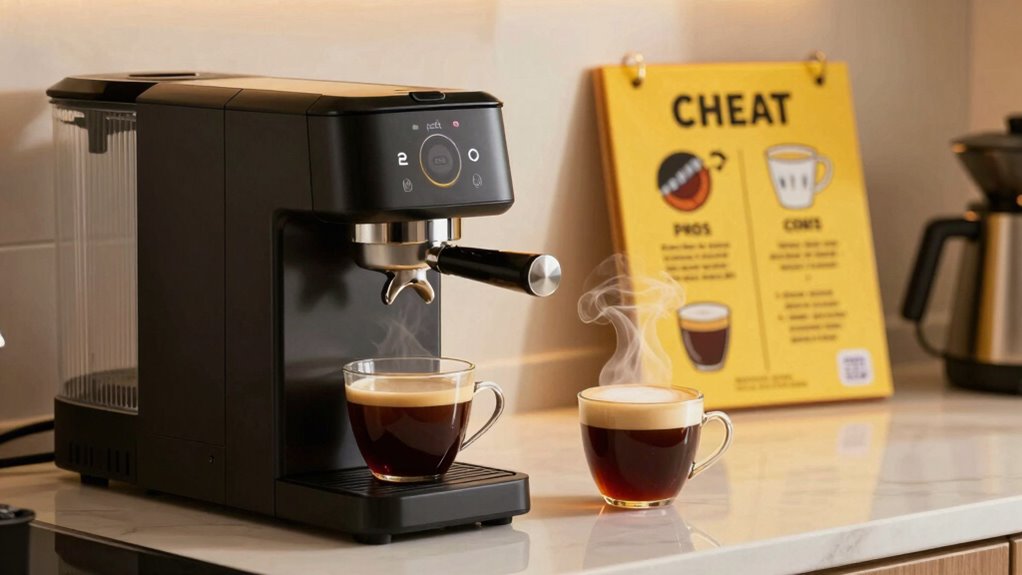
When considering a reverse osmosis system, you need to think about both the initial setup expenses and long-term maintenance costs. These systems can require a significant upfront investment, but understanding ongoing expenses is essential for budgeting. Let’s break down what you can expect financially.
Initial Setup Expenses
Investing in a reverse osmosis system can set you back anywhere from $150 to over $1,000, depending on the type and features you choose. When weighing your initial setup considerations, it’s crucial to factor in potential installation challenges.
Here are some key points to think about:
- Type of System: Choose between under-sink or countertop models.
- Installation Costs: DIY vs. professional installation fees.
- Filter Replacement: Initial filters might be included, but replacements will cost extra.
- Water Pressure: Verify your home’s water pressure meets system requirements. Understanding your home’s water quality standards can also guide your choice effectively.
- Space Requirements: Check if you have enough space for the unit and storage. Additionally, ensure that your setup complies with extension cord standards for safe electrical connections. Understanding the importance of kitchen appliances can further enhance your coffee-making experience. Moreover, investing in comfort and safety products can significantly improve your overall coffee brewing setup.
Being aware of these factors can help you make an informed decision. Additionally, consider the benefits of standby vs. portable generator systems for reliable power during outages when using a reverse osmosis system.
Long-Term Maintenance Costs
While setting up your reverse osmosis system is just the beginning, understanding the long-term maintenance costs is essential for budget planning. Regular maintenance guarantees your system operates efficiently, directly impacting your coffee’s taste. You’ll need to replace filters and membranes periodically, which can add up over time. However, these costs can lead to long-term savings by improving your coffee quality and extending your equipment lifespan. Additionally, regular HEPA filter maintenance can help ensure that your system runs optimally. Implementing smart home safety measures, like monitoring your system’s performance, can also enhance its longevity. Furthermore, neglecting maintenance might result in costly repairs or a shorter lifespan for your system, similar to how motor mounts affect vehicle stability and performance. By budgeting for these ongoing expenses, you can enjoy consistently better coffee without unexpected financial stress. Prioritizing maintenance means you’ll maximize both flavor and value from your reverse osmosis investment. Moreover, maintaining your system can prevent issues commonly associated with poor water quality, ensuring a better extraction process. Additionally, consider implementing debt management strategies to help offset these ongoing costs effectively.
Maintenance Tips for Your Reverse Osmosis Unit
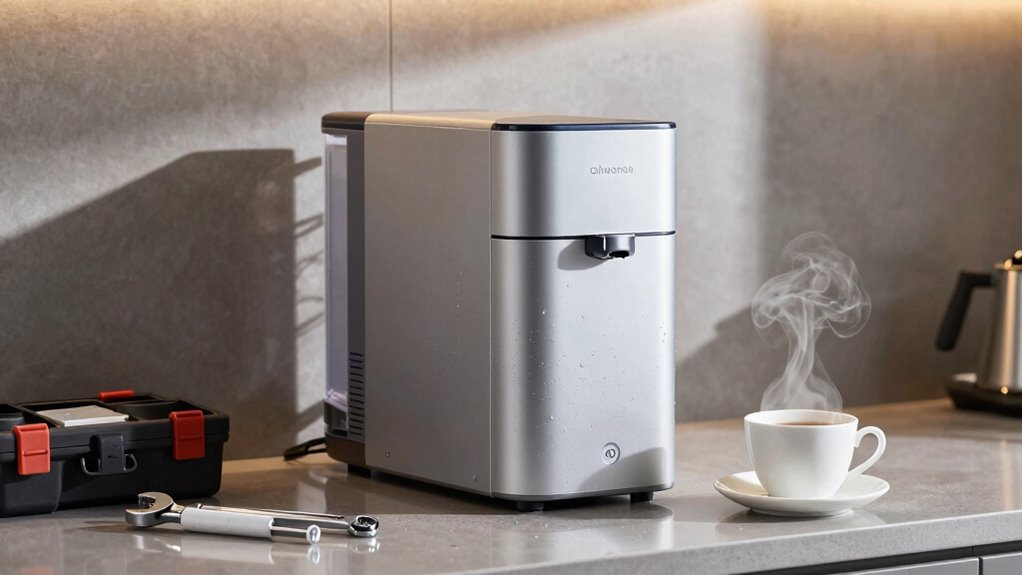
Regular maintenance is key to keeping your reverse osmosis unit running smoothly and efficiently. To guarantee peak performance, follow these essential tips:
- Filter replacement: Change filters as recommended to maintain water quality.
- System cleaning: Regularly clean your unit to prevent build-up and contamination.
- Water testing: Test your water frequently to monitor purity and adjust settings.
- Pressure monitoring: Keep an eye on pressure levels to guarantee efficient operation.
- Tank maintenance: Check the mineral cartridge and tank regularly for any signs of wear.
Incorporating these efficiency tips and troubleshooting techniques will prolong the life of your RO unit, enhancing your coffee experience. Remember, the more you care for your system, the better your coffee will taste!
Best Practices for Using RO Water in Coffee Brewing
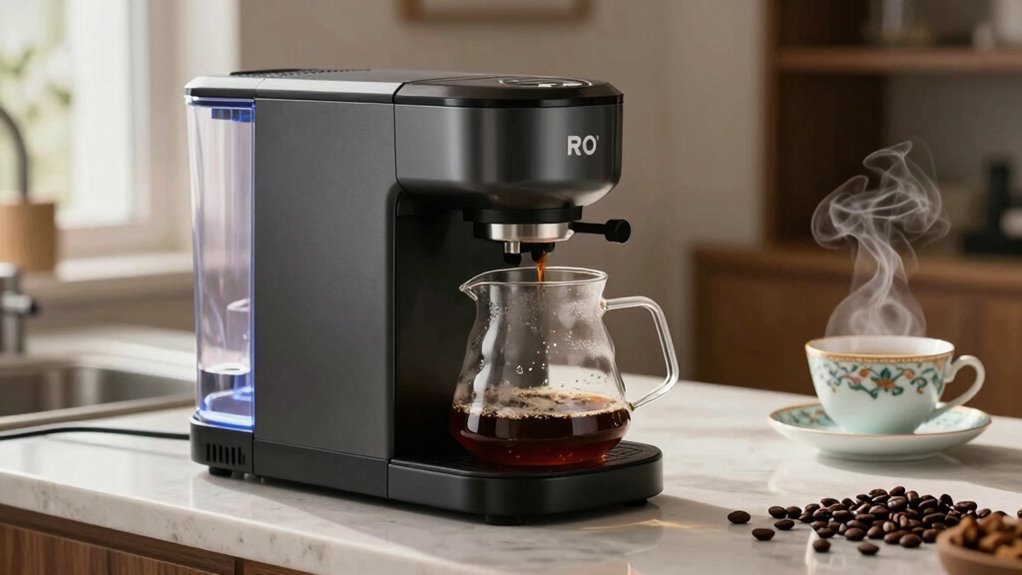
After ensuring your reverse osmosis unit is well-maintained, it’s time to focus on how to best use RO water for brewing coffee. Start by selecting high-quality coffee beans that complement the clarity of RO water. Pay attention to grind size, as a finer grind often enhances extraction. For water temperature, aim for around 195°F to 205°F, which helps extract the best flavors. Keep your brew time within the recommended range for your chosen brew method—whether it’s pour-over, French press, or espresso. Finally, consider water mineralization; adding a mineral blend can elevate flavor complexity and balance. By fine-tuning these elements, you’ll consistently brew a delicious cup of coffee with RO water.
How to Decide if Reverse Osmosis Is Right for Your Coffee?
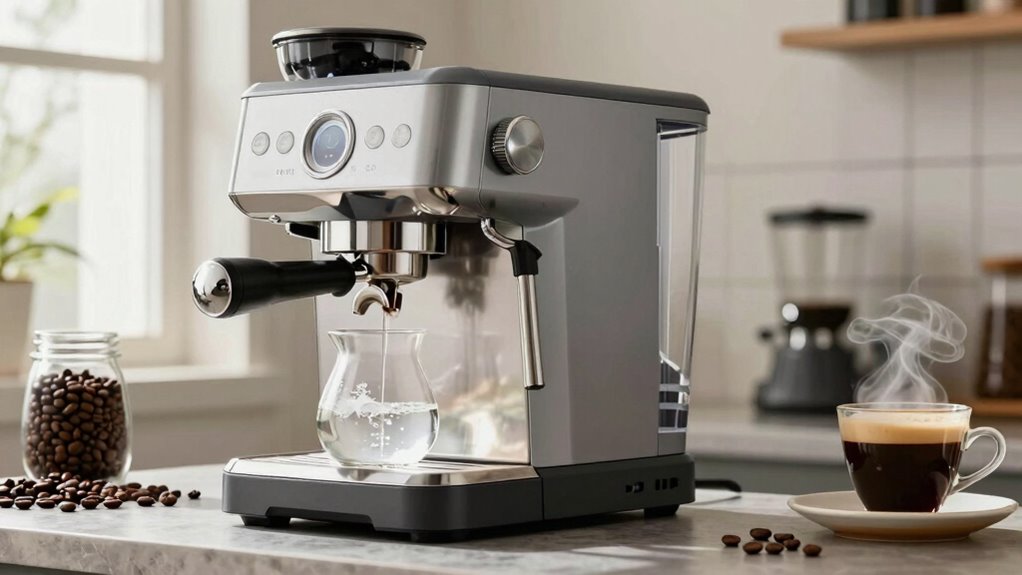
To figure out if reverse osmosis (RO) is right for your coffee, start by evaluating your water quality. Next, think about your taste preferences and how they align with RO water’s characteristics. Finally, check if your brewing equipment can handle the specific needs of RO water for ideal flavor extraction.
Water Quality Assessment
Evaluating your water quality is essential when deciding if reverse osmosis (RO) is the right choice for your coffee. Understanding the specifics of your water can dramatically influence your brewing results. Consider these factors:
- Water hardness: High mineral content can affect taste profiles. Effective water damage solutions can help maintain optimal water quality for brewing.
- Filtration methods: Assess what you’re currently using and how it impacts coffee extraction.
- Mineral content: Essential minerals can enhance flavor, but too much can hinder it. Maintaining metabolic health can also be influenced by your hydration choices.
- Brewing ratios: RO water may require adjustments to ratios for best flavor.
- Equipment types: Your coffee maker may perform differently with RO water.
Additionally, consider how common types of cold medications can impact your flavor preferences, especially if you’re using flavored syrups or creamers that might interact with your coffee’s taste profile.
Taste Preferences Evaluation
While you may have a preferred flavor profile for your coffee, understanding how reverse osmosis (RO) water impacts taste can be essential in your decision-making process. RO water can enhance or alter your coffee’s flavor, depending on your taste preferences and the coffee varieties you choose. Conducting a sensory analysis with different water sources helps you identify what complements your personal palate best. Consider how brewing techniques, extraction methods, and roast levels interact with the purity of RO water. Regional influences can also play a role in flavor complexity.
| Flavor Profile | Brewing Technique | Water Source |
|---|---|---|
| Bright & Fruity | Pour Over | Tap Water |
| Bold & Rich | Espresso | RO Water |
| Smooth & Balanced | French Press | Spring Water |
| Chocolatey & Nutty | AeroPress | Filtered Water |
| Floral & Delicate | Cold Brew | Distilled Water |
Equipment Compatibility Check
Before deciding if reverse osmosis (RO) is right for your coffee, check if your equipment can handle the specific water quality. Different systems require compatibility with your current gear, so consider the following:
- Filter types that work best with RO systems
- System brands known for reliability and performance
- Installation tips for seamless integration
- Maintenance frequency to keep your setup running smoothly
- Taste testing to compare results with your usual water sources
Evaluating your equipment brands and setup requirements is essential. Verify your coffee maker and grinder can utilize RO water effectively for peak flavor. This way, you’ll make an informed choice that enhances your coffee experience.
Frequently Asked Questions
Can Reverse Osmosis Water Harm Coffee Brewing Equipment?
Yes, reverse osmosis water can potentially harm your coffee brewing equipment if it lacks mineral balance. This water is often stripped of essential minerals, which can lead to issues like corrosion and scale buildup over time. Without these minerals, your equipment may not function effectively, shortening its lifespan. To maintain equipment longevity, consider reintroducing some minerals to the water or using a remineralization filter before brewing.
How Often Should I Replace RO Filters?
You should replace your RO filters every 6 to 12 months, depending on your water quality and usage. Keeping a maintenance schedule helps guarantee peak performance and flavor in your coffee. If you notice a drop in water pressure or taste, it might be time to change them sooner. Regular filter replacement not only enhances your coffee but also protects your brewing equipment from potential damage due to impurities.
Is Reverse Osmosis Water Safe for Drinking?
Think of reverse osmosis water like a crystal-clear mountain stream—pure and invigorating. Yes, RO water’s safe for drinking! It removes contaminants, ensuring you enjoy clean, healthy water. The health benefits are notable, too; it can lead to better hydration and improved taste. Just remember, while RO water is safe, you might need to remineralize it to maintain essential minerals your body needs. Enjoy that clean sip!
Can I Remineralize Reverse Osmosis Water for Better Taste?
Yes, you can remineralize reverse osmosis water for better taste! Using remineralization techniques like adding mineral drops or mixing in a pinch of sea salt can enhance flavor. You’ll notice a difference in your coffee’s richness and aroma. Just be mindful of the balance; too many minerals can overpower the taste. Experiment with different methods to find what works best for you and enjoy a more flavorful cup!
What Are the Environmental Impacts of Reverse Osmosis Systems?
Reverse osmosis systems can have significant environmental impacts. You might be surprised to learn they often waste a lot of water—typically three gallons for every gallon produced. This inefficiency puts pressure on local water resources. Additionally, managing the concentrated waste can be challenging, as it may contain contaminants. If you’re considering one, think about these factors and explore ways to minimize water usage and improve waste management to lessen your environmental footprint.
Conclusion
So, you want the perfect cup of coffee, but you might just end up obsessing over your water quality instead. Isn’t it ironic that in the quest for that flawless brew, you could find yourself knee-deep in maintenance and costs? Yet, if you embrace the quirks of reverse osmosis, you’ll discover a world of flavor nuances you never knew existed. Ultimately, the choice is yours—will you let water steal the spotlight, or will you brew your way to coffee perfection?
Fall Picks
fall essentials
As an affiliate, we earn on qualifying purchases.