When choosing between vibratory and rotary pump espresso machines, you’re looking at key differences that can impact your coffee experience. Vibratory pumps are compact, affordable, and perfect for home baristas who need quick pressure. On the other hand, rotary pumps provide consistent pressure, operate quietly, and enhance flavor and crema in your espresso. Consider your budget and brewing style; the right choice can elevate your coffee game. Discover more about what fits your needs perfectly.

Get coffee and tea gear delivered free — and shop member deals
- Fast, free delivery on millions of items
- Access to Prime Big Deal Days deals on October 6–7
- Prime Video, Amazon Music and more included
Key Takeaways
- Vibratory pumps are compact and affordable, making them ideal for home baristas and budget-conscious users.
- Rotary pumps provide consistent pressure and quieter operation, enhancing the overall brewing experience.
- Pressure stability in rotary pumps ensures optimal extraction and rich flavors in espresso.
- Maintenance for vibratory pumps is simpler, while rotary pumps require regular checks for longevity.
- Long-term costs favor rotary pumps due to their durability and better resale value.
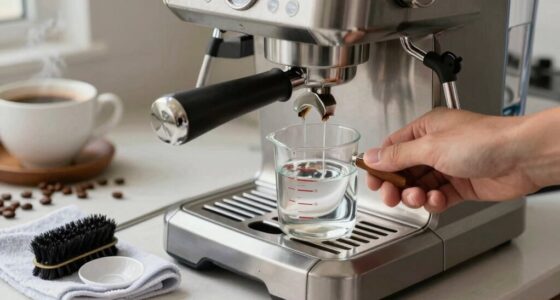
espresso machine with rotary pump
As an affiliate, we earn on qualifying purchases.
As an affiliate, we earn on qualifying purchases.
How Do Vibratory Pumps Compare to Rotary Pumps?
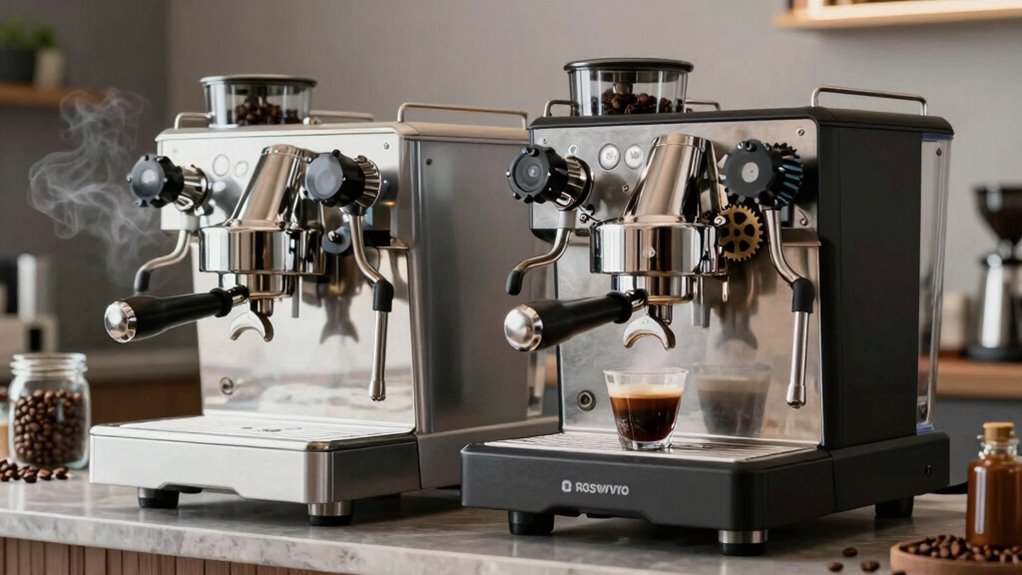
When you’re choosing between vibratory pumps and rotary pumps for your espresso machine, what factors really matter? First, consider the vibratory advantages. These pumps are compact, lightweight, and often more affordable, making them great for home baristas or those on a budget. They also deliver quick pressure builds, ensuring a rapid brewing process. However, rotary disadvantages can’t be ignored. While rotary pumps offer consistent pressure and quieter operation, they tend to be bulkier and pricier. Additionally, maintenance can be more complex with rotary systems. Ultimately, your choice should align with your brewing needs and space. Balancing cost, size, and performance will lead you to the right pump for your espresso experience.
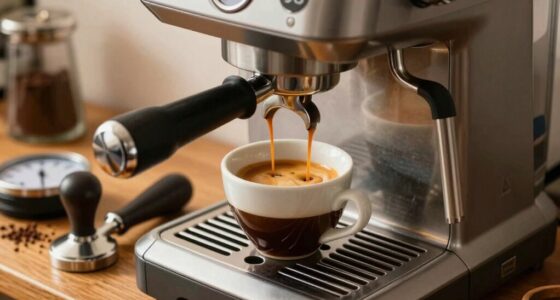
compact vibratory pump espresso maker
As an affiliate, we earn on qualifying purchases.
As an affiliate, we earn on qualifying purchases.
What’s up With Rotary Pumps?
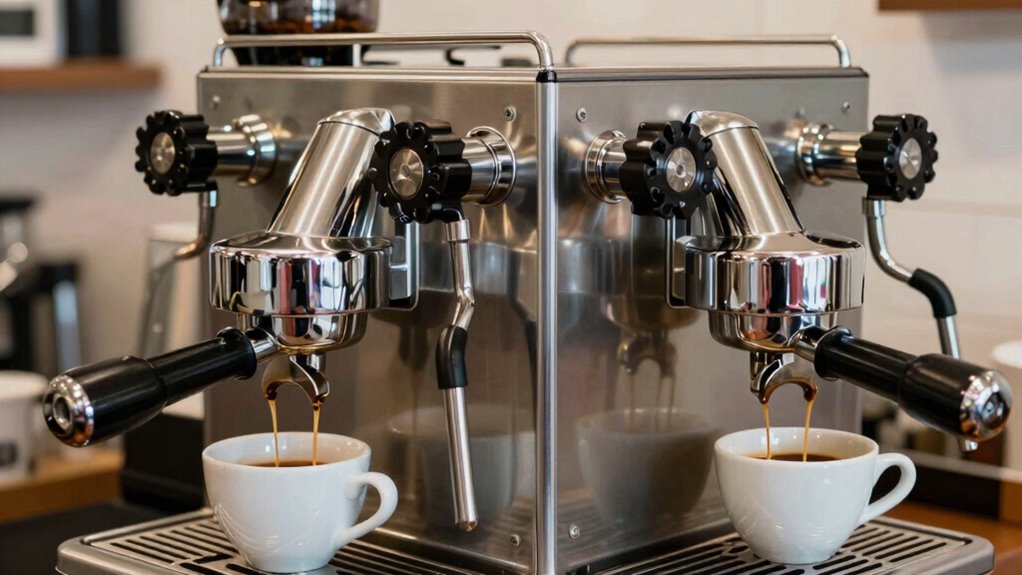
So, what makes rotary pumps stand out in the espresso world? You’ll appreciate their unique operation mechanism, which guarantees consistent pressure for a perfect brew. Plus, they’re generally quieter, making your coffee-making experience more enjoyable.
Operation Mechanism Explained
While both vibratory and rotary pumps serve the same purpose in espresso machines, their operation mechanisms differ markedly. You’ll notice that rotary dynamics involve a continuous flow, thanks to a rotating mechanism that pushes water consistently. In contrast, vibratory mechanics create pressure through rapid on-off cycles, resulting in an intermittent flow. Here’s how rotary pumps work:
- They utilize a motor-driven mechanism, ensuring a steady pressure.
- The design often includes multiple chambers, allowing for consistent water delivery.
- They’re generally quieter and more energy-efficient over time.
Understanding these differences can help you appreciate the nuances of espresso extraction, ultimately enhancing your brewing experience. Additionally, a well-designed kitchen appliance can significantly impact your overall cooking and cleaning efficiency.
Pressure Consistency Benefits
Understanding the operation of rotary pumps highlights their significant advantage in pressure consistency. Unlike vibratory pumps, rotary pumps maintain excellent pressure stability throughout the brewing process. This means you won’t experience those frustrating fluctuations that can ruin your espresso shot. With a rotary pump, you can achieve brewing precision that results in a rich, balanced flavor in every cup. Consistent pressure allows for ideal extraction, ensuring that all the nuanced flavors from your coffee grounds come through beautifully. Plus, you’ll notice that your espresso has a creamy texture and a thick crema, elevating your coffee experience. If you’re serious about crafting the perfect shot, the reliability of a rotary pump is hard to beat. Additionally, pressure stability is crucial for achieving the best possible extraction, further enhancing the complexity of your espresso.
Noise Level Comparison
When considering the noise level of espresso machines, rotary pumps shine for their quieter operation compared to vibratory pumps. You’ll appreciate the calm atmosphere they create while brewing your favorite coffee. The difference in noise can be a game-changer, especially in a home or café setting.
- Vibratory noise can be jarring, disrupting your coffee rituals.
- Rotary hum is more soothing, allowing for a pleasant brewing experience.
- A quieter machine means you can enjoy conversations without interruption. The choice of pump impacts not only noise levels but also the overall quality of your espresso.
If you’re sensitive to sound, the choice between these two types of pumps becomes clear. Opt for a rotary pump, and you’ll enjoy your espresso without the distracting background noise that vibratory pumps often create. Additionally, the principles of sound in espresso machine design can significantly impact your overall brewing experience.
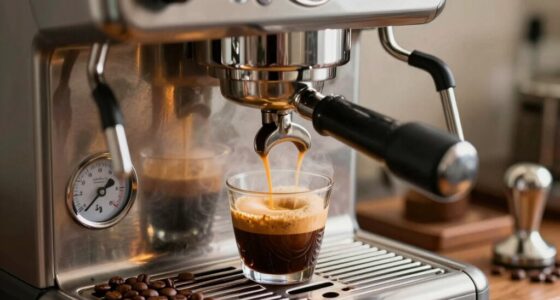
quiet espresso machine with rotary pump
As an affiliate, we earn on qualifying purchases.
As an affiliate, we earn on qualifying purchases.
Pressure and Performance Differences
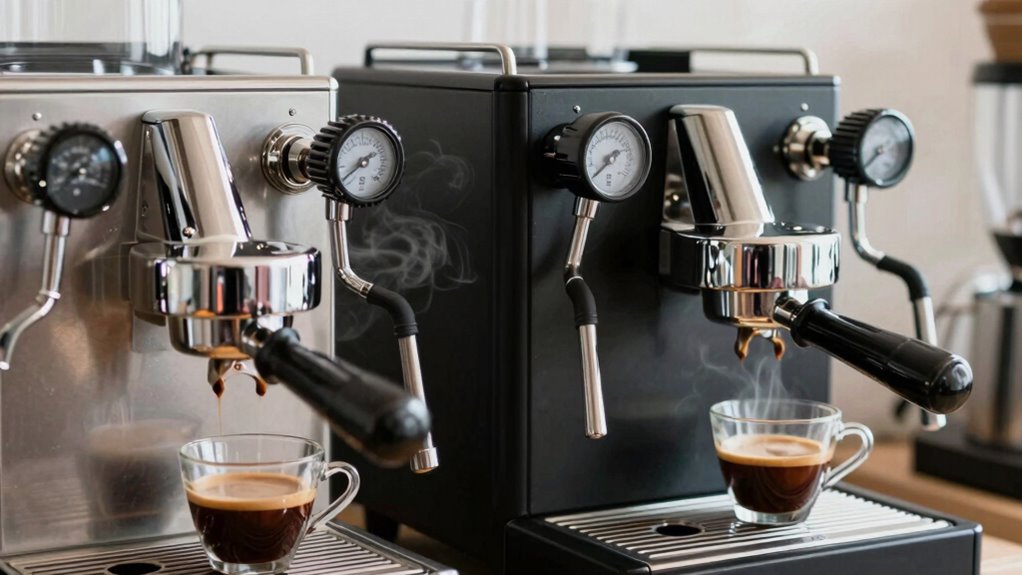
When choosing between vibratory and rotary pump espresso machines, you’ll notice key differences in how they generate pressure. This impacts not only the force applied during extraction but also the consistency of your brew. Understanding these variances can help you make a more informed decision for your espresso needs.
Pressure Generation Techniques
Sure! Here’s your revised article subheading content with the requested modifications:
—
Pressure generation techniques play an essential role in the performance of espresso machines, especially when comparing vibratory and rotary pumps. Understanding these methods can help you choose the right machine for your brewing needs.
- Vibratory dynamics create pressure through rapid oscillations, allowing for compact designs and affordability. This design choice often results in low input lag, which is ideal for quick brewing times. Additionally, the compact nature of these machines can be advantageous for those with limited kitchen space. These machines are often favored by home enthusiasts for their affordable price points.
- Rotary mechanics utilize a rotating mechanism, providing consistent pressure over longer durations, ideal for café settings. Each technique affects your espresso’s flavor and crema, influencing your overall coffee experience. Additionally, the choice of espresso machines under $1000 can significantly impact both pressure consistency and affordability, making it crucial for home baristas.
—
Feel free to ask for any further modifications or additions!
Extraction Consistency Comparison
The way pressure is generated directly impacts extraction consistency, which is essential for achieving the perfect espresso shot. With a vibratory pump, you might notice more fluctuations in pressure during extraction. This can lead to variability in your brew time and affect how extraction variables like temperature and flow rate play out. On the other hand, rotary pumps maintain more stable pressure, allowing for a uniform extraction. This consistency helps guarantee that the coffee grounds are evenly saturated, resulting in balanced flavors. If you’re aiming for precision in your espresso, a rotary pump can deliver better results by minimizing the chances of over or under-extraction due to its reliable performance. Choose wisely to enhance your espresso-making experience.
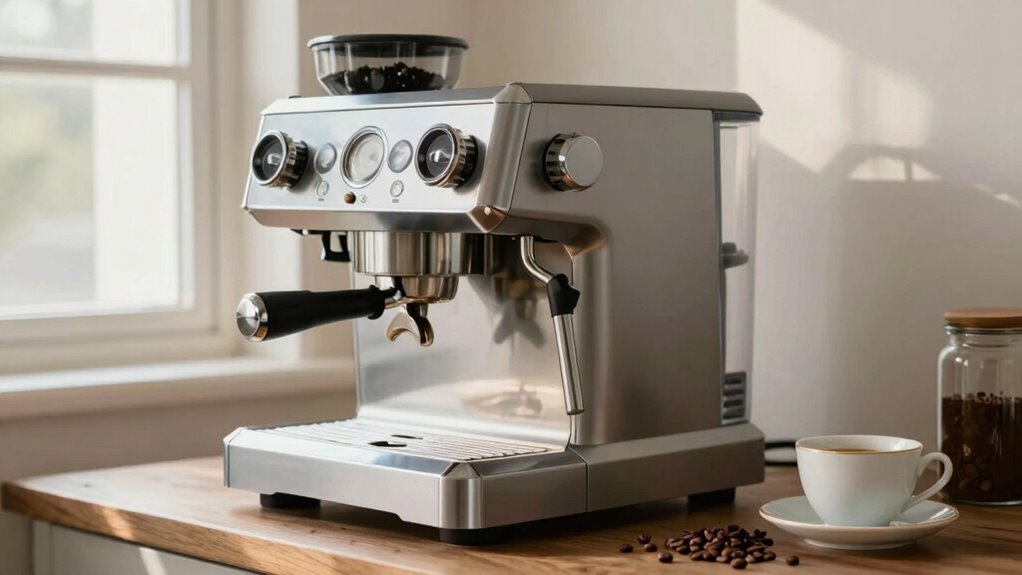
home espresso machine pressure stability
As an affiliate, we earn on qualifying purchases.
As an affiliate, we earn on qualifying purchases.
Noise Levels: Which Pump Is Quieter?
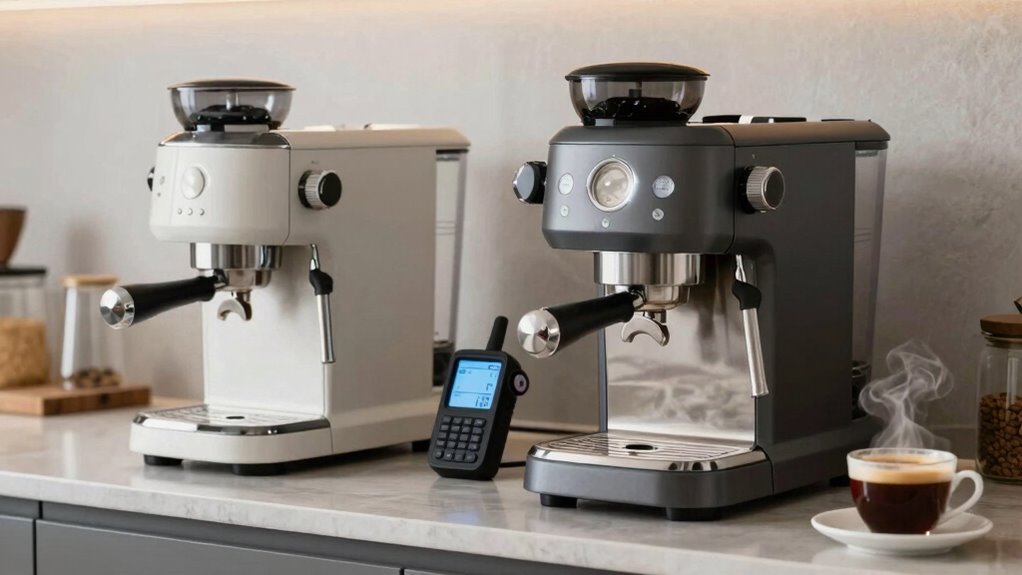
Ever wondered which espresso machine pump is quieter? When it comes to noise levels, vibratory pumps tend to produce a noticeable hum, often referred to as vibratory pump noise. On the other hand, rotary pumps operate more quietly, thanks to their more sophisticated mechanics. If you’re sensitive to sound, this could be an essential factor in your decision.
- Vibratory pump noise can be disruptive in quiet environments.
- Rotary pump noise is typically minimal, making it ideal for home settings.
- Choosing a quieter pump can enhance your overall brewing experience. Additionally, understanding gear fundamentals can help you select the right machine for your needs.
Pump Maintenance: How to Extend Longevity
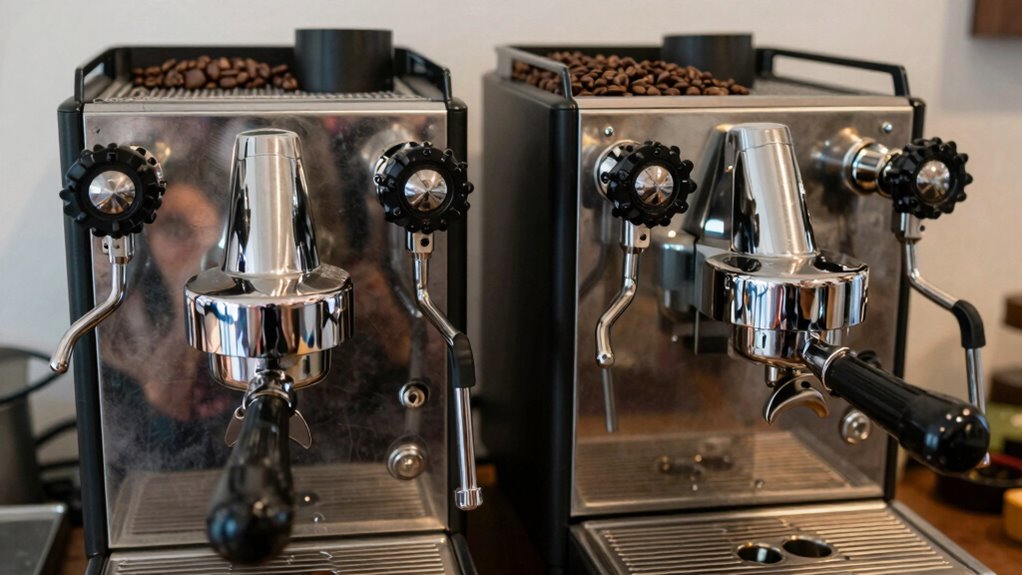
Maintaining your espresso machine’s pump is essential for ensuring longevity and peak performance. Start with regular pump cleaning; it helps remove buildup that can hinder function. Use a soft brush and clean water to avoid damaging components. Incorporate maintenance tips like checking seals and connections frequently—this can prevent leaks and pressure loss. Consider longevity strategies such as running water through the pump occasionally to flush out residue. If you’re looking to enhance your espresso experience, don’t shy away from performance upgrades, like installing a water softener to reduce mineral buildup. Regular pump maintenance also aligns with filtration/suction basics, ensuring optimal performance and preventing issues. It’s important to remember that water damage can also affect your machine over time, so be vigilant about preventing exposure. Additionally, understanding air system efficiency can help you make informed decisions about your espresso machine setup. Maintaining your pump effectively not only improves performance but also contributes to financial health by reducing repair costs over time. Keeping your pump clean also contributes to indoor air quality, as reducing dust and contaminants in the environment can enhance your overall brewing experience. By following these steps, you’ll keep your pump running smoothly and extend its life, ensuring you enjoy rich, flavorful espresso for years to come.
Cost Comparison: Is a Rotary Pump Worth the Extra Cost?
Certainly! Here’s your revised content with the requested addition:
—
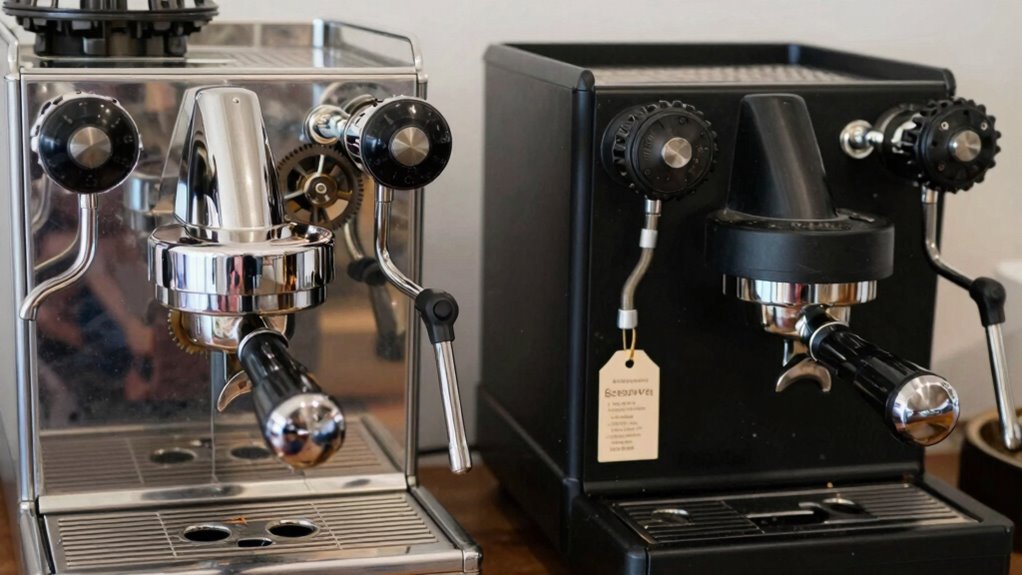
When weighing the costs of espresso machines, you might wonder if investing in a rotary pump is truly worth it. A solid cost analysis can help clarify this decision. Here are a few points to contemplate for your value assessment:
- Durability: Rotary pumps tend to last longer, reducing long-term replacement costs. This longevity can be particularly beneficial when considering budgeting strategies for your overall coffee equipment investment. Additionally, the care & maintenance of these machines can greatly extend their lifespan. Investing in quality equipment can also support effective weight management through the routine of making your own coffee at home. Furthermore, understanding energy efficiency can help you choose machines that save on power consumption over time.
- Consistency: They provide stable pressure, leading to better extraction and flavor, enhancing your brewing experience.
- Resale Value: Rotary pump machines often retain higher resale value, making them a smart investment.
Ultimately, while the upfront cost is higher, the benefits of a rotary pump can outweigh the initial expense. If you’re serious about espresso, it’s worth pondering this investment for quality and performance. Additionally, understanding 2025 tax law changes may help you assess the financial implications of such purchases.
—
Feel free to ask if you need any further modifications!
Choosing the Right Pump for Your Espresso Journey
Choosing the Right Pump for Your Espresso Journey
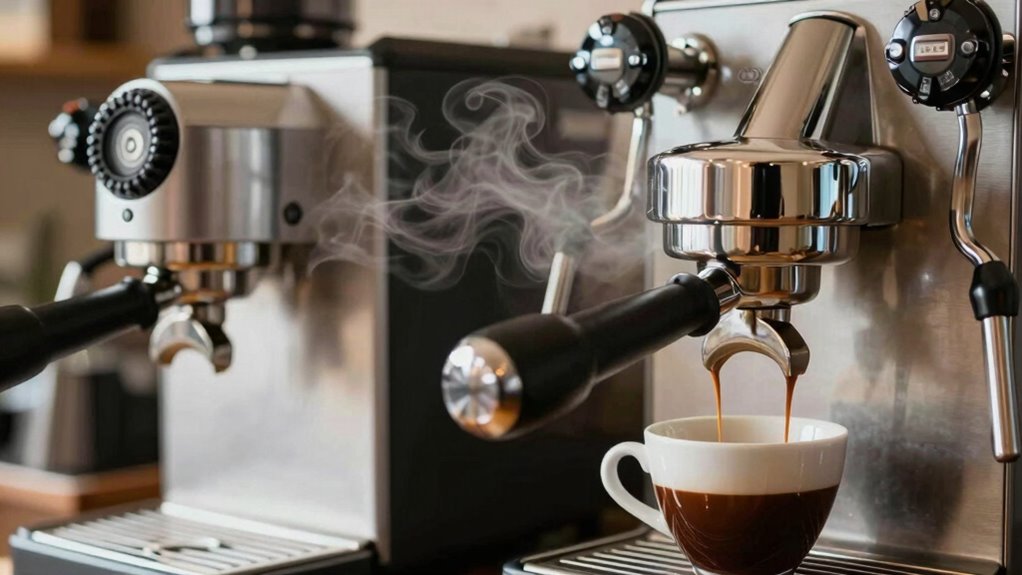
Investing in the right pump can greatly enhance your espresso journey, whether you choose a vibratory or rotary option. First, consider your espresso preferences. If you enjoy quick, straightforward brewing, a vibratory pump might suit you well. It’s compact and often more affordable, making it perfect for home setups. On the other hand, if you’re seeking consistency and the ability to pull higher-quality shots, a rotary pump could be your best bet. These pumps deliver stable pressure and are usually quieter, ideal for serious enthusiasts. Moreover, understanding high-impact recommendations can help you make a more informed decision when purchasing your equipment. Additionally, espresso machines with advanced milk steaming techniques often pair well with rotary pumps, enhancing the overall brewing experience. Furthermore, exploring digital content formats can provide insights into the latest technologies in espresso making. Weigh the benefits of both pump types against your budget and brewing style. Furthermore, understanding digital marketing strategies can help you make a more informed decision when purchasing your equipment. Ultimately, choosing the right pump will elevate your espresso experience to new heights.
Frequently Asked Questions
Can I Upgrade My Vibratory Pump to a Rotary Pump Later?
Yes, you can upgrade your vibratory pump to a rotary pump later. While vibratory pumps have advantages like compact size and lower cost, rotary pumps offer better consistency and are easier to maintain. When you decide to switch, confirm your machine’s compatibility and consider the installation process. Keep in mind that rotary pump maintenance is essential for peak performance, so be prepared for a bit more upkeep compared to your current setup.
Do Pump Types Affect Espresso Flavor Profiles Significantly?
Absolutely, pump types can impact your espresso’s flavor profiles. Think of it like a musician playing the same song on different instruments—each brings out unique nuances. Vibratory pumps can create varied flavor extraction due to pressure fluctuations, while rotary pumps offer greater brewing consistency, delivering a smoother shot. If you’re serious about your espresso, considering the pump type is key to revealing the full spectrum of flavors in your cup.
Are There Brands That Exclusively Use One Pump Type?
Yes, some brands do exclusively use one pump type. For instance, many high-end machines feature rotary pumps for their reliability and quieter operation, while others stick to vibratory pumps for their compact design. The maintenance differences can be significant; rotary pumps often require less frequent servicing, while vibratory pumps might need more attention over time. Choosing a brand that aligns with your espresso preferences and maintenance willingness is key to your coffee experience.
How Do Pump Types Affect Energy Consumption?
Pump types greatly impact energy consumption. Vibratory pumps tend to be more energy-efficient, using less power for shorter extraction times, while rotary pumps often consume more energy but provide consistent pressure, which can enhance flavor. This efficiency also contributes to pump longevity, as less strain on the motor means a longer lifespan. When choosing a machine, consider how each pump’s energy use aligns with your preferences for sustainability and performance.
Can I Use Filtered Water With Either Pump Type?
Absolutely, you can use filtered water with both pump types! Don’t worry about compatibility; high water quality enhances brewing efficiency and prolongs your machine’s life. Just be mindful of mineral content in your filtered water, as it can affect flavor and pump performance. Regular maintenance tips include monitoring scale buildup and cleaning your machine to keep it running smoothly. Enjoy that perfect espresso without the worry of damaging your equipment!
Conclusion
In the world of espresso machines, choosing between vibratory and rotary pumps is like picking between a lively jazz band and a smooth symphony. Both have their perks, but understanding their differences can elevate your brewing experience. If you value performance and quiet operation, a rotary pump might just be your ticket to coffee bliss. Ultimately, the right pump can transform your espresso journey, turning every cup into a masterpiece worth savoring.
Fall Picks
fall essentials
As an affiliate, we earn on qualifying purchases.