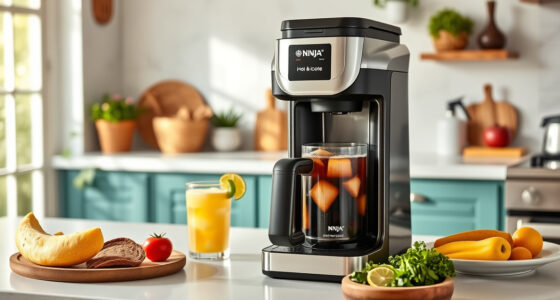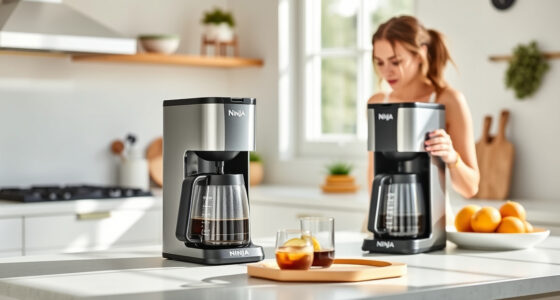

If you prefer bright, crisp flavors with vibrant acidity, flash brew is a great choice since it uses hot water for quick extraction. Cold brew offers a smooth, full-bodied experience with chocolate and nutty notes, ideal if you like a mellow, mellow drink with a creamier texture. Your lifestyle and equipment availability also matter—whether you want a quick brew or something prepared ahead. Keep exploring to discover how each method can elevate your coffee game.

Get coffee and tea gear delivered free with Prime
- Fast, free delivery on millions of items
- Prime Video, Amazon Music and more included
- Member-only deals all year
Key Takeaways
- Flash brew uses hot water for quick extraction, resulting in bright, acidic, and clean flavors; cold brew involves cold steeping for smoother, fuller-bodied coffee.
- Flash brew is ready in minutes, ideal for convenience; cold brew requires 12-24 hours of steeping, suited for pre-prepared, iced coffee.
- Flash brew emphasizes lively, crisp aromatics; cold brew offers a thick, mellow texture with chocolate and nutty notes.
- Equipment differences: flash brew needs simple drip or pour-over setups; cold brew requires larger vessels or specialized makers.
- Flavor profiles differ significantly, making each method suitable for different taste preferences and lifestyle needs.
As an affiliate, we earn on qualifying purchases.
What Are Flash Brew and Cold Brew?
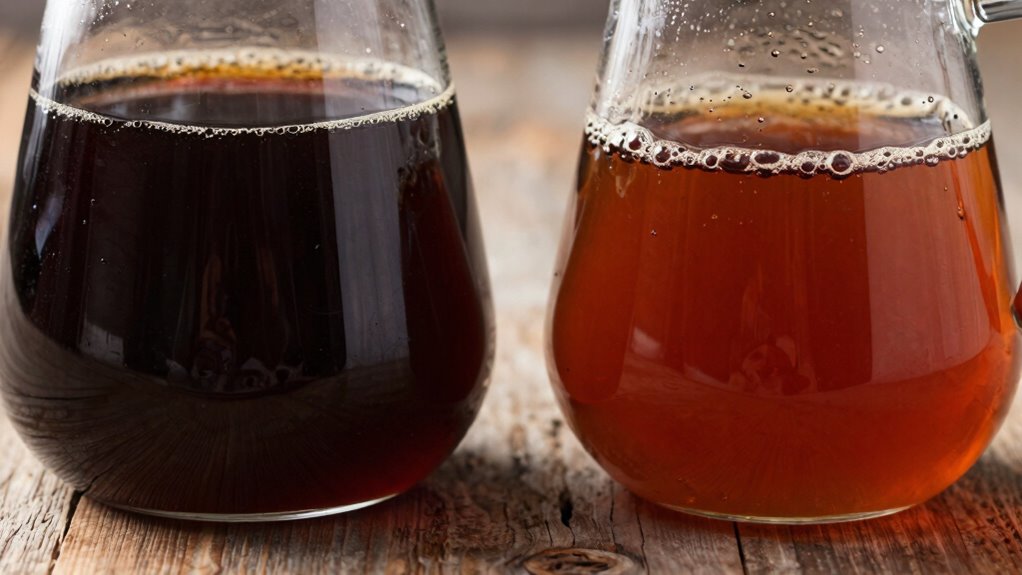
When it comes to making coffee, two popular methods are flash brew and cold brew, each offering a distinct flavor profile and brewing process. Flash brew has roots in coffee history where hot water quickly extracts flavors from freshly ground beans, usually using drip brewers or pour-over equipment. It’s a fast process, typically brewing hot coffee that’s cooled rapidly, preserving bright, vibrant notes. Cold brew, on the other hand, has gained popularity for its smooth, mellow taste. It involves steeping coarsely ground coffee in cold water for 12-24 hours, often using large containers or specialized cold brew equipment. Both methods highlight different aspects of brewing equipment and techniques, shaping the flavor and strength of your coffee in unique ways. Additionally, the contrast ratios in brewing methods can influence the overall perception of flavor intensity, making the choice between them a matter of personal preference.
As an affiliate, we earn on qualifying purchases.
How Are Flash Brew and Cold Brew Made?
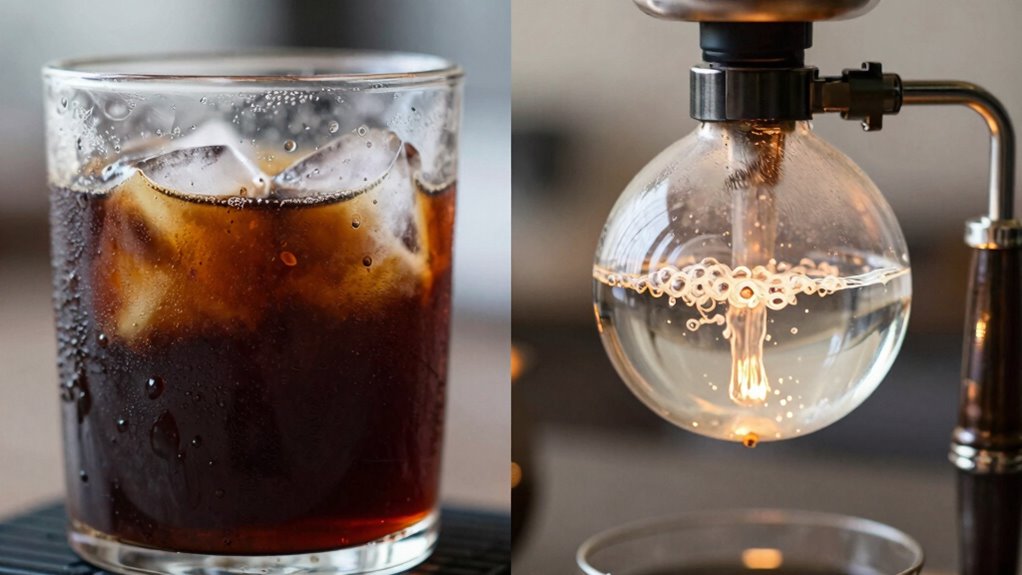
To make flash brew, you start by brewing hot coffee quickly using a drip machine or pour-over setup, then rapidly cool it down to preserve its bright flavors. This method emphasizes coffee sustainability by reducing waste and energy use during brewing. Efficient brewing equipment allows for precise control of temperature and extraction time, ensuring peak flavor. The hot brew process extracts more nuanced flavors before cooling, making it a fast, fresh option. In contrast, cold brew involves steeping coarsely ground coffee in cold water for 12-24 hours, requiring minimal equipment like a large jar or specialized cold brew makers. Both methods focus on different extraction techniques, but the key is in their simplicity and the equipment used, shaping the distinct profiles of each brew.
As an affiliate, we earn on qualifying purchases.
What Flavors and Textures Do These Methods Offer?
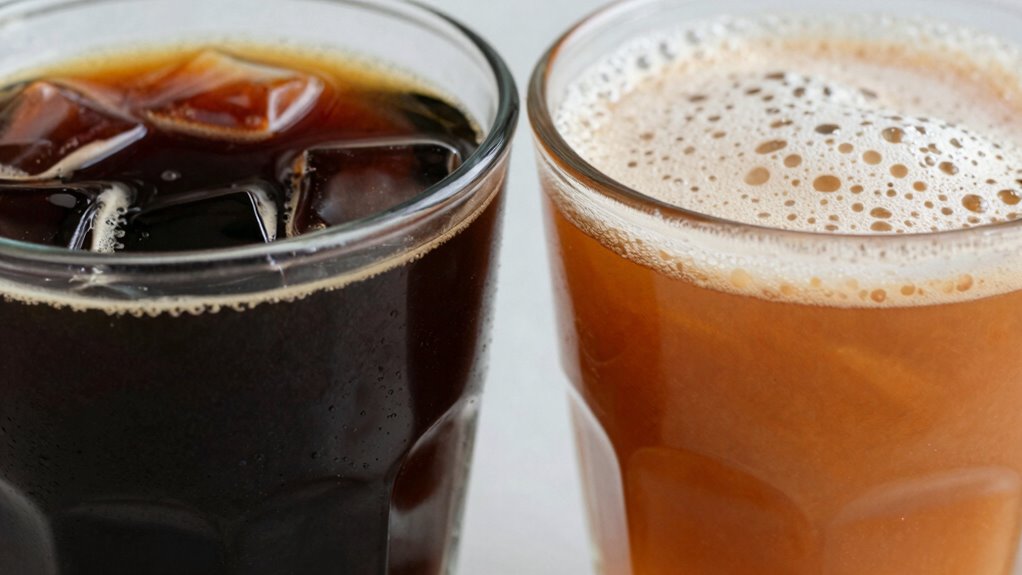
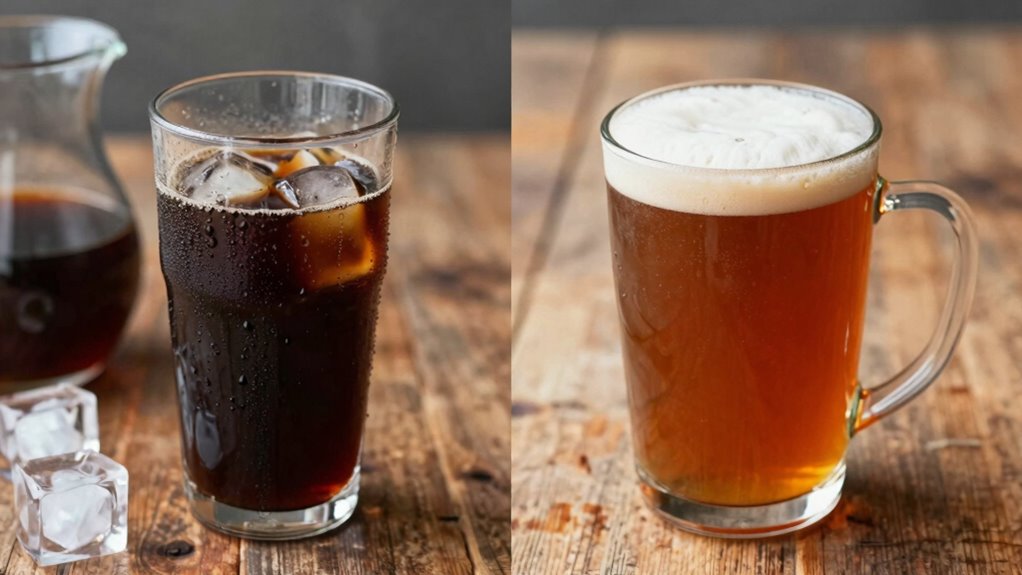
Flash brew often delivers a bright, clean flavor profile with vibrant acidity and nuanced fruit notes, thanks to its quick extraction process that preserves delicate aromatics. This method results in a lively, crisp taste that highlights subtle fruit and floral qualities, making it feel more invigorating on the palate. In contrast, cold brew typically offers a smoother, mellower flavor with a richer, fuller body due to its extended steeping time. Its flavor profiles lean toward chocolatey, nutty, or caramel notes, with less acidity. Regarding texture differences, flash brew tends to be lighter and more lively, while cold brew is often thicker and creamier, giving it a more substantial mouthfeel. These variations in flavor and texture help you find the right coffee experience for your preferences.
As an affiliate, we earn on qualifying purchases.
Which Brewing Style Fits Your Lifestyle? Pros and Cons
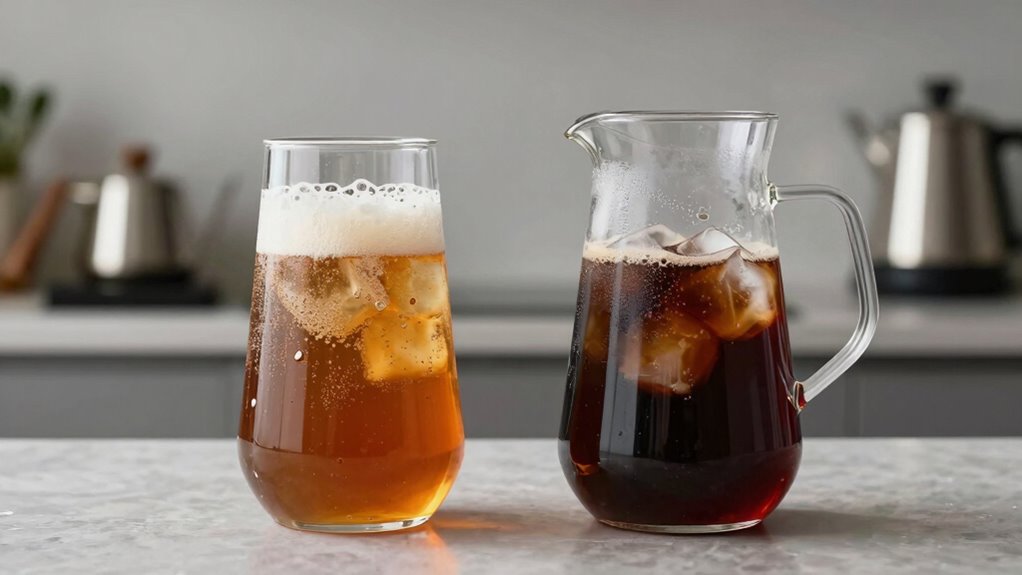
Choosing between flash brew and cold brew depends largely on your lifestyle and daily routine. If you want a quick, hot brew that’s ready in minutes, flash brew suits busy mornings and requires minimal brewing equipment—just a kettle and a filter. It pairs well with breakfast foods and offers a fresh, vibrant flavor, making it a great choice for outdoor gatherings in your backyard. On the other hand, cold brew is ideal if you prefer preparing coffee ahead of time, as it takes 12-24 hours to steep but yields a smooth, concentrated drink perfect for iced coffee or specialty coffee pairings. Cold brew requires a larger investment in brewing equipment, like a slow-drip or immersion maker. Additionally, a quality grinder can significantly enhance your coffee experience, ensuring you get the best flavor extraction. Consider your schedule and coffee preferences to determine which style fits best: convenience and speed or prep-ahead flexibility and flavor complexity.
How to Choose the Best Method for Your Coffee Preferences
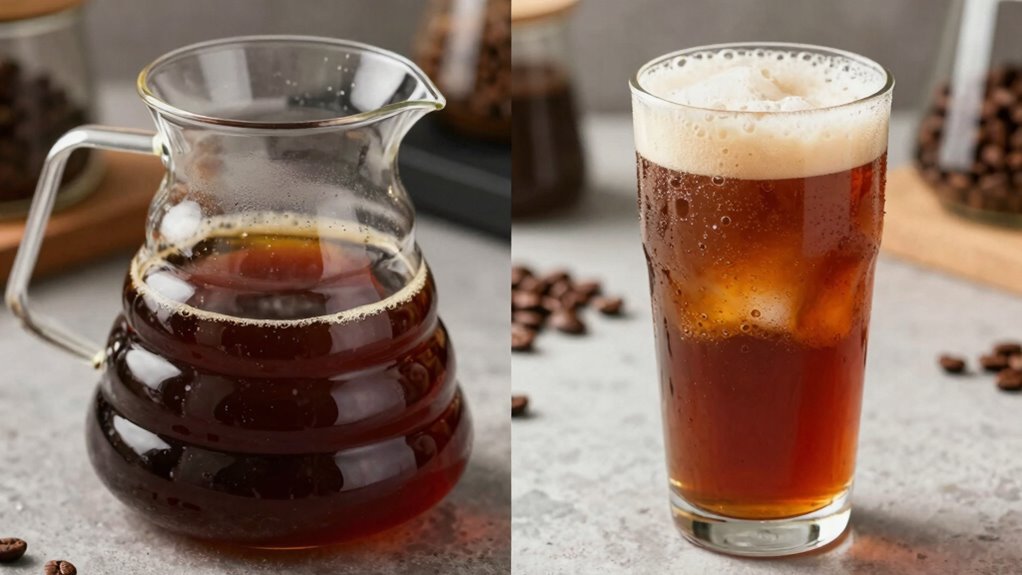
Understanding your coffee preferences is key to selecting the right brewing method. Think about the flavors you enjoy—whether you prefer a bold, intense taste or a smoother, milder profile. Your choice also depends on how you store your coffee; fresh coffee stored properly enhances flavor, making some brewing methods more appealing. Consider your brewing equipment—if you have a quick, easy setup, flash brewing might suit your busy mornings. If you’re patient and enjoy a richer, more complex brew, cold brew could be your best choice. Your lifestyle influences your method, so choose one that fits your routine and taste. By aligning your coffee storage habits and equipment with your flavor preferences, you’ll enjoy a more satisfying coffee experience. Additionally, understanding how to release trauma can enhance your overall well-being, making your coffee ritual even more enjoyable.
Common Mistakes to Avoid When Making Flash or Cold Brew
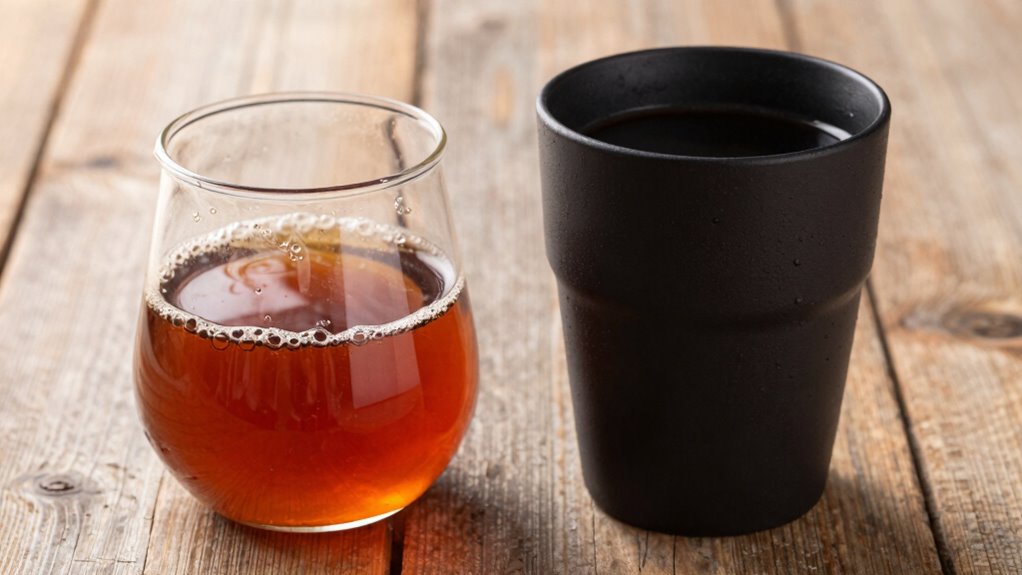
One common mistake is neglecting proper coffee-to-water ratios, which can result in weak or overly bitter brews. Using the wrong ratios affects flavor regardless of your brewing equipment. Also, poor coffee storage can compromise taste, so keep beans airtight and away from heat. Another mistake is rushing the extraction process; cold brew needs time, while flash brewing benefits from precise timing. Make sure your equipment is clean to prevent off-flavors.
| Mistake | Effect | Solution |
|---|---|---|
| Ignoring coffee-to-water ratio | Weak or bitter coffee | Measure accurately |
| Poor coffee storage | Stale or flavorless brew | Use airtight containers |
| Rushing the process | Underdeveloped or over-extracted flavor | Follow recommended timings |
| Dirty brewing equipment | Unwanted tastes | Clean thoroughly after use |
Frequently Asked Questions
Which Brewing Method Is More Environmentally Friendly?
Cold brew tends to be more environmentally friendly because it uses less energy, especially if you prepare it in larger batches, reducing water and resource waste. Its eco-friendly practices focus on minimal heat and energy, and it generally consumes less water during brewing. Flash brew, while quick, often requires more energy for heating. So, if you prioritize sustainability, cold brew aligns better with eco-conscious choices.
How Long Does Each Brewing Process Typically Take?
Think of brewing as a dance, each method with its own rhythm. Flash brew whirls through in about 2-3 minutes, quickly capturing vibrant flavors with rapid brewing techniques. Cold brew, however, unfolds slowly over 12-24 hours, developing mellow, smooth flavor profiles through patience. Your choice depends on whether you crave bold, fresh notes or a gentle, refined taste. Both processes tell a unique story in your cup.
Can You Make Both Styles at Home Easily?
Yes, you can make both styles at home easily. With home brewing, you can customize flavors to your liking, whether you prefer the quick, robust taste of flash brew or the smooth, mellow profile of cold brew. Flash brew requires a simple hot brewing process, while cold brew involves steeping coffee grounds in cold water for hours. Both methods are straightforward and let you experiment with flavor customization for your perfect cup.
What Caffeine Levels Are Associated With Each Method?
Flash Brew typically has a higher caffeine concentration than cold brew because it uses hot water, extracting more caffeine quickly. This means you’ll often experience a stronger energy boost with flash brew. Cold brew, brewed slowly at room or cold temperatures, has a lower caffeine level per ounce but can still provide a sustained energy boost over time. Your choice depends on whether you want an immediate or a longer-lasting effect.
Are There Health Benefits Linked to Either Brewing Style?
You might find that both brewing styles offer health benefits, but they differ in flavor profiles and coffee acidity. Cold brew generally has a smoother, less acidic taste, which can be gentler on your stomach, while flash brew retains more vibrant flavors and higher acidity, potentially providing antioxidants. Both methods can contribute to your health, but your choice depends on your taste preferences and how your body reacts to acidity.
Conclusion
Choosing between flash brew and cold brew ultimately depends on your taste and schedule. For instance, imagine Sarah, a busy professional who prefers a quick, flavorful coffee in the morning, opting for flash brew. Meanwhile, her weekend self enjoys slow, smooth cold brew for relaxing mornings. Understanding their differences helps you pick the right method. So, experiment with both, find what suits your lifestyle, and enjoy richer, personalized coffee every day.
Fall Picks
fall essentials
As an affiliate, we earn on qualifying purchases.