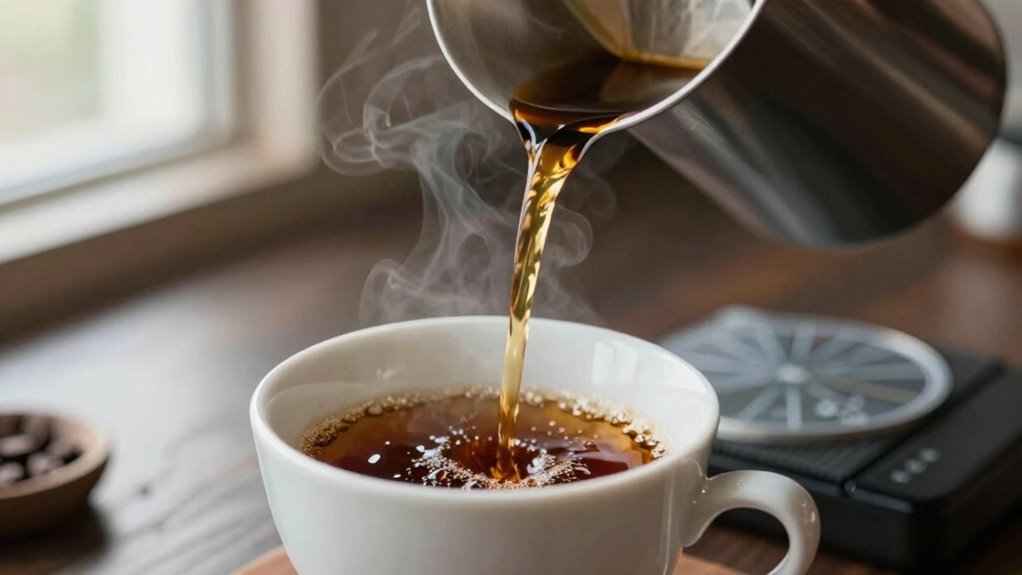

To instantly lift your light roast, start with a slightly coarser grind to prevent over-extraction and preserve bright, fruity notes. Extend your brew time just a bit and keep the water temperature between 195-205°F to bring out nuanced flavors. Use a precise timer to control extraction and adjust your coffee-to-water ratio for more brightness. Small tweaks make a big difference—continue exploring ways to perfect your brew for even better results.

Get coffee and tea gear delivered free — and shop member deals
- Fast, free delivery on millions of items
- Access to Prime Big Deal Days deals on October 6–7
- Prime Video, Amazon Music and more included
Key Takeaways
- Use a slightly coarser grind to prevent over-extraction and preserve bright, fruity notes.
- Extend brew time carefully with precise timing to enhance natural acidity and flavor complexity.
- Maintain water temperature between 195°F and 205°F for delicate extraction of nuanced flavors.
- Ensure freshly roasted beans are stored airtight and ground just before brewing for maximum freshness.
- Regularly calibrate your grinder for consistent particle size, ensuring even extraction and clarity in flavor.
As an affiliate, we earn on qualifying purchases.
Why Light Roasts Need Special Extraction Techniques
Why Light Roasts Need Special Extraction Techniques
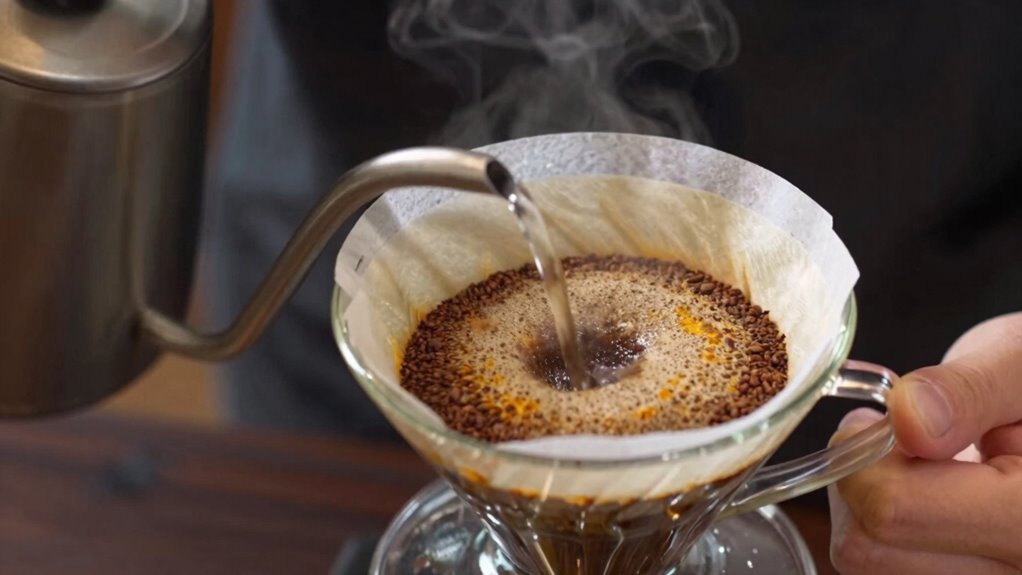
Light roasts require special extraction techniques because they have a denser, less porous structure than darker roasts. This means water struggles more to extract their delicate flavor profiles, which include brighter acidity and nuanced fruity or floral notes. To reveal these flavors, you need to adjust your brewing equipment and method. Using precise temperature controls and longer extraction times helps guarantee water penetrates evenly. Equipment like pour-over drippers or AeroPresses with fine-tuned settings can make a significant difference. If your technique isn’t optimized, you might end up with under-extracted coffee that tastes sour or flat. Remember, light roasts demand a gentler, more attentive approach to brewing. That way, you maximize flavor extraction, highlighting the coffee’s unique characteristics rather than masking them. Additionally, understanding brewing science can enhance your appreciation for the diverse flavors found in these roasts.
As an affiliate, we earn on qualifying purchases.
Choosing the Perfect Grind Size for Light Roast Coffee
Choosing the Perfect Grind Size for Light Roast Coffee
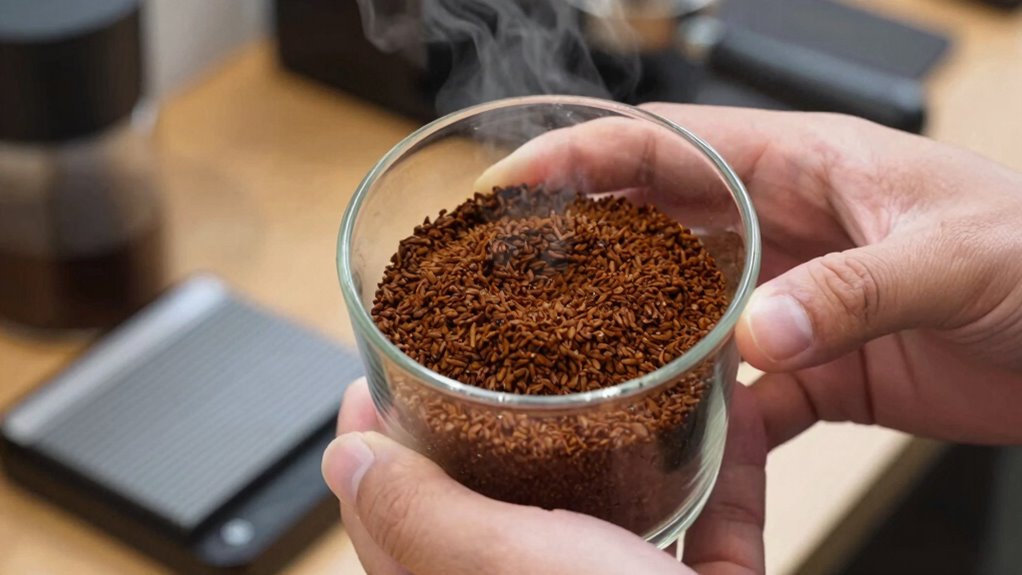
Choosing the right grind size affects your brew time and extraction quality, especially with light roasts. Consistent particle size guarantees even extraction, while adjusting for roast freshness helps fine-tune your results. Additionally, understanding brewing techniques can further enhance your coffee’s flavor and strength. The right grind size can impact the extraction quality of your coffee, ensuring you achieve the best flavor profile. A good knife can help you achieve precision in your coffee preparation, ensuring uniformity in grind size. Pay attention to these factors to optimize your coffee’s flavor and strength.
Grind Size and Brew Time
Since light roasts retain more of their original flavors and delicate compounds, selecting the right grind size is essential for ideal extraction. A finer grind generally increases brew time, helping extract the nuanced flavors that are key to a balanced cup. Conversely, a coarser grind shortens brew time, preventing over-extraction that can dull bright notes. Matching grind size to your brewing method ensures proper flavor pairing, highlighting the coffee’s complexity. Consistent grind size also guarantees uniform extraction, making it easier to control brew time. Pay attention to how your grind size affects extraction; a slight adjustment can dramatically improve the clarity and brightness of your light roast. Ultimately, precise grind size and brew time work together to *reveal* the coffee’s full potential.
Consistency in Particle Size
Achieving a consistent grind size is essential for ideal extraction of light roast coffee, as uneven particles can lead to uneven brewing results. Particle uniformity ensures that water interacts with each coffee particle evenly, promoting balanced extraction and better flavor clarity. To get grind consistency, use a quality burr grinder rather than a blade grinder, which produces uneven particles. Additionally, incorporating auditory feedback therapy techniques can enhance your focus while grinding, helping to maintain consistency in your process. This practice can also foster a deeper understanding of fan culture, allowing coffee enthusiasts to appreciate the nuances of their brew. Adjust the grind size gradually, aiming for a uniform texture—whether you’re aiming for a grind suitable for pour-over or AeroPress. Keep your grinder calibrated regularly to maintain consistency. Remember, the more uniform your particle size, the more predictable and controlled your brew will be, reducing the risk of over- or under-extraction. Consistent grind size ultimately helps you achieve a brighter, more nuanced cup. Additionally, choosing the right coffee blends can enhance your overall espresso brewing experience, making it even more rewarding.
Adjusting for Roast Freshness
Freshness greatly influences how light roast coffee responds to your grind size adjustments. As beans age, their flavor profile changes, making it necessary to tweak your grind for ideal extraction. When your coffee is fresh, use a slightly coarser grind to prevent over-extraction, which can dull delicate flavors. If the beans have been stored longer, a finer grind helps extract more vibrant flavors before they fade. Proper storage techniques, like airtight containers away from light, preserve roast freshness and maintain consistent extraction. Additionally, consider flavor pairing—lighter roasts often pair well with subtle, bright notes, so adjusting grind size can highlight these nuances. Tights for budget shoppers can also enhance your overall coffee experience by promoting mindfulness and enjoyment during the brewing process. Regularly evaluate your roast’s freshness to fine-tune your grind size, ensuring each brew maximizes flavor and clarity.
As an affiliate, we earn on qualifying purchases.
Adjusting Brew Time to Highlight Bright Flavors
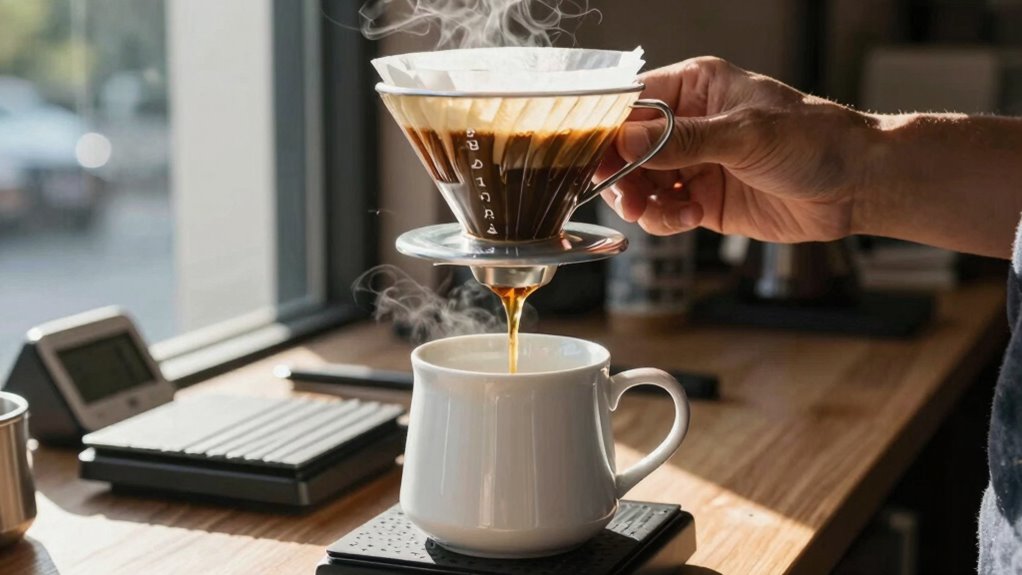
To bring out the bright flavors in your light roast, try extending your brew time slightly, but avoid over-extraction. You can also shorten the overall extraction by adjusting your grind or water flow, which emphasizes acidity. Using precise timer settings helps guarantee consistent results that highlight those vibrant notes. Additionally, understanding the principles of economics and UBI can enhance your appreciation of how artisanal coffee production contributes to sustainable economies. Exploring regional flavors can also deepen your connection to the coffee you brew.
Extend Brew Duration Slightly
By extending the brew duration just a little, you give the water more time to extract the bright, lively flavors inherent in your coffee beans. This slight adjustment emphasizes the natural acidity and fruitiness of light roasts, enhancing your flavor pairing experience. Using the right brewing equipment—like a pour-over or AeroPress—can help control this increased extraction time precisely. Keep in mind:
- Consistent grind size ensures even extraction during the extended brew.
- Adjust water flow rate to avoid over-extraction and bitterness.
- Experiment with timing to find the perfect balance for vivid brightness without excess acidity.
Shorten Extraction for Brightness
Reducing the brew time slightly can help highlight the coffee’s bright, vibrant flavors. When you cut back on extraction, you emphasize the coffee’s natural acidity, giving your cup a lively, crisp character. This approach enhances the flavor profile by preventing over-extraction, which can dull brightness and introduce bitterness. Shortening extraction preserves the delicate fruity and floral notes typical of light roasts, creating a balanced acidity that stands out without overpowering other flavors. Keep in mind, though, that too brief an extraction risks underdeveloping the beans’ nuanced qualities. Find the right balance by slightly decreasing brew time until you notice a clearer, more vibrant acidity that elevates the overall flavor profile. This simple adjustment can make a noticeable difference in your cup’s brightness and complexity.
Use Precise Timer Settings
Using precise timer settings allows you to fine-tune your brew to bring out the coffee’s bright, lively qualities. Adjusting the brewing time influences how the coffee flavor develops, especially with light roasts. Longer extraction times can deepen the flavor, while shorter ones highlight brightness and acidity. To optimize your brewing equipment, experiment with small time adjustments—often just a few seconds make a difference.
- Focus on consistent timing to reveal nuanced flavors
- Use your equipment’s timer to control extraction precisely
- Shorten or extend brew time to emphasize brightness over bitterness
As an affiliate, we earn on qualifying purchases.
Controlling Water Temperature for Nuanced Light Roast Extraction
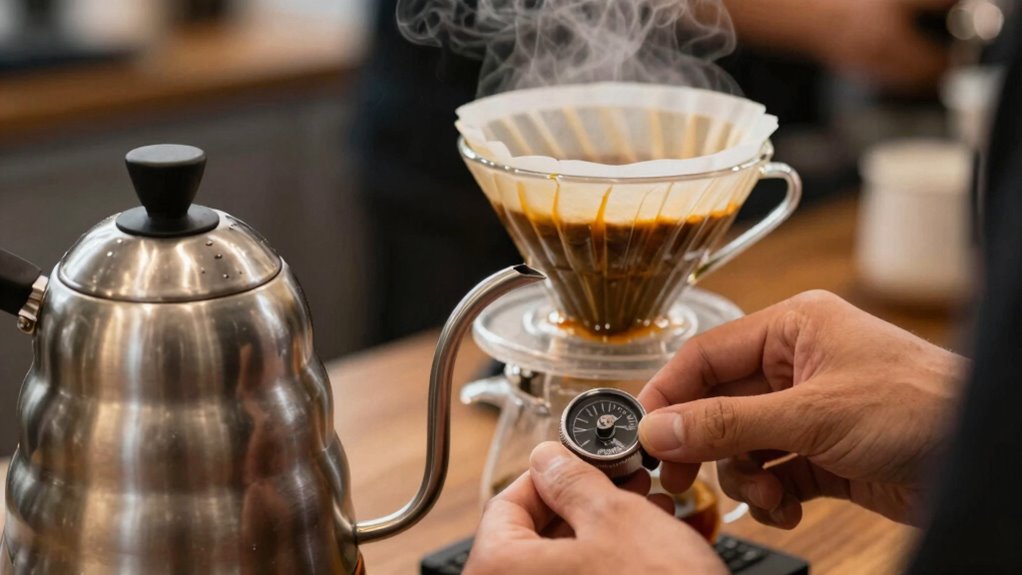
Controlling water temperature is essential for extracting the delicate flavors in light roasts. It influences water chemistry, affecting how compounds dissolve and revealing subtle brightness and acidity. Too hot, and you risk over-extraction, dulling nuanced notes; too cool, and you might under-extract, losing complexity. To achieve excellent temperature, guarantee your equipment is properly calibrated, so your water consistently hits the target range—usually between 195°F and 205°F. Regular calibration prevents temperature fluctuations and maintains precise control. Keep a thermometer handy to monitor water temperature during brewing, especially if your machine’s display isn’t reliable. By managing water temperature carefully, you’ll release the full potential of your light roast, emphasizing its nuanced flavors and delicate aromatics.
Finding the Right Brew Ratio to Enhance Brightness
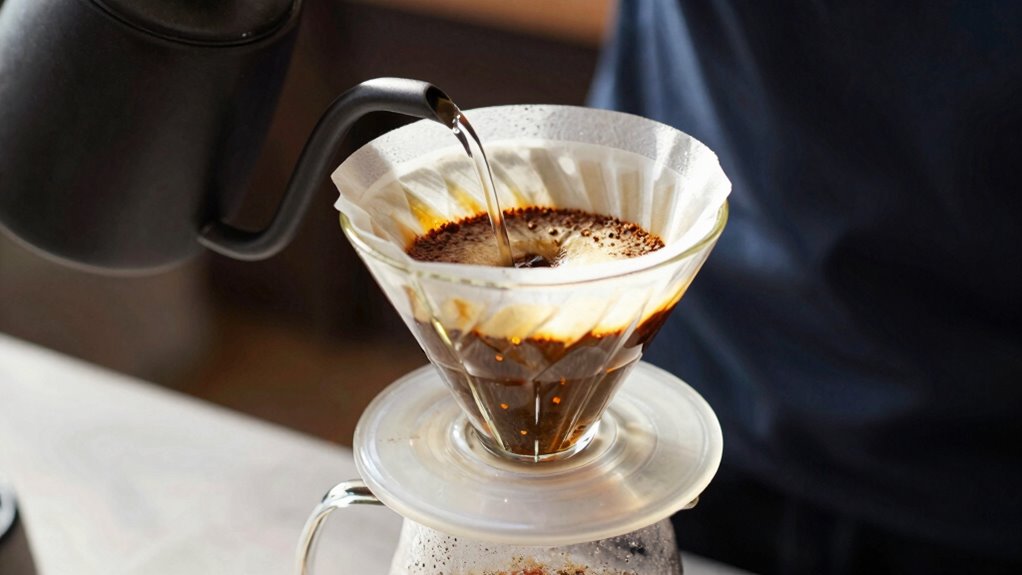
Finding the right brew ratio can especially enhance the brightness and clarity of your light roast. A balanced ratio allows the coffee’s delicate acidity and nuanced flavors to shine. To optimize this, consider how your brewing equipment influences extraction—some brewers need a different ratio to reveal brightness effectively. Experiment with slightly higher coffee-to-water ratios to emphasize vibrant notes, especially when selecting flavor pairings that complement acidity.
- Use a ratio that highlights brightness without overpowering subtle flavors
- Adjust based on your brewing method to maximize clarity
- Align your flavor pairings with the coffee’s acidity for a harmonious profile. Additionally, incorporating aquatic exercises into your routine can boost overall well-being, paralleling the benefits of a well-balanced brew.
Troubleshooting Common Light Roast Coffee Extraction Problems
Troubleshooting Common Light Roast Coffee Extraction Problems
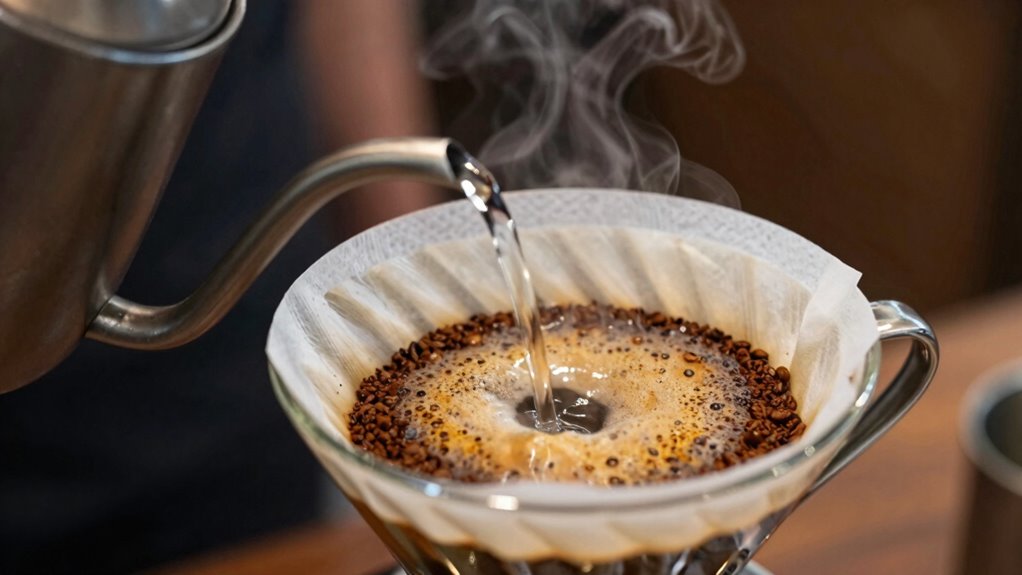
Light roast coffee can be tricky to extract properly, especially when subtle flavors and delicate acidity are involved. If your brew tastes sour or under-extracted, check your coffee bean storage—exposed beans lose freshness and flavor. Make sure your beans are stored in an airtight container away from heat and light. Additionally, brewing equipment maintenance is vital; old or clogged filters, scales, or grinders can cause uneven extraction. Regularly clean your equipment to prevent residue buildup that hampers water flow and extraction consistency. Adjust grind size if your coffee is too sour or weak—finer for more extraction, coarser to slow it down. Super-automatic espresso machines can also enhance your brewing consistency. To ensure optimal flavor, consider using energy-efficient models to maintain precise brewing temperatures. Proper storage and well-maintained equipment help you troubleshoot common issues, guaranteeing your light roast delivers its bright, nuanced profile every time. Furthermore, consider eco-friendly disposal methods for your old coffee gear to minimize environmental impact. Remember, ethical choices in sourcing your coffee can also elevate your brewing experience and contribute to a more sustainable industry.
Frequently Asked Questions
Can Light Roast Extraction Tips Improve Cold Brew Flavor?
Yes, light roast extraction tips can enhance your cold brew flavor by highlighting subtle flavor nuances. Adjusting grind size and brewing time guarantees better extraction, leading to a more balanced and vibrant profile. These tips also improve cold brew consistency, making your brew more uniform every time. By applying light roast extraction techniques, you can reveal brighter, more complex flavors that elevate your cold brew experience considerably.
How Does Altitude Affect Light Roast Extraction Techniques?
Altitude influence markedly affects light roast extraction techniques because higher elevations lower boiling points and change water pressure. You’ll need extraction adjustments, like longer brew times or finer grind sizes, to compensate for these conditions. By tweaking your method based on altitude, you guarantee ideal flavor extraction, preventing under-extraction or over-extraction. Embracing these adjustments helps you achieve a balanced, flavorful cup regardless of your elevation.
Are There Specific Brewing Devices Best Suited for Light Roasts?
You should choose brewing equipment that allows precise control over extraction techniques for light roasts. Devices like pour-over brewers, AeroPress, or even Chemex excel because they offer adjustable variables like grind size, water temperature, and brew time. These tools help you optimize extraction, highlighting the bright, nuanced flavors of light roasts. Focus on equipment that lets you experiment with your techniques, ensuring a balanced, vibrant coffee every time.
What Role Does Water Mineral Content Play in Light Roast Extraction?
Water mineral content plays a vital role in light roast extraction by influencing flavor clarity and balance. The mineral composition, like calcium and magnesium, enhances water’s ability to dissolve coffee compounds, leading to brighter, more vibrant flavors. Too many minerals can cause over-extraction, making the brew bitter, while too few may result in a flat taste. Adjusting mineral levels guarantees ideal extraction and highlights the delicate nuances of light roasts.
Can Adjusting Grind Freshness Impact Extraction Quality?
Adjusting grind freshness can dramatically impact your extraction quality, but it’s a delicate balance. Too fresh, and the grind may be inconsistent, leading to uneven extraction; too stale, and flavor compounds might degrade, dulling your brew. By maintaining grind consistency and preserving freshness, you release a more vibrant, nuanced cup. Stay attentive—small tweaks in grind freshness can transform your light roast experience into something truly exceptional.
Conclusion
Once you start applying these tips, you’ll notice your light roast coffee transforms—bright, vibrant, and full of life. It’s almost like the perfect cup was waiting just beneath the surface all along, ready to reveal itself with a little tweak here and there. With a bit of practice, those small adjustments become second nature, turning every brew into a delightful discovery. So, keep experimenting, and let your passion for coffee lead the way to that ideal cup.
Fall Picks
fall essentials
As an affiliate, we earn on qualifying purchases.