To keep your espresso machine at its best, backflush it once a week if you use it daily, or every 2-4 weeks for less frequent use. Watch for signs like declining flavor, slower brew times, or unusual noises, which indicate you need a clean. Avoid overusing or skipping maintenance to prevent damage. Staying on top of proper cleaning routines helps guarantee your coffee remains rich and flavorful—keep going to discover more expert tips.

Get coffee and tea gear delivered free with Prime
- Fast, free delivery on millions of items
- Prime Video, Amazon Music and more included
- Member-only deals all year
Key Takeaways
- Backflush your espresso machine at least once a week with daily use, and every 2-4 weeks for less frequent use.
- Signs like poor flavor, longer brew times, or unusual noises indicate it’s time to backflush.
- Avoid overusing backflush cycles to prevent damage to seals and gaskets.
- Regularly inspect and replace worn gaskets, seals, and filters to maintain optimal performance.
- Use manufacturer-recommended cleaning agents and follow proper procedures for effective maintenance.
espresso machine backflush cleaning kit
As an affiliate, we earn on qualifying purchases.
As an affiliate, we earn on qualifying purchases.
How to Backflush Your Espresso Machine
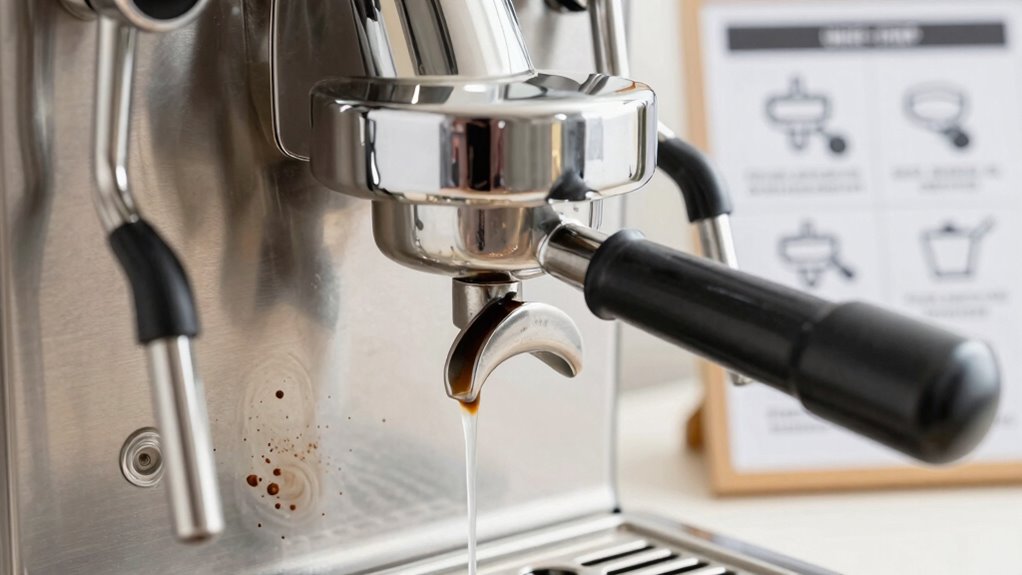
To guarantee your espresso machine stays clean and functions properly, it’s essential to backflush it regularly. Start by removing the portafilter and inserting a blind filter. Add a small amount of cleaning solution or espresso machine cleaner. Run the machine’s brewing cycle for a few seconds, then stop and let it sit for a moment. Repeat this process several times to dislodge any buildup. While doing this, make sure your water filtration system is in good condition, as clean water prevents mineral deposits that can affect backflushing effectiveness. Additionally, using proper filtration can improve the overall longevity of your espresso machine. Regular quality assurance practices in maintenance help ensure your espresso machine continues to perform at its best. Incorporating eco-friendly practices in your cleaning routine can also enhance sustainability. Furthermore, understanding gear care techniques for your espresso machine can prevent long-term issues. Also, periodically check your coffee grinder to verify it’s properly calibrated, so your espresso remains consistent. Regular backflushing, combined with clean water filtration, helps maintain peak performance and extends your machine’s lifespan. Additionally, using a cleaning solution specifically designed for espresso machines can enhance the effectiveness of your backflushing routine.
espresso machine cleaning solution
As an affiliate, we earn on qualifying purchases.
As an affiliate, we earn on qualifying purchases.
Why Regular Backflushing Improves Coffee Taste
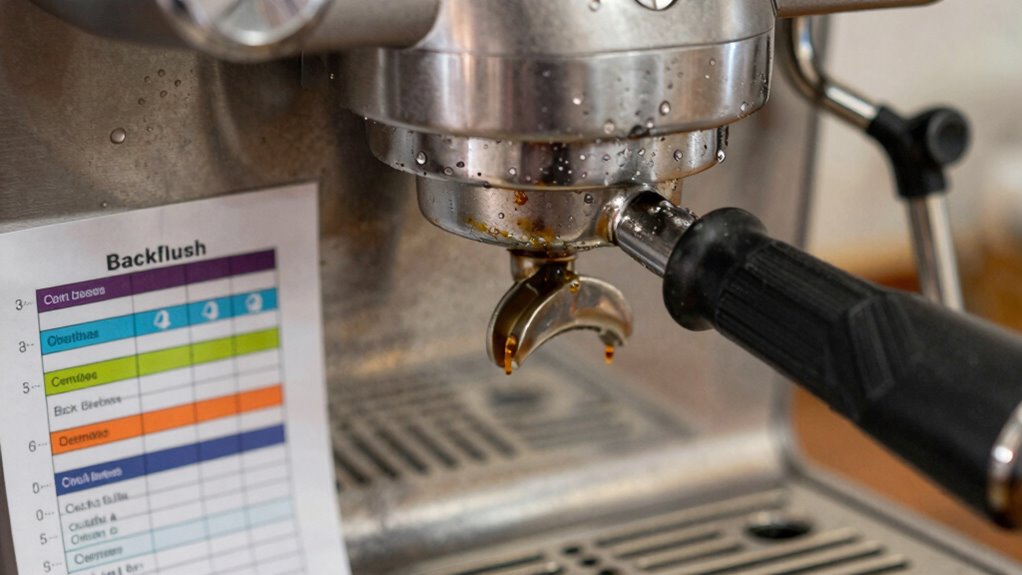
Regularly backflushing your espresso machine doesn’t just keep it running smoothly; it also markedly improves the flavor of your coffee. When your machine is clean, it prevents old coffee oils and residues from tainting new brews, allowing the true flavor of fresh coffee beans to shine. This process also helps maintain ideal water flow and pressure, which are essential for extracting the best flavor. Additionally, consistent backflushing supports proper grinder calibration by reducing clogs and build-up that can affect grind size and extraction quality. AI technologies can also enhance the accuracy of your grind settings, leading to even more precise espresso shots. When your grinder is properly calibrated, you get consistent espresso shots, preserving the coffee’s aroma and flavor. Overall, regular backflushing ensures your machine stays clean and your coffee tastes fresher, richer, and more vibrant. Furthermore, investing in data storage solutions can help you keep track of your maintenance schedule and ensure you never miss a cleaning. Interestingly, shipwreck preservation techniques can be applied to maintain the longevity of your espresso machine by preventing corrosive build-up. Regular maintenance is crucial for achieving optimal coffee extraction and can make a significant difference in your daily brew quality. Moreover, ensuring color accuracy in your brewing process can enhance the visual appeal of your espresso, making each cup more enjoyable.
blind filter for espresso machine
As an affiliate, we earn on qualifying purchases.
As an affiliate, we earn on qualifying purchases.
How Often Should You Backflush?
How Often Should You Backflush?
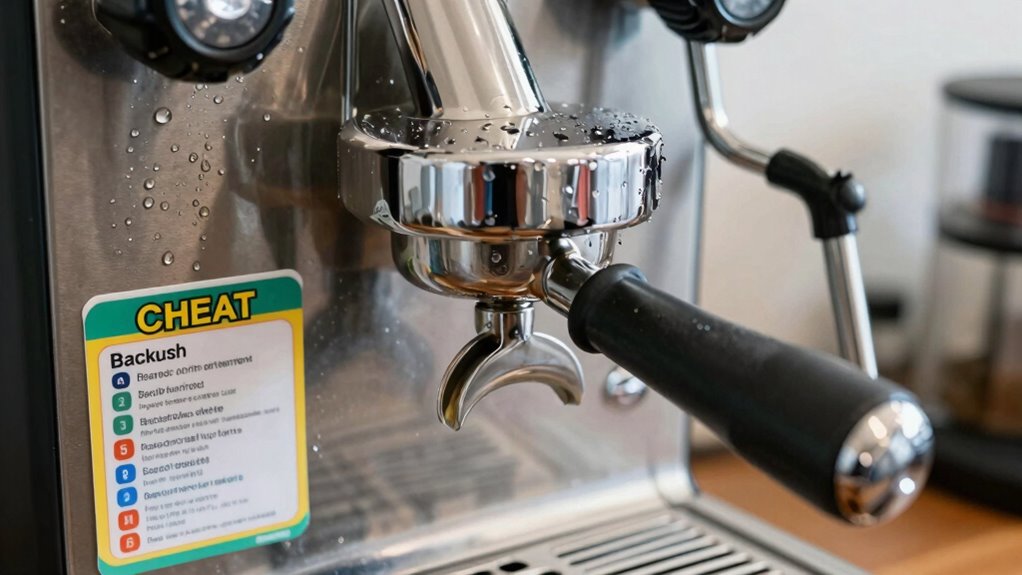
How often you should backflush your espresso machine depends on how frequently you use it. If you brew espresso daily, aim to backflush at least once a week to prevent buildup of coffee grind residues that can affect water flow and brewing quality. For less frequent use, every 2-4 weeks may suffice. Consistent backflushing helps maintain perfect water temperature, ensuring your machine heats evenly and extracts the best flavors. Astrophotography techniques can also benefit from similar regular maintenance to ensure optimal performance. Pay attention to the coffee grind consistency, as finer grinds can clog the system faster, requiring more frequent cleaning. Regular backflushing keeps the internal components clean, preserves water temperature stability, and guarantees your espresso always tastes fresh and balanced. Additionally, using a portable oil radiator in your workspace can help maintain an optimal environment for coffee brewing. Moreover, maintaining your machine aligns with principles of sound healing that emphasize regular care for well-being. Additionally, incorporating adaptable structures into your maintenance routine can enhance the longevity and performance of your espresso machine. Regular maintenance practices, including projector installations, can further ensure that your equipment operates at peak efficiency. Adjust your schedule based on your usage to keep your machine in top shape.
espresso machine gasket replacement
As an affiliate, we earn on qualifying purchases.
As an affiliate, we earn on qualifying purchases.
Signs You Need to Backflush Your Machine
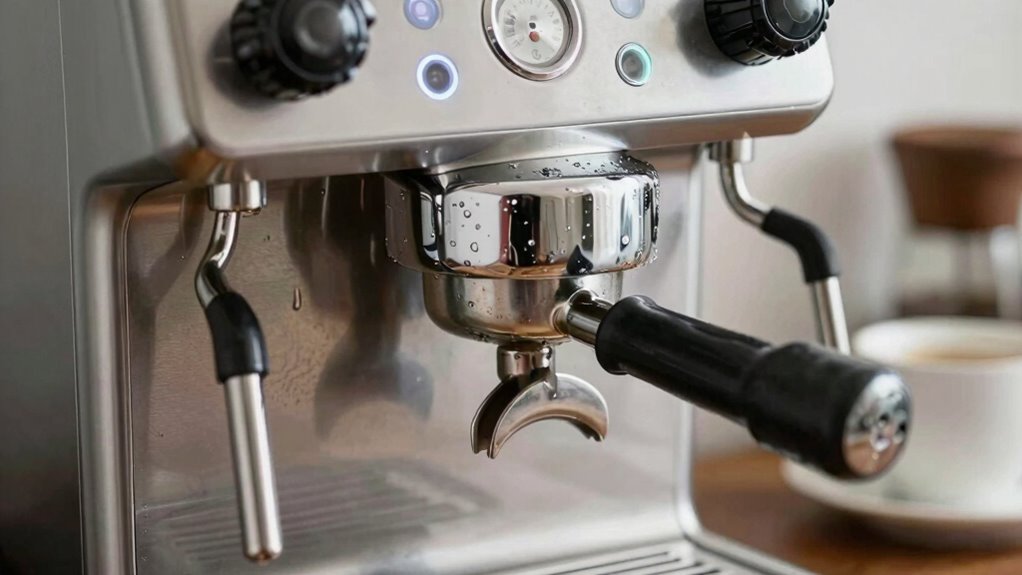
If your espresso’s flavor has started to decline, it might be time to backflush your machine. Unusual noises or a longer brew time are also signs that buildup could be affecting performance. Recognizing these clues helps keep your machine running smoothly and your coffee tasting great. Regular maintenance, including eco-friendly disposal of old coffee grounds and cleaning supplies, can contribute to the longevity of your equipment. Additionally, ensuring software quality in your machine’s components can significantly enhance its overall performance.
Decreased Coffee Quality
Have you noticed that your espresso shots no longer taste as rich or vibrant as they used to? This often signals decreased coffee quality, which can stem from buildup inside your machine. Over time, coffee oils and residues accumulate, affecting extraction and flavor. Even if your coffee bean freshness is ideal, a dirty brew path hampers taste. Additionally, many cultures around the world incorporate halal traditions into their coffee rituals, highlighting the importance of cleanliness and quality in beverage preparation. The importance of regular maintenance is crucial in ensuring your espresso machine operates effectively. If your grinder calibration isn’t spot-on, inconsistent grind size can lead to uneven extraction, further dulling flavors. Regularly backflushing your espresso machine removes these residues, enhancing performance and ensuring your machine functions as designed. When you neglect this maintenance, flavor compounds can’t fully develop during extraction, resulting in flat, bland coffee. So, if your shots aren’t as lively, it’s time to think about a backflush to improve coffee quality. Additionally, cleaning equipment is essential in maintaining optimal performance and longevity, just as it is with airless paint sprayers. Regular maintenance contributes to work-life harmony, ensuring you can enjoy every cup without compromising on quality.
Unusual Machine Noises
When your espresso machine starts making unusual noises, it’s a clear sign that something isn’t right beneath the surface. These strange machine noises often indicate buildup or blockages affecting water pressure. You might hear grinding, hissing, or banging sounds during operation, which suggest the internal components are struggling to function smoothly. Reduced water pressure caused by debris can make the machine work harder, resulting in odd noises. Backflushing helps remove residue from the brew path, restoring proper water flow and quieting those unsettling sounds. If you notice persistent noise issues, it’s a strong sign that your machine needs a thorough cleaning. Addressing these noises early prevents more serious problems and keeps your espresso machine running efficiently. Regular maintenance, including safe cleaning practices, is essential for ensuring your machine remains in top condition.
Longer Brew Time
A noticeable increase in brew time is a clear sign that your espresso machine may need a backflush. When brew time lengthens, it indicates that the extraction speed has slowed, often because buildup or blockages are restricting water flow. This can cause your machine to struggle to push water through the coffee puck efficiently. Over time, residue from coffee oils and particles can clog the system’s valves and screens, leading to longer brew cycles. If your shots are taking noticeably longer to extract, it’s a good time to backflush. Regular backflushing helps clear these obstructions, restoring proper flow and *peak* extraction speed. Maintaining cleanliness in your machine ensures consistent, quality espresso and prevents more serious issues down the line.
Common Mistakes When Backflushing and How to Avoid Them
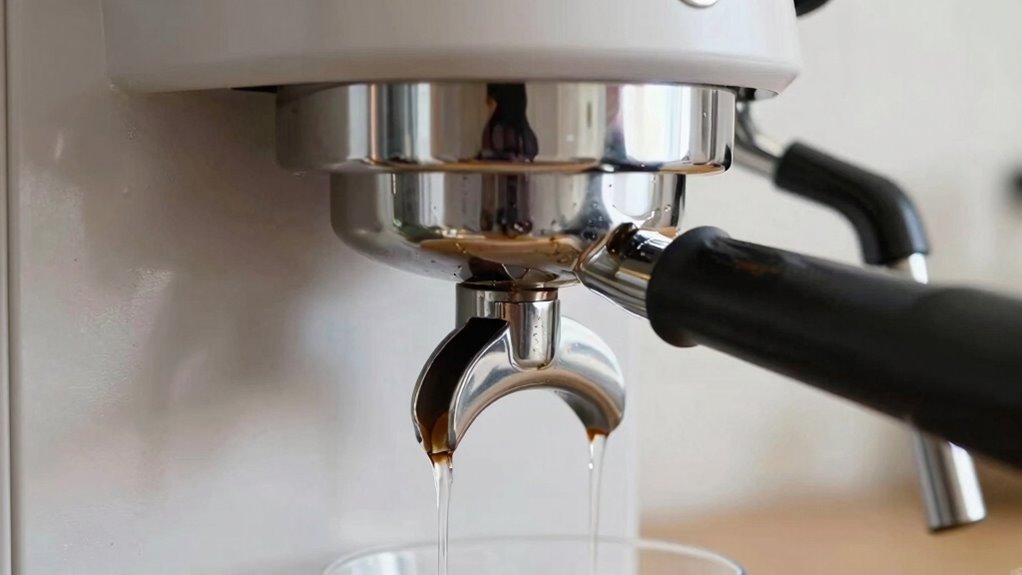
Many people overuse backflush cycles, thinking more is better, but this can damage your machine. Skipping regular maintenance also leads to buildup and potential malfunctions. To avoid these mistakes, follow your manufacturer’s guidelines and stick to a consistent cleaning schedule. Regular cleaning can greatly enhance the overall performance of your machine, similar to how styling cream adds moisture and light hold to hair.
Overusing Backflush Cycles
Overusing backflush cycles can do more harm than good, leading to unnecessary wear on your espresso machine’s components. When you backflush too often, you risk damaging seals and gaskets, which can cause leaks and reduce your machine’s lifespan. Additionally, excessive backflushing may impact your coffee flavor, as frequent cleaning can strip away essential oils and natural flavors from your espresso. To maintain peak performance, only backflush when necessary—typically after every few shots or as recommended by the manufacturer. This approach helps preserve your machine’s longevity while ensuring a clean brew. Remember, moderation is key; overdoing it can lead to costly repairs and compromised coffee quality. Proper backflushing habits will keep your espresso tasting great and your machine running smoothly.
Skipping Regular Maintenance
Skipping regular maintenance is a common mistake that can severely impact your espresso machine’s performance. When you neglect consistent cleaning routines, buildup of coffee oils and residues can clog your machine’s internal parts, reducing efficiency and risking damage. This, in turn, affects your coffee brewing process, leading to stale flavors and inconsistent shots. Regular backflushing is essential to remove these deposits and keep everything running smoothly. Without proper upkeep, your machine’s components won’t operate at their best, and you might find yourself needing costly repairs. To avoid this, stick to a scheduled cleaning routine, including backflushing at the recommended intervals. Staying consistent ensures your espresso machine functions properly, delivering the rich, flavorful coffee you want with every brew.
Tips for Maintaining Your Espresso Machine Between Backflushing
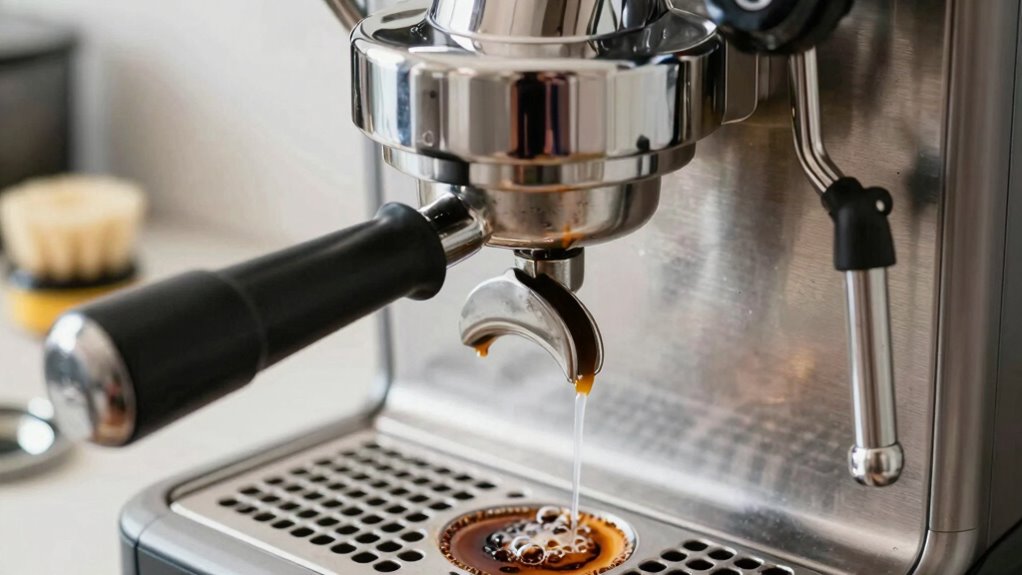
To keep your espresso machine running smoothly between backflushing sessions, regular simple maintenance is essential. Focus on consistent cleaning routines, such as wiping down the portafilter and steam wand after each use, to prevent buildup. Pay attention to water quality by using filtered or soft water, which reduces mineral deposits and keeps internal components cleaner longer. Descale the machine periodically if you notice scale buildup or if you’re using hard water. Keep the drip tray and water reservoir clean to avoid mold and bacteria growth. Regularly inspect gaskets and seals for wear, replacing them as needed. These small steps help maintain peak performance, ensure better-tasting coffee, and prolong the life of your espresso machine.
Troubleshooting Backflushing Issues
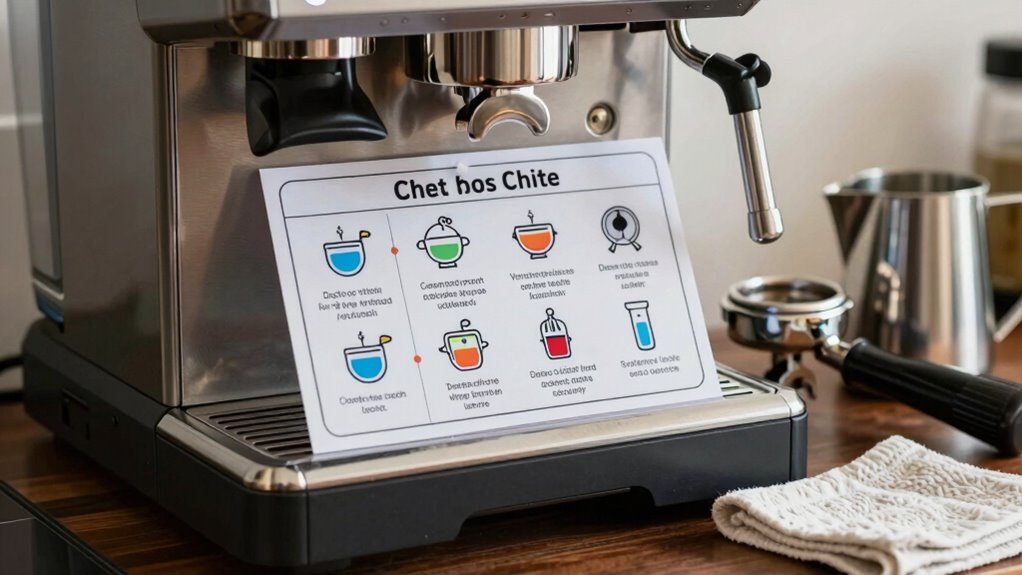
When backflushing your espresso machine, encountering issues is common, but most can be quickly resolved with some troubleshooting. If your machine isn’t cleaning properly or brewing inconsistently, it might be due to improper cleaning procedures or calibration issues. First, check the cleaning process: verify you’re using the correct cleaning agents and following recommended steps. If problems persist, revisit your machine calibration—incorrect pressure or temperature settings can hinder backflushing effectiveness. To visualize, consider the following:
| Issue | Possible Cause | Solution |
|---|---|---|
| Water not flowing | Blocked filters or clogged valves | Clean filters and valves |
| Poor espresso quality | Incorrect calibration | Recalibrate machine |
| Excessive pressure | Incorrect pump pressure | Adjust pump settings |
| Machine leaks | Worn seals or improper cleaning | Replace seals, check cleaning procedures |
Proper troubleshooting ensures your espresso machine stays in top shape.
Frequently Asked Questions
Can I Use Vinegar or Household Cleaners for Backflushing?
You shouldn’t use vinegar or household cleaners for backflushing your espresso machine. Vinegar risks include damaging seals and leaving behind residues that can affect taste. Household cleaners are even more harmful, as they contain chemicals not meant for espresso machines and can cause corrosion or health hazards. Stick to manufacturer-recommended cleaning solutions or specially formulated backflush detergents to keep your machine safe and your coffee tasting great.
How Long Does a Typical Backflush Process Take?
Think of your espresso machine as a garden needing regular watering. A typical backflush takes about 5 to 10 minutes, depending on your maintenance routines. You’ll run the cleaner, rinse, and wipe down, ensuring your equipment stays in top shape. This process is essential for equipment longevity, preventing buildup that can cause breakdowns. Regular backflushing keeps your machine performing at its best, just like a well-tended garden flourishing.
Does Backflushing Affect the Machine’s Warranty?
Backflushing typically doesn’t affect your machine’s warranty if you follow the manufacturer’s instructions and maintain proper cleaning frequency. However, neglecting regular cleaning or using improper cleaning methods might void your warranty. To stay safe, always read your warranty terms and perform routine backflushing as recommended. This guarantees your espresso machine stays in good condition without risking warranty issues, keeping your coffee consistently great.
What Tools Are Essential for Effective Backflushing?
To backflush your espresso machine effectively, you need just a few essential tools—most importantly, a blind filter basket, backflush detergent, and a cleaning brush. These tools are your secret weapons for maintaining ideal cleaning frequency and ensuring machine longevity. With these in hand, you’ll conquer machine maintenance like a pro, preventing clogs and ensuring consistently great coffee every time. Don’t skip this gear; your coffee deserves the best care!
Is It Necessary to Backflush After Every Use?
No, you don’t need to backflush after every use. Incorporate backflushing into your maintenance routines based on your cleaning frequency and how often you use your machine. Regular backflushing—about once a week for daily users—keeps your espresso machine in top shape by removing coffee oils and residue. Adjust the frequency if you notice a decline in performance or taste, ensuring consistent, high-quality coffee.
Conclusion
Think of backflushing as the heartbeat of your espresso machine, keeping its core healthy and vibrant. Regular care guarantees your coffee’s flavor blossoms like a well-tended garden, free from the weeds of residue. When you stay attentive, each shot becomes a symphony of rich, smooth notes, echoing your dedication. Embrace this ritual, and your machine will keep humming its sweet melody, delivering perfect coffee—time after time, day after day.
Fall Picks
fall essentials
As an affiliate, we earn on qualifying purchases.