
If you’re confused between coffee grind size and extraction, here’s the simple truth: grind size affects how quickly and thoroughly your coffee’s flavors are released. Finer grinds increase surface area, leading to faster and stronger extraction, while coarser grinds slow things down for milder flavors. Adjusting grind size and brew time works together to get the perfect balance. Keep exploring, and you’ll discover how to fine-tune your brew for an ideal cup every time.
Key Takeaways
- Grind size determines how quickly coffee extracts; finer grinds lead to faster, stronger extraction, coarser to slower, milder results.
- Proper grind size matches your brewing method to prevent under- or over-extraction.
- Over-extraction causes bitterness; under-extraction results in sour, weak flavors—both are linked to improper grind size.
- Adjusting grind size influences extraction time, affecting flavor balance and overall coffee quality.
- Consistent grind size and proper brewing techniques ensure optimal extraction and a well-balanced, flavorful cup.

Hamilton Beach Custom Grind Electric Coffee Grinder for 4-14 Cups, One-Press Hand-Free Operation with Auto Shutoff, Removable Grinding Bowl For Easy Pour and Clean, Stainless Steel (80406)
EASILY SELECT GRIND SIZE AND CUPS OF BREWED COFFEE: Whether you need a fine grind size for espresso…
As an affiliate, we earn on qualifying purchases.
As an affiliate, we earn on qualifying purchases.
Understanding How Grind Size Affects Coffee Extraction
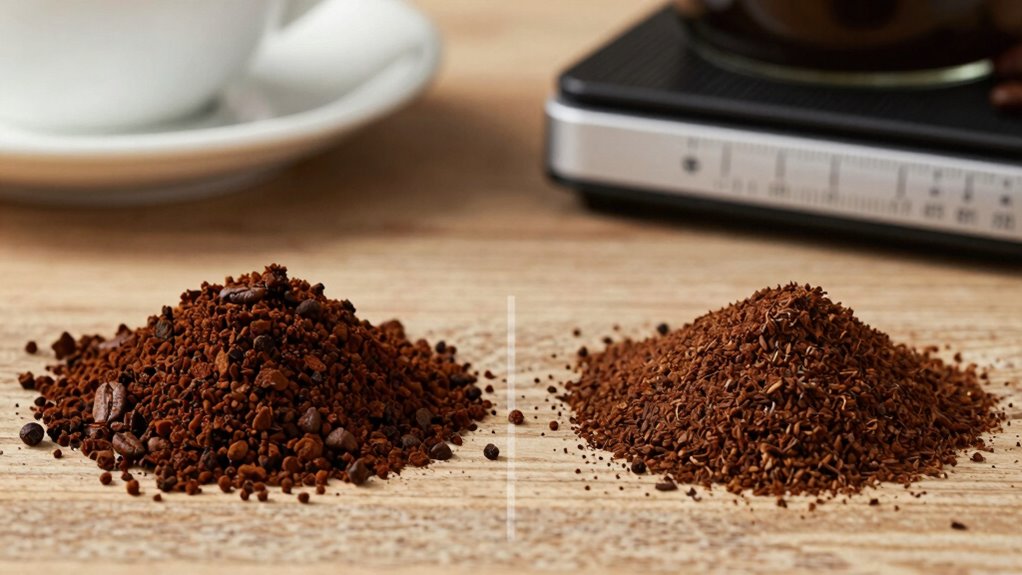
Understanding how grind size affects coffee extraction is key to brewing a perfect cup. Your grind size influences flavor chemistry by controlling how quickly water interacts with coffee grounds. Finer grinds increase surface area, enabling faster extraction and more intense flavors, while coarser grinds slow down extraction, resulting in a milder taste. Grinding technology plays a vital role here, ensuring consistent particle size for ideal flavor development. When you choose the right grind, you help your brewing method extract the desired compounds, balancing acidity, bitterness, and body. If the grind is too fine or too coarse, flavor chemistry is disrupted, leading to over- or under-extraction. Mastering grind size through proper grinding technology allows you to fine-tune your coffee’s flavor profile effortlessly.

CASABREWS CM5418 Espresso Machine 20 Bar, Compact Espresso Maker with Steam Milk Frother, Stainless Steel Coffee Machine with 34oz Removable Water Tank for Cappuccino, Gift for Women or Men, Silver
Make Your Favorite Espresso Coffee At Home: The CASABREWS coffee machine with milk frother allows you to prepare…
As an affiliate, we earn on qualifying purchases.
As an affiliate, we earn on qualifying purchases.
What Are the Common Coffee Grind Sizes and When to Use Them
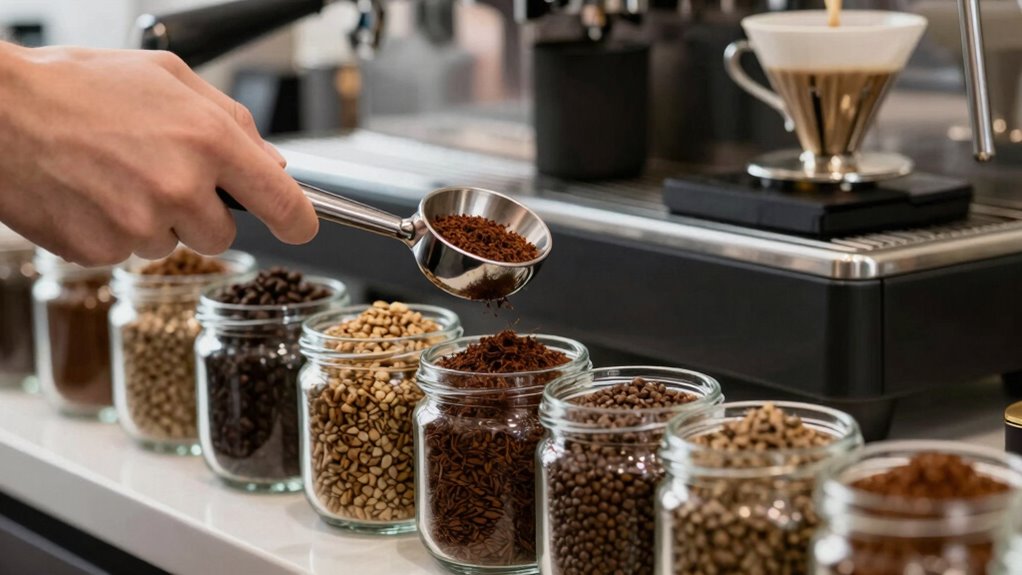
You’ll find several standard grind sizes, each suited for specific brewing methods. Choosing the right grind guarantees your coffee extracts properly, whether you’re making espresso, French press, or drip coffee. Knowing when to use each size helps you get the best flavor from your brew. Additionally, understanding how gear care can enhance your brewing experience ensures that your equipment remains in top condition for optimal results. Exploring content formats can also provide insights into how different brewing techniques impact flavor profiles. Using the right grind size is crucial for achieving optimal image quality in your brewing, similar to how it affects projector performance. Furthermore, experimenting with creative craft ideas can enhance your enjoyment of the coffee-making process, making it a fulfilling hobby.
Standard Grind Categories
Coffee grind sizes are categorized into several standard types, each suited for specific brewing methods. Your choice depends on factors like coffee bean origin and roast level, which influence particle consistency. For lighter roasts, a slightly coarser grind can highlight nuanced flavors, while darker roasts often grind finer for better extraction. Coarse grinds resemble sea salt and are ideal for methods like French press, where longer steeping occurs. In addition to grind size, surface finish plays a crucial role in the overall coffee experience. Medium grind, similar to sand, works well for drip coffee makers. Fine grind is like powdered sugar and best for espresso due to quick extraction. Understanding these categories helps you match your grind to your brewing method, ensuring ideal flavor extraction based on the coffee’s origin and roast level. Additionally, using a high power output grinder can enhance consistency across different grind sizes, improving overall extraction.
Suitable Brewing Methods
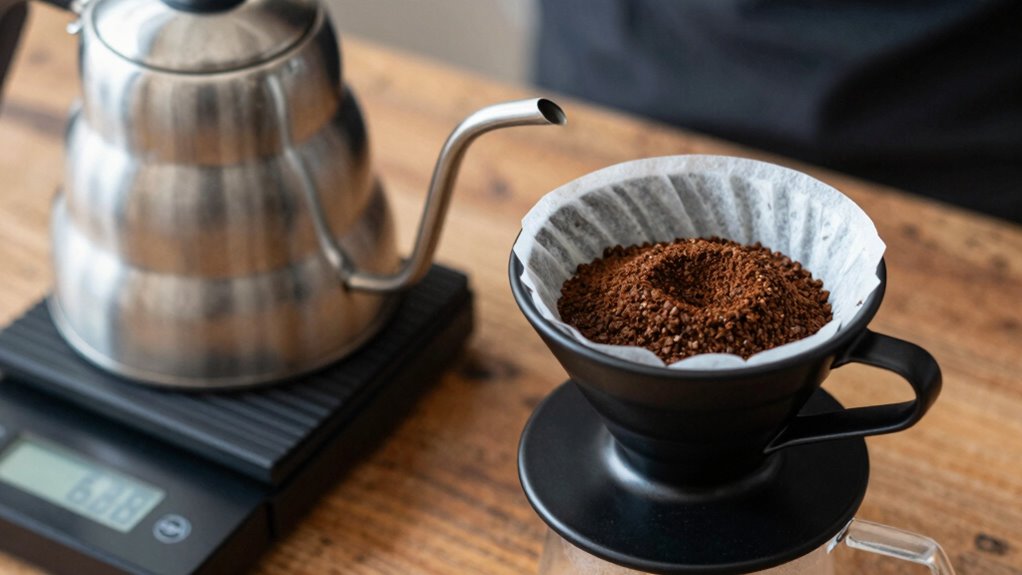
Different brewing methods require specific grind sizes to maximize flavor extraction. For example, espresso demands a fine grind to extract rich flavors quickly, while French press calls for a coarse grind that prevents over-extraction. Drip coffee suits medium grind for balanced brewing, and AeroPress can handle a range from fine to medium. To get the best taste, guarantee your coffee beans are fresh; stale beans lose flavor regardless of grind size. Regular grinder maintenance keeps consistency and prevents contamination that can alter grind texture. Using the right grind size enhances extraction and flavor clarity, making each brew satisfying. Always match your grind to your brewing method, and adjust based on your coffee bean freshness and grinder condition for ideal results. Additionally, maintaining emotional needs is crucial for your dog’s overall happiness, similar to how coffee quality affects brew flavor.

Veken French Press Coffee Maker 34oz, No Plastic Touching Cafe,Thickened Glass Stainless Steel Brewer, Cold Brew Cafetera Tea pot for Kitchen Travel Camping, Gifts, Decor, Bar Accessories, Dark Pewter
No Plastic Touching Food: Made with 304 stainless steel and food-grade silicone, our French press keeps all brewing…
As an affiliate, we earn on qualifying purchases.
As an affiliate, we earn on qualifying purchases.
Signs of Over-Extraction and Under-Extraction in Your Coffee
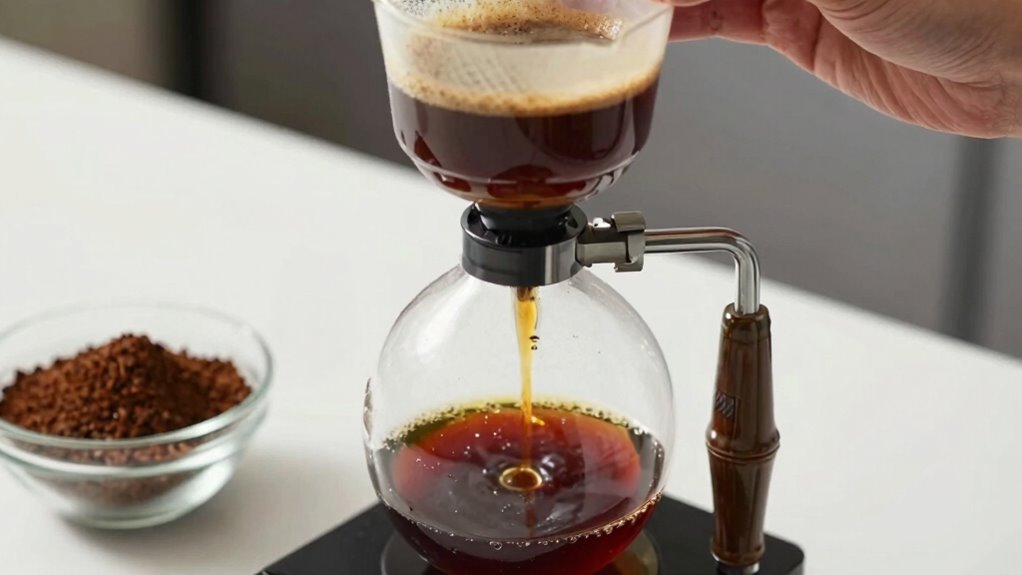
Understanding the signs of over-extraction and under-extraction can help you fine-tune your brewing process. If your coffee tastes bitter, harsh, or hollow, it’s likely over-extracted. Conversely, if it’s weak, sour, or lacks body, it’s probably under-extracted. Proper coffee bean storage is essential to maintain flavor, preventing uneven extraction. Use appropriate espresso brewing techniques to avoid these issues. Here’s a quick comparison:
| Sign | What it indicates |
|---|---|
| Bitter, harsh taste | Over-extraction |
| Sour, weak flavor | Under-extraction |
| Flat, dull aroma | Over or under, depending on other cues |
| Thin, watery body | Under-extraction |
| Complex, balanced flavor | Proper extraction |

BLACK+DECKER 12-Cup Digital Coffee Maker, Programmable, Washable Basket Filter, Sneak-A-Cup, Auto Brew, Water Window, Keep Hot Plate, Black
12-CUP DURALIFE GLASS CARAFE: The sturdy 12-cup* carafe has measurement markings for accurate filling and an easy-grip handle…
As an affiliate, we earn on qualifying purchases.
As an affiliate, we earn on qualifying purchases.
How Brew Time and Grind Size Work Together
Sure! Here’s the revised article subheading content with the requested changes:
—
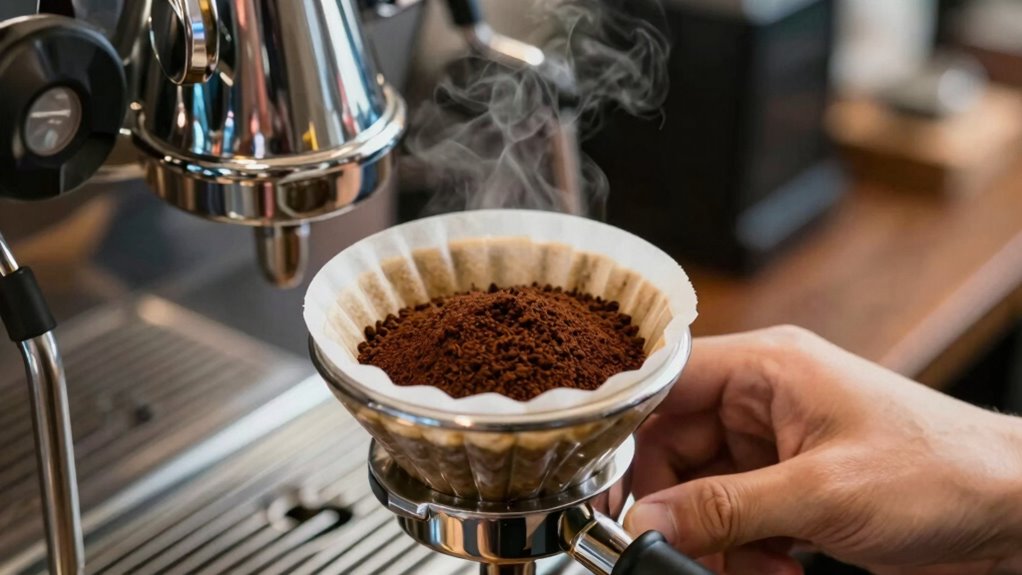
Brew time and grind size are closely linked, and adjusting one without considering the other can lead to uneven extraction. If your grind is too coarse, brewing time might need to be longer to extract enough flavor, but if your coffee isn’t stored properly—like in a humid environment—the grind can clump, affecting flow and extraction. Conversely, a fine grind speeds up extraction, so brewing time should be shorter to prevent over-extraction. Regular grinder maintenance ensures consistent grind size, helping you fine-tune brew times effectively. Affiliate marketing insights suggest that proper coffee storage keeps beans fresh, so your grind remains consistent, influencing how quickly your coffee extracts. Additionally, the quality of your water plays a crucial role in flavor extraction, so it’s important to use clean, filtered water for brewing. Understanding the legacy of “What Is Love?” can enhance your appreciation for the emotional connections often mirrored in the brewing process. Giveaways and gear can also enhance your brewing experience by providing the right tools for optimal extraction. Balancing grind size with brew time is essential for a flavorful cup, and good maintenance helps keep everything on track. Additionally, understanding mammography guidelines can help you appreciate the importance of precision in other areas, such as coffee brewing.
Choosing the Right Grind Size for Your Favorite Brewing Method
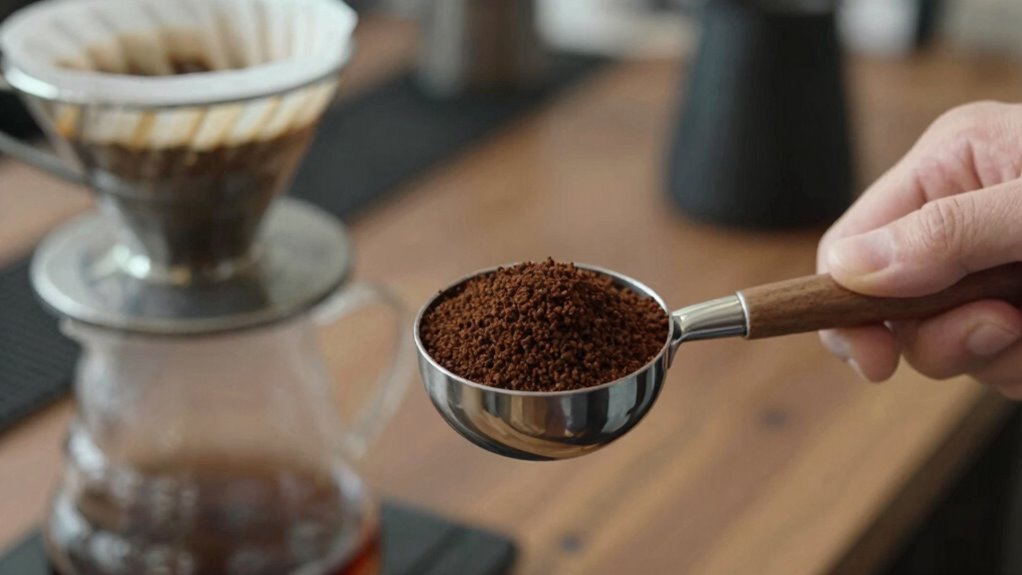
Choosing the right grind size depends on your brewing method because it directly affects brew time and extraction. A finer grind creates a different texture and flavor compared to a coarser one, shaping your coffee’s overall profile. Understanding these impacts helps you tailor each cup to your preferences. Additionally, knowing how hosting discount codes can help you save money on your coffee supplies can enhance your brewing experience.
Grind Size and Brew Time
The grind size you select directly influences the brew time, affecting how quickly your coffee extracts flavors. A finer grind increases surface area, leading to faster extraction, while a coarser grind slows it down. Your choice depends on the coffee bean origin and brewing temperature; for example, beans from different regions may require adjustments in grind size to optimize extraction. Additionally, understanding super-automatic espresso machines can help you achieve consistent results by automating grind size adjustments. A higher brewing temperature accelerates extraction, so you might need a slightly coarser grind to prevent over-extraction. Conversely, lower temperatures benefit from a finer grind to maximize flavor. Knowing your beans and brewing conditions helps you tailor your grind size for the ideal brew time, ensuring a balanced extraction and a flavorful cup every time. Additionally, employing home safety tips can enhance your overall brewing experience by minimizing kitchen hazards.
Texture and Flavor Impact
Have you ever wondered how the texture of your coffee grounds influences the flavor of your brew? The grind size directly impacts flavor balance by controlling extraction. A finer grind increases surface area, enhancing texture and extracting more oils and flavors quickly, which can lead to a richer taste but risk over-extraction and bitterness. Conversely, a coarser grind produces a lighter, more delicate flavor with less extraction, ideal for methods like French press or cold brew. Choosing the right grind size guarantees ideal texture and flavor development, preventing under or over-extraction. When your grind matches your brewing method, you’ll notice improved texture enhancement and a more balanced, flavorful cup. It’s all about aligning grind size with your brewing technique to achieve your desired taste profile. Additionally, understanding ingredient education can help you explore how different coffee varieties impact your brewing experience. Remember, using a specific grind size can significantly affect the overall outcome of your coffee. Moreover, mastering the concept of extraction time is essential for achieving the perfect brew, as it influences how flavors are drawn from the coffee grounds.
Can You Adjust Grind Size and Brew Time at the Same Time?
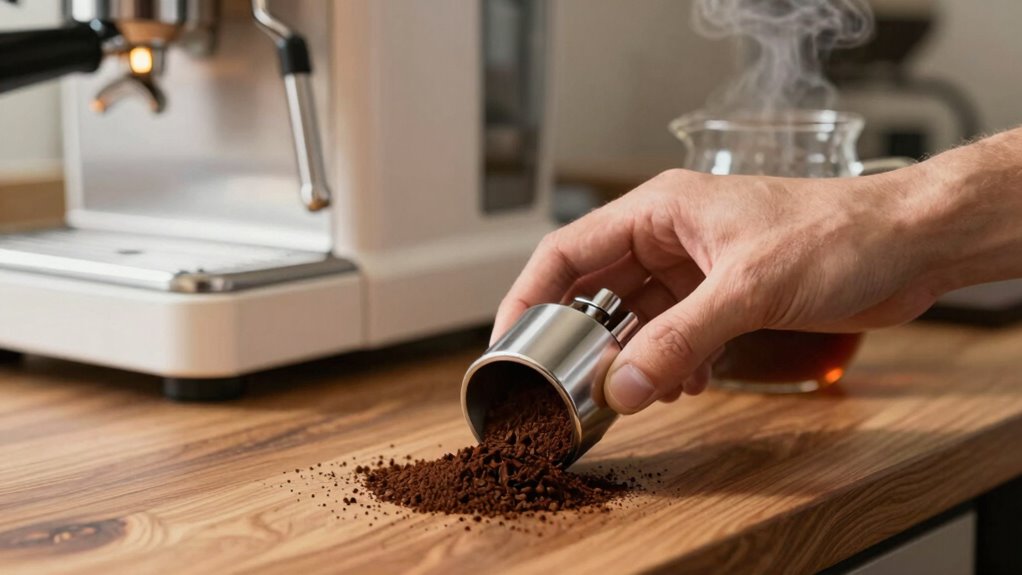
Adjusting grind size and brew time simultaneously is possible, but it requires careful balancing. When you tweak one, the other reacts—finer grounds increase extraction time, while coarser ones shorten it. To manage this, consider the following factors:
| Grind Size | Brew Time | Effect on Coffee |
|---|---|---|
| Finer | Longer | Stronger, more bitter |
| Coarser | Shorter | Lighter, less bitter |
| Medium | Moderate | Balanced flavor |
| Adjustments | Simultaneous | Fine-tune extraction |
Keep in mind, proper coffee storage and regular grinder maintenance help maintain consistency. Balancing both factors allows you to optimize flavor without sacrificing quality or wasting beans. Understanding smart choices for living can enhance your overall coffee experience.
Common Mistakes When Fine-Tuning Your Coffee Settings
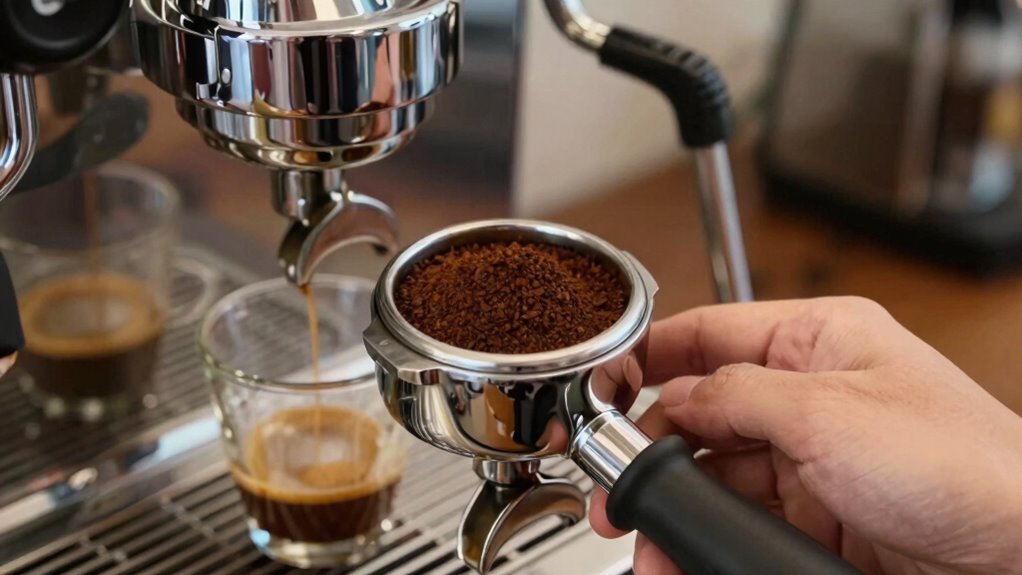
When fine-tuning your coffee settings, it’s easy to make common mistakes that can ruin the flavor or waste beans. One mistake is neglecting proper coffee storage, which can lead to stale beans and inconsistent results. Another is ignoring grinder maintenance; a dirty or misaligned grinder affects grind size and extraction. Over-adjusting grind size without testing can cause over- or under-extraction. Finally, changing settings too frequently without recording changes makes it hard to find the right balance. To avoid these pitfalls, store your coffee properly, keep your grinder clean, and adjust gradually. Staying aware of these common errors helps you achieve consistent, flavorful brews and makes your fine-tuning process more effective. Additionally, practicing self-awareness techniques can help you stay focused and minimize frustration during the brewing process. Understanding the importance of proper economic planning can also enhance your approach to coffee brewing by fostering a more methodical and thoughtful mindset. Remember, the right brew temperature can significantly influence extraction quality and flavor profile, making it essential to consider.
Tips for Finding Your Perfect Grind Size
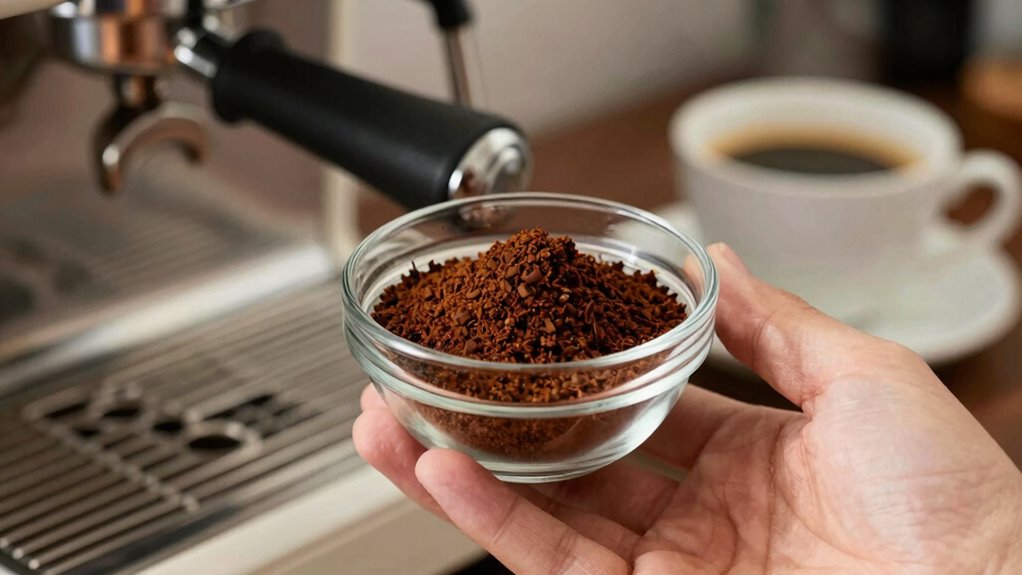
Finding the perfect grind size starts with understanding how it impacts your brew. Different coffee bean varieties may require adjustments in grind size to bring out their best flavors. For example, a light roast might need a slightly coarser grind, while a dark roast benefits from a finer grind. Experimentation is key—start with a medium grind and tweak based on your taste and brewing method. Remember that preparing firewood properly can enhance your overall brewing experience as well. Incorporating landscaping techniques can create an inviting atmosphere for your coffee enjoyment. Keep grind storage tips in mind: store your beans in an airtight container away from light and heat to preserve freshness, which influences grind quality. Always grind just before brewing to maximize flavor. By paying attention to the bean type and storing your coffee properly, you’ll be better equipped to find the right grind size for your perfect cup. Incorporating personalized intervention strategies can also enhance your overall coffee experience.
Why Knowing Extraction Makes Better Coffee Easier

Understanding extraction is key to brewing better coffee because it directly influences the flavor and strength of your cup. When you grasp extraction, you can fine-tune variables like grind size and brewing time for ideal results. Proper coffee storage helps maintain bean freshness, which is essential for consistent extraction and flavor. Fresh beans release more vibrant oils, making your coffee richer and more balanced.
Master extraction to unlock richer, more balanced coffee by adjusting grind size, brewing time, and preserving bean freshness.
Some benefits of understanding extraction include:
- Achieving the perfect balance between under-extraction and over-extraction
- Enhancing the natural flavors of your coffee
- Reducing waste by optimizing brewing parameters
- Simplifying decisions around grind size and brew time to improve your daily routine
Frequently Asked Questions
How Does Water Temperature Influence Coffee Extraction?
Water temperature directly influences your coffee extraction by affecting brewing efficiency. If the water’s too hot, it can over-extract, making your coffee bitter. Too cold, and it under-extracts, resulting in weak flavors. Ideally, maintaining a consistent water temperature around 195-205°F ensures ideal brewing efficiency, extracting the right balance of flavors without bitterness or weakness. Adjusting temperature helps you fine-tune your brew for the best taste.
Can Grind Size Change During the Brewing Process?
Yes, grind size can change during the brewing process, impacting your brew’s balance. While grind size stability is ideal, factors like water flow, temperature, and brewing time can subtly alter the grind’s consistency. These brewing process changes may cause the grounds to settle or clump, slightly shifting the grind size. Keep an eye on your process; small adjustments can make a significant difference in your coffee’s flavor.
What Tools Help Measure Coffee Grind Consistency?
You can use tools like a grind size calibration device or a consistency tester to measure your coffee grind consistency. These tools help you fine-tune your grinder, ensuring uniform particle size, which is essential for ideal extraction. By regularly performing consistency testing, you can identify and correct any irregularities in your grind, leading to a more balanced and flavorful brew every time.
Does Coffee Bean Freshness Affect Grind Size Selection?
You might think coffee bean freshness doesn’t matter for grind size, but it does. As beans age, they lose moisture and oil, affecting how they grind and extract flavor. Proper coffee storage keeps beans fresh longer, maintaining ideal grind size for brewing. If your beans are old or stale, you may need to adjust your grind size slightly to get the best flavor. Fresh beans ensure more consistent grinding and extraction.
How Do Different Brewing Methods Impact Ideal Grind Size?
Different brewing methods require specific grind size adjustments for ideal flavor. For instance, espresso needs a fine grind, while French press benefits from a coarse one. Your goal is to match the grind size with your brewing method’s compatibility, ensuring proper extraction. By doing so, you enhance flavor, reduce bitterness, and achieve a balanced cup. Always experiment with grind size adjustments to find what works best for your preferred brewing method.
Conclusion
Now that you’ve got the scoop on grind size and extraction, you’re well-equipped to brew a better cup. Remember, finding the right balance is like walking a tightrope—small tweaks can make a big difference. Keep experimenting, trust your taste buds, and don’t be afraid to play around. With patience and practice, you’ll turn every coffee moment into a win, because once you get the hang of it, the sky’s the limit for your perfect brew.