
Brew ratio refers to the amount of coffee grounds used relative to water, shaping the coffee’s concentration and flavor strength. Coffee strength is how bold or intense the brew tastes, influenced by factors like grind size, temperature, and ratio. While a higher ratio can make a brew richer, it doesn’t always mean it’s stronger. To truly master your coffee, understanding how these factors interact is key—continue exploring to discover the full potential of your brew.

Get coffee and tea gear delivered free — and shop member deals
- Fast, free delivery on millions of items
- Access to Prime Big Deal Days deals on October 6–7
- Prime Video, Amazon Music and more included
Key Takeaways
- Brew ratio affects coffee concentration by adjusting the water-to-coffee grounds; strength is how bold or intense the final taste perceives.
- Higher brew ratios typically produce milder, more diluted coffee, while lower ratios result in a richer, more concentrated brew.
- Coffee strength depends on extraction efficiency, grind size, and brewing variables, not solely on the ratio.
- Adjusting brew ratio influences flavor profile and body, but technique and extraction control overall strength.
- Myths suggest ratio alone determines strength; in reality, extraction process and brewing method are more impactful.
As an affiliate, we earn on qualifying purchases.
What Are Brew Ratio and Coffee Strength?

Understanding the difference between brew ratio and coffee strength is essential for making a great cup of coffee. Brew ratio refers to the amount of coffee grounds relative to water, which you control during brewing. It influences how concentrated or diluted your coffee will be. Coffee cultivation and roast profiles also play roles, as they affect bean flavor and extraction potential. Lighter roasts highlight different qualities than darker ones, impacting how much coffee you should use for desired strength. Coffee strength describes the perceived intensity or boldness of the brew, often linked to the concentration, but shaped by factors like grind size and brewing method. Knowing these distinctions helps you tailor your brewing process, ensuring your coffee hits the right flavor and body for your taste.
As an affiliate, we earn on qualifying purchases.
How Does Brew Ratio Affect Flavor and Body?

Your brew ratio directly influences the extract concentration, shaping both flavor and body. A higher ratio typically produces a fuller, richer mouthfeel, while a lower ratio can highlight brighter, more nuanced flavors. Understanding this balance helps you craft coffee that matches your preferred strength and taste profile. Additionally, just as in astrophotography techniques, mastering the brew ratio allows you to achieve a more balanced and satisfying cup. By exploring regional flavors, you can further elevate your brewing experience and discover unique taste profiles that complement your chosen ratio. Furthermore, the ability to create seating areas in your brewing space can enhance your overall coffee experience by introducing new dimensions of flavor. The ability to experiment with formats in your brewing technique can also enhance your overall coffee experience by introducing new dimensions of flavor. Incorporating budgeting strategies into your coffee planning can help you invest in quality beans that elevate your brewing experience.
Extract Concentration Impact
When you adjust the brew ratio, it directly influences the extract concentration, which in turn shapes the coffee’s flavor and body. A higher brew ratio results in a more diluted extract, reducing the concentration impact, and often leading to a milder, less intense flavor. Conversely, a lower brew ratio creates a more concentrated extract, enhancing extraction clarity and emphasizing the coffee’s richness and complexity. This concentration impacts how well flavors are extracted and perceived, affecting overall clarity and balance. If the extract is too concentrated, it can taste overbearing or bitter, while too dilute can produce a weak, insipid cup. Understanding this relationship helps you fine-tune your brewing process for ideal flavor and body, based on the desired extraction clarity and concentration impact. Additionally, mastering coffee grinding techniques can significantly enhance the brewing process and improve flavor consistency.
Body and Flavor Balance
Adjusting the brew ratio doesn’t just influence extract concentration; it also considerably impacts the coffee’s body and flavor profile. A higher brew ratio generally produces a fuller, richer body, enhancing flavor harmony and providing a more robust mouthfeel. Conversely, a lower ratio can result in a lighter, more delicate body, emphasizing clarity and subtle flavor notes. Consistent brewing techniques are essential to maintain this balance, ensuring your coffee’s body and flavor remain predictable and enjoyable. When you fine-tune the brew ratio, you control how the coffee’s natural oils and soluble compounds are extracted, directly affecting the overall sensory experience. By understanding this relationship, you can craft a cup that perfectly aligns with your desired flavor profile and body. Additionally, optimizing whole-home water systems can significantly improve the quality of your brew, enhancing both flavor and consistency.
As an affiliate, we earn on qualifying purchases.
What Is Coffee Strength and Why Does It Matter?

Coffee strength refers to how concentrated or potent your brew tastes, which is influenced by factors like grind size, brew time, and coffee-to-water ratio. This strength directly affects the flavor profile, making your coffee taste bolder, milder, or somewhere in between. Understanding what determines coffee strength helps you customize your drink to match your preferences. Additionally, experimenting with coffee-to-water ratio can lead to discovering your ideal brew strength. Using the right tools, such as measuring scoops, can help ensure consistency in your brewing process. Applying the right techniques, such as understanding terminology, can further enhance your brewing experience by clarifying the nuances of coffee preparation.
Definition of Coffee Strength
Coffee strength refers to how bold, rich, or concentrated your brew tastes, and it’s a key factor in how you experience your cup. It’s influenced by the coffee bean’s properties and how you prepare it. The type of coffee bean, such as Arabica or Robusta, impacts the overall strength, with Robusta generally producing a more intense flavor. Brewing temperature also plays a role; higher temperatures extract more solubles from the beans, resulting in a stronger, bolder taste. Conversely, lower temperatures produce a milder flavor. Understanding coffee strength helps you tailor your brew to your preferences, whether you want a robust espresso or a lighter drip coffee. It’s about finding the right balance between bean selection and brewing parameters to achieve your ideal cup. Additionally, just as color accuracy affects image quality in projectors, it also influences the perception of flavor in coffee.
Factors Influencing Strength
Various factors come into play when determining the strength of your brew, making it essential to understand how each one influences the final taste. One key factor is flavor extraction, which depends on grind size, water temperature, and brew time. The more efficiently flavors are extracted, the stronger your coffee’s perceived strength will be. Additionally, brewing consistency guarantees you get the same strength with each cup. Variations in water-to-coffee ratio or brewing method can lead to inconsistent strength levels. If your process isn’t consistent, your coffee might taste weaker or stronger than intended. Recognizing these factors helps you control strength more precisely, so your brew matches your preferences every time. Ultimately, understanding what influences strength allows you to fine-tune your brewing process for the perfect cup.
Impact on Flavor Profile
The strength of your brew directly influences its flavor profile, shaping how you perceive the aroma, body, and overall taste. A stronger coffee often highlights flavor complexity, revealing subtle notes and nuances you might miss otherwise. It also enhances aroma, making the scent more vibrant and inviting. Conversely, a weaker brew can taste more delicate and mellow, emphasizing smoothness over intensity.
Key effects include:
- Increased flavor complexity, highlighting unique beans’ profiles
- Aroma enhancement, intensifying your sensory experience
- Balanced body, affecting mouthfeel and overall richness
Adjusting strength allows you to tailor your coffee’s flavor profile, ensuring each cup aligns with your preferences and highlights the qualities you enjoy most. Understanding brewing science can further help you manipulate these variables for an optimal experience. Additionally, knowing how to select the best espresso beans is crucial for achieving the desired strength and flavor balance.
As an affiliate, we earn on qualifying purchases.
How to Adjust Brew Ratio for Different Coffee Styles

Adjusting your brew ratio is essential for tailoring your coffee to different styles and flavor profiles. To do this effectively, consider how brewing temperature and grind size influence extraction. A higher brew ratio (more water relative to coffee) works well for lighter, more delicate coffees, so you might need a slightly coarser grind to prevent over-extraction. Conversely, for richer, bolder styles, lower ratios with a finer grind can enhance body and flavor. Adjust the brewing temperature accordingly—hotter water extracts more solubles, so a slightly lower ratio might be ideal. Pay attention to how these variables interact; small tweaks can make a big difference in achieving the perfect style. Experiment and taste to find the ideal balance for each coffee style.
How Changing Coffee Strength Impacts Your Brew
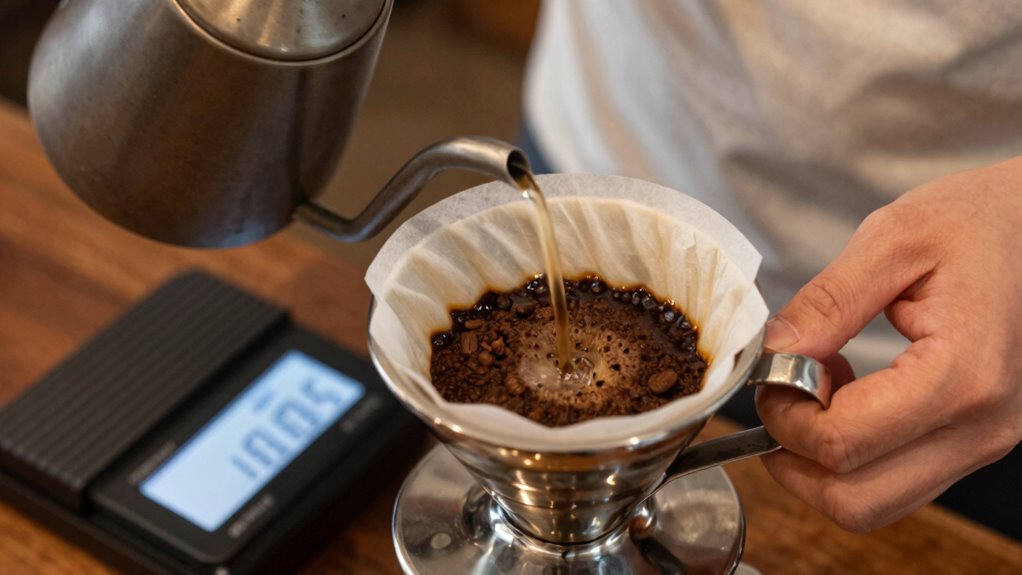
Changing the strength of your coffee directly influences its flavor, body, and overall profile. When you tweak the strength, you’re adjusting the concentration of coffee solids, which affects how bold or delicate your brew tastes. Proper coffee storage helps maintain freshness, ensuring consistent strength over time. Brewing temperature also plays a role—higher temperatures extract more solubles, intensifying strength, while lower temps produce milder results.
Adjusting brewing temperature and storage preserves coffee’s strength and enhances its flavor profile.
Consider these factors:
- Stronger coffee often requires careful storage to prevent staling.
- Adjusting brewing temperature can fine-tune strength without changing coffee-to-water ratios.
- Weaker brews might benefit from increased brewing time to boost flavor without over-extracting.
Common Myths About Brew Ratio and Coffee Strength

Many people believe that increasing the coffee-to-water ratio always results in a stronger brew, but that’s a common misconception. Your choice of coffee equipment and brewing techniques play a bigger role in strength than just the ratio. For example, using a pour-over or espresso machine can produce different intensities even with similar ratios. Some assume a higher ratio equals more caffeine or a bolder taste, but extraction plays a key part. Overloading coffee grounds doesn’t necessarily mean a better or stronger brew if your brewing technique isn’t optimized. Additionally, adjusting grind size and contact time can influence strength more effectively than simply adding more coffee. These myths overlook how subtle adjustments in brewing methods impact overall flavor and strength. Understanding brewing techniques can greatly enhance your coffee experience, as the right equipment and extraction methods can lead to a more satisfying cup.
Should You Prioritize Brew Ratio or Coffee Strength?

Deciding whether to prioritize brew ratio or coffee strength depends on your brewing goals and taste preferences. If you want to highlight specific flavor profiles, adjusting the brew ratio can help emphasize certain notes. For example, a higher ratio often results in a richer, more intense flavor, while a lower ratio can produce a lighter, more delicate cup. Your brewing techniques also influence this choice—methods like pour-over or AeroPress allow precise control over strength and extraction. Consider these factors:
- Focus on flavor profiles you enjoy most
- Experiment with brew ratios to find your ideal balance
- Match brewing techniques to your desired strength and clarity
Additionally, understanding how 85mm lenses can enhance your photography can parallel your journey in perfecting coffee brewing. Importantly, you should also consider the impact of credit card terms on managing your finances while investing in quality coffee equipment. Ultimately, balancing brew ratio and coffee strength lets you craft a cup that aligns with your taste, without the hype.
Tips for Perfect Brew Ratio and Coffee Strength
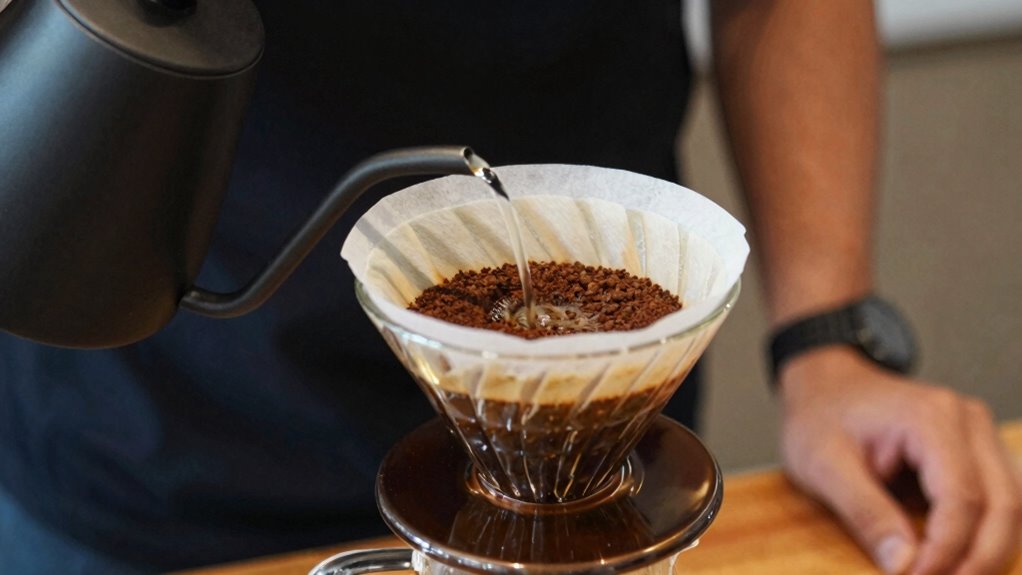
Achieving the perfect brew ratio and coffee strength requires attention to detail and a bit of experimentation. Start by ensuring your coffee storage is airtight to keep beans fresh, which impacts flavor and strength. Regularly calibrate your grinder to maintain consistent grind size—finer for stronger brews, coarser for lighter ones. Adjust your coffee-to-water ratio based on your taste preferences, keeping track of changes. Use the table below as a quick reference:
| Tip | Action |
|---|---|
| Coffee storage | Store beans in a sealed container away from light and moisture |
| Grinder calibration | Regularly check and adjust grind size for consistency |
| Brew ratio adjustments | Experiment with coffee and water amounts to find your ideal strength |
| Record your settings | Keep notes on ratios and grind settings for future reference |
Frequently Asked Questions
Can Brew Ratio and Strength Be Adjusted Independently?
Yes, you can adjust brew ratio and strength independently to fine-tune your coffee’s flavor balance and extraction control. By changing the amount of coffee grounds relative to water, you alter the brew ratio without necessarily impacting strength directly. Conversely, adjusting the grind size or brew time affects strength without changing the ratio. This flexibility helps you craft a balanced, well-extracted cup tailored to your taste preferences.
How Do Brewing Method and Grind Size Influence These Factors?
A stitch in time saves nine, so pay attention to how brewing method and grind size impact your coffee. Your brewing technique affects extraction consistency, while grind size influences flow rate and extraction speed. Using a uniform grind promotes extraction consistency, preventing over- or under-extraction. Different methods, like espresso or drip, require specific grind sizes to optimize flavor. Adjusting these factors helps you control brew ratio and strength independently for your perfect cup.
Which Is More Important for Achieving a Specific Flavor Profile?
You should focus more on brew ratio to achieve a specific flavor profile because it directly impacts flavor consistency and aroma preservation. A consistent brew ratio guarantees you get the same strength and taste each time, highlighting the desired flavors and aromas. While strength is important, maintaining the right ratio helps preserve delicate aromas and guarantees that your coffee’s flavor remains balanced and true to your preferences.
Do Different Coffee Beans Require Different Brew Ratios?
Yes, different coffee beans, depending on their origin and roast level, often require unique brew ratios to reveal their best flavors. Lighter roasts or beans from distinct regions may need a more delicate or stronger ratio to highlight their nuances. Imagine the contrast—bold, dark roasts needing less water, while bright, fruity beans from distant lands thrive with a different ratio. Adjusting this balance truly captures each bean’s unique character.
How Do I Measure and Maintain Consistent Brew Ratio?
To measure and maintain a consistent brew ratio, start by weighing your coffee and water accurately for each brew. Use a scale to track your measurements precisely, which minimizes extraction variability. Keep water temperature steady, ideally between 195-205°F, to guarantee consistent extraction. Record your ratios and tweak as needed, so your brews taste the same every time. Consistency relies on precise measurements, stable water temperature, and attentive adjustments.
Conclusion
Now that you understand the dance between brew ratio and coffee strength, imagine your perfect cup as a symphony—each element playing its part. Adjust your brew ratio like tuning an instrument, and gauge your strength like setting the volume. With this knowledge, you hold the tools to craft a brew that’s vibrant, balanced, and uniquely yours. So, step into your kitchen, and let each pour tell your coffee story.
Fall Picks
fall essentials
As an affiliate, we earn on qualifying purchases.