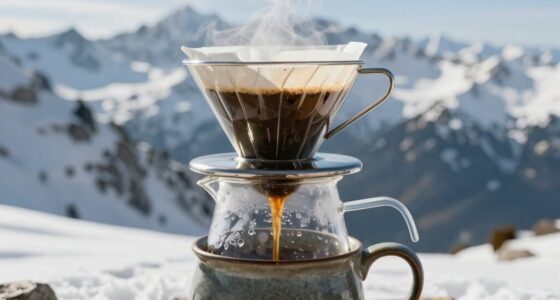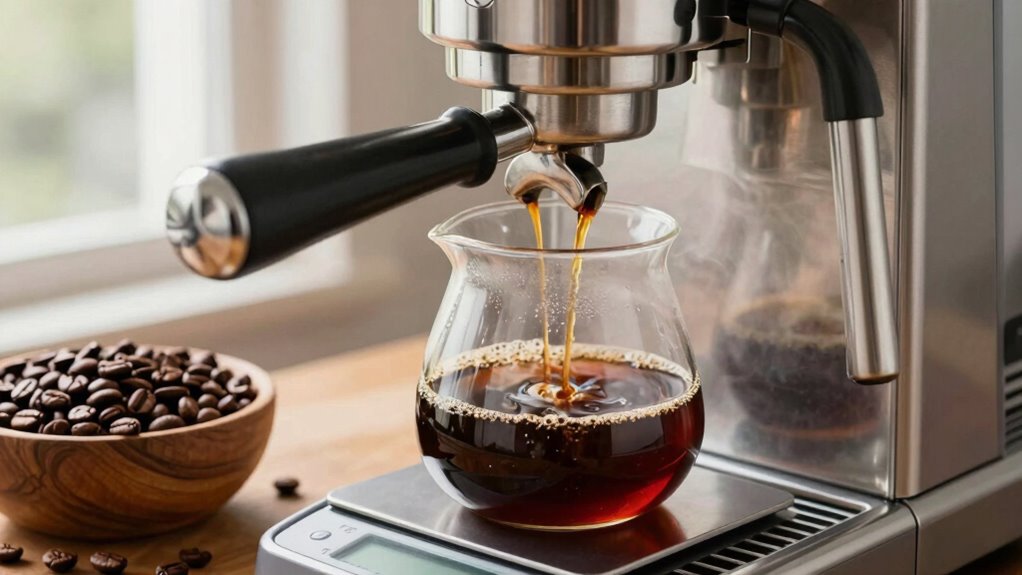

Agitation plays a key role in brewing better coffee by enhancing flavor extraction and aroma. You should stir or swirl your coffee every 30 seconds during pour-over methods. For immersion brews, a quick stir at the start and midway helps balance taste. Use a gentle touch to avoid bitterness from over-agitation and guarantee consistent water exposure. Experiment with different techniques to find what works best for you. Keep exploring, and you’ll reveal even more brewing secrets!
Key Takeaways
- Agitation enhances flavor extraction; use gentle stirring or swirling to evenly expose coffee grounds to water.
- For pour-over methods, agitate every 30 seconds for optimal flavor clarity.
- Adjust agitation techniques based on brewing method; each has unique requirements for best results.
- Monitor water temperature and brew ratios, as they significantly impact agitation efficiency and flavor profile.
- Avoid over-agitation to prevent bitterness and under-agitation to ensure full flavor extraction.
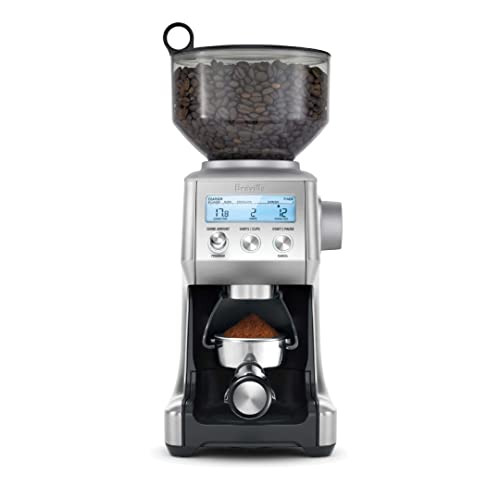
Breville BCG820BSS Smart Grinder Pro for Coffee and Espresso, Brushed Stainless Steel
The Breville Smart Grinder Pro includes 60 unique settings – this programmable conical burr grinder offers a wide...
As an affiliate, we earn on qualifying purchases.
How Agitation Improves Your Coffee Brew
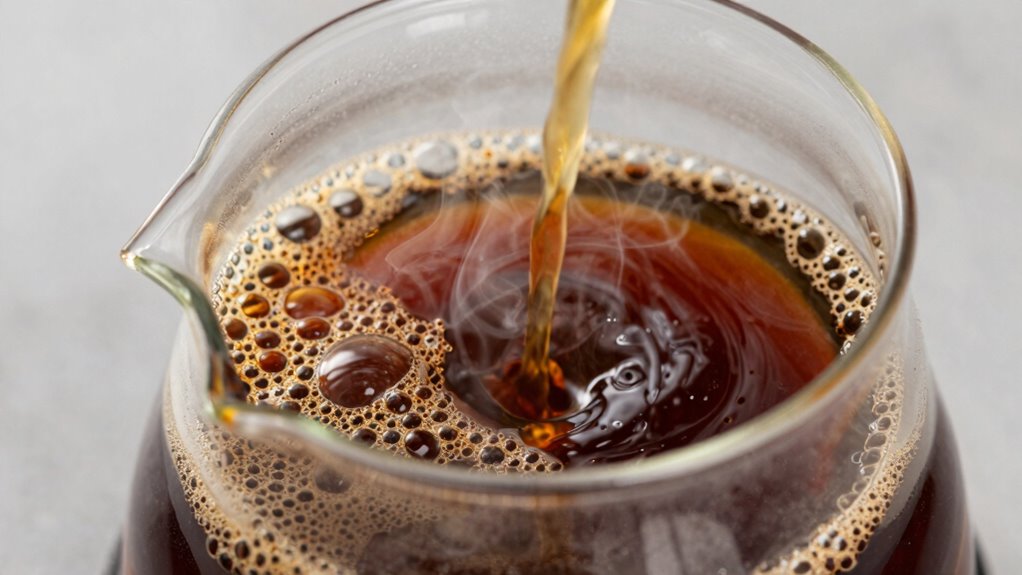
When you brew coffee, agitation plays an essential role in extracting the rich flavors and aromas from the grounds. By stirring or shaking, you enhance the brewing kinetics, ensuring water interacts evenly with all the coffee particles. This uniform exposure helps achieve a better flavor balance, preventing over-extraction of bitter compounds while allowing the sweet and acidic notes to shine. Whether you’re using a French press, pour-over, or any other method, incorporating agitation into your process can elevate your coffee experience. Remember, too little agitation may lead to under-extraction, while too much can overwhelm the brew. Finding the right rhythm can transform your cup, making each sip a delightful exploration of the coffee’s intricate profile.

MOKKOM Professional 64mm Flat Burr Coffee Grinder with 100 Grind Settings, All-Metal Stainless Steel Body, Coffee Bean Grinder with Adjustable Electronic Timer, Anti-Static, LED Display
[64mm Stainless Steel Flat Burrs] As a professional coffee grinder, this machine uses 64mm stainless steel flat burrs...
As an affiliate, we earn on qualifying purchases.
The Impact of Agitation on Flavor Extraction
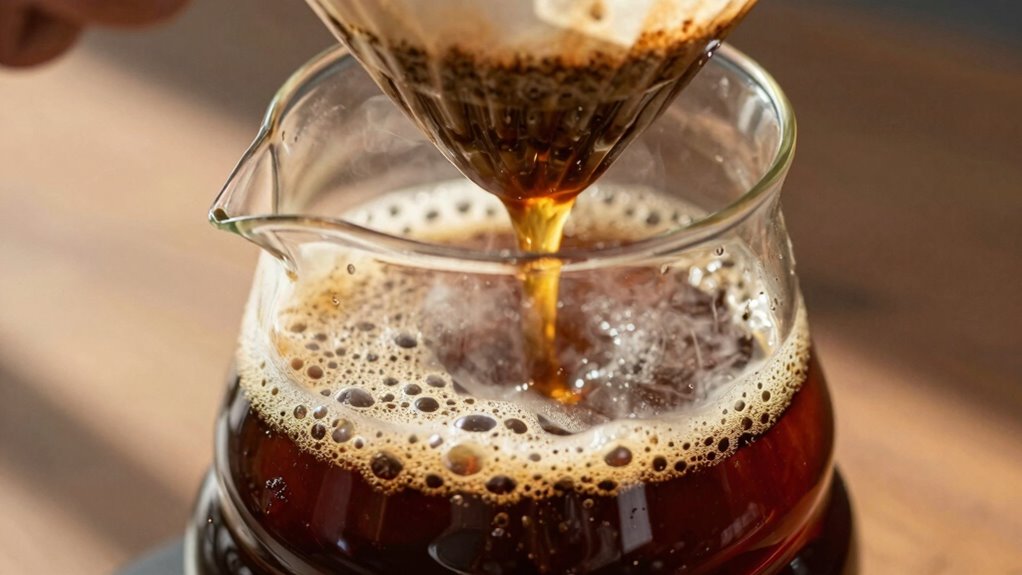
Agitation plays a vital role in how flavors are extracted from your coffee. By understanding different agitation techniques and knowing when to apply them, you can enhance your brew‘s complexity and richness. Let’s explore how to get the most out of your coffee through ideal agitation timing.
Agitation Techniques Explained
Releasing the full potential of your coffee involves understanding how agitation influences flavor extraction. Proper agitation can enhance brew consistency, ensuring you get that perfect cup every time. Here are three effective agitation techniques you can try:
- Stirring: Use a spoon or a specialized agitation tool to gently stir your coffee grounds during brewing. This helps evenly distribute water, leading to balanced extraction.
- Swirling: For immersion methods, swirl the brew occasionally. This keeps the coffee grounds in motion, promoting even saturation.
- Pouring: When using a pour-over method, vary your pouring technique. A steady, circular motion can help saturate the grounds uniformly, improving flavor clarity.
Experiment with these techniques, and watch how they elevate your coffee game!
Optimal Agitation Timing
Understanding how and when to apply agitation can greatly affect the flavor profile of your coffee. The key is to find the right agitation frequency and best duration for your brew method. Generally, a gentle stir or swirl during the brewing process can help extract flavors without over-extraction. For methods like pour-over, aim for agitation every 30 seconds, allowing the coffee grounds to bloom and release CO2. In immersion brewing, a quick stir at the beginning and midway through can enhance flavor without compromising balance. Remember, too much agitation can lead to bitterness, while too little may result in under-extraction. Experimenting with timing will help you discover the perfect rhythm for your ideal cup.

Neretva Espresso Grinder, 2 in 1 Professional Coffee Bean Grinder Stainless Steel Suit 51~58mm Portafilter Burr Coffee Grinder 30 Precise Setting&Anti-Static for Espresso/French Press/Drip/Moka-Silver
PROFESSIONAL CONICAL BURR COFFEE GRINDER- WIth new upgraded 3.0 conical burr grinding technoloy, the coffee grinder ensures that...
As an affiliate, we earn on qualifying purchases.
Brewing Methods and Their Agitation Needs
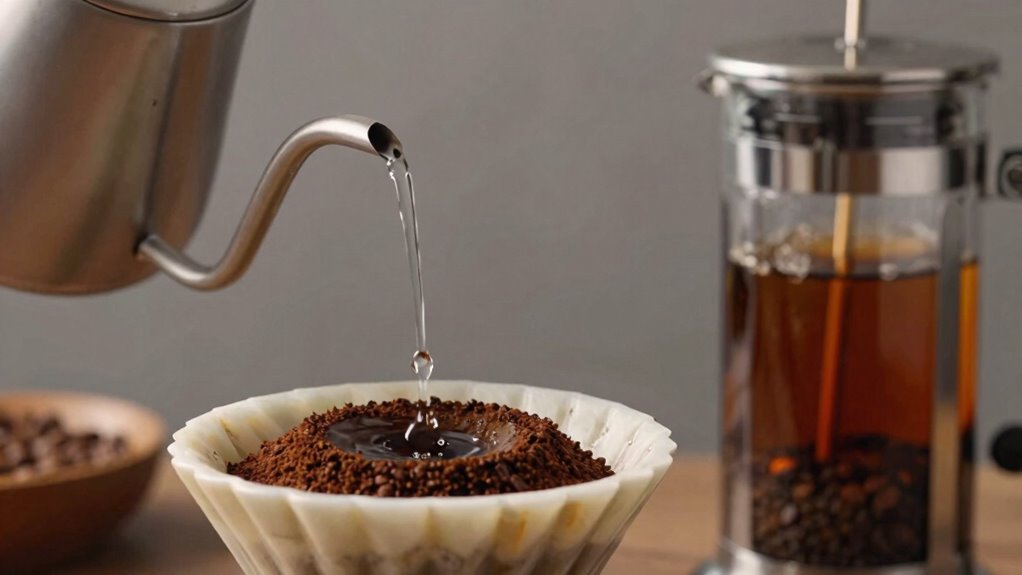
When you explore different coffee brewing methods, you’ll discover that each technique has unique agitation needs that can markedly impact flavor extraction. Here’s a quick breakdown:
- Pour Over Techniques: Gentle swirling or a circular motion helps evenly saturate the grounds, enhancing flavor clarity.
- French Press: You’ll want to stir the coffee after steeping to guarantee ideal extraction, but avoid excessive agitation to prevent bitterness.
- Espresso Agitation: Applying consistent pressure during tamping is essential for even extraction, while the brewing process itself requires a quick, vigorous flow.
For cold brew, minimal agitation is key; letting it steep slowly results in a smooth, less acidic flavor. Understanding these methods can elevate your coffee experience! Additionally, knowing grind size variation can further refine your brewing results.
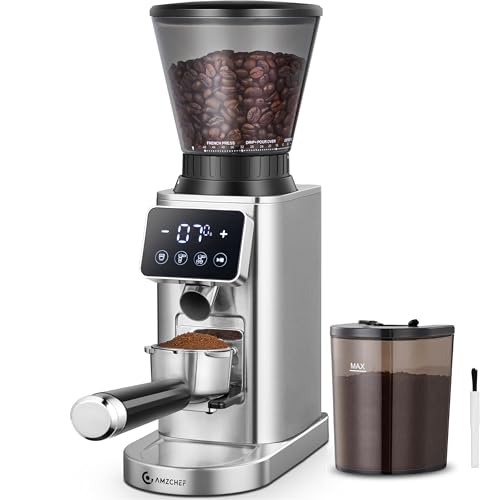
AMZCHEF Coffee Grinder, Burr Coffee Bean Grinder for Home Use with 48 Precise Grind Settings, Detachable Funnel Stand for Espresso, LED Control Panel, Anti-static Design, silver
DESIGN FOR ESPRESSO:We provide portafilter holder ,Portafilter holder pad and photophobic coffee ground container. It is compatible with...
As an affiliate, we earn on qualifying purchases.
Choosing the Best Grind Size
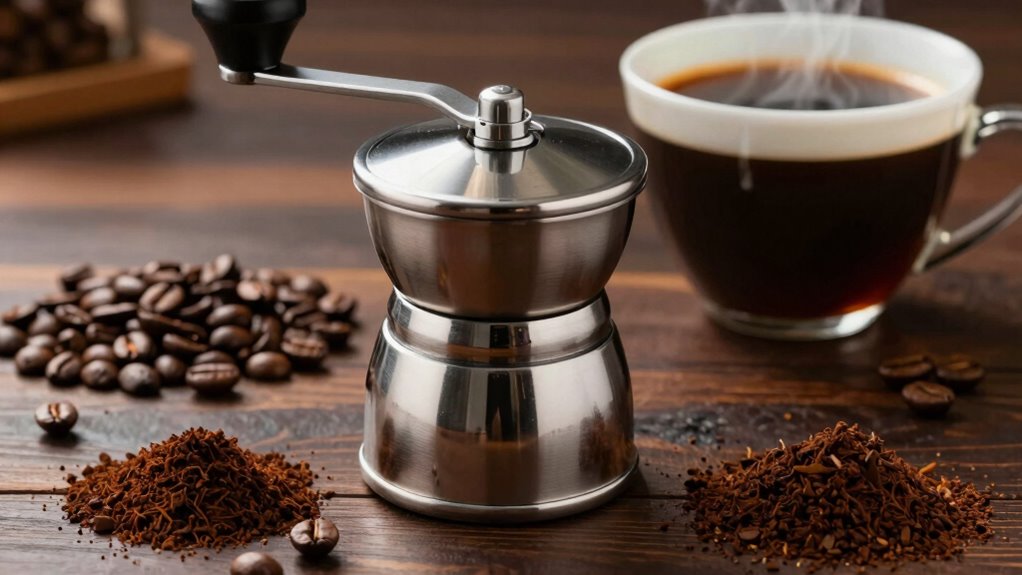
Agitation isn’t the only factor that affects your coffee’s flavor; grind size plays a significant role too. Choosing the right grind size guarantees your coffee extracts evenly, enhancing its overall taste. For a smooth brew, aim for grind uniformity. This means all your coffee particles should be similar in size, allowing for consistent extraction. If your grind varies too much, you’ll get some over-extracted, bitter notes alongside under-extracted, sour flavors. Adjust your grind consistency based on your brewing method; coarser grinds work well for French press, while finer grinds suit espresso. Additionally, understanding the mechanics of French press can help you fine-tune your grind size for optimal results. Remember, the right grind size is essential for great cooking as it directly influences extraction efficiency and flavor balance. Furthermore, using kitchen gadgets can streamline your coffee brewing, making it easier to achieve the perfect grind. Moreover, the principles of strength training fundamentals can be applied to your coffee brewing process, emphasizing the importance of consistency in achieving desired results. Utilizing smart kitchen tools can further simplify your brewing process and enhance your coffee experience. Experiment a bit to find what suits your palate best, but remember, uniformity and consistency are key to achieving that perfect cup every time.
How Water Temperature Affects Agitation in Coffee Brewing

While you might not realize it, water temperature considerably influences agitation during coffee brewing. The right temperature helps extract flavors more efficiently, impacting your overall brew. Here’s how it works:
- Higher Temperatures: Hotter water enhances agitation, promoting faster extraction. However, be cautious; too hot can lead to bitter flavors.
- Lower Temperatures: Cooler water slows down agitation, which can result in under-extraction. Ideal for delicate flavors, but patience is key.
- Brewing Altitude: At higher altitudes, water boils at lower temperatures, affecting water chemistry and extraction rates. Adjust accordingly for the best results.
Techniques for Optimal Agitation During Brewing
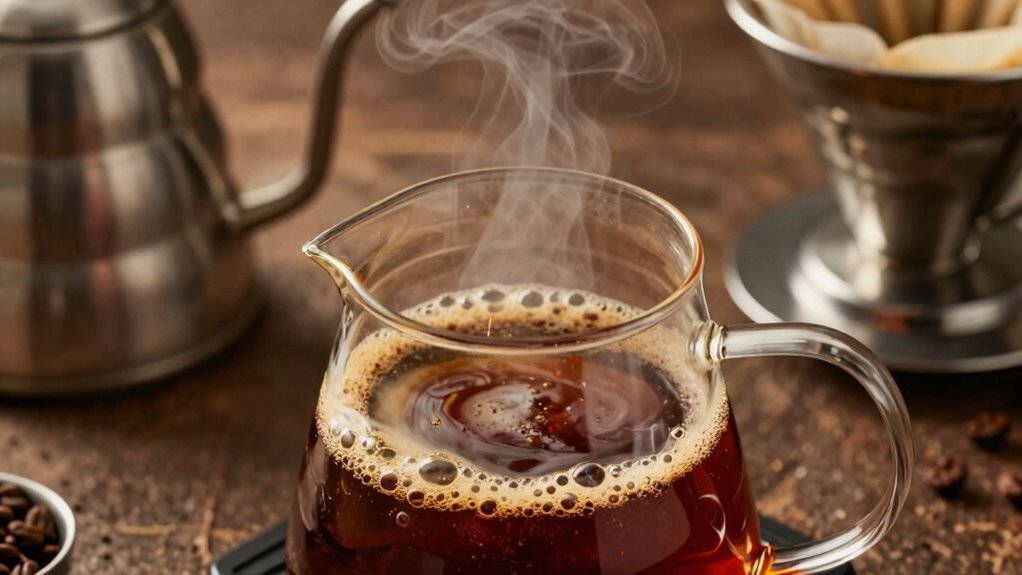
Ideal agitation during coffee brewing can greatly enhance your flavor extraction. To achieve brewing consistency, consider the following techniques. First, stir the grounds gently at the beginning to saturate them evenly, promoting even extraction. Then, during brewing, use a gentle swirl or a circular motion to keep the grounds suspended without causing over-extraction. If you’re using a pour-over method, pour in a steady, circular motion to maintain an even flow of water. This guarantees every coffee particle interacts with the water effectively, improving your flavor balance. Finally, experiment with the duration and intensity of your agitation; slight adjustments can lead to significant flavor improvements, making your cup of coffee more enjoyable. Additionally, optimizing your color accuracy can also enhance the overall sensory experience of your coffee.
Top Mistakes When Controlling Agitation

Even with the right techniques for ideal agitation, mistakes can easily slip in and disrupt your brewing process. Here are some common errors to watch out for:
- Ignoring the Timing: Agitation is about balance. Too little or too much time can lead to under-extraction or over-extraction, messing with flavors.
- Inconsistent Motion: If you vary your stirring speed or direction too much, you might create agitation misconceptions. Consistency is key for uniform extraction.
- Neglecting Temperature: Agitation affects heat distribution. If your water’s too cold or too hot, it can lead to uneven brewing, impacting taste.
Tips for Experimenting With Agitation for Superior Brews
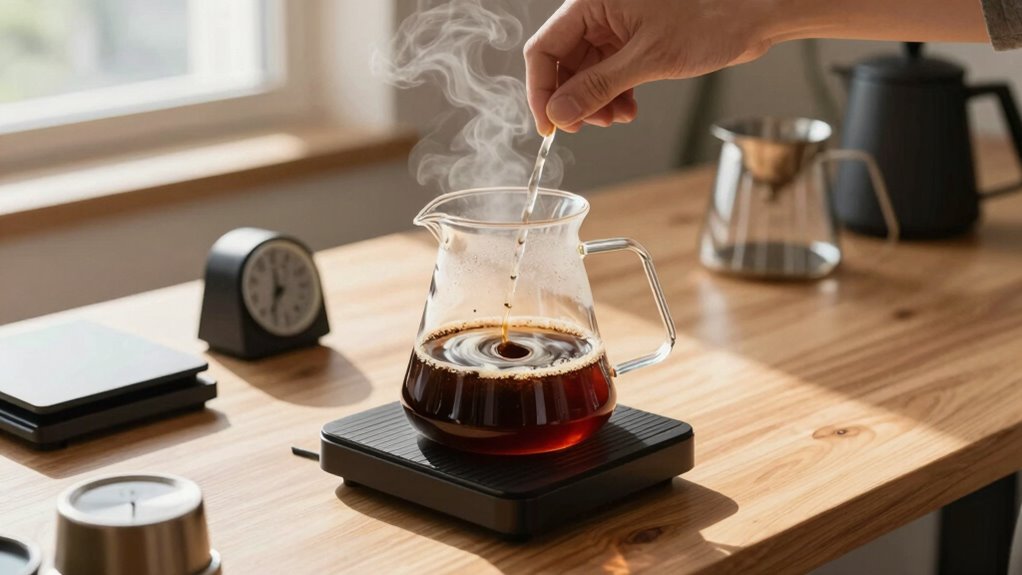
To elevate your coffee brewing game, experimenting with agitation techniques can make a significant difference in flavor extraction. Start by adjusting your brew ratios; a higher coffee-to-water ratio often requires more agitation to guarantee even extraction. Try different methods, like stirring or swirling, to see how they affect your brew.
Pay attention to coffee freshness, too; fresher beans can yield better flavors with less agitation. Make small adjustments and keep notes on what works best. You might find that a gentle swirl enhances the taste without over-extracting. Finally, don’t hesitate to experiment with different brewing devices and their specific agitation needs, as each method can bring out unique flavor profiles. Happy brewing!
Frequently Asked Questions
What Is the Ideal Agitation Time for Different Brewing Methods?
The ideal agitation time varies by brewing method. For pour-over, aim for about 30 seconds during the brew time to enhance extraction efficiency. In French press, 15-20 seconds of gentle stirring works well. For cold brew, agitate for 1-2 minutes initially, then let it steep. Each method’s agitation affects how quickly flavors extract, so adjusting your technique can lead to a more balanced cup. Experiment to find what suits your taste best!
Can I Use a Blender for Coffee Agitation?
Sure, you can use a blender for coffee agitation! Imagine you’ve got a freshly ground batch, and you toss it in the blender to enhance the coffee texture. Blender efficiency can really boost extraction, making your brew richer. Just be cautious; blending too long may over-extract and create bitterness. For the best results, pulse it briefly and check the consistency. You’ll enjoy a unique flavor profile with this method!
How Does Agitation Affect Caffeine Content in Coffee?
Agitation boosts flavor extraction and brewing efficiency, which can affect caffeine content in your coffee. When you stir or shake your brew, you’re helping the water interact more thoroughly with the coffee grounds. This increased interaction leads to a more uniform extraction of flavors and caffeine. So, if you want a stronger cup, consider incorporating agitation techniques into your brewing process. You’ll notice a difference in both taste and caffeine kick!
Is Agitation Necessary for Cold Brew Coffee?
Agitation’s like a gentle nudge in the world of cold brew techniques—it’s not strictly necessary, but it sure helps. Think of it as inviting the flavors to dance, enhancing flavor extraction. If you let those coffee grounds mingle with water without much movement, you might miss out on some of the rich nuances. So, while you can enjoy cold brew without it, a little agitation can elevate your cup to new heights.
What Tools Can I Use for Effective Coffee Agitation?
For effective coffee agitation, you can use tools like a spoon, a whisk, or a French press. Each of these brewing techniques helps enhance flavor extraction by ensuring even saturation of your coffee grounds. If you’re making cold brew, consider using a jar with a tight lid; shaking it gently will do wonders. Experiment with these tools to find what works best for your taste, and enjoy a richer, more flavorful cup!
Conclusion
Incorporating intentional agitation into your brewing routine can truly transform your coffee experience. By balancing brew methods, grind size, and water temperature, you’ll reveal a symphony of sublime flavors. Don’t shy away from experimenting; each sip can surprise you with new sensations. So, embrace the art of agitation and elevate your everyday cup to extraordinary heights. With practice and patience, you’ll brew blissful beverages that delight the senses and satisfy your coffee cravings.