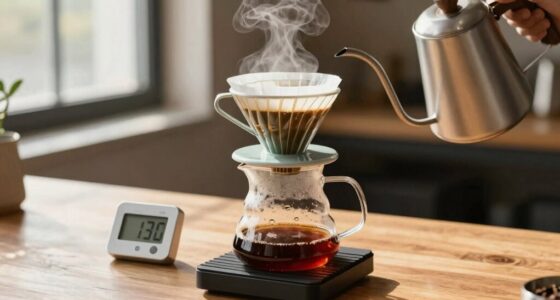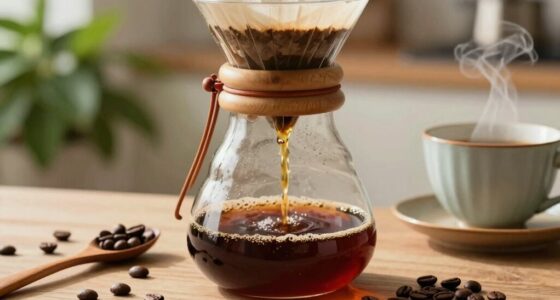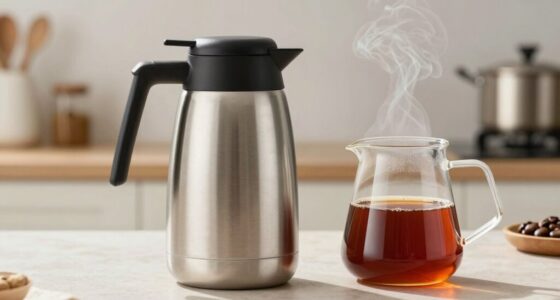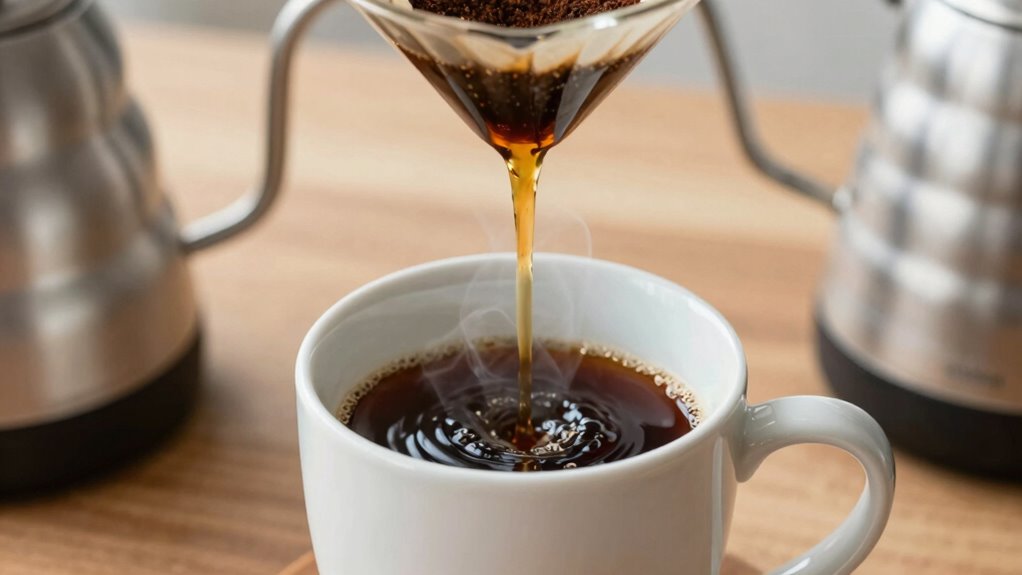

To avoid stalling a pour-over coffee, focus on a steady, circular pouring motion. Use a medium-coarse grind and guarantee your water temperature is around 200°F. Aim for a 1:15 coffee-to-water ratio and preheat your equipment to minimize temperature loss. Keep your pouring consistent throughout the brewing process to facilitate even saturation of the grounds. By honing these techniques, you’ll elevate your brewing game. There’s plenty more to explore for perfecting your pour-over experience.

Get coffee and tea gear delivered free with Prime
- Fast, free delivery on millions of items
- Prime Video, Amazon Music and more included
- Member-only deals all year
Key Takeaways
- Use a medium-coarse grind to ensure optimal flow and prevent stalling during extraction.
- Pour water steadily in circular motions to evenly saturate the coffee grounds.
- Maintain a consistent water temperature around 200°F for balanced extraction and flavor.
- Preheat brewing equipment to minimize heat loss and maintain brewing temperature.
- Experiment with coffee-to-water ratios, starting with 1:15, to enhance flavor and prevent stalling.
As an affiliate, we earn on qualifying purchases.
Understanding the Basics of Pour-Over Coffee
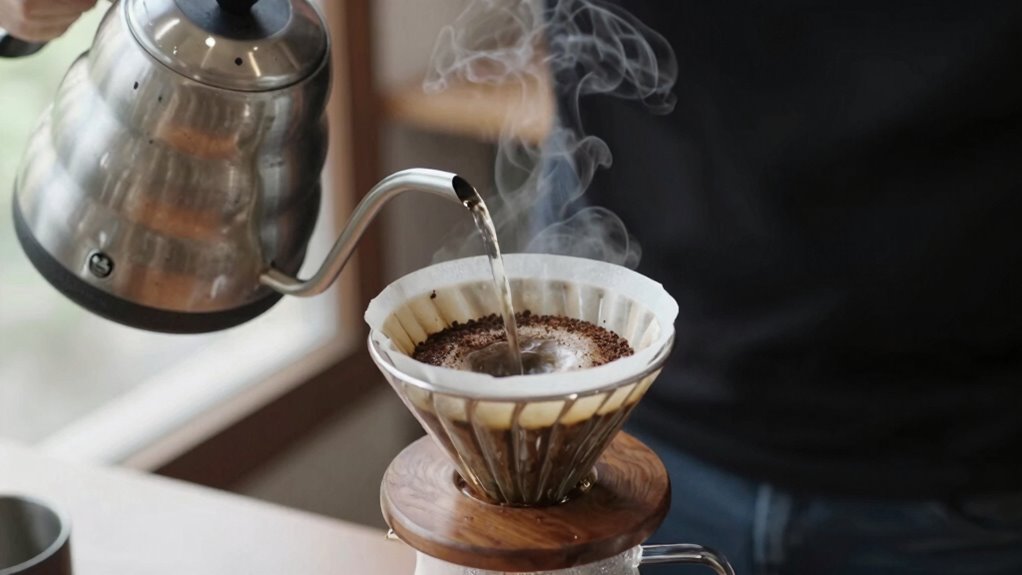
Pour-over coffee is all about precision and technique. You’ll want to focus on the right brewing methods to achieve ideal coffee extraction. Start by selecting freshly ground coffee and the appropriate grind size; a medium-coarse grind usually works best. Make sure your water is at the right temperature—around 200°F is perfect. As you pour, use a steady, circular motion to saturate the grounds evenly, allowing the coffee to bloom. This process releases gases and enhances flavor. Timing’s essential, too; aim for a brewing time of about three to four minutes. By mastering these basics, you set the foundation for a delicious cup while avoiding common pitfalls that can stall your pour-over experience. Enjoy the process!
As an affiliate, we earn on qualifying purchases.
Identifying Common Pour-Over Issues
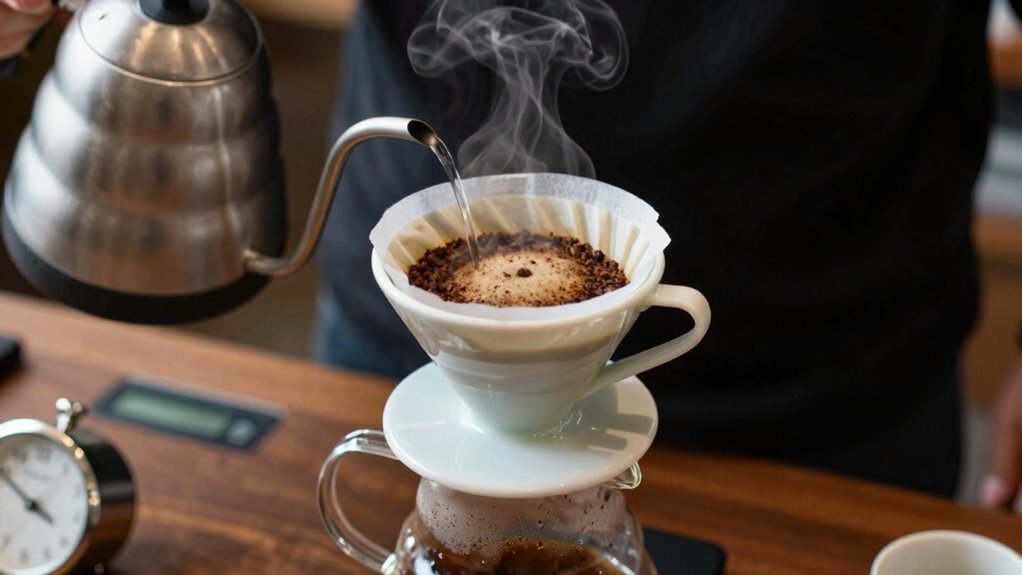
When it comes to pour-over coffee, a few common issues can really impact your brew. You might face uneven coffee beds, incorrect grind sizes, or water temperature problems. Let’s explore how to identify and fix these issues to guarantee a smooth pour-over experience.
Uneven Coffee Bed
Have you ever noticed how an uneven coffee bed can lead to a less-than-ideal brew? When your coffee bed isn’t level, it affects brew consistency, resulting in an uneven extraction. Here’s what to watch for:
- Uneven Distribution: Make certain the coffee grounds are spread out evenly in the filter.
- Uneven Saturation: Pour water in a circular motion to guarantee all parts of the coffee bed get wet simultaneously.
- Insufficient Tamping: Lightly shake the dripper to settle the grounds before brewing.
Incorrect Grind Size
If you’re not using the right grind size, your pour-over coffee might not reach its full potential. The grind consistency plays a vital role in extracting flavors. If your grind is too fine, water can flow too slowly, leading to over-extraction. On the other hand, a coarse grind can cause water to rush through too quickly, resulting in under-extraction. Both issues can ruin your brew ratio, meaning you won’t enjoy the balanced flavors you’re aiming for. Aim for a medium grind that allows for a steady flow while maximizing extraction. Experimenting with your grind size will help you find the sweet spot, ensuring that each cup of coffee showcases its rich, complex flavors. Understanding the mechanics of French press coffee can further enhance your brewing technique.
Water Temperature Issues
While many factors affect your pour-over coffee, water temperature is crucial for achieving the perfect brew. Aiming for the right brewing temperature guarantees ideal extraction and enhances the flavors in your cup. Here are three common water temperature issues to watch out for:
- Too Hot: If your water exceeds 205°F (96°C), it can scorch the coffee, leading to bitter notes.
- Too Cold: Water below 195°F (90°C) may under-extract, resulting in a sour or weak taste.
- Inconsistent Temperature: Fluctuations can alter water chemistry, affecting the brew’s consistency and quality.
To improve your pour-over, invest in a thermometer and monitor your water temperature carefully for the best results! Additionally, understanding brewing fundamentals can further enhance your coffee-making skills and ensure a consistently great cup.
coffee kettle with temperature control
As an affiliate, we earn on qualifying purchases.
As an affiliate, we earn on qualifying purchases.
Step-by-Step Guide to Pouring Coffee
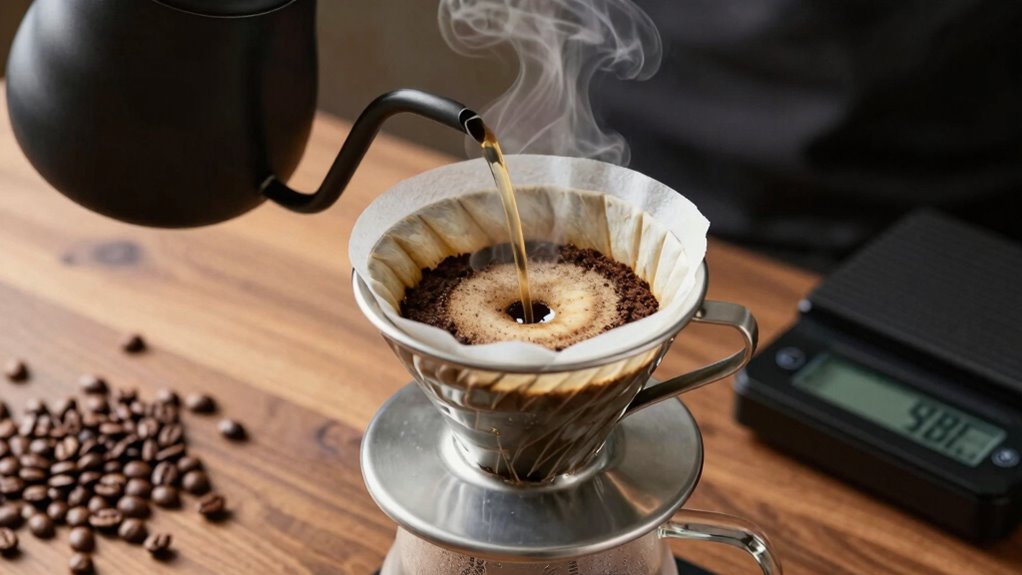
To brew the perfect pour-over, start with quality coffee beans that suit your taste. Next, focus on mastering your pouring technique, ensuring a steady and controlled flow. Finally, pay attention to your water temperature, as it can greatly impact the extraction process. Using a grinder suitable for espresso can also enhance the flavor profile of your brew.
Choose Quality Coffee Beans
Choose Quality Coffee Beans (Step-by-Step Guide to Pouring Coffee)
Choosing quality coffee beans is essential for a successful pour over, as the right beans can transform your brewing experience. To elevate your coffee, consider these key factors:
- Coffee Origin: Explore beans from different regions. Each origin brings unique characteristics that influence flavor. Additionally, beans with high antioxidant levels can contribute positively to your overall health. Understanding investment diversification in your coffee choices can enhance your brewing experience. Furthermore, selecting beans with antimicrobial properties can help support your immune system while enjoying your coffee.
- Flavor Profiles: Look for beans with flavor notes that appeal to you—fruity, nutty, or chocolatey. Your preference will guide your choice.
- Freshness: Always opt for freshly roasted beans. Check the roast date and buy in small quantities to guarantee you’re brewing with the best flavor. Additionally, selecting beans with nutritional benefits can enhance your overall health while enjoying coffee.
Master Your Pour Technique
Mastering your pour technique is essential for crafting the perfect pour over. Start by holding your kettle at a comfortable height, allowing for better pour control. As you begin your pour, aim for a slow, steady stream directed at the center of the coffee bed. This promotes even saturation. Adjust your angle to manage the flow rate; a higher angle increases the pour speed, while a lower angle slows it down. Remember to move in a circular motion to guarantee all grounds are evenly wet. If you notice any stalling, pause briefly to let the coffee bloom before continuing. With practice, these adjustments will help you achieve a smooth, flavorful extraction every time.
Optimize Water Temperature Control
While you might think any water temperature will do, fine-tuning it is essential for a great pour over. The right temperature enhances flavor extraction and prevents bitterness, so focus on these key points:
- Ideal Temperature: Aim for 195°F to 205°F for maximum extraction.
- Temperature Stability: Use a kettle with precise controls to maintain consistency throughout your pour.
- Heat Retention: Preheat your brewing equipment to minimize heat loss during the process.
As an affiliate, we earn on qualifying purchases.
Must-Have Tools for Perfect Pour-Over Coffee

When it comes to brewing the perfect pour-over coffee, having the right tools makes all the difference. Start with a quality brewing kettle for precise pouring. Pair it with coffee scales to measure your coffee and water accurately. Choose the right filter types to enhance flavor while ensuring coffee freshness. Understanding grind size is also critical for achieving the best extraction, as it influences color accuracy in the final brew. Additionally, using anti-fatigue mats in your brewing area can help keep you comfortable during those extended coffee sessions. Remember that wellness technology can also play a role in enhancing your coffee experience.
Here’s a simple table to guide you on essential tools:
| Tool | Purpose |
|---|---|
| Brewing Kettle | Control pour rate |
| Coffee Scales | Measure coffee and water |
| Filter Types | Enhance flavor |
| Serving Vessels | Present your brew stylishly |
Don’t overlook water quality, and use timing methods to perfect your brew. With the right pour-over accessories, you’re set for success! Additionally, understanding kitchen science can significantly improve your brewing technique.
How to Troubleshoot Your Pour-Over Technique
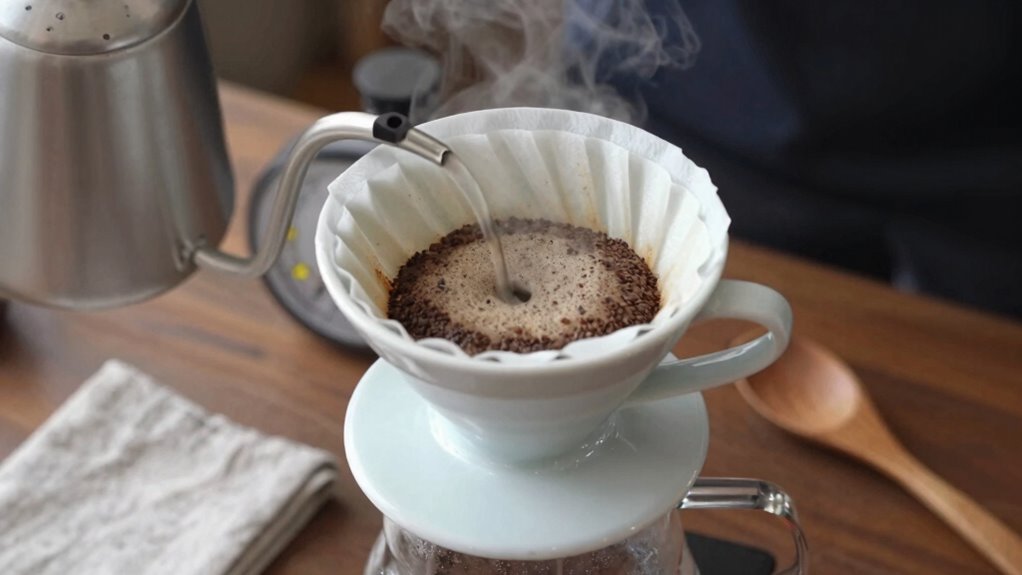
To troubleshoot your pour-over technique effectively, start by evaluating your grind size and pouring method. Paying attention to these brewing variables can greatly improve your results. Here are three key areas to focus on:
- Grind Size: If your coffee’s too coarse, it’ll brew too quickly. If it’s too fine, you’ll risk over-extraction. Aim for a medium grind for ideal flow. Additionally, consider how smart appliances can assist in achieving consistent grind sizes. Using a burr grinder can ensure uniformity in your grind, which is crucial for optimal extraction. Essential oils like rosemary can enhance your cognitive focus, helping you enjoy the brewing process even more. Moreover, integrating smart technology into your coffee routine can streamline your preparation and improve consistency.
- Pour Over Ratios: Make sure you’re using the right coffee-to-water ratio. A common starting point is 1:15 (1g coffee to 15g water). Adjust based on taste preferences.
- Pouring Technique: Pour steadily and in circular motions. This helps saturate the grounds evenly and avoids stalling. Additionally, consider how air quality considerations can affect your overall brewing environment, as a cleaner atmosphere may enhance your coffee experience. A well-ventilated space can help maintain the freshness of your coffee beans, ensuring a better brew.
Tips for Enhancing Your Pour-Over Experience
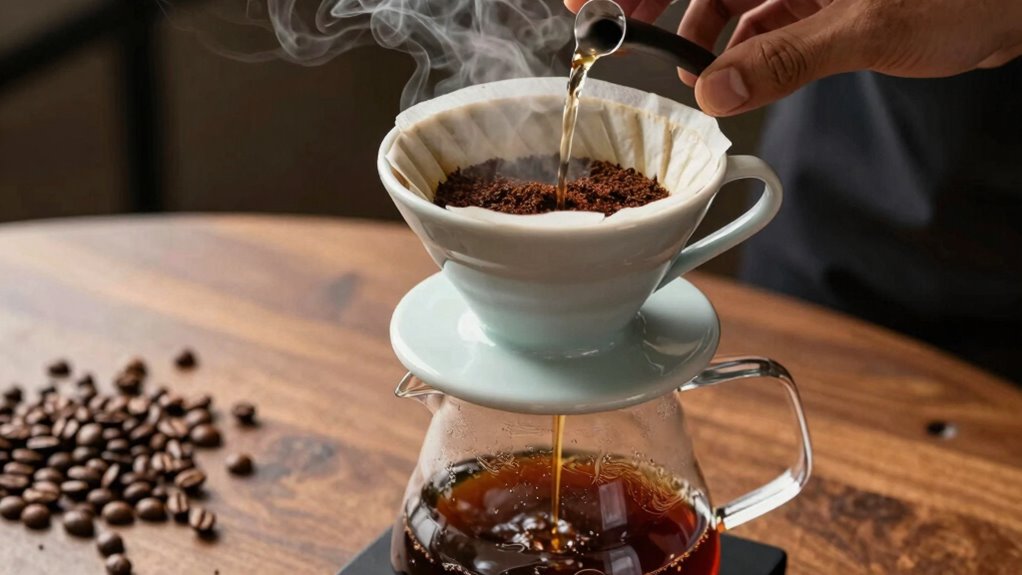
Improving your pour-over experience goes beyond troubleshooting; it’s about refining your overall approach to brewing. Start by experimenting with different brewing ratios. A common starting point is 1:15 (coffee to water), but don’t hesitate to adjust based on your taste preferences. This will enhance flavor exploration, allowing you to discover unique notes in your coffee. Additionally, a well-structured nutrition plan can help you appreciate the nuances of coffee better.
Also, pay attention to your grind size—finer grinds extract faster, while coarser ones yield a slower brew. Consistency in pouring technique is essential, too; aim for a steady, circular motion. Finally, consider using filtered water to avoid unwanted flavors. Each of these tips can elevate your pour-over game, making for a more enjoyable and personalized coffee experience. Additionally, understanding the basics of grind size and extraction can significantly improve your brewing results.
Frequently Asked Questions
What Coffee Bean Types Are Best for Pour-Over?
For pour-over, you’ll want to choose coffee beans that highlight unique flavor profiles. Single-origin beans from regions like Ethiopia or Colombia offer bright, fruity notes, while beans from Brazil tend to be nutty and chocolatey. Experimenting with various coffee bean origins will help you discover what you enjoy most. Remember, freshness matters too, so always use freshly roasted beans for the best extraction and flavor in your cup!
How Does Water Temperature Affect Pour-Over Coffee?
Water temperature’s essential for your pour-over coffee, but hey, who needs a balanced brew, right? If you use water that’s too hot, you risk over-extracting, leading to bitterness. Too cool? You’ll under-extract, leaving your coffee weak. Aim for around 195-205°F to hit that sweet spot. This temperature helps you achieve the ideal extraction balance, enhancing flavors while keeping brew time in check. So, don’t underestimate the power of proper water temperature!
Can I Use Pre-Ground Coffee for Pour-Over?
Yes, you can use pre-ground coffee for pour-over, but be mindful of the grind size. A medium grind works best, as it allows for ideal extraction during the brew time. If the coffee’s too fine, it might clog the filter and extend the brew time, while too coarse may lead to weak flavors. Experiment a bit to find the balance that suits your taste, ensuring you enjoy a rich and satisfying cup.
How Often Should I Clean My Pour-Over Equipment?
You should clean your pour-over equipment after every use for ideal flavor and hygiene. Daily maintenance keeps your coffee tasting fresh, prevents buildup, and enhances your brewing experience. If you’re using it frequently, consider rinsing the filter and carafe with hot water right away. Once a week, do a thorough clean with soap and water, making sure everything’s spotless. Regular cleaning frequency guarantees your coffee ritual remains enjoyable and satisfying.
What Is the Best Pour-Over Ratio for Beginners?
For beginners, a great pour-over ratio is 1:15, which means 1 gram of coffee for every 15 grams of water. This balances flavor and strength nicely. Start with a medium grind size, as it helps with even extraction and prevents over-extraction. Experiment with your brewing techniques, tweaking the ratio slightly based on your taste preferences. You’ll find the perfect cup by making small adjustments until you discover what you love!
Conclusion
By following these steps, you’ll not only master the art of pour-over coffee but also discover a newfound appreciation for the ritual. Imagine pouring your perfect cup while a friend unexpectedly drops by, and you can impress them with your brewing skills. Coincidentally, you’ll realize that a well-executed pour-over isn’t just about great coffee; it’s about creating memorable moments. So grab your tools, embrace the process, and enjoy every sip of your delicious creation.
Fall Picks
fall essentials
As an affiliate, we earn on qualifying purchases.