

A high-end prosumer espresso machine should match your preferred workflow, not just offer an impressive feature list. My best overall pick is the Rancilio Silvia Pro X, which pairs dual boilers with a capable home-barista format; the Diletta Alto with Flow Control stands out for hands-on shot adjustment, while the Fellow Espresso Series 1 brings pressure profiling to the comparison. The main tradeoffs are boiler capacity versus counter space, built-in convenience versus grinder flexibility, and manual control versus a simpler daily routine. Some machines here are entry-level choices rather than true high-end peers, so the ranking reflects capability as well as value and usability. Read on for the full breakdown and a guide to choosing the right setup.

Get coffee and tea gear delivered free with Prime
- Fast, free delivery on millions of items
- Prime Video, Amazon Music and more included
- Member-only deals all year
Complete the kit


Key Takeaways
- The Rancilio Silvia Pro X is the most balanced high-end pick: its dual-boiler design suits buyers who want to brew espresso and steam milk without the workflow of a single-boiler machine.
- The Diletta Alto models separate standard control from experimentation: the PID-and-shot-timer version focuses on repeatable brewing, while the Flow Control version adds more scope to adjust extraction.
- The Fellow Espresso Series 1 prioritizes pressure profiling: it is the distinctive choice for buyers who want to explore pressure-led brewing rather than a conventional espresso routine.
- Built-in grinders are a convenience tradeoff, not an automatic upgrade: the Meraki and Breville Barista Express models simplify setup, while separate grinder ownership leaves more room to change or upgrade components independently.
- The lineup spans several capability levels: the Gaggia Classic Evo Pro, Rancilio Silvia with PID, and Breville Barista Express are more approachable choices, but buyers seeking high-end features should compare them carefully with the dual-boiler Diletta and Silvia Pro X models.
| Meraki Dual Boiler Espresso Machine with Grinder and Built-In Scales |  | Best All-in-One for Precision | Operation: Semi-automatic | Boilers: 350 ml brew boiler; 550 ml steam boiler | Grinder: 45 marked settings with micro-adjustment | VIEW ON AMAZON | See Our Full Breakdown |
| Diletta Alto Dual Boiler Espresso Machine with PID, Shot Timer, and Adjustable OPV (Black) |  | Best for Hands-On Dual-Boiler Control | Boiler type: Dual boiler | Portafilter: 58 mm | Water capacity: 3 liters | VIEW ON AMAZON | See Our Full Breakdown |
| Rancilio Silvia Semi-Automatic Espresso Machine with PID, Black |  | Best Compact Upgrade for Manual Brewing | Operation: Semi-automatic | Portafilter: 58 mm | Boiler material: Brass | VIEW ON AMAZON | See Our Full Breakdown |
| Diletta Alto Espresso Machine with Flow Control, Dual Boilers, PID, Shot Timer, Adjustable OPV |  | Best for Flow-Profile Experimentation | Operation: Semi-automatic | Boiler configuration: Dual boilers | Portafilter: 58 mm | VIEW ON AMAZON | See Our Full Breakdown |
| Nuova Simonelli Oscar II Semi-Automatic Espresso Machine |  | Best for High-Volume Milk Drinks | Boiler type: Heat exchange | Boiler capacity: 2 L | Water tank: 3 L | VIEW ON AMAZON | See Our Full Breakdown |
| Diletta Bello Semi-Automatic Espresso Machine, Stainless Steel |  | Best Traditional Heat-Exchanger Pick | Machine type: Semi-automatic espresso machine | Boiler: 3-liter insulated stainless steel heat exchanger | Controls: Manual brew and steam controls; buttons | VIEW ON AMAZON | See Our Full Breakdown |
| Gaggia Classic Evo Pro Semi-Automatic Espresso Machine, Brushed Stainless Steel | 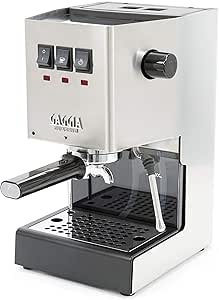 | Best Compact Entry to Prosumer Gear | Machine type: Semi-automatic espresso machine | Extraction pressure: 9 bar | Portafilter: 58 mm | VIEW ON AMAZON | See Our Full Breakdown |
| Rancilio Silvia Pro X Espresso Machine |  | Best for Temperature and Shot Control | Machine type: Semi-automatic espresso machine | Boilers: 300 ml brew boiler and 1-liter steam boiler | Temperature control: Dual PID | VIEW ON AMAZON | See Our Full Breakdown |
| Fellow Espresso Series 1 Espresso Machine with Pressure Profiling |  | Best Guided High-Control Machine | Operation mode: Semi-automatic | Coffee input: Ground coffee | Capacity: 2 liters | VIEW ON AMAZON | See Our Full Breakdown |
| Breville Barista Express Espresso Machine, Black Sesame |  | Best All-in-One Grinder Setup | Operation mode: Semi-automatic | Grinder: Integrated conical burr grinder | Bean hopper: 1/2 lb | VIEW ON AMAZON | See Our Full Breakdown |
| Rancilio Silvia Pro X Espresso Machine, Black |  | Best for Temperature and Workflow Control | Operation mode: Semi-automatic | Boiler configuration: Separate 300 ml brew boiler and 1-liter steam boiler | Temperature control: Dual PID | VIEW ON AMAZON | See Our Full Breakdown |
| Diletta Bello+ Semi-Automatic Espresso Machine with PID, Shot Timer, and Programmable Preinfusion |  | Best for Hands-On Traditional Brewing | Type: Semi-automatic espresso machine | Boiler configuration: Dual boiler | Temperature control: PID; adjusts steam-boiler temperature | VIEW ON AMAZON | See Our Full Breakdown |
| Breville BES870BTR Barista Express Espresso Machine, Black Truffle |  | Best All-in-One Entry to Prosumer Brewing | Machine type: Semi-automatic espresso machine | Grinder: Built-in conical burr grinder | Bean hopper: 1/2 lb | VIEW ON AMAZON | See Our Full Breakdown |
| high end prosumer espresso machine | Dimensions | Power |
|---|---|---|
| Meraki Dual Boiler Espresso Ma | 14.57 × 14.57 × 16.33 in (D × W × H) | — |
| Diletta Alto Dual Boiler Espre | 19.75 × 12 × 14.5 in (D × W × H) | 1400 W, 120 V |
| Rancilio Silvia Semi-Automatic | 11 × 9.5 × 13.5 in (D × W × H) | 1100 W, 120 V |
| Diletta Alto Espresso Machine | 19.75 × 12 × 14.5 in (D × W × H) | — |
| Nuova Simonelli Oscar II Semi- | Listed as 15 3/4 × 11 13/16 × 16 1/16 in and 16 × 12 × 16 in | 1,200 W, 110 V |
| Diletta Bello Semi-Automatic E | 17.75 x 11 x 14.5 in (D x W x H) | 1500 watts |
| Gaggia Classic Evo Pro Semi-Au | 8 x 9.5 x 14.2 in (D x W x H) | 1200 watts |
| Rancilio Silvia Pro X Espresso | 16.5 x 10 x 15.2 in (D x W x H) | — |
| Fellow Espresso Series 1 Espre | 23.07 x 14.57 x 12.6 in (D x W x H) | — |
| Breville Barista Express Espre | 13.8 x 12.5 x 15.9 in | 1600 W |
| Rancilio Silvia Pro X Espresso | 16.5 × 10 × 15.2 inches (D × W × H) | 1000 watts, 120 volts |
| Diletta Bello+ Semi-Automatic | 17.75 × 11 × 14.5 inches (D × W × H) | 1500 watts, 120 volts |
| Breville BES870BTR Barista Exp | — | 1600 watts, 120 volts |
More Details on Our Top Picks
Meraki Dual Boiler Espresso Machine with Grinder and Built-In Scales
The Meraki puts the fewest separate pieces of gear between fresh beans and a measured shot: its integrated grinder and built-in scales handle both dosing and yield, while dual boilers let you pull espresso and steam milk at the same time. That makes it a more self-contained setup than the Diletta Alto, which requires a separate grinder and scale but offers an adjustable OPV and, in one version, flow control. Meraki’s 45 grinder settings, micro-adjustment, PID, heated grouphead, and controlled pre-infusion give an engaged home barista several ways to refine extraction. The tradeoff is that this remains hands-on semi-automatic brewing, not push-button preparation, and the integrated components limit the freedom to choose or upgrade a separate grinder. Its 15 kg weight also makes it less convenient to move.
Pros:- Integrated burr grinder has 45 marked settings plus micro-adjustment.
- Built-in scales measure dose and espresso yield to within 0.2 g.
- Separate brew and steam boilers allow simultaneous extraction and milk texturing.
- PID control, a heated grouphead, and controlled pre-infusion support repeatable brewing.
Cons:- Semi-automatic operation still requires hands-on preparation and shot control.
- Integrated grinder and scales offer less flexibility than a separate grinder-and-machine setup.
- At 15 kg, it is cumbersome to move or reposition.
Best for: Home baristas who want grinder, dose measurement, and espresso equipment in one setup, and who are willing to adjust recipes by hand.
Not ideal for: Buyers who already own a preferred grinder, want separate equipment for easier upgrades, or need a lightweight machine to move often.
- Operation:Semi-automatic
- Boilers:350 ml brew boiler; 550 ml steam boiler
- Grinder:45 marked settings with micro-adjustment
- Scale accuracy:Within 0.2 g
- Output pressure:9 bar
- Water capacity:2 liters
- Dimensions:14.57 × 14.57 × 16.33 in (D × W × H)
- Weight:15 kg
Our verdict“Choose the Meraki if you want a precision-focused dual-boiler setup with grinder and scales built in; choose the Diletta Alto if you prefer separate equipment and adjustable OPV control.”
Diletta Alto Dual Boiler Espresso Machine with PID, Shot Timer, and Adjustable OPV (Black)
The Diletta Alto is the more traditional prosumer choice beside the Meraki: it pairs dedicated brew and steam boilers with ground coffee, leaving grinder selection to the owner. Separate PID controls and a shot timer built into the display help make temperature and timing easier to manage, while the adjustable OPV beneath the drip tray gives experienced users access to pressure adjustment without placing the control in plain sight. It also arrives with standard and bottomless portafilters and several baskets, a more practice-ready accessory package than the Rancilio Silvia PID. Expect a 22-minute warm-up to brew temperature, however, and plan for a substantial 40 lb machine. The Alto suits people who value manual control and a durable metal build more than fast startup or an integrated grinder.
Pros:- Dedicated brew and steam boilers have separate PID temperature controls.
- Shot timer is integrated into the PID display.
- Adjustable OPV is accessible beneath the drip tray.
- Includes standard and bottomless portafilters, multiple baskets, and backflushing accessories.
Cons:- Takes about 22 minutes to reach brew temperature.
- At 40 lb, it is heavy to move or reposition.
- Ground-coffee operation means a separate grinder is required.
Best for: Experienced home baristas who already have a capable grinder and want dual boilers, temperature control, and accessible pressure adjustment.
Not ideal for: People who want an all-in-one machine, a quick morning warm-up, or a compact setup that is easy to lift and reposition.
- Boiler type:Dual boiler
- Portafilter:58 mm
- Water capacity:3 liters
- Warm-up time:22 minutes to brew temperature
- Operation:Manual
- Dimensions:19.75 × 12 × 14.5 in (D × W × H)
- Weight:40 lb
- Power:1400 W, 120 V
Our verdict“Pick the Alto if you have a grinder and want a manual dual-boiler machine with practical pressure and temperature controls; the Meraki is the more self-contained alternative.”
Rancilio Silvia Semi-Automatic Espresso Machine with PID, Black
The Silvia PID is the most compact, straightforward route here for someone who wants manual espresso control without the Diletta Alto’s large dual-boiler footprint. Its 11-inch depth and 58 mm portafilter make it easier to accommodate on a crowded counter, while a brass boiler, steel case, and commercial-style wand give it a more traditional machine feel than an integrated setup like the Meraki. The PID, programmable pre-infusion, and shot timer help users build repeatable routines; the three-way solenoid valve also relieves pressure after brewing and supports backflushing. The compromise is workflow: unlike the Alto, it does not have separate brew and steam boilers, so it is less suited to rapid drink-after-drink milk service. It requires the user to manage shots manually, and the listed coffee input is pre-ground.
Pros:- Compact 11 × 9.5 × 13.5 in footprint compared with the larger Diletta Alto.
- PID temperature control, programmable pre-infusion, and shot timing support repeatability.
- Steel case and brass boiler provide a sturdy traditional construction.
- Three-way solenoid valve supports pressure relief and backflushing.
Cons:- Does not have the Alto’s separate brew and steam boilers.
- Semi-automatic brewing requires the user to manage preparation and extraction.
- Listed coffee input is pre-ground, so it is not an integrated fresh-bean setup.
Best for: Home baristas with limited counter space who want a durable, manual machine with PID-based temperature and shot controls.
Not ideal for: Households that regularly make several milk drinks back to back, or buyers who expect an included grinder or dual-boiler workflow.
- Operation:Semi-automatic
- Portafilter:58 mm
- Boiler material:Brass
- Water capacity:2 liters
- Controls:PID, programmable pre-infusion, and shot timer
- Dimensions:11 × 9.5 × 13.5 in (D × W × H)
- Power:1100 W, 120 V
- Materials:Alloy steel and brass
Our verdict“Choose the Silvia PID for a compact, traditional machine with useful temperature controls, but favor the Diletta Alto for dual-boiler milk-drink throughput.”
Diletta Alto Espresso Machine with Flow Control, Dual Boilers, PID, Shot Timer, Adjustable OPV
This Alto version adds a flow control valve to the dual-boiler foundation shared with the other Diletta Alto, giving espresso enthusiasts a hands-on way to vary water flow during a shot. Paired with PID temperature control, pre-infusion, and a shot timer, that extra adjustment makes it better suited to recipe experimentation than the Rancilio Silvia PID, whose listed controls focus on temperature, pre-infusion, and timing. The tradeoff is a steeper learning curve: flow control rewards careful dialing-in but adds another variable, not a shortcut to consistently good espresso. Like the standard Alto, it needs a separate grinder, takes about 22 minutes to warm up, and occupies a large, heavy footprint. Buyers who want a simpler dual-boiler workflow may be better served by the version without flow control.
Pros:- Flow control valve enables manual adjustment of water flow during extraction.
- Dual boilers support separate brewing and steaming workflows.
- PID control, pre-infusion, and a shot timer provide useful recipe feedback.
- 58 mm portafilter and solenoid valve support a familiar, serviceable workflow.
Cons:- Flow control adds a variable that takes practice to use consistently.
- Warm-up time is about 22 minutes.
- At 40 lb and 19.75 in deep, it needs substantial counter space and is difficult to move.
- Requires a separate grinder for whole-bean espresso.
Best for: Experienced espresso hobbyists who already own a grinder and want to experiment with shot flow and extraction recipes.
Not ideal for: Casual users who want straightforward operation, quick startup, or a smaller machine; flow adjustment may add complexity without much benefit to their routine.
- Operation:Semi-automatic
- Boiler configuration:Dual boilers
- Portafilter:58 mm
- Water capacity:3 liters
- Flow control:Included
- Warm-up time:Approximately 22 minutes
- Dimensions:19.75 × 12 × 14.5 in (D × W × H)
- Weight:40 lb
Our verdict“Choose this Alto over the standard Diletta Alto if flow profiling is part of your hobby; otherwise, the non-flow-control version offers a simpler path to dual-boiler brewing.”
Nuova Simonelli Oscar II Semi-Automatic Espresso Machine
The Oscar II takes a different route from the dual-boiler Diletta Alto models: its copper heat-exchange boiler supports brewing and steaming from one boiler, while a 3 L tank and manual wand suit households that make milk drinks regularly. Timed dosing offers a repeatable stopping point without requiring the operator to stop every shot by feel, though it does not provide the Meraki’s built-in scales for weighing dose and yield. The Oscar II is also a more appliance-like choice than the manual Silvia PID, but it gives up some of that model’s listed PID and pre-infusion controls. A grinder is not included, and buyers need to use suitable water or a water softener. Product data also gives conflicting weight and dimensions, so check the unit’s current specifications before planning a tight counter fit.
Pros:- Copper heat-exchange boiler supports espresso and milk-drink preparation.
- Large 3 L water tank reduces the need for frequent refilling.
- Timed dosing helps provide a repeatable shot stopping point.
- Includes a portafilter, tamper, milk frother, and shot baskets.
Cons:- A grinder is not included.
- It lacks the listed dual-boiler and PID controls of the Diletta Alto models.
- Water softening may be needed if the household supply does not meet the machine’s requirements.
- Provided product data lists conflicting weight and dimensions.
Best for: Households that make frequent espresso and milk drinks and want a large water tank, timed dosing, and a manual steam wand.
Not ideal for: Buyers seeking dual boilers, advanced PID-based adjustment, an included grinder, or clear, consistent footprint and weight information.
- Boiler type:Heat exchange
- Boiler capacity:2 L
- Water tank:3 L
- Operation:Semi-automatic with timed dosing
- Steam wand:One manual wand
- Power:1,200 W, 110 V
- Grinder:Not included
- Dimensions:Listed as 15 3/4 × 11 13/16 × 16 1/16 in and 16 × 12 × 16 in
Our verdict“Choose the Oscar II for a tank-forward heat-exchange workflow and frequent milk drinks, but select a Diletta Alto if independent boilers and more explicit temperature controls matter more.”
Diletta Bello Semi-Automatic Espresso Machine, Stainless Steel
The Diletta Bello suits buyers who want a substantial, hands-on prosumer machine without moving to a dual-boiler design. Its 3-liter insulated heat-exchanger boiler lets me brew espresso and steam milk at the same time, a practical advantage over the single-boiler Gaggia Classic Evo Pro when making milk drinks back-to-back. Manual brew and steam controls keep the process direct, but they also leave timing and technique to the barista rather than providing the Rancilio Silvia Pro X’s dual PID temperature management and shot timer. The stainless steel case, frame, and boiler give this machine a durable, cohesive build, though its 50-pound weight and nearly 18-inch depth demand a committed counter spot. I’d choose it for traditional workflow and simultaneous steaming, not for guided automation; even the optional eco timer requires reaching under the case to activate it.
Pros:- Heat exchanger supports brewing and steaming at the same time.
- Insulated stainless steel boiler, case, and frame provide a substantial build.
- Manual controls give experienced users direct control over brewing and steaming.
- Available in polished stainless steel or powdercoated finishes.
Cons:- Manual operation calls for active control of both brewing and steaming.
- At 50 pounds and 17.75 inches deep, it takes a sizable, largely permanent counter position.
- The optional 60-minute eco timer is activated by a switch under the case.
Best for: Experienced home baristas who make several milk drinks in a row and want a traditional heat-exchanger workflow with manual controls.
Not ideal for: Buyers who want temperature profiling, a shot timer, or easy portability; the Silvia Pro X offers more electronic control, while the Bello is heavy and requires hands-on operation.
- Machine type:Semi-automatic espresso machine
- Boiler:3-liter insulated stainless steel heat exchanger
- Controls:Manual brew and steam controls; buttons
- Power:1500 watts
- Voltage / amperage:120 volts / 15 A
- Dimensions:17.75 x 11 x 14.5 in (D x W x H)
- Weight:50 pounds
- Origin:Italy
Our verdict“Choose the Bello if simultaneous brewing and steaming in a traditional, manual heat-exchanger machine matter more than electronic guidance or compact size.”
Gaggia Classic Evo Pro Semi-Automatic Espresso Machine, Brushed Stainless Steel
The Gaggia Classic Evo Pro is the compact, skill-building choice in this group. Its 58 mm portafilter matches the format used by many prosumer machines, while the included single-shot, double-shot, and pressurized baskets let me start with more forgiving preparation before moving toward finer control. At just 8 inches wide and 20 pounds, it fits where the much larger Diletta Bello is harder to accommodate. The tradeoff is workflow: this machine does not offer the Bello’s heat-exchanger capacity or the Rancilio Silvia Pro X’s separate brew and steam boilers, so milk-drink rounds require more patience. A steam wand supports milk texturing, but the hands-on process asks for practice. I’d pick the Gaggia for a modest kitchen and a buyer who wants a capable foundation, not for someone prioritizing rapid, simultaneous drink production.
Pros:- Commercial-style 58 mm portafilter and stated 9-bar extraction pressure.
- Compact 8-inch width takes less counter space than the Diletta Bello.
- Includes commercial single-shot, double-shot, and pressurized double-shot baskets.
- Steam wand supports milk frothing and latte art.
Cons:- Hands-on brewing and steaming require practice and attention.
- Does not offer the simultaneous brew-and-steam workflow of the Bello or Silvia Pro X.
- At 20 pounds, it is less convenient to move than its compact footprint might suggest.
Best for: Newer espresso hobbyists with limited counter space who want a 58 mm portafilter, a real steam wand, and room to develop technique.
Not ideal for: Households that regularly prepare several milk drinks in quick succession; the Bello and Silvia Pro X can brew and steam simultaneously.
- Machine type:Semi-automatic espresso machine
- Extraction pressure:9 bar
- Portafilter:58 mm
- Water capacity:2.1 liters
- Power:1200 watts
- Dimensions:8 x 9.5 x 14.2 in (D x W x H)
- Weight:20 lb
- Included baskets:Commercial single-shot, commercial double-shot, and pressurized double-shot
Our verdict“Pick the Gaggia if you want a compact, hands-on machine for learning espresso technique and can accept a slower milk-drink workflow.”
Rancilio Silvia Pro X Espresso Machine
The Rancilio Silvia Pro X is the control-focused pick for baristas who want more repeatability than the manual Diletta Bello provides. Its separate 300 ml brew and 1-liter steam boilers allow simultaneous brewing and steaming, while dual PID controls let me manage each boiler’s temperature independently. Adjustable low-pressure preinfusion and a built-in shot timer add useful feedback when dialing in a coffee, rather than leaving every decision to manual timing. The Fellow Espresso Series 1 adds pressure profiling and on-screen guidance, so it may suit buyers who prefer a more assisted interface; the Silvia Pro X instead emphasizes dedicated controls and a conventional workflow. The compromises are its 4-inch cup clearance, 15-minute stated warm-up, and a footprint that needs planning. I’d favor it for repeatable, hands-on espresso, not for users who want a very fast start or automated coaching.
Pros:- Separate brew and steam boilers allow simultaneous brewing and steaming.
- Dual PID controls provide independent boiler temperature management.
- Adjustable low-pressure preinfusion and a front-facing shot timer support dialing in.
- Programmable auto-on and a removable water tank add everyday convenience.
Cons:- The stated 15-minute warm-up is slower than the Fellow Espresso Series 1’s under-two-minute heating claim.
- Four-inch cup clearance limits the height of cups placed under the group.
- Its 16.5-inch depth requires careful counter-space planning.
Best for: Experienced home baristas who want independent brew and steam temperature control, repeatable shots, and simultaneous milk preparation.
Not ideal for: Buyers who need a short warm-up, tall-cup clearance, or on-screen drink coaching; the Fellow Espresso Series 1 offers more guidance and faster stated heating.
- Machine type:Semi-automatic espresso machine
- Boilers:300 ml brew boiler and 1-liter steam boiler
- Temperature control:Dual PID
- Preinfusion:Adjustable, low-pressure
- Water tank:2 liters
- Warm-up time:15 minutes
- Cup clearance:4 inches
- Dimensions:16.5 x 10 x 15.2 in (D x W x H)
Our verdict“Choose the Silvia Pro X for dual-boiler control and shot repeatability if you value hands-on precision more than fast heating or guided recipes.”
Fellow Espresso Series 1 Espresso Machine with Pressure Profiling
The Fellow Espresso Series 1 pairs advanced shot control with a more guided interface than the traditional machines here. Pressure profiling and precise temperature control give me room to shape extraction, while on-screen instructions and drink recipes can make those options less intimidating than the manual workflow of the Diletta Bello. Assisted milk steaming and a claimed heating time under two minutes also favor convenience over the Rancilio Silvia Pro X, whose stated warm-up is 15 minutes. That speed and guidance come with tradeoffs: the Series 1 still requires a separate grinder, and semi-automatic brewing rewards practice rather than removing it. Its listed depth of 23.07 inches is especially demanding compared with the narrower Gaggia Classic Evo Pro. I’d choose it for modern controls and coaching, but not for a small counter or a buyer seeking a simpler, integrated grinder setup.
Pros:- Pressure profiling and precise temperature control offer shot-shaping options.
- On-screen guidance and built-in recipes help users learn the workflow.
- Assisted milk steaming supports milk preparation with less manual control.
- Listed heating time is under two minutes.
Cons:- Requires a separate grinder, unlike the Breville Barista Express.
- Semi-automatic operation still takes practice for consistent espresso.
- The listed 23.07-inch depth is much larger than the Gaggia Classic Evo Pro’s footprint.
Best for: Tech-oriented home baristas who want pressure profiling, recipe guidance, assisted milk steaming, and fast stated heating without giving up semi-automatic control.
Not ideal for: Small-kitchen buyers or anyone wanting an all-in-one grinder; its listed 23.07-inch depth takes substantial space, and coffee must be ground separately.
- Operation mode:Semi-automatic
- Coffee input:Ground coffee
- Capacity:2 liters
- Heating time:Under 2 minutes
- Portafilter:58 mm
- Dimensions:23.07 x 14.57 x 12.6 in (D x W x H)
- Materials:Stainless steel, brass, silicone, food-grade plastic, and wood
- Special features:Pressure profiling, precise temperature control, assisted milk steaming, programmable functions, and self-cleaning
Our verdict“Pick the Series 1 if you want guided recipes and modern shot controls, provided you have room for it and already own or plan to buy a grinder.”
Breville Barista Express Espresso Machine, Black Sesame
The Breville Barista Express makes the most sense for buyers who want grinding and espresso preparation in one machine, rather than assembling a separate grinder-and-machine setup. Its integrated conical burr grinder doses fresh coffee into the portafilter, while low-pressure pre-infusion and digital temperature control provide more extraction support than the compact, more stripped-back Gaggia Classic Evo Pro. The manual steam wand also gives me room to practice microfoam, but it does not offer the Fellow Espresso Series 1’s assisted steaming or pressure profiling. That distinction matters: the Breville favors a familiar, consolidated workflow over advanced shot shaping. Its 54 mm portafilter is smaller than the 58 mm formats on the Gaggia, Fellow, and other prosumer-oriented options, and the integrated grinder limits upgrade flexibility. I’d choose it for convenience and a complete starter station, not for maximum modularity.
Pros:- Integrated conical burr grinder doses fresh coffee directly into the portafilter.
- Low-pressure pre-infusion and digital temperature control support more controlled extraction.
- Manual steam wand can produce microfoam for lattes and cappuccinos.
- Includes a portafilter, baskets, tamper, milk jug, and cleaning accessories.
Cons:- The integrated grinder limits the ability to upgrade the grinder separately.
- Its 54 mm portafilter is smaller than the 58 mm formats on the Gaggia and Fellow.
- Manual espresso preparation and milk texturing require practice.
Best for: Home espresso buyers who want a grinder, machine, tamper, portafilter, and milk jug in one setup and prefer fewer separate components.
Not ideal for: Baristas who want a 58 mm portafilter, pressure profiling, or freedom to upgrade the grinder independently; the Fellow offers more shot-shaping features.
- Operation mode:Semi-automatic
- Grinder:Integrated conical burr grinder
- Bean hopper:1/2 lb
- Water tank:67 oz
- Power:1600 W
- Dimensions:13.8 x 12.5 x 15.9 in
- Weight:22.1 lb
- Portafilter:54 mm
Our verdict“Choose the Barista Express if you want one machine to cover grinding and espresso basics, and accept less modularity than separate prosumer components provide.”
Rancilio Silvia Pro X Espresso Machine, Black
The Silvia Pro X is a strong fit for espresso drinkers who want dual-boiler control without moving to a larger prosumer setup. Its separate 300 ml brew boiler and 1-liter steam boiler let you pull a shot while steaming milk, a useful workflow advantage over the single-boiler Silvia. Dual PID controls, adjustable soft preinfusion, and a shot timer also give hands-on users several ways to manage extraction. Compared with the Diletta Bello+, the Silvia Pro X specifies separate brew and steam temperature controls and a shorter listed warm-up time, while the Bello+ offers a larger stated capacity and a deeper drip tray. The tradeoffs are a 15-minute warm-up and a footprint that needs room front to back. I’d choose it for controlled daily milk-drink making, not for a cramped counter or instant morning shots.
Pros:- Separate brew and steam boilers support simultaneous espresso extraction and milk steaming.
- Dual PID controls allow temperature management for both brewing and steaming.
- Adjustable low-pressure preinfusion and a built-in shot timer support repeatable shot preparation.
- Programmable wake-up mode and a removable 2-liter tank add useful daily convenience.
Cons:- The 16.5-inch listed depth can be a challenge on shallow counters.
- The listed 15-minute warm-up is slower than an immediate-start routine.
- A 4-inch cup clearance limits the height of cups placed under the group.
Best for: Home baristas who make espresso and milk drinks back-to-back and want separate boilers, PID temperature control, and adjustable preinfusion.
Not ideal for: People with shallow counters or a routine that demands near-instant startup; its 16.5-inch depth and listed 15-minute warm-up need planning.
- Operation mode:Semi-automatic
- Boiler configuration:Separate 300 ml brew boiler and 1-liter steam boiler
- Temperature control:Dual PID
- Preinfusion:Adjustable, low-pressure
- Water tank:2 liters
- Warm-up time:15 minutes
- Dimensions:16.5 × 10 × 15.2 inches (D × W × H)
- Power:1000 watts, 120 volts
Our verdict“Choose the Silvia Pro X if simultaneous brewing and steaming plus precise shot controls matter more than a compact footprint or a short warm-up.”
Diletta Bello+ Semi-Automatic Espresso Machine with PID, Shot Timer, and Programmable Preinfusion
The Diletta Bello+ suits baristas who prefer manual control and a traditional machine layout over guided or automated operation. Its dual-boiler configuration supports separate brew and steam functions, while the PID screen adjusts steam-boiler temperature and doubles as a shot timer. Programmable passive preinfusion, up to 10 seconds, gives users another way to shape extraction before full pressure. Compared with the Rancilio Silvia Pro X, the Bello+ offers a stated 3-liter capacity and a deeper drip tray, but its description does not specify separate PID control for both boilers or a warm-up time. The Bello+ also asks more of the operator: brew and steam controls are manual, and it is designed for ground coffee rather than an integrated grinder workflow. Its Italian-made stainless steel construction will appeal to buyers who value a carefully built machine, but its 17.75-inch depth calls for generous counter space.
Pros:- Dual-boiler configuration supports separate brewing and steaming functions.
- PID screen adjusts steam-boiler temperature and also serves as a shot timer.
- Programmable passive preinfusion can be set for up to 10 seconds.
- Stainless steel case, frame, and boiler are built by hand in Milan.
Cons:- Manual brew and steam controls require active operation and practice.
- No built-in grinder, so buyers need a separate grinder and counter space for it.
- Its 17.75-inch depth can be difficult to accommodate on shallow counters.
Best for: Experienced home baristas who already own a grinder and want manual brew and steam controls, programmable preinfusion, and a dual-boiler setup.
Not ideal for: Beginners seeking automated guidance or buyers who want a built-in grinder; its controls require practice and it is designed for ground coffee.
- Type:Semi-automatic espresso machine
- Boiler configuration:Dual boiler
- Temperature control:PID; adjusts steam-boiler temperature
- Preinfusion:Programmable passive preinfusion up to 10 seconds
- Capacity:3 liters
- Controls:Manual brew and steam controls
- Dimensions:17.75 × 11 × 14.5 inches (D × W × H)
- Power:1500 watts, 120 volts
- Included accessories:58 mm portafilter, tamper, baskets, and brush
Our verdict“Pick the Bello+ if you want a manually operated dual-boiler machine and already have the grinder and skills to make full use of its controls.”
Breville BES870BTR Barista Express Espresso Machine, Black Truffle
The Breville Barista Express takes a different route from the dedicated dual-boiler machines here: it combines a conical burr grinder and semi-automatic espresso machine in one unit. That makes it a practical starting point for buyers who want to grind and brew without assembling a separate grinder-and-machine setup. Adjustable grind size and dose control let users tune the coffee, while precise temperature control and a manual microfoam wand leave room to develop barista skills. Compared with the Rancilio Silvia Pro X and Diletta Bello+, the Barista Express prioritizes integrated convenience over separate boilers and simultaneous brewing and steaming. The compromise is a more involved learning curve and less of the dedicated dual-boiler workflow expected from higher-end prosumer machines. Its bulk also claims a permanent spot on the counter, so it is best for a buyer who values an all-in-one setup more than modular upgrades.
Pros:- Built-in conical burr grinder keeps grinding and espresso preparation in one setup.
- Adjustable grind size and dose control provide room to tune recipes.
- Precise temperature control supports more controlled espresso extraction.
- Manual microfoam wand allows hands-on milk texturing and latte art practice.
Cons:- The integrated design does not offer the separate-boiler workflow of the Silvia Pro X or Bello+.
- Learning to dial in grind, dose, and milk texture can take time.
- Its bulk may require dedicated counter space.
Best for: Newer home baristas who want an integrated grinder, adjustable dosing, and manual milk texturing in one counter-ready machine.
Not ideal for: Experienced prosumer buyers who prioritize dual boilers and simultaneous brewing and steaming, or owners who want to upgrade grinder and machine separately.
- Machine type:Semi-automatic espresso machine
- Grinder:Built-in conical burr grinder
- Bean hopper:1/2 lb
- Water tank:67 oz
- Temperature control:Precise temperature control
- Milk steaming:Manual microfoam steam wand
- Power:1600 watts, 120 volts
- Included accessories:Stainless steel portafilter, filter baskets, tamper, milk jug, and cleaning tools
- Warranty:1-year limited
Our verdict“Choose the Barista Express if an integrated grinder and machine matter more than dual-boiler performance or a modular prosumer setup.”

How We Picked
I compared these machines on the factors that change daily use: temperature control, boiler configuration, shot-adjustment options, milk-steaming workflow, grinder integration, maintenance needs, and the room each machine is likely to require. I also weighed whether a feature solves a real workflow problem or mainly adds another variable for the owner to manage. This matters in a prosumer roundup because a machine with more controls is not automatically a better fit for someone who wants consistent drinks with minimal setup.
The ranking favors machines that combine meaningful control with a capable, practical home workflow. The Rancilio Silvia Pro X leads as a balanced dual-boiler option; the Diletta Alto with Flow Control ranks highly for hands-on extraction control, and the Fellow Espresso Series 1 earns a distinct place for pressure profiling. More accessible single-boiler and integrated-grinder models remain useful alternatives, but they rank lower for buyers specifically seeking high-end prosumer capability. The two Barista Express listings and two Silvia Pro X finishes are treated as closely related options, not separate technical designs.
Factors to Consider When Choosing High End Prosumer Espresso Machine
Choosing a machine is only part of building a satisfying espresso setup. I would match the machine to how often you make milk drinks, how much control you want over extraction, and whether you already own a grinder before paying for advanced features.
Decide Whether You Need One Boiler or Two
Boiler design shapes the pace of a drink routine more than many exterior features do. A single-boiler machine generally asks you to manage brewing and steaming in sequence, which can be perfectly workable for occasional espresso or one drink at a time. Dual boilers let brewing and steaming happen with less waiting between tasks, a meaningful advantage when making several milk drinks. Buyers sometimes pay for dual boilers before asking whether their household actually needs that faster workflow. If you mostly drink straight espresso, grinder quality and repeatable temperature control may matter more than simultaneous steaming. Choose capacity around your usual routine, not an imagined café rush.
Treat the Grinder as Part of the Machine Decision
A capable espresso grinder is needed whether it sits inside the machine or beside it. Integrated grinder models can reduce counter clutter and make a first setup easier, but they tie two pieces of equipment together: changing or upgrading one can mean replacing a useful part of the other. A separate grinder takes more space and adds another purchase decision, yet it gives you greater freedom to adjust grind quality independently. Avoid choosing a machine based only on a built-in grinder’s convenience if you expect to refine your setup over time. Check that the grinder can make small enough adjustments for your beans and preferred recipes. Also measure the full workflow footprint, including space for a grinder, knock box, and scale.
Pay for Control You Will Actually Use
PID temperature control, adjustable pressure, preinfusion, and flow or pressure profiling each offer a different kind of influence over a shot. Temperature stability helps make repeated brewing less variable, while profiling tools let a curious owner shape how water moves through the coffee. More adjustment can be rewarding, but it also creates more decisions and makes recipes harder to reproduce if you change several variables at once. A common mistake is to buy the most adjustable machine without a plan for learning its controls. Start with the question of whether you want reliable repeatability or active experimentation. For many home users, a smaller set of useful controls is easier to master than a long menu of options.
Match Milk-Steaming Capacity to Your Household
Milk drinks put sustained demand on a machine, particularly when several people want drinks close together. Think about how many drinks you make in one session, whether you need to steam milk and brew at the same time, and how much hands-on practice you want with the steam wand. A machine that makes excellent espresso may still feel slow if its steaming workflow does not fit your routine. On the other hand, extra steaming capacity adds cost, size, and another system to maintain. If you mainly drink espresso, do not let milk performance dictate the whole purchase. If cappuccinos are a daily habit, give workflow and recovery time the same attention as shot controls.
Plan for Water, Cleaning, and Repair Access
Long-term ownership depends on the water going into the machine and the maintenance you are willing to do. Hard water can contribute to scale buildup, while neglected backflushing and routine cleaning can affect performance regardless of the machine’s feature set. Before buying, check the manufacturer’s water guidance, cleaning steps, and availability of replacement parts and service in your area. A plumb-in option may suit a fixed setup, but a reservoir is simpler for many kitchens and avoids installation work. Do not assume a more expensive machine is maintenance-free. A realistic care routine protects consistency and helps keep ownership manageable.
Measure the Full Setup Before Choosing a Premium Body
Espresso equipment needs practical space beyond the machine’s listed dimensions. Leave room to reach the water reservoir, work with the portafilter, position a scale, and move a milk pitcher without knocking into nearby items. Also consider heat, ventilation, cabinet clearance, and whether the machine will stay in one place. A compact single-boiler model can make more sense than a larger dual-boiler machine if the kitchen layout would make daily use awkward. Check the height beneath cabinets with the cup tray and any top-mounted accessories in place. A good fit is one you can use comfortably every morning, not just one that fits on paper.
Frequently Asked Questions
Is a dual-boiler machine worth choosing if I mostly make espresso?
Not always. A dual boiler is most useful when you want to brew and steam at the same time or make several milk drinks in a row. If you drink straight espresso and usually prepare one cup at a time, you may get more practical value from a quality grinder and stable brewing controls. Consider how often waiting between brewing and steaming would actually interrupt your routine. Paying for capacity you rarely use can leave less room in your setup budget for the grinder, scale, or water treatment that also affects results.
Should I choose a machine with a built-in grinder or buy a separate grinder?
A built-in grinder is appealing if you want a simpler, tidier setup with fewer separate devices. A separate grinder is a stronger fit if you want to upgrade components independently or already own a grinder you like. Compare the integrated option’s adjustment range and usability with the flexibility you would get from a standalone grinder. Also account for counter space, since a separate grinder needs a permanent place beside the machine. The right choice depends on whether convenience now or upgrade flexibility later matters more to you.
Is flow or pressure profiling a good choice for a first prosumer machine?
It can be, if experimenting with recipes is part of the appeal of owning a prosumer machine. Profiling offers ways to change extraction, but it adds variables that can make it harder to identify why a shot tastes different. A buyer focused on repeatable daily drinks may prefer temperature control and a straightforward workflow first. If you choose a profiling machine, learn one variable at a time and keep notes on dose, grind, and shot behavior. That approach makes advanced controls a tool for learning rather than a source of guesswork.
Can a lower-cost single-boiler model meet the needs of a serious home barista?
Yes, if your routine is modest and you are comfortable working within its pace and feature set. A single-boiler machine can support careful espresso preparation, especially when paired with a capable grinder and consistent technique. The limits tend to show up when you make multiple milk drinks quickly or want more temperature and workflow control. A higher-end dual-boiler option is easier to justify when those limits repeatedly interrupt your routine. Decide based on your daily drink volume and desired control, rather than assuming that serious espresso requires the largest machine.
How should I choose between the two Rancilio Silvia Pro X listings?
The two Silvia Pro X listings in this roundup represent the same machine model in different finishes, so the choice is primarily about appearance and how each finish suits your kitchen. Compare the listed specifications and included accessories before ordering, since listing details can vary by seller or package. Do not treat the color difference as a reason to expect a different brewing system. If you are choosing between the Silvia Pro X and another machine, focus on workflow, control options, size, and maintenance instead. That keeps the decision centered on practical differences rather than duplicated listings.
Conclusion
For the strongest all-around high-end prosumer fit, I recommend the Rancilio Silvia Pro X, particularly for buyers who want dual boilers and a balanced daily workflow. The Diletta Alto with Flow Control is my premium pick for owners who want more hands-on influence over extraction, while the PID-and-shot-timer Alto is a more direct choice for repeatability without that added profiling focus. For value and a more approachable starting point, compare the Rancilio Silvia with PID, Gaggia Classic Evo Pro, and Breville Barista Express, keeping in mind that they do not offer the same high-end workflow as the dual-boiler models. Beginners who want an integrated setup can start with the Barista Express; buyers who want pressure-led experimentation should look at the Fellow Espresso Series 1. If you make frequent milk drinks, favor dual boilers; if you mainly want espresso and an upgradeable setup, prioritize a separate grinder and controls you will use.


