To choose the right batch size for home roasting, start by understanding your roaster’s capacity and the type of coffee beans you’re using. Pay attention to your desired flavor profile, experiment with different sizes, and track your results. Make adjustments based on roasting time, bean density, and how each batch influences flavor consistency. Keep a log of your process to refine your technique. Discovering the nuances of batch size will elevate your roasting experience further.

Get coffee and tea gear delivered free — and shop member deals
- Fast, free delivery on millions of items
- Access to Prime Big Deal Days deals on October 6–7
- Prime Video, Amazon Music and more included
Key Takeaways
- Assess your roaster’s capacity to determine the maximum batch size for optimal performance and consistent results.
- Consider the type of coffee beans, as different varieties react differently to heat during roasting.
- Define your desired flavor profile, adjusting batch size to enhance specific notes and characteristics.
- Experiment with small batch adjustments, documenting each roast for better control and understanding of flavor outcomes.
- Maintain a consistent batch size to ensure uniform roasting results and track adjustments for continuous improvement.
As an affiliate, we earn on qualifying purchases.
Understanding the Importance of Batch Size in Home Roasting
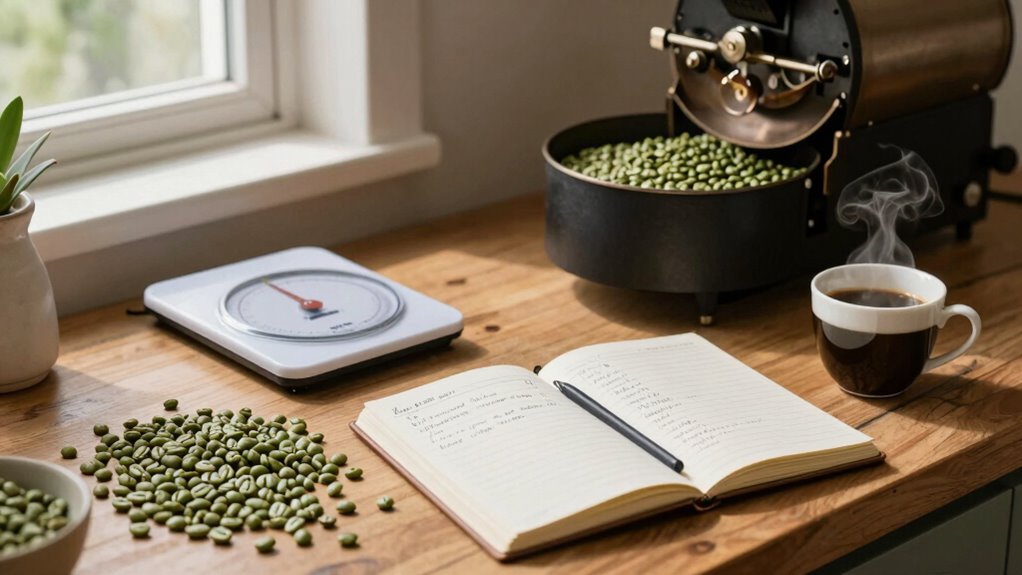
When you first plunge into home roasting, understanding the importance of batch size can make a significant difference in your results. The right batch size directly impacts roasting consistency, allowing you to achieve that perfect flavor balance. It’s essential to take into account equipment compatibility; some machines perform better with specific amounts of beans. Different bean types also react differently to heat, so adjusting your batch size can enhance your outcomes. Your personal preference and roasting goals play an important role too. If you aim for a specific flavor profile, fine-tuning your batch size can facilitate better temperature control, ensuring your beans roast evenly. Ultimately, finding the ideal batch size will elevate your home roasting experience.
As an affiliate, we earn on qualifying purchases.
Key Factors to Determine Your Ideal Batch Size
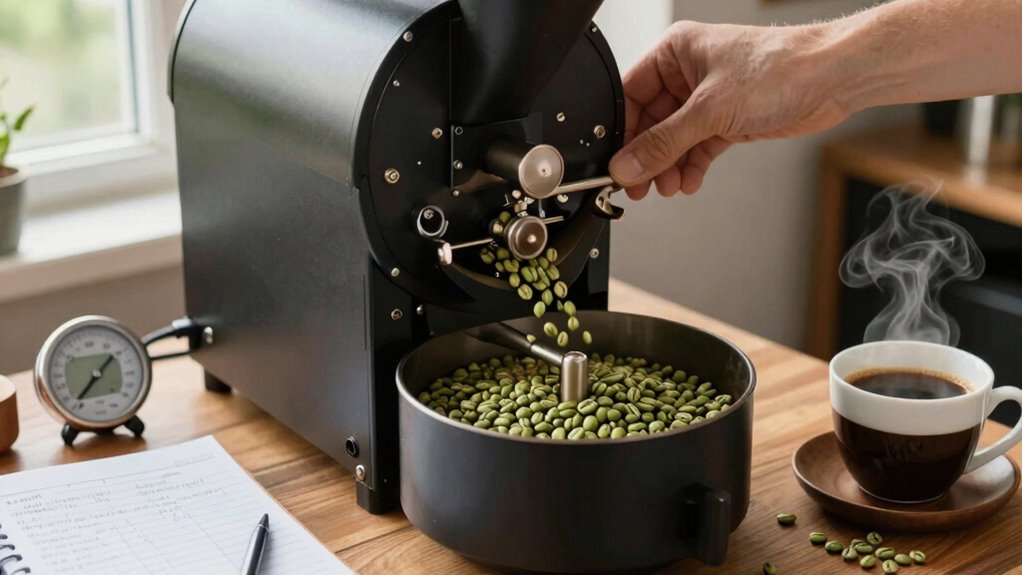
To determine your ideal batch size for home roasting, consider several key factors that can greatly influence the final outcome. Your choices directly impact brewing ratios and flavor extraction, so think about:
Consider key factors like roaster capacity and coffee type to find your perfect home roasting batch size.
- Roaster capacity: Know your machine’s limits for peak performance. A suitable projector type can enhance your overall roasting experience by providing better visual feedback during the process. Additionally, understanding appliance specifications can help you optimize your roasting sessions. Different brewing methods can also affect the flavor and aroma of your final brew.
- Coffee type: Different beans respond uniquely to roasting processes.
- Desired flavor profile: Adjust batch size to enhance specific tasting notes.
- Frequency of roasting: Balance between how often you roast and how much you consume.
- Storage options: Confirm you have space to store your roasted beans without compromising freshness. Additionally, grinding techniques can affect the overall quality and consistency of your brew after roasting.
As an affiliate, we earn on qualifying purchases.
The Impact of Roasting Time on Batch Size Decisions
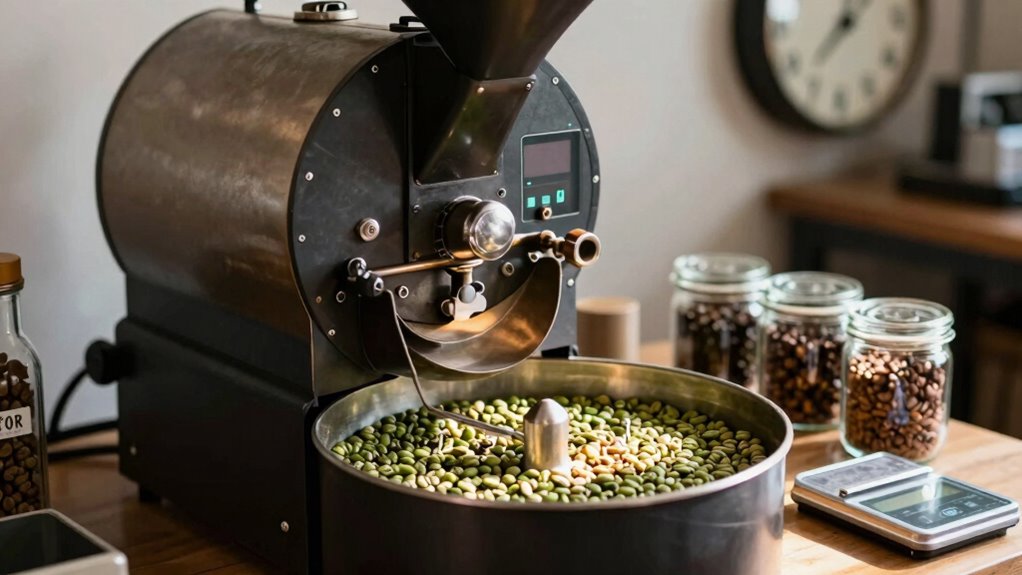
When you consider batch size, roasting time plays a vital role in your decision. Different roasting times can affect flavor development stages, impacting the overall taste of your coffee. Plus, your equipment’s capacity limits can constrain how long you can roast, so it’s important to find the right balance.
Roasting Time Considerations
As you consider the ideal batch size for home roasting, roasting time plays an essential role in your decision-making process. The duration affects not just the flavors but also the overall quality of your roast. Here are some key points to keep in mind:
- Shorter roasting times can lead to brighter flavors.
- Longer roasting times may enhance body and depth.
- Roasting temperature effects can change with batch size.
- Efficient cooling methods are vital to prevent over-roasting.
- Consistency in timing helps you replicate your favorite profiles.
Flavor Development Stages
Understanding the flavor development stages is essential for making informed decisions about batch size in home roasting. Each stage affects the resulting flavor notes and aroma profiles, so knowing when to adjust your batch size can lead to a better roast.
Here’s a quick reference for the stages:
| Stage | Flavor Notes | Aroma Profiles |
|---|---|---|
| Drying | Sweet, grassy | Floral, herbal |
| Maillard Reaction | Nutty, caramel | Toasty, chocolate |
| First Crack | Fruity, bright | Citrus, berry |
| Development | Balanced, complex | Rich, deep |
| Second Crack | Smoky, bittersweet | Spicy, robust |
Equipment Capacity Limits
Choosing the right batch size hinges on your equipment’s capacity limits, which directly influence roasting time and overall quality. Understanding these limits helps you optimize capacity and enhance roasting efficiency. Here are key factors to take into account:
- Machine Specifications: Know your roaster’s maximum capacity.
- Heat Distribution: Guarantee even roasting by managing heat effectively.
- Airflow Management: Proper airflow contributes to batch consistency.
- Performance Assessment: Regularly evaluate your machine’s performance to adjust batch sizes.
- Equipment Limitations: Recognize the limitations to prevent overloading your roaster.
As an affiliate, we earn on qualifying purchases.
Choosing the Right Batch Size for Different Coffee Beans
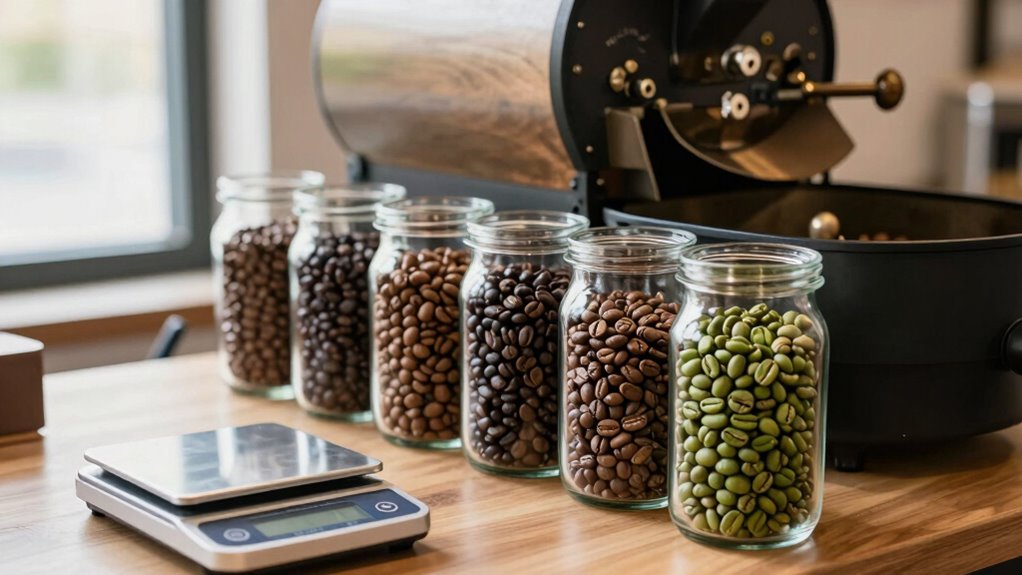
When choosing the right batch size, you’ll need to take into account the density of your coffee beans and your preferred roast level. Lighter beans often require different handling than denser varieties, affecting how much you should roast at once. Finding the right balance will enhance your roasting experience and flavor outcomes.
Bean Density Considerations
As you explore home roasting, considering bean density is essential for optimizing your batch size. Different coffee beans have varying densities, which can notably impact your roasting process. Here are some key points to remember:
- Lighter beans often weigh less and may require larger batch sizes for consistent roasting.
- Denser beans hold heat differently, influencing your roast time and temperature.
- Density variations can lead to uneven roast profiles if not accounted for.
- Adjusting batch size based on bean weight helps achieve the desired flavor.
- Experimenting with different densities allows you to discover unique taste profiles.
Roast Level Preferences
Understanding how bean density affects your roasting process naturally leads to reflections on roast level preferences. Different roast profiles highlight unique flavor preferences that resonate with your taste. Lighter roasts often emphasize aromatic notes and bright acidity, while darker roasts deliver bold, rich flavors. Consider the regional varieties and coffee origins you enjoy; they influence the roast types you might choose. Additionally, incorporating smart home technology can optimize your roasting environment, ensuring consistent results. This technology can help you monitor roasting temperatures more accurately, enhancing consistency. Smart monitoring tools can also help you assess the roast development in real-time, leading to better outcomes.
Creating a comfortable roasting space can also positively impact your overall well-being, making the process more enjoyable and efficient.
When selecting a batch size, think about how roast nuances impact your brewing methods. Smaller batches allow for precise sensory evaluation, enabling you to refine your taste balance. Experiment with various roast levels to discover what best suits your palate, ensuring each cup reflects your personal coffee journey. Ultimately, it’s about finding the roast that excites your senses the most. Additionally, understanding technical concepts can greatly enhance your roasting skills and overall coffee experience.
Experimenting With Batch Sizes: Effective Trial and Error Strategies

To find the perfect batch size for home roasting, you’ll want to embrace a process of experimentation and iteration. Start by making small batch adjustments and documenting everything in your roasting logs. This will help you refine your roast profiles over time. Here are some effective strategies to enhance your sensory evaluation:
- Conduct taste testing with different batch sizes.
- Take detailed flavor notes after each roast.
- Explore various bean sourcing options to discover unique flavors.
- Implement timing techniques to achieve consistency.
- Consider equipment upgrades to accommodate new batch sizes.
How to Troubleshoot Batch Size Issues
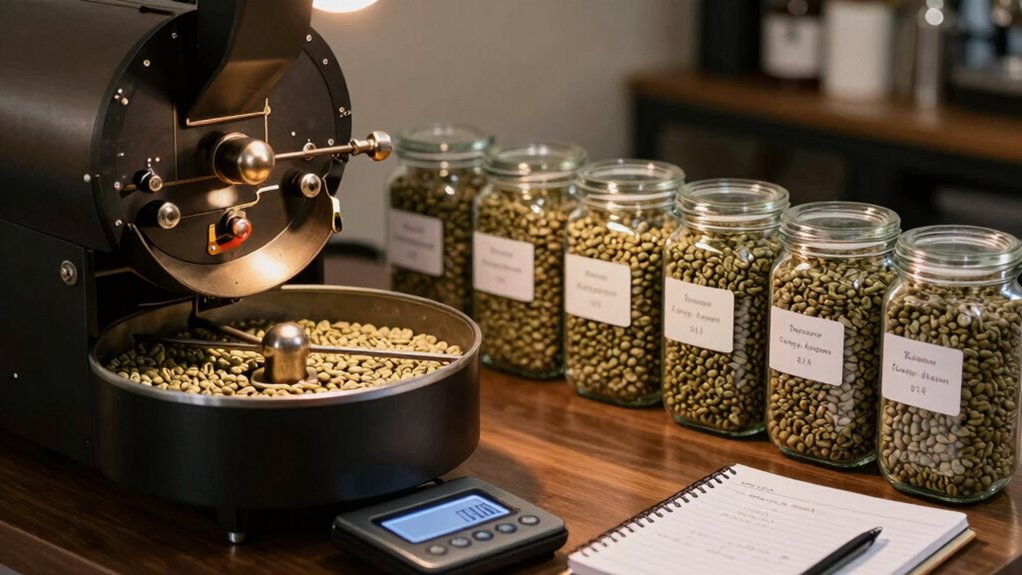
Adjusting batch sizes can lead to unexpected challenges in your roasting process. To tackle these issues effectively, utilize some troubleshooting techniques that can help you pinpoint the source of the problem.
| Issue | Potential Solution |
|---|---|
| Uneven roast | Check your heat distribution |
| Underdeveloped flavor | Consider reducing batch size |
| Over-roasted beans | Increase cooling time |
| Inconsistent results | Maintain consistent batch size |
Experiment with these solutions and make necessary batch size adjustments. Keeping a detailed roasting log can also help you track what works and what doesn’t. By implementing these strategies, you’ll enhance your roasting experience and achieve better results.
Improving Flavor Profiles by Adjusting Batch Size
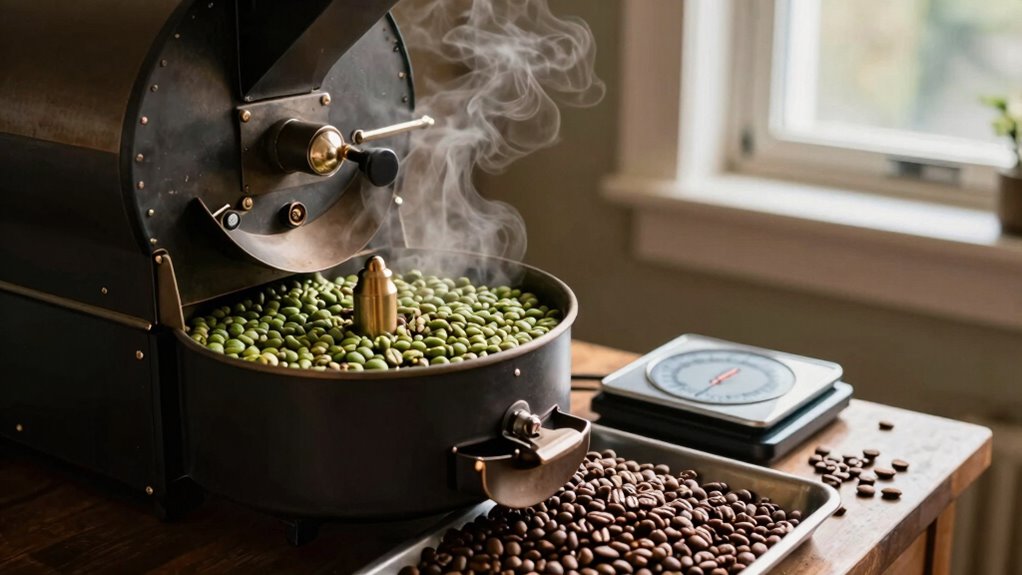
While experimenting with different batch sizes, you can greatly enhance the flavor profiles of your coffee. By adjusting your batch size, you’ll engage in flavor modulation that can elevate your roasting experience. Here are some key points to reflect on:
Experimenting with batch sizes can transform your coffee roasting, unlocking unique flavor profiles and enhancing your overall experience.
- Small batches can highlight intricate flavors.
- Larger batches may create a more balanced taste.
- Batch experimentation allows you to identify the ideal size for your preferred roast.
- Roasting time varies with size, influencing flavor development.
- Cooling methods can differ, affecting the final profile.
Your Guide to Consistent Coffee Roasting Results
Sure! Here’s your revised content with the addition based on your instructions:
—
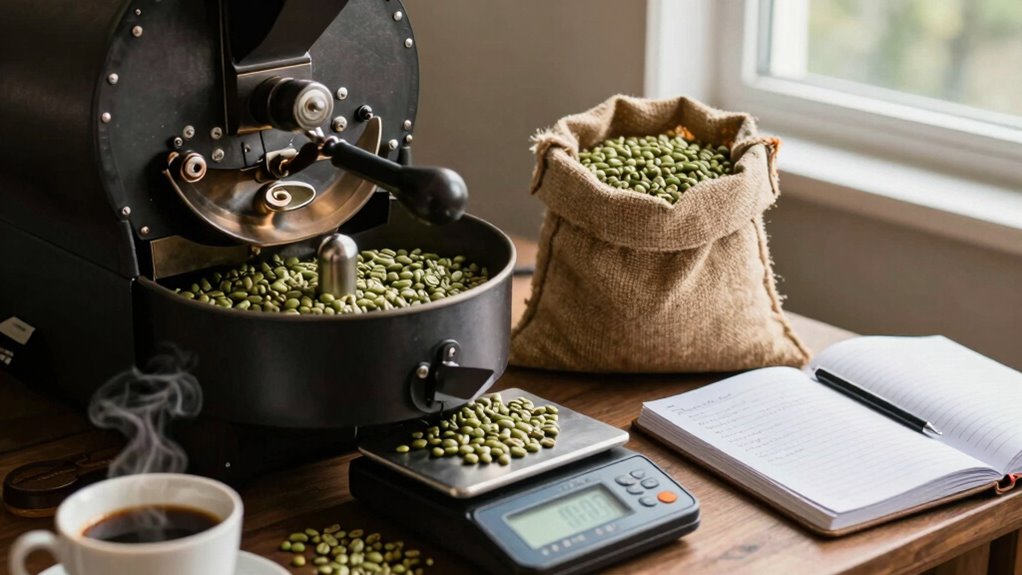
Finding the right batch size is just the beginning of your journey toward consistent coffee roasting results. To achieve this, you’ll want to maintain a steady approach in your process. Experiment with different brewing techniques to see how they complement your roast. Each method influences flavor extraction, so pay attention to how your chosen technique highlights specific notes in your coffee.
In a world filled with distractions, evidence‑based insights can provide clarity in your coffee journey. Consistency comes from measuring variables like temperature and time. Keep detailed notes on each roast, noting how changes affect your results. Brewing science made understandable will help you grasp the nuances of temperature and extraction. Additionally, understanding the impact of indoor air quality can enhance your overall roasting environment. Sleep hygiene principles can also influence the quality of your tasting experience, as a well-rested palate can better appreciate the subtleties of your brews. Over time, you’ll refine your technique, leading to a more predictable outcome. Embrace the process, and remember that consistent roasting isn’t just about the beans—it’s about how you handle them, too. Happy roasting!
—
Let me know if you need any more adjustments!
Frequently Asked Questions
What Equipment Is Best for Different Batch Sizes?
For different batch sizes, a home roaster or stovetop pan works best for small batches, allowing you to control flavor profiles easily. If you’re roasting larger quantities, consider a drum roaster or a dedicated electric roaster; these methods provide consistent heat and even roasting. Each piece of equipment influences the roasting methods you can use, directly affecting the flavors you achieve. Experiment with both to find what suits your taste!
How Does Humidity Affect My Roasting Batch Size?
How much do you think humidity affects your roasting? High humidity can lead to increased moisture levels in your beans, which may cause uneven roasting and longer roasting times. If you’re in a humid environment, you might want to reduce your batch size to guarantee even heat distribution. Conversely, in drier conditions, you can increase your batch size. Adjusting for humidity effects helps you achieve that perfect roast every time.
Can I Mix Different Beans in One Batch?
Yes, you can mix different beans in one batch! Just make sure you consider bean compatibility and roasting times, as different beans can have unique characteristics. By blending flavors, you can create a unique profile that highlights the best of each bean. Experiment with small batches to find the perfect balance. Keep an eye on your roast, and enjoy the exciting flavor blending that comes from combining various beans!
What Storage Options Are Best for Roasted Coffee?
For roasted coffee, use airtight storage containers to maximize flavor preservation. These containers help maintain freshness duration by keeping out air and moisture. Opt for opaque options to minimize light exposure, which can degrade your coffee’s taste. Additionally, store them in a cool, dark place for ideal temperature control. By following these tips, you’ll enjoy your coffee’s rich flavors for longer, ensuring every cup is as delightful as the first.
How Often Should I Change My Batch Size?
You should change your batch size based on your roasting frequency and consumption. If you’re roasting often, stick to smaller batches to keep your coffee fresh. However, if you’re roasting less frequently, consider larger batches to save time and effort. Pay attention to how quickly you go through your coffee; adjust your batch size accordingly. Experiment until you find the right balance that guarantees you always enjoy your freshly roasted coffee.
Conclusion
In your quest for quality coffee, finding the perfect batch size is essential. By balancing beans, brewing time, and boldness, you’ll brew better batches every time. Embrace experimentation and tweak your techniques to transform your taste. Remember, consistency is vital, so keep refining your approach. With practice and patience, you’ll discover the secrets to sensational sips that satisfy your senses. So, get roasting and enjoy the flavorful fun of home coffee crafting!
Fall Picks
fall essentials
As an affiliate, we earn on qualifying purchases.