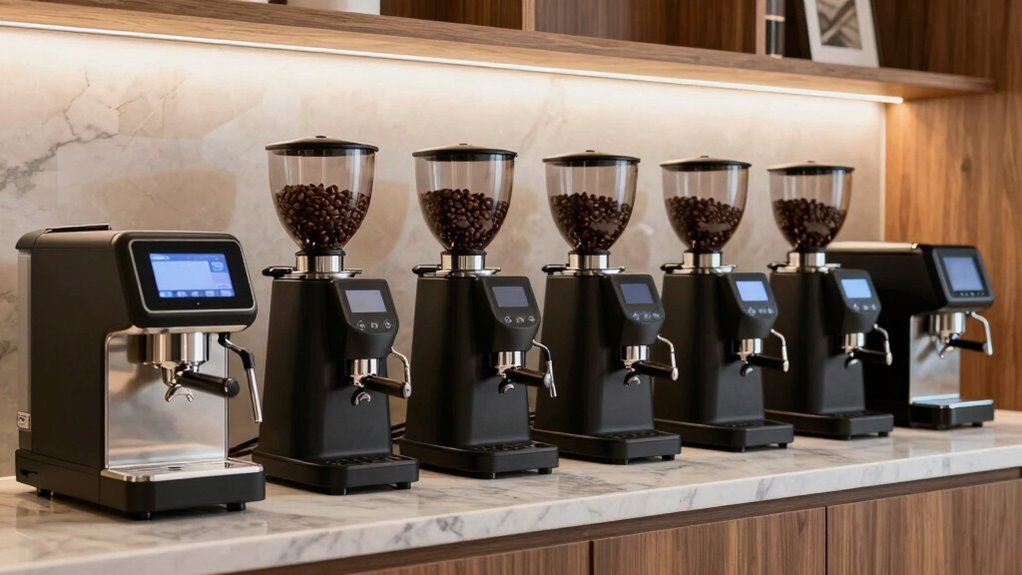
If you want the quietest espresso machine with a built-in grinder, focus on the grinder as well as the brewing system: grinding is often the loudest part of the routine. My best overall pick is the De’Longhi La Specialista Arte Evo, a more established all-in-one option with hands-on controls; the Meraki Dual Boiler stands out for its dual-boiler design and scales, while the AMZCHEF Espresso Machine with Grinder and Temperature Control offers adjustable brewing features in a more accessible style. None of these models can be assumed silent, and product names or feature lists alone do not establish which one is quietest. The main tradeoffs are noise versus grind control, automation versus hands-on learning, and a compact footprint versus added brewing features. Read on for the full comparison and guidance on choosing a machine that fits your kitchen, routine, and tolerance for grinder noise.

Get coffee and tea gear delivered free with Prime
- Fast, free delivery on millions of items
- Prime Video, Amazon Music and more included
- Member-only deals all year
Complete the kit



Key Takeaways
- The grinder is the key noise source to investigate: the listed product details do not provide comparable measured sound levels, so this roundup cannot responsibly claim a verified quietest model.
- De’Longhi La Specialista Arte Evo is the strongest overall fit: it is the recognizable established option in this group, while its hands-on design suits buyers who want more involvement than a push-button routine.
- Meraki Dual Boiler is the feature-led pick: dual boilers and dual scales are aimed at buyers who value a more involved workflow, not people whose only priority is quieter grinding.
- AMZCHEF’s two models serve different priorities: the temperature-control model emphasizes brew adjustment, while the black semi-automatic version is the simpler choice when a more straightforward setup matters.
- Marketing feature counts need context: the model described with 44 grind settings gives finer selection on paper, but more settings do not prove quieter grinding or better espresso without useful adjustment steps and a capable burr set.
| AMZCHEF Espresso Machine with Grinder and Temperature Control |  | Best for Brewing Flexibility | Model: CM1626 | Type: Semi-automatic espresso machine | Grind settings: 44 | VIEW ON AMAZON | See Our Full Breakdown |
| Grindora Semi-Automatic Espresso Machine with Grinder |  | Best for Mess-Controlled Dosing | Model: AT-CMG-01 | Grinder: Built-in conical burr, 44 settings | Dosing: 0.1-second precision timer | VIEW ON AMAZON | See Our Full Breakdown |
| De’Longhi La Specialista Arte Evo Espresso Machine with Coffee Grinder |  | Best for Guided Home Barista Practice | Built-in grinder: Conical burr | Grind settings: 15 | Temperature settings: 3 | VIEW ON AMAZON | See Our Full Breakdown |
| Meraki Dual Boiler Semi-Automatic Espresso Machine with Grinder and Dual Scales |  | Best Premium Control | Operation: Semi-automatic | Grinder settings: 45 marked settings with micro-adjustment | Boilers: 350 ml brew boiler; 550 ml steam boiler | VIEW ON AMAZON | See Our Full Breakdown |
| AMZCHEF Semi-Automatic Espresso Machine with Built-In Grinder, Black |  | Best Compact Espresso Starter | Model: 5560 | Type: Semi-automatic espresso machine | Grinder settings: 20 | VIEW ON AMAZON | See Our Full Breakdown |
| Espresso Machine with Built-in Burr Grinder, 44 Grind Settings & Steam Wand |  | Best for Grind Customization | Coffee maker type: Espresso machine | Operation mode: Semi-automatic | Grinder: Conical burr grinder with 44 settings | VIEW ON AMAZON | See Our Full Breakdown |
| quietest espresso machine with built in grinder | Dimensions | Model |
|---|---|---|
| AMZCHEF Espresso Machine with | 12.5 × 10.82 × 13.38 in | CM1626 |
| Grindora Semi-Automatic Espres | 11.02 × 9.57 × 14.57 in | AT-CMG-01 |
| De’Longhi La Specialista Arte | — | — |
| Meraki Dual Boiler Semi-Automa | 14.57 × 14.57 × 16.33 in | — |
| AMZCHEF Semi-Automatic Espress | 11.2 × 9.1 × 14.2 in | 5560 |
| Espresso Machine with Built-in | 11.02 in. deep × 9.53 in. wide × 14.72 in. high | — |
More Details on Our Top Picks
AMZCHEF Espresso Machine with Grinder and Temperature Control
For buyers who want one machine for espresso and other grind styles, the AMZCHEF CM1626 offers 44 grind settings, adjustable brew temperatures, and a cold brew mode. That flexibility makes it a better fit for households that switch beans and drinks than the AMZCHEF Model 5560, which has 20 grind settings and focuses more narrowly on espresso. The removable 60-ounce tank and descaling function also give owners practical maintenance support.
Quietness is the key unknown: the supplied details do not state grinder noise levels, and a built-in grinder will still make noise during dosing. Its 1500-watt heating system and steam wand add drink-making range, but buyers seeking a compact, simple setup may prefer the smaller-footprint Grindora. This is a feature-rich choice, not a verified low-noise pick.
Pros:- 44 grind settings allow more adjustment across beans and brewing styles than the AMZCHEF Model 5560.
- Adjustable brewing temperature offers control for different roasts.
- Cold brew mode adds an option beyond espresso.
- Removable 60-ounce tank and descaling function support routine upkeep.
Cons:- No grinder noise measurement or quiet-operation feature is provided, so it cannot be confirmed as especially quiet.
- Its broad feature set may add complexity for buyers who only want straightforward espresso.
- The listed 120 V power specification may not suit buyers using other electrical standards.
Best for: Home coffee drinkers who alternate between espresso and cold brew or other grind styles and want temperature adjustments.
Not ideal for: Buyers whose main requirement is independently verified quiet operation, or who want a compact, low-complexity espresso setup.
- Model:CM1626
- Type:Semi-automatic espresso machine
- Grind settings:44
- Brewing temperature:190°F–201°F
- Water tank:60 oz, removable
- Steam wand:8 mm stainless steel
- Power:1500 W, 120 V
- Dimensions:12.5 × 10.82 × 13.38 in
Our verdict“Choose the CM1626 for broad grind and drink flexibility, but not if quietness is your non-negotiable without noise data.”
Grindora Semi-Automatic Espresso Machine with Grinder
The Grindora AT-CMG-01 stands out for pairing a 44-setting conical burr grinder with timed dosing and anti-static grinding. Those details address a common annoyance of integrated grinders—scattered grounds—rather than promising a noise level the supplied information does not verify. Its three PID temperature settings and pre-infusion give hands-on users more brewing control than the simpler AMZCHEF Model 5560, which has fewer grind settings.
The tradeoff is accessory fit: its 51 mm portafilter is less common than the 58 mm format on the Meraki Dual Boiler, so buyers with existing baskets or tools should check compatibility. The 1.8-liter removable tank and cup warmer make it a practical all-in-one station, but no sound rating is listed. I would shortlist it for tidier workflow, not assume it is the quietest grinder in the group.
Pros:- Built-in conical burr grinder provides 44 settings and timed dosing.
- Anti-static grinding and a dosing ring are designed to reduce grounds mess.
- Three PID temperature choices and pre-infusion allow extraction adjustments.
- Removable 1.8-liter tank and cup warmer support a complete home workflow.
Cons:- The 51 mm portafilter may limit compatibility with accessories made for 58 mm machines such as the Meraki.
- No noise rating is provided for the grinder or machine.
- Semi-automatic brewing requires the user to manage preparation and extraction.
Best for: Espresso hobbyists who want adjustable timed dosing, reduced grinder mess, and a removable tank in a relatively narrow machine.
Not ideal for: Owners of 58 mm espresso accessories or buyers who need published grinder noise data before choosing.
- Model:AT-CMG-01
- Grinder:Built-in conical burr, 44 settings
- Dosing:0.1-second precision timer
- Temperature control:PID; 194°F, 198°F, and 205°F
- Pressure:20-bar pump
- Water tank:1.8 liters, removable
- Portafilter:51 mm
- Dimensions:11.02 × 9.57 × 14.57 in
Our verdict“Pick the Grindora if tidy timed dosing matters more than 58 mm accessory compatibility or proven low-noise performance.”
De’Longhi La Specialista Arte Evo Espresso Machine with Coffee Grinder
The De’Longhi La Specialista Arte Evo suits buyers who want a barista-style setup with a commercial-style steam wand and included barista kit. Its three temperature settings and 15 grinder steps offer useful control, while the cold brew function adds variety. Compared with the Grindora, it has fewer grind settings, so it gives less scope for fine adjustment; its appeal is the bundled workflow and milk-texturing focus rather than maximum grinder range.
For a roundup centered on quietness, the important limitation is that no grinder noise specification is supplied. The commercial-style wand and multiple controls may also mean a steeper learning curve than the AMZCHEF Model 5560. Its 15-bar pump rating does not tell buyers how loud grinding or brewing will be. This is better treated as a feature-led choice for skill-building than as a proven quiet machine.
Pros:- Included barista kit gives new home baristas tools to begin dialing in drinks.
- Commercial-style steam wand supports milk texturing and latte art practice.
- Cold brew capability broadens drink options beyond espresso.
- Three temperature settings provide some control over brewing conditions.
Cons:- Its 15 grinder settings offer less adjustment than the 44-setting Grindora and AMZCHEF CM1626.
- No grinder or operating noise data is provided.
- Multiple features and manual controls may take time for beginners to learn.
Best for: Home barista learners who want a bundled preparation kit, capable milk texturing, and both espresso and cold brew options.
Not ideal for: Noise-sensitive households that need documented sound levels, or buyers who prioritize many grind adjustments and a simpler learning curve.
- Built-in grinder:Conical burr
- Grind settings:15
- Temperature settings:3
- Cold brew:Yes
- Steam wand:Commercial-style
- Pump pressure:15 bar
- Extraction pressure:9 bar
Our verdict“Choose the De’Longhi for a bundled, milk-focused barista setup, not for confirmed quietness or the widest grind adjustment.”
Meraki Dual Boiler Semi-Automatic Espresso Machine with Grinder and Dual Scales
The Meraki Dual Boiler is the most control-oriented option here, combining an integrated grinder with 45 marked settings and micro-adjustment, dual scales, PID control, and independent brew and steam boilers. The scales can help users repeat a dose and espresso yield, while separate boilers allow milk texturing and brewing at the same time. That is a more advanced workflow than the Grindora’s single-machine feature set, though the Grindora takes up less counter space and includes a removable tank.
Its 58 mm E61-compatible portafilter is an advantage for accessory compatibility, but the machine is also the largest listed and requires hands-on skill. Crucially for this roundup, no grinder noise measurement is supplied; a premium control package does not prove quieter operation. I would rank it for repeatability and simultaneous drink preparation, not for buyers seeking the simplest or smallest setup.
Pros:- Independent boilers allow brewing and milk texturing at the same time.
- Dual scales measure coffee dose and espresso yield to support repeatable recipes.
- 45 grinder settings with micro-adjustment allow detailed dialing in.
- 58 mm E61-compatible portafilter works with a familiar accessory format.
Cons:- Its 14.57 × 14.57 × 16.33-inch footprint is larger than the Grindora and AMZCHEF Model 5560.
- Semi-automatic operation calls for hands-on preparation and extraction control.
- No grinder noise data is supplied, so quiet operation cannot be confirmed.
Best for: Experienced home espresso users who value repeatable dosing and yield, simultaneous brewing and steaming, and 58 mm accessory compatibility.
Not ideal for: Small-kitchen owners, beginners seeking automated preparation, or noise-sensitive buyers who require verified sound measurements.
- Operation:Semi-automatic
- Grinder settings:45 marked settings with micro-adjustment
- Boilers:350 ml brew boiler; 550 ml steam boiler
- Scale accuracy:Within 0.2 g
- Output pressure:9 bar
- Portafilter:58 mm, E61-compatible
- Water capacity:2 liters
- Dimensions:14.57 × 14.57 × 16.33 in
Our verdict“Choose the Meraki for advanced repeatability and simultaneous steaming, provided you have counter space and do not need proven low-noise performance.”
AMZCHEF Semi-Automatic Espresso Machine with Built-In Grinder, Black
The AMZCHEF Model 5560 is a straightforward choice for a smaller counter: its listed footprint is 11.2 × 9.1 × 14.2 inches, narrower than the AMZCHEF CM1626 and considerably less imposing than the Meraki Dual Boiler. It combines a grinder, steam wand, adjustable pre-infusion, and three PID temperature levels, giving a new espresso maker core controls without the Meraki’s dual boilers and scales.
The compromise is grinder range: 20 settings provide less tuning room than the 44-setting CM1626 or Grindora. Its 1350-watt heating system and 20-bar pump are specified, but neither figure establishes quiet operation; no noise rating is available. As with the other semi-automatic picks, users must manage preparation and extraction themselves. It makes the most sense when footprint and a contained espresso workflow matter more than advanced adjustment or demonstrated low sound.
Pros:- Compact listed dimensions suit tighter counters better than the Meraki Dual Boiler.
- Built-in grinder and steam wand combine key espresso tasks in one machine.
- Three PID-controlled temperature levels and adjustable pre-infusion allow basic extraction tuning.
- Removable water tank supports easier refilling.
Cons:- Its 20 grinder settings offer less adjustment than the 44-setting AMZCHEF CM1626 and Grindora.
- No sound measurement or quiet-operation feature is listed.
- Semi-automatic operation leaves dosing, preparation, and extraction management to the user.
Best for: First-time home espresso buyers with limited counter space who want an integrated grinder, basic temperature choices, and a steam wand.
Not ideal for: Enthusiasts who want a broad grind range, advanced workflow measurement, or documented quiet grinder operation.
- Model:5560
- Type:Semi-automatic espresso machine
- Grinder settings:20
- Pump pressure:20 bar
- Power:1350 W, 120 V
- Pre-infusion:Adjustable, 3–10 seconds
- Brewing temperatures:Three levels, 197°F–205°F
- Dimensions:11.2 × 9.1 × 14.2 in
Our verdict“Choose the Model 5560 for a compact starter setup, but look elsewhere if you need extensive grinder adjustment or verified quietness.”
Espresso Machine with Built-in Burr Grinder, 44 Grind Settings & Steam Wand
The standout here is grind control: 44 settings and a high-definition display give detail-focused home baristas more room to adjust than a simpler all-in-one setup. Pre-infusion and a 20-bar pump add brewing controls, while hot and cold drink options make it more versatile than a machine focused mainly on espresso and milk drinks, such as the De’Longhi La Specialista Arte Evo. The stainless-steel body is relatively compact on the counter, but the feature set may take time to learn, and the listing provides no noise measurement or grinder sound details. I would not rank it as the quietest on specs alone. Its semi-automatic operation also means it does not remove the hands-on steps of dialing in and preparing each drink.
Pros:- 44 grind settings allow fine adjustment for different beans and brewing preferences.
- High-definition display makes settings easier to monitor while dialing in a drink.
- Pre-infusion and a 20-bar pump provide additional extraction controls.
- Hot and cold beverage options extend its use beyond espresso and milk drinks.
Cons:- No grinder or operating-noise measurements are provided, so quietness cannot be confirmed.
- The range of controls may require a learning period before brewing becomes routine.
- Semi-automatic operation leaves preparation steps to the user.
Best for: Home espresso drinkers who want many grind adjustments, a display-led workflow, and the option to make both hot and cold drinks.
Not ideal for: Buyers prioritizing verified low operating noise or a simple, mostly hands-off espresso routine; the product data gives no noise figures, and its controls may take practice.
- Coffee maker type:Espresso machine
- Operation mode:Semi-automatic
- Grinder:Conical burr grinder with 44 settings
- Output pressure:20 bar
- Wattage:1350 watts
- Voltage:110 volts
- Dimensions:11.02 in. deep × 9.53 in. wide × 14.72 in. high
- Warranty:1-year limited warranty
Our verdict“Choose this machine if grind customization and hot-and-cold drink options matter more to you than a documented quietness level or a hands-off workflow.”

How We Picked
I ranked these six machines around the actual promise of the search: a built-in grinder paired with a less disruptive home espresso routine. I considered the grinder and brewing features named in each product description, the likely learning curve suggested by the machine type, the usefulness of controls for dialing in a shot, and the practical tradeoffs created by added complexity. I also treated the ability to compare noise as a buyer-relevant factor: no comparable decibel measurements or verified sound tests were supplied, so I do not label any model definitively the quietest.
The order gives more weight to a balanced, identifiable espresso setup than to a feature count alone. The De’Longhi leads as the most balanced recommendation for buyers seeking an established all-in-one format; Meraki ranks for buyers who will use its more elaborate dual-boiler workflow. The AMZCHEF and Grindora options follow as simpler or more narrowly specified alternatives, while the 44-setting model earns a distinct place for grind adjustment rather than a proven noise advantage. Buyers who need quiet operation above all should check current manufacturer specifications and seek comparable sound measurements before choosing.
Factors to Consider When Choosing Quietest Espresso Machine With Built In Grinder
A quiet grinder is not just a matter of choosing a machine with fewer controls or a shorter product name. I would compare the whole morning routine: how long grinding takes, where the machine sits, how much adjustment it needs, and whether its brewing features earn their added noise and upkeep.
Separate grinder noise from brewing noise
Ask whether published noise information refers to grinding, brewing, or the machine as a whole; these are different sound events. A short, loud grind can be more noticeable than a longer, lower-pitched pump cycle, especially in an open kitchen. Look for measured sound levels taken at a stated distance and during a named task, rather than relying on words such as quiet or low-noise. If no comparable data exists, treat noise claims as unverified and check the return policy before committing. A sound measurement also cannot tell you whether a high-pitched grinder tone will bother you more than a lower, steadier hum.
Match the grinder controls to your coffee routine
More grind settings can help when changing beans or adjusting extraction, but a larger number is not automatically better. The useful question is whether the steps are fine enough to correct a shot that runs too quickly or too slowly. Fresh beans, roast level, and dose all affect the result, so even a broad adjustment range may require some trial and error. Buyers who keep one bean and one recipe may prefer fewer, clearer controls over a long settings menu. Before buying, check whether the machine lets you change grind time and dose easily, not just grind size.
Choose how much hands-on espresso work you want
Semi-automatic machines give you more control over dosing, tamping, and shot timing, but they ask you to build a repeatable routine. That can make them satisfying for someone who wants to learn espresso and frustrating for someone who expects consistent drinks with minimal effort. Built-in grinding reduces separate equipment, but it does not remove the need to dial in coffee or clean the grinder area. If several people will use the machine, look for controls that are clear enough for different skill levels. A simpler workflow may matter more to household harmony than an extra brewing feature.
Decide whether advanced heating features earn their complexity
Dual boilers can let a machine prepare espresso and steam milk with less waiting between tasks, which is useful for back-to-back milk drinks. That advantage matters less if you mostly drink straight espresso or make one cup at a time. More elaborate systems can also take up more counter space and add cleaning or setup steps. Compare the machine’s actual workflow with your usual drink order before paying for extra capacity. For a noise-conscious buyer, an advanced boiler system does not solve grinder noise, so treat heating performance and sound as separate decision points.
Plan for placement, vibration, and cleanup
A machine can sound louder when it sits on a hollow counter or touches a backsplash, because vibration may carry through nearby surfaces. Measure the counter area and leave room to fill the water tank, access the hopper, and remove parts for cleaning. A stable, level surface and a suitable isolation mat may reduce transmitted vibration, though neither will make a loud grinder silent. Also check how readily you can reach the burr area and grounds chute; coffee buildup can make daily use messier and maintenance less appealing. These practical details can shape the experience more than a small difference in the machine’s footprint.
Set a standard for quietness claims before comparing models
Do not infer quiet operation from a premium label, burr-grinder wording, or a large number of grind settings. Ask for sound readings under consistent conditions, including the same distance, room setup, and grinding task. If a seller or manufacturer cannot provide that information, compare the return window, warranty coverage, and availability of replacement or service parts instead. Watching a demonstration can reveal sound character, but phone recordings do not provide dependable decibel comparisons. If you brew while others are sleeping, the safest choice is one you can assess in your own kitchen rather than one selected on an unverified quietness claim.
Frequently Asked Questions
Which of these machines is confirmed to be the quietest?
None can be confirmed as the quietest from the information available here because there are no comparable sound measurements for the six models. Grinder noise can vary with bean type, grind setting, dose, machine placement, and the room itself. Treat the ranking as a feature-and-use-case comparison, not a decibel test. If quietness is a strict requirement, ask for sound readings during grinding and check the return terms before ordering.
Does a machine with 44 grind settings have an advantage for quieter brewing?
No: a higher setting count describes adjustment options, not sound level. It may help you make smaller changes to grind size, but it does not prove that the motor or burrs are quieter. The 44-setting option is most relevant if you expect to change beans or tune espresso often. For noise-sensitive kitchens, request a grinding sound measurement separately and weigh it alongside control range.
Should I choose the Meraki Dual Boiler if I mostly make one espresso at a time?
Its dual-boiler design and scales are more compelling for someone who values a measured, feature-rich workflow or regularly prepares drinks in sequence. If you usually make one straight espresso, those features may add complexity without improving the part of the routine you care about most. They also do not establish that the grinder is quieter than the other options. Compare its footprint and daily cleaning needs with a simpler machine before deciding.
Is a built-in grinder quieter than buying a separate grinder?
Not necessarily. Noise depends on the grinder’s motor, burr design, housing, and how the machine transfers vibration to the counter, not simply whether the grinder is built in. An all-in-one can save space and reduce the number of separate appliances, but it also means you cannot easily replace the grinder alone if its sound or performance disappoints you. A separate grinder may give you more flexibility, though it still adds another noise source and takes up counter space. Compare measured sound and service options rather than assuming either layout is quieter.
What should I prioritize if I make coffee before other people wake up?
Prioritize verified grinding sound data, a short and predictable grind routine, and a stable placement away from walls or hollow surfaces that can amplify vibration. Consider whether you can grind beans in advance without sacrificing the freshness and workflow you want. A machine with advanced brewing controls will not help if the grinder wakes the household, so keep noise evidence ahead of feature count. If no model has reliable measurements, choose a seller with a practical return policy and test the machine during your normal morning routine.
Conclusion
For the broadest balance of recognizable all-in-one design and hands-on espresso control, I would start with the De’Longhi La Specialista Arte Evo as best overall. The AMZCHEF Espresso Machine with Grinder and Temperature Control is my best value-style pick for buyers who want brewing adjustments without centering the purchase on an elaborate dual-boiler workflow, while the Meraki Dual Boiler is the best premium-style fit for people who will use its added workflow features. Beginners should compare the two AMZCHEF models and Grindora based on which controls and setup instructions are clearest; neither product name alone proves it is easier or quieter. For fine grind adjustment, the 44-setting built-in burr grinder model is the specific-needs choice, but I would not select it on settings count as a quietness claim. Since none of these options has comparable verified sound data in this roundup, buyers whose main requirement is a peaceful early-morning routine should confirm noise information or use a return window before settling on a machine.