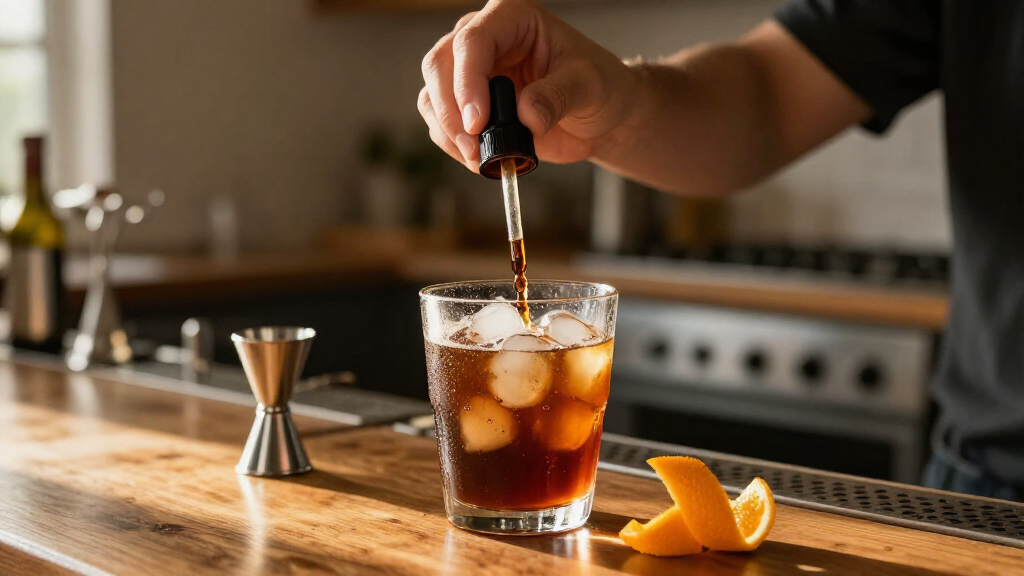

Choosing coffee cocktail bitters means deciding how much roasted flavor you want, what you plan to mix, and whether you need an alcohol-free option. My lead pick is Barrel Roll Espresso Cocktail Bitters for its espresso-and-cacao profile and barrel aging. Bablouie & Co. is the clearest fit for shoppers who want explicitly non-alcoholic coffee bitters, while El Guapo Chicory Pecan takes a more New Orleans-inspired route with roasted coffee, chicory, and nutty notes.

Get coffee and tea gear delivered free with Prime
- Fast, free delivery on millions of items
- Prime Video, Amazon Music and more included
- Member-only deals all year
The main tradeoff is between a focused coffee flavor and a broader flavor profile that can bring vanilla, spice, chicory, or pecan into the glass. Bottle size also matters: Luxardo provides the largest listed volume, while Bablouie and Buji come in compact one-ounce bottles. I ranked these options by how directly they serve coffee-forward cocktails, how distinct their flavor descriptions are, and how clearly their listed uses and formats suit different buyers.
Complete the kit


Key Takeaways
- Barrel Roll is my best overall match for espresso-led cocktails, with cacao, cinnamon, vanilla, and barrel aging adding complexity beyond straight coffee.
- Bablouie & Co. is the most clearly specified non-alcoholic coffee bitters choice for people making both cocktails and mocktails, but its bottle is only 1 fl oz.
- Luxardo offers the largest listed volume at 200 ml and a coffee-and-spice profile aimed at classic and contemporary cocktails.
- El Guapo Chicory Pecan brings the most distinctive regional flavor combination, pairing coffee with chicory, pecan, and cinnamon.
- Buji Vanilla is not a dedicated coffee bitters: it is a vanilla, orange peel, and spice option for buyers who want a complementary flavor rather than a roast-forward one.
| Barrel Roll Espresso Cocktail Bitters, Barrel-Aged, 2 oz |  | Best Overall — espresso character with barrel-aged depth | Brand: Barrel Roll | Type: Espresso cocktail bitters | Size: 2 oz | VIEW LATEST PRICE | See Our Full Breakdown |
| Bablouie & Co. Non-Alcoholic Coffee Bitters, 1 fl oz |  | Best for Beginners — clearly non-alcoholic and mocktail-friendly | Brand: Bablouie & Co. | Volume: 1 fl oz (30 ml) | Alcohol: Non-alcoholic | VIEW LATEST PRICE | See Our Full Breakdown |
| Luxardo Coffee-Flavored Cocktail Bitters, 200 ml |  | Best for Cocktail Volume — largest stated bottle in the group | Brand: Luxardo | Type: Coffee-flavored cocktail bitters | Volume: 200 ml | VIEW LATEST PRICE | See Our Full Breakdown |
| El Guapo Chicory Pecan Bitters, 118 ml |  | Best Distinctive Flavor — roasted coffee with chicory and pecan | Brand: El Guapo | Volume: 118 ml | Alcohol: Non-alcoholic | VIEW LATEST PRICE | See Our Full Breakdown |
| Buji Vanilla Cocktail Bitters with Ugandan Vanilla, Orange Peel & Spices (1 oz / 30 ml) |  | Best Complementary Mixer — vanilla and citrus for coffee drinks | Brand: Buji | Volume: 1 oz / 30 ml | Ingredients: Ugandan vanilla, orange peel, and aromatic spices | VIEW LATEST PRICE | See Our Full Breakdown |
| coffee cocktail bitter | Brand | Listed uses | Volume |
|---|---|---|---|
| Barrel Roll Espresso Cocktail | Barrel Roll | Cocktails, coffee drinks, desserts, and baking | — |
| Bablouie & Co. Non-Alcoholic C | Bablouie & Co. | Espresso Martinis, Negronis, Old Fashioneds, Whiskey Sours, and mocktails | 1 fl oz (30 ml) |
| Luxardo Coffee-Flavored Cockta | Luxardo | — | 200 ml |
| El Guapo Chicory Pecan Bitters | El Guapo | Cocktails, baking, and other mixology creations | 118 ml |
| Buji Vanilla Cocktail Bitters | Buji | Cocktails, coffee, desserts, and other treats | 1 oz / 30 ml |
More Details on Our Top Picks
Barrel Roll Espresso Cocktail Bitters, Barrel-Aged, 2 oz
Barrel Roll is my best overall choice because it puts espresso at the center while adding supporting flavors that suit a mixed drink: gentian root, cinnamon, cacao, and vanilla. The barrel-aging detail gives it a more developed identity than a simple coffee flavoring, and the stated uses span cocktails, coffee drinks, desserts, and baking. That breadth makes it the most adaptable dedicated espresso pick in this group.
Compared with Bablouie & Co., Barrel Roll offers a more layered ingredient description and twice the stated bottle volume, while Bablouie is the clearer selection when non-alcoholic status is a priority. Against Luxardo, Barrel Roll makes a stronger case for kitchen use and espresso-led drinks; Luxardo instead supplies a larger 200 ml bottle for cocktail-focused use. Its 2 oz format is still relatively small, and the description does not state alcohol content or provide a specific dosing guide. Buyers who need those details should not assume them.
I would choose it for someone who wants coffee to remain recognizable but also wants spice and cocoa around it. I would skip it if the brief is specifically alcohol-free bitters, a large-volume bottle, or a narrowly defined coffee-only flavor without cinnamon and vanilla in the mix.
Pros:- Espresso is supported by gentian root, cinnamon, cacao, and vanilla.
- Barrel-aged and described as small-batch handcrafted in the USA.
- Listed for cocktails, coffee drinks, desserts, and baking.
- At 2 oz, it offers more volume than the one-ounce Bablouie and Buji bottles.
Cons:- The 2 oz bottle remains compact compared with Luxardo’s 200 ml format.
- The supplied details do not specify alcohol content or a dosing guide.
- Cinnamon, cacao, and vanilla make the profile less strictly coffee-only.
Best for: Home bartenders seeking espresso-forward bitters that can also flavor coffee drinks and desserts.
Not ideal for: Buyers who require explicitly non-alcoholic bitters, want a large-format bottle, or prefer a simple coffee-only profile.
- Brand:Barrel Roll
- Type:Espresso cocktail bitters
- Size:2 oz
- Origin:Handcrafted in the USA
- Aging:Aged in real wood barrels
- Flavor notes:Espresso, gentian root, cinnamon, cacao, and vanilla
- Listed uses:Cocktails, coffee drinks, desserts, and baking
Our verdict“I recommend Barrel Roll as the most balanced dedicated espresso bitters here, provided its unstated alcohol details do not conflict with your needs.”
Bablouie & Co. Non-Alcoholic Coffee Bitters, 1 fl oz
Bablouie & Co. is the easiest fit for spirit-free mixing because its non-alcoholic status is explicit and its described uses include mocktails as well as cocktails. Its dark roast coffee, bittersweet notes, and spice make the flavor direction clear without introducing the more elaborate barrel, cacao, or nutty character found elsewhere in this lineup. For a shopper starting with coffee bitters, that directness can make the choice easier to understand.
Compared with Barrel Roll, Bablouie gives up the barrel-aged, espresso-and-cacao framing but adds a definite non-alcoholic claim. Compared with El Guapo, it has a more straightforward dark-roast description rather than chicory and pecan. It is also made with natural herbs and lists no artificial flavors or colors. The clear downside is size: at just 1 fl oz, this is the smallest stated volume in the group, tied with Buji, so frequent use may call for a replacement sooner than with Luxardo or El Guapo.
I would pick it when a household needs one coffee bitters for cocktails and mocktails, especially if avoiding alcohol in the bitters matters. I would pass if bottle longevity is the main concern or if you want a layered dessert-friendly profile backed by a broader list of uses.
Pros:- Explicitly non-alcoholic, with mocktails included among its uses.
- Dark roast coffee is paired with bittersweet and spice notes.
- Made with natural herbs and no artificial flavors or colors, according to the listing.
- Small-batch handcrafted.
Cons:- The 1 fl oz bottle is the smallest stated format in this lineup.
- Its flavor description is less layered than Barrel Roll’s espresso, cacao, and barrel-aging combination.
- The supplied description does not list a dropper or a specific dosing recommendation.
Best for: Beginners and hosts who want explicitly non-alcoholic coffee bitters for cocktails and mocktails.
Not ideal for: Frequent bitters users who want a larger bottle or shoppers seeking barrel-aged, espresso-led complexity.
- Brand:Bablouie & Co.
- Volume:1 fl oz (30 ml)
- Alcohol:Non-alcoholic
- Flavor:Dark roast coffee with bittersweet and spice notes
- Ingredients:100% natural herbs; no artificial flavors or colors
- Crafting:Small-batch, handcrafted
- Listed uses:Espresso Martinis, Negronis, Old Fashioneds, Whiskey Sours, and mocktails
Our verdict“I would choose Bablouie when alcohol-free coffee bitters and mocktail flexibility matter more than bottle size.”
Luxardo Coffee-Flavored Cocktail Bitters, 200 ml
Luxardo is the practical pick for a cocktail-focused bar that wants coffee bitters in a larger bottle. Its 200 ml volume is far more generous than the 1 fl oz Bablouie and Buji formats, and the flavor description combines robust coffee notes with a balanced blend of spices. The listed cocktails—Old Fashioneds, Negronis, and Espresso Martinis—make its intended role clear: this is presented as a modifier for classic and contemporary drinks rather than an all-purpose kitchen flavoring.
That focus distinguishes it from Barrel Roll, which is also named for espresso but lists coffee drinks, desserts, and baking as uses. Luxardo gives more volume than Barrel Roll’s 2 oz bottle, but its description does not provide the same extra detail about barrel aging or a broader non-cocktail role. Against Bablouie, Luxardo has the larger format and a classic-cocktail emphasis, while Bablouie is the stronger fit for mocktails because it is explicitly non-alcoholic.
The main limitation is also its specialization: the supplied description says cocktails, so readers looking for baking or dessert uses have clearer options elsewhere. It is made in Italy, but the provided details do not state alcohol content, ingredients beyond coffee and spices, or a dosing method. I would not infer those points from the brand or origin.
Pros:- Largest stated volume in this lineup at 200 ml.
- Combines robust coffee notes with spices.
- Listed for classic and contemporary cocktails, including Old Fashioneds and Espresso Martinis.
- Made in Italy.
Cons:- The supplied use description is limited to cocktails.
- Alcohol content and detailed ingredients are not specified in the supplied information.
- The flavor description gives less ingredient-level detail than Barrel Roll or El Guapo.
Best for: Home bartenders who make coffee-forward cocktails regularly and prefer the largest stated bottle size here.
Not ideal for: Buyers who need explicitly non-alcoholic bitters or want a product described for coffee drinks, desserts, and baking as well as cocktails.
- Brand:Luxardo
- Type:Coffee-flavored cocktail bitters
- Volume:200 ml
- Country of origin:Italy
- Flavor:Robust coffee notes with spices
- Listed use:Cocktails
- Example cocktails:Old Fashioneds, Negronis, and Espresso Martinis
Our verdict“I would choose Luxardo for a cocktail-led bar that values a 200 ml bottle, not for buyers seeking the broadest kitchen use.”
El Guapo Chicory Pecan Bitters, 118 ml
El Guapo stands apart through its chicory-and-pecan combination, not by chasing the most direct espresso taste. Roasted coffee sits alongside chicory, pecan, and cinnamon, a profile that points toward a rounder, more regional flavor direction than Bablouie’s dark roast and spice. Handcrafted in New Orleans, it also has a clear place in a bar that wants a distinctly New Orleans-inspired ingredient rather than a generic coffee note.
For versatility, El Guapo compares well with Barrel Roll: both list baking or dessert-adjacent uses in addition to cocktails, although Barrel Roll’s profile is more espresso-and-cacao focused. Its 118 ml bottle is larger than the one-ounce Bablouie and Buji bottles, though smaller than Luxardo’s 200 ml format. El Guapo is also explicitly non-alcoholic, which gives it an advantage over products whose supplied details do not state alcohol content.
The tradeoff is that pecan and chicory make this a less neutral way to add coffee character. If you want roasted coffee with minimal supporting flavors, Bablouie is more direct. The product information notes a glass bottle, recycled craft label, and waxed cap, but packaging details do not tell me how it will taste in a particular recipe. I would start with this bottle for its distinctive profile, not for a plain espresso effect.
Pros:- Distinctive roasted coffee, chicory, pecan, and cinnamon flavor notes.
- Explicitly non-alcoholic.
- Listed for cocktails, baking, and other mixology creations.
- Handcrafted in New Orleans with a glass bottle and recycled craft label.
Cons:- Pecan and chicory give it a less neutral flavor than Bablouie’s dark-roast profile.
- Its 118 ml bottle is smaller than Luxardo’s 200 ml format.
- The supplied product details do not include customer review content or a dosing guide.
Best for: Cocktail makers and bakers who want non-alcoholic bitters with coffee, chicory, pecan, and cinnamon.
Not ideal for: Shoppers who want a clean espresso-only accent or prefer the largest available bottle.
- Brand:El Guapo
- Volume:118 ml
- Alcohol:Non-alcoholic
- Flavor notes:Roasted coffee, chicory, pecan, and cinnamon
- Origin:Handcrafted in New Orleans
- Packaging:Glass bottle with recycled craft label and waxed cap
- Listed uses:Cocktails, baking, and other mixology creations
Our verdict“I recommend El Guapo to buyers who want a non-alcoholic coffee bitters with a recognizable chicory-and-pecan identity.”
Buji Vanilla Cocktail Bitters with Ugandan Vanilla, Orange Peel & Spices (1 oz / 30 ml)
Buji is the lineup’s complementary option, not its strongest dedicated coffee bitters. Its stated flavor centers on Ugandan vanilla, orange peel, and aromatic spices, with coffee listed as one possible use alongside cocktails, desserts, and other treats. That makes it useful for adding a sweeter-sounding, aromatic direction around coffee, but it is a different purchase from a bottle built around espresso or roasted coffee. I rank it fifth because the article’s focus is coffee cocktail bitters, and its supplied flavor notes do not include coffee.
The glass dropper is a practical point of difference from the other listed bottles: it supports more controlled dispensing when the flavor is concentrated. The maker says the bottle makes about 60 cocktails, but the actual amount per drink is not provided, so I would treat that yield as an estimate rather than a dosing rule. Compared with Barrel Roll, Buji offers vanilla and spice without a stated espresso or cacao component; compared with Bablouie, it is not described as non-alcoholic and is not presented as a coffee-forward bitters.
Choose Buji if you already have a coffee bitters and want a separate vanilla-orange accent for coffee cocktails or desserts. Skip it if you are shopping for a single bottle to supply clear roasted coffee flavor. Its 1 oz size is compact, and its concentrated bittersweet character calls for measured use rather than casual pouring.
Pros:- Ugandan vanilla, orange peel, and aromatic spices offer a complementary profile.
- Glass dropper allows controlled dosing.
- Made without artificial flavor, according to the listing.
- Listed for cocktails, coffee, desserts, and other treats.
Cons:- The stated flavor notes do not include coffee, so it is not a direct substitute for dedicated coffee bitters.
- The 1 oz bottle is compact.
- Concentrated bittersweet flavor may call for careful dosing.
Best for: Home mixologists who want precise vanilla, orange, and spice accents for coffee cocktails, desserts, and treats.
Not ideal for: Buyers seeking a dedicated coffee or espresso bitters, or anyone who needs explicitly non-alcoholic bitters.
- Brand:Buji
- Volume:1 oz / 30 ml
- Ingredients:Ugandan vanilla, orange peel, and aromatic spices
- Bottle:Glass dropper
- Stated yield:About 60 cocktails
- Production:Small-batch
- Listed uses:Cocktails, coffee, desserts, and other treats
Our verdict“I would buy Buji as a vanilla-spice companion for coffee cocktails, not as my main bottle for adding coffee flavor.”

How We Picked
I ranked these five bottles by how well their stated flavors and uses answer a coffee-cocktail need, not by treating every product labeled bitters as interchangeable. A dedicated coffee profile should plausibly bring roast or espresso character to a drink; a complementary bottle may be useful in coffee cocktails but should not be mistaken for a coffee-forward bitters.
Flavor fit came first. Barrel Roll, Bablouie, Luxardo, and El Guapo all specify coffee or espresso notes, though they take different routes: barrel-aged espresso, dark roast with bittersweet spice, coffee with spices, and roasted coffee with chicory and pecan. Buji has vanilla, orange peel, and spices, so I placed it lower for this particular topic even though its described uses include coffee.
I also weighed use-case range and bottle details. Products described for mocktails, desserts, or baking can suit readers who want a single flavoring for more than cocktails. Clearly stated non-alcoholic status can matter for spirit-free drinks, while a larger bottle may appeal to a home bar that uses bitters regularly. I did not infer alcohol content where it was not supplied, or claim that any bottle performs a particular way beyond its listed ingredients, style, and intended uses.
Finally, I treated limitations as part of the ranking. A compact bottle may be convenient but offers less volume; a broad spice profile may be less purely coffee-led; and a product described mainly for cocktails may be less versatile for kitchen use. The product descriptions do not provide enough information to compare details such as drop count, exact sweetness, or cocktail-specific dosing, so I leave those claims open rather than inventing them.
| coffee cocktail bitter | Brand | Listed uses |
|---|---|---|
| Barrel Roll Espresso Cocktail | Barrel Roll | Cocktails, coffee drinks, desserts, and baking |
| Bablouie & Co. Non-Alcoholic C | Bablouie & Co. | Espresso Martinis, Negronis, Old Fashioneds, Whiskey Sours, and mocktails |
| Luxardo Coffee-Flavored Cockta | Luxardo | — |
| El Guapo Chicory Pecan Bitters | El Guapo | Cocktails, baking, and other mixology creations |
| Buji Vanilla Cocktail Bitters | Buji | Cocktails, coffee, desserts, and other treats |
Factors to Consider When Choosing Coffee Cocktail Bitters
I would choose coffee bitters by matching the bottle’s actual flavor notes to the drink, then checking alcohol status, volume, and how much use beyond cocktails matters to me. The word “coffee” can describe anything from espresso-forward bitters to a broader vanilla, spice, or chicory accent, so the label alone does not tell the whole story.Decide whether coffee should lead or support the flavor
For a clear coffee or espresso accent, start with products whose listed notes name coffee directly. Barrel Roll puts espresso beside cacao, cinnamon, and vanilla; Bablouie describes dark roast with bittersweet spice; and Luxardo combines robust coffee notes with spices. These are the more direct choices when you want the bitters to read as coffee-related.
El Guapo also includes roasted coffee, but chicory and pecan are central to its identity. It makes more sense if you welcome those extra notes than if you want an unobtrusive coffee accent. Buji sits in a different category: its notes are vanilla, orange peel, and spices. Since coffee is a listed use rather than a stated flavor note, I would treat it as a companion bottle, not a coffee bitters substitute.
Check alcohol status instead of assuming
If you need alcohol-free bitters for mocktails or personal preference, the supplied descriptions explicitly identify Bablouie & Co. and El Guapo as non-alcoholic. The descriptions for Barrel Roll, Luxardo, and Buji do not state alcohol content. I would verify that detail with the maker or product packaging rather than infer it from the words “bitters,” a listed use, or a brand’s origin.
This distinction matters most when bitters are going into a spirit-free drink or when you are following a specific dietary or personal requirement. Bablouie directly lists mocktails; El Guapo’s non-alcoholic status is clear and its uses include cocktails and baking. For the other bottles, check the current label if alcohol content affects your decision.
Match bottle volume to how often you mix
Luxardo has the largest stated volume at 200 ml, followed by El Guapo at 118 ml. Barrel Roll comes in a 2 oz bottle, while Bablouie and Buji are 1 fl oz or 30 ml. If coffee bitters will be part of a regular home-bar rotation, the larger listed formats may be a better fit than the compact bottles. If you are trying a new profile or expect occasional use, a smaller format may feel more manageable.
Volume does not tell you how many drinks a bottle will make on its own; dispensing amounts can vary, and only Buji gives an approximate cocktail yield. Even there, the listed information does not specify a per-drink dose. I would compare the bottle size without assuming that each product uses the same number of drops.
Think beyond the cocktail glass
If you want one bottle for more than mixed drinks, compare the listed uses carefully. Barrel Roll is named for cocktails, coffee drinks, desserts, and baking. El Guapo also lists baking alongside cocktails and other mixology creations, while Bablouie spans cocktails and mocktails. Those descriptions make these bottles easier to place across a home bar and kitchen.
Luxardo is described for cocktails, so I would choose it for drink-making rather than assume it is intended for baking. Buji lists coffee, desserts, and treats, but its profile is vanilla, orange, and spice rather than coffee-forward. A wider list of uses can be handy, but flavor compatibility still matters: an ingredient that works in a cocktail may change a dessert in a way you do not want.
Choose supporting notes that suit your recipes
Supporting flavors can make a coffee cocktail more distinctive, but they also narrow the fit. Cacao and barrel aging make Barrel Roll the more layered espresso option. Bablouie’s bittersweet spice stays closer to a dark-roast description, while Luxardo keeps its supporting profile at the broader level of spices. El Guapo adds chicory and pecan, making it the most clearly marked departure from a straightforward coffee note.
Buji’s vanilla and orange peel can add a contrasting aromatic direction, but that contrast may not suit someone who wants coffee to dominate. I would start by considering the drink you actually make: a recipe that welcomes warm spice may suit several options, while a simple coffee-forward drink could call for a more direct profile. Since the product information does not give exact tasting strength or recipe measurements, begin with the manufacturer’s directions if supplied on the bottle.
Read product claims within their limits
These descriptions do not provide a consistent set of details across all five bottles. Some identify alcohol status, some list origin or packaging, and others give a broad cocktail range. I would use those facts to narrow the options, but avoid treating missing information as a positive or negative feature. For example, the absence of an alcohol statement is not proof that a product contains alcohol or is alcohol-free.
Likewise, the stated uses are not a guarantee that every bitters profile will suit every recipe. Compare the ingredient notes, check the bottle for any current directions, and choose based on your intended drinks. That approach favors a bottle whose stated character fits your own menu over a generic claim that one option works everywhere.
Frequently Asked Questions
What are coffee cocktail bitters used for?
Coffee cocktail bitters are used in small additions to bring coffee, espresso, roast, or related spice notes to mixed drinks. In this lineup, the listed examples include Espresso Martinis, Old Fashioneds, Negronis, and Whiskey Sours, though each product’s profile differs. Some bottles also list uses in mocktails, coffee drinks, desserts, or baking. I would match the flavor notes to the recipe rather than assume every bottle tastes alike.
Which options in this comparison are explicitly non-alcoholic?
Bablouie & Co. and El Guapo are explicitly described as non-alcoholic in the supplied product details. Alcohol content is not specified for Barrel Roll, Luxardo, or Buji, so I would check their current labels or ask the maker if that detail matters. I would not infer alcohol status from an intended use or from the general product category.
Which coffee bitters offer the most bottle volume?
Luxardo lists 200 ml, the largest volume among these five options, and El Guapo follows at 118 ml. Barrel Roll is 2 oz, while Bablouie and Buji are each 1 fl oz or 30 ml. Bottle volume alone does not establish how many cocktails a product will make, since the listed dosing information is not consistent across the lineup.
Can I use these bitters in coffee or desserts as well as cocktails?
Some products explicitly list non-cocktail uses. Barrel Roll is described for coffee drinks, desserts, and baking; El Guapo lists baking; Bablouie lists mocktails; and Buji lists coffee, desserts, and treats. Luxardo’s supplied use description is focused on cocktails. I would consider each flavor profile before adding it to food, since cinnamon, cacao, chicory, pecan, vanilla, and orange can alter a recipe beyond its coffee note.
Is Buji a dedicated coffee bitters?
No—not based on the supplied flavor notes. Buji is described with Ugandan vanilla, orange peel, and aromatic spices, while coffee is listed as one of its possible uses. It can add a complementary aromatic note to coffee cocktails, but buyers seeking direct roasted coffee or espresso character should look at Barrel Roll, Bablouie, Luxardo, or El Guapo instead.
Conclusion
For the broadest match to coffee cocktail bitters, I would start with Barrel Roll: it pairs espresso with cacao, cinnamon, vanilla, and barrel aging, and its listed uses reach beyond cocktails. If explicitly non-alcoholic bitters are your priority, choose between Bablouie & Co. for a direct dark-roast, mocktail-friendly profile and El Guapo for roasted coffee with chicory, pecan, and cinnamon. Buyers who make coffee cocktails regularly and want the largest stated bottle can look to Luxardo, while its described use is more cocktail-focused.
Choose Buji only if you want vanilla, orange, and spice to complement coffee rather than supply the coffee flavor itself. My ranking favors products whose stated character most directly fits the topic, while giving each bottle a clear role: Barrel Roll for versatility, Bablouie for spirit-free mixing, Luxardo for bottle volume, El Guapo for a distinctive regional profile, and Buji for an aromatic supporting note.