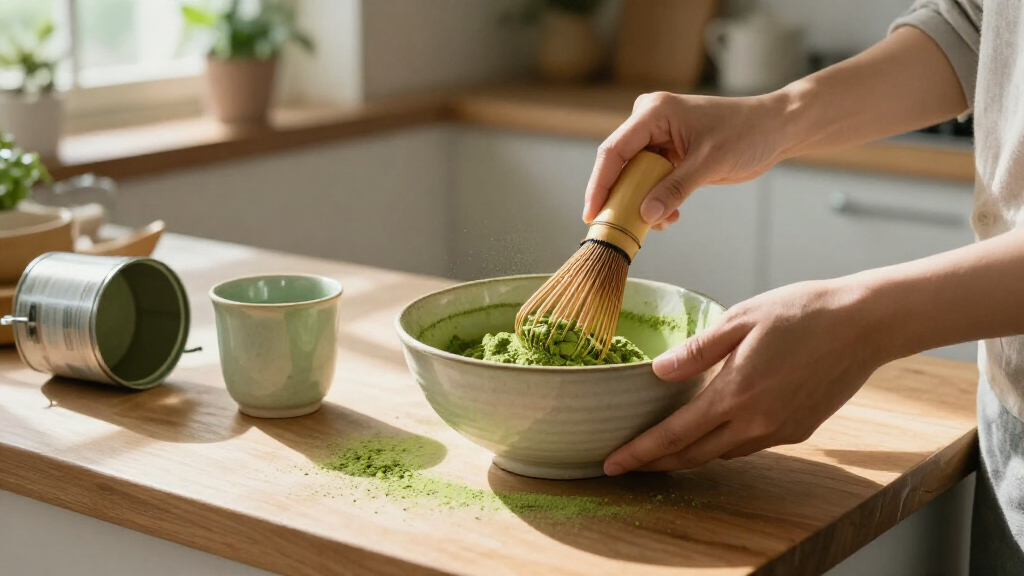

For matcha green tea powders, I’d start with Naoki Superior Blend Ceremonial Grade Matcha as the standout for plain whisked tea, while Jade Leaf Organic Culinary Grade Matcha, 100g suits regular lattes and Micro Ingredients First Harvest Culinary Grade offers a larger format for frequent cooking. The main tradeoff is choosing between a smaller powder intended for drinking on its own and a larger culinary bag that is easier to use in recipes. This roundup also includes sweetened matcha, which saves a preparation step but gives you less control over sweetness. I compare each option by grade, format, stated origin, and the uses its labeling supports. Read on for the full breakdown and a match for your routine.

Get coffee and tea gear delivered free with Prime
- Fast, free delivery on millions of items
- Prime Video, Amazon Music and more included
- Member-only deals all year
Complete the kit


Key Takeaways
- Use matters more than bag size: the smaller Naoki ceremonial tin is the clearer fit for plain whisked tea, while the two-pound culinary options make more sense for frequent recipes.
- Jade Leaf spans two different routines: its 30 g and 100 g culinary formats share a cooking focus, but the larger pack better suits repeat use.
- First-harvest wording sets Micro Ingredients apart: it adds a harvest detail to a one-pound culinary format, though its label still points toward cooking rather than an assured ceremonial profile.
- Ito En is the convenience outlier: its sweetened powder reduces preparation steps, at the cost of control over sweetness and a less direct match for unsweetened matcha.
- Several listings are generic and similarly named: package size and stated grade help distinguish the one- and two-pound culinary powders, but limited detail makes origin and flavor comparisons harder.
| Organic Matcha Green Tea Powder, 16 oz |  | Best for Everyday Bulk Use | Weight: 16 oz (1 lb) | Certification: USDA Certified Organic | Ingredients: Pure organic green tea powder | VIEW LATEST PRICE | See Our Full Breakdown |
| Naoki Matcha Superior Blend Japanese Matcha Powder, 40 g |  | Best for a Balanced Daily Cup | Weight: 40 g (1.4 oz) | Origin: Uji, Kyoto, Japan | Harvest: First harvest | VIEW LATEST PRICE | See Our Full Breakdown |
| Organic Culinary Grade Matcha Green Tea Powder, 2 lb |  | Best for High-Volume Recipes | Weight: 2 lb | Grade: Culinary | Harvest: First harvest | VIEW LATEST PRICE | See Our Full Breakdown |
| Jade Leaf Organic Culinary Grade Matcha Powder, 30 g |  | Best Small Starter Pack | Brand: Jade Leaf | Tea type: Matcha green tea | Grade: Culinary | VIEW LATEST PRICE | See Our Full Breakdown |
| Ito En Sweetened Matcha Green Tea Powder, 17.5 oz |  | Best for Sweet Matcha Drinks | Product type: Sweetened green tea powder | Flavor: Matcha | Net weight: 17.5 oz | VIEW LATEST PRICE | See Our Full Breakdown |
| Micro Ingredients Organic Japanese Matcha Green Tea Powder, First Harvest, Culinary Grade, 1 lb |  | Best for First-Harvest Culinary Matcha | Brand: Micro Ingredients | Origin: Japan | Harvest: First harvest, early spring leaves | VIEW LATEST PRICE | See Our Full Breakdown |
| Organic Japanese Matcha Green Tea Powder, Culinary Grade, 2 lb |  | Best for High-Volume Baking | Weight: 2 lb (907 g) | Grade: Culinary | Origin: Japanese tea plants | VIEW LATEST PRICE | See Our Full Breakdown |
| Matcha DNA Organic Matcha Green Tea Powder, 16 oz |  | Best for Organic Everyday Versatility | Net weight: 16 oz | Certification: USDA Organic | Packaging: Certified without BPA | VIEW LATEST PRICE | See Our Full Breakdown |
| Naoki Superior Blend Ceremonial Grade Matcha, 100 g |  | Best for Ceremonial-Style Tea | Brand: Naoki | Product type: Ceremonial-grade matcha powder | Origin: Uji, Kyoto, Japan | VIEW LATEST PRICE | See Our Full Breakdown |
| Organic Culinary Grade Matcha Green Tea Powder, 2 lb |  | Best for Stone-Ground Bulk Matcha | Weight: 2 lb | Grade: Culinary | Harvest: Early spring leaves | VIEW LATEST PRICE | See Our Full Breakdown |
| Tenzo Organic Japanese Matcha Powder |  | Best for Smooth, Unsweetened Lattes | Origin: Primarily Kagoshima, Japan | Cultivars: Yutakamidori, Saemidori, and Asanoka | Certifications: USDA Organic and Kosher | VIEW LATEST PRICE | See Our Full Breakdown |
| Jade Leaf Matcha Powder, Organic Culinary Grade, 100g |  | Best for Everyday Culinary Use | Weight: 100 g / 3.53 oz | Grade: Culinary | Origin: Uji and Kagoshima, Japan | VIEW LATEST PRICE | See Our Full Breakdown |
| Organic Japanese Matcha Green Tea Powder, Culinary Grade, 1 lb (454 g) |  | Best for Bulk Recipe Prep | Weight: 1 lb (454 g) | Origin: Japanese-sourced tea plants | Grade: Culinary | VIEW LATEST PRICE | See Our Full Breakdown |
| Organic Culinary Grade Matcha Green Tea Powder, 1 lb |  | Best for Early-Spring Culinary Matcha | Weight: 1 lb (454 g) | Servings: 151 | Serving suggestion: 1 scoop daily | VIEW LATEST PRICE | See Our Full Breakdown |
| matcha green tea powder | Weight | Grade | Origin | Testing |
|---|---|---|---|---|
| Organic Matcha Green Tea Powde | 16 oz (1 lb) | — | — | — |
| Naoki Matcha Superior Blend Ja | 40 g (1.4 oz) | — | Uji, Kyoto, Japan | — |
| Organic Culinary Grade Matcha | 2 lb | Culinary | — | Third-party lab tested for safety, purity, and potency |
| Jade Leaf Organic Culinary Gra | — | Culinary | — | — |
| Ito En Sweetened Matcha Green | — | — | — | — |
| Micro Ingredients Organic Japa | 1 lb | Culinary | Japan | Ingredients pass third-party lab testing |
| Organic Japanese Matcha Green | 2 lb (907 g) | Culinary | Japanese tea plants | Third-party lab tested |
| Matcha DNA Organic Matcha Gree | — | — | — | Third-party tested for impurities |
| Naoki Superior Blend Ceremonia | — | — | Uji, Kyoto, Japan | — |
| Organic Culinary Grade Matcha | 2 lb | Culinary | — | Third-party lab tested |
| Tenzo Organic Japanese Matcha | — | — | Primarily Kagoshima, Japan | — |
| Jade Leaf Matcha Powder | 100 g / 3.53 oz | Culinary | Uji and Kagoshima, Japan | — |
| Organic Japanese Matcha Green | 1 lb (454 g) | Culinary | Japanese-sourced tea plants | Third-party lab tested |
| Organic Culinary Grade Matcha | 1 lb (454 g) | Culinary | — | Third-party lab tested |
More Details on Our Top Picks
Organic Matcha Green Tea Powder, 16 oz
The 16 oz resealable bag suits households that use matcha in drinks and recipes often. Its ingredient list is simply organic green tea powder, with no added sugar or fillers, so I can adjust sweetness and strength myself. The smooth, earthy, slightly grassy flavor is a better fit for lattes, smoothies, and baking than for anyone seeking a very mild cup. Compared with Naoki Matcha Superior Blend, this bag offers far more powder for regular kitchen use, while Naoki provides a specified Japanese origin and first-harvest sourcing in a smaller tin. The tradeoff here is that the large format may sit open for a long time if matcha is only an occasional drink, and the vegetal flavor can be too assertive for sensitive palates.
Pros:- Single-ingredient organic green tea powder with no added sugar or fillers
- Works in hot and iced drinks, smoothies, baking, and desserts
- Resealable bag helps store the large quantity between uses
Cons:- Sixteen ounces may be more powder than occasional users can use promptly
- Slightly grassy flavor may overpower a delicate plain matcha
Best for: Regular matcha drinkers and home cooks who want an unsweetened organic powder for drinks and recipes.
Not ideal for: Occasional users or buyers who prefer mild, low-grassiness matcha; the large bag and vegetal flavor may be a poor fit.
- Weight:16 oz (1 lb)
- Certification:USDA Certified Organic
- Ingredients:Pure organic green tea powder
- Packaging:Resealable bag
- Flavor:Smooth, earthy, slightly grassy
- Suggested uses:Hot or iced tea, lattes, smoothies, baking, and desserts
Our verdict“Choose this bag if you use unsweetened matcha regularly across drinks and recipes and have room for a bulk supply.”
Naoki Matcha Superior Blend Japanese Matcha Powder, 40 g
Uji origin and first-harvest leaves give this small tin a clear case for buyers who care about where their matcha comes from. Shade-growing and a smooth, mild umami profile suit whisked tea, while the same powder can go into lattes or recipes. Compared with the bulk Organic Matcha Green Tea Powder, 16 oz, Naoki gives more sourcing detail and a smaller quantity to finish; that makes it easier to choose for a focused tea routine, but less suited to frequent baking or large households. The tin provides about 20 servings at 2 g each. The stated slight bitterness means it may still be too assertive for someone who wants a notably sweet or completely mellow cup, and it contains caffeine.
Pros:- Made in Uji, Kyoto, from shade-grown first-harvest leaves
- Smooth flavor with mild umami for tea and mixed drinks
- Airtight packaging helps protect the powder between servings
- About 20 servings in a compact 40 g tin
Cons:- Contains caffeine
- Slight bitterness may be noticeable in plain tea
- Small quantity is less practical for frequent recipe use than bulk bags
Best for: Tea drinkers seeking a small-format Japanese matcha with stated Uji origin, first-harvest leaves, and a balanced flavor.
Not ideal for: Bulk users, caffeine-avoiders, or people who want a sweet, bitterness-free powder.
- Weight:40 g (1.4 oz)
- Origin:Uji, Kyoto, Japan
- Harvest:First harvest
- Growing method:Shade-grown
- Servings:About 20
- Serving size:2 g (1 tsp)
- Dietary attributes:Gluten-free, sugar-free
- Packaging:Airtight packaging
Our verdict“Pick Naoki if origin and a balanced plain cup matter more to you than buying matcha in bulk.”
Organic Culinary Grade Matcha Green Tea Powder, 2 lb
A two-pound supply makes this the lineup’s clearest choice for cooks who mix matcha into liquids and use it often. The powder is finely milled from shade-grown first-harvest leaves, and its culinary grade positioning fits everyday mixing better than a small tin such as Jade Leaf Organic Culinary Grade Matcha Powder, 30 g. It is a single-ingredient organic powder, with non-GMO status and third-party safety, purity, and potency testing stated in the product data. The listed 302 servings at 3 g each make the large format concrete, though the quantity is a commitment for anyone still deciding whether matcha belongs in their routine. It must be mixed into liquid rather than steeped and removed like ordinary tea, so buyers wanting a teabag-style preparation should choose another format.
Pros:- Two-pound supply with about 302 servings at the stated serving size
- Single-ingredient organic powder with no added sugar or flavors
- Shade-grown, finely milled first-harvest leaves
- Third-party testing is stated for safety, purity, and potency
Cons:- Large quantity may be difficult to use up for occasional matcha drinkers
- Must be mixed into liquid rather than steeped and removed
- Culinary-grade format may not suit buyers seeking a tea-focused ceremonial option
Best for: Frequent home cooks and matcha drinkers who want a large supply of culinary-grade powder for mixing into liquids.
Not ideal for: First-time buyers, occasional users, or tea drinkers who expect to steep and remove the leaves like traditional tea.
- Weight:2 lb
- Grade:Culinary
- Harvest:First harvest
- Growing method:Shade-grown
- Serving size:1 scoop (3 g)
- Approximate servings:302
- Ingredients:Organic green tea powder
- Certifications:Certified Organic; non-GMO
- Testing:Third-party lab tested for safety, purity, and potency
Our verdict“Choose this two-pound bag if you already use matcha frequently in mixed drinks and recipes.”
Jade Leaf Organic Culinary Grade Matcha Powder, 30 g
The 30 g pack gives curious buyers a manageable way to try culinary matcha before committing to a large bag. Jade Leaf’s powder is made from shade-grown leaves sourced from Uji and Kagoshima, and its USDA organic certification and single-ingredient formulation keep the choice straightforward. The fine grind and stated smooth flavor suit lattes, smoothies, baking, or whisked tea. Compared with Naoki Matcha Superior Blend, this is explicitly culinary grade, so its strongest case is flexible kitchen use rather than a tea-first choice built around first-harvest sourcing details. That smaller size also means frequent users will run out sooner and may prefer a bulk format. Buyers looking specifically for ceremonial grade should skip it; the product data identifies it as culinary grade.
Pros:- Small 30 g pack is a practical entry point for occasional use
- USDA Organic certified with no added ingredients
- Fine powder and smooth flavor suit drinks and recipes
- Sourced from partner farms in Uji and Kagoshima, Japan
Cons:- Culinary grade may not satisfy buyers seeking ceremonial grade
- Small pack is less suitable for frequent matcha use
Best for: New matcha buyers who want a small organic culinary-grade pack for trying drinks and recipes.
Not ideal for: Frequent users seeking a larger supply or tea drinkers specifically looking for ceremonial-grade matcha.
- Brand:Jade Leaf
- Tea type:Matcha green tea
- Grade:Culinary
- Organic certification:USDA Organic
- Net weight:30 g (1.06 oz)
- Ingredients:Pure shade-grown green tea leaves
- Dietary attributes:Vegan, naturally gluten-free
- Sourcing:Partner farms in Uji and Kagoshima, Japan
Our verdict“Start with Jade Leaf if you want a small, versatile organic powder for experimenting in the kitchen.”
Ito En Sweetened Matcha Green Tea Powder, 17.5 oz
Pre-sweetened matcha gives this large pack a different job from the lineup’s unsweetened powders: it is aimed at buyers who want a ready-to-mix base for lattes, smoothies, iced drinks, and recipes. Finely milled Japanese green tea leaves provide the matcha component, while the sweetening means you do not have the same control over sweetness as with Organic Matcha Green Tea Powder, 16 oz. That makes Ito En a more direct fit for people who prefer sweet drinks, but a less flexible pantry choice for plain tea or recipes where sugar needs to be adjusted independently. Product data lists a single 17.5 oz pack but does not specify the ingredients or the amount of sweetener, so buyers who need precise formulation details may want a more fully described option.
Pros:- Sweetened format suits buyers who prefer sweeter matcha drinks
- Made with finely milled Japanese green tea leaves
- Can be mixed into lattes, smoothies, iced drinks, and recipes
- Large 17.5 oz pack supports repeated use
Cons:- Added sweetness limits control over flavor and recipe sweetness
- Product data does not specify ingredients or sweetener quantity
Best for: Matcha latte and smoothie drinkers who prefer a sweetened mix and want a large pack for repeated use.
Not ideal for: Buyers who drink unsweetened matcha, control sweetness in recipes, or need a fully specified ingredient list.
- Product type:Sweetened green tea powder
- Flavor:Matcha
- Net weight:17.5 oz
- Pack size:1
- Tea leaf description:Finely milled Japanese green tea leaves
- Suggested uses:Lattes, smoothies, iced drinks, and recipes
Our verdict“Choose Ito En for convenient sweet matcha drinks, and skip it if you want full control over sweetness.”
Micro Ingredients Organic Japanese Matcha Green Tea Powder, First Harvest, Culinary Grade, 1 lb
First-harvest Japanese leaves give this culinary powder a clear point of difference among the larger recipe-focused options. I’d choose it for lattes, smoothies, and baking when organic sourcing and an earthy, unflavored profile matter more than a ceremonial-style cup. Its fine texture is meant to mix into drinks and recipes, while the one-pound pouch offers a substantial supply without the two-pound commitment of the Organic Japanese Matcha Green Tea Powder, Culinary Grade, 2 lb. The tradeoff is its culinary grade: buyers seeking a delicate matcha for whisking and sipping may prefer Naoki Superior Blend Ceremonial Grade Matcha. It also contains caffeine, and the supplied details don’t specify a serving count, so portion planning is less direct.
Pros:- Made from young, first-harvest Japanese tea leaves
- USDA organic and unflavored
- Fine powder is suited to drinks and recipes
- Made without soy, dairy, gluten, or tree nuts
Cons:- Culinary grade is less suited to buyers seeking ceremonial matcha
- Contains caffeine
- Serving count is not stated in the supplied product details
Best for: Organic matcha buyers who mainly make lattes, smoothies, and recipes and want a one-pound supply from first-harvest Japanese leaves
Not ideal for: Tea drinkers seeking a ceremonial-grade powder for sipping plain, or anyone avoiding caffeine
- Brand:Micro Ingredients
- Origin:Japan
- Harvest:First harvest, early spring leaves
- Grade:Culinary
- Weight:1 lb
- Certification:USDA organic
- Flavor:Unflavored; smooth, earthy taste
- Testing:Ingredients pass third-party lab testing
Our verdict“Choose this one-pound pick for organic, first-harvest matcha in everyday recipes; choose Naoki Superior Blend Ceremonial Grade Matcha for a ceremonial-style cup.”
Organic Japanese Matcha Green Tea Powder, Culinary Grade, 2 lb
If matcha is a regular baking ingredient in your kitchen, this two-pound culinary pouch is built for repeated use in cakes, shakes, lattes, and other recipes. Its stated 302 servings at 3 g each make portions easier to plan than with Micro Ingredients Organic Japanese Matcha, whose supplied details don’t list a serving count. The powder is organic and has no added flavors or fillers, so it can work across sweet and savory recipes without bringing a pre-sweetened profile. That versatility comes with a real commitment: occasional drinkers may find this much powder inconvenient to work through, and the naturally occurring caffeine may not suit every routine. Like the smaller culinary options, it is a less fitting choice for buyers who want ceremonial-grade matcha for plain tea.
Pros:- Large pouch lists 302 servings
- Defined 3 g serving size helps with portioning
- Organic powder without added flavors or fillers
- Suitable for drinks, shakes, and baking
Cons:- Two-pound quantity may be excessive for occasional users
- Culinary grade is less suited to plain ceremonial-style tea
- Contains naturally occurring caffeine
Best for: Frequent home bakers and smoothie makers who want a clearly portioned, organic culinary matcha supply
Not ideal for: Occasional matcha drinkers with little use for a two-pound pouch, or buyers seeking ceremonial-grade tea
- Weight:2 lb (907 g)
- Grade:Culinary
- Origin:Japanese tea plants
- Serving size:3 g (1 scoop)
- Servings:302
- Sugar:0 g
- Dietary attributes:Organic, non-GMO, non-irradiated; gluten-, dairy-, egg-, peanut-, and soy-free
- Testing:Third-party lab tested
Our verdict“Pick this pouch for frequent cooking and drink preparation with defined servings; choose Micro Ingredients’ one-pound matcha if you want a smaller commitment.”
Matcha DNA Organic Matcha Green Tea Powder, 16 oz
USDA-certified organic and free of additives, this 16-ounce powder suits buyers who want one unsweetened matcha for tea, smoothies, lattes, and baking. Its size sits between Naoki Superior Blend Ceremonial Grade Matcha at 100 g and the two-pound culinary pouches from Organic Japanese Matcha and Organic Culinary Grade Matcha Green Tea Powder. That makes it a middle-ground pantry choice, although the supplied details don’t state a grade or serving count, so it’s harder to compare its intended use and yield directly. Third-party impurity testing and packaging certified without BPA may matter to buyers screening product and packaging details. Since it is unsweetened, it leaves sweetness up to you; people who prefer a ready-sweetened drink should choose a different format.
Pros:- USDA-certified organic
- Works for tea, lattes, smoothies, and baking
- Packaging is certified without BPA
- Third-party tested for impurities
Cons:- Unsweetened powder may need sweetener to suit some preferences
- Grade and serving count are not stated in the supplied details
Best for: Organic matcha shoppers who want an unsweetened 16-ounce powder for several kinds of drinks and recipes
Not ideal for: Buyers who need a clearly specified ceremonial or culinary grade, a stated serving count, or a sweetened blend
- Net weight:16 oz
- Certification:USDA Organic
- Packaging:Certified without BPA
- Dietary features:Gluten-free, vegan, unsweetened, no additives
- Testing:Third-party tested for impurities
- Suggested uses:Tea, lattes, smoothies, baking, and recipes
Our verdict“Choose Matcha DNA for a versatile organic 16-ounce powder, but opt for Naoki if a stated ceremonial grade is your priority.”
Naoki Superior Blend Ceremonial Grade Matcha, 100 g
Shade-grown, first-harvest leaves from Uji, Kyoto distinguish Naoki from the lineup’s culinary powders, which are geared more toward recipes and bulk use. Its smooth, balanced umami profile and hint of bitterness make it the clearest fit here for buyers who plan to whisk matcha as tea, while the powder can also go into lattes, smoothies, and recipes. The airtight packets help protect the powder between uses, and grinding shortly before it leaves Japan is part of the product’s stated sourcing story. At 100 g, it is a much smaller supply than the one- and two-pound culinary pouches, though its stated 50 servings still may be more than an occasional drinker wants. Those who dislike bitterness may prefer a different flavor profile.
Pros:- Ceremonial grade from shade-grown first-harvest Uji leaves
- Ground shortly before leaving Japan, according to the product details
- Airtight packets help protect the powder
- Suitable for tea as well as lattes and recipes
Cons:- Hint of bitterness may not suit every palate
- 100 g may be more than occasional users need
- Smaller supply than the bulk culinary powders in this lineup
Best for: Matcha drinkers who want a stated ceremonial grade, Uji origin, and a balanced umami cup
Not ideal for: Occasional users who want only a small trial quantity, or drinkers who strongly dislike any bitter note
- Brand:Naoki
- Product type:Ceremonial-grade matcha powder
- Origin:Uji, Kyoto, Japan
- Harvest:First harvest
- Package size:100 g (3.5 oz)
- Serving size:2 g (1 tsp)
- Approximate servings:50
- Packaging:Airtight packets
Our verdict“Choose Naoki for a ceremonial-grade, Uji-sourced matcha intended for whisked tea; choose a culinary pouch for frequent baking and bulk use.”
Organic Culinary Grade Matcha Green Tea Powder, 2 lb
Fine stone-ground powder is the defining detail here: this two-pound culinary matcha is aimed at buyers who want a versatile ingredient for teas, lattes, smoothies, and baked goods. Like Organic Japanese Matcha Green Tea Powder, Culinary Grade, 2 lb, it lists 302 servings, but this option also specifies early spring leaves and a long set of exclusions, including soy, dairy, gluten, fish, preservatives, and fillers. That detail may help shoppers with particular dietary filters compare it with other bulk pouches. The large quantity suits kitchens that use matcha often; occasional drinkers may find it burdensome to measure and prepare regularly. Its culinary grade also makes it less suited than Naoki Superior Blend Ceremonial Grade Matcha for buyers seeking a powder specifically presented for ceremonial-style tea.
Pros:- Two-pound pouch lists 302 servings
- Fine stone-ground powder suits drinks and baking
- Organic, vegan, unsweetened, and zero sugar
- Third-party lab tested with a broad list of stated exclusions
Cons:- Bulk size may be excessive for occasional matcha users
- Culinary grade is less suited to ceremonial-style tea
- Requires measuring and preparation at home
Best for: Frequent matcha cooks and drink makers who want a stone-ground, unsweetened bulk powder with listed dietary exclusions
Not ideal for: Occasional drinkers, buyers wanting a ready-to-drink sweetened matcha, or those prioritizing ceremonial-grade tea
- Weight:2 lb
- Grade:Culinary
- Harvest:Early spring leaves
- Processing:Fine stone ground
- Source:Japanese green tea plant
- Serving size:1 scoop
- Servings:302
- Dietary attributes:Organic, vegan, unsweetened, zero sugar; free from GMOs, gluten, soy, dairy, fish, preservatives, and fillers
- Testing:Third-party lab tested
Our verdict“Choose this bulk option for frequent recipes and drinks where stone-ground texture and listed dietary exclusions matter.”
Tenzo Organic Japanese Matcha Powder
Tenzo stands out for its very fine powder, with particles listed at 10 microns or less to help it whisk smoothly into tea and milk. Its bright umami profile, with nori and crisp green apple notes, gives it more character than a powder chosen mainly for bulk cooking. Compared with Jade Leaf Organic Culinary Grade Matcha, Tenzo offers named cultivars and more detail about flavor, while Jade Leaf provides a stated 100 g quantity and culinary-grade positioning.
USDA Organic and Kosher certifications, plus no added ingredients or sweetener, suit buyers who want control over what goes into a drink or recipe. The tradeoff is that Tenzo blends spring, summer, and fall harvests, so it is not a single-harvest choice. It also contains naturally occurring caffeine, which may not suit caffeine-sensitive drinkers.
Pros:- Powder is listed at 10 microns or less for smooth whisking
- Bright umami flavor with nori and green apple notes
- USDA Organic and Kosher certified
- No added ingredients or sweetener
Cons:- Blends matcha from spring, summer, and fall harvests
- Contains naturally occurring caffeine
Best for: Matcha drinkers who want a finely milled, unsweetened powder with a described flavor profile for whisked tea and lattes
Not ideal for: Caffeine-sensitive buyers or shoppers seeking a clearly single-harvest matcha
- Origin:Primarily Kagoshima, Japan
- Cultivars:Yutakamidori, Saemidori, and Asanoka
- Certifications:USDA Organic and Kosher
- Particle size:10 microns or less
- Caffeine:30–35 mg per 1/2 teaspoon
- Added ingredients:None
- Sweetened:No
Our verdict“Choose Tenzo if fine texture and unsweetened, flavor-forward drinks matter more to you than a single-harvest profile.”
Jade Leaf Matcha Powder, Organic Culinary Grade, 100g
Jade Leaf is the practical pick for recipes and daily drinks: its 100 g package of culinary-grade powder is described for lattes, smoothies, and baking. The listed origin spans Uji and Kagoshima, Japan, and the ingredient statement is simple: pure Japanese green tea leaf. Compared with Tenzo Organic Japanese Matcha Powder, Jade Leaf gives a clear package weight and culinary-grade label; Tenzo instead supplies finer particle-size and cultivar details that may appeal to buyers focused on whisking and tasting notes.
Organic certification and a naturally sweet, smooth flavor make it a flexible option without added ingredients. The main compromise is its culinary grade, which may not offer the delicate complexity some buyers seek for traditional tea preparation. Its color and flavor also depend on careful storage, so it is less convenient for anyone who expects to keep an opened pouch on the counter.
Pros:- 100 g package size is specified
- Culinary grade suits lattes, smoothies, and baked goods
- USDA Organic certified and sourced from Uji and Kagoshima
- Ingredient list names only Japanese green tea leaf
Cons:- Culinary grade may lack the delicate complexity sought for traditional tea
- Needs proper storage to preserve color and flavor
Best for: Home cooks and latte drinkers who want a 100 g bag of organic culinary matcha for regular recipes
Not ideal for: Buyers seeking a ceremonial-grade powder with delicate tasting notes or those unable to store matcha carefully
- Weight:100 g / 3.53 oz
- Grade:Culinary
- Origin:Uji and Kagoshima, Japan
- Certifications:USDA Organic, Non-GMO, Vegan, Gluten-Free, Dairy-Free, Keto-Friendly
- Ingredients:100% pure Japanese green tea leaf
- Uses:Lattes, smoothies, and baked goods
Our verdict“Pick Jade Leaf for a clearly sized, versatile culinary matcha, and look to Tenzo if cultivar and fine-powder details matter more.”
Organic Japanese Matcha Green Tea Powder, Culinary Grade, 1 lb (454 g)
This one-pound jar is built for frequent culinary use: its listed 151 servings and 3 g scoop make portions easy to repeat across drinks, shakes, and baking. The organic culinary-grade powder has no added sugar or dairy, and the product data says it is third-party lab tested. Compared with Jade Leaf Matcha Powder, Organic Culinary Grade, 100g, this package provides substantially more powder and a stated serving size, which better suits households that use matcha often. Jade Leaf’s smaller package may fit buyers who want less on hand.
Its scale is also the main tradeoff. Culinary grade is aimed at mixing into recipes rather than buyers seeking the subtlety of ceremonial matcha, and a large jar asks for consistent storage after opening. Naturally occurring caffeine remains part of the powder, so it may not fit caffeine-avoiding routines.
Pros:- One-pound quantity with 151 stated servings
- 3 g scoop serving provides a repeatable portion
- Organic and third-party lab tested
- No added sugar or dairy
Cons:- Large quantity may be more than occasional users can use while maintaining freshness
- Culinary grade may not suit buyers seeking ceremonial-style tea
- Contains naturally occurring caffeine
Best for: Frequent bakers and smoothie makers who want a large supply with a defined scoop serving
Not ideal for: Occasional matcha drinkers or shoppers seeking ceremonial-grade flavor and texture
- Weight:1 lb (454 g)
- Origin:Japanese-sourced tea plants
- Grade:Culinary
- Certification:Organic
- Serving size:3 g (1 scoop)
- Servings per jar:151
- Sugar and dairy:0 g sugar; no dairy
- Testing:Third-party lab tested
- Dietary attributes:Non-GMO, non-irradiated; made without gluten, eggs, peanuts, soy, wheat, yeast, or tree nuts
Our verdict“Choose this bulk format if matcha is a regular ingredient in your kitchen and you can store a large jar carefully.”
Organic Culinary Grade Matcha Green Tea Powder, 1 lb
The early-spring leaf sourcing is the clearest point of difference here, paired with fine stone grinding for a powder intended for lattes, smoothies, and baking. Its one-pound format and stated 151 servings put it in the same bulk-use category as Organic Japanese Matcha Green Tea Powder, Culinary Grade, 1 lb. This product adds a specific early-spring harvest claim, while the other one-pound option lists a 3 g scoop and Japanese-sourced tea plants without naming a harvest period.
Unsweetened, zero-sugar matcha gives cooks flexibility to set sweetness in each drink or recipe, and the product is described as vegan and free of several common allergens. The tradeoff is limited preparation and storage guidance in the product details; buyers new to matcha may need to work out their own routine. Like the other bulk culinary option, it is a poor fit for shoppers specifically seeking ceremonial grade.
Pros:- Made from early-spring leaves
- Fine stone-ground powder for culinary uses
- One-pound size with 151 stated servings
- Organic, vegan, unsweetened, and zero sugar
Cons:- Product details do not provide preparation or storage instructions
- Culinary grade is not specified as ceremonial grade
- Large package may not suit infrequent users
Best for: Home cooks who use matcha regularly and prefer a bulk, unsweetened powder with an early-spring harvest claim
Not ideal for: New matcha drinkers who need preparation or storage guidance, or buyers seeking ceremonial grade
- Weight:1 lb (454 g)
- Servings:151
- Serving suggestion:1 scoop daily
- Grade:Culinary
- Source:Japanese green tea plant
- Harvest:Early spring leaves
- Processing:Fine stone-ground
- Dietary attributes:Organic, vegan, unsweetened, zero sugar
- Testing:Third-party lab tested
Our verdict“Choose this powder if you want a large unsweetened culinary supply and value its stated early-spring sourcing.”

How We Picked
I ranked these powders by how clearly their stated grade, format, and intended use help a buyer choose for whisked tea, lattes, or cooking. I gave the strongest fit to products whose descriptions point to a distinct routine, such as ceremonial-grade Naoki for plain tea or culinary-grade bulk bags for recipes. Package size mattered because matcha is best bought in an amount a household can use while it is still fresh; a large bag is practical for regular use but can be an awkward first purchase. I also looked at stated organic status, Japanese origin, harvest wording, and whether the powder is sweetened.
The ranking reflects the information supplied in the product names, not a claim of personal testing or verified tasting. Several entries use nearly identical generic names, so I treated their stated differences—such as one versus two pounds—as more reliable distinctions than assumptions about taste or quality. Products with a clear use case rank ahead of listings that disclose little beyond grade and size. That makes the order a guide to fit and transparency rather than a claim that every powder can be compared on flavor from its name alone.
| matcha green tea powder | Origin | Testing |
|---|---|---|
| Organic Matcha Green Tea Powde | — | — |
| Naoki Matcha Superior Blend Ja | Uji, Kyoto, Japan | — |
| Organic Culinary Grade Matcha | — | Third-party lab tested for safety, purity, and potency |
| Jade Leaf Organic Culinary Gra | — | — |
| Ito En Sweetened Matcha Green | — | — |
| Micro Ingredients Organic Japa | Japan | Ingredients pass third-party lab testing |
| Organic Japanese Matcha Green | Japanese tea plants | Third-party lab tested |
| Matcha DNA Organic Matcha Gree | — | Third-party tested for impurities |
| Naoki Superior Blend Ceremonia | Uji, Kyoto, Japan | — |
| Organic Culinary Grade Matcha | — | Third-party lab tested |
| Tenzo Organic Japanese Matcha | Primarily Kagoshima, Japan | — |
| Jade Leaf Matcha Powder | Uji and Kagoshima, Japan | — |
| Organic Japanese Matcha Green | Japanese-sourced tea plants | Third-party lab tested |
| Organic Culinary Grade Matcha | — | Third-party lab tested |
Factors to Consider When Choosing Matcha Green Tea Powders
Before choosing a bag, decide how you’ll prepare matcha and how often you expect to use it. The label can narrow the field, but grade terms and large package sizes do not tell the whole story. These factors help weigh convenience, freshness, and flexibility across the options in this roundup.
Match the grade to how you drink it
Terms such as ceremonial and culinary are useful signals of intended use, but naming conventions vary between sellers. For plain whisked tea, choose a product explicitly positioned for that purpose and buy a small amount while you learn your preferences. For lattes, a culinary powder can be a sensible choice because milk and other ingredients change the final drink. Cooking can also suit culinary matcha, where the powder is blended with other flavors. A common mistake is treating the grade label as a guarantee of a particular taste or production standard. Check the seller’s product details for origin, harvest, and preparation guidance when those details matter to you.
Choose a package size you can finish
Matcha is a finely milled tea, so exposure to air, light, heat, and moisture can wear down its freshness after opening. A large bag can be practical for frequent smoothies, baking, or daily lattes, but it may be a poor first purchase if you only drink matcha occasionally. Smaller formats reduce the time a package stays open and let you decide whether the flavor suits you. Check whether the package can be sealed securely and plan to store it away from heat and light. Buying several smaller packs may help with freshness, though it can mean more packaging. Let your actual weekly use, rather than the amount that seems convenient on paper, guide the size.
Look for origin and harvest detail
Japanese origin and harvest descriptions can help distinguish products, especially when several listings use similar names. First-harvest wording, as seen in the Micro Ingredients listing, gives you one additional detail to compare. Still, such terms do not by themselves establish how a powder will taste or how carefully it was handled. If provenance is a priority, look for details beyond a broad country reference, such as a named region or clear sourcing information. Generic listings in this group disclose less, so a buyer who values traceability may want to seek fuller product documentation. Avoid inferring flavor or quality from a label that does not provide evidence for it.
Decide whether sweetened powder fits your routine
Sweetened matcha offers convenience when you want a quick drink with fewer ingredients to measure. That convenience comes with a tradeoff: you have less control over sweetness, and the blend may not suit recipes where you want unsweetened tea. Check the ingredient list before buying, especially if you are tracking added sugar or want a simple powder. Plain matcha gives you more flexibility to add sweetener, milk, or other ingredients to taste. A frequent mistake is comparing a sweetened blend directly with pure matcha without accounting for what is already included. Choose by the drink you intend to make most often.
Pay more for details that serve your purpose
A premium or ceremonial label is most useful when you plan to prepare matcha simply and want sourcing or production details that support that use. It may add little value if your main plan is to mix the powder into a strongly flavored smoothie or baked recipe. For everyday lattes, consistent availability and a manageable package can matter more than a prestige label. Organic status may be a deciding preference, but it does not answer questions about flavor, freshness, or provenance on its own. Compare the full listing and ingredient information rather than relying on a single front-of-package term. Spend extra only when the stated distinction matches what you will notice in your cup.
Frequently Asked Questions
Should I buy ceremonial or culinary matcha for lattes?
Either can work in a latte, so start with the flavor and preparation you want rather than treating the grade name as a strict rule. Culinary powders are expressly positioned for recipes and mixed drinks, making them a practical fit when matcha is one ingredient among several. A ceremonial-labeled powder is more clearly aimed at plain whisked tea, where its character is less masked. If you drink both styles, a smaller pack can help you compare without committing to a bulk bag. Check the listing for specific preparation advice and ingredient details.
Is a two-pound bag a good first matcha purchase?
Usually, a large bag makes sense only if you already use matcha frequently in drinks or cooking. Once opened, powder is exposed to air and moisture, so a slow-moving bag may lose freshness before you finish it. A small pack lets you learn whether you like the taste and how much you use each week. If you choose a bulk format, divide it into tightly sealed portions and keep them away from heat and light. The two-pound culinary options in this roundup are better suited to established routines than casual sampling.
Does ‘first harvest’ mean a matcha will taste better?
First-harvest wording tells you something about the harvest timing, but it is not enough on its own to predict flavor or overall quality. Growing conditions, processing, storage, and freshness also affect what reaches your cup. In this roundup, the Micro Ingredients listing includes that detail while still identifying the powder as culinary grade. If plain tea is your priority, look for fuller sourcing information and a clear intended use alongside harvest claims. Treat the phrase as one comparison point, not a complete quality assessment.
What should I check before buying sweetened matcha powder?
Read the ingredient list to see what sweetener is included and how much control you will have over the final drink. Sweetened powder can be convenient when you want a quick, consistent beverage, but it may not fit recipes that call for unsweetened matcha. It also limits your ability to adjust sweetness to taste. The Ito En option in this group is the clearest convenience pick, while the plain powders offer more flexibility. Choose based on whether a ready-sweetened drink or control over ingredients matters more to you.
How can I compare two matcha powders with nearly identical names?
Start with the details the listings actually disclose: grade, package size, stated origin, harvest information, organic status, and ingredients. Several products here have generic names, so a larger package alone does not show that one powder tastes better or comes from a more specific source. When key details are missing, check the full product page or seller documentation before relying on broad claims. If the information remains sparse, favor the listing that clearly fits your use and lets you buy a manageable amount. Avoid assuming that similar labels mean the powders are interchangeable.
Conclusion
For plain whisked tea, I’d start with Naoki Superior Blend Ceremonial Grade Matcha, whose stated grade gives it the clearest drinking role here. For value in frequent cooking, compare the two-pound culinary powders and choose the listing with the clearest sourcing and package details; bulk makes sense only if you use it regularly. Jade Leaf Organic Culinary Grade Matcha, 100g is my pick for a beginner who wants a manageable amount for lattes or recipes, while the 30 g version is a smaller trial format. For a more specific sourcing cue in a culinary bag, consider Micro Ingredients First Harvest; for preparation convenience, choose Ito En Sweetened Matcha if its fixed sweetness suits your taste. In short, match the powder to your main drink, then size the package to your actual use.


