
If your espresso tastes bitter, it’s likely due to over-extraction, a too-fine grind, or high brewing temperatures. To fix this, adjust your grind size for consistency, keep your water temperature between 190°F and 205°F, and aim for a brew time of 25-35 seconds. Always use fresh coffee beans for ideal flavor. With a few tweaks, you can achieve that perfect cup. Explore additional tips to fine-tune your espresso experience.
Key Takeaways
- Adjust grind size to ensure a consistent texture, preventing over-extraction and reducing bitterness in your espresso.
- Maintain brewing temperature between 190°F and 205°F to enhance sweetness and balance flavors.
- Start with a 25-second extraction time, and adjust in 5-second increments to find the optimal brew time.
- Use freshly roasted beans and grind them just before brewing for the best flavor and aroma.
- Invest in quality equipment to ensure precise temperature control and consistent grind size for superior espresso.

SHARDOR Conical Burr Espresso Coffee Grinder Electric with Precision Timer 2.0, Touchscreen Adjustable Burr Mill with 51 Precise Settings for Home Use, Anti-static, Stainless Steel
Premium 40 Millimeter Stainless Steel Conical Burr: Designed to minimize grinding heat and protect the essential oils in…
As an affiliate, we earn on qualifying purchases.
As an affiliate, we earn on qualifying purchases.
Why Is My Espresso Bitter?
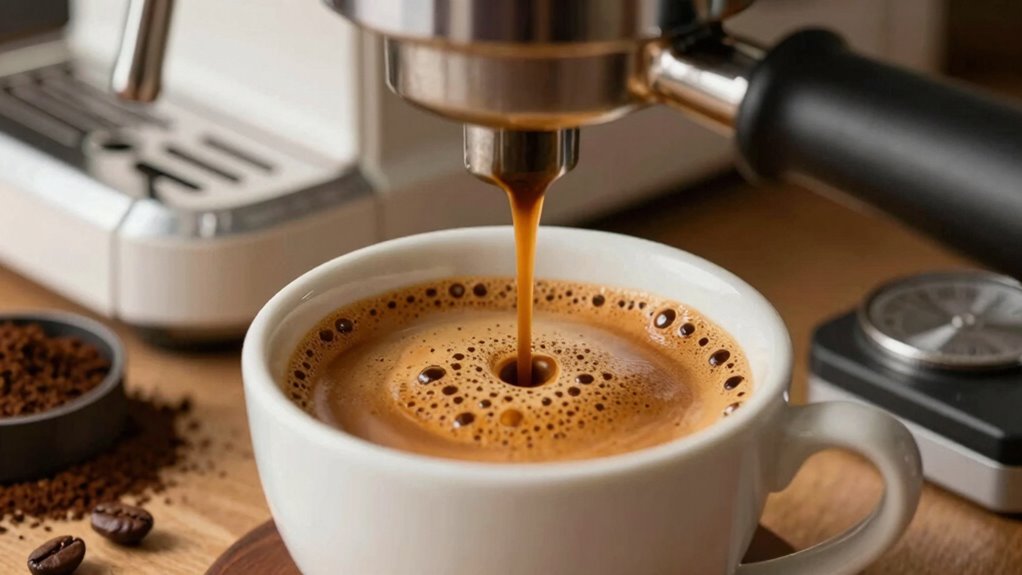
If your espresso tastes bitter, you’re not alone—many enthusiasts face this issue. Achieving the perfect espresso balance is essential to crafting a delightful flavor profile. Often, bitterness arises from over-extraction, where water pulls too many compounds from the coffee grounds. This can lead to an unbalanced brew that overshadows the intended flavors.
To avoid this, pay attention to your grind size; a finer grind can increase extraction speed, while a coarser one may slow it down. Moreover, understanding the importance of water temperature** can significantly impact the extraction process. Additionally, monitor your brewing time and water temperature. Both factors play a significant role in extracting the right flavors without crossing into bitterness. By fine-tuning these elements, you can enhance your espresso experience and enjoy a more harmonious flavor profile. Understanding the importance of grind size can significantly impact your brewing results. Moreover, brewing techniques such as adjusting pressure can also help in achieving optimal extraction. Furthermore, using quality coffee beans will ensure that the base flavors are rich and vibrant, providing a better foundation for your brew. Additionally, maintaining your coffee equipment** is crucial to prevent any residual bitterness from affecting your brew.

SHARDOR Espresso Machine 20 Bar, Professional Espresso Machine with Milk Frother and Touchscreen, Expresso Coffee Machines with Adjustable Temperature,for Cappuccino, Latte
Professional 20 Bar Pressure System: This semi-automatic espresso maker has a 20-bar pump and a powerful 1350W motor,…
As an affiliate, we earn on qualifying purchases.
As an affiliate, we earn on qualifying purchases.
Top Reasons Your Espresso Tastes Bitter
What causes your espresso to taste bitter? Several factors can disrupt the delicate extraction balance, leading to that unpleasant bitterness. Here are the top reasons:
Discover the key factors that can lead to a bitter espresso and how to achieve a perfectly balanced shot.
- Over-extraction: When water flows through coffee grounds for too long, it extracts undesirable bitter compounds.
- Too fine grind: A grind that’s too fine can increase surface area, causing over-extraction and masking the coffee acidity.
- High brewing temperature: Water that’s too hot can scorch the coffee, pushing those bitter flavors to the forefront.
- Stale coffee beans: Old beans lose their natural flavors, resulting in a harsh, bitter taste rather than a smooth, balanced shot.

Maestri House Mini Coffee Scale with Timer, USB-C Rechargeable Espresso Scale, 2kg/0.1g Accurate Scale for Espresso and Pour-Over Coffee, Portable Digital Kitchen Scale with Auto Timer (Black&Silver)
【Ultra Small, Yet Professional】The Espresso Scale is small enough to fit in your palm. It measures 4.13*4.13*0.78 inches…
As an affiliate, we earn on qualifying purchases.
As an affiliate, we earn on qualifying purchases.
How Grind Size Affects Bitter Espresso
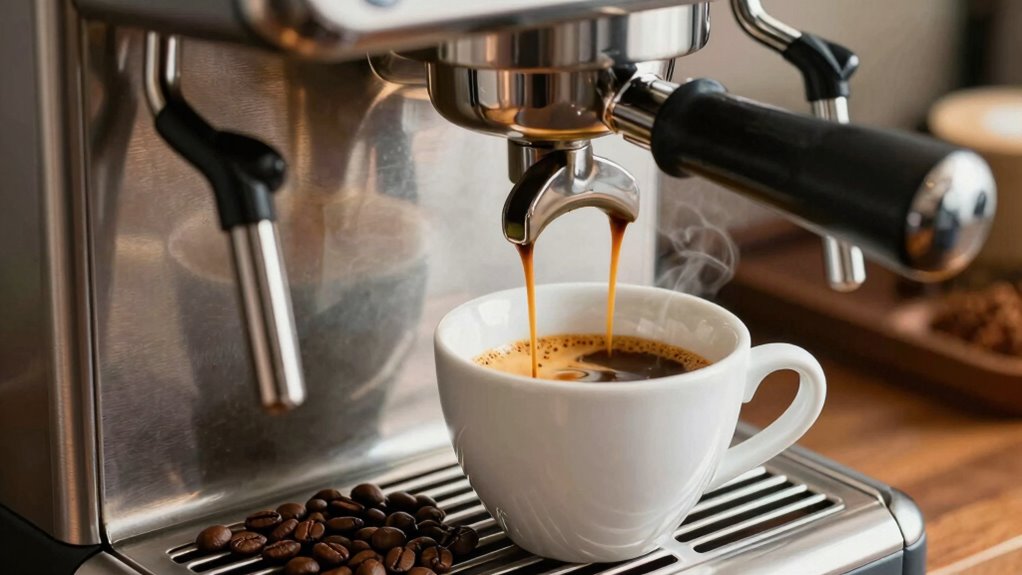
While you might not realize it, grind size plays an essential role in the taste of your espresso, especially when it comes to bitterness. If your grind consistency is too fine, you risk over-extraction, leading to a bitter cup. When water flows through a fine grind, it extracts flavors more aggressively, pulling out those unpleasant bitter notes. Conversely, a coarser grind may result in under-extraction, giving you a sour taste. Striking the right extraction balance is critical; aim for a medium-fine grind for best results. Experiment with your grinder settings to find that sweet spot where the flavors harmonize, reducing bitterness while enhancing the rich, complex notes of your espresso. Adjusting your grind size can truly transform your brewing experience. Additionally, understanding the mechanics of French press can provide insights into how different brewing methods influence flavor extraction.

Lavazza Super Crema Whole Bean Coffee, Medium Espresso Roast, Arabica and Robusta Blend, 2.2 lb Bag, Package May Vary (Pack of 1)
SUPER CREMA: A 2.2 lb whole bean coffee bag ideal for espresso preparation
As an affiliate, we earn on qualifying purchases.
As an affiliate, we earn on qualifying purchases.
How Water Temperature Affects Your Espresso
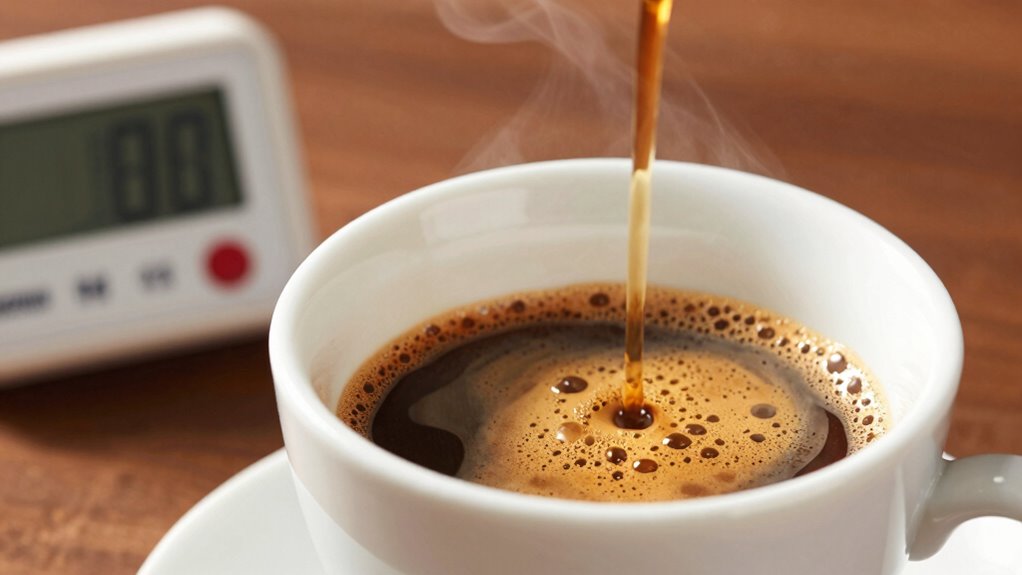
Water temperature plays an essential role in brewing your perfect espresso. If you don’t hit the ideal brewing range, you risk either under-extracting or over-extracting flavors. Let’s explore how overheating water can ruin your shot and what the best temperature should be.
Ideal Brewing Temperature Range
The ideal brewing temperature range for espresso typically falls between 190°F and 205°F. Staying within this range helps achieve optimal extraction, balancing flavors and aromas effectively. If your water’s too cool, you might miss out on rich, complex notes. Conversely, water that’s too hot can lead to bitterness.
Consider these points for your next brew:
- Flavor Depth: Warmer water enhances sweetness and acidity, which can also help counteract microplastics in dust that may affect taste perception.
- Crema Quality: Ideal temperatures help create a rich, velvety crema.
- Consistency: Maintaining the right heat guarantees uniform extraction.
- Brew Time: Temperature impacts how quickly water extracts flavors, making high-quality brewing capabilities essential for the best results.
Additionally, understanding safe movement basics can improve your overall brewing technique and help you handle equipment more effectively.
Effects of Overheating Water
Maintaining the right temperature is essential, but overheating water can wreak havoc on your espresso. When water exceeds the preferred range, it alters the water chemistry, leading to over-extraction. This means you’re pulling too many compounds from the coffee grounds, resulting in a bitter taste. You might think you’re achieving a bold flavor, but it’s actually a harsh, unpleasant brew.
An ideal extraction balance is vital; too hot, and you’ll lose the nuanced flavors that make your espresso special. Instead, focus on a temperature that enhances the natural sweetness and complexity of the coffee. Avoid the temptation to crank up the heat, and remember that a well-balanced brew comes from respecting your espresso’s preferred temperature.
How to Adjust Brew Time for a Smoother Flavor
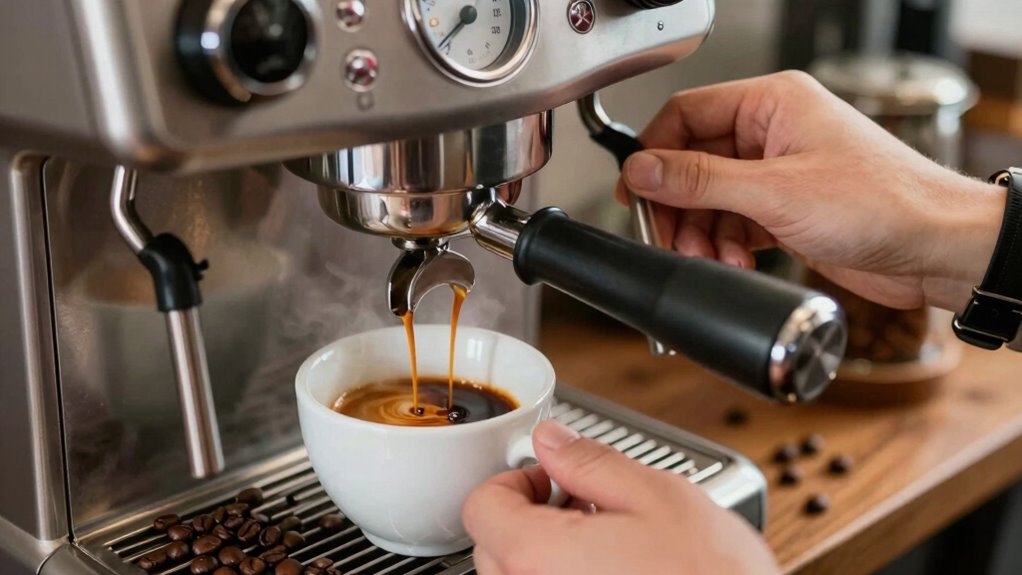
Adjusting brew time is essential for achieving a smoother espresso flavor. If your shot tastes bitter, tweaking the brew time can help you find the right flavor balance. Here’s how to do it:
- Start with a 25-second extraction – This is a good baseline for most espressos.
- Increase by 5 seconds – If it’s too bitter, try lengthening the brew time to mellow the taste.
- Taste and adjust – Evaluate the flavor after each adjustment. If it’s still harsh, keep increasing.
- Aim for 30-35 seconds – This timeframe often yields a well-rounded shot, balancing sweetness and acidity.
Experimenting with these steps will help you refine your brew time for that perfect, smooth espresso experience.
Selecting the Best Coffee Beans for Flavor
Sure! Here’s your revised content with the requested changes:
—
When you choose the right coffee beans, you set the foundation for a fantastic espresso. Start by considering the coffee origin, as different regions produce distinct flavor profiles. For example, South American beans often have bright acidity, while African beans may offer fruity notes. Additionally, understanding regional flavors can help you select beans that complement your taste preferences. Next, think about the roasting method; lighter roasts preserve more of the bean’s natural flavors, while darker roasts bring out bold, smoky tones. Always prioritize bean freshness, as stale beans can ruin your brew. Higher contrast ratios yield deeper flavors in your espresso, enhancing your overall experience. Interestingly, certain essential oils for a calming effect can complement your coffee ritual, enhancing your sensory experience. Experiment with blend varieties to discover unique combinations that suit your taste. Finally, your brewing technique can enhance the flavors, so adjust your espresso machine settings to complement your chosen beans. Additionally, investing in smart kitchen gadgets can help you maintain optimal brewing conditions. Happy brewing!
—
Let me know if you need any further adjustments!
How to Avoid Bitter Espresso: Expert Tips
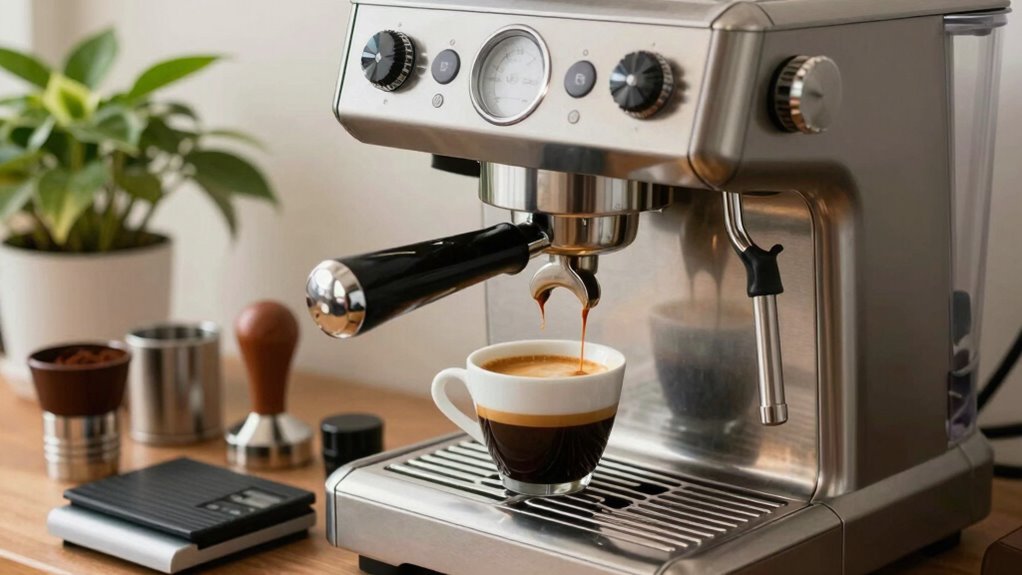
To avoid bitter espresso, you need to pay close attention to grind size and brew temperature. If your coffee’s too fine or the water’s too hot, you’ll likely end up with an unpleasant taste. Let’s explore how tweaking these factors can lead to a smoother cup.
Grind Size Matters
Although many factors influence espresso quality, grind size plays a crucial role in preventing bitterness. To achieve that perfect shot, focus on these key aspects of grind consistency and grind distribution:
- Uniformity: Confirm your grind has a consistent texture, resembling fine sand.
- Freshness: Use freshly roasted beans; the grind should be done just before brewing.
- Adjustments: Experiment with finer or coarser settings based on your espresso machine’s requirements.
- Distribution: Make sure the coffee grounds are evenly distributed in the portafilter to prevent channeling.
Brew Temperature Control
Maintaining the right brew temperature is vital for extracting the best flavors from your coffee without introducing bitterness. Ideally, aim for a brew temperature between 195°F and 205°F (90°C to 96°C). If it’s too low, you won’t fully extract the coffee’s rich flavors; too high, and you’ll draw out unwanted bitter compounds.
To achieve that perfect extraction balance, invest in a reliable thermometer or an espresso machine with precise temperature control. Always preheat your equipment to guarantee consistent results. Remember, small adjustments can make a big difference. If your espresso tastes bitter, check your brew temperature first—it’s a significant factor in achieving a smooth, flavorful shot. Additionally, consider how kitchen ventilation can help maintain stable temperatures in your brewing environment. Keep experimenting until you find your ideal sweet spot!
Frequently Asked Questions
Can the Espresso Machine Itself Cause Bitterness?
Yes, your espresso machine can cause bitterness. If the grind size is too fine, it can lead to over-extraction, making your brew taste bitter. Similarly, if the extraction time is too long, you’ll extract undesirable flavors. Regularly clean your machine and check the settings. Adjusting the grind size and timing can help you avoid those bitter notes and guarantee a smoother, more enjoyable espresso experience.
How Often Should I Clean My Espresso Machine?
You should clean your espresso machine at least once a week to maintain peak performance. Create a maintenance schedule that includes daily rinsing of the portafilter and group head, along with weekly deep cleaning. This routine helps prevent bitterness in your brew and keeps your machine in top shape. If you use your machine heavily, consider increasing the cleaning frequency to guarantee the best flavor and longevity of your equipment.
Does the Type of Water Affect Espresso Taste?
Yes, the type of water you use definitely affects your espresso’s taste. Water hardness and mineral balance play essential roles in extracting flavors from the coffee grounds. If your water’s too hard, it can lead to over-extraction, resulting in bitterness. Conversely, water that’s too soft might under-extract, making your espresso taste flat. Aim for a balanced mineral content to enhance the flavor profile and achieve a smoother, more enjoyable shot.
Can Milk or Cream Reduce Bitterness in Espresso?
Yes, milk or cream can definitely reduce bitterness in espresso. They add creaminess, which balances the coffee’s acidity and enhances its sweetness. When you brew at higher temperatures, some of the bitter compounds can intensify, so adding milk or cream helps mellow those flavors. Try experimenting with different ratios to find the perfect balance for your taste. You’ll end up with a smoother, more enjoyable espresso experience.
What Storage Methods Preserve Coffee Bean Freshness?
To preserve coffee bean freshness, you should use vacuum sealing or store them in airtight containers. Vacuum sealing removes air, preventing oxidation and retaining flavor. If you opt for airtight containers, make sure they’re opaque to block light, which can degrade the beans. Keep your coffee in a cool, dark place, away from moisture and heat. These methods help maintain the beans’ rich taste and aroma for your perfect brew.
Conclusion
So, when you’re brewing espresso, keep an eye on those grind sizes, water temps, and brew times. Coincidentally, the right coffee beans can turn that bitter taste into a smooth delight. Adjusting just a few elements can lead to a rich, balanced shot that makes every sip a pleasure. Remember, your espresso journey is all about experimenting and refining; soon enough, you’ll discover the perfect brew that keeps you coming back for more. Enjoy!