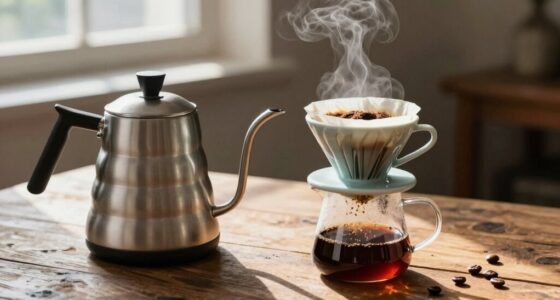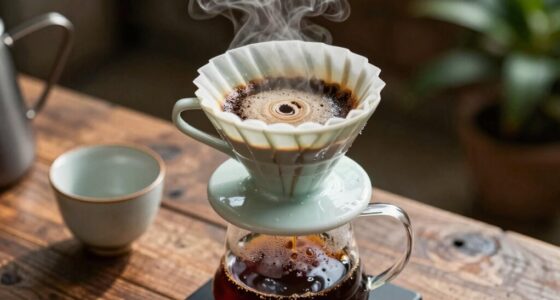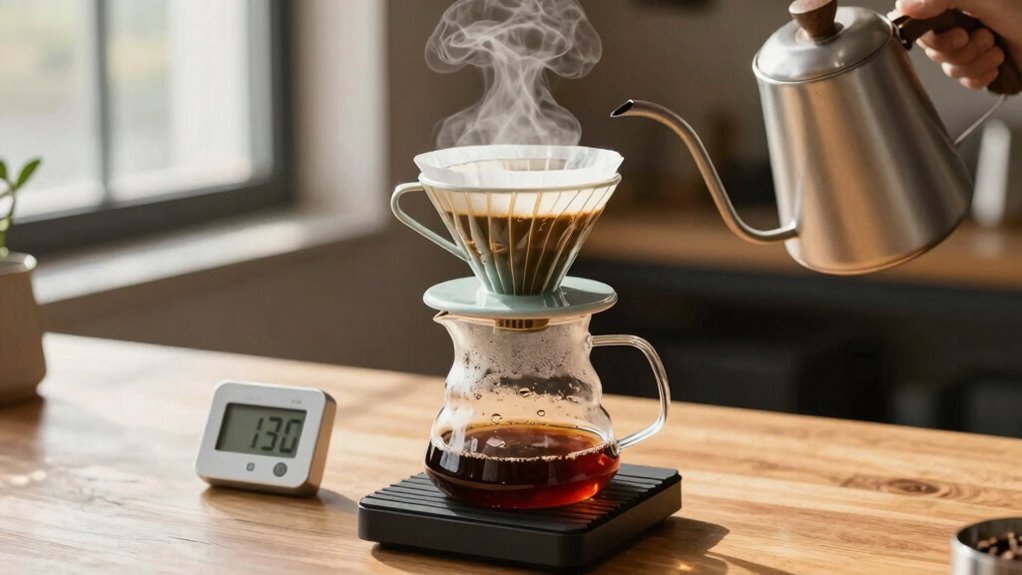
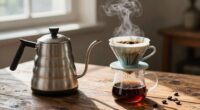
Getting the water temperature right for pour over coffee is essential. You should aim for 195°F to 205°F for ideal extraction. If the water’s too hot, your coffee can taste bitter; too cold, and it’ll be weak. Use a digital thermometer or a kettle with precise temperature control for accuracy. Preheat your equipment to maintain temperature. These tips can really improve your coffee. Stick around to uncover more insights on brewing techniques!
Key Takeaways
- Use water temperatures between 195°F and 205°F for optimal pour-over coffee extraction and flavor balance.
- Invest in a kettle with temperature control to maintain consistent brewing temperatures.
- Preheat your equipment to prevent temperature drops during the brewing process.
- Monitor brew time; longer brews may require slightly lower temperatures to avoid bitterness.
- Adjust grind size based on humidity; finer for humid conditions, coarser for dry environments to enhance extraction.
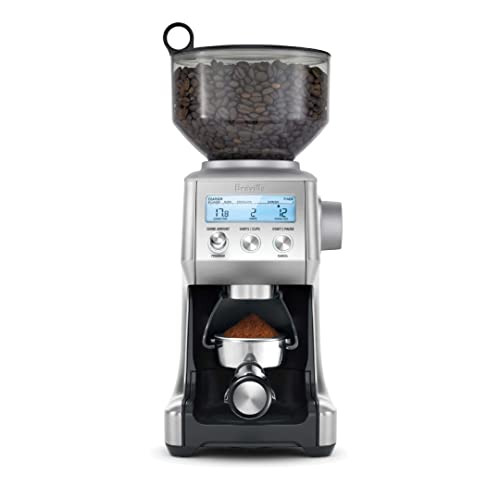
Breville BCG820BSS Smart Grinder Pro for Coffee and Espresso, Brushed Stainless Steel
The Breville Smart Grinder Pro includes 60 unique settings – this programmable conical burr grinder offers a wide...
As an affiliate, we earn on qualifying purchases.
The Ideal Temperature Range for Pour Over Coffee
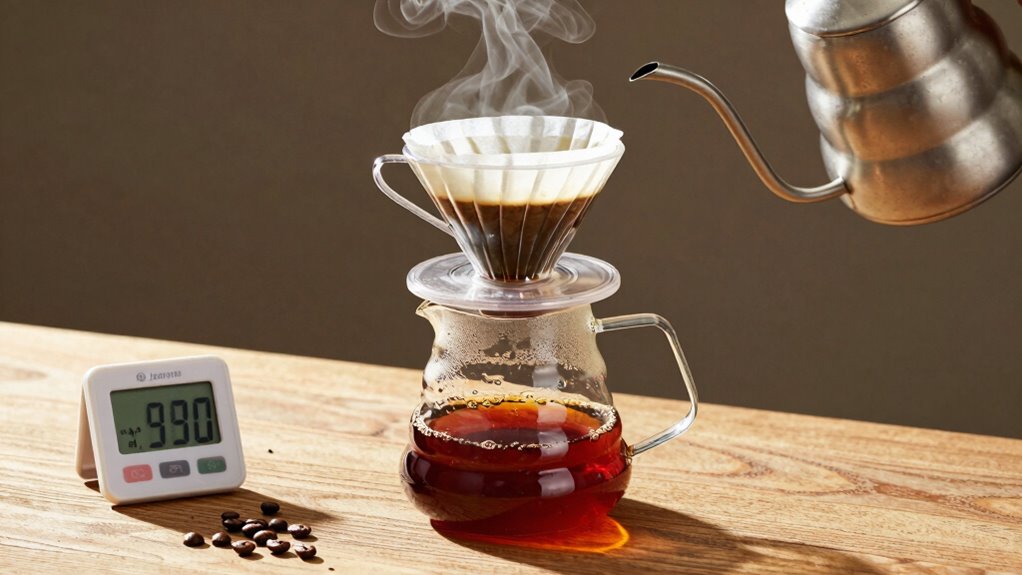
When brewing pour over coffee, the ideal temperature range is essential for extracting the best flavors. Aim for water between 195°F and 205°F. This temperature helps you achieve the perfect brew strength and guarantees that your coffee isn’t overly bitter or weak. If your water’s too hot, you risk over-extracting, leading to undesirable flavors. On the other hand, water that’s too cool can result in under-extraction, leaving you with a bland cup.
Pay attention to your extraction time as well. Aiming for a total brew time of around three to four minutes lets you find that sweet spot. By controlling both temperature and time, you’ll reveal the vibrant notes and nuances in your coffee, elevating your pour over experience.

MOKKOM Professional 64mm Flat Burr Coffee Grinder with 100 Grind Settings, All-Metal Stainless Steel Body, Coffee Bean Grinder with Adjustable Electronic Timer, Anti-Static, LED Display
[64mm Stainless Steel Flat Burrs] As a professional coffee grinder, this machine uses 64mm stainless steel flat burrs...
As an affiliate, we earn on qualifying purchases.
How to Measure Your Water Temperature Accurately
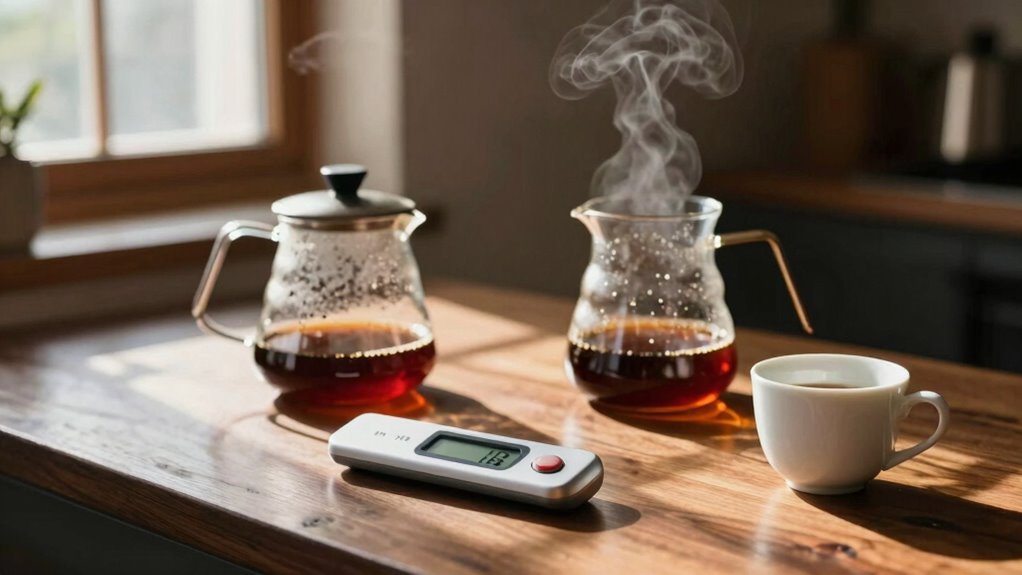
How can you guarantee your water’s at the perfect temperature for brewing? Start by using a digital thermometer for precise readings. These devices give you quick, accurate measurements, ensuring your water’s just right. If you prefer a non-contact method, infrared sensors can be a great choice, allowing you to check temperatures without burning your fingers. Remember, water quality matters; impurities can affect boiling points and overall taste. Pair your thermometer with brewing scales for better temperature stability throughout the process. Experiment with different measurement techniques to find what works best in your home setups. This way, you’ll consistently achieve that ideal brew without guesswork, elevating your pour-over coffee experience.

Neretva Espresso Grinder, 2 in 1 Professional Coffee Bean Grinder Stainless Steel Suit 51~58mm Portafilter Burr Coffee Grinder 30 Precise Setting&Anti-Static for Espresso/French Press/Drip/Moka-Silver
PROFESSIONAL CONICAL BURR COFFEE GRINDER- WIth new upgraded 3.0 conical burr grinding technoloy, the coffee grinder ensures that...
As an affiliate, we earn on qualifying purchases.
Common Temperature-Related Mistakes in Pour Over Brewing
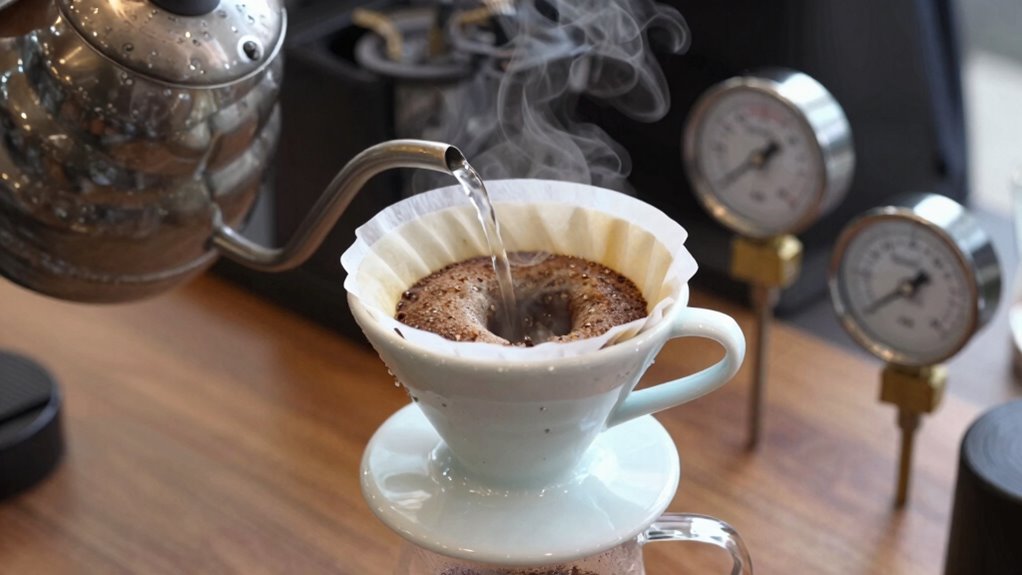
While brewing pour-over coffee, many people overlook the critical role temperature plays, leading to common mistakes that can ruin the flavor. One frequent error is using inconsistent water temperatures, which can stem from inadequate brewing equipment. If your kettle doesn’t maintain a steady temperature, you risk under-extracting or over-extracting your coffee, leading to unbalanced flavor profiles. Additionally, using a kettle with temperature control features can help ensure optimal extraction. Another mistake involves using poor water quality; minerals and impurities can greatly impact taste. If your water isn’t clean or well-balanced, it can mask the coffee’s true flavors. Finally, forgetting to preheat your brewing equipment can lead to a chilly brew, affecting extraction. By paying attention to these factors, you can elevate your pour-over experience and enjoy a more flavorful cup. Understanding the mechanics of French press can also enhance your overall brewing skills.
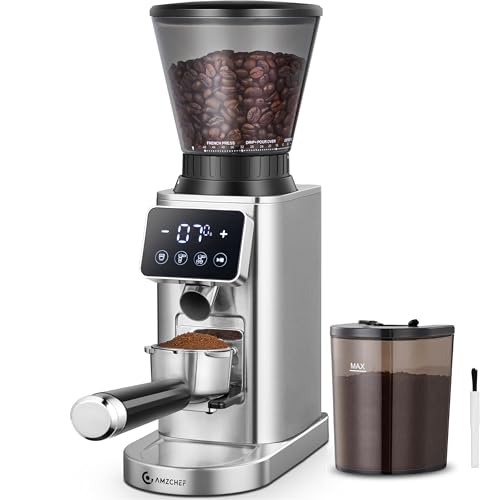
AMZCHEF Coffee Grinder, Burr Coffee Bean Grinder for Home Use with 48 Precise Grind Settings, Detachable Funnel Stand for Espresso, LED Control Panel, Anti-static Design, silver
DESIGN FOR ESPRESSO:We provide portafilter holder ,Portafilter holder pad and photophobic coffee ground container. It is compatible with...
As an affiliate, we earn on qualifying purchases.
How to Adjust Temperature for Different Coffee Beans
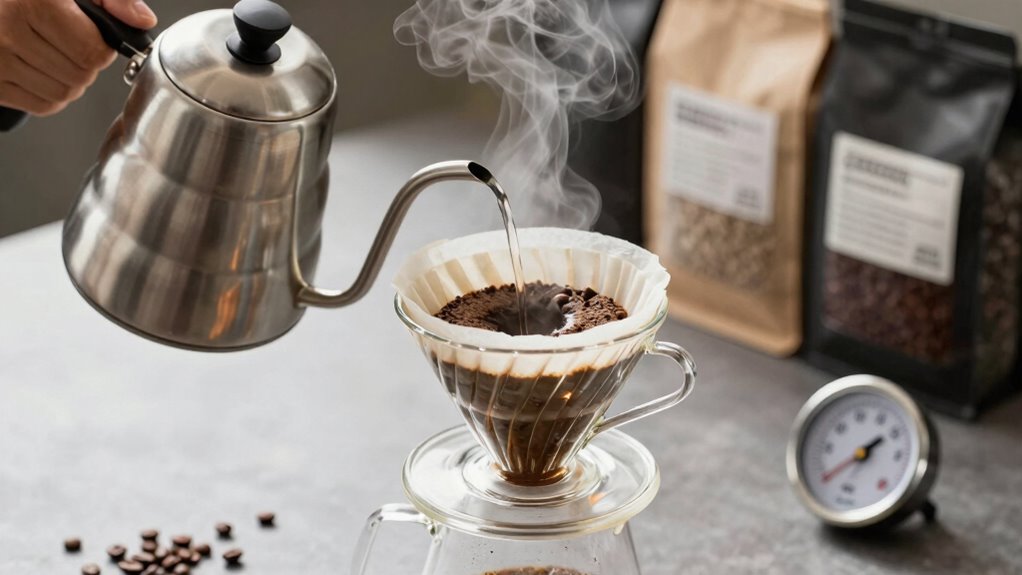
When brewing with different coffee beans, adjusting your water temperature can make a big difference in flavor. For light roasts, you’ll want to use hotter water to extract those delicate notes, while dark roasts benefit from slightly cooler temperatures to avoid bitterness. Let’s explore how these adjustments can elevate your pour-over experience.
Light Roast Temperature Guidelines
To brew the perfect cup of light roast coffee, you need to pay close attention to the water temperature, as it greatly affects the extraction process. Light roast characteristics, like bright acidity and floral notes, shine best at temperatures between 195°F and 205°F. If your water’s too hot, you risk over-extracting, which can lead to bitter flavors overshadowing those delicate nuances. On the other hand, if it’s too cool, you won’t fully extract the coffee’s vibrant flavors. Aim for a sweet spot around 200°F for ideal flavor extraction. This temperature range aligns with the principles of effective brewing, ensuring you highlight the unique attributes of your light roast. Additionally, understanding brewing science can help you master the nuances of temperature and extraction. The flexibility of digital publishing allows you to explore different brewing techniques and share your findings with others. Remember that effective budgeting strategies can also apply to your coffee brewing, making each cup a worthwhile investment. Experiment within this range to find what suits your taste, ensuring you highlight the unique attributes of your light roast. This approach will elevate your brewing game and enhance your coffee experience, especially when considering color accuracy to ensure the best visual representation of your coffee’s rich hues.
Dark Roast Temperature Adjustments
After mastering the ideal water temperature for light roasts, it’s time to think about dark roasts, which require a different approach. Dark roast characteristics, like boldness and a deeper body, benefit from slightly lower temperatures—typically around 200°F to 205°F. This adjustment helps prevent over-extraction, which can lead to bitterness. Understanding extraction techniques is essential for achieving the best flavor profile.
When brewing, aim for a coarser grind to enhance flavor extraction without overwhelming your palate. Monitor your brew time, too; shorter times can highlight the rich, chocolatey notes of dark roasts. Remember, finding the perfect balance may take a few tries, so don’t hesitate to tweak the temperature and grind size until you discover your ideal cup. Additionally, using anti-fatigue mats can help create a more comfortable environment while you experiment with your brewing techniques. Enjoy the journey!
How Altitude and Environment Affect Brewing Temperature
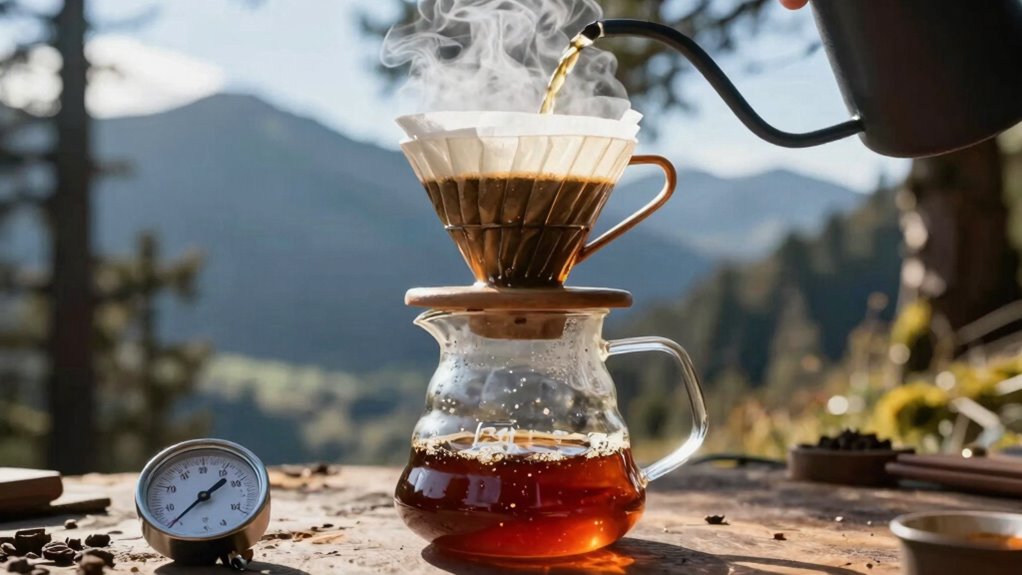
When you’re brewing coffee at higher altitudes, you’ll notice that water boils at lower temperatures, which can affect your brew. Humidity levels also play a role, impacting how your coffee extracts and tastes. Understanding these factors helps you make the necessary temperature adjustments for a perfect cup.
Altitude’s Impact on Temperature
While you might not think about it, altitude greatly affects your brewing temperature. As you climb higher, atmospheric pressure drops, leading to lower boiling points for water. This means that your ideal brewing temperature might not be reached if you stick to standard guidelines. For instance, at elevations above 3,000 feet, water boils at about 200°F instead of 212°F. This drop can result in under-extraction, making your coffee taste sour or weak. To counteract these altitude effects, you’ll need to make brewing adjustments. Increasing your water temperature slightly or extending your brew time can help you achieve a balanced cup. By understanding how altitude influences your brewing, you’ll consistently enjoy better coffee, no matter where you are.
Humidity and Brewing Variables
Humidity plays an essential role in how your coffee brews, influencing both extraction and flavor. When humidity levels rise, coffee beans absorb moisture, which can lead to uneven extraction. This variation affects how oils and flavors are released, ultimately shifting the taste profile. On the flip side, low humidity can dry out your beans, making them brittle and less effective during brewing. Both scenarios disrupt brewing consistency, leading to unpredictable results. To counteract humidity effects, adjust your grind size and brewing time accordingly. If it’s humid, you might want a finer grind to guarantee proper extraction. Conversely, in dry conditions, a coarser grind can help maintain balance, allowing you to enjoy a more flavorful cup. Additionally, understanding the impact of temperature control can further enhance your brewing process and consistency, as proper brewing techniques can help mitigate the effects of environmental variables on your coffee. Moreover, maintaining good indoor air quality can prevent microplastics in dust that may also influence the flavor profile of your coffee. Furthermore, regular air purifier maintenance can help ensure that the environment remains optimal for brewing, reducing the likelihood of unwanted contaminants affecting the taste. To enhance this process, consider how airborne allergens can also affect the overall air quality in your brewing environment, impacting the freshness and flavor of your coffee.
Temperature Adjustments for Elevation
As you ascend in elevation, the boiling point of water decreases, which means you’ll need to make temperature adjustments for ideal brewing. The elevation effects can greatly alter your coffee’s extraction. At higher altitudes, water boils at lower temperatures, so you might find that your usual brew temperature isn’t effective.
To adapt your brewing techniques, consider lowering your brewing temperature by about 1°F for every 500 feet above sea level. This helps guarantee you’re extracting those delicate flavors without over-extracting the bitter notes. Additionally, in desert gardening, where water availability is crucial, understanding how temperature impacts extraction can enhance your brewing experience. Having the right packing strategies can also improve your travel experience by ensuring you have the right equipment on hand. Furthermore, many smart indoor gardens utilize automated watering systems to maintain optimal hydration, which can be a game changer in your brewing setup. Also, be mindful of your environment; factors like wind and humidity can further influence your results. Emergency power sources can also provide essential backup during unexpected situations, allowing you to maintain your brewing setup anywhere. By fine-tuning your approach, you’ll consistently achieve a flavorful cup, no matter where you are. Additionally, just as cold medications are tailored for specific symptoms, adjusting your brew temperature is crucial for optimizing flavor extraction at altitude.
Tips for Consistent Temperature Control in Pour Over Coffee
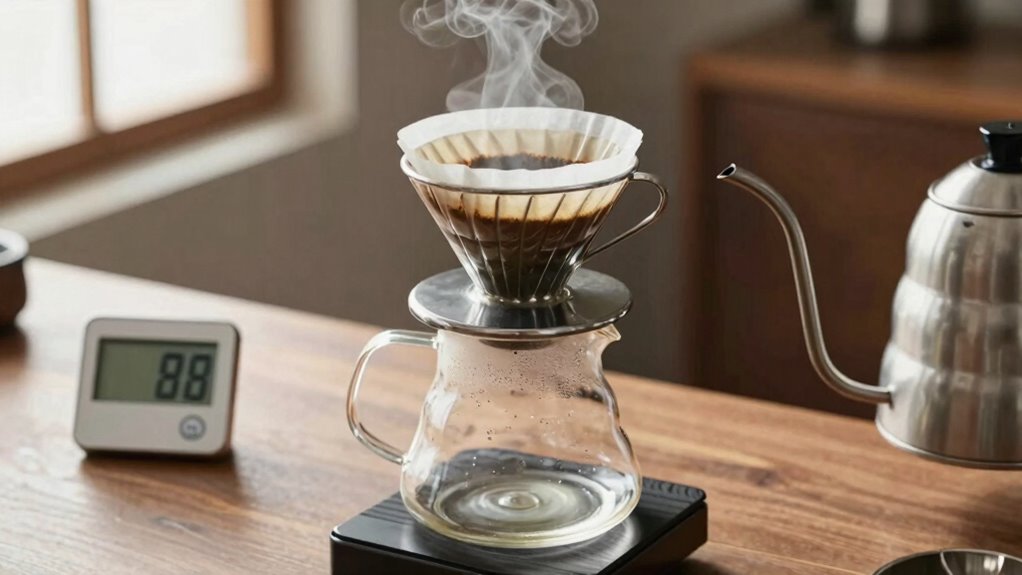
To achieve the perfect pour over, you need to maintain consistent water temperature throughout the brewing process. Here are some tips to help you control the temperature effectively:
- Kettle Selection: Choose a kettle with precise temperature control. Electric kettles are great for this.
- Preheat Your Equipment: Warm your pour over dripper and mug with hot water to prevent temperature drops.
- Monitor Brew Time: Keep track of your brew time; longer brew times may require slightly lower temperatures.
- Use a Thermometer: Invest in a thermometer to guarantee your water’s at the ideal temperature before pouring. Additionally, maintaining consistent temperature during brewing can enhance the extraction of flavors, much like how essential oils work in various applications.
Experimenting With Temperature for Flavor Profiles

Certainly! Here’s your revised subheading content with the requested addition:
—
While many focus on grind size and coffee-to-water ratios, experimenting with water temperature can reveal a range of flavor profiles that elevate your pour over coffee. Adjusting the temperature impacts brew time and flavor extraction, allowing you to highlight different notes based on bean variety. For instance, higher temperatures often enhance fruity flavors, while lower temperatures can bring out chocolatey undertones. Make certain your water quality is high, as impurities can affect taste. Using high-quality equipment is crucial for maintaining temperature stability throughout the process. Engaging in taste testing with various temperatures to find what suits your palate best is essential for discovering your ideal brew. Each adjustment opens up a world of flavor possibilities, making your pour over experience uniquely yours. Additionally, understanding brew temperature guidelines can help you achieve the best extraction for your specific coffee beans, as smart kitchen tools can assist in maintaining precise temperatures during brewing. Remember, having access to expert recommendations can simplify the process and enhance your brewing experience overall.
—
Let me know if you need any further adjustments!
Troubleshooting Common Temperature Issues in Pour Over Coffee
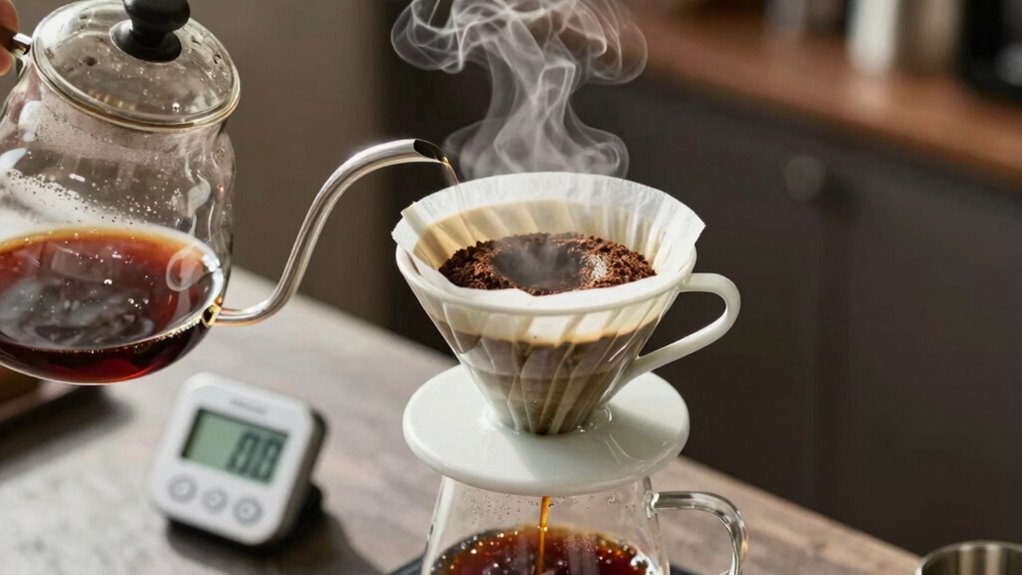
When you’re brewing pour over coffee, temperature issues can easily disrupt your process and flavor. Here are some common problems and how to fix them:
- Water Too Hot: If your brew time is too short, your coffee grind might be overly bitter. Aim for 195°F to 205°F.
- Water Too Cold: A longer brew time can lead to weak coffee. Make sure your water temperature is in the right range for ideal extraction.
- Inconsistent Temperature: Use a kettle with temperature control. This helps maintain consistent heat throughout your brew.
- Incorrect Coffee Grind: A grind that’s too coarse or fine can affect extraction. Adjust your grind size based on your brew time for better results.
With these tips, you’ll resolve temperature issues and enhance your coffee!
Why Water Temperature Matters for Pour Over Coffee
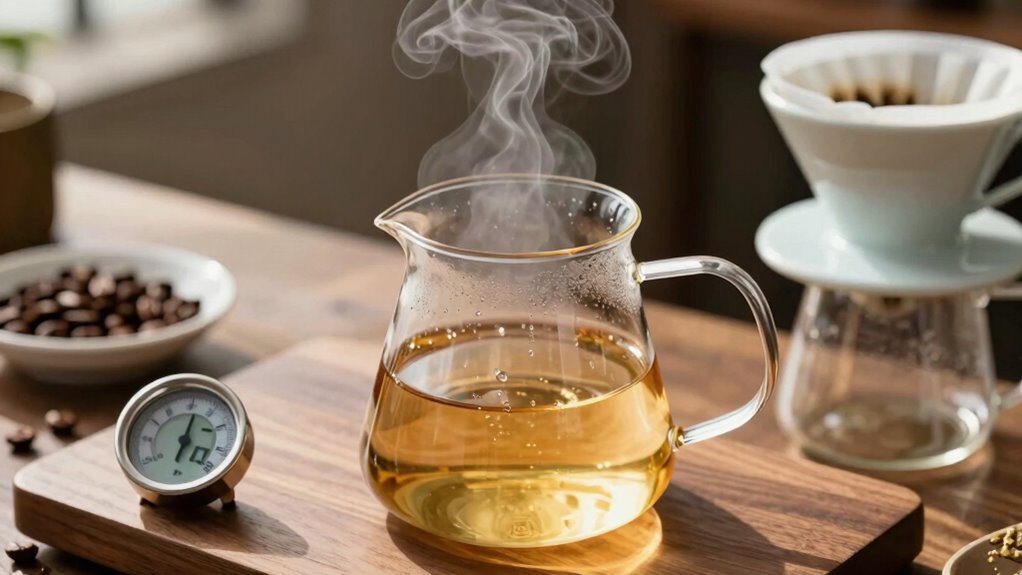
Understanding why water temperature matters for pour over coffee is essential for achieving the perfect brew. The right temperature directly influences water chemistry, affecting how compounds extract from the coffee grounds. If your water’s too hot or too cold, you’ll throw off the extraction balance, leading to either bitter or weak flavors. This inconsistency can mask the flavor nuances you want to highlight. Choosing the right kettle can help you control your pour, while also considering your grind size for ideal results. By maintaining consistent brewing temperatures, you’ll guarantee a better cup every time. Remember, the perfect temperature makes all the difference in revealing the full potential of your coffee.
Frequently Asked Questions
Can I Use Tap Water for Pour Over Coffee?
Yes, you can use tap water for pour over coffee, but pay attention to water quality and mineral content. If your tap water tastes good on its own, it’s likely fine for brewing. However, hard water with high mineral content can affect flavor and extraction. If you notice off-tastes or your coffee lacks clarity, consider using filtered or bottled water instead. This way, you’ll enhance your coffee experience.
How Does Water Temperature Affect Caffeine Extraction?
Think of water temperature as the conductor of a symphony; it dictates how well caffeine plays with your coffee. If you use water that’s too cold, caffeine solubility drops, leading to weak extraction. Conversely, too hot can over-extract, making your brew bitter. For ideal extraction, aim for 195°F to 205°F. This balance guarantees you draw out the right flavors and caffeine, creating a harmonious cup you’ll love.
What Type of Thermometer Is Best for Measuring Water Temperature?
For measuring water temperature, digital thermometers are your best bet. They offer quick, accurate readings, making them ideal for coffee brewing. Instant thermometers, like laser types, provide a fast way to check the temperature without direct contact, but they might not be as precise in liquid. Choose a digital thermometer with a probe for the most reliable results, ensuring you hit that perfect brewing temperature every time.
Is There a Difference in Temperature for Iced Pour Over?
Yes, there’s definitely a difference in temperature for iced pour over. When you’re using iced coffee techniques, aim for water around 200°F, similar to traditional methods, but remember to account for ice melting. For cold brew methods, you’ll want to steep at room temperature or in the fridge, using colder water (around 60°F) to create a smooth, less acidic flavor. Adjusting your temperature will enhance the overall taste of your iced coffee.
How Often Should I Change My Brewing Water?
Brewing coffee’s like painting a masterpiece—each stroke matters! You should change your brewing water frequently, ideally every few days, to maintain water quality. Fresh water guarantees you get the best flavors from your beans and keeps brewing consistency high. Stale water can dull your coffee’s taste, leading to a less vibrant cup. So, keep your water fresh and your coffee will sing! Remember, every drop counts in your perfect brew.
Conclusion
In the quest for the perfect pour over, water temperature plays a vital role in extracting the flavors you love. By mastering the ideal temperature range and avoiding common mistakes, you can elevate your brewing game. So, why settle for mediocre coffee when a few adjustments can reveal a world of flavor? Keep experimenting and refining your technique to find the temperature that suits your taste, and you’ll soon be savoring your best cup yet.