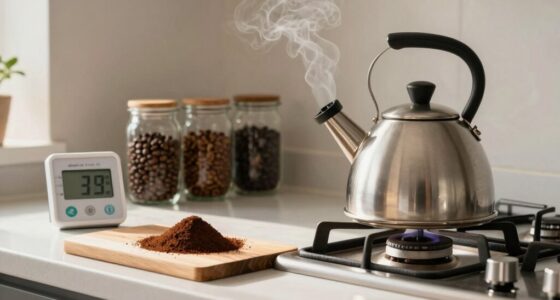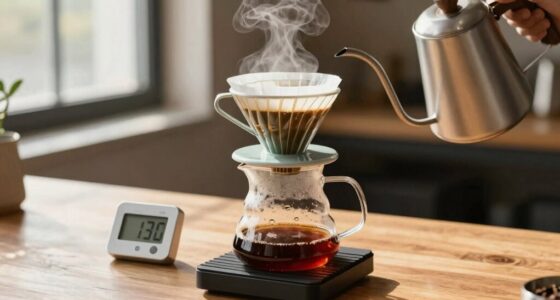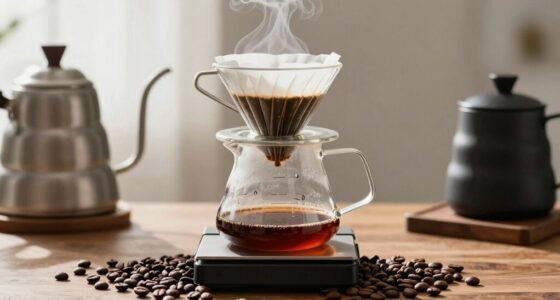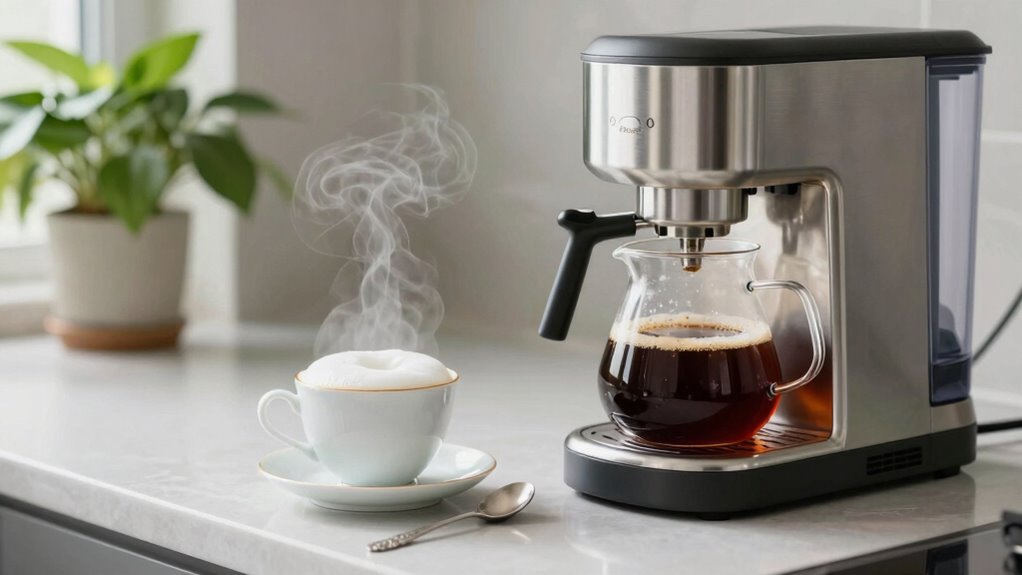

If your drip coffee tastes sour, start by checking your grind size and brewing time—too fine a grind or a short brew can lead to extraction issues. Use fresh, properly stored beans and verify your water’s mineral content is balanced. A clean machine is essential; residues can affect flavor, so clean it regularly. Finally, adjust your coffee-to-water ratio for a richer taste. There’s more to explore for that perfect cup, so keep going!

Get coffee and tea gear delivered free with Prime
- Fast, free delivery on millions of items
- Prime Video, Amazon Music and more included
- Member-only deals all year
Key Takeaways
- Ensure coffee beans are fresh; stale beans contribute to sourness and diminished flavor.
- Adjust grind size to avoid under-extraction, which can lead to a sour taste.
- Experiment with brew time; extending it by 30 seconds to a minute may reduce sourness.
- Use clean, filtered water to enhance flavor and minimize impurities that can cause sour notes.
- Regularly clean your coffee equipment to prevent residue buildup that affects taste quality.
As an affiliate, we earn on qualifying purchases.
Identifying Sour Coffee Problems and Solutions

When you brew coffee that tastes sour, it can ruin your morning ritual, but identifying the root cause is the first step to a solution. Sour acidity often stems from brewing mistakes, like improper grind size or extraction issues. If your coffee’s too coarsely ground, it might not extract enough flavor, leading to that unpleasant taste. Freshness factors also play an essential role; stale beans can contribute to sourness. Pay attention to your coffee storage, as exposure to air can degrade flavor. Finally, consider your taste preferences—some might enjoy a slight acidity, while others prefer a smoother cup. By making flavor adjustments based on these factors, you can transform your sour brew into a delightful experience. Additionally, using super-automatic espresso machines can enhance consistency in your brewing process, helping to reduce sour notes.
As an affiliate, we earn on qualifying purchases.
Essential Elements Influencing Coffee Taste

To brew a great cup of coffee, understanding the elements that influence its taste is essential. Coffee acidity plays a vital role in defining flavor profiles. A balanced acidity can enhance the brightness of your brew, bringing out vibrant flavor notes like citrus or berry. Too much acidity, however, can lead to that unpleasant sourness you want to avoid. Additionally, maintaining proper filtration is crucial, as it can impact the clarity and smoothness of your coffee. Using quality water can also significantly enhance your brew, as impurities can mask the true flavors of your coffee. Furthermore, kitchen ventilation is important as it helps eliminate any lingering odors that might interfere with your coffee’s aroma.
Incorporating smart programming into your brewing routine can also optimize flavor consistency.
Additionally, the brewing method affects extraction. For instance, a longer brew time can intensify certain flavors while reducing acidity. Water temperature also matters; hotter water can extract more oils and flavors, but it may increase bitterness. By paying attention to these factors, you can create a more enjoyable cup, elevating those delightful flavor notes without the sour undertones. Understanding the brewing method is crucial for perfecting your coffee and avoiding sour flavors.
As an affiliate, we earn on qualifying purchases.
Choosing the Best Coffee Beans for Flavor
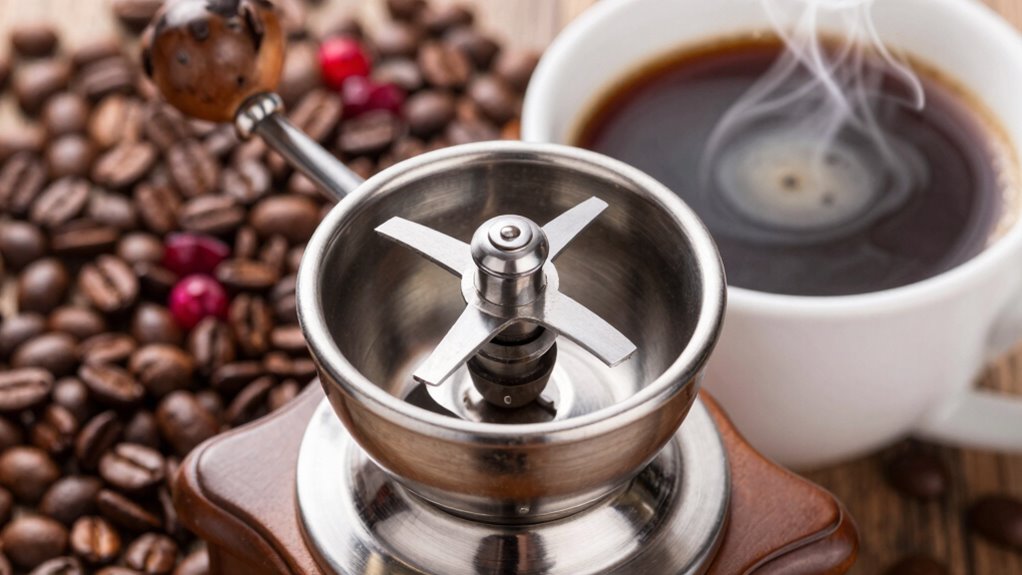
Choosing the Best Coffee Beans for Flavor
Choosing the right coffee beans can considerably impact your brew’s flavor, as the origin, processing method, and roast level all contribute to the final taste. Consider these key factors when selecting your beans:
Selecting the right coffee beans is essential, as origin, processing, and roast level shape your brew’s unique flavor profile.
- Bean Origin: Different regions produce unique flavor notes and aroma profiles.
- Roast Level: Lighter roasts highlight acidity and brightness, while darker roasts offer rich, bold flavors.
- Processing Methods: Washed or natural processes can influence sweetness and complexity.
- Freshness Factor: Always opt for freshly roasted beans for the best taste. Additionally, using essential oils such as eucalyptus oil may enhance your overall coffee experience by promoting a clear nasal passage for better aroma appreciation. This is particularly important when considering cookie preferences, as they can influence your overall enjoyment of coffee. Brewing techniques can also play a crucial role in unlocking the full potential of your selected beans. An understanding of caffeine content can further guide you in choosing beans that suit your flavor and energy preferences.
Experiment with grind size and brewing techniques to match the varietal differences and enhance your tasting notes. Additionally, explore how natural remedies can complement your coffee experience and avoid sour flavors. By focusing on these elements, you can elevate your coffee experience and avoid sour flavors.
water filtration for coffee maker
As an affiliate, we earn on qualifying purchases.
As an affiliate, we earn on qualifying purchases.
Adjusting Brew Time for a Balanced Cup

Adjusting Brew Time for a Balanced Cup
Adjusting brew time can make all the difference in achieving a balanced cup of coffee. If you’re dealing with a sour taste, your brew time might be too short. Experiment with brew time adjustments by adding an extra 30 seconds to a minute. This allows for better extraction of the coffee’s flavors, helping to eliminate that sourness. Conversely, if your coffee tastes overly bitter, you might have brewed it too long. Finding that sweet spot requires some trial and error, but a well-timed brew can enhance the overall taste. Keep a close eye on your brew time, and you’ll discover effective sour taste remedies that bring out the rich, nuanced flavors of your coffee. Additionally, using innovative tools can further streamline your brewing process. Moreover, understanding color accuracy in your brewing equipment can help ensure that the flavor is represented as intended. Incorporating smart kitchen gadgets can also optimize your brewing experience and enhance flavor extraction. Furthermore, ensuring your brewing environment has good indoor air quality can positively influence the freshness of your ingredients. Remember, maintaining air purifier efficiency in your kitchen can also contribute to a cleaner brewing environment. Happy brewing!
Why Water Temperature Matters in Brewing?
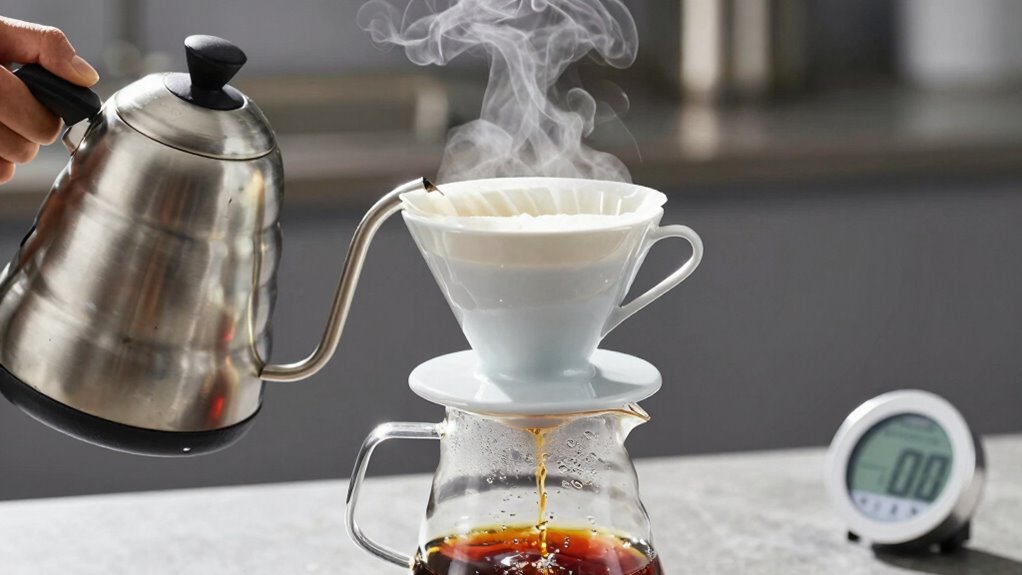
Water temperature plays an essential role in brewing the perfect cup of coffee. If you’re outside the ideal brewing range, it can drastically alter your flavor profile and affect extraction time. Let’s explore how the right temperature can make all the difference in your cup.
Optimal Brewing Temperature Range
When brewing coffee, getting the temperature right is essential for extracting the best flavors. Ideal brewing temperature ranges between 195°F and 205°F (90°C to 96°C). This range allows you to balance extraction without overdoing it. Here are some key points to take into account:
- Temperature Control: Make sure your brewing equipment can maintain consistent heat.
- Brewing Equipment: Use tools designed for precision, like a thermometer or a quality coffee maker.
- Water Quality: Fresh, filtered water enhances the overall experience.
- Experimentation: Don’t hesitate to adjust the temperature to discover your ideal brew.
Impact On Flavor Profile
The temperature at which you brew coffee greatly influences its flavor profile. If the water’s too hot, it can extract excessive acidity levels, leading to a sour taste that masks the rich flavor notes you’re after. Conversely, cooler water might not extract enough, sacrificing the coffee’s aroma profile. Various brewing methods and the grind size also play significant roles in extraction efficiency. You’ll want to verify your coffee freshness aligns with your chosen temperature to achieve a harmonious taste balance. By adjusting these brewing variables, you can enhance the overall experience, showcasing the unique flavor notes of your coffee. Remember, the right temperature sets the stage for a delightful cup, elevating both aroma and taste.
Extraction Time Balance
To achieve the perfect cup of coffee, balancing extraction time with water temperature is essential. The right temperature can greatly affect brew consistency and flavor extraction. Here’s what to keep in mind:
- Hotter water extracts flavors faster but can lead to bitterness.
- Cooler water takes longer, often resulting in sour notes if under-extracted.
- Optimal range is typically between 195°F and 205°F for balanced extraction, as metabolic health can also be influenced by what we consume.
- Experiment with techniques like pour-over or French press to find your ideal brew.
- Understanding brewing science can help you fine-tune your approach for better results.
Balancing Coffee-to-Water Ratios
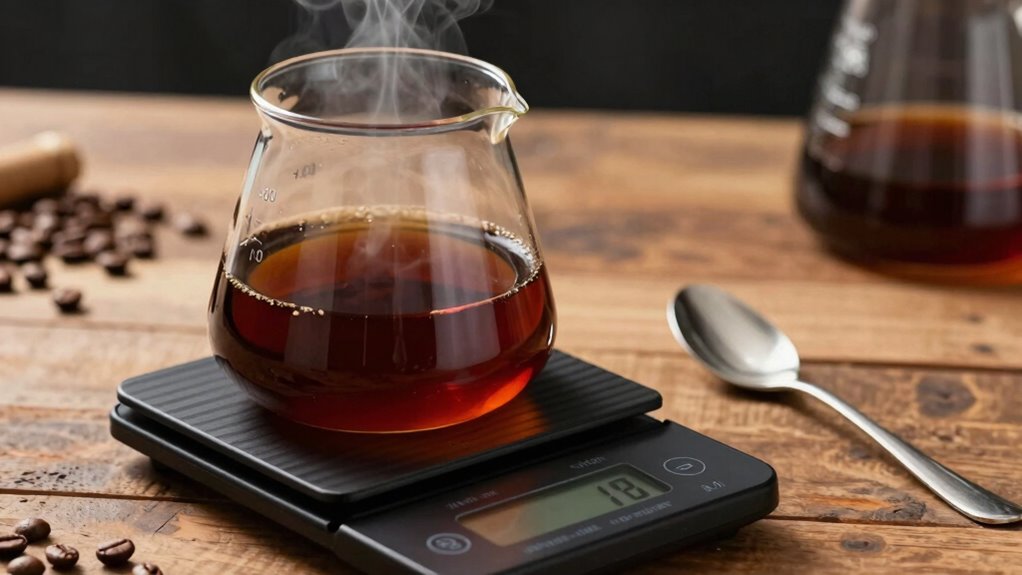
Getting the right coffee-to-water ratio is essential for a balanced brew. You’ll find that the ideal ratios vary depending on your taste preferences, but the quality of your water and the brewing time also play significant roles. Let’s break down how these factors can transform your cup of coffee.
Ideal Coffee Ratios
Finding the right coffee-to-water ratio can transform your brewing experience, making it essential for achieving a balanced cup. The ideal ratio not only enhances coffee strength but also guarantees brew consistency. Here are some key points to take into account:
- Start with a standard ratio of 1:15 (coffee to water).
- Adjust to taste; a stronger cup may use 1:12.
- Experiment to find your perfect balance.
- Remember, different beans may require slight tweaks in ratios.
Water Quality Impact
While you might focus on the coffee-to-water ratio, the quality of your water plays a crucial role in brewing the perfect cup. Water hardness and mineral content can dramatically influence flavor extraction. Ideally, you want a balanced pH to avoid sour notes; local tap water often contains chlorine levels that can clash with your coffee’s taste. Consider using filtration methods to improve water quality, enhancing both flavor and aroma. The source origin of your water matters, too—fresh, clean water promotes temperature stability during brewing, ensuring consistency. By prioritizing water quality alongside your coffee-to-water ratio, you’ll elevate your brewing experience and enjoy a much smoother, richer cup. Additionally, understanding the importance of Water hardness can help you select the right filtration method for optimal flavor. Furthermore, improving your water quality can also reduce indoor allergens, creating a more enjoyable environment for brewing.
Brew Time Considerations
To brew a balanced cup of coffee, timing is just as essential as the coffee-to-water ratio. Making proper brew time adjustments can greatly enhance your coffee’s flavor profile, preventing that sour taste. Here’s how brew time impacts your cup:
- Under-extraction: Too short a brew time leads to sour flavors.
- Over-extraction: Too long can result in bitterness.
- Ideal range: Aim for 4-6 minutes for most drip methods. Properly calibrating your brew time can make a significant difference in taste.
- Experimentation: Adjust your brew time based on your coffee type and grind size.
Additionally, understanding coffee gear essentials can help you refine your brewing technique for optimal results.
Cleaning Your Coffee Equipment for Better Taste

Cleaning your coffee equipment is essential for brewing a cup that truly delights your taste buds. Regular equipment maintenance guarantees you avoid unwanted residue buildup from coffee oils. Depending on your brewing method, adjust your cleaning frequency; daily for drip machines and weekly for French presses. Use appropriate descaling methods to combat mineral deposits, and choose the right filter types to enhance flavor while keeping your equipment clean. Prioritize brewing hygiene by rinsing components after each use and storing tools in a clean, dry place. Invest in effective cleaning solutions specifically designed for coffee makers to promote equipment longevity. By keeping your gear spotless, you’ll savor a fresher, more enjoyable cup every time.
Exploring Different Brewing Methods for Flavor Variety
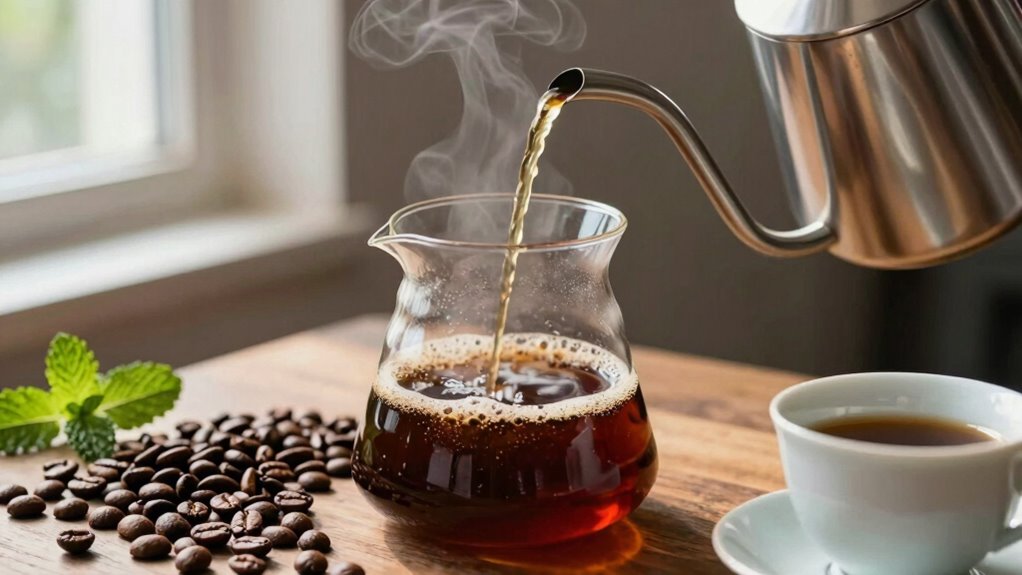
How can you elevate your coffee experience? Exploring different brewing methods is key to revealing unique flavor profiles. Each technique offers something special, so consider these options:
- Pour Over: Allows control over grind size and extraction methods, enhancing coffee freshness.
- French Press: Delivers a rich body, perfect for balancing acidity levels.
- Aeropress: Offers versatility, catering to various taste preferences with quick brewing.
- Cold Brew: Results in a smooth, less acidic coffee, great for warm days.
Experimenting with these brewing techniques can drastically change your coffee’s character. Adjusting grind size and using the right brewing equipment can help you discover new favorites while ensuring you enjoy your daily cup to its fullest potential.
Frequently Asked Questions
Can I Use Flavored Coffee Beans for Better Taste?
Yes, you can definitely use flavored coffee beans for taste enhancement! Flavored beans add a unique twist to your brew, transforming ordinary coffee into something special. Just choose a flavor you enjoy, whether it’s vanilla, hazelnut, or caramel. Keep in mind, though, that the quality of the beans matters, so opt for fresh, high-quality flavored beans. Experimenting with different flavors can lead to delightful discoveries in your coffee experience!
How Does Grind Size Affect Coffee Flavor?
Grind size greatly affects coffee flavor because it influences extraction. A consistent grind guarantees even extraction, allowing flavors to develop properly. If you’re making espresso, a finer grind increases surface area, leading to quicker extraction and bolder flavors. Conversely, a coarser grind for methods like French press slows extraction, producing a different taste profile. So, pay attention to grind consistency to enhance your coffee experience—experiment and find what works best for you!
What Storage Methods Keep Coffee Beans Fresh?
To keep your coffee beans fresh, vacuum sealing and using airtight containers are your best bets. It’s a common myth that just any container will do, but exposure to air, light, and moisture can ruin flavor. When you vacuum seal or store beans in airtight containers, you minimize these factors and preserve the rich taste. Remember, always store them in a cool, dark place for ideal freshness. Your coffee will thank you!
Is It Safe to Reuse Coffee Grounds?
Yes, it’s safe to reuse coffee grounds, but the quality of your brew may suffer. When you use them again, the coffee extraction process can be less effective, leading to a weaker flavor. If you’re experimenting with different brewing techniques, consider using the grounds for a cold brew or in recipes like coffee-infused desserts. Just remember, while it’s convenient, fresh grounds usually yield a better taste and aroma for your cup!
Can I Mix Different Coffee Beans for Improved Flavor?
Yes, you can mix different coffee beans for improved flavor! Combining beans from various origins can create unique flavor profile combinations. For instance, blending a fruity Ethiopian bean with a chocolatey Brazilian one can enhance complexity and balance. Experiment with ratios to discover what suits your taste best. Just remember that each bean’s roast level and freshness can affect the final brew, so keep those factors in mind while mixing!
Conclusion
Now that you know how to tackle sour drip coffee, imagine taking your next sip—will it be the rich, balanced flavor you’ve always wanted? By fine-tuning your brewing techniques and selecting the right beans, you’re on the brink of coffee perfection. But wait—before you brew again, have you cleaned your equipment? Don’t let a simple oversight ruin your masterpiece. Dive back in, experiment, and savor the delight of a truly satisfying cup. Your taste buds are waiting!
Fall Picks
fall essentials
As an affiliate, we earn on qualifying purchases.