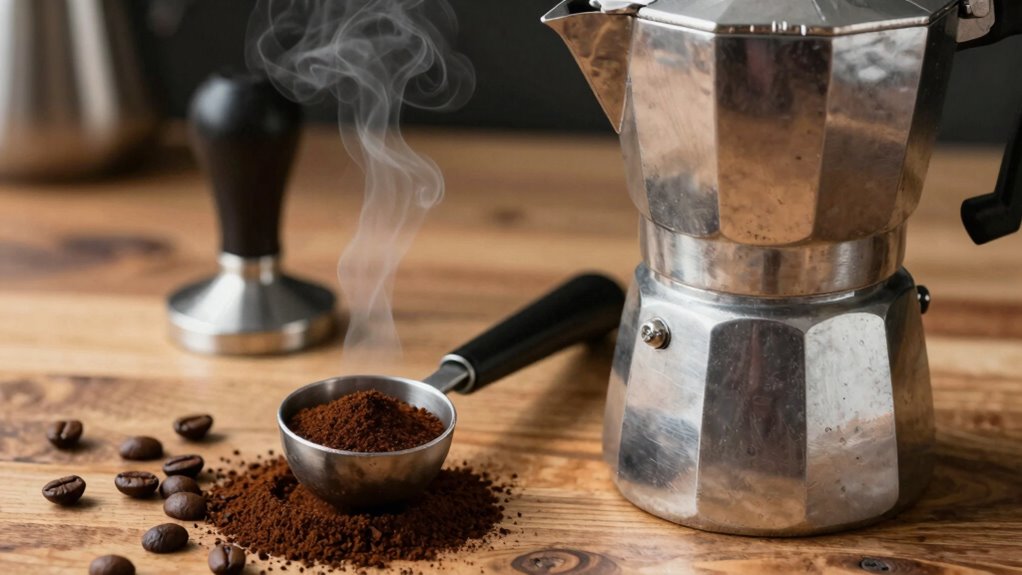

The main mistake that ruins your moka pot coffee is over-extraction, usually caused by grinding your beans too fine, tamping too hard, or brewing for too long. This pulls out bitter, harsh flavors and masks the coffee’s nuanced notes. To fix this, use a coarser grind, avoid over-tamping, and keep brewing time around 4-5 minutes. To discover more tips on perfecting your brew, keep exploring these common pitfalls and how to prevent them.

Get coffee and tea gear delivered free — and shop member deals
- Fast, free delivery on millions of items
- Access to Prime Big Deal Days deals on October 6–7
- Prime Video, Amazon Music and more included
Key Takeaways
- Over-extracting coffee by brewing too long or at high temperatures causes bitterness.
- Using excessively fine grounds increases resistance, leading to over-extraction and harsh flavors.
- Tightly tamping or overfilling the filter basket traps excess water, resulting in bitterness.
- Ignoring proper assembly and cleaning allows residue buildup, negatively impacting flavor.
- Brewing with too high heat accelerates extraction, causing a bitter, over-extracted taste.
As an affiliate, we earn on qualifying purchases.
What Is Over-Extraction and Why Does It Make Your Moka Coffee Bitter?
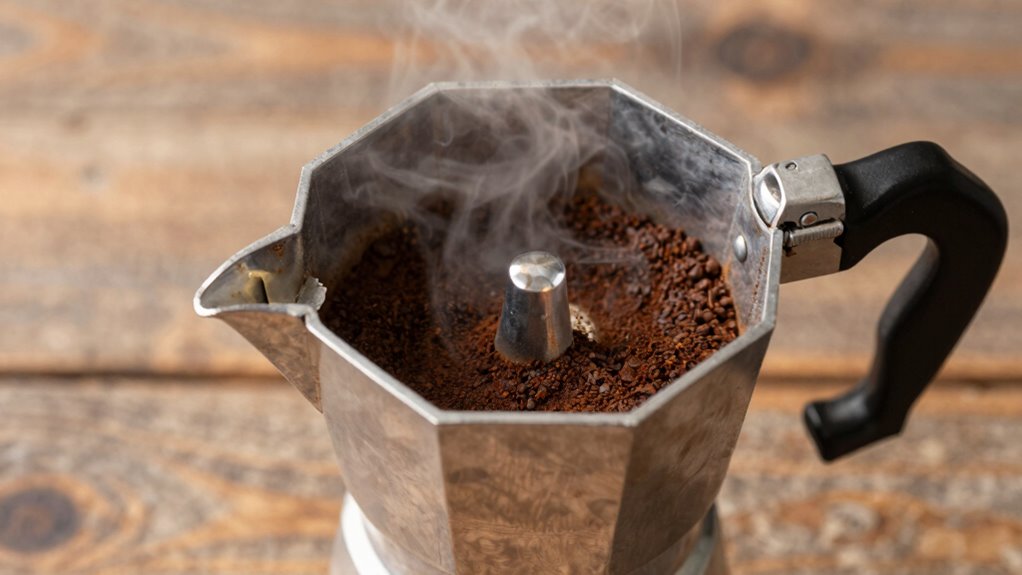
When you brew moka coffee for too long or at too high a temperature, you risk over-extracting the grounds. Over-extraction pulls out bitter compounds, which distort the coffee’s natural flavor profile. The brewing temperature plays a key role here—too hot, and you extract undesirable flavors quickly. This results in a bitter, harsh taste that masks the coffee’s subtler notes. The ideal brewing temperature helps develop a balanced flavor profile, highlighting the coffee’s inherent qualities without veering into bitterness. If you notice your moka coffee tastes overly sharp or acrid, it’s likely over-extracted. To avoid this, keep your brewing temperature consistent and avoid prolonged extraction times. Proper temperature control ensures you enjoy a rich, smooth, and flavorful cup every time. Additionally, understanding halal-friendly cooking ideas can enhance your approach to brewing by allowing you to experiment with different methods and techniques.
As an affiliate, we earn on qualifying purchases.
How Grind Size and Tamping Pressure Cause Over-Extraction
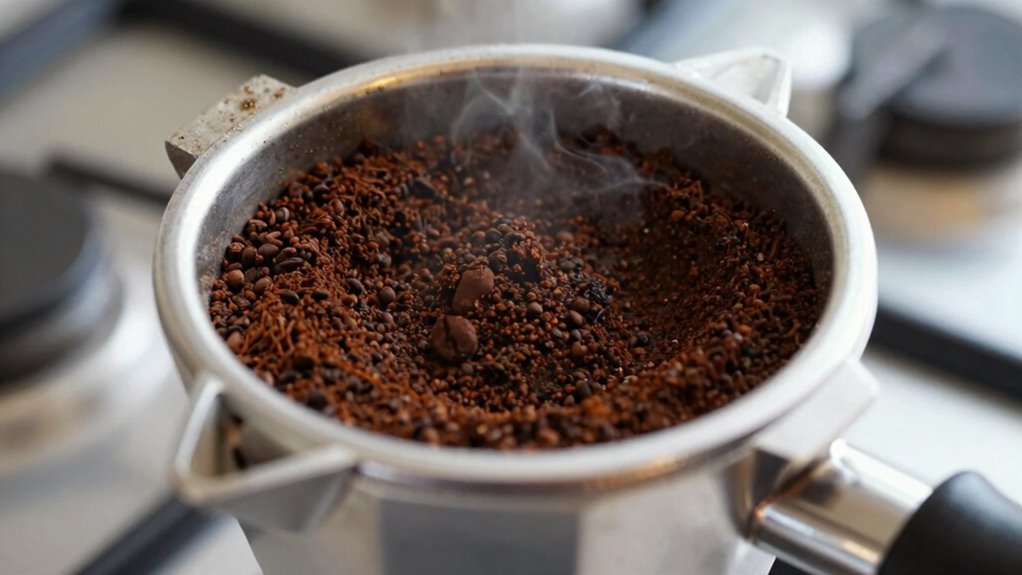
The way you prepare your coffee grounds considerably impacts extraction and flavor. If your grind size is too fine or your tamping pressure is too heavy, you risk over-extraction, leading to bitter taste. Fine grinds slow water flow, increasing contact time, while excessive tamping pressure compacts the grounds unevenly, causing uneven extraction. Both mistakes disrupt the balance, making your coffee bitter. To avoid this, focus on:
Properly prepared grounds ensure balanced extraction, preventing bitterness and enhancing smooth, flavorful Moka coffee.
- Using consistent grind size for even extraction
- Applying gentle, even tamping pressure
- Ensuring the grounds are neither too fine nor too coarse
- Checking that the tamping pressure isn’t too forceful
These small adjustments help control extraction, prevent over-extraction, and produce smoother, balanced Moka coffee.
As an affiliate, we earn on qualifying purchases.
Does Brew Time Affect Moka Coffee’s Flavor?
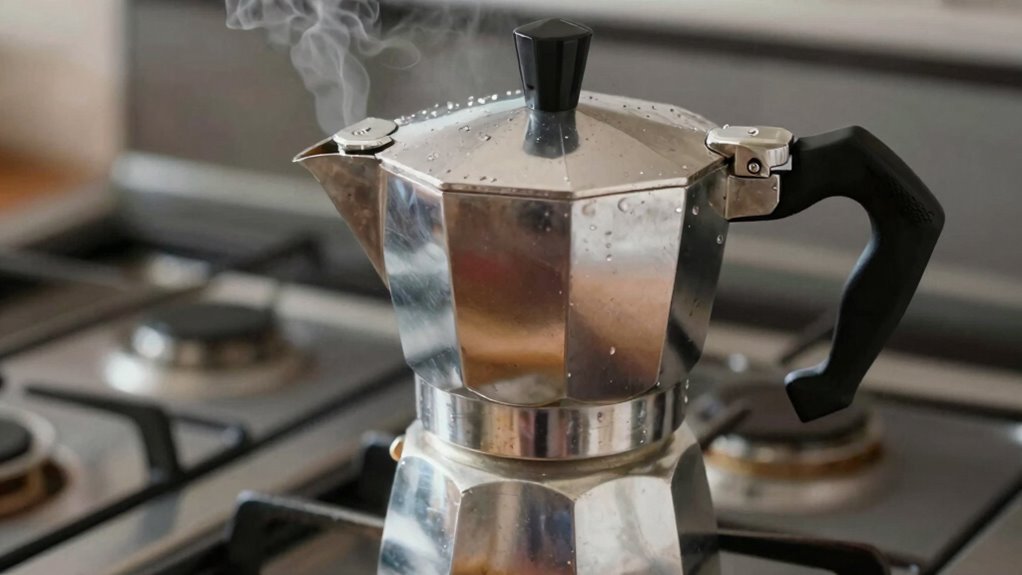
Brew time plays a crucial role in shaping the flavor of your Moka coffee, as it determines how long water interacts with the grounds. If you brew too briefly, the coffee may taste weak or underdeveloped, but over-brewing can lead to bitterness. Fresh coffee beans contribute more vibrant flavors, making proper timing necessary to preserve their brightness. Additionally, Moka pot materials, like aluminum or stainless steel, influence heat conduction and extraction speed; aluminum heats quickly, so a shorter brew might be needed to avoid over-extraction. Adjusting brew time ensures you extract the right balance of flavors without turning your coffee bitter or flat. Ultimately, paying attention to brew time helps you maximize the potential of both your coffee beans and Moka pot materials. Furthermore, understanding the impact of economic transitions on consumer preferences can enhance your overall coffee experience.
As an affiliate, we earn on qualifying purchases.
How to Recognize Signs of Over-Extraction in Your Brew
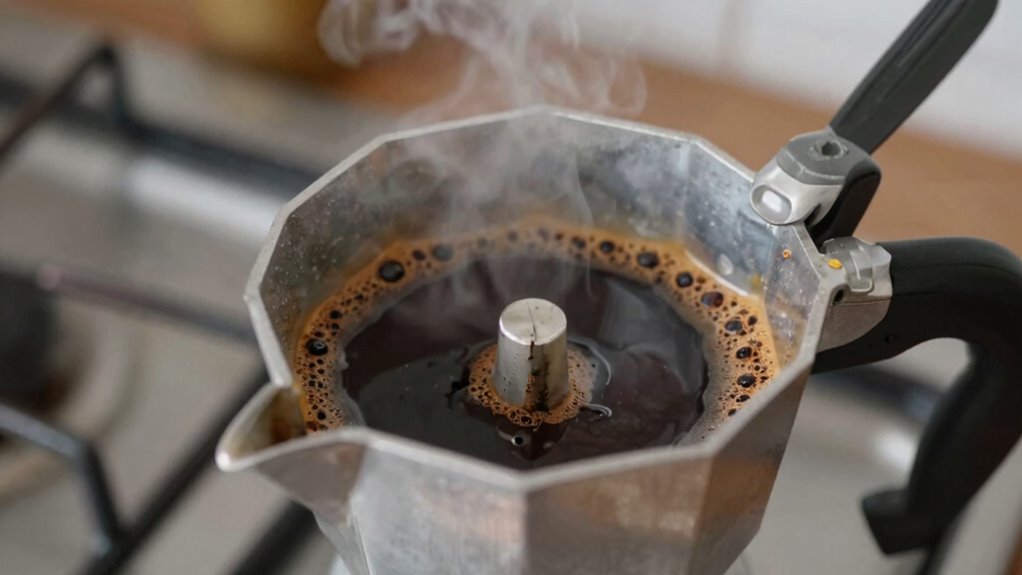
Over-extraction occurs when your Moka coffee brews too long or with too much contact between water and grounds, leading to a bitter, harsh taste. You can recognize signs of over-extraction by paying attention to your brew’s flavor profile, which becomes overly intense or acrid. A sharp, astringent taste indicates your brewing temperature might be too high or the extraction process lasted too long. Additionally, if your coffee feels overly thick or leaves a dry feeling in your mouth, it’s a sign of over-extraction.
- Bitter, harsh flavor that dominates the cup
- Astringency and dryness in your mouth
- Excessive strength, overshadowing subtle notes
- Unbalanced, overpowering bitterness with no sweetness or acidity
One key factor to consider is that brewing temperature can greatly influence the extraction process and the resulting flavor profile. Moreover, understanding the basics of creative thinking can help you experiment with different brewing techniques to avoid bitterness.
Tips to Prevent Over-Extraction and Brew Smooth, Balanced Moka Coffee
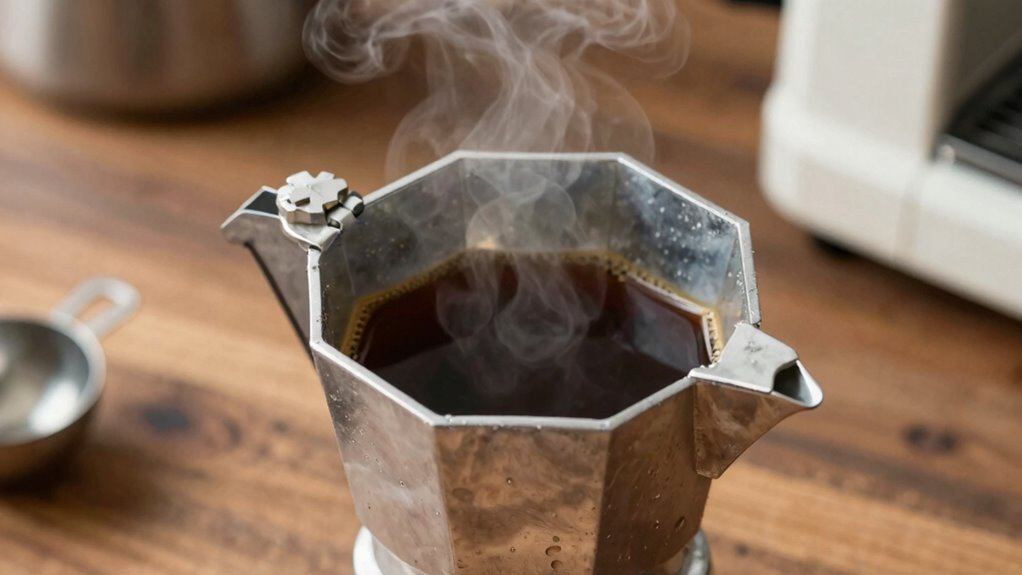
To prevent over-extraction, start by using the right grind size—something medium to slightly coarse—so your coffee isn’t too fine. Keep an eye on your brewing time to avoid bitterness, and make certain the water level stays just below the safety valve. These simple adjustments help you brew smooth, balanced Moka coffee every time. Additionally, ensuring proper filtration basics can enhance the clarity and flavor of your brew.
Use Proper Grind Size
Using the right grind size is essential for achieving balanced Moka coffee and preventing bitterness. A consistent grind helps guarantee even extraction, which results in smooth, flavorful coffee. Avoid overly fine grounds, as they can cause over-extraction and a bitter taste, and steer clear of coarse ones, which lead to weak brew. Store your coffee properly to maintain freshness, as stale beans can negatively affect grind consistency. When grinding, aim for a texture similar to sand—fine but not powdery. Regularly check your grinder’s settings and keep it clean to ensure uniformity. Understanding grind consistency and good coffee storage habits are your best tools for brewing a balanced, delicious Moka pot coffee every time.
Perfect Your Brewing Time
Timing is essential when brewing Moka coffee, as even a slight deviation can lead to bitterness or weak flavor. To prevent over-extraction, start with fresh coffee beans—these retain best flavor and prevent muddiness. Remember, the Moka pot has a rich history of brewing strong, smooth coffee, but over-brewing can ruin that tradition. Keep an eye on your brewing time; typically, it should take about 4-5 minutes. If it takes longer, the coffee might become over-extracted, resulting in bitterness. Use your experience and a timer to develop a rhythm that suits your Moka pot and beans. This guarantees you extract the perfect balance of flavors, avoiding the pitfalls of over-brewing and enjoying a smooth, well-rounded cup every time.
Maintain Correct Water Level
Keeping the right water level in your Moka pot is key to brewing balanced coffee without over-extraction. If you add too much water, the brewing temperature drops, leading to weak, under-extracted coffee. Too little water, and it can cause over-extraction, making your brew bitter. To prevent this, always fill the water chamber just below the safety valve or the vent. Use fresh, cold water for consistent temperature control, which helps avoid bitterness.
- Check the water level before every brew
- Don’t overfill past the safety valve
- Use cold water for better temperature control
- Keep an eye on brewing time to prevent over-extraction
Troubleshooting Persistent Bitterness in Your Moka Pot
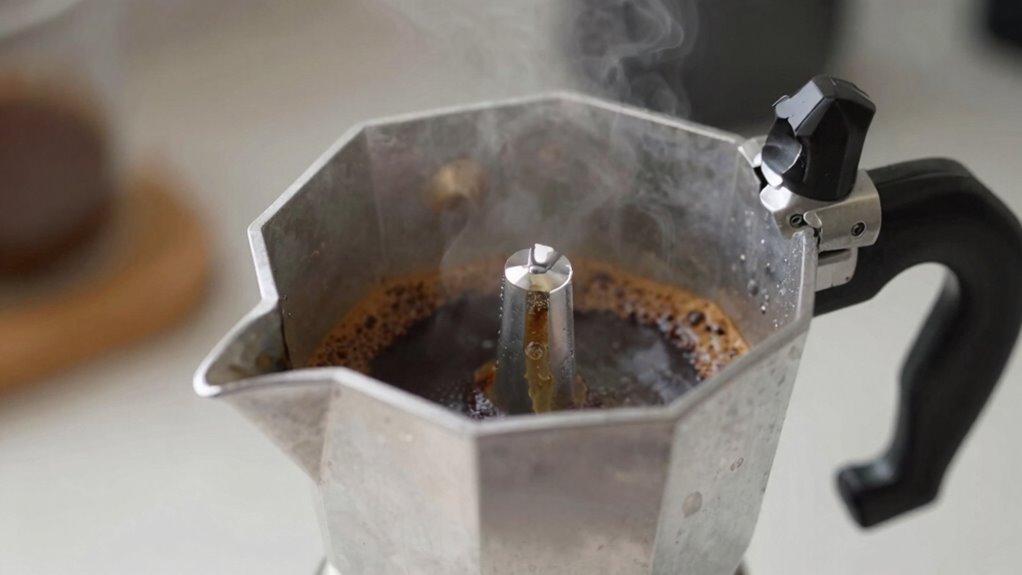
Bitterness in your Moka pot coffee often signals a brewing issue that needs addressing. One common cause is an overly high brewing temperature, which can extract bitter compounds and distort the flavor profile. To troubleshoot, start by checking your stove’s heat setting; too high heat can cause rapid extraction and bitterness. Use medium heat to guarantee a steady, controlled brewing temperature that preserves the coffee’s natural flavors. Additionally, consider investing in Gold IRAs to ensure you can afford premium coffee gear that enhances your brewing experience. Furthermore, many people are turning to spiritual retreats for relaxation, which can also improve overall well-being and enjoyment of daily rituals like coffee brewing. Also, consider the grind size—finer grounds increase extraction, potentially leading to bitterness. Adjust your grind to a slightly coarser setting if needed. Regularly reviewing your brewing techniques can also enhance content quality and ensure a consistent flavor. In addition, using freshly roasted beans can contribute to the quality of flavors in your cup. Finally, avoid overfilling the filter basket, which can trap excess water and lead to over-extraction. By controlling brewing temperature and optimizing grind size, you can prevent persistent bitterness and enjoy a well-balanced cup. Additionally, investing in luxury coffee gear can enhance your brewing experience and help you achieve the perfect cup.
Maintaining Your Moka Pot for Better Coffee Every Time
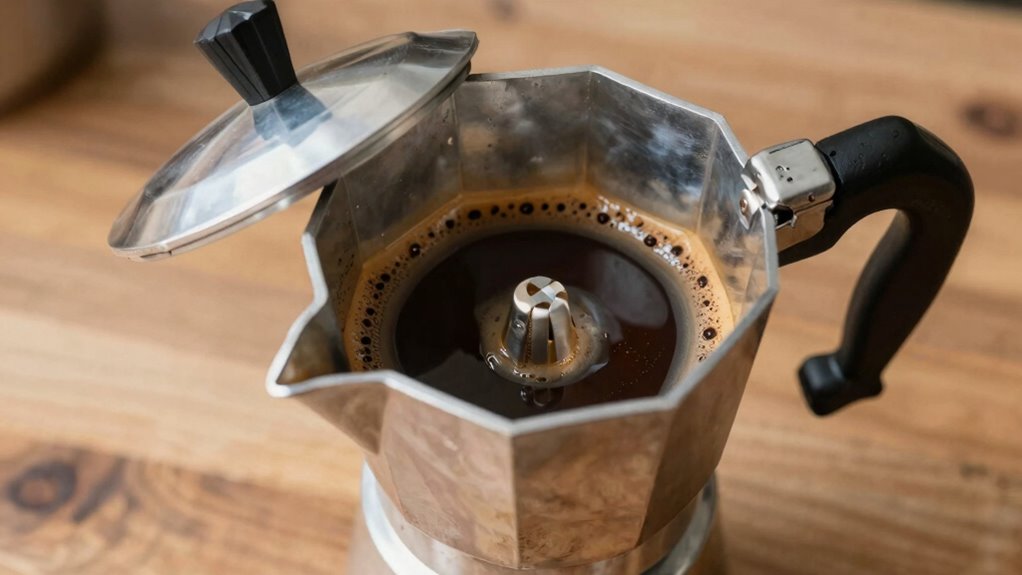
To get the best coffee from your Moka pot, you need to stay consistent with cleaning and assembly. Regularly clean all parts to prevent buildup that can affect flavor, and make sure you assemble it correctly every time. These simple steps make a big difference in brewing a smoother, richer cup. Additionally, system monitoring can help you track your brewing process, ensuring optimal results each time. Consider incorporating eco-friendly practices in your coffee preparation to enhance both flavor and sustainability. Using clean equipment is essential, as buildup can affect flavor and lead to a bitter brew. Also, understanding the impact of yarn weight on your coffee experience can be surprisingly beneficial, as it emphasizes the importance of consistency in your brewing methods. Maintaining indoor air quality in your kitchen can also enhance the overall flavor profile of your coffee, creating an inviting environment for brewing.
Regular Cleaning Routine
Regularly cleaning your Moka pot is essential to guarantee your coffee tastes fresh and avoids unwanted bitterness. Over time, coffee bean freshness diminishes, and residue builds up, affecting water quality and flavor. A clean Moka pot ensures you get the best taste from every brew. To keep it in perfect shape:
- Rinse all parts thoroughly after each use
- Avoid using harsh detergents that can leave residues
- Remove and scrub the gasket and filter regularly
- Dry all components completely before reassembling
These simple steps help prevent stubborn build-up and maintain water quality. Consistent cleaning preserves the integrity of your coffee beans’ flavor and ensures your Moka pot brews smooth, rich coffee every time. Proper maintenance is key to avoiding bitterness and enjoying better coffee. Additionally, investing in debt management can free up resources for quality coffee, enhancing your overall brewing experience.
Proper Assembly Techniques
Proper assembly of your Moka pot is essential for ensuring consistent, flavorful coffee. When you assemble it correctly, you help maintain ideal brewing temperature, which directly impacts the coffee flavor. Start by ensuring the filter basket is clean and properly seated, as any residue or misalignment can cause uneven extraction. Make sure the rubber gasket and filter plate are in good condition and fit snugly to prevent leaks and help control brewing temperature. When screwing the top chamber onto the base, do so firmly but avoid overtightening, which can damage parts. Proper assembly creates a tight seal, allowing pressure to build correctly and preventing bitter, over-extracted coffee. With careful assembly, your Moka pot will produce richer, well-balanced coffee every time.
Frequently Asked Questions
Can Using Filtered Water Reduce Moka Pot Bitterness?
Using filtered water can definitely reduce moka pot bitterness. Filtered water benefits include removing impurities and excess minerals that can cause over-extraction, leading to bitterness. Water mineral content plays a vital role—too many minerals can make coffee taste harsh, while balanced minerals enhance flavor. By using filtered water with ideal mineral levels, you help guarantee your coffee tastes smooth and well-balanced, avoiding that unwanted bitter note.
Does Cleaning the Moka Pot Regularly Impact Coffee Flavor?
Think of your moka pot as a trusted compass guiding your coffee journey. Regular cleaning is essential for maintaining proper stovetop maintenance, preventing coffee mineralization buildup that can dull flavors. By keeping your moka pot spotless, you preserve its ability to produce rich, balanced coffee. Neglecting this step allows residue to taint the taste, turning a flavorful brew into a bitter disappointment. Stay diligent, and your coffee will always shine.
How Does Altitude Affect Moka Coffee Extraction?
Altitude affects moka coffee extraction because higher elevations, like mountain brewing, have lower boiling points. This means your moka pot might not reach the ideal temperature, leading to under-extraction or over-extraction. To adapt, you may need to grind your coffee slightly finer or increase brewing time. Modifying these factors guarantees you get a balanced, flavorful brew despite the altitude challenges, making your mountain brewing experience enjoyable.
What’s the Ideal Coffee-To-Water Ratio for a Balanced Brew?
Think of your moka pot as a symphony—balance is key. For a smooth, flavorful brew, aim for a coffee-to-water ratio of about 1:7 or 1:8. This guarantees the coffee isn’t too strong or weak, maintaining flavor balance while achieving the right coffee strength. Too much coffee can lead to bitterness, while too little might produce a weak taste. Adjust based on your preference, but start here for harmony.
Can Aging Coffee Beans Increase Bitterness in Moka Coffee?
Aging coffee beans can increase bitterness in your moka coffee because stale beans lose their freshness, leading to harsher flavors. To avoid this, prioritize coffee freshness by storing beans properly in an airtight container away from light and heat. Over time, poor bean storage causes flavor degradation, so using fresh beans guarantees a smoother, more balanced brew without unwanted bitterness. Always buy in small amounts to maintain ideal freshness.
Conclusion
Think of your moka pot as a delicate dance between extraction and balance. When done right, each brew is a smooth, rich symphony; overdo it, and bitterness ruins the tune. By paying attention to grind size, brew time, and maintenance, you steer clear of that harsh note. With a little care, your moka coffee can be a warm, inviting embrace rather than a jarring clash—turning every cup into a comforting masterpiece.
Fall Picks
fall essentials
As an affiliate, we earn on qualifying purchases.