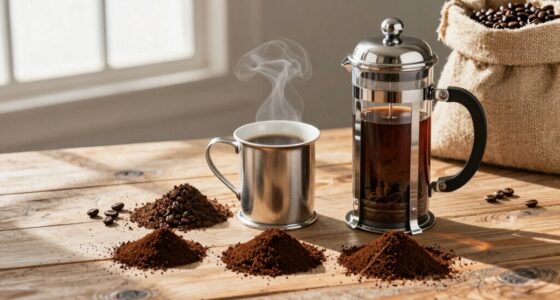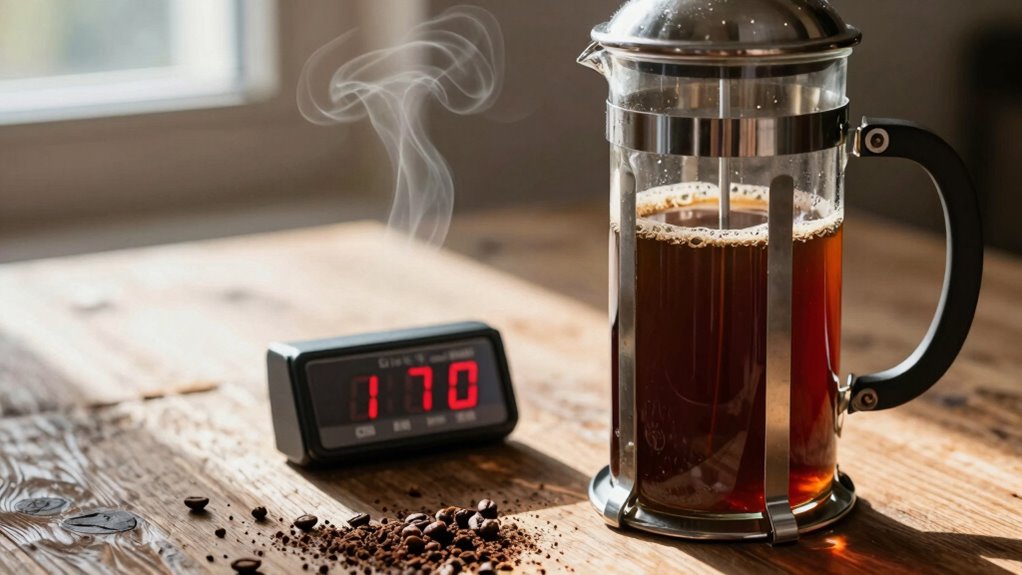

The one mistake that can ruin your French press coffee is using the wrong grind size. A too-fine grind leads to over-extraction, resulting in bitter flavors, while a coarse grind risks under-extraction, leading to sour tastes. To avoid this, aim for a coarse, breadcrumb-like texture for balanced results. Consistency is key, so experiment and adjust your grind until you find what works best for you. Discovering more about how to perfect your French press technique can enhance your brewing experience.
Key Takeaways
- Using a grind size that’s too fine can lead to over-extraction, resulting in bitterness; opt for a coarse grind resembling breadcrumbs.
- Brewing at temperatures below 195°F can cause under-extraction, leading to a sour taste; aim for 195°F to 205°F for optimal flavor.
- Steeping for longer than 4 minutes can introduce bitterness; monitor your brewing time closely for a balanced flavor profile.
- Poor water quality can affect taste; always use filtered water to avoid unwanted flavors in your French press brew.
- Consistent coffee-to-water ratios enhance flavor balance; experiment with proportions to find your preferred strength and taste.
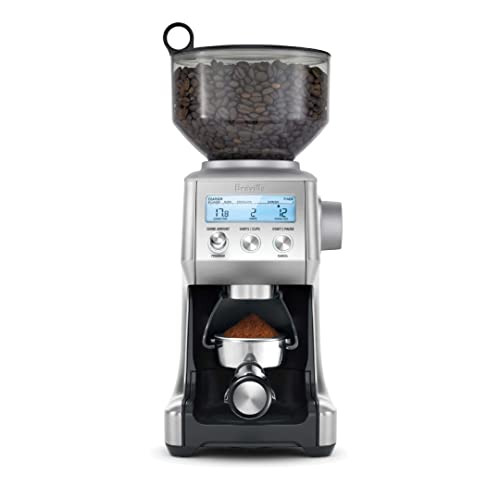
Breville BCG820BSS Smart Grinder Pro for Coffee and Espresso, Brushed Stainless Steel
The Breville Smart Grinder Pro includes 60 unique settings – this programmable conical burr grinder offers a wide...
As an affiliate, we earn on qualifying purchases.
Why Grind Size Matters for French Press Coffee
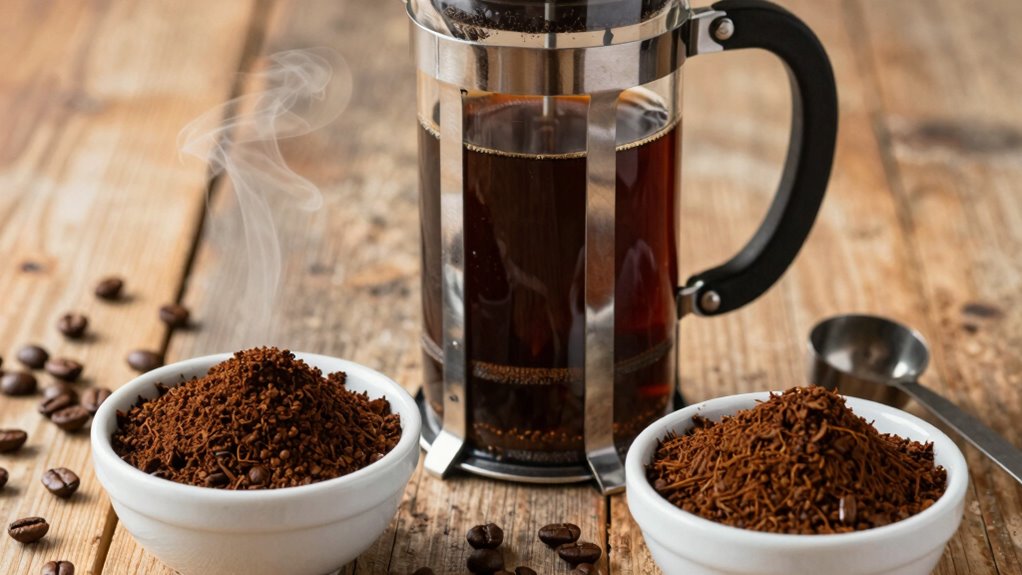
When you think about brewing the perfect cup of French press coffee, grind size plays an essential role. A coarser grind allows for better extraction during the brewing process, ensuring you get the most flavor from your beans. If your grind is too fine, you risk over-extraction, making your coffee bitter. Additionally, understanding the various brewing methods can help you appreciate why grind size is so crucial.
Furthermore, the brewing temperature and water quality matter, too. Hot water extracts flavors more effectively, but if it’s too hot, it can exacerbate the bitterness from a fine grind. Using filtered water enhances the taste, as impurities can affect the final brew. To ensure a rich brew, it’s also important to consider coffee-to-water ratios, as this can significantly impact flavor balance. Additionally, maintaining proper hydration levels can enhance your overall coffee experience, just as getting your grind size right can lead to a rich, flavorful French press coffee without the common pitfalls.

MOKKOM Professional 64mm Flat Burr Coffee Grinder with 100 Grind Settings, All-Metal Stainless Steel Body, Coffee Bean Grinder with Adjustable Electronic Timer, Anti-Static, LED Display
[64mm Stainless Steel Flat Burrs] As a professional coffee grinder, this machine uses 64mm stainless steel flat burrs...
As an affiliate, we earn on qualifying purchases.
How to Choose the Right Grind Size
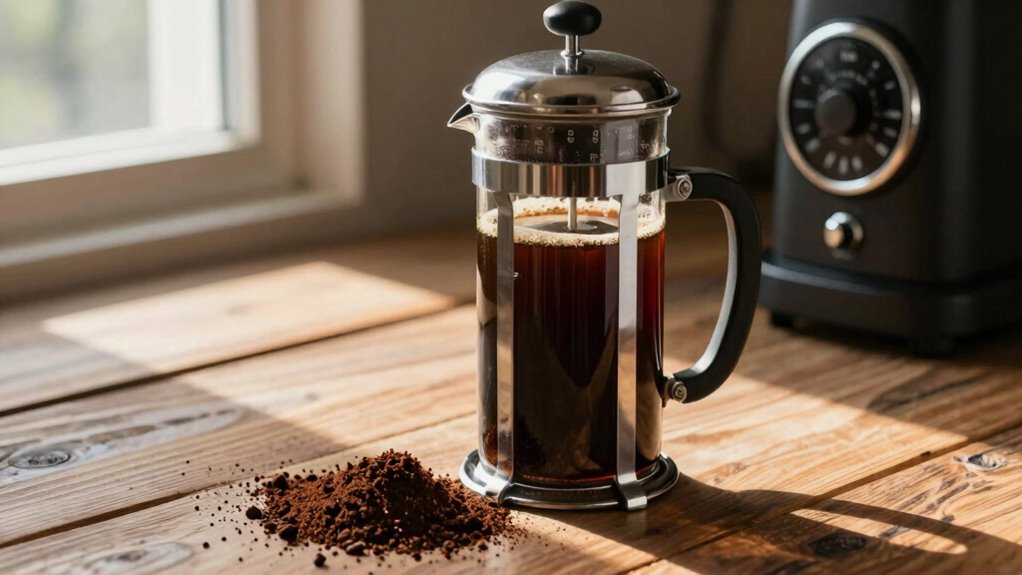
Getting the grind size right can make or break your French press experience. For ideal flavor extraction, aim for a coarse grind. This size allows the water to interact with the coffee grounds effectively during the brew time, enhancing the overall coffee aroma. If the grind’s too fine, you risk over-extraction, leading to a bitter taste. Conversely, a grind that’s too coarse may result in under-extraction, leaving your coffee weak and lacking depth. Familiarize yourself with various brewing techniques to see what suits your palate best. Adjusting the grind size can greatly impact your cup, so don’t hesitate to experiment until you find the perfect balance that brings out the rich flavors you love. Additionally, understanding evidence-based practices can help elevate your brewing experience even further. For instance, utilizing essential oils for respiratory health may enhance your overall coffee experience by promoting easier breathing while you enjoy your brew.

Neretva Espresso Grinder, 2 in 1 Professional Coffee Bean Grinder Stainless Steel Suit 51~58mm Portafilter Burr Coffee Grinder 30 Precise Setting&Anti-Static for Espresso/French Press/Drip/Moka-Silver
PROFESSIONAL CONICAL BURR COFFEE GRINDER- WIth new upgraded 3.0 conical burr grinding technoloy, the coffee grinder ensures that...
As an affiliate, we earn on qualifying purchases.
Common Grind Sizes for French Press Brewing
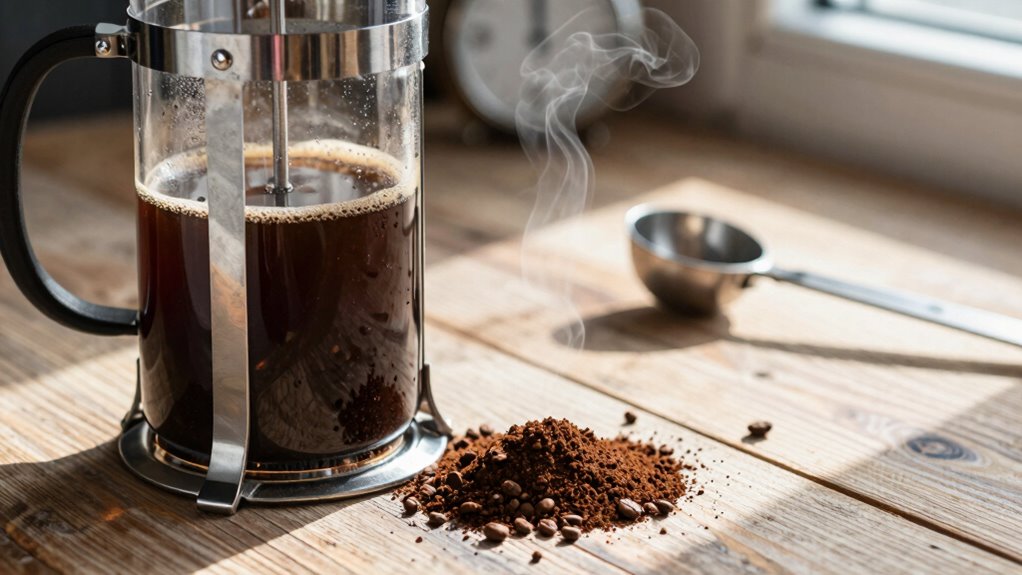
Understanding common grind sizes for French press brewing is vital for achieving that perfect cup of coffee. A coarse grind is typically recommended, as it allows for ideal extraction without over-extracting flavors. However, some prefer a medium grind for a slightly different taste profile, highlighting various flavor nuances from different coffee origins. Make sure to experiment with grind adjustments to see what matches your taste preferences best. Consistency in your grind is important, so invest in good brewing equipment that helps maintain that. Proper grind storage also plays a role; keep your coffee fresh to preserve those delightful flavors. By mastering these grind sizes, you’ll enhance your brewing techniques and enjoy a richer coffee experience. Additionally, understanding brewing science will help you refine your approach to extraction and flavor balance.

SHARDOR Conical Burr Espresso Coffee Grinder Electric with Precision Timer 2.0, Touchscreen Adjustable Burr Mill with 51 Precise Settings for Home Use, Anti-static, Stainless Steel
Premium 40 Millimeter Stainless Steel Conical Burr: Designed to minimize grinding heat and protect the essential oils in...
As an affiliate, we earn on qualifying purchases.
The Impact of Over-Extraction on Flavor
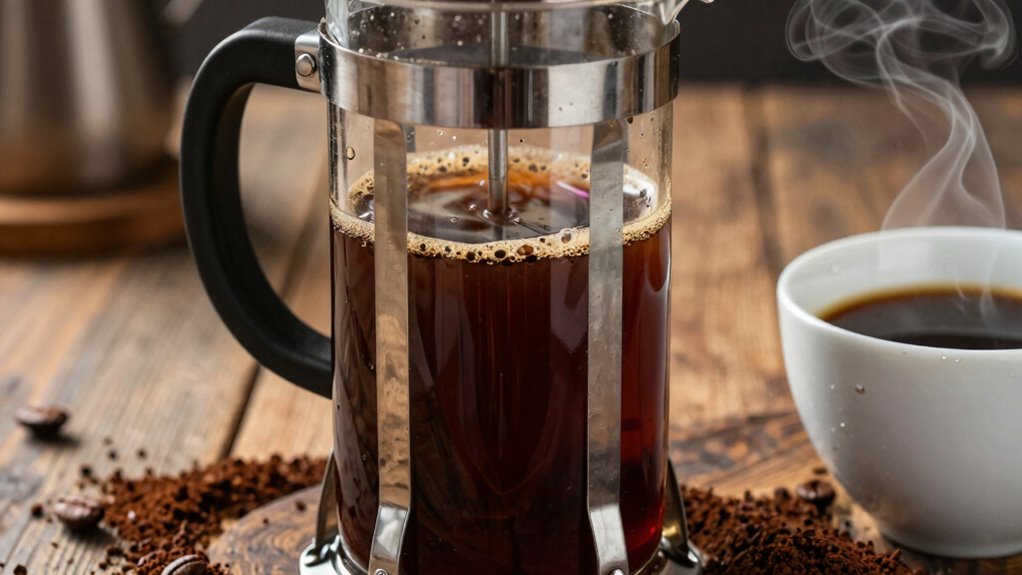
When you over-extract your coffee in a French press, you might notice a bitter flavor that masks the beans’ natural sweetness. This bitterness can lead to an unbalanced taste experience, making your brew less enjoyable. To avoid this, it’s essential to pay attention to your brew time and grind size.
Bitter Flavor Profile
Over-extraction can quickly turn your French press coffee into a bitter brew that masks the rich flavors you’re aiming for. When you let your coffee steep too long, the bitterness sources—like over-extracted compounds—can dominate your cup. Instead of a harmonious flavor balance, you get an unpleasant, sharp taste that overwhelms the nuances in your beans. To avoid this, aim for a steeping time of about four minutes, and monitor your grind size; a coarser grind helps prevent those bitter notes from taking over. Remember, the goal is to enhance the natural sweetness and complexity of your coffee, not to drown it in bitterness. Keep an eye on the clock, and enjoy a smooth, flavorful cup every time!
Loss of Sweetness
Letting your coffee steep too long not only leads to bitterness but also strips away its natural sweetness. When you over-extract, you disrupt the sweetness balance that makes your brew enjoyable. The sugars in the coffee beans are delicate; if they’re left in hot water too long, they dissolve and are replaced by harsher compounds. This loss diminishes the flavor harmony you crave, leaving your cup tasting flat and uninviting. To maintain that delightful sweetness, stick to the recommended brew time. It’s about finding the sweet spot where you get rich flavors without sacrificing the pleasant notes that elevate your coffee experience. Remember, a well-timed brew is key to revealing the full potential of your French press. Understanding brewing choices can also help you optimize your extraction for a more balanced cup. Additionally, just as with color accuracy in projectors, achieving the right brewing time is essential for enhancing the overall flavor profile. Incorporating smart home technology can also streamline your brewing process, ensuring precise control over your coffee-making environment, as well as understanding nutrition basics to fuel your body for a more enjoyable coffee experience. By mastering the timing of your brew, you enhance the flavor complexity that can be achieved with your coffee.
Unbalanced Taste Experience
Although it might seem harmless to let your coffee steep a bit longer, doing so can throw your flavor profile completely off balance. Over-extraction occurs when your coffee grounds release too many compounds, leading to a bitter, astringent taste. This disrupts the taste balance you aim for, overshadowing the sweeter notes and delicate acidity that create flavor harmony. Instead of enjoying a rich, well-rounded cup, you end up with an unpleasant brew that’s hard to savor. To achieve that perfect taste balance, stick to the recommended steeping time. By doing this, you’ll highlight the coffee’s natural sweetness and complex flavors, ensuring a delightful cup every time. Remember, timing is key to revealing the best in your French press!
Effects of Under-Extraction on Your Brew
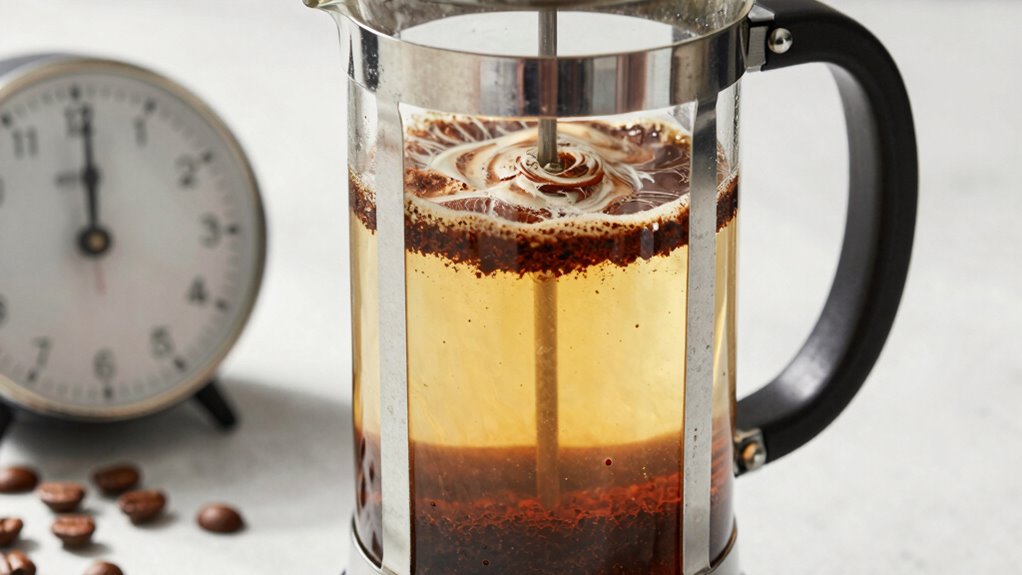
When you under-extract your coffee, you risk missing out on the rich flavors and aromas that make each cup enjoyable. Under extraction causes a lack of sweetness and body, leaving your brew tasting sour and thin. Brewing temperature effects also play a critical role; too low a temperature can exacerbate this issue, highlighting undesirable notes.
Here’s a quick overview of the effects:
| Flavor Profile | Common Notes | Brewing Temperature |
|---|---|---|
| Under-Extracted | Sour, Bitter | Below 195°F (90°C) |
| Ideal Extraction | Balanced, Sweet | 195°F – 205°F (90-96°C) |
| Over-Extracted | Harsh, Astringent | Above 205°F (96°C) |
Consistent Grind Size Tips
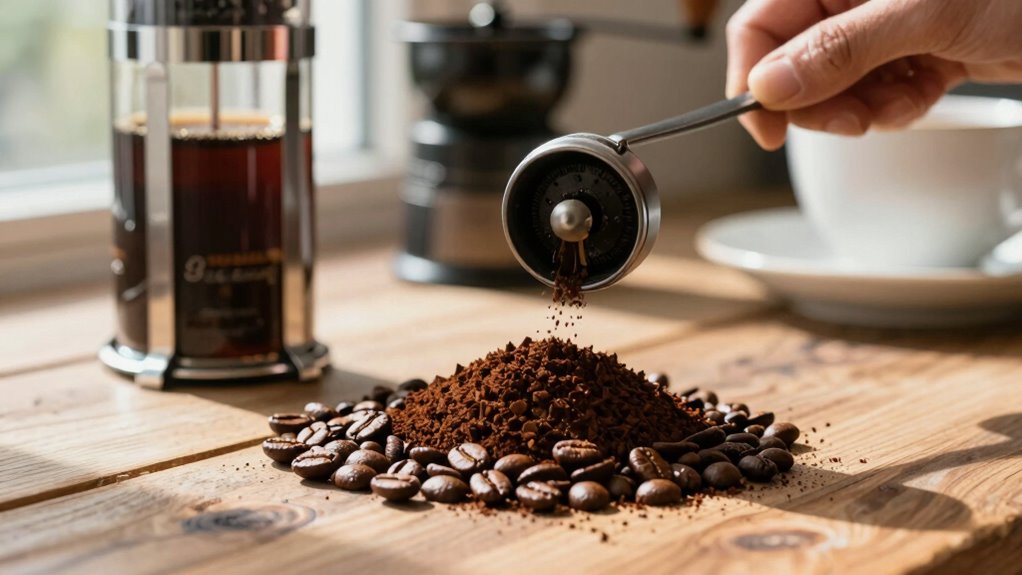
To achieve a balanced brew and avoid under-extraction, you need to pay attention to your grind size. Start with a coarse grind, ideally resembling breadcrumbs, for ideal extraction. Make grind adjustments based on your taste preferences and brewing time; if your coffee tastes sour, try a finer grind. Regular grind maintenance is essential—clean your grinder frequently to prevent old coffee residues from affecting the flavor. Additionally, exploring emerging trends in brewing methods can provide fresh insights into achieving the perfect cup. Also, consider using a burr grinder for uniformity, as blade grinders can create inconsistent sizes. Unique planter designs can be a great source of inspiration for creating a cozy coffee brewing space. Pressure washers can also be helpful for cleaning your grinder’s exterior. Experiment with different settings and keep notes to refine your process. Remember, consistency is key; a slight change in grind size can greatly impact your French press experience. Additionally, understanding the importance of grind size can significantly enhance your brewing results. Incorporating training concepts from other brewing methods can help you discover new flavors. Enjoy the journey of perfecting your brew!
Troubleshooting Grind-Related Brew Issues
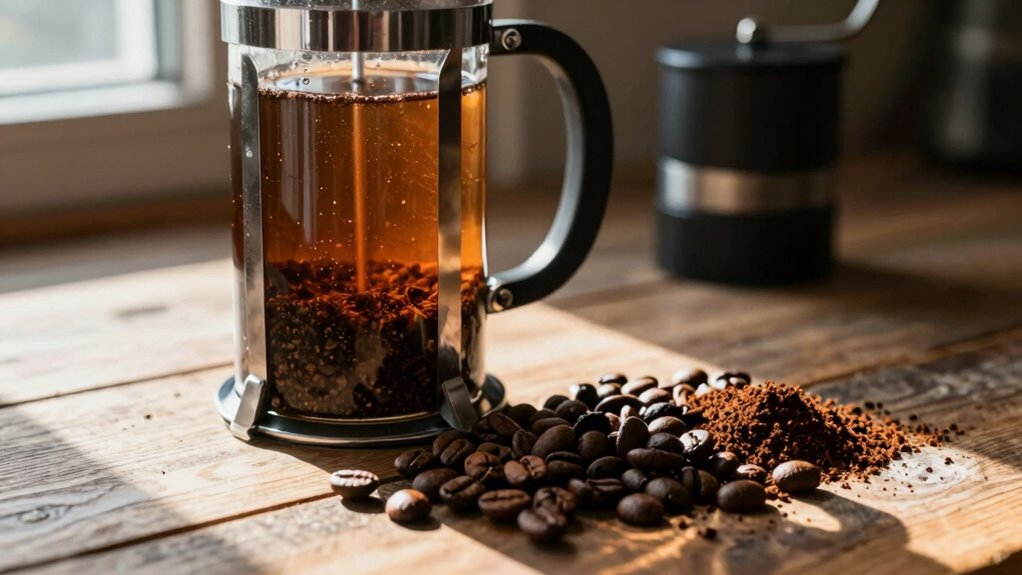
When your French press brew isn’t hitting the mark, it’s often due to grind size. A consistent grind is essential for balanced extraction, so if you’re struggling, it’s time to reassess. Let’s explore how adjusting your grind can transform your coffee experience. Additionally, maintaining pest-free spaces in your brewing area can contribute to a cleaner and more enjoyable coffee ritual. Using a baking steel for heating your coffee water can also help achieve the perfect temperature for extraction. Furthermore, ensuring good indoor air quality can enhance your overall coffee experience by reducing contaminants that might affect flavor. Poor air quality can introduce allergens and odors that may interfere with your enjoyment of freshly brewed coffee. Incorporating essential oils like peppermint oil during your coffee rituals can also elevate your mood and enhance your brewing experience.
Grind Size Matters
Although you might not realize it, the grind size of your coffee beans plays an essential role in how your French press brew turns out. A coarse grind is ideal, as it enhances extraction while minimizing bitterness. If your grind is too fine, it can lead to over-extraction, ruining the flavor. Pay attention to brewing temperature, too; water that’s too hot can exacerbate this issue. Confirm your coffee’s freshness for the best results; old beans can negatively impact taste. Grind uniformity is critical; inconsistent sizes can lead to uneven extraction. Finally, always consider water quality—impurities can ruin the whole experience. By managing these factors, you’ll achieve a balanced brew with the perfect brewing time.
Consistency Is Key
Even with the right grind size, inconsistencies can still derail your French press experience. To guarantee a perfect brew every time, focus on these key factors:
- Brew Temperature: Aim for 195-205°F (90-96°C). Too hot or too cold can affect extraction.
- Water Quality: Use filtered water to avoid unwanted flavors. Tap water can lead to off-tastes and inconsistent results.
- Grind Consistency: Invest in a good grinder. Uneven particles can result in over-extraction or under-extraction, ruining your cup. Additionally, ensure proper airflow around your brewing setup to enhance overall performance.
How Coffee Beans Affect Your Grind Size Choice
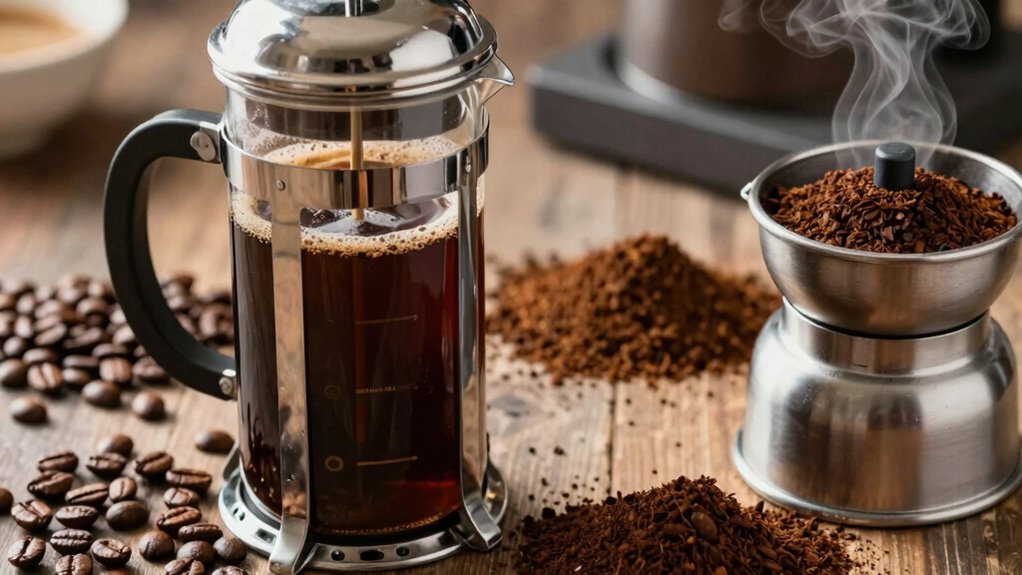
Understanding how coffee beans affect your grind size choice is essential for achieving the perfect brew. The bean origin and roast level play a significant role in determining the ideal grind. For instance, lighter roasts often require a coarser grind, while darker beans may benefit from a finer texture. Your desired flavor profile influences extraction time and brewing temperature; coarser grinds typically yield a longer extraction time, while finer grinds extract flavors more quickly. Additionally, experimenting with creative craft techniques can enhance your brewing process by allowing you to tailor your grind approach. Don’t forget about water quality, as it impacts the overall taste. Additionally, using the right acoustic drum shields can help create a quieter environment, allowing you to focus on perfecting your brewing techniques. Experimenting with different grind techniques based on your brewing method can help you find the right balance, enhancing your coffee experience and ensuring a delicious cup every time.
Final Thoughts on Perfecting Your French Press Brew
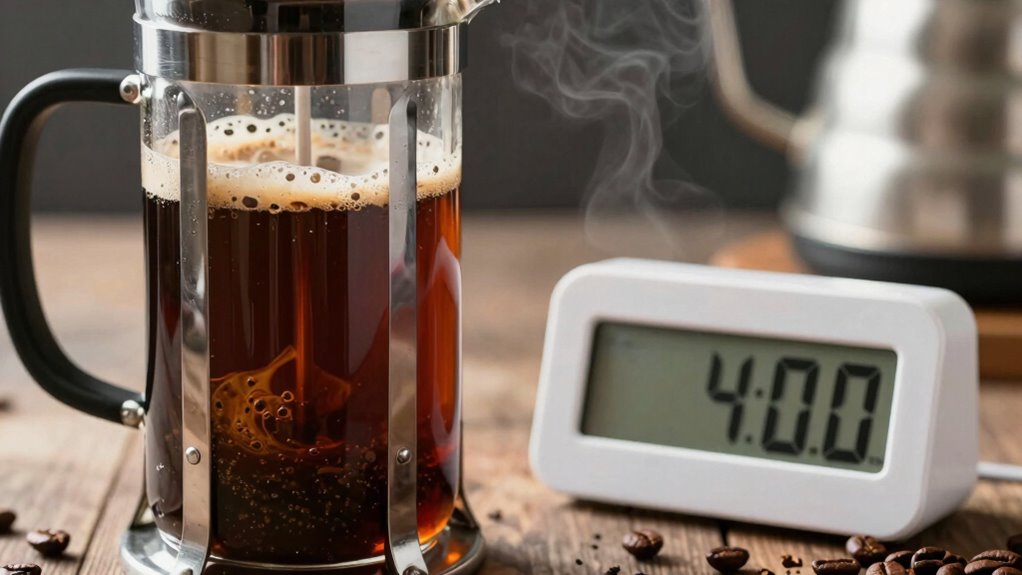
Perfecting your French Press brew involves more than just the right beans and grind size; it’s about mastering the entire process. To elevate your brewing game, consider these three essential factors:
- Brew Temperature: Aim for a temperature between 195°F and 205°F for ideal extraction.
- Coffee Freshness: Use freshly roasted beans and grind them just before brewing to enhance flavor.
- Brew Time: Stick to a 4-minute steep for a balanced taste; adjust slightly based on your preference.
Frequently Asked Questions
Can I Use Pre-Ground Coffee for French Press Brewing?
Yes, you can use pre-ground coffee for French press brewing, but be mindful of the coffee grind size. Coarser grinds work best, as they allow for ideal flavor extraction without resulting in a bitter brew. If your pre-ground coffee is too fine, it’ll lead to over-extraction and a gritty texture. For the best taste, consider grinding your beans just before brewing to enhance freshness and flavor. Enjoy your perfect cup!
How Long Should I Steep French Press Coffee?
You might wonder, how long should you steep your French press coffee? Ideally, you’ll want to steep it for about four minutes. This allows the grind size to extract flavors without becoming bitter. Use a consistent steeping technique, and remember that coffee freshness plays an essential role in taste. Adjust your brewing ratios based on your preference, but stick to about one tablespoon of coffee per six ounces of water for a balanced brew.
What Water Temperature Is Best for French Press?
For the best French press coffee, aim for water temperatures between 195°F and 205°F. This range guarantees ideal extraction, enhancing the flavor without bitterness. Also, focus on water quality; filtered water can improve taste and brewing consistency. If you’re using boiling water, let it sit for about 30 seconds before pouring. This simple adjustment helps you achieve a rich, balanced brew every time you make coffee. Enjoy your perfect cup!
How Many Coffee Beans Do I Need per Cup?
For a perfect cup, you’ll need about 1 to 2 tablespoons of coffee beans per 6 ounces of water. That’s a coffee bean ratio of 1:15 to 1:18. Experimenting with grind size is essential too; a coarser grind enhances extraction while preventing over-brewing. So, whether you prefer a stronger brew or a milder taste, adjusting the coffee bean ratio and grind size will help you find your ideal balance.
Can I Reuse Coffee Grounds in French Press?
You can reuse coffee grounds in a French press, but it’s not ideal for freshness. After the first brew, the grounds lose much of their flavor. If you do reuse them, consider using them for a lighter second cup. Keep in mind that grind size affects extraction; coarser grounds might hold up better for a second brew than finer ones. Ultimately, for the best taste, fresh grounds are your best bet!
Conclusion
To brew the perfect French press coffee, remember that your grind size holds the key. Picture the rich aroma swirling around you, each sip revealing a symphony of flavors. Avoid the pitfalls of over- or under-extraction by choosing a coarse grind that captures the essence of your beans. With a consistent grind, you’ll transform your morning routine into a delightful ritual, where every cup is a warm embrace that awakens your senses. Enjoy the journey to coffee perfection!