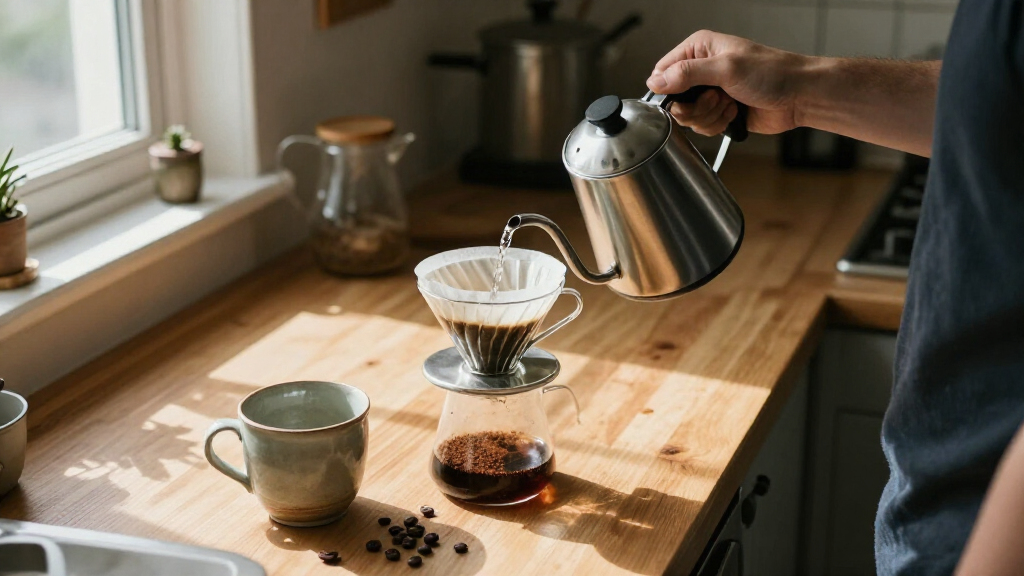

Choosing coffee brewing accessories often comes down to two manual setups: a pour-over dripper with filters and a kettle, or a French press with its built-in metal filter. Both can make good coffee without an electric brewer, but they ask for different things from you. Pour-over rewards attention to grind, water flow, and timing; the French press is more forgiving and produces a heavier cup with more oils and fine particles.

Get coffee and tea gear delivered free with Prime
- Fast, free delivery on millions of items
- Prime Video, Amazon Music and more included
- Member-only deals all year

MiiCoffee Minipress Coffee Scale with Auto Timer
- ✔ Maximum capacity: 2 kg
- ✔ Readout accuracy: 0.1 g
- ✔ Dimensions: 3.6 x 3.4 x 0.6 in (92 x 88 x 14 mm)

BOOKOO Themis Mini Precision Coffee Scale
- ✔ Capacity: 1,000 g
- ✔ Readout accuracy: 0.1 g
- ✔ Flow tracking: 0.1 g/s
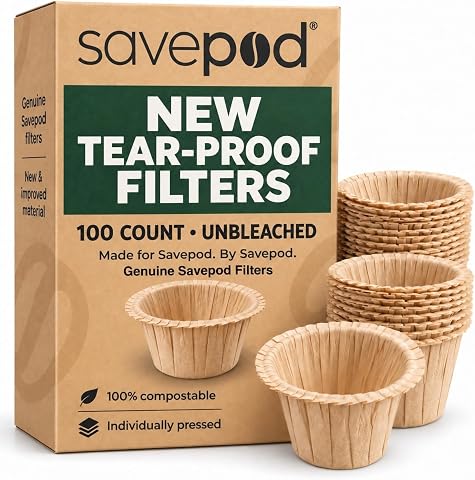
Savepod Unbleached Coffee Filters, Burst-Resistant, 100 Count
- ✔ Material: Unbleached paper
- ✔ Quantity: 100 filters
- ✔ Compatible devices: Reusable K-Cup pods and Keurig brewers
The main tradeoff is control versus simplicity. A pour-over setup suits drinkers who enjoy adjusting each brew and want a clean, bright profile. A French press suits people who want a substantial cup, fewer accessories, and a straightforward routine. Cost can favor either option depending on the grinder and kettle you already own, so the right choice is less about buying the most gear and more about how you want to brew every day.
At a Glance
| Criteria | Pour-over setup | French press setup | Winner |
|---|---|---|---|
| Cup body and clarity | Cleaner, lighter cup; paper filters remove most sediment and oils | Fuller, heavier cup with more oils and some fine sediment | Depends |
| Control and repeatability | High control over pouring, flow, and brew time; technique affects results | Steeping time and grind size matter, but pouring technique matters less | A |
| Ease of brewing | Requires a steady pour and attention to timing | Simple routine: add grounds and water, wait, then press | B |
| Cleanup | Used paper filter and grounds are easy to discard; dripper needs rinsing | Wet grounds can be awkward to remove; plunger and vessel need washing | A |
| Accessory needs | Dripper, filters, and ideally a gooseneck kettle; scale is useful | Press and a grinder; no paper filters or specialized kettle required | B |
| Batch size and serving | Best for one or two cups brewed directly into a mug or carafe | Convenient for multiple servings from one brew | B |
| Value | Low entry cost, though a suitable kettle and filters add recurring or upfront expense | Often strong value if you want a larger batch and already own a kettle | Depends |
MiiCoffee Minipress Coffee Scale with Auto Timer
The MiiCoffee Minipress is the most balanced choice in this group because it pairs 0.1 g precision with a 2 kg maximum capacity and dedicated espresso and pour-over timer modes. That wider capacity gives it an edge over the BOOKOO Themis Mini when we want to weigh a larger brew vessel or ingredients beyond a small espresso setup. Its compact 3.6 x 3.4 in footprint is designed to fit beneath espresso machines, while the aluminum body, reinforced glass top, and included silicone pad support a practical countertop routine.Compared with BOOKOO, MiiCoffee focuses on clear, familiar weighing and timing rather than flow-rate feedback or Bluetooth. That makes it the easier all-round recommendation for brewers who want to repeat recipes without adding another connected feature set. The tradeoff is the small weighing surface: larger drippers and carafes may overhang or feel cramped, even though the scale can measure up to 2 kg. It also needs USB-C charging, so it is not a no-maintenance accessory. Choose it for everyday espresso and pour-over; skip it if you specifically want flow tracking or need a broad platform.
Pros:
- 0.1 g increments with capacity up to 2 kg
- Separate espresso and pour-over timer modes
- Compact body designed to fit under espresso machines
- Reinforced glass top, aluminum body, and included silicone pad
Cons:
- Small 3.6 x 3.4 in weighing area can limit vessel placement
- Requires periodic USB-C recharging
Best for: Home brewers who switch between espresso and pour-over and want one compact scale with built-in timing and a higher capacity.
Not ideal for: Brewers using wide drippers or large vessels that need a broad weighing platform, or espresso enthusiasts who specifically want live flow-rate tracking.
Bottom line: For the broadest mix of espresso and pour-over brewing, MiiCoffee offers the strongest combination of capacity, precision, and timing.
“For the broadest mix of espresso and pour-over brewing, MiiCoffee offers the strongest combination of capacity, precision, and timing.”
BOOKOO Themis Mini Precision Coffee Scale
When our main goal is to follow espresso extraction closely, the BOOKOO Themis Mini brings a capability the MiiCoffee Minipress does not list: real-time flow tracking at 0.1 g/s. Its three brewing modes and Bluetooth connectivity make it the more specialized choice for brewers who value added feedback alongside weight. The mini format is intended to fit beneath espresso machines, and 0.1 g readout accuracy supports fine dose and yield adjustments.That specialization comes with a narrower ceiling. The Themis Mini holds up to 1,000 g, half the listed capacity of MiiCoffee, so MiiCoffee is the safer pick if we expect to weigh larger vessels or use the scale beyond espresso. BOOKOO’s water-resistant front surface may help with splashes around brewing, but the description does not establish full-body water resistance. Its rechargeable 500 mAh battery is rated for up to 45 days, though actual runtime will depend on use. Pick BOOKOO for compact espresso feedback; choose MiiCoffee if capacity and straightforward timer modes matter more.
Pros:
- 0.1 g accuracy with real-time flow tracking
- Three brewing modes for different coffee workflows
- Bluetooth connectivity and compact mini form
- Rechargeable battery rated for up to 45 days
Cons:
- 1,000 g maximum capacity is below MiiCoffee’s 2 kg limit
- Only the front surface is specified as water-resistant
- Bluetooth and extra modes may be unnecessary for simple weighing
Best for: Espresso brewers who want flow-rate feedback, multiple brewing modes, and a small scale that can fit beneath a machine.
Not ideal for: Anyone weighing larger brew vessels, needing more than 1 kg of capacity, or wanting a surface described as fully water-resistant.
Bottom line: Choose the Themis Mini when espresso flow feedback matters more than the higher capacity and simpler versatility of MiiCoffee.
“Choose the Themis Mini when espresso flow feedback matters more than the higher capacity and simpler versatility of MiiCoffee.”
Savepod Unbleached Coffee Filters, Burst-Resistant, 100 Count
The Savepod unbleached filters solve a different problem from the two scales: they are disposable paper inserts for single-serve brewing in compatible reusable pods. Put ground coffee inside, brew, then lift out the filter and grounds to make cleanup simpler. Their burst-resistant design and compatibility with K-Cup 1.0, K-Cup 2.0, and K Supreme systems make them a practical add-on for pod users who want to keep using their own coffee.Compared with MiiCoffee and BOOKOO, Savepod does nothing to measure a recipe or time an extraction; its value is in reducing contact with loose wet grounds after brewing. It also requires a compatible reusable pod or Savepod ring, so buyers who use only standard disposable pods cannot use it as described. And because each filter is single-use, we trade cleanup convenience for ongoing replacement and paper waste. This is the right pick for compatible reusable-pod routines, not for pour-over or espresso workflows.
Pros:
- Designed to make used grounds easier to remove
- Burst-resistant paper construction
- Unbleached material
- Compatible with listed K-Cup generations and K Supreme
Cons:
- Requires a compatible reusable pod or Savepod ring
- Disposable filters need replacement after each brew
- Does not provide weighing or timing functionality
Best for: Single-serve coffee drinkers with a compatible reusable K-Cup pod or Savepod ring who want to remove grounds with less cleanup.
Not ideal for: Brewers who do not own a compatible reusable pod, avoid disposable filters, or need an accessory for espresso or pour-over.
Bottom line: For compatible reusable-pod users, Savepod is the cleanup-focused choice, though its narrow fit makes it less broadly useful than either scale.
“For compatible reusable-pod users, Savepod is the cleanup-focused choice, though its narrow fit makes it less broadly useful than either scale.”
As an Amazon Associate we earn from qualifying purchases.
Key Differences
The clearest difference is in the cup. Pour-over paper filters catch much of the coffee oil and fine sediment, producing a lighter texture that makes subtle flavors easier to distinguish. The French press metal mesh lets more of those compounds through, which gives coffee a rounded, weightier feel. Neither profile is inherently better: choose clarity if you like a clean finish, or body if you want a richer mouthfeel.
The brewing routine reinforces that difference. Pour-over gives you more ways to adjust the result, but those adjustments take attention and can introduce inconsistency. French press brewing is easier to repeat without practiced pouring, though steep time and grind size still affect the cup. For a busy morning or several cups at once, the press is usually simpler. For a slower, single-cup ritual, pour-over offers more control and a tidier filter-based cleanup.
Price alone does not settle the choice. A basic dripper can be inexpensive, but a gooseneck kettle and ongoing paper filters may raise the total. A French press usually needs fewer dedicated accessories and handles several servings, but its glass body can break and its mesh parts need care. Pay extra for pour-over gear when control and clarity matter to you; otherwise, a dependable press is often the more practical buy.
Detailed Comparison
Cup body and clarity (major difference)
Pour-over wins for a clean, clear cup: paper filters catch much of the oil and fine sediment. French press coffee carries more oils and particles through the mesh, so it tastes fuller and can leave a little sediment at the bottom. This is a meaningful flavor and texture difference, but it is a preference call rather than a universal quality ranking. Pick pour-over for delicate or bright flavors; pick French press for weight and richness.
Control and repeatability (Pour-over setup wins — moderate)
Pour-over wins on control, with a moderate gap. You can adjust the pouring pattern, water flow, and timing to influence extraction, which makes the method appealing to curious brewers. That extra control also means technique has a larger effect on consistency. French press needs attention to grind and steep time, but the brewing steps are less sensitive to pouring skill. Choose pour-over to fine-tune; choose the press to keep the process straightforward.
Ease of brewing (French press setup wins — moderate)
French press wins for ease, especially for beginners or rushed mornings. Add grounds and hot water, wait, and press; there is no need to learn a controlled pour. Pour-over has a short ingredient list but asks for more hands-on attention while water passes through the grounds. The difference is moderate: neither method is difficult, but the press is more forgiving when your routine is inconsistent.
Cleanup (Pour-over setup wins — minor)
Pour-over usually wins, by a minor to moderate margin. Lift out the paper filter and grounds together, then rinse the dripper. A French press leaves wet grounds inside the vessel and around the plunger, where they can be messy to remove before washing. The press is still easy to clean with practice, but people who dislike handling spent grounds may prefer paper filters.
Accessory needs (French press setup wins — moderate)
French press wins for a minimal kit. The press itself handles brewing and filtering, and an ordinary kettle is enough to heat water. Pour-over can work with basic equipment, but a gooseneck kettle helps control the pour, and paper filters are an ongoing purchase. A scale can improve either method. The difference is moderate if you are starting from scratch and small if you already own a suitable kettle.
Batch size and serving (French press setup wins — moderate)
French press wins for serving several people from one brew. Larger presses are common, and the steeping process does not require pouring through each cup separately. Pour-over is particularly convenient for one or two servings, brewed directly into a mug or carafe, though larger drippers are available. For a household that wants coffee at the same time, the press is usually the practical option.
Value (moderate difference)
There is no automatic winner on price. A basic dripper can cost little, but filters recur and a controlled pour may call for a specialized kettle. A French press can cover brewing and filtering in one purchase and may be better value for multiple servings. The gap depends on what you own and what you drink: spend more on pour-over only when its cup profile and hands-on control are benefits you will use.
Pour-over setup: Pros and Cons
Pros:
- Produces a clean cup with little sediment
- Offers precise control over water flow and brew time
- Paper filters make spent grounds easy to remove
- Works especially well for brewing one or two cups
Cons:
- More sensitive to pouring technique
- A gooseneck kettle improves control but adds cost
- Paper filters create an ongoing supply cost
- Less convenient for making several servings at once
French press setup: Pros and Cons
Pros:
- Simple, forgiving brewing routine
- Makes a fuller-bodied cup with more oils
- Usually needs fewer dedicated accessories
- Convenient for brewing multiple servings together
Cons:
- More fine sediment can reach the cup
- Spent grounds can be messy to remove
- Plunger and mesh parts need regular washing
- Glass models can break if handled roughly
Who Should Choose What
Choose Pour-over setup if:
- You prefer a lighter, cleaner cup and want flavor clarity.
- You enjoy adjusting a brew and do not mind staying involved while it drains.
- You usually make one or two cups and value easy grounds disposal.
- You already have a kettle that gives you enough control over water flow.
Choose French press setup if:
- You want a fuller, heavier cup with a simple routine.
- You often make coffee for more than one person at a time.
- You want to avoid paper filters and specialized pouring equipment.
- You are new to manual brewing and prefer a method with fewer technique demands.
Skip both if: Skip both if you need coffee ready with minimal attention or cleanup; an automatic drip brewer may fit your routine better.
Value for Money
Paying more for a pour-over setup is worthwhile for drinkers who notice the difference between a clear, lighter cup and a fuller one, and who enjoy controlling the brew. A basic dripper is affordable, but a gooseneck kettle and a supply of paper filters can increase the total cost. Those extras buy convenience and control only if you will use them regularly.
For straightforward daily coffee, the French press is often better value: one purchase provides a brewer and reusable filter, and a larger model can serve several people. It is not automatically cheaper over time, since quality models vary in price and glass can break. Choose based on the total setup you need, how many cups you make, and which cup you prefer. If you are unsure, start with the method that needs fewer new accessories in your kitchen.
Final Verdict
For most people who want manual coffee with little fuss, choose a French press. It makes a satisfying, fuller cup, handles multiple servings, and usually needs less specialized equipment. Choose pour-over if a cleaner cup and hands-on control matter enough to justify a more attentive routine and, potentially, a better kettle.
The biggest deciding factor is your preferred cup and brewing habit: clarity and precision point to pour-over; body, simplicity, and batch brewing point to French press. Pay more for pour-over gear only when you will enjoy the control it gives you. If speed and minimal cleanup matter above all, skip both and consider an automatic brewer.
Frequently Asked Questions
Which is better for a beginner: pour-over or French press?
French press is generally easier for a beginner because it does not require a controlled pouring technique. Pour-over is also accessible, but consistent results take more attention to water flow and timing.
Does pour-over coffee taste stronger than French press coffee?
Not necessarily. Pour-over usually tastes cleaner and lighter in texture, while French press carries more oils and fine particles, creating a fuller mouthfeel. Strength depends on the coffee dose, grind, water, and brew time.
Do I need a gooseneck kettle for pour-over?
No, but it makes water flow easier to control, which can improve consistency. If you are testing the method or brewing casually, start with the kettle you have and decide later whether tighter control is worth the cost.
Which method is easier to clean?
Pour-over is usually tidier because a paper filter holds the grounds for disposal. A French press takes more rinsing, since wet grounds cling to the vessel and plunger, though the cleanup is manageable once it becomes part of the routine.