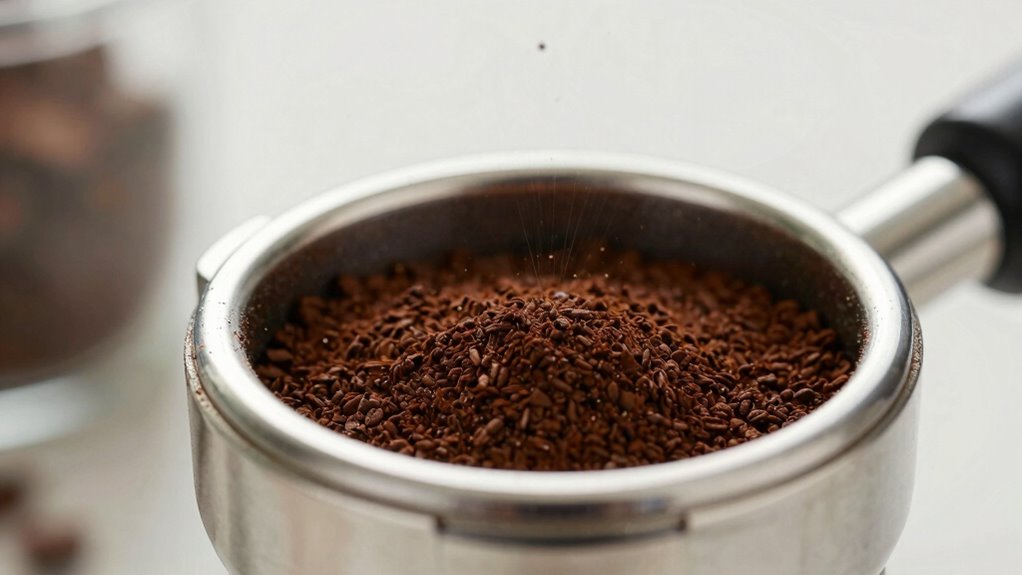

Static electricity in coffee grinding causes uneven extraction and inconsistent flavors. When grind particles cling to the grinder, they affect your brew’s taste and aroma. Regular cleaning, using a humid environment, and choosing the right grinder can help reduce static. Look for models with anti-static features or fine-tuned designs for better airflow. Plus, proper bean storage can further enhance your coffee routine. Discover more tips to elevate your grinding experience and make every cup exceptional.
Listen free for 30 days with Audible
Thousands of audiobooks and originals — cancel anytime.
As an affiliate, we earn on qualifying purchases.
Key Takeaways
- Static electricity in coffee grinding causes particles to cling, leading to inconsistent grind sizes and uneven extraction during brewing.
- Uneven extraction due to static can alter flavor profiles and diminish aroma intensity, impacting the overall coffee experience.
- Regular cleaning and maintaining a humid environment can significantly reduce static buildup in grinders.
- Choosing grinders with anti-static features, like metal housing and optimized grind chambers, can enhance performance and minimize static.
- Proper bean storage in airtight containers helps maintain flavor and prevents oxidation that can affect coffee quality.
As an affiliate, we earn on qualifying purchases.
Understanding Static Electricity in Coffee Grinding: Causes and Solutions
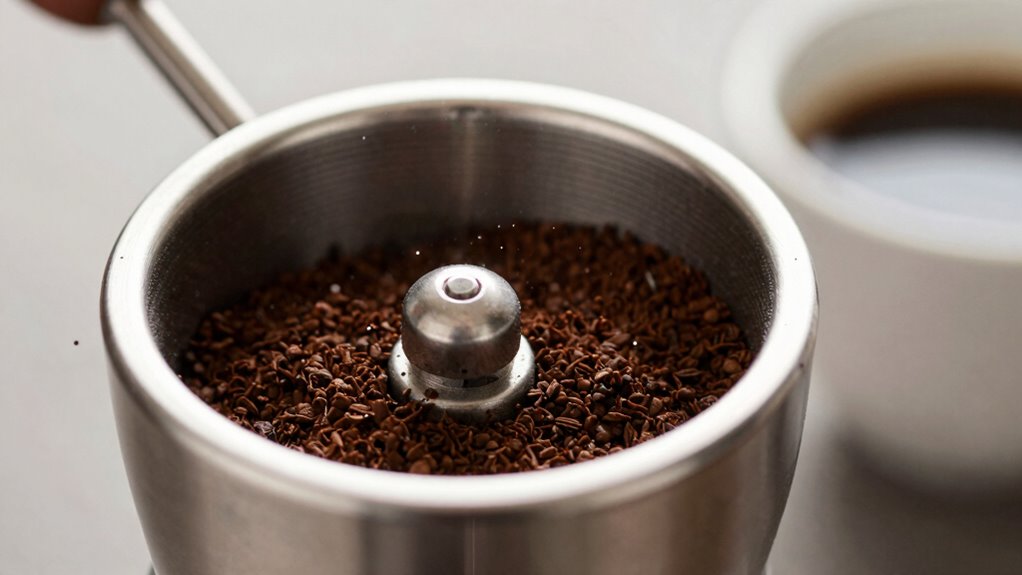
When you grind coffee, static electricity can become an unexpected nuisance. It occurs when the coffee grind particles rub against each other and the grinder’s surfaces, creating an electrical charge. This charge causes grinds to cling to the grinder and your container, making it tricky to transfer them without losing some.
To combat this, you can try a few simple solutions. First, use a grinder with anti-static features. Alternatively, you can lightly moisten your coffee beans before grinding, which reduces static cling. Another option is to use a static-reducing container that helps manage the clinginess of the coffee grind. By understanding static electricity and implementing these strategies, you’ll enjoy a smoother grinding experience.
coffee grinder with static reduction
As an affiliate, we earn on qualifying purchases.
As an affiliate, we earn on qualifying purchases.
How Does Static Affect Coffee Grind Consistency?

Static electricity can markedly impact the consistency of your coffee grind, leading to uneven extraction and flavor. When you grind coffee, static buildup can create a charge that causes particles to cling together or stick to the grinder. This results in a lack of grind uniformity, as some grounds may end up larger while others are finer. Such inconsistencies can affect how water interacts with the coffee during brewing, ultimately altering your cup’s taste. To minimize static, consider using a grinder designed to reduce static buildup or try different grinding techniques. By ensuring a more uniform grind, you’ll enhance the extraction process and enjoy a better coffee experience.
coffee bean airtight storage container
As an affiliate, we earn on qualifying purchases.
As an affiliate, we earn on qualifying purchases.
How Static Affects Coffee Flavor and Aroma

While grinding coffee, the static electricity generated can greatly alter the flavor and aroma of your brew. When static builds up, it can cause coffee grounds to stick to the grinder’s sides, leading to uneven extraction. This inconsistency can affect your coffee’s flavor profile, resulting in a less balanced cup. Additionally, the static can impact aroma intensity by keeping essential oils trapped in the grinder instead of releasing them into your brew. When these oils remain, you might miss out on the rich, complex scents that enhance your coffee experience. By understanding how static influences these elements, you can appreciate the importance of grind consistency for achieving the perfect cup.
As an affiliate, we earn on qualifying purchases.
Tips for Reducing Static in Your Grinder
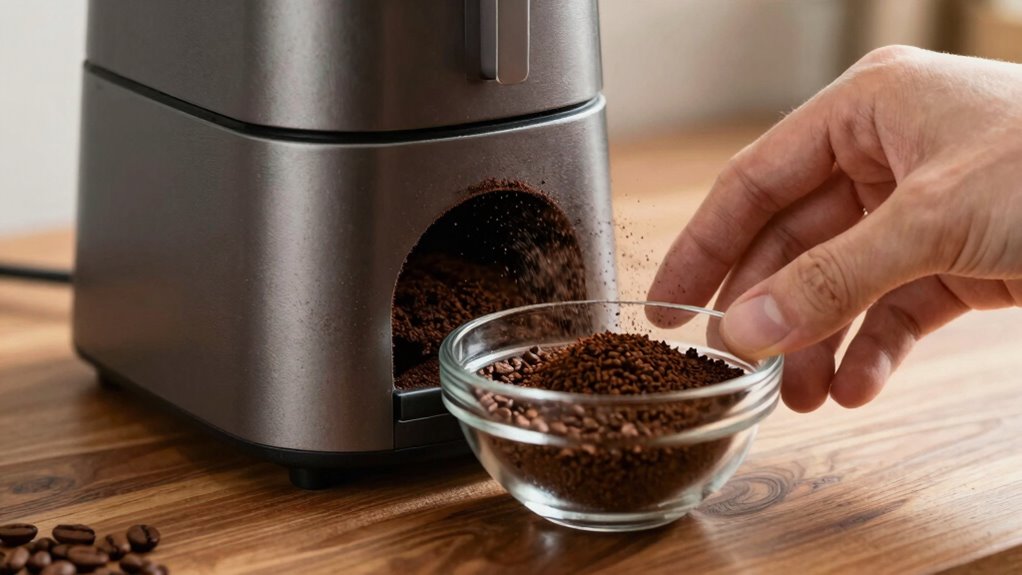
How can you reduce static in your coffee grinder for a better brew? Start with proper grinder maintenance techniques. Regularly clean your grinder to remove coffee residue that can contribute to static. Next, consider grinding environment adjustments. A humid environment can help reduce static cling, so try grinding in a slightly more humid room if possible. You can also use a small amount of rice or a damp paper towel in the grinder to minimize static buildup. Additionally, try grinding in smaller batches to lessen the charge that builds up. Finally, using a static-free container to catch your grounds can make a significant difference. With these tips, you’ll enjoy a smoother brewing experience with less mess! Moreover, using super-automatic espresso machines can also help in achieving a more consistent grind and brew.
What’s the Best Grinder for Reducing Static?

When it comes to reducing static in coffee grinding, the design of your grinder plays a vital role. Look for models with anti-static features that can minimize that pesky buildup. Understanding these factors can help you choose the best grinder for a smoother brewing experience.
Grinder Design Factors
To effectively reduce static in coffee grinding, you need to take into account various design factors of the grinder itself. One key consideration is the grinder materials; using metals or other non-plastic components can minimize static buildup. Plastic grinders often create more static due to friction, so it’s best to avoid them. Additionally, the grind size plays a significant role; finer grinds tend to generate more static. If you prefer a coarser grind, you may notice less static. Look for grinders designed with these factors in mind, as they can help create a smoother grinding experience. Balancing materials and grind size will make a noticeable difference in reducing static while you enjoy your coffee ritual.
Anti-Static Features
Sure! Here’s your content with the requested modifications:
—
Choosing the right grinder can make a significant difference in minimizing static during the coffee grinding process. Look for grinders that utilize advanced grinder technology designed specifically to combat static. Many high-quality models incorporate anti-static materials, which help reduce the cling of coffee grounds to the grinder’s components. Grinders that offer advanced technology often feature innovative designs that can further mitigate static.
For instance, grinders with metal housing often generate less static than plastic ones. Additionally, some grinders feature static-reducing designs, like specially shaped grind chambers, which promote better airflow and minimize static buildup. Regular maintenance of these grinders can also enhance their performance and longevity, similar to how air purifier maintenance improves efficiency. A grinder’s ability to maintain color accuracy can also influence the consistency of the grind, ensuring a more uniform extraction. Understanding filtration basics can also help you choose the right equipment for your needs.
Brands like Breville and Baratza have models that excel in this area, ensuring a cleaner grinding experience. Ultimately, investing in a grinder with effective anti-static features will enhance your coffee preparation and keep your workspace tidy. Understanding kitchen science can further help you choose the right equipment for your needs.
—
Let me know if you need any further modifications!
How to Handle Static-Prone Coffee Grounds

Although static electricity can be a pesky issue when grinding coffee, there are effective ways to manage those clingy grounds. To minimize static cling, try using grounding techniques. For instance, before you grind, lightly moisten the coffee beans with a spray bottle. Just a tiny bit of water can help, as it reduces static build-up. You can also consider using an anti-static grinder or a grinder with a built-in grounding feature. Another trick is to grind your coffee directly into a container with a lid; this helps contain the grounds and reduces mess. Finally, avoid over-grinding, as finer particles tend to cling more. With these tips, you’ll keep your coffee grounds manageable and enjoy a cleaner brewing experience.
Avoid These Common Mistakes That Increase Static in Coffee Grinding
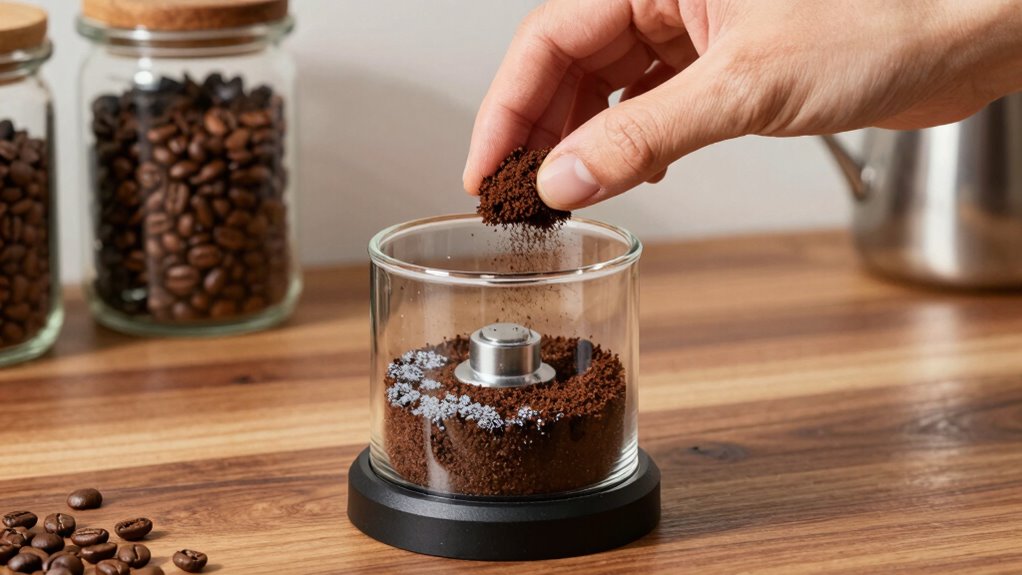
When grinding your coffee, your method can really affect how much static you get. Plus, the humidity in your environment plays a significant role too. Let’s look at some common mistakes that might be making your static problem worse.
Grinding Method Matters
While grinding coffee might seem straightforward, the method you use can greatly impact static buildup. Choosing the right grinding techniques is essential. For instance, using a burr grinder instead of a blade grinder can minimize static. Burr grinders produce a more consistent grind, reducing friction and the chances of static electricity forming. Additionally, pay attention to grinder materials; plastic components can generate more static than metal ones. If your grinder has plastic parts, consider switching to a model with stainless steel or glass. Finally, avoid grinding too quickly; a slower, steadier grind can help reduce static as well. By refining your grinding method, you can enjoy a smoother, less static-prone coffee experience. Furthermore, understanding brewing science can aid in optimizing your coffee’s flavor while minimizing static issues.
Humidity Levels Impact Static
Humidity levels play an essential role in static buildup during coffee grinding. When the air is dry, you might notice increased static effects, leading to clinging coffee grounds. On the other hand, higher humidity can help reduce this static buildup. Additionally, poor indoor air quality can exacerbate these static issues, making it crucial to manage your environment effectively. To minimize static and enhance your grinding experience, consider these tips:
- Store your beans properly – Keep them in airtight containers to maintain moisture levels and prevent excessive oxidation that can affect flavor. Moreover, proper storage can also help preserve the antimicrobial properties of the beans. Furthermore, if coffee is exposed to high sugar and fat content, it may also influence flavor and aroma.
- Grind in a humid environment – If possible, grind on days with higher humidity for better results.
- Use a damp cloth – Wipe your grinder’s interior with a damp cloth before use to mitigate static effects. Additionally, understanding the mechanics of French press can enhance your overall coffee brewing experience.
Why a Mess-Free Grinding Experience Matters
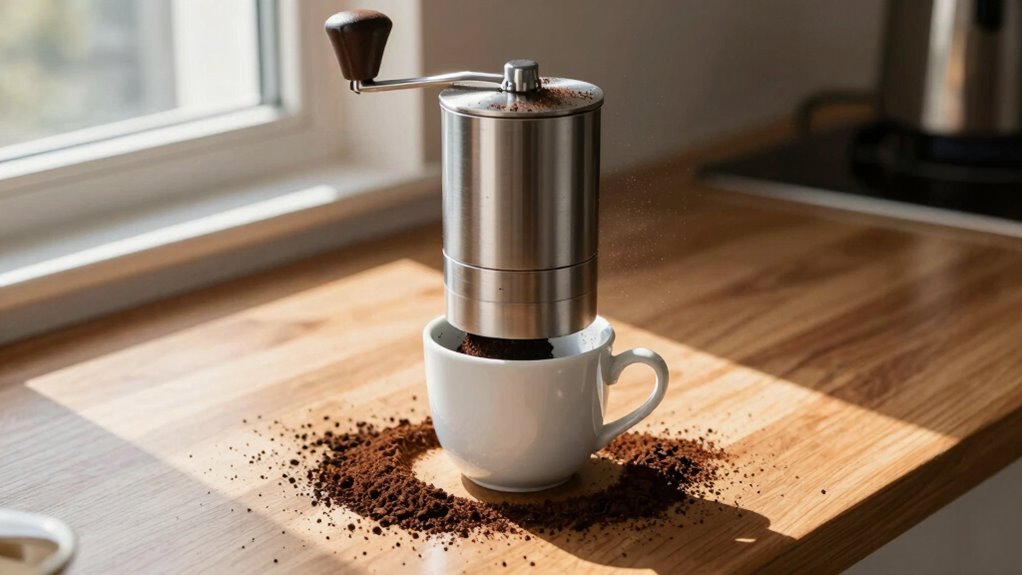
A clean kitchen is essential for any coffee lover, and a mess-free grinding experience plays a big role in that. When you grind your beans, the last thing you want is a messy cleanup that distracts from your brewing ritual. Static can cause grounds to cling to your grinder and countertop, leading to frustration and wasted coffee. A well-designed grinder minimizes static, enhancing your user experience by making the process smoother and more enjoyable. You can focus on the aroma and flavor of your coffee instead of cleaning up stray grounds. By investing in a grinder that tackles static effectively, you’re not just improving cleanliness—you’re elevating your entire coffee routine. Enjoy your brewing without the hassle!
Frequently Asked Questions
Can Static Electricity Damage My Coffee Grinder?
No, static electricity won’t damage your coffee grinder. However, static buildup can affect how coffee grounds behave, creating clumps that make grinding less efficient. Most grinder materials, like stainless steel or plastic, are designed to handle some static, but if you notice excessive buildup, consider adjusting your grind or using a grinder with anti-static features. Keeping your grinder clean and dry can also help minimize static issues while you brew.
Does Humidity Affect Static Levels in Coffee Grinding?
Yes, humidity does affect static levels in coffee grinding. When the air is humid, moisture helps reduce static electricity, leading to less clingy coffee grounds. This makes it easier for you to clean your grinder and prevents clumping. However, in dry conditions, static can build up, causing grounds to stick. To combat this, consider using a static prevention technique, like lightly moistening your beans before grinding, for a smoother experience.
Are Certain Coffee Beans More Prone to Static?
Oh sure, let’s blame the coffee beans for all your grinding woes! In reality, some coffee bean types, like light roasts, are more prone to static generation than darker ones. The difference lies in their moisture content and density. So, if you find yourself wrestling with flying grounds, it might just be that your light roast is acting out. Keep experimenting; you might just find a bean that behaves!
How Often Should I Clean My Grinder to Reduce Static?
You should clean your grinder every few weeks to effectively reduce static. Regular grinder maintenance helps minimize residue buildup, which can contribute to static. Use simple cleaning techniques like brushing out the grounds and wiping down the burrs with a dry cloth. If you notice excessive static, consider deep cleaning monthly. Keeping your grinder clean not only enhances performance but also improves your coffee’s flavor. So, make cleaning a habit!
Can Static Impact Espresso Extraction Specifically?
Sure, let’s blame static for that espresso flavor that just won’t shine! Yes, static can mess with extraction efficiency. When those coffee grounds cling to the grinder instead of diving into your portafilter, you’re losing flavor potential. So, next time you’re sipping a mediocre shot, remember: it could be that pesky static stealing your espresso’s thunder. Keep your grinder clean, and watch your extraction game improve!
Conclusion
In the world of coffee grinding, static can feel like a pesky ghost, haunting your mornings and disrupting your brew. By understanding its causes and embracing effective solutions, you can transform your grinding experience from chaotic to smooth. Think of your grinder as a vessel, where every grain matters, and reducing static is the key to revealing the rich flavors and aromas that await. Embrace the journey, and let your coffee bloom without the burden of static!
Flea & tick season Picks
flea and tick prevention
As an affiliate, we earn on qualifying purchases.