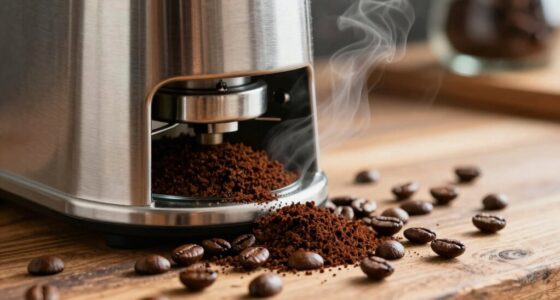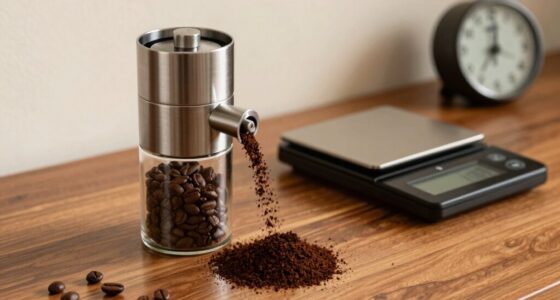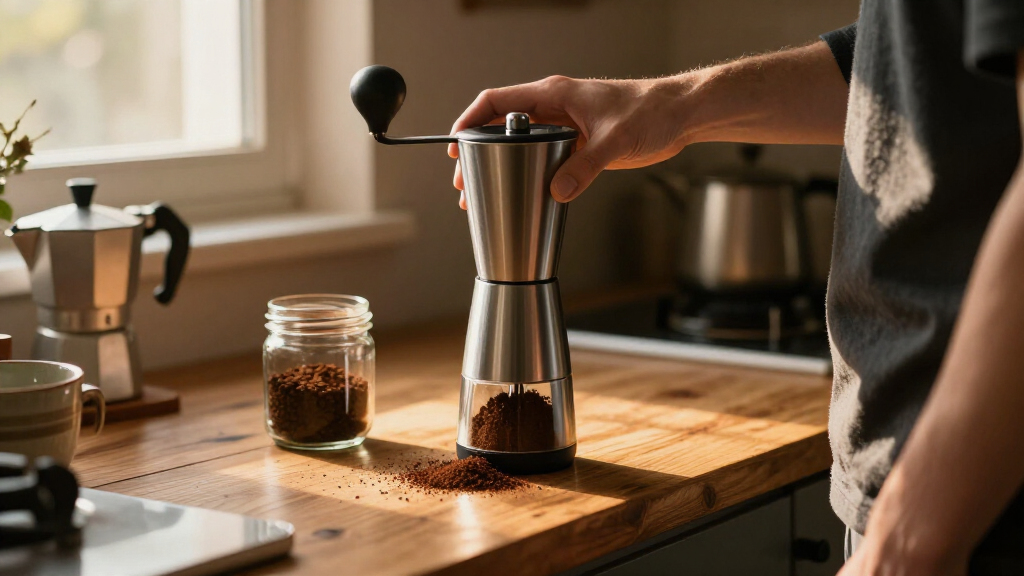

When choosing an electric coffee grinder, the decision often hinges on balancing grind quality with budget and convenience. Burr grinders, known for their consistency and uniformity, appeal to serious coffee lovers who prioritize flavor and precision. Blade grinders, on the other hand, tend to be more affordable and straightforward, making them suitable for casual drinkers or those new to brewing at home. The core difference lies in how they grind beans: burr grinders crush beans between two abrasive surfaces, while blade grinders chop beans with a rotating blade. This distinction impacts grind uniformity, flavor extraction, and usability. Understanding these differences can help you decide which grinder aligns with your brewing style and expectations.

Get coffee and tea gear delivered free with Prime
- Fast, free delivery on millions of items
- Prime Video, Amazon Music and more included
- Member-only deals all year

SHARDOR 64mm Flat Burr Coffee Grinder, 100 Settings, Anti-Static, Black
- ✔ Burr Size: 64mm
- ✔ Grinding Settings: 100
- ✔ Material: All-metal chamber
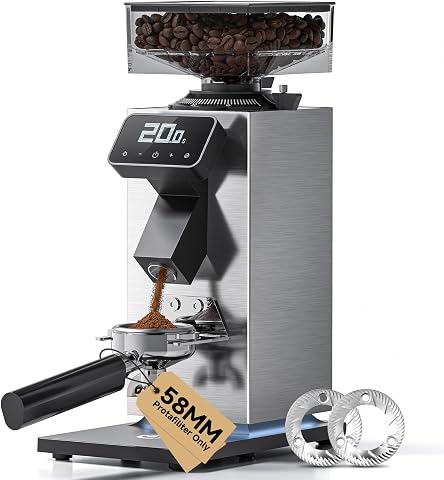
AMZCHEF 64mm Flat Burr Coffee Grinder, Commercial Grade Espresso Bean Grinder, 90 Settings, All-Metal Chamber, Anti-Static, LED T…
- ✔ Burr Size: 64mm
- ✔ Settings: 90
- ✔ Material: Stainless Steel
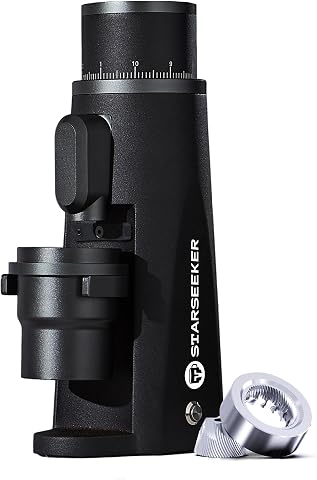
Starseeker Edge Electric Coffee Grinder, 48mm Conical Burr Espresso Grinder
- ✔ Burr Size: 48mm
- ✔ Grind Settings: 100
- ✔ Body Material: Aluminum alloy
This comparison explores key criteria such as grind consistency, price, capacity, ease of use, noise levels, durability, and additional features. Whether you’re seeking a high-precision machine for espresso or a simple device for drip coffee, this overview clarifies which option offers the best value and fit for your needs.
At a Glance
| Criteria | Burr Coffee Grinders | Blade Coffee Grinders | Winner |
|---|---|---|---|
| Grind Consistency | Excellent, very uniform, ideal for espresso and pour-over | Poor to moderate, uneven grind, especially for espresso | A |
| Price | Higher, reflecting build quality and precision | Lower, more budget-friendly | B |
| Capacity | Moderate to large, suitable for multiple cups | Small to moderate, suitable for single or few cups | A |
| Ease of Use | Moderate, requires some setup | Simple, quick to operate | B |
| Noise Level | Moderate to high, depending on model | Louder, especially at high speeds | B |
| Durability | Longer-lasting if well maintained | Shorter lifespan, more prone to wear | A |
| Features | Often includes dose control, timer, and grind settings | Limited features, basic operation | A |
SHARDOR 64mm Flat Burr Coffee Grinder, 100 Settings, Anti-Static, Black
<p>The <strong>SHARDOR 64mm Flat Burr Coffee Grinder</strong> stands out for offering a remarkable level of precision with <strong>100 adjustable grind settings</strong>. Its all-metal construction and anti-static system ensure a consistent, uniform grind with minimal heat buildup, which preserves flavor. Compared to the other options, it’s the most durable and easiest to clean, thanks to removable parts. However, its single-voltage 120V compatibility and lack of an automatic timer mean it’s less suited for those seeking plug-and-play convenience or international use. It’s an excellent choice for dedicated coffee enthusiasts who value control and build quality over extra features or portability.</p>
Pros:
- Precise grind adjustment with 100 settings
- Uniform grinding with minimal heat
- Durable all-metal construction
- Easy to clean with removable parts
Cons:
- Only compatible with 120V power supply
- No built-in timer for automatic operation
- Price may be high for casual users
Best for: Serious home baristas who want precise control over grind size and durability.
Not ideal for: Casual users or those who need a portable or multi-voltage device.
Bottom line: This pick is perfect for enthusiasts prioritizing precision, durability, and consistent results, despite its higher price and limited voltage compatibility.
“This pick is perfect for enthusiasts prioritizing precision, durability, and consistent results, despite its higher price and limited voltage compatibility.”
AMZCHEF 64mm Flat Burr Coffee Grinder, Commercial Grade Espresso Bean Grinder, 90 Settings, All-Metal Chamber, Anti-Static, LED T…
<p>The <strong>AMZCHEF 64mm flat burr grinder</strong> offers <strong>90 adjustable settings</strong> suitable for a range of brewing styles, from espresso to French press. Its stainless steel body and all-metal chamber ensure durability, while the anti-static technology keeps messes at bay. The <strong>LED touch panel with micro-timer</strong> makes operation intuitive and precise, ideal for users who appreciate high-tech convenience. Compared with the SHARDOR, it’s slightly heavier and heavier, which might reduce portability. It does not include a portafilter, so espresso users will need to purchase accessories separately. Still, its combination of features makes it suitable for serious coffee lovers seeking a wide range of grind options with easy control.</p>
Pros:
- Precise grind settings for various brewing methods
- Durable all-metal chamber and stainless steel body
- Anti-static system reduces mess
- Intuitive LED touch panel with micro-timer
Cons:
- Does not include a portafilter
- Heavier at 12.6 lbs, less portable
- Requires separate purchase of accessories
Best for: Home baristas who want a versatile grinder with advanced controls and durability.
Not ideal for: Those seeking a compact, travel-friendly option or a grinder with included portafilter accessories.
Bottom line: Ideal for users wanting a durable, feature-rich grinder that adapts to multiple brewing styles, despite its weight and additional accessory needs.
“Ideal for users wanting a durable, feature-rich grinder that adapts to multiple brewing styles, despite its weight and additional accessory needs.”
Starseeker Edge Electric Coffee Grinder, 48mm Conical Burr Espresso Grinder
<p>The <strong>Starseeker Edge</strong> offers a <strong>48mm conical burr</strong> designed to preserve the coffee’s flavor profile by reducing heat and static. Its <strong>100 adjustable grind settings</strong> make it versatile enough for espresso, drip, pour-over, and French press. The <strong>aluminum body</strong> ensures durability without excess weight, making it suitable for small spaces or occasional use. Compared with flat burr models, it may produce slightly less uniform grind sizes but excels in flavor preservation and ease of use. Its limited capacity may not suit large batches, but it’s an excellent pick for espresso enthusiasts or those with limited space.</p>
Pros:
- Consistent grind quality with adjustable settings
- Durable aluminum construction
- Easy to clean and maintain
- Compact, space-saving design
Cons:
- Limited capacity for large quantities
- More expensive than basic grinders
- Slightly less uniform grind compared to flat burrs
Best for: Espresso lovers and those seeking a compact, flavor-focused grinder.
Not ideal for: Users requiring large quantities or multi-user capacity.
Bottom line: A top choice for flavor-conscious users with small spaces, despite its limited capacity and slightly higher cost.
“A top choice for flavor-conscious users with small spaces, despite its limited capacity and slightly higher cost.”
As an Amazon Associate we earn from qualifying purchases.
Key Differences
The primary distinction between burr and blade coffee grinders lies in the quality and consistency of the grind. Burr grinders produce a uniform particle size, which is crucial for extracting maximum flavor and achieving desired brew strength, especially in espresso and pour-over methods. Blade grinders, with their spinning blades, tend to create uneven grounds, resulting in inconsistent extraction and potentially muddled flavors. This difference matters most for those who prioritize coffee quality and precision brewing.
In addition to grind quality, price plays a significant role. Burr grinders are generally more expensive, reflecting their advanced grinding mechanisms and build quality. Blade grinders are more affordable, making them attractive for casual users or those on a tight budget. Capacity is another factor: burr models often come with larger hoppers, suitable for multiple cups, while blade grinders are typically smaller, designed for quick, individual use.
Detailed Comparison
Grind Consistency (Burr Coffee Grinders wins — major)
Burr grinders excel in delivering a uniform grind, essential for balanced extraction. Blade grinders, however, often produce inconsistent particle sizes, which can lead to over-extraction or under-extraction, affecting flavor. For espresso and pour-over enthusiasts, this difference is significant; for French press or drip coffee, the impact is less noticeable.
Price (Blade Coffee Grinders wins — moderate)
Blade grinders are typically more affordable, often costing a third or less of burr models. This lower price point makes them accessible for budget-conscious consumers or those just starting with home brewing. Burr grinders, while more expensive, offer better grind quality and durability, which can justify the higher cost for dedicated coffee drinkers.
Capacity (Burr Coffee Grinders wins — moderate)
Burr grinders usually feature larger hoppers and grounds containers, suitable for multiple cups at once. Blade grinders tend to be smaller and designed for quick, single-serve use. For households with multiple coffee drinkers or frequent brewing, a burr grinder’s larger capacity is advantageous.
Ease of Use (Blade Coffee Grinders wins — minor)
Blade grinders are straightforward: load beans, press a button, and grind. Burr grinders often have multiple settings and require more steps to adjust grind size but provide more control. For casual users or those who prefer simplicity, blade grinders are easier. For precision and customization, burr grinders are better suited.
Noise Level (Blade Coffee Grinders wins — minor)
Blade grinders tend to be louder, especially at high speeds, which can be disruptive in quiet mornings. Burr grinders usually operate more quietly but still generate noise, especially during initial grinding. For users sensitive to noise, a burr grinder’s moderate sound level might be preferable.
Durability (Burr Coffee Grinders wins — major)
Burr grinders are constructed for long-term use, with sturdy burr plates and motors designed for frequent operation. Blade grinders, with their simpler design, tend to wear out faster and may require replacement sooner. For regular, heavy use, a burr grinder offers better longevity.
Features (Burr Coffee Grinders wins — moderate)
Many burr grinders include multiple grind settings, timers, dosing options, and digital controls, providing extensive customization. Blade grinders are basic, often with just a single speed and manual operation. Users seeking versatility and precision should favor burr models.
Burr Coffee Grinders: Pros and Cons
Pros:
- Excellent grind consistency ideal for espresso and precise brewing
- More durable and longer-lasting with proper maintenance
- Advanced features like dose control and multiple grind settings
- Larger capacity suitable for multiple cups
Cons:
- Higher initial cost
- More complex operation and cleaning process
- Typically heavier and bulkier
Blade Coffee Grinders: Pros and Cons
Pros:
- Lower purchase price, accessible for budget buyers
- Simple, quick operation suitable for casual use
- Lightweight and compact design
Cons:
- Uneven grind sizes affecting flavor quality
- Less durable, prone to wear and tear
- Limited features and customization options
- Smaller capacity for larger brewing needs
Who Should Choose What
Choose Burr Coffee Grinders if:
- You prioritize grind uniformity for espresso or pour-over coffee
- You plan to brew multiple cups regularly
- You’re willing to invest more upfront for better results and durability
Choose Blade Coffee Grinders if:
- You are new to home grinding or brew infrequently
- You want a quick, simple device for basic drip or French press coffee
- Budget constraints make affordability a priority
Value for Money
Burr grinders, though more expensive, deliver consistent, high-quality grounds that significantly enhance flavor extraction. They are generally worth the investment for dedicated coffee enthusiasts. Blade grinders offer acceptable results for casual drinkers but compromise on grind consistency and longevity, making them less suitable for serious brewing. For those who value brewing precision and flavor, paying more for a burr grinder provides better long-term value.Final Verdict
Serious coffee drinkers aiming for optimal flavor and consistency should opt for a burr grinder, despite the higher price. Its superior grind uniformity, durability, and feature set justify the investment. Casual users or those new to brewing can start with a blade grinder, which offers convenience and affordability but should be aware of its limitations. Ultimately, the choice hinges on how much importance you place on grind quality versus initial cost and simplicity.
Frequently Asked Questions
Is a burr grinder worth the extra cost?
Yes, if you prioritize flavor, precision, and long-term durability. Burr grinders produce uniform grinds that significantly improve brewing results, especially for espresso and pour-over methods.
Can I use a blade grinder for espresso?
While possible, it’s not ideal. Blade grinders tend to produce uneven grounds, which can lead to over-extraction and bitter flavors in espresso. For best results, a burr grinder is recommended.
Are burr grinders difficult to clean?
They require regular cleaning of the burrs and hopper, but most models come with cleaning brushes and straightforward procedures. Proper maintenance ensures consistent performance and longevity.
How much should I expect to spend on a good burr grinder?
Quality burr grinders typically start around $100 and can go beyond $300 for advanced models with multiple features. Investing in a mid-range model offers a good balance of performance and price.
Will a burr grinder improve my coffee significantly?
Yes, especially if you’re currently using pre-ground coffee or a blade grinder. The improved grind consistency allows for better extraction, resulting in richer, more balanced flavors.
Halloween Picks
halloween
As an affiliate, we earn on qualifying purchases.