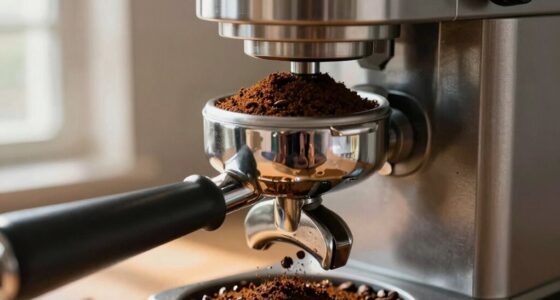

Alkalinity in coffee plays a vital role in balancing flavor and enhancing extraction efficiency. It helps neutralize acidity, ensuring your brew isn’t overly sour or flat. The right alkalinity brings out bright notes and rich undertones, while improper levels can mute flavors. Measuring and adjusting your water’s alkalinity can transform your coffee experience, tailored to your taste preferences and brewing method. Keep exploring, and you’ll discover tips to optimize your cup even further.

Get coffee and tea gear delivered free with Prime
- Fast, free delivery on millions of items
- Prime Video, Amazon Music and more included
- Member-only deals all year
Key Takeaways
- Alkalinity affects coffee’s acidity and flavor balance, influencing whether the cup tastes bright or mellow.
- Proper water hardness and mineral balance are crucial for optimal flavor extraction during brewing.
- Measuring alkalinity can be done using test strips, titration kits, or pH meters for accuracy.
- Adjusting alkalinity based on brewing methods enhances flavor profiles, with different needs for espresso, pour-over, and cold brew.
- Experimenting with mineral types and acidic ingredients can significantly improve coffee flavor complexity.
coffee water alkalinity test strips
As an affiliate, we earn on qualifying purchases.
As an affiliate, we earn on qualifying purchases.
What Is Alkalinity and Why Does It Matter for Coffee?

Alkalinity, often overlooked in the coffee brewing process, plays an essential role in determining the flavor and extraction of your favorite brew. It refers to the ability of water to neutralize acids, which can greatly impact coffee acidity. When you brew coffee, the water’s alkalinity interacts with the coffee grounds, affecting how flavors are extracted. If your water is too soft or lacks sufficient alkalinity, you might end up with a sour or overly acidic cup. Conversely, water hardness can also influence alkalinity levels, leading to a balanced or off-tasting brew. Understanding alkalinity helps you control these factors, ensuring your coffee achieves the desired flavor profile, whether you prefer a bright acidity or a more mellow taste.
As an affiliate, we earn on qualifying purchases.
How Does Alkalinity Affect Coffee Flavor Profiles?
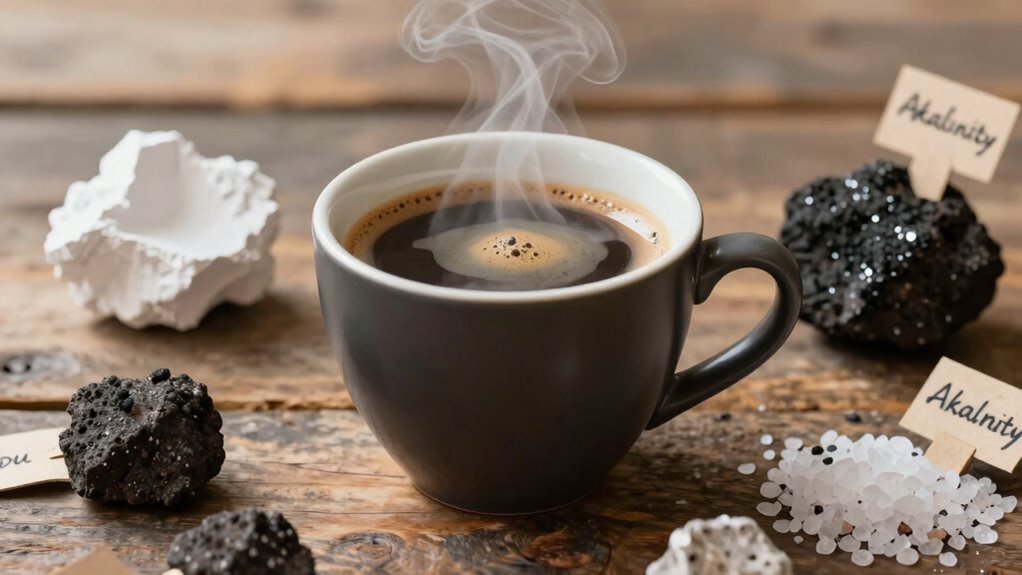
When you brew coffee, the alkalinity of your water can greatly shape the flavor profile of your cup. The right balance can enhance flavor complexity and maintain acidity balance, resulting in a more enjoyable experience. Here are some effects of alkalinity on your brew:
The alkalinity of your water can transform your coffee, enhancing flavors and creating a more enjoyable experience.
- Bright citrus notes that dance on your palate
- Rich chocolate undertones that provide depth
- Smooth mouthfeel that wraps around your taste buds
- Balanced sweetness that rounds out flavors
- Lingering finish that keeps you coming back
Too much alkalinity can mute these characteristics, leading to a flat cup. Finding the perfect level is essential for revealing the full potential of your coffee’s flavor profile, making each sip a delightful journey.
As an affiliate, we earn on qualifying purchases.
How Water Chemistry and Alkalinity Affect Brewing
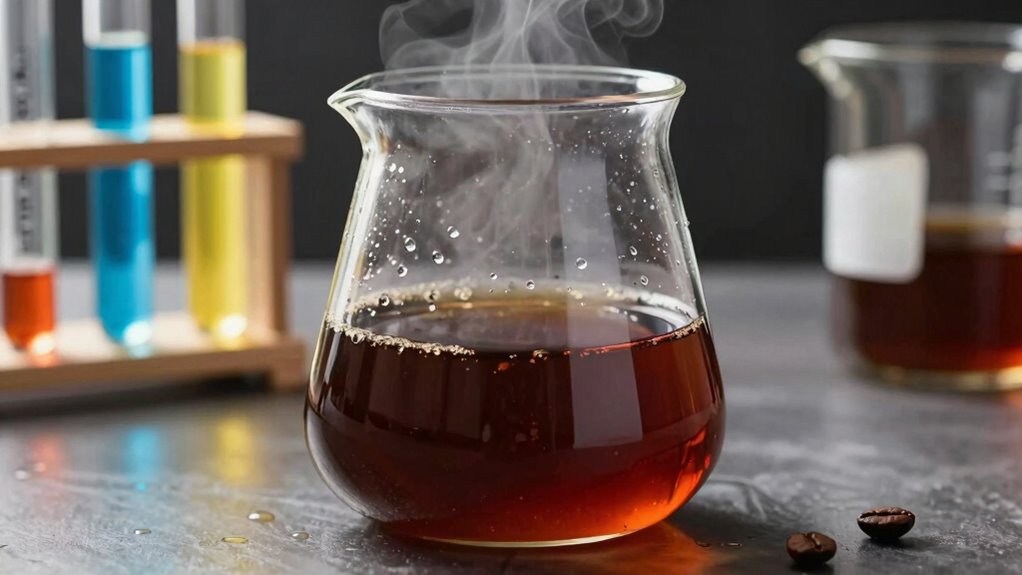
When you’re brewing coffee, the chemistry of your water plays an essential role in the final flavor. Different compositions and pH levels can greatly impact extraction and taste. Understanding these factors helps you make better coffee every time.
Water Composition’s Role
Understanding how water composition impacts your coffee can elevate your brewing experience greatly. The right balance of minerals and water hardness plays an essential role in flavor extraction. Keep these factors in mind:
- Water Hardness: Soft vs. hard water can considerably alter taste.
- Mineral Balance: Sodium, calcium, and magnesium create a harmonious brew. The right mineral composition can enhance the overall flavor profile.
- Filtration Methods: Choosing the right filtration can enhance or detract from flavors. Effective filtration can remove unwanted impurities that might negatively impact taste.
- Temperature Effects: Ideal brewing temperature guarantees efficient extraction. Using brewing methods like the French press can further highlight the importance of water quality.
- Brewing Equipment: Different tools may require specific water compositions for best results.
Additionally, integrating smart appliances can streamline your brewing process and ensure consistent results.
pH Levels Impact
pH levels in your brewing water not only influence flavor but also affect extraction efficiency. If your water’s pH is too high or too low, you might not extract the full range of flavors from your coffee beans. Water hardness and brewing temperature also play essential roles in this process.
| pH Level | Flavor Impact | Ideal Brewing Temp |
|---|---|---|
| Below 6 | Sour, under-extracted | 195°F – 205°F |
| 6 – 8 | Balanced, ideal | 195°F – 205°F |
| Above 8 | Bitter, over-extracted | 195°F – 205°F |
As an affiliate, we earn on qualifying purchases.
How Can You Measure Alkalinity in Your Brewing Water?
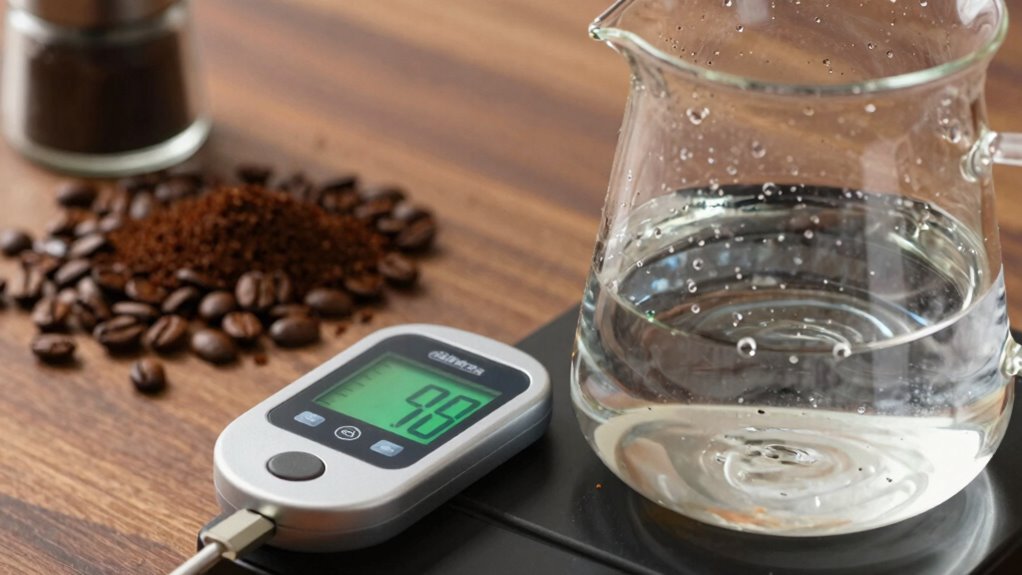
How can you effectively measure the alkalinity in your brewing water? Understanding your water’s alkalinity is essential for great coffee. You can use various testing methods and alkalinity tools to get precise readings. Here’s how you can do it:
- Test Strips: Quick and easy, just dip and compare colors.
- Titration Kits: More accurate, these kits provide detailed alkalinity levels.
- pH Meters: Digital meters can give you precise measurements.
- Water Test Kits: Extensive kits test multiple water parameters, including alkalinity.
- Lab Analysis: For the ultimate accuracy, send a sample to a lab.
Ideal Alkalinity Levels for Different Brewing Methods

When brewing coffee, the ideal alkalinity level can vary based on your method. For pour-over and drip coffee, aim for moderate alkalinity to enhance flavor balance and extraction time. Your grind size and water temperature also play significant roles; finer grinds and hotter water can require slightly higher alkalinity for best brew strength. If you’re using an espresso machine, a lower alkalinity can help maintain the rich taste, especially with darker roast levels. Cold brew, on the other hand, often benefits from higher alkalinity to counteract its natural acidity. Ultimately, consider your coffee origin and personal taste preferences when deciding on brewing ratios and alkalinity levels. Adjusting these factors will elevate your coffee experience.
Top Myths About Coffee Alkalinity Debunked

Ever wondered what misconceptions surround coffee alkalinity? Let’s explore some common myths while myth busting these coffee misconceptions:
- All coffee is acidic: Not all coffees are created equal; some can be more alkaline. Additionally, understanding kidney health maintenance can help you choose coffee that supports your overall well-being. The water filtration systems you use can also impact the alkalinity of your brew.
- Alkalinity affects flavor negatively: In moderation, it can enhance sweetness and balance.
- You can’t change water alkalinity: Simple adjustments can make a big difference.
- Dark roasts are always less acidic: Roast level doesn’t dictate alkalinity.
- Only specialty coffee needs attention: Every cup benefits from understanding alkalinity. Additionally, understanding ergonomics and wellness can improve your overall coffee experience.
How to Adjust Alkalinity in Your Brewing Water

To brew the perfect cup of coffee, you need to know how to adjust your water’s alkalinity. Start by measuring your water’s alkalinity levels, then consider adding mineral supplements or using acidic ingredients to balance it out. With these simple steps, you can enhance your coffee’s flavor profile considerably.
Measuring Water Alkalinity Levels
How can you guarantee your coffee’s taste is just right? Measuring water alkalinity levels is essential. You’ll need reliable measurement tools to get started. Here’s a quick guide on what to look for:
- pH Strips: Visual indicators that change color based on alkalinity.
- Digital TDS Meter: Provides precise readings of total dissolved solids.
- Alkalinity Test Kits: Often include reagents that react with water samples.
- Colorimetric Tests: Use chemical reactions to indicate alkalinity levels.
- pH Meters: Offer accurate readings for serious brewers.
Understanding water quality parameters can greatly enhance your brewing process. Check your water regularly with these alkalinity indicators. Adjusting your brewing water can elevate your coffee experience, ensuring every cup is just how you like it.
Adding Mineral Supplements Effectively
Sure! Here’s your revised article subheading content with the requested addition:
—
Adjusting the alkalinity of your brewing water can greatly enhance your coffee’s flavor profile. To do this effectively, you’ll want to know the right mineral types and dosage guidelines. Here’s a simple table to help you:
| Mineral Type | Recommended Dosage (ppm) | Effect on Flavor |
|---|---|---|
| Calcium Carbonate | 50-100 | Smooth, balanced taste |
| Magnesium Sulfate | 10-30 | Brightness and clarity |
| Sodium Bicarbonate | 15-30 | Softens acidity |
Start with small adjustments, and taste-test your coffee to find the sweet spot. Remember, each mineral contributes uniquely, so experimenting will lead you to the perfect brew. Understanding studio dividers can also enhance your overall coffee experience, as nutritional information can guide you in making healthier choices. Incorporating aromatherapy techniques into your routine can also enhance your overall coffee experience. Happy brewing!
—
Let me know if you need any further assistance!
Utilizing Acidic Ingredients Strategically
Ever wondered how incorporating acidic ingredients can fine-tune your coffee’s alkalinity? By strategically adding these elements, you can achieve a more vibrant flavor balance. Here’s how to make the most of them:
- Citrus Zest: A hint of orange or lemon can brighten your brew.
- Vinegar: A splash of high-quality vinegar can enhance complexity.
- Tamarind Paste: This adds a unique tanginess that elevates your coffee.
- Sour Cherries: A few crushed cherries can introduce delightful notes.
- Coffee Cherry Pulp: It offers a subtle acidity and sweet undertones.
Experiment with these acidic ingredients to adjust the alkalinity in your brewing water, enhancing both aroma and taste. You’ll discover how a little acidity can transform your cup!
How Alkalinity Influences Coffee Extraction Efficiency

When you brew coffee, the alkalinity of your water can greatly impact extraction efficiency. Higher alkalinity can enhance extraction kinetics, allowing more soluble compounds to dissolve during brewing. This can lead to a richer flavor profile, but it’s essential to balance it with other brewing variables, like grind size and brew time. If your water’s too alkaline, it might mask the coffee’s natural acidity, resulting in a flat taste. Conversely, low alkalinity can hinder extraction, making it difficult to achieve ideal flavor. By adjusting your water’s alkalinity, you can fine-tune your brewing process, ensuring that you extract the full spectrum of flavors from your coffee. Experimenting with these factors will help you find your perfect brew.
Exploring Alkalinity Trends in Specialty Coffee

As you explore the world of specialty coffee, you’ll notice that alkalinity trends play an essential role in shaping flavor profiles. Understanding these trends helps you appreciate the nuances of your brew.
Consider how these factors influence your coffee experience:
- Flavor experimentation: Different alkalinity levels can enhance or mute specific notes.
- Sourcing origins: Beans from various regions exhibit distinct alkalinity traits.
- Brewing techniques: Adjusting water alkalinity can optimize extraction.
- Roasting profiles: Light vs. dark roasts react differently to alkalinity.
- Consumer preferences: More people seek out sustainable practices that align with their values.
Frequently Asked Questions
Can High Alkalinity Cause Bitterness in Coffee?
Yes, high alkalinity can cause bitterness in coffee. When you brew with water that has a high pH, it can extract more bitter compounds from the coffee grounds, affecting the overall coffee flavor. You might notice that the usual balance of sweetness and acidity gets disrupted. To improve your brew, consider adjusting your water chemistry for better results, ensuring a more enjoyable cup that highlights the coffee’s natural characteristics.
Does Alkalinity Impact Espresso Extraction Time?
Yes, alkalinity does impact espresso extraction time. When you adjust your water’s alkalinity, it can influence the extraction variables, affecting how quickly flavors are drawn out. Higher alkalinity may lead to longer extraction times, which can alter the taste profile. By fine-tuning your brewing techniques, you can achieve a balanced shot, ensuring the coffee isn’t over-extracted or under-extracted. Experimenting with these factors will help you find the perfect balance for your espresso.
How Does Alkalinity Interact With Coffee Oils?
Alkalinity interacts with coffee oils by affecting their extraction during brewing. When the water’s alkalinity is balanced, it helps extract the rich flavors from the oils, enhancing the overall coffee flavor. If the alkalinity is too high or too low, it can disrupt this balance, leading to under-extracted or over-extracted oils. You’ll notice that achieving the right alkalinity can make your coffee taste more vibrant and full-bodied.
Are There Specific Beans That Thrive in Alkaline Water?
Yes, certain bean varieties thrive in alkaline water. When you work with water chemistry, beans like Ethiopian Yirgacheffe and Costa Rican varieties often perform better due to their natural acidity balancing with alkaline conditions. This combination enhances their flavor profiles, allowing you to enjoy more vibrant and complex notes. If you’re experimenting, consider adjusting your brewing method and water composition to see how different beans respond. It’s a fascinating journey!
Can I Use Bottled Water With Low Alkalinity for Brewing?
Absolutely, you can use bottled water with low alkalinity for brewing. Just remember, the water pH and mineral content play a vital role in flavor extraction. If the water’s too low in minerals, your coffee might taste flat. Coincidentally, many bottled waters have a balanced mineral profile that enhances the brew. Experiment with different brands to find one that complements your coffee’s unique characteristics, ensuring you enjoy every sip!
Conclusion
Understanding alkalinity in coffee isn’t just for the experts—it’s for anyone who loves a great cup. You might be surprised to find that tweaking your water’s alkalinity can transform your brewing experience. Just like discovering that pinch of salt can elevate your favorite dish, adjusting alkalinity can reveal flavors you never knew existed. So, whether you’re a casual sipper or a dedicated aficionado, diving into the chemistry of your brew could lead to your next favorite coffee moment!
Halloween Picks
halloween
As an affiliate, we earn on qualifying purchases.