
TL;DR

Get coffee and tea gear delivered free with Prime
- Fast, free delivery on millions of items
- Prime Video, Amazon Music and more included
- Member-only deals all year
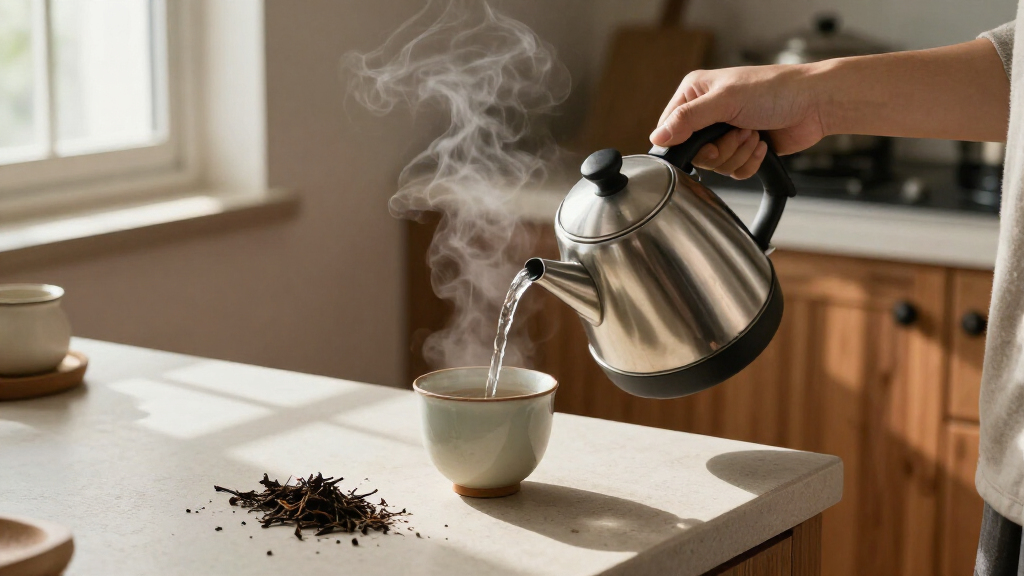
Electric kettles for tea make brewing easier, and adjustable temperature settings help you repeat results for delicate teas. Green and white teas often taste best around 70–85°C, oolong around 85–95°C, and black tea and many herbal infusions with hotter water; start with the tea package and adjust to taste. Choose a kettle for capacity, safety, materials, and cleaning as well as its features.
A kettle can make excellent tea, but the water you pour matters as much as the leaves in your cup. Too-hot water can turn a delicate green tea sharp and bitter; water that is too cool can leave it thin and grassy.
This guide helps you choose an electric kettle for tea based on what you drink, how many cups you make, and which features you will actually use. You’ll get practical temperature ranges, a clear way to compare kettle materials and controls, and simple advice for cleaning and safe use. You don’t need a gadget-filled kitchen. You need a kettle that fits the way you brew.
Start with the tea package: green and white teas often use 70–85°C, oolong 85–95°C, and black or herbal teas hotter water.
Choose variable temperature controls if you regularly brew temperature-sensitive tea and value repeatability.
Compare kettle capacity in liters, and heat only enough water for the cups you plan to make.
Check the particular kettle’s water-contact materials, automatic shutoff, and boil-dry protection.
Descale according to the maker’s instructions; a removable filter catches flakes but does not soften water.
Set the water temperature to bring out each tea’s flavor
Electric kettles for tea work best when you match water heat to the leaves: green and white teas often use 70–85°C (158–185°F), oolong commonly uses 85–95°C (185–203°F), and black tea and many herbal infusions call for near-boiling or boiling water. These are starting ranges, not rules carved into a tea tin.
Temperature changes how quickly water extracts flavor from the leaves. Hotter water generally draws out flavor compounds faster, which can make a strong cup quickly but may also bring out bitterness or astringency in delicate teas. Cooler water slows that extraction, giving you more control, though too cool a pour can leave a tea tasting muted. Think of temperature like the volume knob on a speaker: too high can drown out subtle notes, while too low can leave the character hard to hear.
For example, if your green tea tastes harsh after a boiling-water pour, try lowering the temperature before changing the steep time. If a white tea tastes watery, move a few degrees hotter or steep it longer. These adjustments have different effects: hotter water can make extraction more forceful, while extra steeping time lets the leaves infuse longer without changing the initial heat.
Tea maker instructions are a useful first guide, and your taste gets the final vote. “Boiling” also varies: at higher elevations, water boils below 100°C. A kettle’s display may not reflect the exact temperature at the moment you pour, especially if its sensor sits near the base or heating continues briefly after the display reaches its target. Treat settings as repeatable starting points rather than guarantees of lab-perfect results. Start with the package, then make one small adjustment at a time. If your kettle only boils water, let it cool before brewing a temperature-sensitive tea.
Products Worth Considering

Cuisinart Stand Mixer, 12 Speed, 5.5 Quart Stainless Steel Bowl, Chef’s Whisk, Mixing Paddle, Dough Hook, Splash Guard w/ Pour Spout, Ruby R

Ninja Luxe Café Mini Plus Espresso and Drip Coffee Machine with AutoFroth, Stainless Steel (ES351)

Breville Smart Grinder Pro Conical Burr Coffee Grinder, Brushed Stainless Steel
As an affiliate, we earn on qualifying purchases.
Decide whether variable temperature is worth the extra cost
A variable-temperature kettle is worth considering if you often brew green, white, or oolong tea and want repeatable results. Those teas can respond noticeably to changes in water heat, so selecting a setting helps you return to a cup you liked without relying on guesswork. If you mainly drink black tea, which usually takes hotter water, a basic kettle may meet your needs just fine.
Imagine making sencha before work on Monday and again on Tuesday. With adjustable controls, you can choose the same temperature both mornings instead of guessing whether water that has cooled on the counter is ready. That consistency is useful when you want to compare teas or repeat a recipe, but it does not ensure the same flavor every time: leaf quantity, water, steep time, and kettle calibration also matter. A keep-warm function can help if you return for another cup, though it may use electricity to maintain heat or reheat water. Check how long it holds the temperature and whether it reheats automatically.
More buttons don’t guarantee more accuracy. Settings differ by model, and the displayed number can be an imperfect guide to the water you pour. Use it as a repeatable starting point: taste the tea, then adjust if it seems too bitter, flat, or weak. If the temperature steps are widely spaced, or the controls are awkward to use, the added feature may offer less practical value than its price suggests.
App or voice controls may suit a connected kitchen, but they are optional. If you usually fill the kettle once, boil water, and make a mug of breakfast tea, you may get more everyday value from a comfortable handle, simple controls, and easy cleaning. Consider what you will use often: paying for precision can make sense when it changes your daily brewing, while a simpler kettle can be easier to operate and maintain. Buy for the routine you have, not the feature list you might use someday.
Compare kettle size, materials, and safety before you buy
The best electric kettle for tea fits your daily serving size, feels comfortable when full, and has safety features you will rely on. Compare capacity in liters rather than “cups,” since cup sizes vary, and consider which surfaces contact the water when checking construction claims. Size affects both convenience and how much water you might heat by habit: a larger kettle is handy for several people, but it can encourage heating more water than one cup requires.
For example, a person who brews one morning mug may prefer a compact kettle and a clear minimum-fill marking, so there is less temptation to heat a full tank. A household serving several people may find a larger capacity more convenient because it reduces refill-and-reheat cycles. Heating extra water takes extra energy, so a generous kettle earns its place when you regularly use that capacity. Match the size to your usual batch, while checking that the minimum fill is practical for your smallest brew.
| Feature | What it offers | What to check |
|---|---|---|
| Stainless steel | Durable, everyday construction | Weight, water-contact parts, and cleaning access |
| Glass | Lets you see the water level | How easily you can handle and clean it |
| Plastic | Can keep a kettle lightweight | Which parts contact the water |
| Variable controls | Repeatable starting temperatures | How the model measures and displays heat |
Materials involve practical tradeoffs rather than one universally best choice. Stainless steel is often durable, but a full metal kettle may feel heavy, and the exterior can become hot depending on its design. Glass makes the water level visible, but it can be heavier or require more careful handling. Plastic can reduce weight, though buyers concerned about water-contact materials should inspect the specific model rather than infer its construction from the exterior. Cleaning access matters too: a wide opening can make it easier to reach mineral buildup, while a removable filter may catch flakes but does not soften the water.
Check the specific model’s construction instead of assuming a “plastic-free” claim tells you about every component. Look for automatic shutoff, boil-dry protection, a stable base, a comfortable handle, and a lid that opens safely. These features help reduce common mishaps such as continued heating after boiling or accidental operation without enough water; they do not remove the need to handle hot water carefully. Cordless means you can lift the kettle off its powered base to pour; the base still needs electricity.
Use a simple routine for better tea from your kettle
A steady routine makes an ordinary kettle easier to use for good tea: check the tea’s instructions, heat only the needed water, and adjust the temperature or steeping time based on the result. Each step solves a different problem: the package gives you a starting recipe, measuring water avoids unnecessary heating, and small changes help you learn what suits your taste. The kettle is the starting point; the leaves and your taste complete the recipe.
- Check the package. Note its suggested temperature and steep time, especially for a delicate tea. Following both together gives you a fair first try before you change anything.
- Fill for the cups you plan to make. Stay above the kettle’s minimum line and avoid heating a full tank for one mug. This saves water and electricity, while respecting the minimum keeps the kettle operating as intended.
- Choose the right heat. Use the kettle setting if available. With a basic kettle, boil the water and let it cool when the tea calls for a lower temperature. Cooling is less precise, but it can still be enough to avoid pouring freshly boiled water on delicate leaves.
- Taste and adjust. If a green tea tastes sharp, try cooler water; if it tastes faint, try slightly hotter water or a longer steep. Change one thing at a time so you can tell which adjustment helped.
- Pour and store safely. Keep the kettle on its proper base while heating, and follow the manual for filling, handling, and storing water. This helps avoid spills, dry heating, and uncertainty about how long water should sit in the kettle.
Say you’re brewing two cups of white tea on a Sunday afternoon. Heating just enough water, then following the package directions, avoids an unnecessary full boil if the leaves call for cooler water. If the result is weak, you can try a slightly longer steep next time; if it is too sharp, lower the temperature. If your kettle has a keep-warm setting, it can help when you plan a second cup, but check the manual to understand its timer and reheating behavior.
You don’t need a specialty kettle to make tea. A regular electric kettle works if you can boil water and allow it to cool. A gooseneck spout offers more pouring control, which is useful for a slow, directed pour, but that control rarely changes the result for tea steeped in a mug or pot. Most tea drinkers can pour comfortably from a standard spout.
Keep limescale, waste, and guesswork from spoiling your routine
Regular cleaning keeps your kettle easier to use, while heating only what you need avoids needless water and electricity use. In hard-water areas, minerals can leave limescale inside the kettle; a removable filter can catch flakes, but it does not soften the water. As buildup accumulates, it can make the kettle less pleasant to use and may affect heating performance, so removing it helps keep the appliance working as intended.
If you make tea every morning and live somewhere with hard water, you may see pale, chalky buildup sooner than a friend with softer tap water. How often you need to descale depends on your water and how often you use the kettle. Follow the manufacturer’s recommended method; it may call for a suitable descaler or a diluted household acid such as vinegar or citric acid, followed by a thorough rinse. A filter can trap loosened flakes when you pour, but it cannot prevent dissolved minerals from entering the kettle, so it does not replace descaling.
Fresh water and reheating are matters of taste and preference. Many tea drinkers like fresh water for a brighter cup, but whether reheated or stored water tastes different depends on the water and the person drinking it. Repeatedly heating a large volume you do not need also uses more energy than heating a smaller amount for each brew. If you leave water in the kettle, follow the product manual and empty or clean it as directed.
Safety deserves the same everyday attention as flavor. Don’t overfill the kettle, keep its electrical parts and base dry, and don’t use it with a damaged cord or unstable base. Automatic shutoff and boil-dry protection are useful safeguards, but they work alongside careful use, not in place of it: the kettle and water remain hot after heating stops, and a safety feature cannot prevent every spill or burn.
Frequently Asked Questions
Can I make tea with a regular electric kettle?
Yes. Boil the water, then let it cool if your tea calls for a lower temperature. A variable-temperature kettle makes repeat brewing easier, but it isn’t required.
What temperature should I use for green, white, oolong, and black tea?
Green and white teas often use 70–85°C (158–185°F), while oolong commonly uses 85–95°C (185–203°F). Black tea and many herbal infusions usually use near-boiling or boiling water; follow the package and adjust to taste.
How accurate are electric kettle temperature settings?
Accuracy varies by design and calibration. The displayed temperature may differ from the water you pour, so treat it as a guide and judge the result by taste.
Is stainless steel, glass, or plastic best for a tea kettle?
There is no single best material. Compare durability, weight, visibility, cleaning access, and the specific parts that contact water; product construction varies between models.
How do I remove limescale from an electric kettle?
Follow the manufacturer’s instructions, which may recommend a suitable descaler or diluted vinegar or citric acid. Rinse the kettle thoroughly afterward, and descale as often as your water hardness and use require.
Do I need a gooseneck kettle for tea?
Usually not. A gooseneck spout gives you more control over the pour, but most tea brews work well with a standard spout.
Conclusion
Choose your kettle around the tea you drink most: adjustable temperature for delicate leaves, a simple boil for everyday black tea, and a size that suits your usual number of cups. Follow the tea package, heat only what you need, and let your own taste guide small changes.
Make the next cup a small experiment: cooler water for a sharp green tea, a little more heat for a weak one. Soon, your kettle will feel less like an appliance and more like the first quiet note in a good morning.