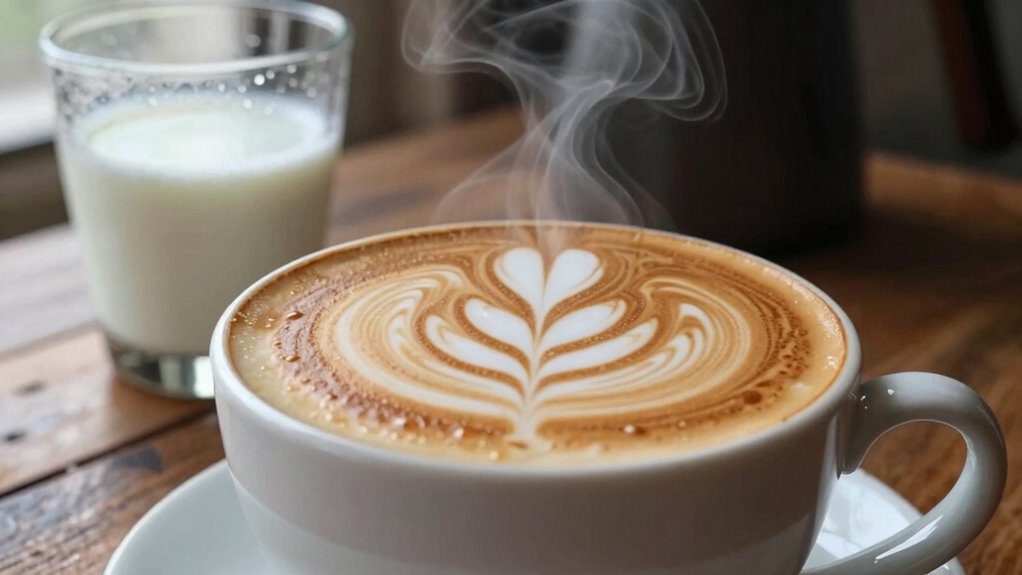

The truth about milk temperature for lattes is simple: the ideal range is 150°F to 155°F. Too hot, and you’ll scorch the milk; too cold, and it won’t froth right. Many believe boiling milk creates better froth, but that’s a myth—it just burns the milk. Understanding these factors can elevate your latte game. Master the right temperature, and you’ll enhance flavor and texture. Stick around, and you’ll discover more tips to perfect your latte-making skills.
Key Takeaways
- The ideal milk temperature for lattes is between 150°F and 155°F for optimal creaminess and flavor.
- Overheating milk can scorch it, leading to bitterness and ruining the latte’s sweetness.
- Cooler milk can froth effectively if steamed with proper technique, debunking the myth of boiling for better froth.
- Different milk types require specific heating temperatures to achieve the best frothing results.
- Consistent use of a reliable thermometer ensures accurate heating, enhancing overall latte quality.

MiiCoffee Digital Milk Frothing Thermometer with Clip, Espresso Machine Accessories for Steaming Milk (Fahrenheit)
【Designed for Espresso】MiiCoffee Digital Milk Frothing Thermometer was designed to help you steam milk to the perfect temperature,…
As an affiliate, we earn on qualifying purchases.
As an affiliate, we earn on qualifying purchases.
Why Milk Temperature Matters for Your Latte
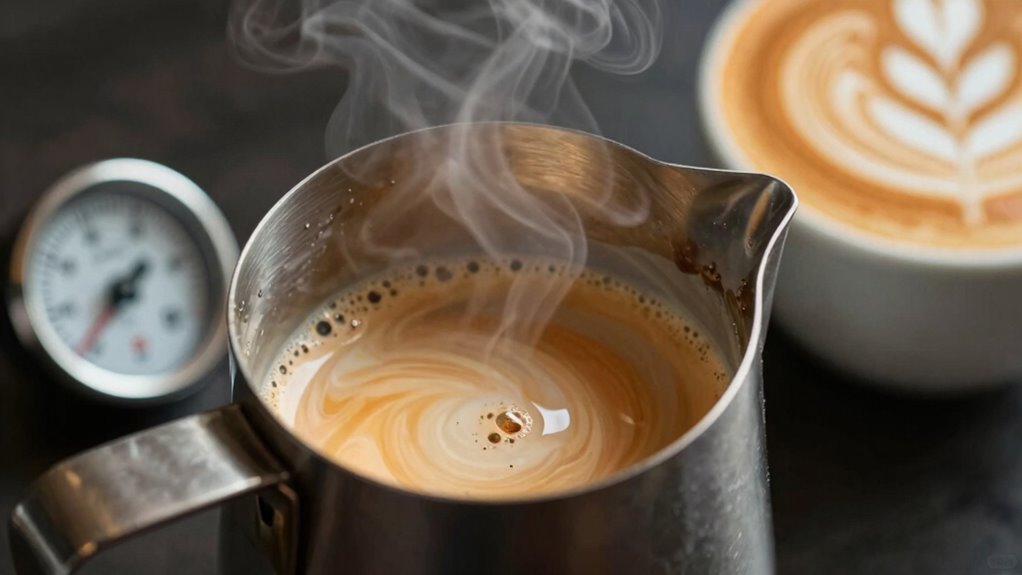
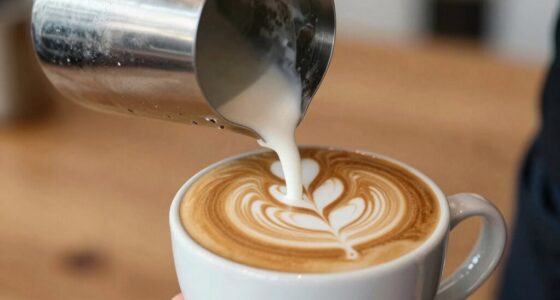
When you’re crafting the perfect latte, the temperature of your milk plays an essential role. It directly influences the milk texture, which is vital for achieving that creamy, velvety finish you desire. If your milk’s too hot, it can scorch and ruin the flavor, while milk that’s too cold won’t froth properly, leaving you with a lackluster drink. The right temperature creates microfoam, which allows you to create stunning latte art. That beautiful heart or rosette on top isn’t just for show; it’s a reflection of your skill in managing milk temperature. So, keep an eye on that thermometer and master the art of frothing; your lattes will thank you with every sip.

Milk Pitcher, Dailyart Stainless Steel Milk Frothing Pitcher with Thermometer for Coffee, Cappuccino,Espresso,Latte Art(600ml/20oz)
☕Designed for Beginners: Our milk frothing pitcher with integrated thermometer allows for precise temperature measurement, making the frothing…
As an affiliate, we earn on qualifying purchases.
As an affiliate, we earn on qualifying purchases.
The Ideal Milk Temperature for Creamy Lattes
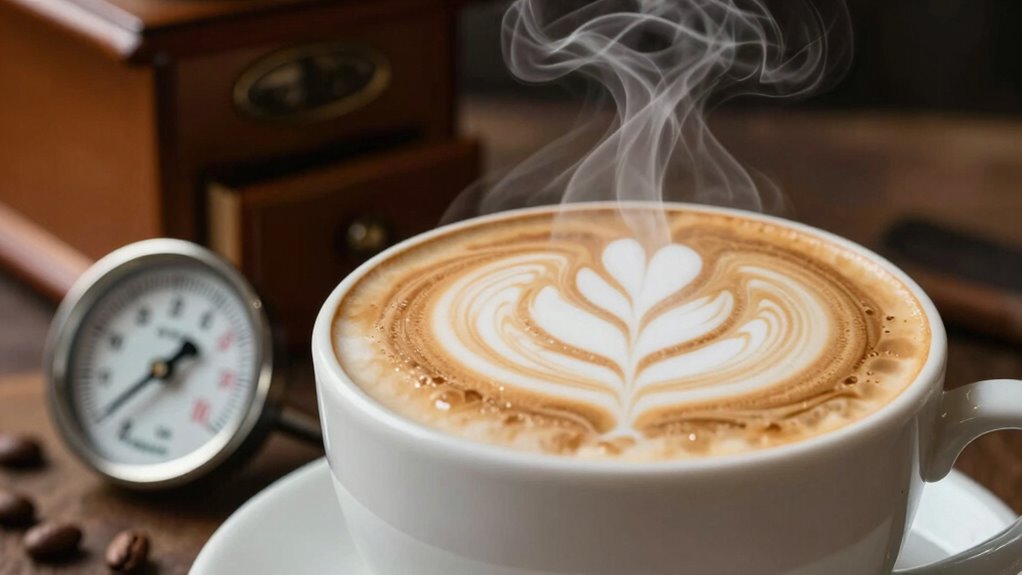
To achieve that perfect creamy latte, you should aim for a milk temperature between 150°F and 155°F (65°C to 68°C). At this range, milk frothing becomes a breeze, creating that luscious microfoam you crave. If your milk’s too hot, you risk scalding it, ruining its sweetness and texture. On the flip side, under-heated milk won’t froth properly, leaving you with a lackluster latte. Mastering temperature control is essential for consistency; invest in a reliable thermometer to help you hit that sweet spot every time. Remember, the right temperature not only enhances flavor but also elevates your overall latte experience. Super-automatic espresso machines often come with built-in thermometers, making it easier to achieve that ideal milk temperature. So, keep that milk frothing goal in mind, and you’ll be on your way to latte perfection!

SIMPLETASTE Milk Frother, 4-in-1 Electric Milk Frother and Steamer, Automatic Warm and Cold Foam Maker and Milk Warmer for Latte, Cappuccinos, Dark Blue
4-in-1 Multifunctional: Customize your favorite café-style drinks at home with this versatile milk frother. Choose from warm dense…
As an affiliate, we earn on qualifying purchases.
As an affiliate, we earn on qualifying purchases.
Common Myths About Milk Temperature
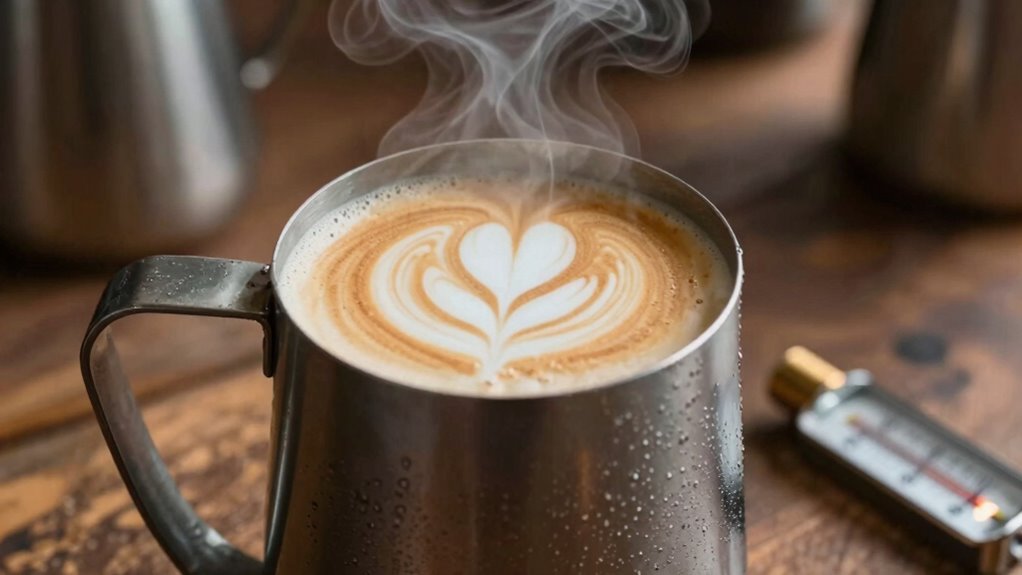
Many coffee enthusiasts hold strong beliefs about milk temperature that can lead to misconceptions. One common myth is that steaming milk to a boiling point creates better froth. In reality, overheating can burn the milk, ruining its sweetness and texture. Another temperature misconception is that colder milk yields less foam. While cooler milk may take longer to froth, it can still produce a rich, creamy texture when steamed properly. Some believe that all milk types must be heated to the same temperature, but different milk compositions react uniquely. By understanding these milk myths, you can refine your latte-making skills and achieve the perfect balance of temperature and flavor. Additionally, the ideal milk temperature for a latte is around 60-70°C, allowing for optimal flavor and froth without compromising quality. Exploring the differences between espresso and coffee can also enhance your overall coffee experience.
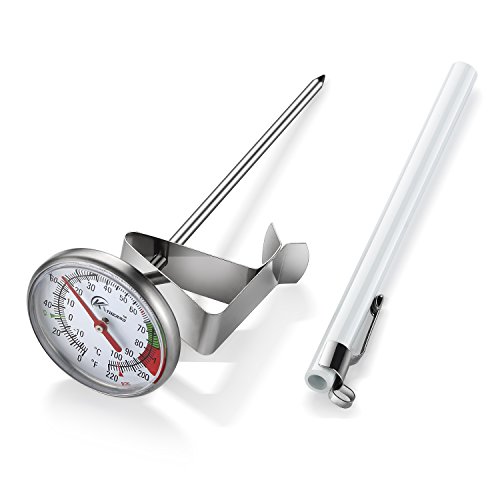
KT THERMO Instand Read 2-Inch Dial Thermometer,Best for The Coffee Drinks,Chocolate Milk Foam
DESIGN:Multi-stage design of the fixed clip, adjust the thermometer read the location of the disk surface to facilitate…
As an affiliate, we earn on qualifying purchases.
As an affiliate, we earn on qualifying purchases.
How to Measure Milk Temperature Accurately
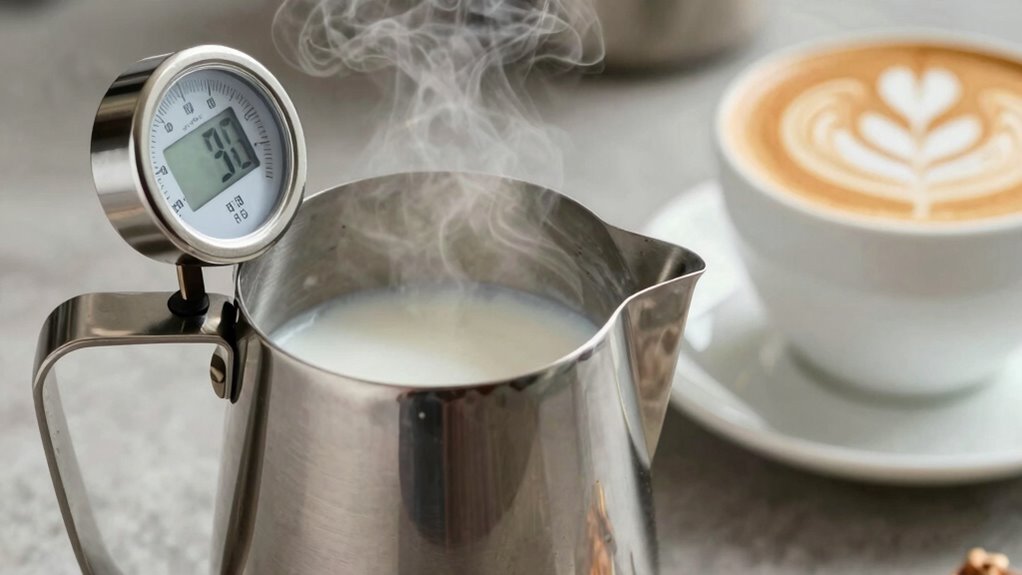
While achieving the perfect milk temperature for your latte, measuring it accurately is crucial. You can’t rely on guesswork; using milk thermometers will give you the precision you need. Opt for a digital thermometer for quick and clear readings, or a dial thermometer for a classic touch.
When heating milk, employ temperature techniques like the “hand test” to gauge heat levels. Just be cautious—this method isn’t as precise. Aim for a temperature between 150°F to 155°F (65°C to 68°C) for ideal frothing.
Keep your thermometer clean and calibrated to maintain accuracy. With the right tools and techniques, you’ll consistently achieve that perfect milk temperature, enhancing your latte experience every time.
What Happens When You Heat Milk?
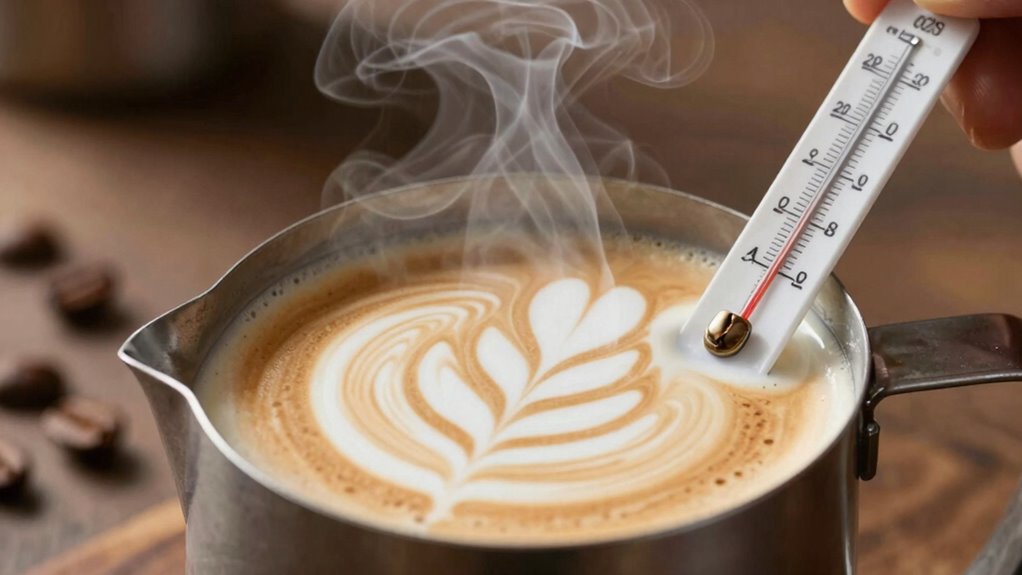
When you heat milk, its structure changes, affecting how it combines with coffee. You’ll notice shifts in flavor, too, as the heat enhances sweetness while mellowing other notes. Understanding these transformations can help you create the perfect latte.
Milk Structure Changes
Heating milk triggers a fascinating transformation in its structure, as proteins, fats, and sugars undergo significant changes. You’ll notice that the milk composition shifts, affecting protein structure and fat content. As the temperature rises, lactose behavior alters, impacting sweetness. The thermal properties of milk also change, leading to increased viscosity and foam stability, which is essential for lattes. Nutrient retention can be a concern, but the right heating method helps maintain vital vitamins.
| Change | Effect |
|---|---|
| Protein Structure | Denaturation occurs |
| Fat Content | Emulsification improves |
| Lactose Behavior | Sweetness increases |
Understanding these changes can enhance your latte-making skills, ensuring a creamy and satisfying result.
Flavor Profile Alterations
As the milk undergoes structural changes, its flavor profile also evolves. When you heat milk, you’ll notice a shift in taste nuances, as the natural sugars caramelize slightly, enhancing sweetness. This transformation creates a richer, creamier mouthfeel that complements your latte perfectly. Additionally, the right essential oils for relaxation can enhance your overall sensory experience while enjoying your coffee.
Moreover, the heating process affects the aromatic balance, releasing more volatile compounds that contribute to the overall flavor experience. You’ll find that properly steamed milk brings out a harmonious blend of tastes, making your coffee more enjoyable. However, if overheated, milk can turn bitter, overshadowing those delicate flavors you’ve come to love. So, pay attention to the temperature; it’s essential for achieving that ideal balance in your latte. Additionally, the right milk type can significantly influence the creaminess and taste, impacting your overall coffee experience. Regularly using glycolic acid products can also enhance your skin texture, just as the right milk temperature enhances your latte.
Ideal Milk Temperatures for Different Milk Types
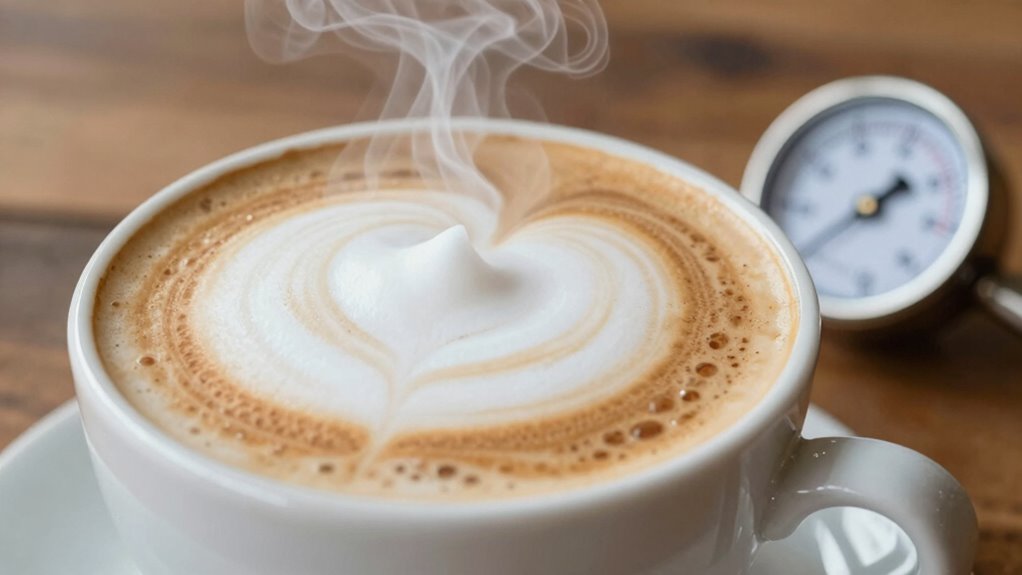
To create the perfect latte, understanding the ideal milk temperatures for different milk types is essential. Whole milk shines at 150-155°F, delivering a creamy texture and rich flavor. Skim milk, with its lower fat content, froths best around 140-145°F, resulting in a lighter drink. For those using almond milk, aim for 140-150°F; its nutty flavor comes alive at these temperatures. Oat milk, a popular milk alternative, performs well between 150-160°F, enhancing its natural sweetness. Always consider the lactose content, especially if you’re lactose-sensitive. Each type of milk requires specific frothing techniques and steaming methods to highlight its unique flavor nuances. By adhering to these temperature ranges, you’ll elevate your latte experience.
How to Froth Milk for Optimal Temperature

Understanding the ideal temperatures for different milk types sets the stage for frothing milk effectively. To achieve that perfect foam, you need the right frothing techniques and tools. Here are some tips to help you froth milk like a pro:
- Use a quality milk frother for consistent results.
- Keep an eye on the temperature—ideal frothing range is between 150°F and 155°F.
- Practice the right angle when steaming to incorporate air evenly.
How Milk Temperature Impacts Latte Flavor
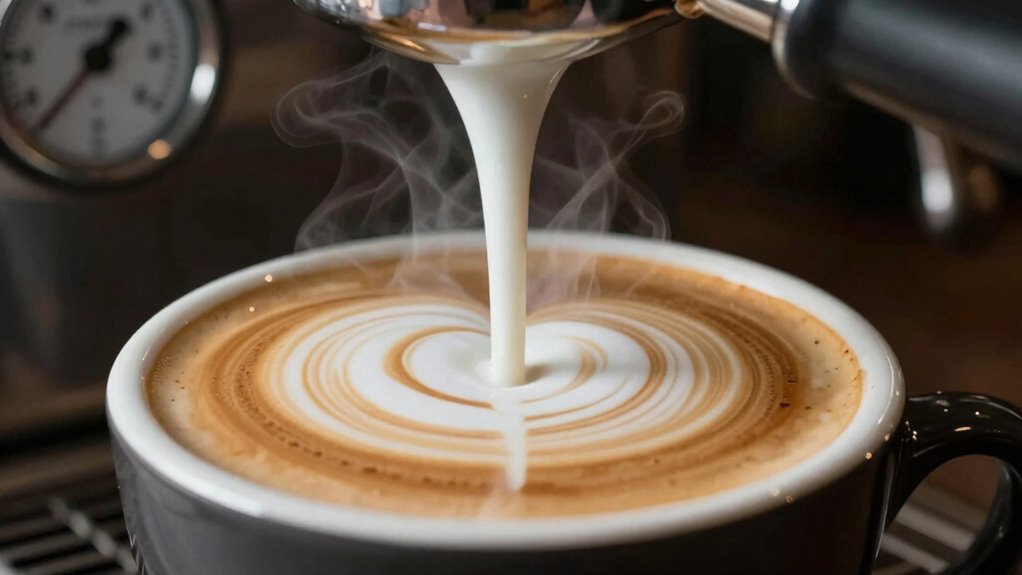
The temperature of your milk plays a vital role in shaping your latte’s flavor. When you hit the ideal range, you enhance the sweetness and texture, making each sip a delight. However, straying too far from that range can lead to bitter notes and a less enjoyable experience.
Optimal Temperature Range
When you heat milk for a latte, hitting the right temperature is essential for flavor enhancement. Ideal milk frothing occurs between 150°F to 155°F (65°C to 68°C). This temperature range allows for creamy texture without scalding the milk, which can ruin the taste. Effective temperature control can make a significant difference in your latte experience.
- It preserves the milk’s natural sweetness.
- It guarantees a velvety microfoam.
- It prevents that unpleasant burnt flavor.
Staying within this ideal range not only boosts the flavor but also elevates your overall coffee experience. So, next time you prepare a latte, pay attention to that temperature—it truly matters!
Flavor Profile Changes
Getting the milk temperature just right can dramatically alter the flavor profile of your latte. When you heat milk to the ideal range, it enhances milk sweetness, creating a delightful contrast with coffee’s acidity balance. This temperature also promotes texture enhancement, making your latte creamier and more enjoyable. As you experiment with different brewing techniques, you’ll notice how the temperature affects flavor notes and aroma release, bringing out subtle hints that might otherwise go unnoticed. Additionally, the right warmth influences the mouthfeel impact, making each sip more satisfying. By understanding these ingredient interactions, you can fine-tune your lattes, transforming them into a rich, flavorful experience that excites your palate.
Troubleshooting Milk Temperature Issues
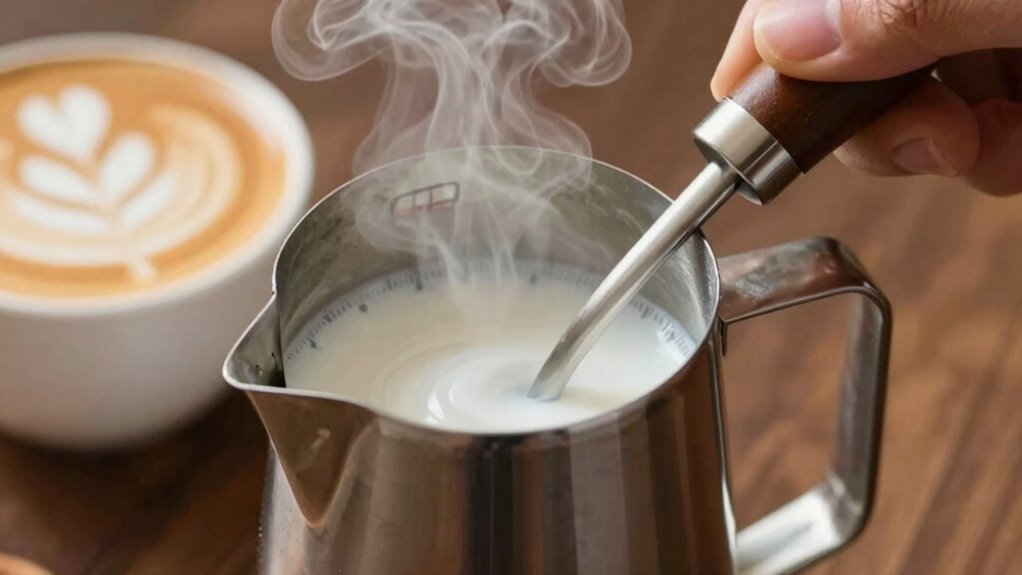
While crafting the perfect latte, you might encounter milk temperature issues that can throw off your drink’s balance. To troubleshoot, focus on these key areas:
Mastering the perfect latte requires attention to milk temperature—get it right for a balanced and delicious drink.
- Frothing Technique: Make sure you’re using the right method for milk frothing. If it’s too hot or too cool, it’ll affect your latte’s texture.
- Temperature Calibration: Regularly check your thermometer for accuracy. Even small discrepancies can lead to big taste changes.
- Milk Type: Different milk varieties have unique temperature thresholds for ideal frothing. Know your milk’s limits!
Best Practices for Consistent Latte Quality at Home
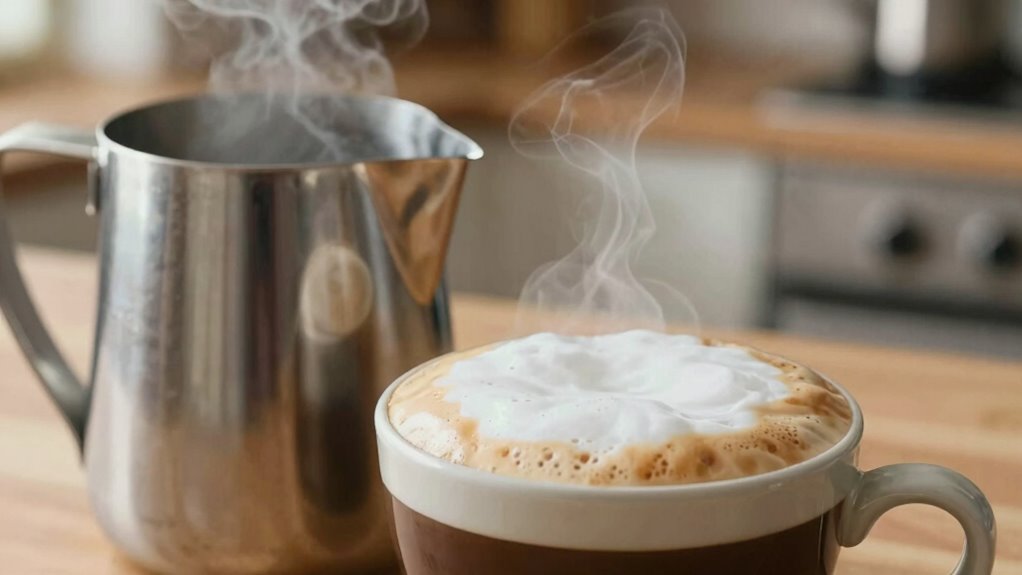
To achieve consistent latte quality at home, focus on establishing a reliable routine. Start with fresh, high-quality coffee beans and grind them just before brewing. Use a scale to measure your coffee and water accurately, ensuring ideal extraction. When it comes to milk, experiment with different milk alternatives like almond, oat, or soy to find your favorite. Heat your milk to the right temperature—around 150°F to 155°F—before frothing for that perfect microfoam. Strength training fundamentals can also apply to perfecting your latte-making skills, as consistency is key. Practice your latte art skills regularly; it’s a fun way to enhance your coffee experience. Finally, clean your equipment after each use to maintain the best flavor. With these practices, you’ll consistently enjoy café-quality lattes at home!
Frequently Asked Questions
Can I Use Non-Dairy Milk for Lattes?
Yes, you can definitely use non-dairy milk for lattes! Popular non-dairy options like almond, oat, and soy milk can create delicious drinks. Just keep in mind that each type froths differently, so experiment with frothing techniques to find the best results. For instance, oat milk tends to froth well and holds its texture, while almond milk might require a bit more finesse. Enjoy crafting your perfect non-dairy latte!
How Does Altitude Affect Milk Temperature?
Altitude affects milk temperature by altering the boiling point of liquids. At higher elevations, water boils at lower temperatures, which can impact milk frothing. You’ll need to make altitude adjustments when steaming milk for lattes. This means you should froth your milk a bit longer to achieve that silky texture you love. By tweaking your technique, you can guarantee your lattes are just as delicious, no matter how high up you are!
Does Milk Temperature Impact Nutritional Value?
Yes, milk temperature can impact its nutritional value. When you heat milk, you might alter its composition slightly, affecting some vitamins, especially B vitamins, and proteins. However, the nutritional benefits largely remain intact. So, if you’re enjoying a hot latte, you’re still getting essential nutrients. Just be mindful not to overheat it, as extreme temperatures could diminish some of those valuable components. Enjoy your drink while keeping its benefits in mind!
Can I Reheat Milk Without Affecting Taste?
Yes, you can reheat milk without greatly affecting its taste. Use gentle milk reheating techniques, like warming it slowly on the stove or in the microwave at low power. Stirring helps distribute heat evenly and preserve flavor. Avoid boiling, which can alter the taste and texture. For best results, use taste preservation methods, such as reheating only the amount you need, ensuring it stays fresh and delicious for your drinks.
What Equipment Is Best for Frothing Milk?
When it comes to frothing milk, you’ve gotta have the right tools to hit the ground running. A steam wand is your best friend, giving you that professional touch. Pair it with a frothing pitcher for easy pouring, and don’t forget a milk frother for quick froths at home. If you want precision, a temperature gauge guarantees your milk’s just right. With these, you’ll create café-quality lattes in no time!
Conclusion
So, you thought milk temperature didn’t matter? Ironically, it’s the secret to your latte’s creamy bliss. Aim for that perfect range, and you’ll reveal flavors you didn’t even know existed. Remember, heating milk isn’t just about making it warm; it’s about crafting an experience. Keep those myths at bay, and with a little practice, you’ll be the latte whisperer at home. Who knew a simple temperature could brew such greatness? Cheers to your delicious journey!