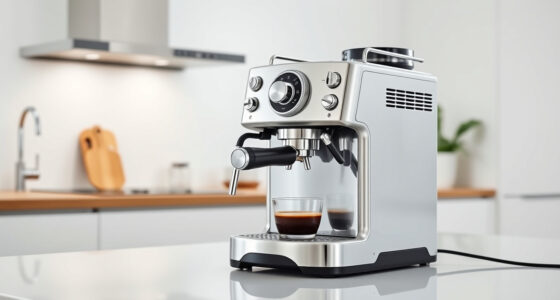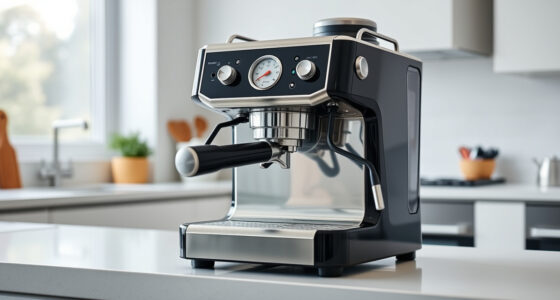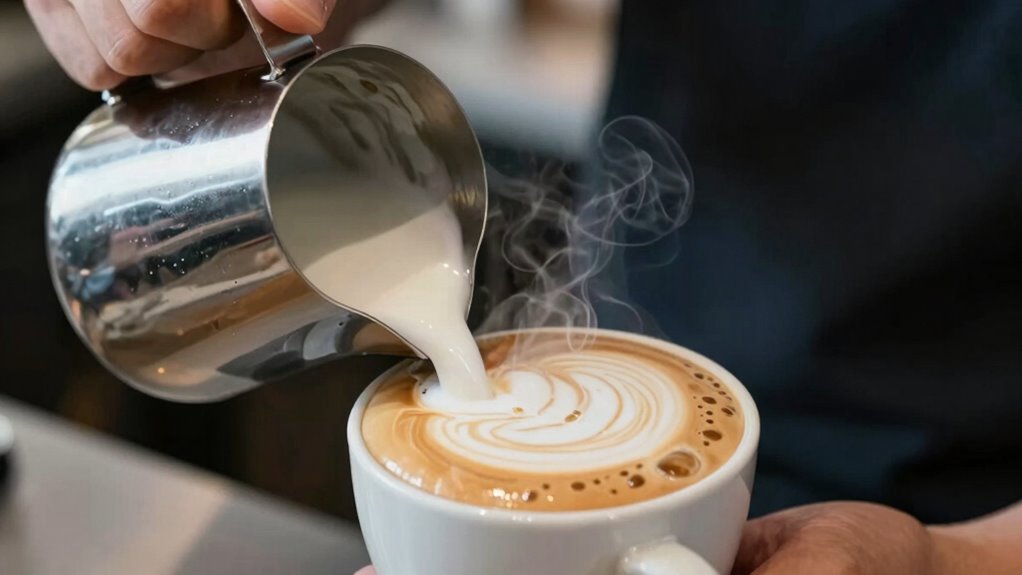

To make perfect cappuccino foam, start by choosing fresh milk—whole milk yields the best creaminess—and heat it to about 140-150°F. Position your steam wand just below the surface and tilt the pitcher slightly to introduce tiny air bubbles for microfoam. Keep the temperature consistent, around 150°F to 155°F, and whirl the milk to create a smooth, dense foam. For expert tips and troubleshooting, keep exploring these essential steps.

Get coffee and tea gear delivered free with Prime
- Fast, free delivery on millions of items
- Prime Video, Amazon Music and more included
- Member-only deals all year
Key Takeaways
- Use milk heated to 140-150°F for optimal microfoam creation.
- Position the steam wand just below the milk surface and tilt the pitcher slightly.
- Incorporate air gently at the start to form tiny bubbles, then submerge wand to create a whirlpool.
- Maintain milk temperature between 150°F and 155°F for smooth, stable foam.
- Aim for shiny, velvety foam with small bubbles that holds shape for latte art.
As an affiliate, we earn on qualifying purchases.
How Does Cappuccino Foam Form and Why Is It Important?
How Does Cappuccino Foam Form and Why Is It Important?
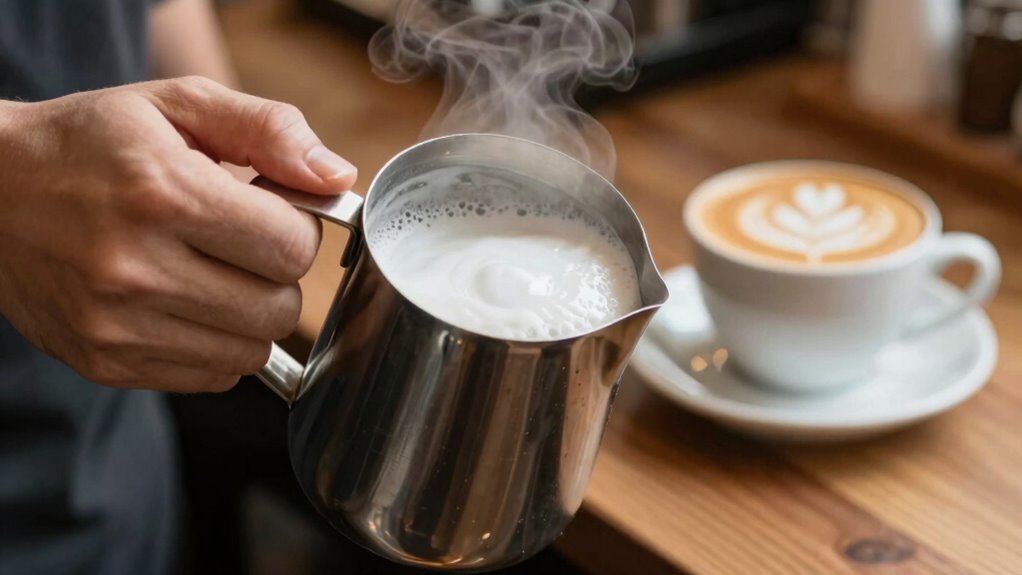
Have you ever wondered how that velvety foam on your cappuccino forms? It all starts with milk temperature. When you steam milk, heating it to around 140-150°F creates the perfect environment for foam formation. This temperature range helps incorporate air efficiently without scorching the milk. Foam stability is essential because it determines how long the foam maintains its structure and texture on your coffee. Properly steamed milk creates tiny bubbles that trap air, giving the foam its smooth, creamy consistency. If the milk isn’t heated enough or gets too hot, the foam can collapse quickly. Ensuring the right milk temperature and focusing on foam stability results in a rich, long-lasting foam that elevates your cappuccino experience. Understanding color accuracy can enhance how we appreciate the intricacies of crafting the perfect cup.
As an affiliate, we earn on qualifying purchases.
Choosing the Best Milk for Frothing and Foam Quality
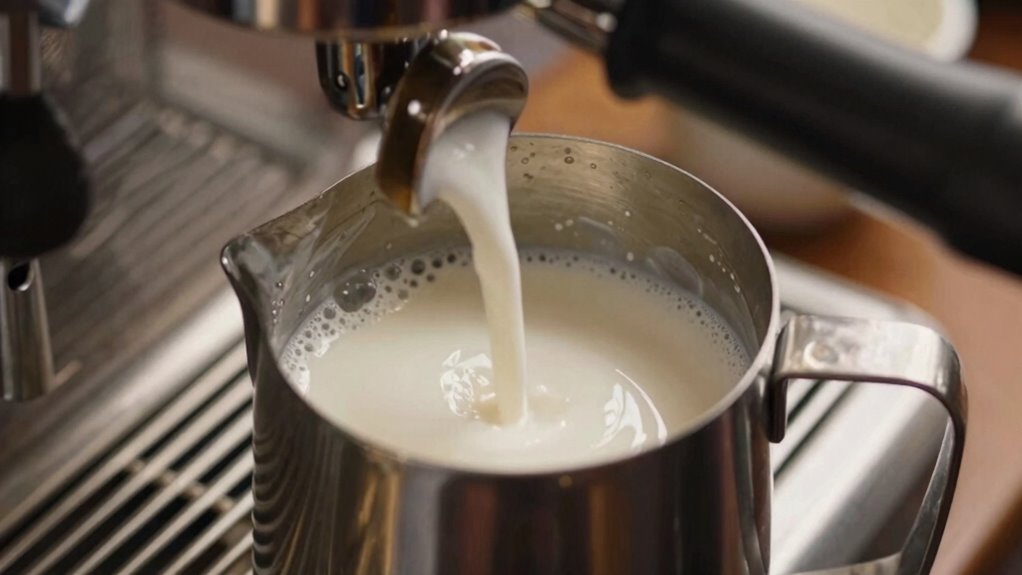
Choosing the right milk plays a vital role in achieving perfect froth and foam quality. The type of milk you select influences the texture, stability, and flavor of your cappuccino foam. For the best results, consider these options:
- Dairy milk: Whole milk creates rich, creamy foam, while lower-fat options produce lighter froth.
- Milk alternatives: Almond, soy, or oat milk can work well but may require specific steaming techniques for ideal foam.
- Flavor infusions: Adding natural flavorings like vanilla or cinnamon can enhance your foam’s taste, especially with milk alternatives that absorb flavors differently.
Experiment with different types to find what suits your taste and foam needs best. The right choice guarantees a velvety, dense foam perfect for your cappuccino. Additionally, creating seating areas can enhance your overall coffee experience, making it more enjoyable for social gatherings.
As an affiliate, we earn on qualifying purchases.
Mastering the Steam Wand Technique for Dense, Creamy Foam
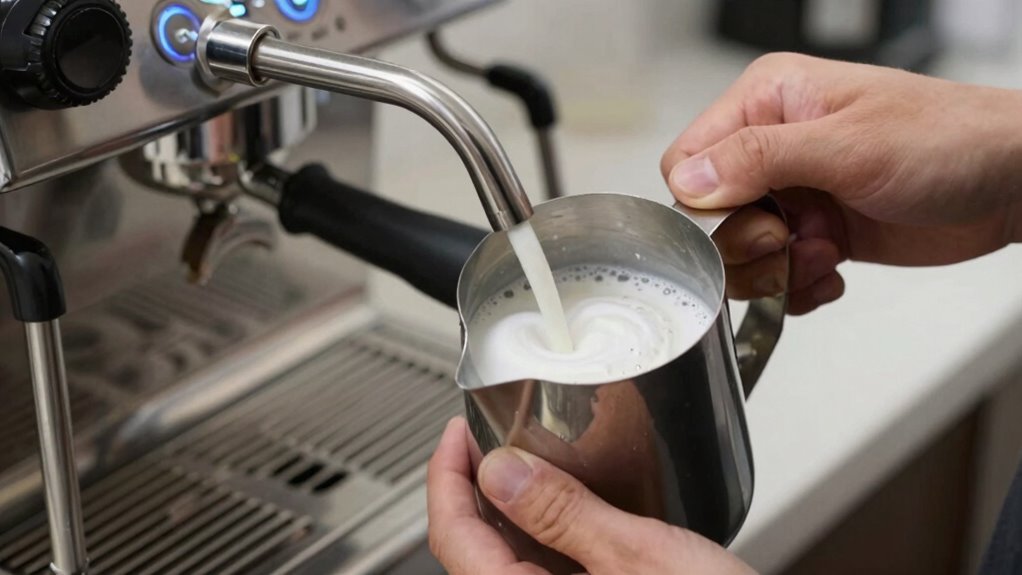
Mastering the steam wand technique is essential for creating dense, creamy foam that elevates your cappuccino. To achieve this, position the wand just below the milk’s surface and tilt the pitcher slightly. As you turn on the steam, listen for a consistent hissing sound and aim to incorporate air gently for fine microfoam. Keep the milk temperature between 150°F and 155°F; this guarantees ideal texture and sweetness. Properly textured foam is vital for latte art, as it flows smoothly and holds intricate designs. During steaming, angle the pitcher to maintain a whirlpool motion, which creates uniform microbubbles. With practice, your foam will become denser and creamier, providing the perfect canvas for beautiful latte art and a delicious cappuccino. Understanding steam pressure when choosing your steam wand can also significantly impact your foam quality. The choice of espresso machine type can further enhance your brewing experience and ensure consistent results.
As an affiliate, we earn on qualifying purchases.
How to Achieve the Perfect Foam Texture and Consistency
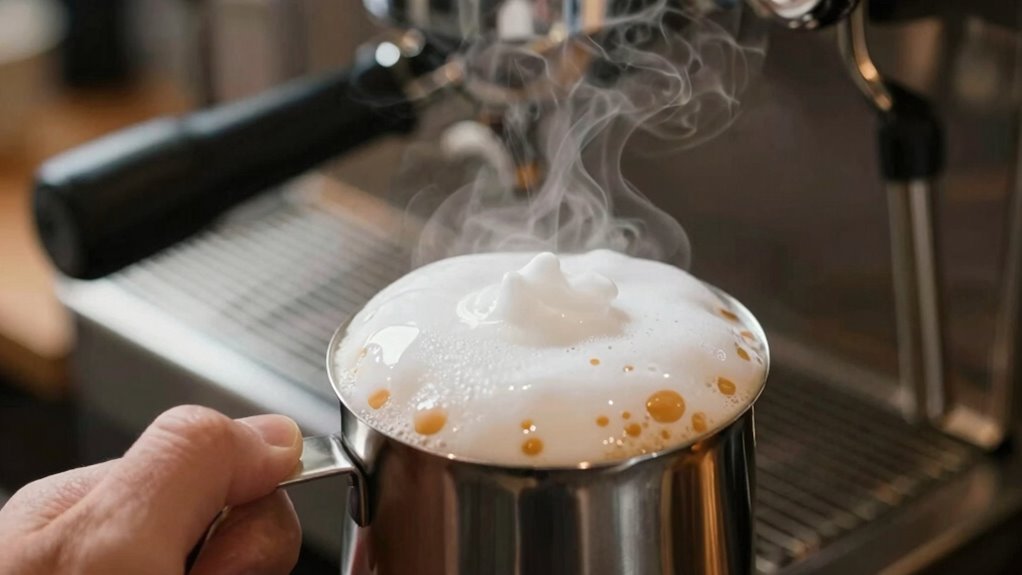
Once you’ve got the steam wand technique down, the next step is ensuring your foam has the right texture and consistency. Achieving the perfect foam depends on controlling *milk temperature* and using the right *frothing tools*. Aim for a milk temperature between 140°F and 150°F; this range creates smooth, glossy foam without overheating. Use high-quality *frothing tools*, like a calibrated steam wand or a handheld frother, to get a fine, velvety microfoam. Focus on incorporating small, consistent air bubbles, which create a creamy texture. Remember, the goal is a shiny, smooth foam that holds its shape, not large bubbles or a soupy appearance. To enhance your skills, understanding brewing science will provide you with essential knowledge about ratios and extraction. With practice, mastering these elements will give you flawless cappuccino foam every time.
Troubleshooting Common Cappuccino Foam Problems

Even experienced baristas can encounter issues with their cappuccino foam, but understanding common problems can help you troubleshoot effectively. If your foam isn’t forming properly, check your milk temperature—too hot or cold can prevent proper aeration. When using milk alternatives, like almond or soy milk, be aware they often produce less stable foam; try adjusting steaming techniques or switching brands. If your foam is too frothy or lacks creaminess, it might be over-foamed or over-steamed. For flavor additions, avoid adding them before steaming, as they can interfere with foam stability. Instead, add flavorings after steaming, ensuring the foam stays smooth and velvety. Troubleshooting these issues means adjusting your technique and ingredients for consistently perfect cappuccino foam. Additionally, using expert appliance recommendations can significantly enhance your milk steaming process, leading to better foam consistency.
Frequently Asked Questions
Can I Make Cappuccino Foam With Non-Dairy Milk Alternatives?
Yes, you can make cappuccino foam with plant-based milk. Many non-dairy milk alternatives, like almond, soy, or oat milk, froth well with the right technique. To achieve good foam, try alternative frothing techniques such as using a milk frother, steaming with a whisk, or shaking in a jar. Keep in mind, some plant-based milks foam better than others, so experiment to find your favorite for a creamy, frothy cappuccino.
What Equipment Is Best for Creating Professional-Quality Foam?
To create professional-quality foam, you need a good frothing pitcher and either a steam wand or an electric frother. The best equipment helps you achieve the right milk texture and control frothing techniques. Use a steam wand for precise temperature and microfoam, while electric frothers are user-friendly for beginners. Always focus on incorporating air slowly and consistently to produce smooth, velvety foam that elevates your cappuccino.
How Do Environmental Factors Affect Frothing and Foam Stability?
Environmental factors profoundly impact frothing and foam stability; for instance, 60% of baristas notice inconsistent foam due to climate sensitivity. Humidity and temperature influence milk’s ability to foam: high humidity can weaken foam, while colder temperatures enhance stability. The container material also matters—stainless steel retains cold better, aiding foam longevity. You should consider these factors for ideal frothing, ensuring your cappuccino foam remains smooth and stable regardless of environmental conditions.
Is Temperature Control Necessary During the Frothing Process?
Yes, temperature control is essential for frothing consistency. You need to maintain temperature accuracy to avoid overheating or underheating the milk, which can affect foam texture and stability. When your milk hits the right temperature, the foam becomes creamy and stable. Using a thermometer helps you stay precise, ensuring you get the best froth every time and achieving that perfect cappuccino.
How Long Should I Steam Milk for Optimal Foam?
You should steam milk for about 20-30 seconds for ideal foam, as most baristas find this perfect for creating creamy, velvety milk texture. Surprisingly, milk doubles in volume during proper frothing, showcasing the importance of timing. Focus on frothing techniques that incorporate consistent, gentle motion, maintaining the right temperature without overheating. This ensures your foam stays silky and smooth, perfect for a rich cappuccino.
Conclusion
Mastering the art of cappuccino foam is like finding the right key to a secret door—unlocking a world of rich textures and flavors. With patience and practice, you’ll craft foams that whisper of old-world craftsmanship and modern perfection. Remember, even da Vinci’s brushstrokes required patience; your foam, too, will become a masterpiece. Keep experimenting, and soon you’ll create a symphony of crema and microbubbles that elevates every sip.
Halloween Picks
halloween
As an affiliate, we earn on qualifying purchases.