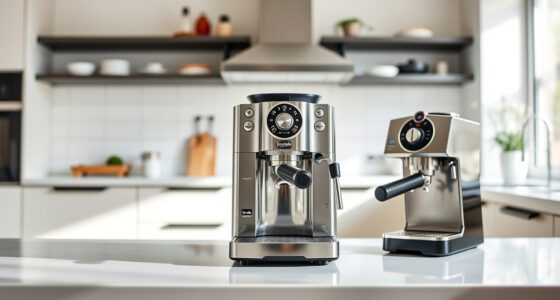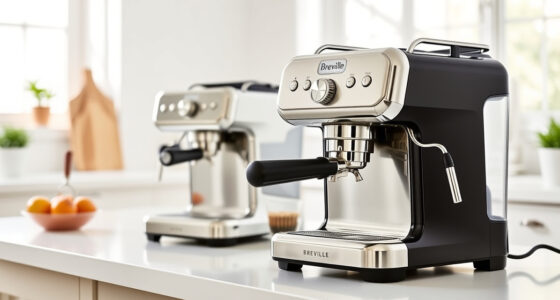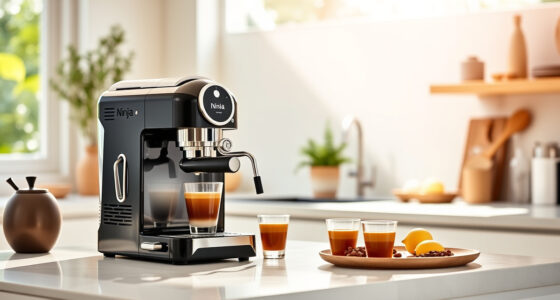
To keep your high-end espresso machine in top shape, perform daily maintenance like flushing the group head and wiping down surfaces. Regularly check the water reservoir and clean the portafilter. Don’t forget to maintain the brew group and grinder by rinsing and using a soft brush. Descaling every 1 to 3 months prevents build-up that can affect flavor. This simple routine guarantees quality coffee and machine longevity. There’s plenty more to discover about effective maintenance techniques.

Get coffee and tea gear delivered free — and shop member deals
- Fast, free delivery on millions of items
- Access to Prime Big Deal Days deals on October 6–7
- Prime Video, Amazon Music and more included
Key Takeaways
- Regularly flush the group head and wipe the exterior to maintain cleanliness and performance.
- Rinse the brew group daily and apply lubricant monthly for optimal functionality.
- Check the water reservoir frequently and descale every 1 to 3 months to prevent mineral buildup.
- Use a soft brush and vacuum to clean the grinder, ensuring it operates effectively.
- Monitor indoor air quality and implement safety measures to enhance the brewing environment.
As an affiliate, we earn on qualifying purchases.
Why Regular Maintenance Is Crucial for Your Espresso Machine

While you might think your high-end espresso machine can run indefinitely without a hitch, regular maintenance is key to keeping it in top shape. Ignoring upkeep can lead to decreased espresso longevity and compromised machine performance. Over time, coffee oils and minerals build up, affecting both the taste of your brew and the efficiency of your machine. By investing a little time regularly, you guarantee each shot of espresso is rich and flavorful. Additionally, cleaning techniques can vary depending on the specific model of your machine, so it’s important to consult your manual. Understanding the caffeine content in espresso shots can also help you adjust your brewing methods for optimal flavor. Plus, proper maintenance helps prevent costly repairs down the road. You wouldn’t skip regular check-ups for your car, right? Treat your espresso machine with the same care, and it’ll reward you with consistent, high-quality coffee for years to come. Additionally, understanding what matters when choosing coffee gear can enhance your overall brewing experience. Regular cleaning ensures that essential components like the brew group remain in optimal condition, maximizing your machine’s performance. Cleaning the filtration basics of your machine helps maintain water quality, ensuring that every cup tastes as good as the last.
high-end espresso machine descaling kit
As an affiliate, we earn on qualifying purchases.
As an affiliate, we earn on qualifying purchases.
Essential Daily Maintenance Tips for Your Espresso Machine
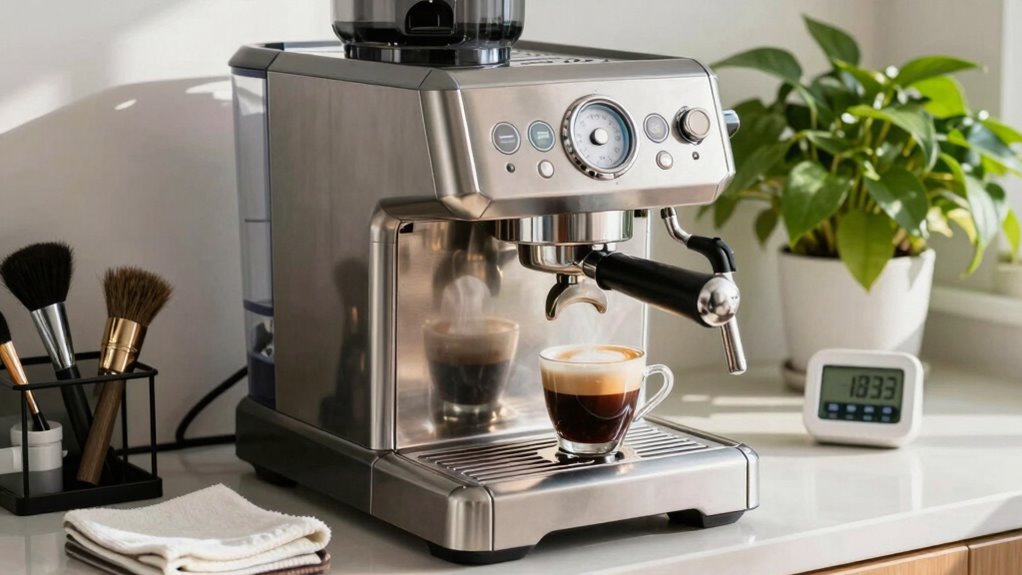
To keep your high-end espresso machine performing at its best, a few essential daily maintenance tasks can make all the difference. Start by flushing the group head to remove any residual coffee oils and grounds, ensuring peak coffee quality. Use maintenance tools like a microfiber cloth to wipe down the exterior and keep surfaces clean. Don’t forget to check the water reservoir; fresh water is vital for consistent flavor. Also, inspect the portafilter for any leftover coffee particles, giving it a quick rinse. Finally, empty the drip tray regularly to prevent overflow and maintain hygiene. These simple daily tasks will enhance your machine’s lifespan and elevate your coffee experience. Additionally, consider color accuracy when choosing your coffee beans, as it can significantly impact the flavor profile of your brew.
espresso machine portafilter cleaning tool
As an affiliate, we earn on qualifying purchases.
As an affiliate, we earn on qualifying purchases.
Quick Steps to Clean Your Espresso Machine’s Brew Group
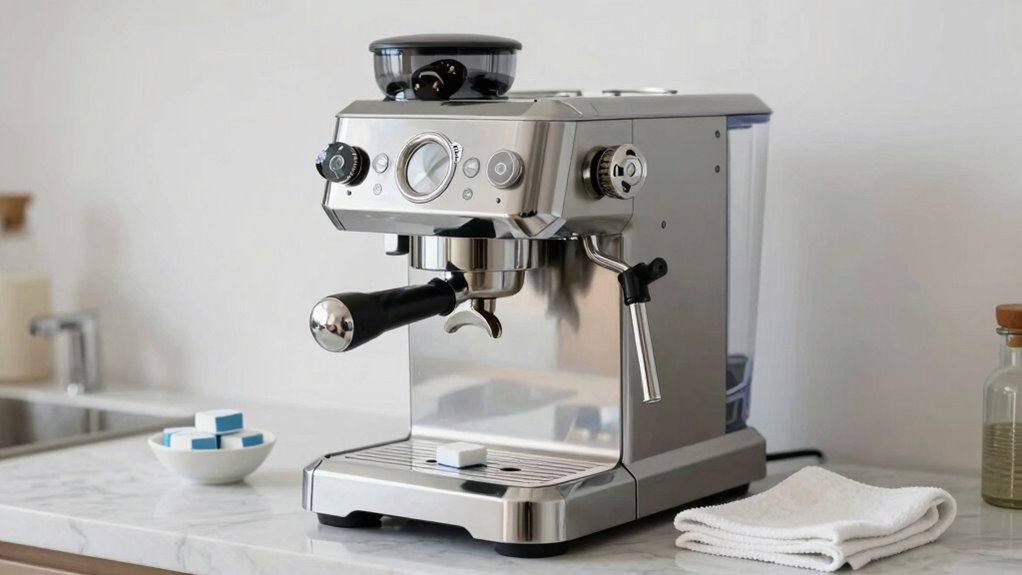
Regular daily maintenance sets the foundation for deeper cleaning, especially when it comes to your espresso machine’s brew group. Follow these quick steps to guarantee peak performance:
| Step | Action | Frequency |
|---|---|---|
| Remove Brew Group | Take it out gently | Daily |
| Rinse Components | Use warm water to rinse | Daily |
| Clean Filters | Replace or clean as needed | Weekly |
| Lubricate Parts | Apply recommended lubricant | Monthly |
espresso machine maintenance kit
As an affiliate, we earn on qualifying purchases.
As an affiliate, we earn on qualifying purchases.
How to Keep Your Water Reservoir and Pipes Free From Build-Up
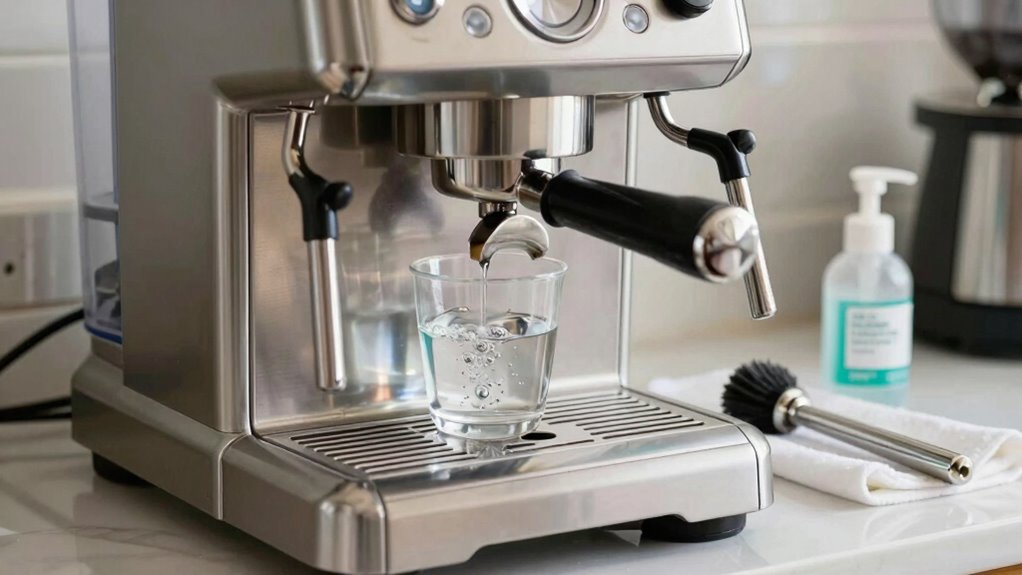
Maintaining a clean water reservoir and pipes is essential for ideal espresso flavor, as mineral build-up can affect both the taste and performance of your machine. To keep your system in top shape, regularly check the water quality you’re using. High mineral content can lead to unwanted deposits, so consider using filtered or bottled water if your tap water isn’t up to par.
Make it a habit to empty and rinse the reservoir every few days. This simple step prevents stagnation and minimizes build-up. You should also inspect the pipes for any signs of scaling. If you notice any, a quick wipe-down with a soft cloth can help keep things flowing smoothly. Regular attention will guarantee your espresso tastes its best.
Descaling: Why and How to Do It
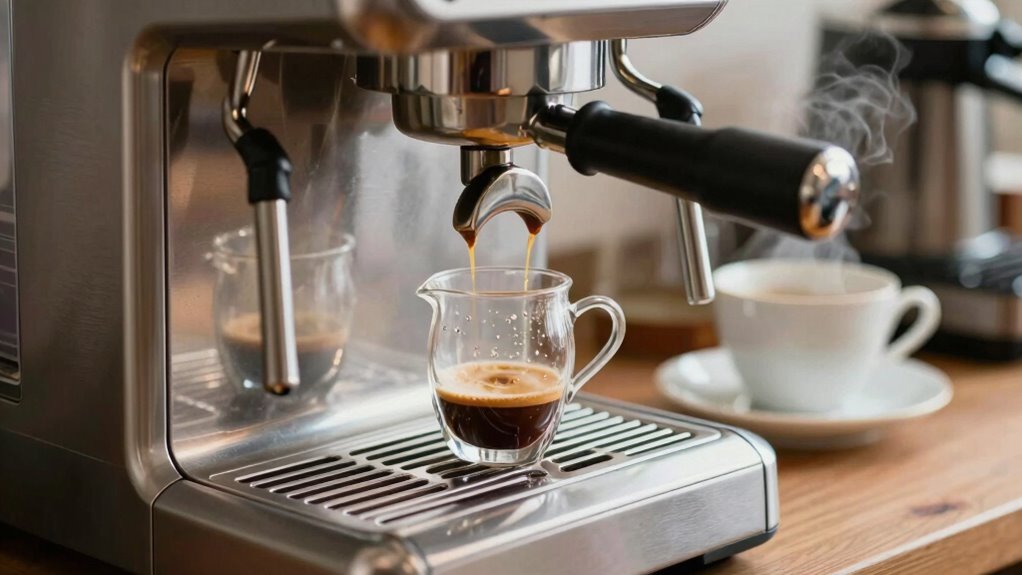
Why is descaling so essential for your espresso machine? Over time, minerals from water build up inside, affecting performance and flavor. Regular descaling helps maintain your machine’s efficiency and extends its lifespan. Aim for a descaling frequency of every 1 to 3 months, depending on your water quality and usage. Home Gym & Strength Training principles can also apply to maintaining your espresso equipment, as proper care ensures optimal performance. Additionally, descaling is crucial because it prevents water chemistry issues that can compromise your espresso quality. Studies show that skin health can also be influenced by the quality of water used in brewing, as impurities may alter the taste of your coffee. Moreover, regular maintenance practices help to ensure eco-friendly HVAC systems work efficiently in your home.
To descale, choose an effective descaling solution, preferably one specifically designed for espresso machines. Start by emptying the water reservoir and mixing the solution with water as per the instructions. Run the solution through your machine, allowing it to sit in the brew group for a few minutes before rinsing thoroughly with clean water. This simple process will keep your espresso machine running smoothly and guarantee delicious coffee every time. Incorporating essential oils for maintenance can also enhance your overall coffee experience by providing a refreshing aroma during the descaling process.
How to Properly Clean and Maintain Your Espresso Grinder
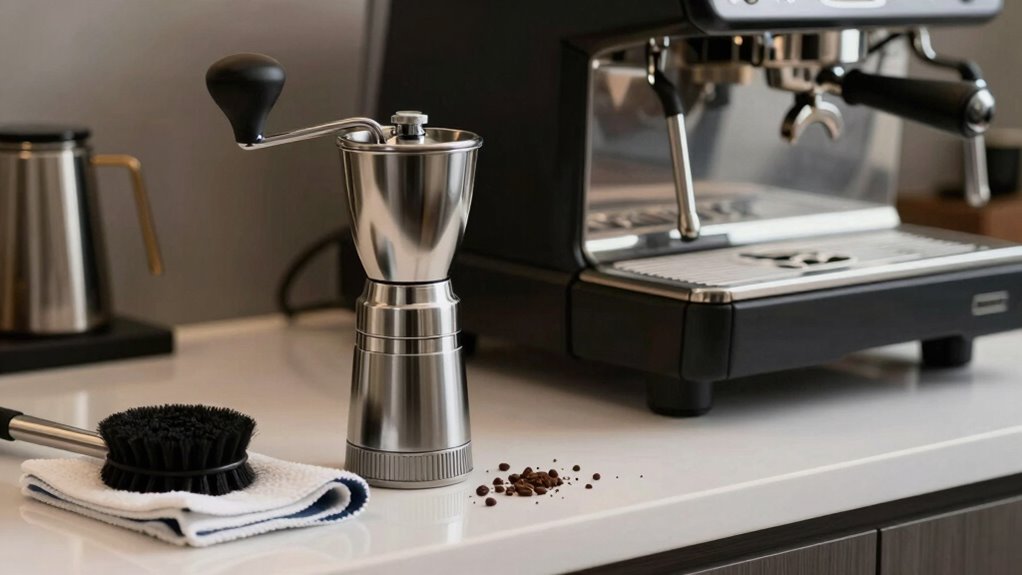
To keep your espresso grinder in top shape, a consistent cleaning routine is essential. You should focus on daily maintenance to prevent buildup, while also incorporating deep cleaning techniques periodically. Let’s explore how to effectively manage both aspects for peak performance.
Daily Cleaning Routine
Although it might seem tedious, establishing a daily cleaning routine for your espresso grinder is crucial for peak performance and flavor extraction. Start by removing any leftover coffee grounds; this helps prevent stale flavors that can ruin your brew. Next, wipe down the exterior and hopper with a damp cloth to keep everything clean and hygienic. Don’t forget to check the burrs for any buildup; this can affect your brew temperature and extraction time. If you notice clogs, use a brush to clear them out. Additionally, maintaining a clean grinder can enhance your investment in high-quality coffee beans, ensuring they are used to their full potential. Regular maintenance is vital for achieving consistent performance in any kitchen appliance. Furthermore, a well-maintained grinder contributes to optimal flavor extraction, allowing you to enjoy the full richness of your coffee. Remember, just like air systems require routine upkeep, a clean grinder is essential for maintaining the quality of your brews. Finally, run a small batch of rice through the grinder to absorb any oils. By following this simple routine, you’ll guarantee consistent results and a better tasting espresso every time. Additionally, ensure proper airflow around the unit to enhance performance, similar to the air purifier maintenance practices.
Deep Cleaning Techniques
While daily cleaning keeps your espresso grinder in good shape, deep cleaning is essential for long-term performance and flavor integrity. Aim to perform a deep clean every few weeks, depending on your cleaning frequency and usage. Start by unplugging the grinder and disassembling it. Use a soft brush to remove coffee grounds from the burrs, followed by a vacuum to clear out any debris. Wash removable parts with warm, soapy water, then dry completely. Consider using a grinder cleaner specifically designed for deep cleaning benefits, which helps eliminate oils and residues. Regular deep cleaning not only enhances flavor but also extends the life of your grinder, ensuring every cup of espresso is as delicious as the last. Additionally, maintaining indoor air quality can further improve your overall espresso experience by reducing contaminants that may affect flavor. High-quality studio dividers can also help in creating a more controlled environment for your coffee-making process. Using a dehumidifier can help manage humidity levels, ensuring the coffee grounds remain fresh and flavorful. Furthermore, monitoring air quality levels in your workspace can enhance the overall brewing experience by minimizing the presence of harmful particles. Incorporating safety gear for your coffee-making setup can also prevent accidents and enhance your brewing experience.
Frequently Asked Questions
How Often Should I Replace My Espresso Machine’s Water Filter?
You should replace your espresso machine’s water filter every 2 to 3 months, depending on your water quality and usage. This guarantees peak performance and longevity for your machine. Keeping track of the water filter lifespan is essential; if you notice changes in taste or flow, it might be time to replace it sooner. Regular filter replacement frequency helps maintain the flavor of your espresso and prevents mineral buildup, enhancing your brewing experience.
Can I Use Vinegar Instead of a Commercial Descaler?
You can use vinegar as a descaling alternative, but it’s not the most effective choice. While vinegar can help remove some mineral buildup, it might not tackle tougher deposits like a commercial descaler would. Plus, vinegar’s strong odor can linger in your machine, affecting the taste of your espresso. If you want the best results, stick with a dedicated descaling solution designed specifically for espresso machines. It’s worth the investment for peak performance!
What Should I Do if My Espresso Machine Leaks?
If your espresso machine leaks, start by identifying the leak causes. Check all connections and seals for wear or damage. Tighten any loose fittings and verify the drip tray isn’t overfilled. Next, run a troubleshooting step by checking the water reservoir for cracks. If the problem persists, descaling your machine might help. Finally, consult the manufacturer’s guidelines or a professional if you can’t pinpoint the issue. Don’t ignore the problem!
Is It Necessary to Service My Machine Professionally?
Yes, it’s essential to service your espresso machine professionally for ideal longevity. You might think you can handle minor issues yourself, but professional service catches hidden problems before they escalate. Imagine brewing that perfect cup every morning—regular maintenance is key to making it happen. Plus, expert technicians can enhance performance and extend your machine’s life. Investing in professional care now saves you time and money down the road. Don’t overlook this benefit!
How Can I Tell if My Grinder Needs Calibration?
You can tell your grinder needs calibration if your coffee taste starts to suffer. If it’s bitter or overly sour, check the grinder settings. Try adjusting them slightly and brew another cup. Consistency in grind size is key; if you’re noticing uneven extraction or varying flavors, that’s a sign your grinder needs attention. Regularly tasting your coffee will help you identify when it’s time to recalibrate for the best results.
Conclusion
Keeping your high-end espresso machine in top shape is like tuning a fine instrument—it requires attention and care. By following these maintenance tips, you’ll guarantee that every cup of coffee hits the right notes. Regular cleaning and upkeep not only preserve the machine’s longevity but also enhance the flavor of your brews. So, treat your espresso machine with the love it deserves, and you’ll enjoy rich, delicious coffee for years to come.
Fall Picks
fall essentials
As an affiliate, we earn on qualifying purchases.