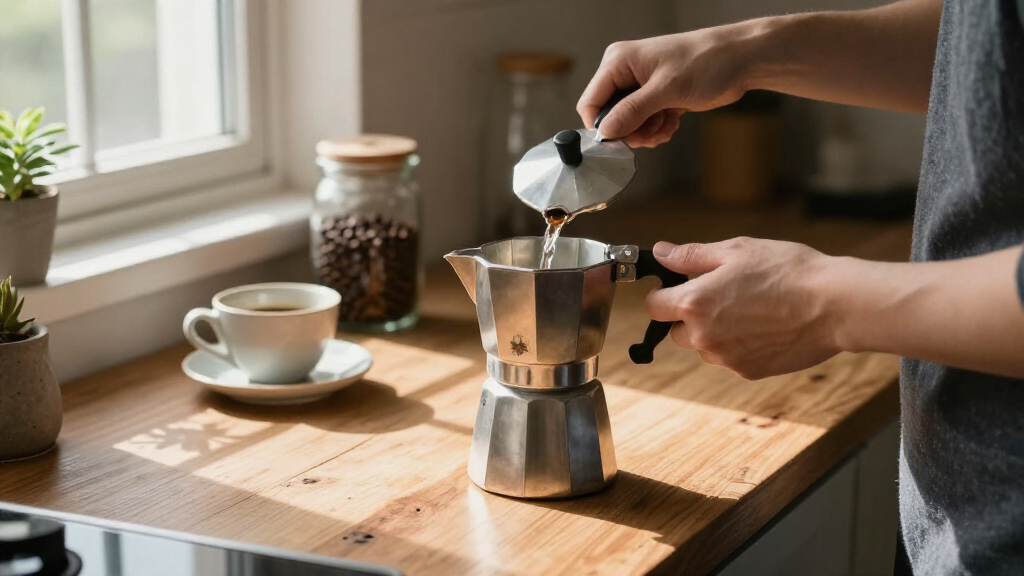

TL;DR

Get coffee and tea gear delivered free with Prime
- Fast, free delivery on millions of items
- Prime Video, Amazon Music and more included
- Member-only deals all year
This article explains how to properly brew coffee with a moka pot, emphasizing correct technique and understanding its unique brewing method. It clarifies common misconceptions and offers practical tips for authentic results.
The moka pot, a staple of Italian households, is not an espresso machine but a distinct brewing method that produces a concentrated, full-bodied coffee at roughly 1–2 bar of pressure. Proper technique is essential to achieve the authentic flavor and avoid common pitfalls, and this guide offers step-by-step instructions rooted in traditional Italian practice. You can learn more about the process in this detailed guide.
The moka pot, introduced by Alfonso Bialetti in 1933, is a stovetop coffee maker that uses steam pressure to extract coffee, but it operates at much lower pressure than a professional espresso machine. For a detailed overview, see the original analysis. This results in a unique style of coffee called caffè della moka, which is richer and more rounded than drip coffee but softer than true espresso.
To brew correctly, users should fill the water chamber just below the safety valve, use a medium-fine grind similar to sand, and avoid tamping the grounds. The coffee should be brewed over medium-low heat, with attention paid to the sound and appearance of the rising coffee. Once the stream turns pale, it’s time to remove the pot from heat to prevent bitterness and over-extraction. Stirring the coffee before serving ensures an even flavor profile.
Many common mistakes—such as using too fine a grind, high heat, or overfilling—can lead to bitter, weak, or scorched coffee. For a comprehensive look at the ritual, see the original article. Following these steps helps preserve the delicate balance that makes moka brewing a cherished ritual in Italy. Regular maintenance, like cleaning the gasket and filter, prolongs the life of the pot and maintains flavor quality.
Why Proper Moka Technique Elevates Coffee Quality
Understanding and applying the correct moka pot method is vital for achieving the rich, balanced coffee Italians cherish. It prevents common issues like bitterness, sourness, or leaks, and transforms a simple kitchen appliance into a ritual that connects to centuries of Italian tradition. For coffee enthusiasts worldwide, mastering this method offers a way to enjoy authentic, full-bodied coffee without expensive equipment or complex techniques.
As an affiliate, we earn on qualifying purchases.
Historical and Cultural Roots of the Moka Pot
The moka pot was created in 1933 by Alfonso Bialetti, quickly becoming a household icon across Italy. Its simple design and reliable operation made it accessible for millions, embedding it into daily life and social routines. Despite its widespread use, many outside Italy misunderstand its function, often mistaking it for an espresso machine. Over decades, specialty-coffee brewers have refined the technique, emphasizing the importance of correct grind size, heat control, and timing to optimize flavor. Today, the moka remains a symbol of Italian domestic life and a testament to enduring design and tradition.
“The moka pot is not trying to produce espresso; it creates its own unique style of concentrated coffee, rooted in Italian tradition.”
— Coffee historian Maria Rossi
As an affiliate, we earn on qualifying purchases.
Unresolved Questions About Moka Brewing Technique
While the core steps are well established, some details—such as the ideal exact grind size or the best timing for removing the pot—vary among enthusiasts and experts. Additionally, differences in stove types and personal preferences can influence brewing outcomes, making it difficult to prescribe a single perfect method for all users. More research or consensus may develop as specialty coffee communities continue to refine moka techniques.
As an affiliate, we earn on qualifying purchases.
Future Developments in Moka Coffee Preparation
Expect ongoing experimentation with grind size, heat control, and timing to further refine moka brewing. Innovations in materials or design may also emerge, aimed at improving consistency or ease of use. Meanwhile, educational efforts and community sharing will likely help preserve traditional techniques while encouraging innovation within the moka coffee ritual.
As an affiliate, we earn on qualifying purchases.
Key Questions
Can I make espresso-style coffee with a moka pot?
No, the moka pot operates at much lower pressure (1–2 bar) than an espresso machine (around 9 bar). It produces a concentrated coffee but not true espresso, which requires specialized equipment.
What grind size should I use for my moka pot?
Use a medium-fine grind, similar to sand or fine table salt. Too fine can cause bitterness and clogging; too coarse results in weak, sour coffee.
How do I know when to remove the moka from the heat?
Listen for a steady, honey-like stream of coffee. When the stream turns pale and begins to surge, before the gurgling sound, it’s time to take the pot off the heat.
How should I clean my moka pot?
Regularly wash all parts with warm water, avoiding soap. Remove and inspect the gasket and filter for wear, replacing them as needed to maintain a good seal and flavor.
Is it better to preheat the water or use room-temperature water?
Both methods work; preheating can shorten brewing time, but using room-temperature water is simpler and less likely to cause burns or damage. Choose based on your preference and stove setup.
Source: Mad Tasting
Halloween Picks
halloween
As an affiliate, we earn on qualifying purchases.