
The one mistake that ruins contact time in coffee is neglecting precise timing during brewing. If you overlook this detail, you’ll end up with imbalanced flavors, either too sour or too bitter. Each brewing method has its ideal contact time, and sticking to it is key for a perfect cup. Make sure to use tools like timers and scales to maintain consistency. Stick around to discover more tips to refine your brewing routine.
Key Takeaways
- Monitor Brewing Time: Ensure precise timing for each brewing method to avoid over or under-extraction affecting flavor balance.
- Maintain Consistent Grind Size: Use a uniform grind to promote even extraction; irregular sizes can lead to unwanted flavors.
- Control Brewing Temperature: Keep water between 195°F and 205°F to prevent bitterness from over-extraction or sourness from under-extraction.
- Use Proper Coffee-to-Water Ratio: Start with a 1:15 ratio for optimal strength, adjusting based on taste preferences.
- Regularly Clean Equipment: Prevent stale flavors by maintaining clean brewing tools and using fresh coffee beans.
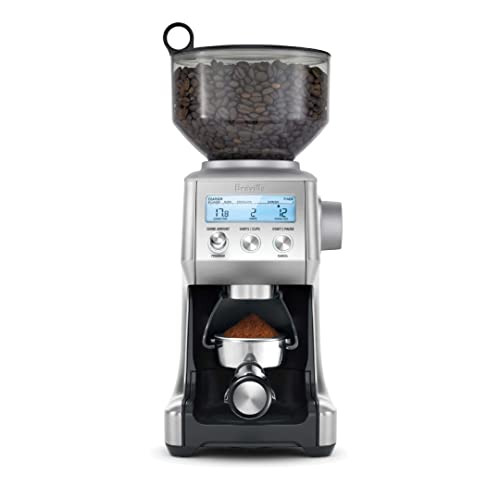
Breville BCG820BSS Smart Grinder Pro for Coffee and Espresso, Brushed Stainless Steel
The Breville Smart Grinder Pro includes 60 unique settings – this programmable conical burr grinder offers a wide...
As an affiliate, we earn on qualifying purchases.
Understanding Contact Time in Coffee Brewing

When you brew coffee, understanding contact time is crucial for achieving the perfect cup. Contact time refers to how long water interacts with coffee grounds during brewing. This time directly impacts coffee extraction, which determines the flavor profile of your brew. Too short a contact time can result in under-extraction, leading to a sour or weak taste. Conversely, too long can cause over-extraction, making your coffee bitter. To guarantee brewing consistency, aim for an ideal contact time tailored to your brewing method—whether it’s pour-over, French press, or espresso. Experimenting with different times helps you discover the balance that highlights your coffee’s unique flavors, enhancing your overall coffee experience. So, pay attention to that timing!

MOKKOM Professional 64mm Flat Burr Coffee Grinder with 100 Grind Settings, All-Metal Stainless Steel Body, Coffee Bean Grinder with Adjustable Electronic Timer, Anti-Static, LED Display
[64mm Stainless Steel Flat Burrs] As a professional coffee grinder, this machine uses 64mm stainless steel flat burrs...
As an affiliate, we earn on qualifying purchases.
Identifying Common Mistakes in Coffee Brewing
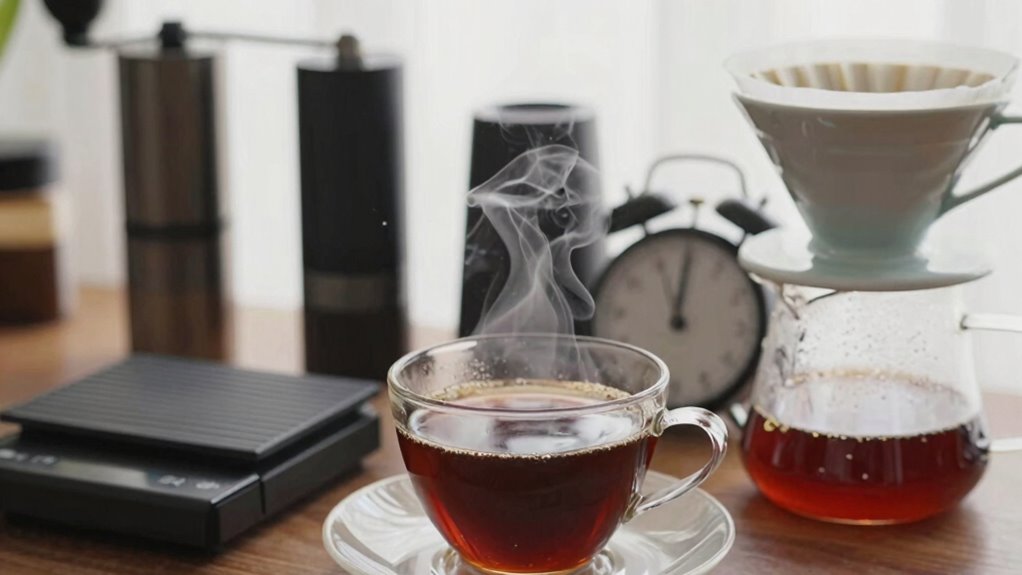
When brewing coffee, you might be making some common mistakes that affect the flavor. Incorrect brew temperature, inconsistent grind size, and poor brewing time can all ruin your cup. Let’s pinpoint these issues so you can enjoy a better brew.
Incorrect Brew Temperature
While many factors contribute to a great cup of coffee, incorrect brew temperature can easily derail your efforts. If your water’s too hot, it over-extracts flavors, leaving a bitter taste. Conversely, if it’s too cool, you’ll end up with under-extracted, weak coffee. The ideal brew temperature generally falls between 195°F and 205°F. Staying within this range maximizes extraction efficiency, allowing you to capture the coffee’s full flavor profile. Additionally, understanding the mechanics of French press coffee can help you appreciate the importance of brew temperature. So, before you brew, check your thermometer or kettle settings. Investing a little time in getting the right temperature can make a significant difference in your cup. Additionally, using super-automatic espresso machines can help maintain consistent temperatures throughout the brewing process. Remember, the perfect brew temperature is key to revealing the best taste in your coffee. Don’t let this common mistake spoil your coffee experience!
Inconsistent Grind Size
A consistent grind size can make or break your coffee brewing experience. If your grind consistency isn’t spot-on, you’ll end up with uneven extraction, leading to a less-than-perfect cup. When some particles are too fine and others too coarse, you can’t achieve that balanced flavor you crave. To avoid this common mistake, guarantee your grinder calibration is accurate. Regularly check and adjust your grinder to maintain that ideal grind size. Whether you’re using a blade or burr grinder, consistency is key. Take the time to dial in your settings, and you’ll notice the difference in your brew. A little attention to grind size can elevate your coffee experience greatly. Don’t overlook this vital step!
Poor Brewing Time
Sure! Here’s your revised content with the requested changes:
—
If you don’t pay attention to brewing time, your coffee’s flavor can suffer dramatically. Timing precision is essential for achieving the right extraction balance. Too short or too long can throw off your coffee’s flavor profile and brew consistency. Here are some common mistakes to avoid:
- Not considering brewing variables like water quality and coffee freshness.
- Using the wrong brewing equipment that doesn’t allow for accurate timing.
- Ignoring the recommended brewing times for your chosen method. Different brewing methods can also impact the extraction rate, so understanding them is crucial. Additionally, the science of extraction plays a vital role in delivering the perfect cup, making it essential to grasp these principles. Recognizing how metabolic health can be influenced by factors such as caffeine intake and hydration is also important. The right brewing technique can also enhance sleep quality, as certain compounds in coffee can affect your rest.
To elevate your coffee game, make sure you monitor the brewing time closely. By doing so, you’ll enhance the extraction balance and enjoy a consistently delicious cup every time. Remember, great coffee starts with mindful brewing practices! Additionally, understanding how regional flavors influence your coffee can help in making informed choices for optimal brewing.
—
Let me know if you need any further modifications!

Neretva Espresso Grinder, 2 in 1 Professional Coffee Bean Grinder Stainless Steel Suit 51~58mm Portafilter Burr Coffee Grinder 30 Precise Setting&Anti-Static for Espresso/French Press/Drip/Moka-Silver
PROFESSIONAL CONICAL BURR COFFEE GRINDER- WIth new upgraded 3.0 conical burr grinding technoloy, the coffee grinder ensures that...
As an affiliate, we earn on qualifying purchases.
How Grind Size Affects Contact Time
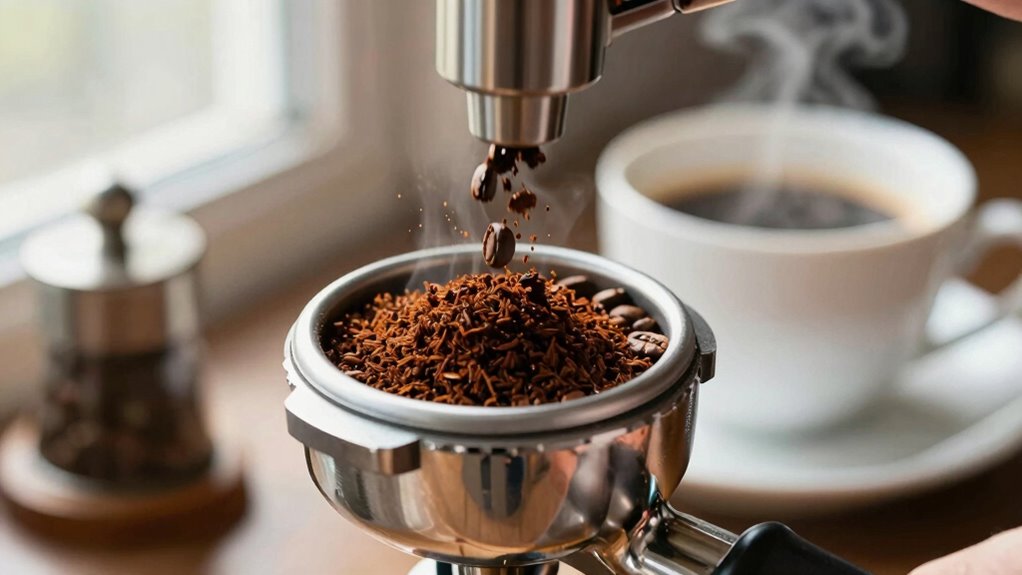
The grind size of your coffee plays a vital role in contact time during brewing. A fine grind can enhance extraction, while a coarse grind might leave you with weak flavors. Depending on your brewing method, adjusting the grind size can make all the difference in your cup.
Fine Grind Benefits
While many factors influence coffee extraction, grind size stands out as a crucial element that can enhance your brew. A fine grind offers several advantages, particularly in improving contact time with water. This tighter grind increases the surface area, allowing for better extraction of flavors and oils, leading to a richer cup of coffee.
Consider these fine grind benefits:
- Taste enhancement: You’ll notice a more robust flavor profile with nuanced notes.
- Faster extraction: Fine particles extract quickly, giving you a quicker brew time.
- Versatility: It works well with various brewing methods, like espresso or Aeropress.
Embracing a fine grind can elevate your coffee experience, ensuring every sip is packed with satisfaction. Additionally, achieving a fine grind prepares you for café-quality results in your home brewing endeavors.
Coarse Grind Drawbacks
Although many coffee enthusiasts appreciate a coarse grind for its ease of brewing, it often leads to significant drawbacks in extraction. When you use a coarse grind, the larger particles don’t release their flavors as efficiently as finer grinds. This means you might end up with under-extracted coffee, leaving your cup tasting flat and lacking depth. The contact time between water and coffee grounds is essential; with a coarse grind, that time often isn’t sufficient for ideal flavor extraction. You may find that your brew lacks the richness and complexity you desire. To truly enjoy your coffee, consider adjusting your grind size. A finer grind can enhance extraction, yielding a more flavorful experience.
Brewing Method Impact
Understanding how grind size impacts brewing methods can transform your coffee experience. The right grind size directly influences contact time, affecting flavor extraction and coffee consistency. Whether you’re using a French press or an espresso machine, adjust your grind size to match your brewing technique.
- For a coarser grind, guarantee longer contact time and stable temperature for peak flavor.
- A fine grind requires precise brewing ratios to prevent over-extraction.
- Always maintain your equipment and use high-quality water for the best results.
Pay attention to coffee freshness, as stale beans can compromise your brew, regardless of grind size. Additionally, using a coarser grind will ensure optimal extraction and enhance the overall flavor profile of your coffee. With these considerations, you’ll enhance your coffee’s richness and enjoy every sip.

SHARDOR Conical Burr Espresso Coffee Grinder Electric with Precision Timer 2.0, Touchscreen Adjustable Burr Mill with 51 Precise Settings for Home Use, Anti-static, Stainless Steel
Premium 40 Millimeter Stainless Steel Conical Burr: Designed to minimize grinding heat and protect the essential oils in...
As an affiliate, we earn on qualifying purchases.
How Water Temperature Affects Extraction
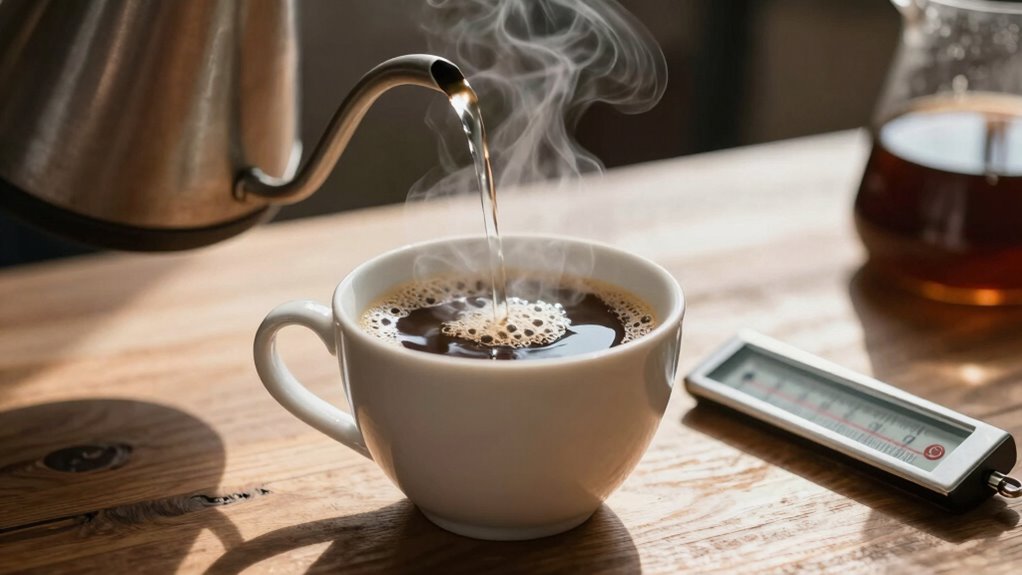
When brewing coffee, the temperature of your water plays a crucial role in extraction. If it’s too hot, you risk over-extracting, which can lead to bitterness. Conversely, water that’s too cool might under-extract, leaving your coffee sour and lacking depth. The ideal range typically hovers between 195°F and 205°F. This range not only optimizes flavor but also enhances brew consistency, ensuring you enjoy a balanced cup every time. Additionally, indoor air quality can influence your perception of taste, making optimal brewing conditions even more important. Using a high-quality espresso machine can further improve your brewing process and overall coffee experience, particularly those with programmable settings. Furthermore, maintaining proper home gym safety can enhance your overall well-being, which indirectly affects your coffee enjoyment. Brewing fundamentals emphasize that precision in water temperature is key to achieving the best extraction results. High refresh rates in projectors can similarly improve your visual experience, ensuring that every detail is captured vividly.
Ideal Contact Times for Various Coffee Methods?
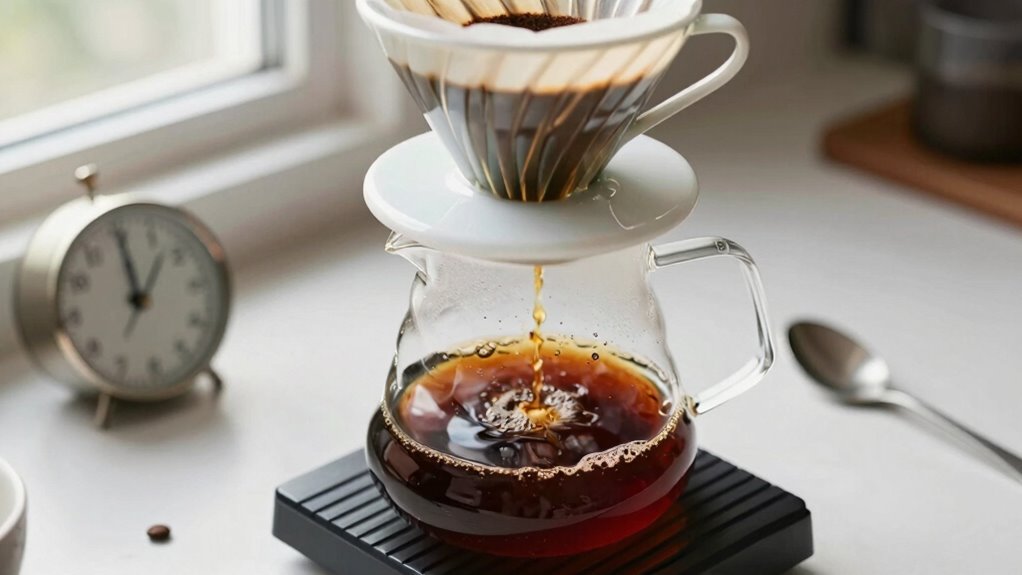
While brewing coffee, knowing the ideal contact time for different methods is essential to achieving the perfect cup. Each brewing method has its own best extraction times that can dramatically affect flavor. Here’s a quick guide to get you started:
- Pour Over: Aim for 2.5 to 4 minutes for the best balance of flavors.
- French Press: Steep for about 4 to 5 minutes to extract the rich oils and aromas.
- Espresso: A quick 25 to 30 seconds is ideal for that concentrated shot.
When you match these contact times with the right ideal brew ratios, you’ll reveal the full potential of your coffee. Adjusting these variables guarantees a delightful experience in every cup.
Finding the Perfect Coffee-to-Water Ratio
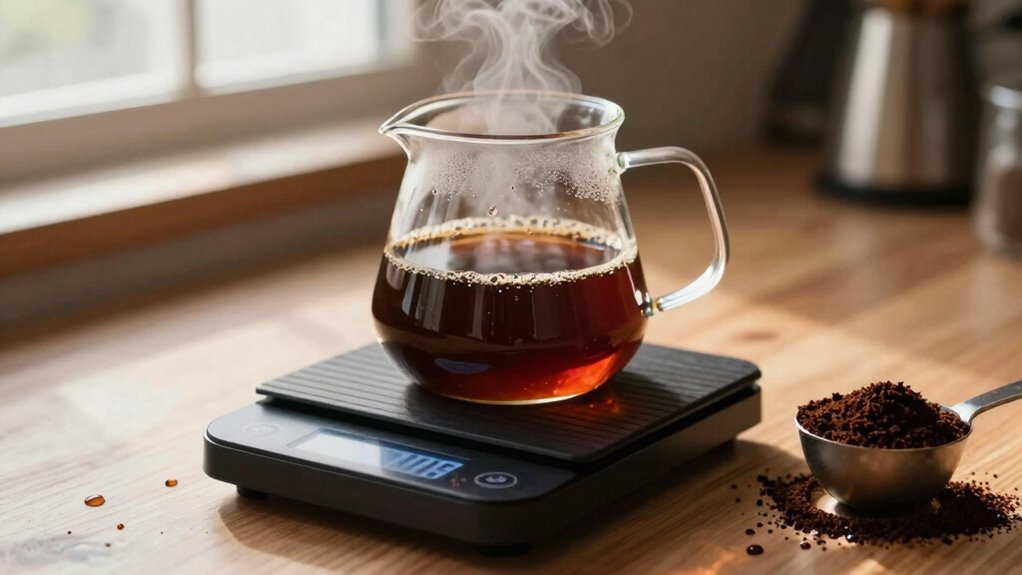
Finding the right coffee-to-water ratio can transform your brewing experience, as it directly influences the flavor and strength of your cup. Aim for a ratio that suits your taste profiles—typically, a starting point is 1:15 (coffee to water). This helps guarantee ideal coffee strength and brewing consistency. High-quality water enhances extraction efficiency, while grind uniformity impacts flavor balance. Remember, too coarse or fine a grind can affect how well flavors are extracted, leading to undesirable bitterness or sourness. Prioritize brewing freshness, using freshly ground coffee to maximize flavor. Adjust your ratio based on your preferences, but always keep these elements in mind for a satisfying cup that hits the right notes every time.
Tools to Monitor Contact Time
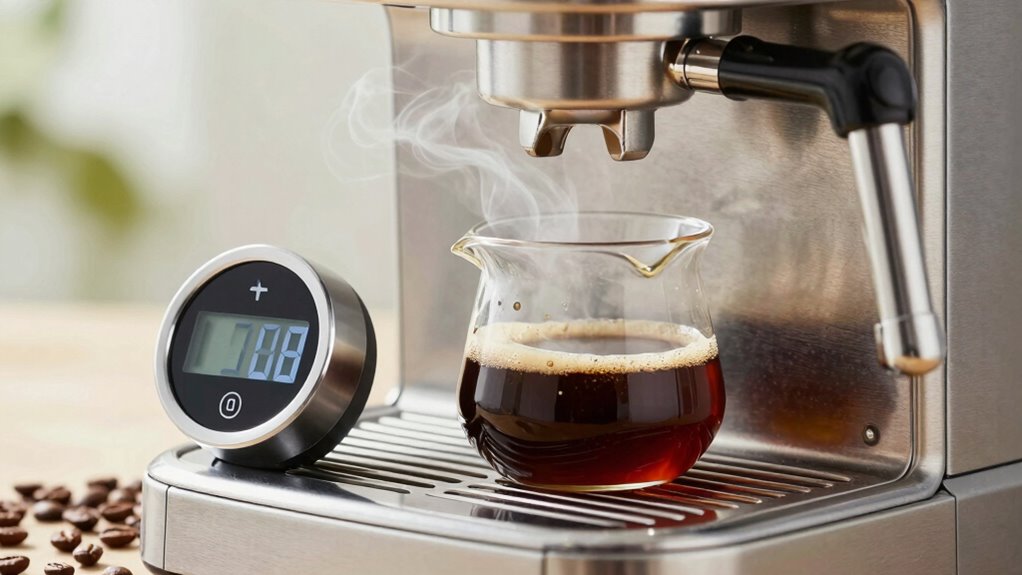
Achieving the perfect coffee-to-water ratio sets the stage for an exceptional brew, but monitoring contact time is just as important. Using the right tools can help you guarantee your coffee is brewed to perfection. Here are some essential items to take into account:
- Brew timers: These keep track of your brewing time, helping you avoid over-extraction or under-extraction.
- Extraction tools: Devices like refractometers can measure the concentration of your brew, giving you insight into extraction quality.
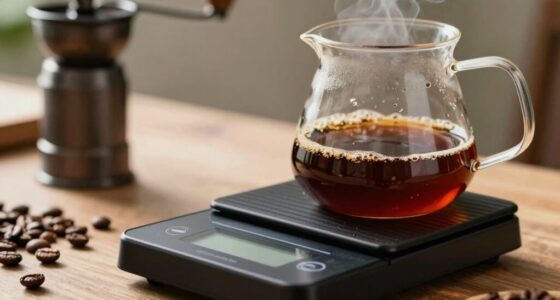
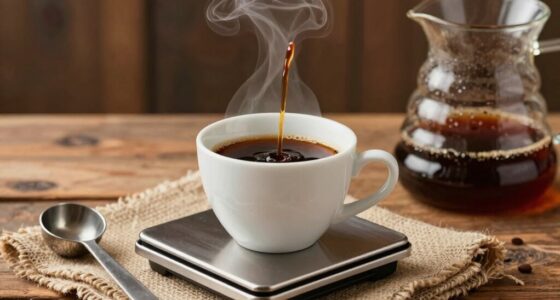
- Smart scales: These measure both weight and time, allowing you to refine your brewing process with precision.
Tips for Perfecting Your Coffee Brewing Routine
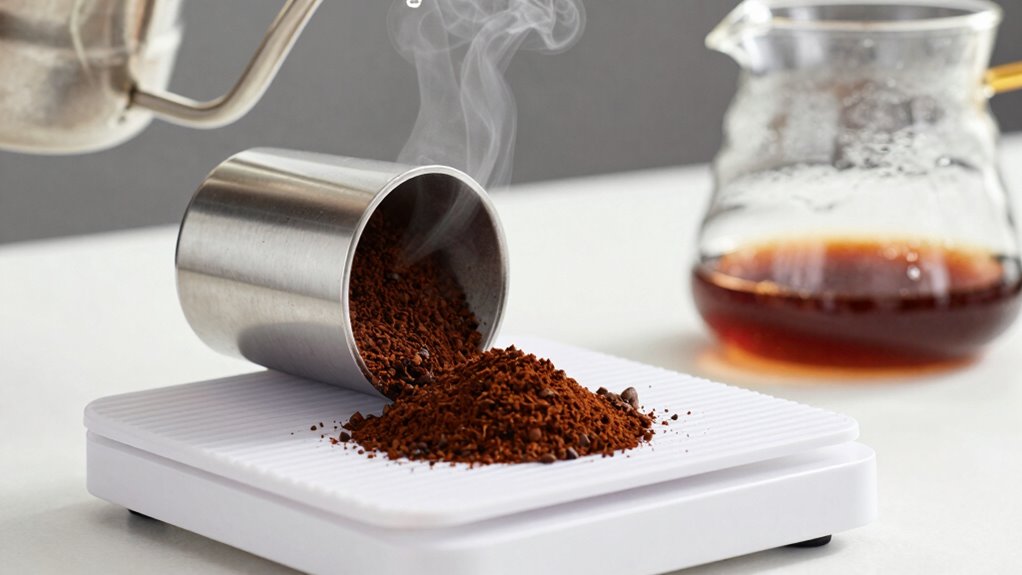
Perfecting your coffee brewing routine requires attention to detail and a few key strategies. Start by experimenting with different brew techniques, like pour-over or French press, to find what suits your taste. Pay close attention to water temperature; ideally, it should be between 195°F and 205°F for best extraction. Next, focus on grind size—coarser for immersion methods and finer for espresso. This can greatly impact the flavor profiles you reveal. Don’t forget about your coffee-to-water ratio; a general guideline is 1:15 for a balanced cup. Additionally, using the right kitchen ventilation can help maintain optimal brewing conditions by reducing humidity and odors. Incorporating water-cooled mattresses into your sleep routine can also improve your overall energy levels for better coffee enjoyment. Regularly cleaning your equipment, much like the importance of air purifier maintenance, is essential to avoid stale tastes. Moreover, investing in smart kitchen gadgets, such as smart composters, can enhance your sustainability efforts while enjoying great coffee. Finally, understanding the significance of budgeting can help you allocate funds for high-quality coffee beans, ensuring a consistently delicious cup that showcases the unique characteristics of your coffee beans.
The One Mistake That Ruins Contact Time in Coffee (And How to Avoid It)
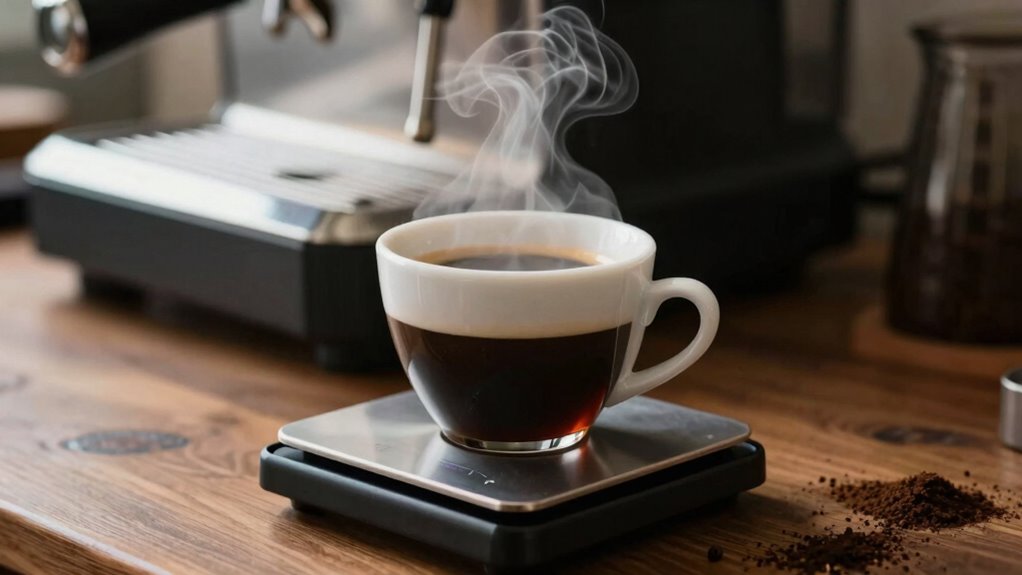
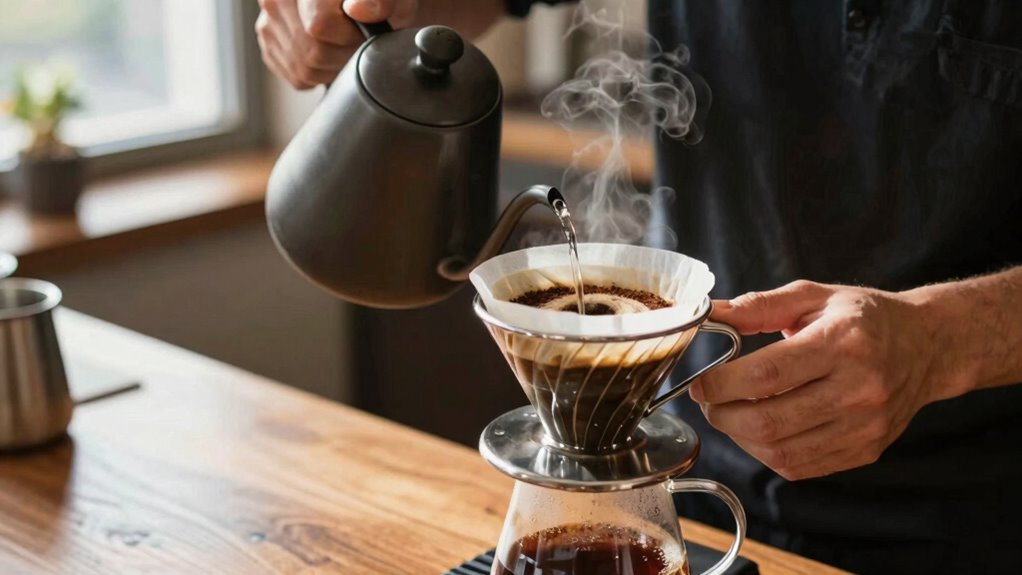
While many factors contribute to a great cup of coffee, one critical mistake can easily sabotage your contact time: inconsistent pouring. When you pour unevenly, you disrupt coffee extraction, leading to uneven flavors and brewing consistency.
To avoid this mistake, consider the following tips:
- Use a gooseneck kettle for precise pouring control.
- Practice a steady pour to guarantee even saturation of coffee grounds.
- Monitor your brewing time to maintain consistency across different batches.
Frequently Asked Questions
Can I Use Tap Water for Brewing Coffee?
Yes, you can use tap water for brewing coffee, but its quality matters. If your tap water has high mineral content or chlorine, it might affect your coffee’s flavor profile. Ideally, aim for filtered or bottled water to enhance the taste. Remember, the right water also impacts brewing temperature, ensuring your coffee extracts properly. Experiment with different water sources to find what elevates your brew to the next level!
How Does Coffee Freshness Affect Contact Time?
Coffee freshness greatly impacts contact time. Freshly roasted beans retain essential oils and flavors, enhancing extraction during brewing. If your grind size is too coarse, you’ll need a longer contact time, while a finer grind requires less time. Additionally, the brewing temperature plays an important role; hotter water extracts flavors faster. So, to get the best cup, use fresh beans, adjust your grind size, and maintain the right brewing temperature.
What Is the Best Brewing Method for Beginners?
If you’re a beginner, the pour-over method is one of the best brewing techniques to start with. It gives you control over the coffee ratios and extraction time, helping you learn how different variables affect flavor. Just use a 1:15 coffee-to-water ratio for a balanced cup. Experimenting with grind size and pouring speed can really elevate your experience. Enjoy the process, and you’ll quickly discover what suits your taste!
Should I Pre-Wet Coffee Filters Before Brewing?
Pre-wetting coffee filters is a smart move! Studies show that about 60% of coffee drinkers notice a difference in flavor when using pre-wet filters. By saturating the filter, you enhance brewing consistency and prevent paper taste from seeping into your coffee. Plus, it helps with even extraction during brewing. So, take a moment to rinse that filter before you start; your cup will thank you for it!
How Does Coffee Storage Impact Flavor and Contact Time?
Coffee storage greatly impacts flavor and contact time. Using an airtight coffee container helps with flavor preservation by limiting exposure to air. Humidity control is essential; moisture can lead to stale flavors. Temperature stability also plays a role; keeping your coffee in a cool, dark place prevents degradation. When you store coffee properly, you maintain its freshness, ensuring the best extraction during brewing, which enhances both flavor and contact time.
Conclusion
When it comes to brewing the perfect cup of coffee, don’t underestimate the importance of contact time. Did you know that a mere 10 seconds can greatly impact flavor extraction? If you’re consistently over-extracting or under-extracting, your daily brew could be falling flat. By paying close attention to grind size, water temperature, and brew method, you can avoid this common mistake. Enjoy a rich, balanced cup every time—after all, you deserve it!