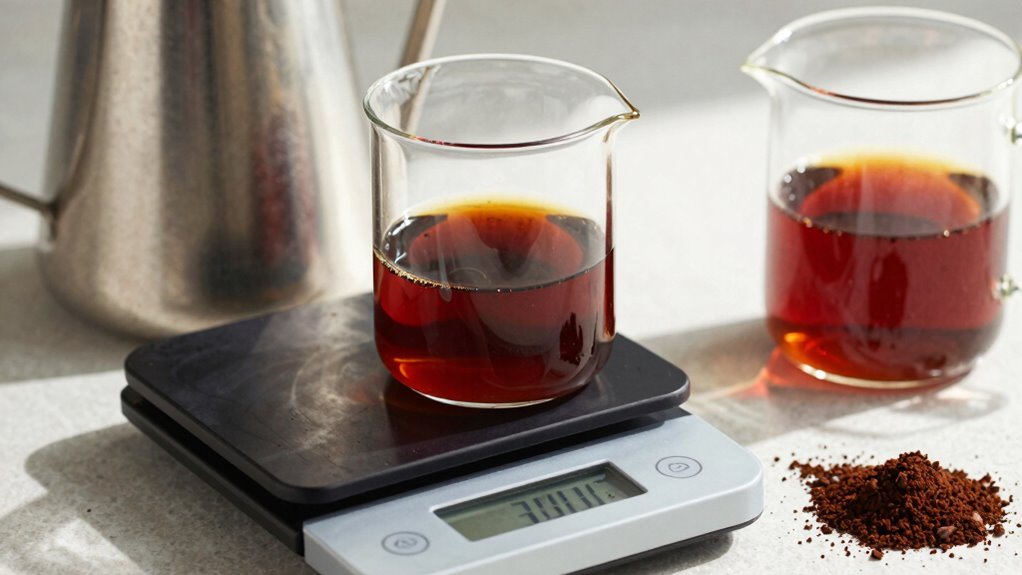

To brew the perfect cup of coffee, you’ll want to use the right coffee-to-water ratio. For most methods, start with two tablespoons of coffee for every six ounces of water, adjusting to your taste. Remember, a coarser grind suits a French press, while a finer grind is best for espresso. Keep an eye on water temperature, ideally between 195°F and 205°F, to avoid bitterness. Stick around, and you’ll discover even more tips to enhance your brewing skills.
Key Takeaways
- Use a standard ratio of two tablespoons of coffee for every six ounces of water for balanced flavor.
- Adjust the ratio based on brewing method: 1:2 for espresso, 1:15 for French press, and 1:16 for pour over.
- Experiment with small adjustments to the coffee amount for preferred strength without compromising flavor.
- Maintain consistent measurements and grind sizes to avoid over or under-extraction issues.
- Consider water temperature and equipment to enhance the overall brewing process and taste.

NKOVE Digital Coffee Scale with Timer 3kg/0.1g High Precision Espresso Scale Tare Function for Pour Over Maker Brew
☕0.1g High Precision Measurement: Experience the ultimate accuracy with a high-precision sensor that delivers results with 0.1g accuracy….
As an affiliate, we earn on qualifying purchases.
As an affiliate, we earn on qualifying purchases.
How to Brew Your Perfect Cup of Coffee

Brewing your perfect cup of coffee starts with understanding the essential coffee-to-water ratio. Typically, a good rule of thumb is two tablespoons of coffee for every six ounces of water. But don’t stop there; consider the grind size. A coarser grind works well for methods like French press, while a finer grind suits espresso. Next, pay attention to water temperature. Ideally, it should be between 195°F and 205°F. If it’s too hot, you risk over-extraction, leading to bitterness; too cool, and you’ll under-extract, resulting in a weak flavor. By mastering the coffee-to-water ratio, grind size, and water temperature, you’ll be well on your way to brewing that perfect cup you crave each morning. Enjoy the process!

KRUPS Electric Coffee Grinder: 3 oz Capacity, 200 Watts – Versatile for Beans, Spices, Nuts – One-Touch Operation, Customizable Grind for 12 Cups – Ideal for Espresso, French Press
Powerful Performance: 200-watt motor and stainless steel blades ensure consistent, precise grinding for up to 12 cups of…
As an affiliate, we earn on qualifying purchases.
As an affiliate, we earn on qualifying purchases.
Common Mistakes in Coffee Brewing Ratios

Getting the coffee-to-water ratio just right can make all the difference in your brew, but it’s easy to make common mistakes along the way. One major pitfall is measuring inaccuracies, which can lead to over extraction issues or under extraction causes. If you’re not precise, your coffee might taste bitter or weak. Also, don’t overlook water temperature effects; brewing with water that’s too hot or too cold can ruin your flavor. Grind size impacts extraction as well—too coarse or too fine can throw off your balance. Finally, equipment variations, like using different brewing devices, can alter your results considerably. Paying attention to these factors can help you avoid frustration and brew a better cup.

BOMATA Digital Water Thermometer for Water, Liquid, Candle and Cooking. Instant Read Food Thermometer Waterproof IPX7 with Long Probe for Cooking, Meat, BBQ! T101 (Black Color)…
[ Waterproof – IPX7 ] With the strong waterproof ability, it’s very suitable for measuring the temperature of…
As an affiliate, we earn on qualifying purchases.
As an affiliate, we earn on qualifying purchases.
How to Fix Common Coffee Brewing Ratio Mistakes
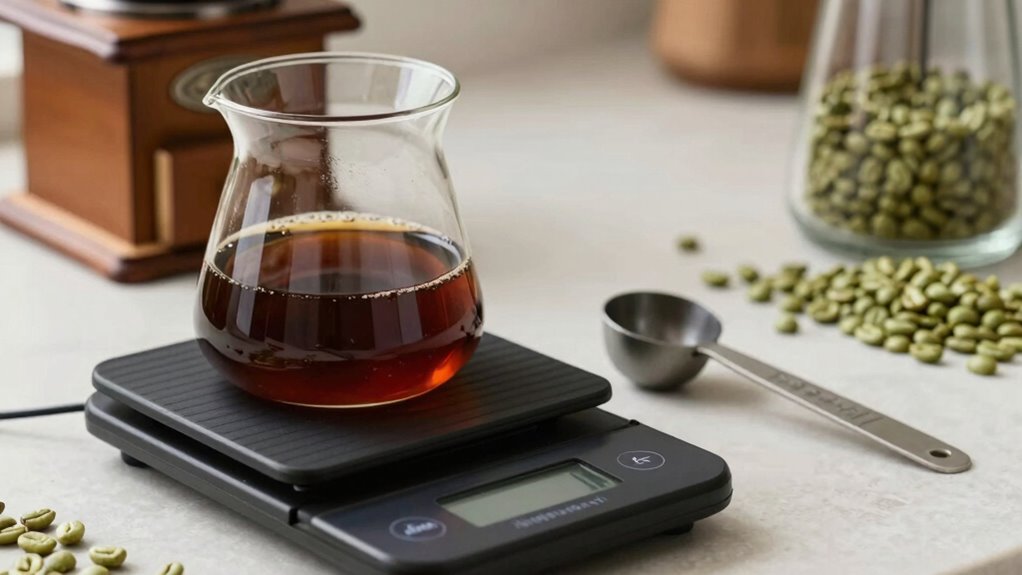
While it’s easy to make mistakes with coffee brewing ratios, fixing them can lead to a much better cup. If your coffee tastes too weak, you might need to increase the coffee amount to enhance the brew strength. A good starting point is to aim for a 1:15 ratio of coffee to water. On the flip side, if your coffee is too strong or bitter, reduce the coffee quantity or increase the water to achieve a better flavor balance. Experiment with small adjustments until you find your perfect brew. Remember, consistency is key—once you discover your ideal ratio, stick with it for consistently delicious results. Additionally, understanding the mechanics of French press can help you fine-tune your ratios for even better results. Super-automatic espresso machines can also simplify the brewing process, allowing you to focus more on your ratios. To enhance your brewing experience, consider applying nutrition and meal prep basics that can improve your overall approach to coffee. Using smart kitchen tools can further elevate your coffee brewing game and ensure precise measurements. Incorporating kitchen science principles into your brewing routine can also lead to improved flavor profiles. Happy brewing!

Coffee Under Pressure: A Guide to Espresso Machine Ownership
As an affiliate, we earn on qualifying purchases.
As an affiliate, we earn on qualifying purchases.
Coffee-To-Water Ratios for Different Brewing Methods
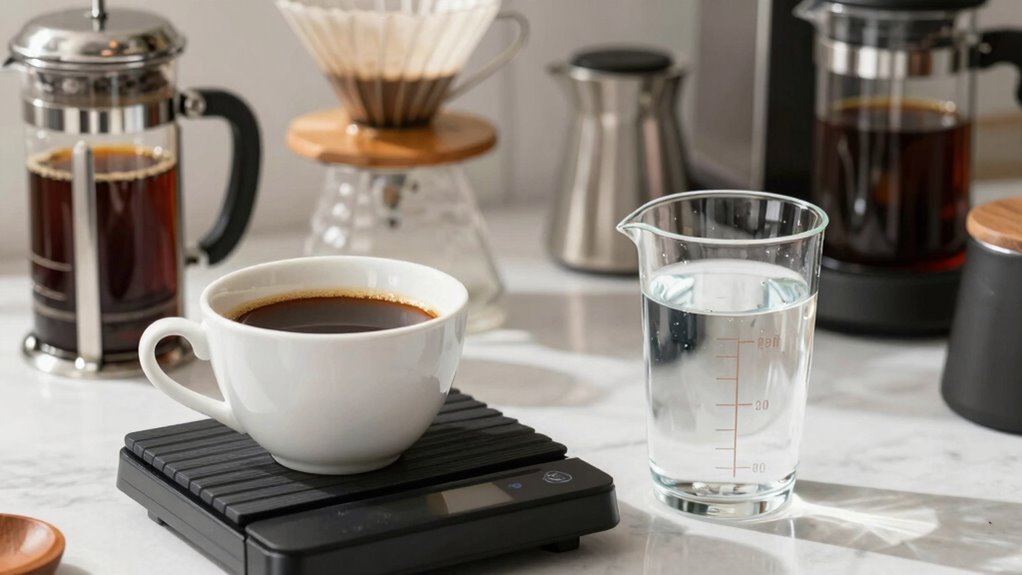
Finding the right coffee-to-water ratio can vary considerably based on the brewing method you choose. For espresso extraction, you typically want a ratio of 1:2, meaning for every gram of coffee, you’ll use two grams of water. This creates a rich, concentrated shot. If you’re using a pour over method, aim for a ratio of around 1:16. This allows for pour over precision, enhancing the coffee’s flavor profile while preventing bitterness. French press lovers usually opt for a 1:15 ratio, which gives a full-bodied brew. Remember, adjusting these ratios to match your taste preferences is key. Experiment to find what works best for you, and enjoy the journey of discovering your perfect cup!
Key Factors in Coffee-To-Water Ratios You Should Know

Understanding the key factors in coffee-to-water ratios can elevate your brewing experience greatly. First, consider the grind size. Finer grinds increase the surface area, leading to quicker extraction, while coarser grinds slow it down. Adjust your coffee-to-water ratio based on your grind to guarantee peak flavor. Additionally, maintaining HEPA filters in your kitchen appliances can ensure a cleaner brewing environment, which may influence the taste of your coffee. Regular maintenance of kitchen ventilation systems can also help reduce unwanted odors that might affect your brew. Moreover, keeping your appliances free from high dust levels ensures better overall performance. Furthermore, using quality coffee beans can significantly impact the flavor profile of your brew.
Next, think about extraction time. This is the duration your water interacts with the coffee grounds. Longer extraction times typically require a coarser grind and a lower coffee-to-water ratio to avoid bitterness. Conversely, shorter extraction times benefit from finer grinds and higher ratios to extract the desired flavors. By mastering these factors, you’ll brew a more balanced and satisfying cup every time. Additionally, color accuracy plays a significant role in enhancing the overall experience, similar to how it impacts image quality in home cinema projectors.
Frequently Asked Questions
What Is the Ideal Coffee-To-Water Ratio for Cold Brew?
The ideal coffee-to-water ratio for cold brew is typically 1:4 to 1:5, depending on how strong you like it. For cold brew essentials, start with coarsely ground coffee and cold water. Use your preferred brewing techniques, like steeping for 12 to 24 hours. Experiment with the ratio to find what suits your taste best. Remember, you can always dilute it with water or milk after brewing for a smoother finish!
Does Grind Size Affect Coffee-To-Water Ratio?
Yes, grind size does affect your coffee-to-water ratio. When you adjust grind consistency, you alter extraction balance. Finer grinds increase surface area, leading to quicker extraction, while coarser grinds slow it down. If you’re aiming for a balanced brew, you’ll need to tweak your water ratio based on your grind. So, remember: the right grind size paired with the right water amount creates that perfect cup you’re looking for!
Can I Use Flavored Coffee With Different Ratios?
Yes, you can definitely use flavored coffee with different ratios! Flavored blends often have unique characteristics, so you might need to make ratio adjustments to achieve your desired taste. Start with the standard coffee-to-water ratio, then tweak it based on your preference. If the flavor is strong, you might reduce the amount of coffee; if it’s milder, consider increasing it. Experimenting will help you find the perfect balance for your cup!
How Does Altitude Impact Coffee Brewing Ratios?
Altitude affects brewing ratios because the lower air pressure can lead to faster extraction. At higher altitudes, you might find that your coffee brews quicker, which can alter flavor intensity. You’ll need to adjust your coffee-to-water ratio to prevent over-extraction, which can make your brew taste bitter. Experimenting with these ratios at different elevations can help you achieve a balanced flavor that suits your taste preferences.
What Tools Help Measure Coffee and Water Accurately?
If you think eyeballing coffee and water is a genius move, think again! To brew the perfect cup, grab a coffee scale—it’s like a tiny scale whispering, “Don’t mess this up!” Measurement cups are also your best friends; they’ll keep you honest. With these tools, you’ll measure precisely, avoiding that gut-wrenching guesswork. So, ditch the chaos and embrace the accuracy; your taste buds will thank you for it!
Conclusion
In the delightful journey of brewing coffee, finding the right coffee-to-water ratio is your golden ticket to a perfect cup. By avoiding a few common pitfalls and adjusting as needed, you’ll unveil a world of rich flavors and aromas. Remember, each brewing method has its own charming quirks to explore. So, embrace the nuances, experiment with confidence, and soon enough, you’ll be savoring a brew that feels like a warm hug in a mug. Enjoy every sip!