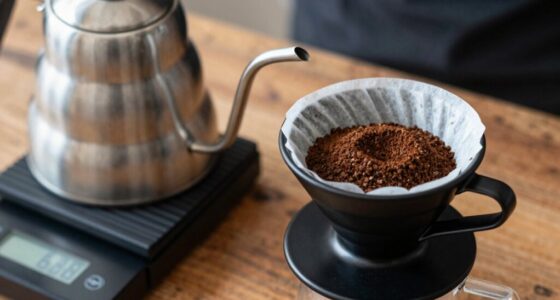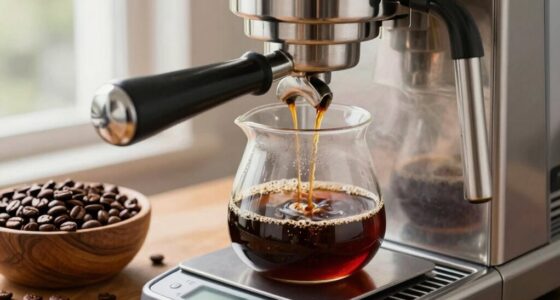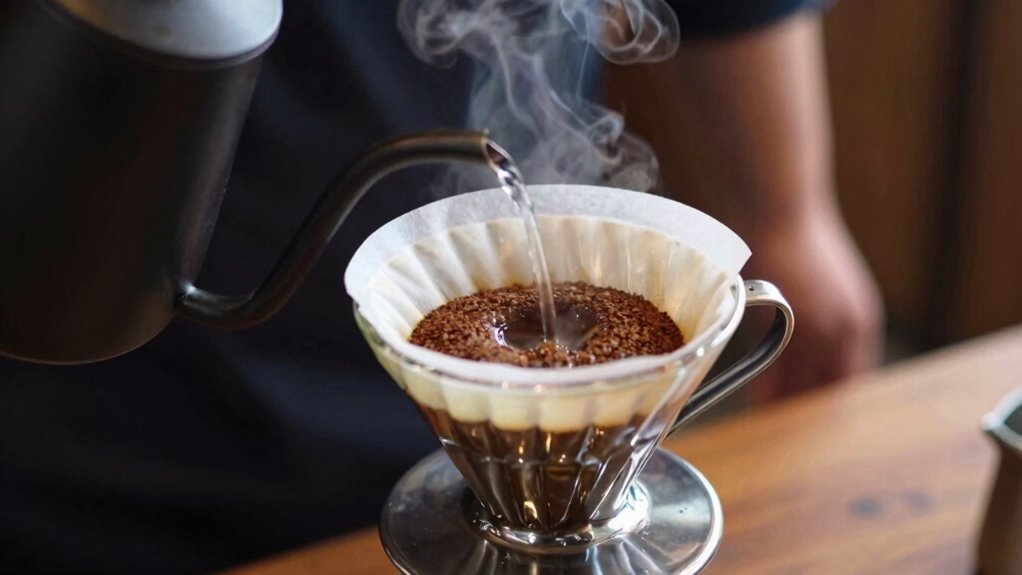

To instantly improve your coffee, start by accurately measuring your TDS with a reliable refractometer and guarantee your beans are fresh. Calculate extraction yield to see if your brew is balanced, aiming for around 18-22%. Adjust grind size, brew time, or water temperature based on these metrics. Consistently monitoring and tweaking these factors helps you craft a richer, more consistent cup. Keep exploring, and you’ll learn even more ways to perfect your brew.
Key Takeaways
- Regularly measure TDS and extraction yield to monitor and adjust brewing parameters for optimal flavor.
- Maintain consistent grind size, brew time, and temperature to ensure stable extraction and flavor balance.
- Use a reliable refractometer and freshly ground coffee for accurate, repeatable measurements.
- Adjust coffee dose and grind coarseness based on TDS and extraction data to avoid under- or over-extraction.
- Proper storage, cleaning, and calibration are essential to maintain measurement accuracy and coffee quality.

R2 Extract Coffee TDS Refractometer, 0-30% Range, ±0.02% Precision, Portable, Waterproof, Rechargeable, Ideal for Pour Over, Espresso, and Coffee Enthusiasts
Precise TDS Measurement for Better Brews: Achieve perfect extraction with 0-30% TDS range, ±0.02% precision, 0.01% resolution, and…
As an affiliate, we earn on qualifying purchases.
As an affiliate, we earn on qualifying purchases.
What Are Coffee TDS and Extraction Yield: and Why Do They Matter?
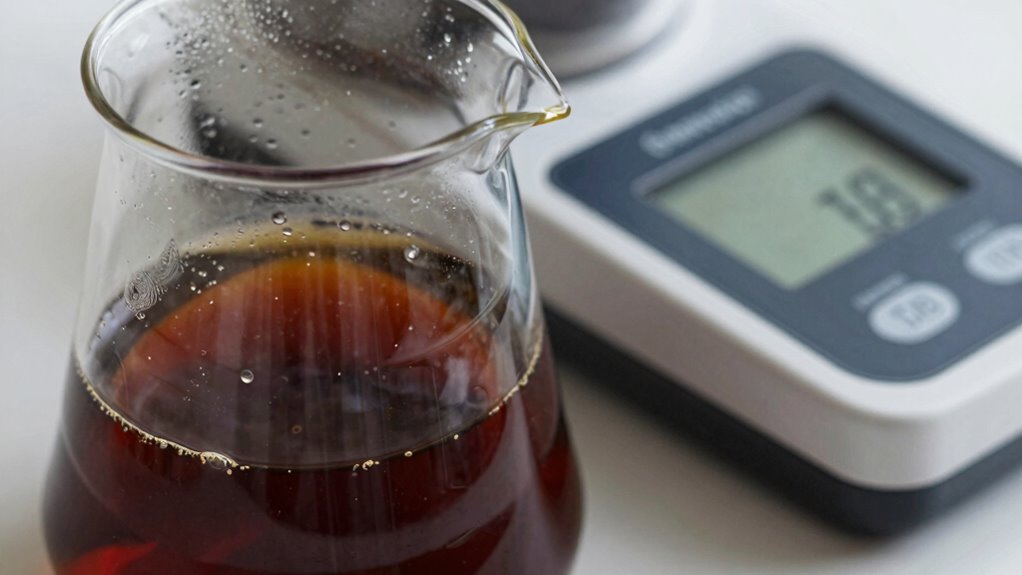
Understanding coffee TDS (Total Dissolved Solids) and extraction yield is essential for brewing a perfect cup. TDS measures the concentration of dissolved solids in your coffee, directly affecting its flavor and strength. Extraction yield indicates how much of the coffee’s soluble compounds you’ve successfully extracted during brewing. When these factors are balanced, you achieve consistent brewing, which is key to developing a reliable coffee flavor. If TDS is too high, your coffee may taste overly bitter; too low, and it could be weak and underwhelming. Properly managing these variables helps you replicate your desired flavor profile every time. In short, understanding TDS and extraction yield guarantees you gain better control over your brewing process, resulting in a more satisfying and consistent coffee experience. Additionally, exploring content formats can further enhance your understanding of how different brewing methods impact these variables. Using a super-automatic espresso machine can also provide precise control over extraction, enhancing your overall coffee experience.

SmartRef Digital Refractometer by Anton Paar – Coffee TDS Refractometer with in-App Extraction Yield Calculator, Smart, Easy, Quick, Digital, Coffee Tester
PRECISE TDS MEASUREMENT: Determines coffee's Total Dissolved Solids (TDS) with 0.01% TDS resolution and a guaranteed 0.03% TDS…
As an affiliate, we earn on qualifying purchases.
As an affiliate, we earn on qualifying purchases.
How to Measure Coffee TDS Accurately
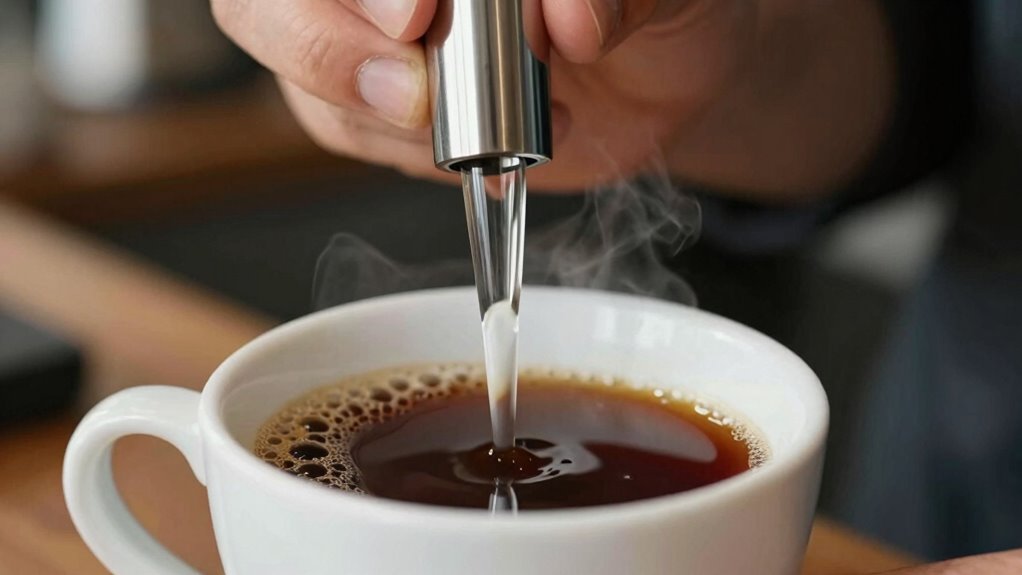
To measure coffee TDS accurately, you need a reliable refractometer, which is the most common and precise tool for this purpose. Ensure your coffee is fresh—bean freshness impacts TDS readings, as stale beans can skew results. Proper coffee storage maintains bean quality and measurement consistency. Before measuring, grind your coffee consistently and extract a sample. Place a few drops of the brew on the refractometer’s prism, close the cover, and look through the eyepiece. Record the TDS percentage displayed clearly. Use this data to fine-tune your brewing process.
| Step | Action |
|---|---|
| 1 | Use fresh, well-stored beans |
| 2 | Grind consistently |
| 3 | Measure with a refractometer |
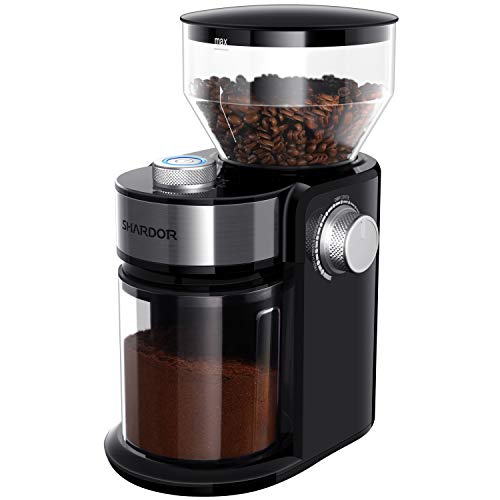
SHARDOR Electric Burr Coffee Grinder 2.0, Adjustable Burr Mill with 16 Precise Grind Setting for 2-14 Cup, Black
[ PRECISION BURR GRINDING ] – Metallic flat burr coffee grinder delivers a uniform grind size, for consistent…
As an affiliate, we earn on qualifying purchases.
As an affiliate, we earn on qualifying purchases.
How to Calculate Coffee Extraction Yield
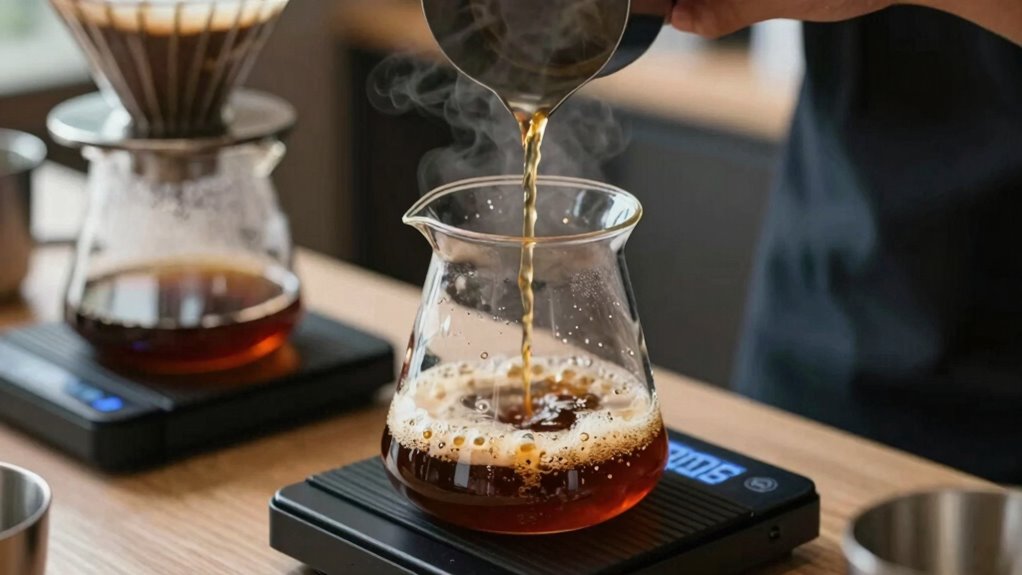
To calculate coffee extraction yield, you need to understand the solids percentage in your brew, which shows how much dissolved coffee is present. You’ll measure the weight of your brewed coffee and then use that data with the solids percentage to determine efficiency. This process helps you optimize your brewing method for better flavor and consistency. Additionally, utilizing an online tool can streamline the detection of passive voice in your writing, enhancing clarity in your coffee descriptions.
Understanding Coffee Solids Percentage
Calculating the coffee solids percentage is essential for determining how efficiently your brewing process extracts flavors and compounds from the beans. It shows how much of the dissolved solids in your brew come directly from the coffee bean itself. To find this, you analyze the concentration of dissolved solids in your coffee, often using TDS measurements. Your roast level influences the solids content, with lighter roasts typically retaining more of the original bean’s compounds, while darker roasts may have slightly less. Understanding this percentage helps you gauge extraction efficiency and adjust your grind size, brew time, or dose for a better-tasting cup. Additionally, embracing calm and clarity can elevate your coffee experience, ensuring you extract the maximum flavor and aroma from every coffee bean. Accurate calculation allows you to optimize your brewing process, ensuring you extract the maximum flavor and aroma from every coffee bean. Additionally, maintaining work-life harmony can enhance your overall enjoyment of coffee, making each cup a moment of mindfulness amidst your busy day.
Measuring Brewed Coffee Weight
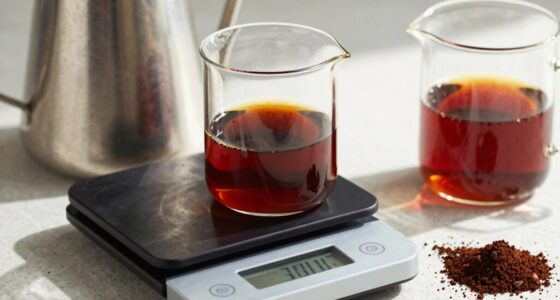
Have you ever wondered how much of your coffee brew is actual coffee solids versus water? To find out, you need to measure the brewed coffee weight accurately. Start by weighing your brewed coffee after filtering out the grounds. This weight includes all solids and water. Your grind size affects extraction, so keep it consistent for accurate results. Use a scale to record the total brewed weight precisely. Knowing this weight helps determine the coffee’s extraction yield, which shows how efficiently your coffee beans released their flavors. Remember, a finer grind size generally increases extraction, resulting in more solids in your brew. By measuring your brewed coffee weight regularly, you can fine-tune your grind size and brewing method for a better, more consistent cup.
Calculating Extraction Efficiency
Sure! Here’s the revised content following your instructions:
—
Once you’ve measured your brewed coffee weight, you can determine how efficiently your beans released their flavors by calculating the extraction yield. This calculation shows whether you’ve achieved a good balance of flavors in your cup, avoiding under- or over-extraction. To do this, multiply the TDS (Total Dissolved Solids) by your brew weight, then divide by the coffee dose used. The resulting percentage indicates your extraction efficiency. Ideal ranges typically fall between 18-22%. Different roast profiles influence the appropriate extraction; darker roasts often require slightly lower yields to preserve their flavor balance, while lighter roasts can handle higher yields. Additionally, understanding urban traffic confidence can enhance your overall coffee brewing experience as it encourages a more relaxed and focused approach. Calculating extraction efficiency helps you fine-tune your brewing process, ensuring a consistent, flavorful cup aligned with your roast profile. Additionally, using an online tool can help you detect passive voice in your writing, enhancing clarity and engagement.
—
Let me know if you need any further modifications!
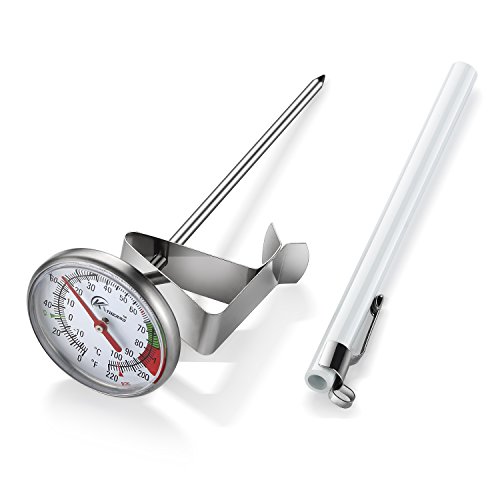
KT THERMO Instand Read 2-Inch Dial Thermometer,Best for The Coffee Drinks,Chocolate Milk Foam
DESIGN:Multi-stage design of the fixed clip, adjust the thermometer read the location of the disk surface to facilitate…
As an affiliate, we earn on qualifying purchases.
As an affiliate, we earn on qualifying purchases.
How TDS and Extraction Impact Your Coffee’s Flavor
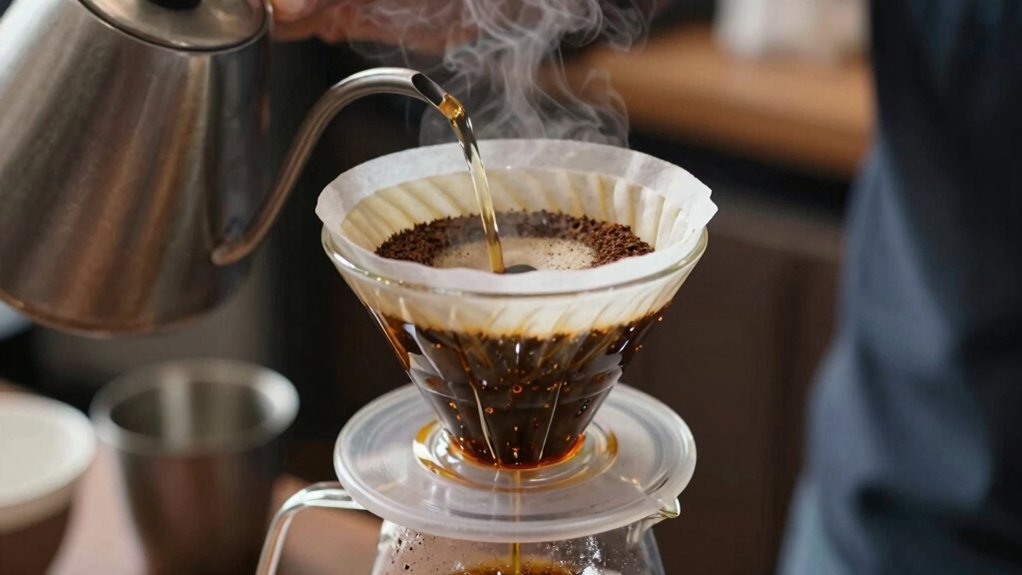
The levels of Total Dissolved Solids (TDS) and extraction directly influence the flavor profile of your coffee. When TDS is too low, your brew can taste weak and underwhelming, while excessively high TDS may lead to bitterness and over-extraction. Proper extraction guarantees a balanced flavor, highlighting the coffee’s nuanced notes without overpowering bitterness. Achieving the right TDS enhances aroma, making your coffee more inviting and complex. This balance impacts how flavors meld, creating a harmonious cup. If your TDS and extraction are optimized, you’ll notice an improved aroma and a more refined flavor profile. In short, understanding how these metrics shape your brew helps you craft coffee that’s consistently well-rounded, flavorful, and aromatic.
Simple Steps to Optimize Your Coffee Brew Using These Metrics
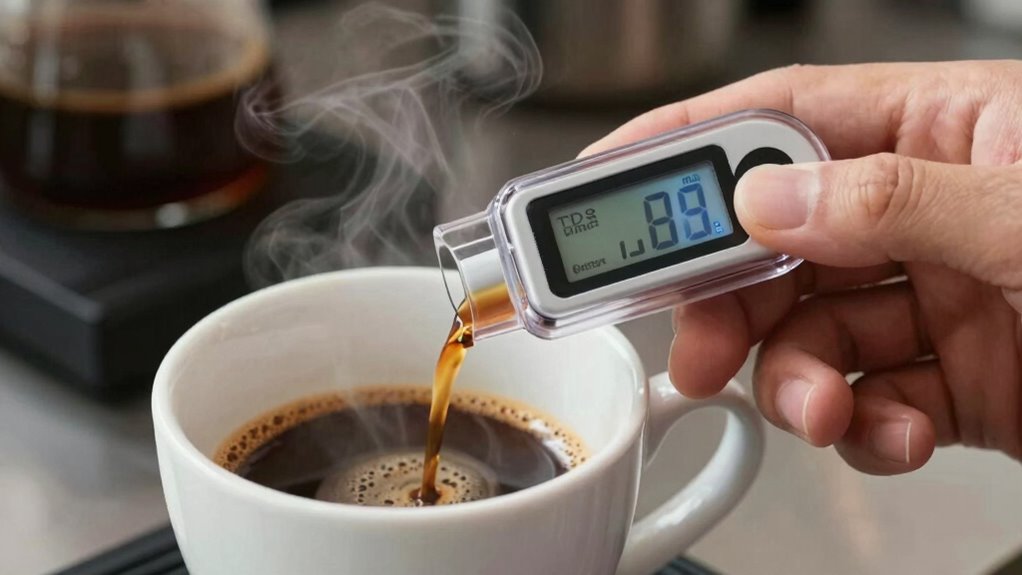
To improve your coffee, start by understanding the basics of Coffee TDS and how it influences flavor. Measure extraction yield accurately to see how well your brew extracts from the grounds. Then, apply these metrics to make quick adjustments and consistently craft a better cup. Additionally, consider seasonal ingredients in your coffee blends to enhance flavor complexity and enjoyment.
Understanding Coffee TDS Basics
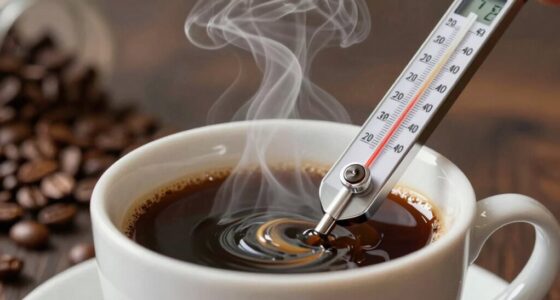
Understanding Coffee TDS basics is essential for optimizing your brew because it provides a clear measurement of how much dissolved coffee solids are present in your cup. TDS, or Total Dissolved Solids, directly impacts coffee aroma and flavor intensity. When your TDS is too low, your coffee may taste weak, while too high can make it over-extracted and bitter. To regulate TDS effectively, pay attention to brewing temperature—too hot or too cold can skew your measurements. Maintaining the right brewing temperature ensures consistent extraction and helps you hit your target TDS. By understanding these fundamentals, you can tweak variables like grind size and brew time to enhance aroma and flavor, resulting in a more balanced, satisfying cup every time.
Measuring Extraction Yield Precisely
Accurately measuring extraction yield allows you to fine-tune your brewing process for better flavor and consistency. By tracking this metric, you can better understand how different variables influence your flavor profiles, ensuring each cup hits the mark. Fresh beans contribute to ideal extraction, so knowing your yield helps you adjust grind size, brew time, or temperature to maximize bean freshness. Precise measurement involves weighing your coffee grounds and brewed coffee, then calculating extraction yield with a simple formula. This process reveals whether you’re over-extracting, which can result in bitterness, or under-extracting, leading to sourness. Regularly monitoring extraction yield helps you develop a consistent routine, revealing the full potential of your beans and consistently delivering balanced, flavorful coffee. Additionally, understanding steampunk brewing techniques can enhance your appreciation for the art of coffee-making.
Applying Metrics for Better Brew
Once you have your extraction yield and TDS metrics, applying them to your brewing process becomes straightforward. Adjusting variables like brewing temperature influences coffee aroma and extraction efficiency. For example, higher temperatures generally boost extraction and aroma, but too hot can lead to over-extraction. Use the table below to guide your adjustments:
| Variable | Effect on Coffee Aroma | Recommended Adjustment |
|---|---|---|
| Brewing Temperature | Enhances aroma, influences extraction | Increase slightly if aroma is weak |
| Grind Size | Affects extraction rate | Use finer grind for more aroma |
| Brew Time | Controls extraction balance | Extend for fuller flavor |
| Coffee Dose | Impacts strength and aroma | Adjust for desired intensity |
| TDS & Yield | Reflects extraction quality | Fine-tune to optimize flavor |
Focus on these metrics to craft a balanced, aromatic brew.
Troubleshooting Common Extraction Issues
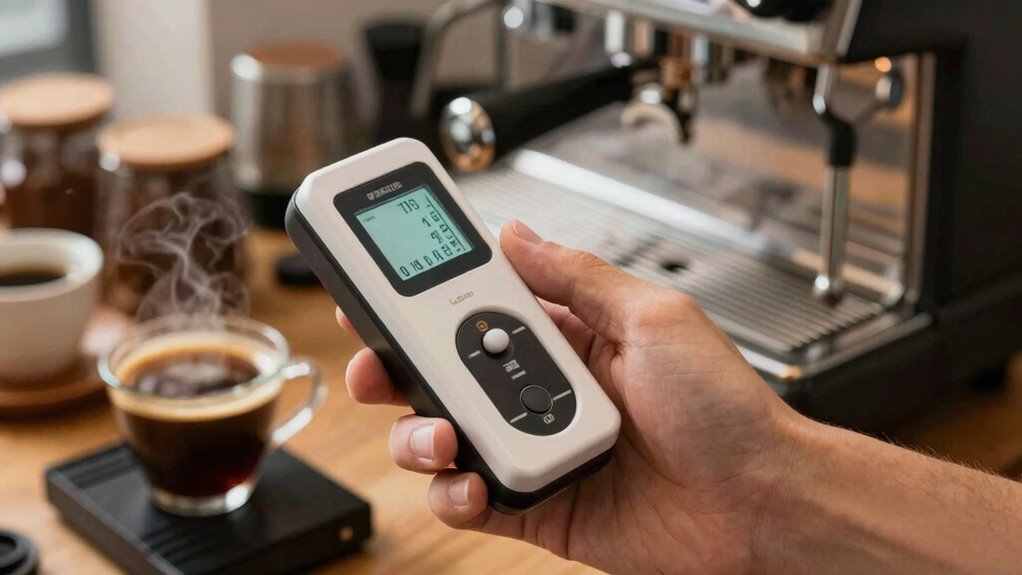
When your coffee extraction isn’t producing the desired flavor, identifying the root cause can feel overwhelming. Common issues often stem from simple adjustments. First, check your coffee storage—exposed beans lose freshness, leading to uneven extraction. Additionally, using proper storage techniques can significantly prolong the life of your beans, and investing in data storage solutions can help keep your coffee-related data organized. Next, verify your grinder calibration; inconsistent grind size hampers proper extraction. Third, examine your brewing variables: water temperature and brew time affect flavor. Fourth, confirm your equipment is clean; old coffee oils and residues can taint taste. Addressing these points systematically helps improve extraction. If your coffee tastes sour or under-extracted, try a coarser grind or shorter brew time. Conversely, if it’s bitter or over-extracted, opt for a finer grind or longer brew. Consistent calibration and proper storage are key to troubleshooting common extraction issues effectively. Additionally, understanding brewing techniques can enhance your overall coffee experience.
Frequently Asked Questions
What Equipment Is Needed to Measure TDS and Extraction Yield?
To measure TDS and extraction yield, you’ll need a refractometer, a scale, and a coffee sampler. The refractometer is essential for accurately evaluating coffee flavor by measuring TDS, which impacts brewing consistency. The scale helps you weigh your coffee and water precisely, ensuring reliable results. With these tools, you can fine-tune your brew, consistently improving flavor and achieving the perfect extraction every time.
How Often Should I Test My Coffee’s TDS During Brewing?
You should test your coffee’s TDS midway through brewing, especially if you’re aiming for flavor consistency. For example, a barista who checks TDS after the first minute adjusts grind size, ensuring uniform extraction and balanced flavors. Regular testing helps maintain grinding precision and prevents over- or under-extraction. By monitoring TDS periodically, you fine-tune your process, delivering consistently excellent cups every time.
Can TDS and Extraction Yield Improve Different Brewing Methods?
Yes, TDS and extraction yield can improve different brewing methods by enhancing flavor consistency and preserving coffee freshness. When you measure TDS, you guarantee each method extracts the ideal amount of solubles, leading to a balanced taste. Adjusting extraction yield helps maintain consistent flavor profiles across brews, regardless of the method. This focus on precise extraction guarantees your coffee remains fresh and flavorful, no matter how you brew it.
Are There Ideal TDS and Extraction Ranges for Specific Coffee Types?
Sure, there are ideal TDS and extraction ranges for specific coffee types, but who needs consistency when you can chase flavor chaos? For maximum flavor consistency, stick to the recommended TDS and extraction levels for each coffee variety. Freshness enhances these ranges, helping you avoid bland or over-extracted brews. So, follow these ranges, keep your coffee fresh, and enjoy a reliably delicious cup—because predictability can be a good thing.
How Do Ambient Factors Like Temperature Affect TDS Measurements?
Ambient temperature can greatly influence TDS measurements by affecting measurement accuracy. When the environment is too hot or cold, it can cause fluctuations in your refractometer’s readings, leading to inconsistent results. To guarantee accurate measurements, you should calibrate your device in the same ambient temperature as your brewing area. Keeping your equipment at a stable temperature helps you get precise TDS readings, ultimately improving your coffee’s consistency and quality.
Conclusion
By understanding your coffee’s TDS and extraction yield, you can master your brew, improve its flavor, and enjoy every sip more. Measure accurately, calculate carefully, and adjust confidently. Embrace these metrics to troubleshoot issues, refine your method, and access the full potential of your beans. Consistently evaluate, adapt, and enjoy the process—because better coffee begins with smarter choices. Make these simple steps your routine, and watch your coffee quality elevate with every cup.