To stop guessing your coffee brew ratio, focus on a simple 1:15 ratio of coffee to water for balanced flavor. Measure precisely, and adjust based on strength preferences and bean types. Remember, grind size, water temperature, and brew time all impact taste. If your coffee’s too bitter or weak, tweak these elements. Experimenting with different ratios can reveal your perfect cup. If you want to elevate your brewing game, there’s more to explore!
Key Takeaways
- Brew ratios, like the standard 1:15, ensure consistent coffee flavor and strength across different brewing methods.
- Measure coffee and water accurately using a precise scale for optimal extraction and taste.
- Adjust brew ratios based on coffee bean characteristics and personal flavor preferences for the best results.
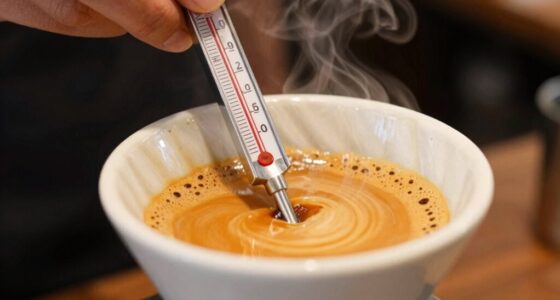
- Monitor water temperature (195°F to 205°F) and grind size to enhance flavor profiles during brewing.
- Regularly experiment with ratios and methods to discover your ideal coffee taste and avoid bitterness or weakness.

NKOVE Digital Coffee Scale with Timer 3kg/0.1g High Precision Espresso Scale Tare Function for Pour Over Maker Brew
☕0.1g High Precision Measurement: Experience the ultimate accuracy with a high-precision sensor that delivers results with 0.1g accuracy….
As an affiliate, we earn on qualifying purchases.
As an affiliate, we earn on qualifying purchases.
Why Brew Ratios Matter for Your Coffee Consistency
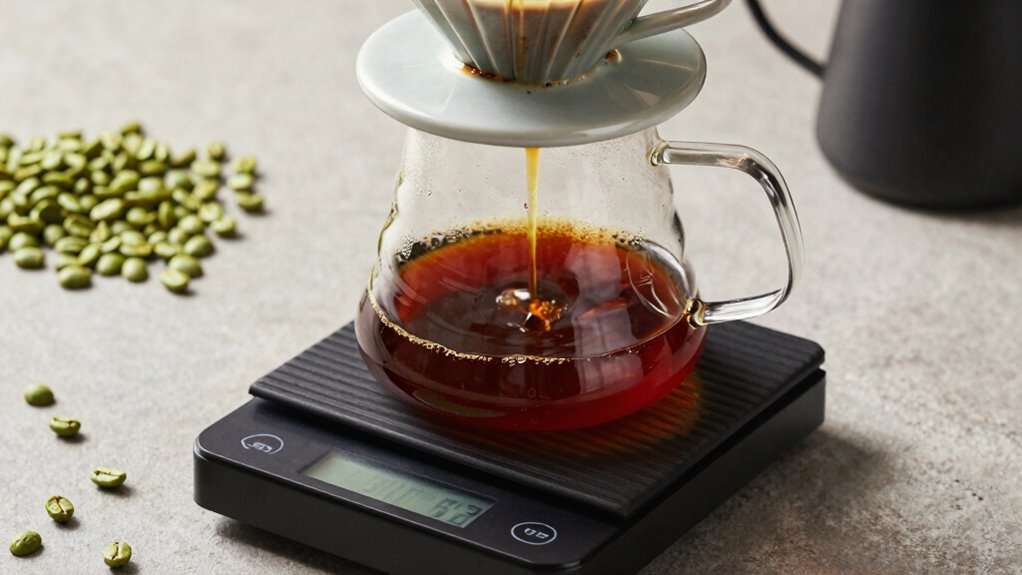
When it comes to brewing coffee, understanding brew ratios can make all the difference in achieving a consistent flavor. By knowing the right ratio of coffee to water, you can control brew strength, ensuring each cup delivers the same delightful experience. If you use too much coffee, your brew might taste overly bitter; too little, and it could be weak and underwhelming. Finding the sweet spot helps achieve that perfect flavor balance you crave. It’s all about precision—measuring your ingredients keeps your coffee game strong. Additionally, different brewing methods can significantly affect your coffee’s taste and strength. For instance, maintaining proper technique & form during brewing will enhance your coffee’s overall quality, making it crucial to master milk steaming techniques for lattes and cappuccinos. Furthermore, understanding kitchen science can help you experiment with different ratios to find your ideal brew. So, next time you brew, remember that sticking to a specific ratio will elevate your coffee consistency and enhance your overall enjoyment. Your taste buds will thank you for it!
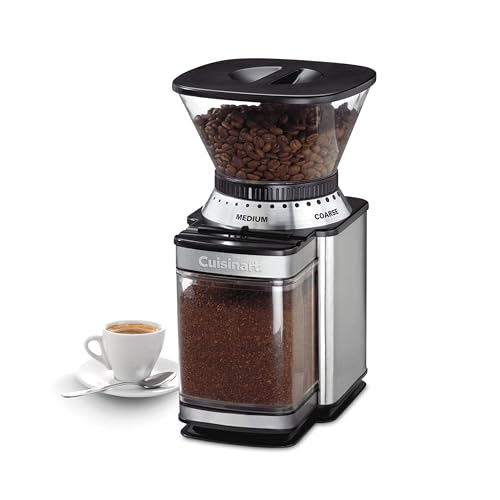
Cuisinart Coffee Grinder, Electric One-Touch Automatic Burr Coffee Grinder with 18-Position Grind Selector, Cup Size Selector for 4 – 18 Cups, DBM-8P1, Black Stainless
ENJOY OPTIMUM FLAVOR: The Cuisinart Coffee Grinder with 18-position slide-dial grind selector provides a uniform grind from ultra-fine…
As an affiliate, we earn on qualifying purchases.
As an affiliate, we earn on qualifying purchases.
What Are Coffee Brew Ratios?
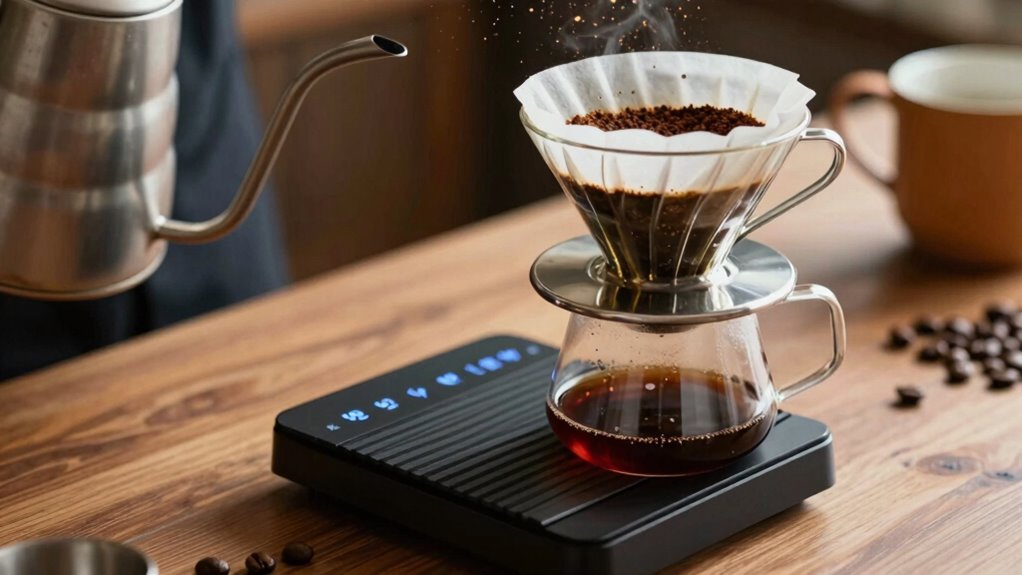
What Are Coffee Brew Ratios?
Coffee brew ratios refer to the precise balance of coffee grounds to water used in the brewing process. Getting this ratio right is essential for optimal coffee extraction and flavor. Different brewing techniques may require varying ratios to achieve the best results. This balance is crucial for ensuring that you can cook better and enjoy a consistently great cup of coffee. Additionally, just as with essential oils like eucalyptus oil, which acts as a powerful decongestant, finding the right coffee brew ratio can enhance the overall experience.
Here’s a quick reference table to help you understand common brew ratios:
| Brewing Method | Coffee to Water Ratio | Ideal Brew Time |
|---|---|---|
| French Press | 1:15 | 4 minutes |
| Pour Over | 1:16 | 3-4 minutes |
| Espresso | 1:2 | 25-30 seconds |
| Cold Brew | 1:8 | 12-24 hours |

Ratio Six Series 2 Coffee Machine – Automatic Drip Coffee Maker – 1.25L/40oz – Brews 2-8 Cups – Matte Black
Simplify Your Routine – Tired of complicated coffee rituals? The Ratio coffee maker streamlines your morning routine with…
As an affiliate, we earn on qualifying purchases.
As an affiliate, we earn on qualifying purchases.
The Science Behind Your Coffee Brew Ratio

Understanding the ideal brew ratio is key to revealing your coffee’s full flavor potential. When you adjust this ratio, you can drastically change the taste profile, highlighting different notes and aromas. Let’s explore how these factors work together to enhance your daily cup.
Ideal Brew Ratios Explained
While crafting the perfect cup, you might not realize that the brew ratio plays an essential role in flavor and strength. Understanding how to balance your coffee and water can enhance your brewing experience greatly. Here’s what you should know about ideal brew ratios:
- A standard ratio is 1:15 (coffee to water) for balanced flavor extraction.
- Adjust the ratio for stronger brew strength—try 1:12 for a bolder taste.
- Use a finer grind for increased flavor extraction in shorter brew times.
- Experimenting with different ratios helps you find your personal sweet spot.
- Utilizing coffee gear that suits your brewing style can further refine your coffee experience.
Impact On Flavor Profile
The brew ratio doesn’t just influence strength; it also shapes the flavor profile of your coffee. By adjusting this ratio, you can enhance specific flavor notes and control acidity levels. A higher ratio often results in greater body richness and aroma intensity, while a lower ratio can boost sweetness balance and improve bitterness control. Your brew time and grind size also play crucial roles—coarser grinds and longer brew times can lead to a smoother, more balanced aftertaste quality. Additionally, the bean origin greatly impacts these elements, showcasing unique characteristics. Understanding how your brew ratio interacts with these factors helps you craft the perfect cup tailored to your taste preferences.

BOMATA Digital Water Thermometer for Water, Liquid, Candle and Cooking. Instant Read Food Thermometer Waterproof IPX7 with Long Probe for Cooking, Meat, BBQ! T101 (Black Color)…
[ Waterproof – IPX7 ] With the strong waterproof ability, it’s very suitable for measuring the temperature of…
As an affiliate, we earn on qualifying purchases.
As an affiliate, we earn on qualifying purchases.
Calculating Your Ideal Brew Ratio

Calculating your ideal brew ratio starts with understanding the basics of how coffee and water interact. Once you grasp these fundamentals, you can easily adjust the ratio to match your personal taste preferences. Let’s explore how to find that perfect balance for your cup.
Understanding Brew Ratio Basics
Brew ratio is the secret ingredient that transforms your coffee experience. Understanding how to calculate your ideal brew ratio can enhance both brew strength and flavor balance in every cup you make. Here are some key points to reflect upon:
- Start with a common ratio, like 1:15 (coffee to water).
- Adjust based on your preferred brew strength—stronger coffee might need a lower ratio.
- Experiment with different beans, as their flavor profiles can shift your ratio needs.
- Keep notes on your adjustments to find what works best for you.
Adjusting For Personal Taste
Finding your perfect brew ratio is all about personal preference. Start by identifying your flavor preferences—do you enjoy a bolder cup or something milder? Once you’ve got a baseline, use the standard ratios as a guide but don’t hesitate to make personal adjustments. Taste testing is key; brew a few batches at different ratios and note how each one affects the flavor. If you find your coffee too bitter, try using less coffee or more water. Conversely, if it’s watery, increase the coffee amount. Embrace brewing flexibility; every adjustment can lead you closer to your ideal cup. Remember, coffee is a personal journey, so enjoy experimenting until you find your sweet spot! Additionally, consider exploring smart kitchen gadgets that can help streamline your brewing process. Understanding the science of brewing can also enhance your experience by informing your ratio adjustments based on extraction principles. The right filtration techniques can also improve the clarity and taste of your coffee, ensuring a better overall experience.
Effects of Common Brew Ratios on Coffee Flavor
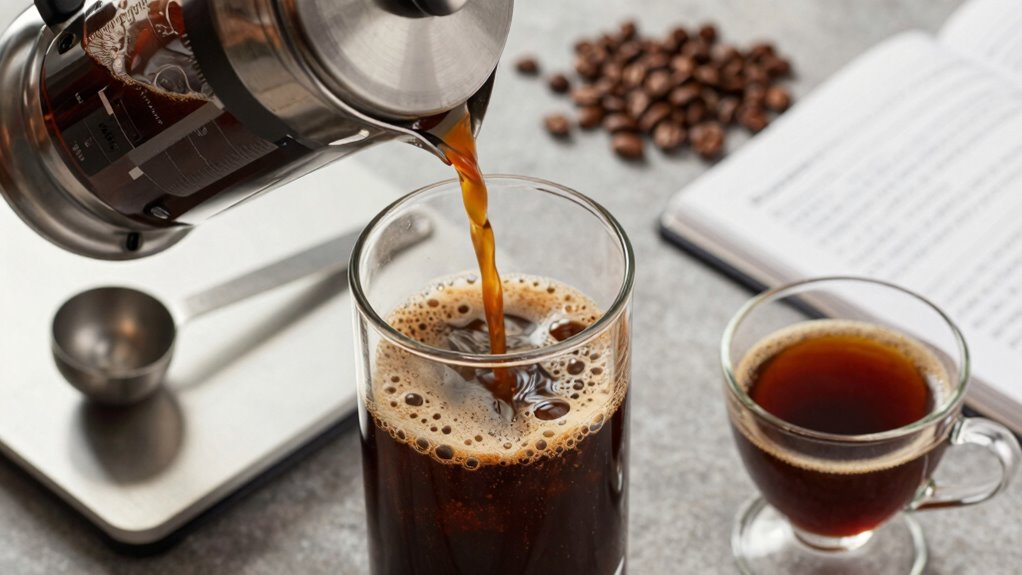
While experimenting with different coffee brew ratios, you’ll quickly discover how they markedly influence the flavor of your cup. The right ratio can enhance various aspects of your brew, affecting everything from aroma to aftertaste. Here’s what to reflect on:
- Flavor Intensity: A stronger ratio boosts flavor intensity, making each sip more impactful.
- Aroma Complexity: Adjusting the ratio can reveal different aroma complexities, enriching your coffee experience.
- Acidity Balance: Finding the perfect ratio balances acidity, ensuring neither sharpness nor dullness dominates.
- Body Richness: Your brew’s body richness can shift, affecting the mouthfeel and overall satisfaction.
Experiment with brew temperature, bitterness levels, sweetness profile, and aftertaste notes to discover your ideal cup! Additionally, understanding evidence-backed guidance can help you refine your brewing technique for optimal results.
How to Adjust Brew Ratios by Brewing Method
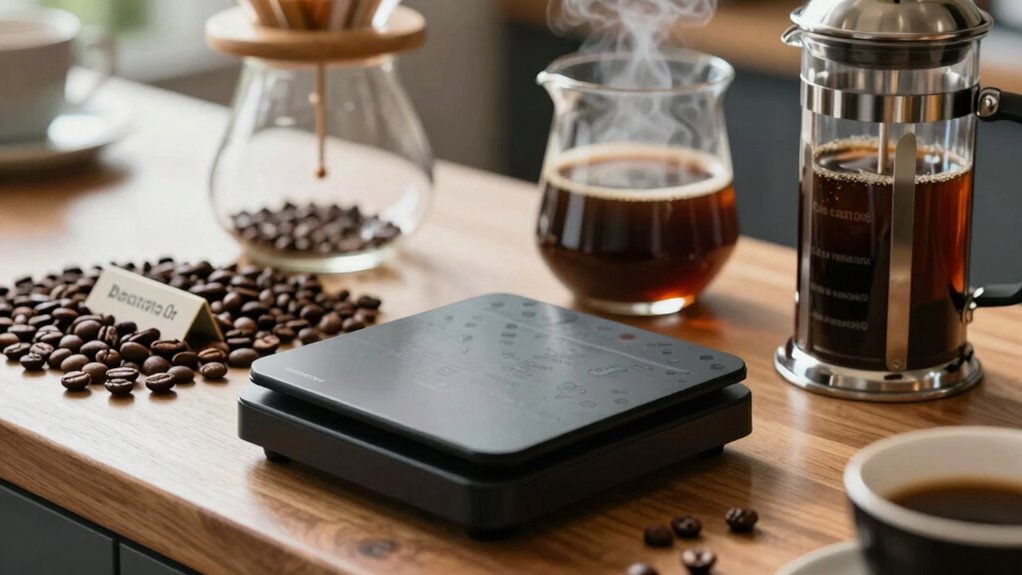
When brewing coffee, the method you choose can greatly impact your brew ratio. For instance, the pour over method typically requires a different ratio than the French press technique. Understanding these nuances helps you craft the perfect cup every time.
Pour Over Method
The pour over method is a popular choice among coffee enthusiasts for its ability to highlight unique flavor profiles. To get the best results, you’ll want to pay attention to a few key factors:
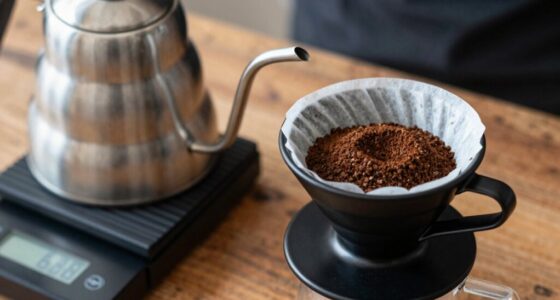
- Coffee Grind: Use a medium grind for ideal extraction.
- Water Temperature: Aim for 195°F to 205°F for balanced flavor.
- Brew Ratio: A common starting point is 1:15 (coffee to water).
- Pour Technique: Pour in a circular motion to evenly saturate the grounds.
French Press Technique
After mastering the pour over method, exploring the French press technique can elevate your coffee experience even further. This brewing technique relies on the right grind size, typically coarse, to optimize flavor extraction. Start with fresh coffee and a 1:15 coffee-to-water ratio. Heat your water to about 200°F for the best results.
Once you’ve combined the coffee and water, let it steep for four minutes. This steeping method enhances flavor without over-extraction, similar to how contrast ratios affect image quality in projectors. After steeping, press down the plunger slowly to avoid bitterness. Finally, serve your coffee at an ideal serving temperature of around 140°F. With the right equipment choice and attention to these details, you’ll enjoy a rich and satisfying cup every time. Understanding brewing science can further enhance your brewing skills and result in even better flavor profiles.
Measuring Coffee and Water: Best Practices
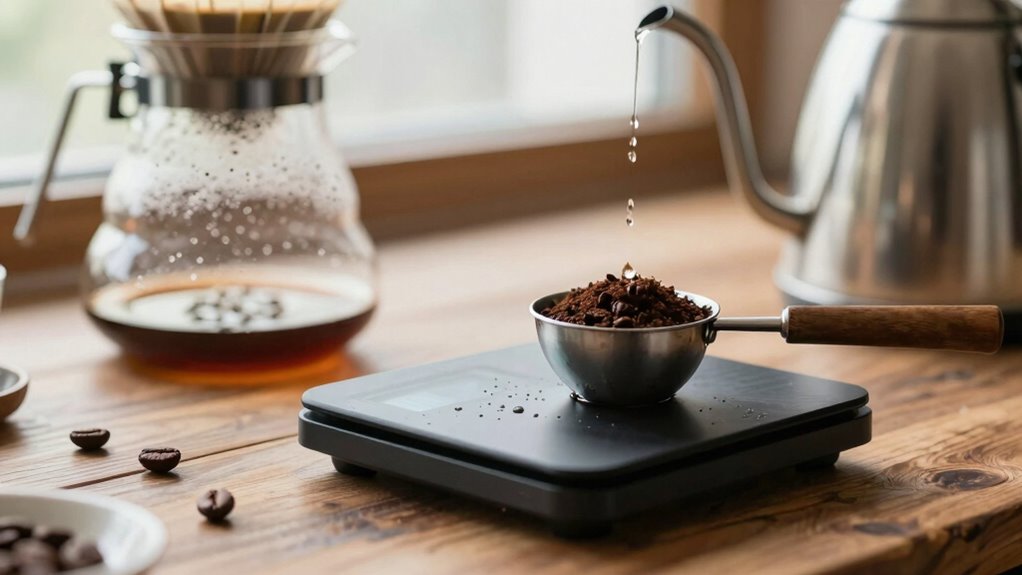
Getting the coffee-to-water ratio right is crucial for brewing a perfect cup. To achieve this, focus on these best practices:
- Use a precise scale: Scale accuracy guarantees you measure coffee and water in consistent measurement units.
- Consider grind size: Adjust your grind size based on brewing equipment to extract ideal flavors.
- Monitor water temperature: Water quality and temperature play essential roles in extracting the best from your coffee.
- Prioritize coffee freshness: Always use fresh coffee for the best taste; stale beans can ruin your brew. Additionally, ensure that your brewing environment is free of high dust or humidity to avoid compromising the flavor.
Troubleshooting: What to Do If Your Coffee Is Off?
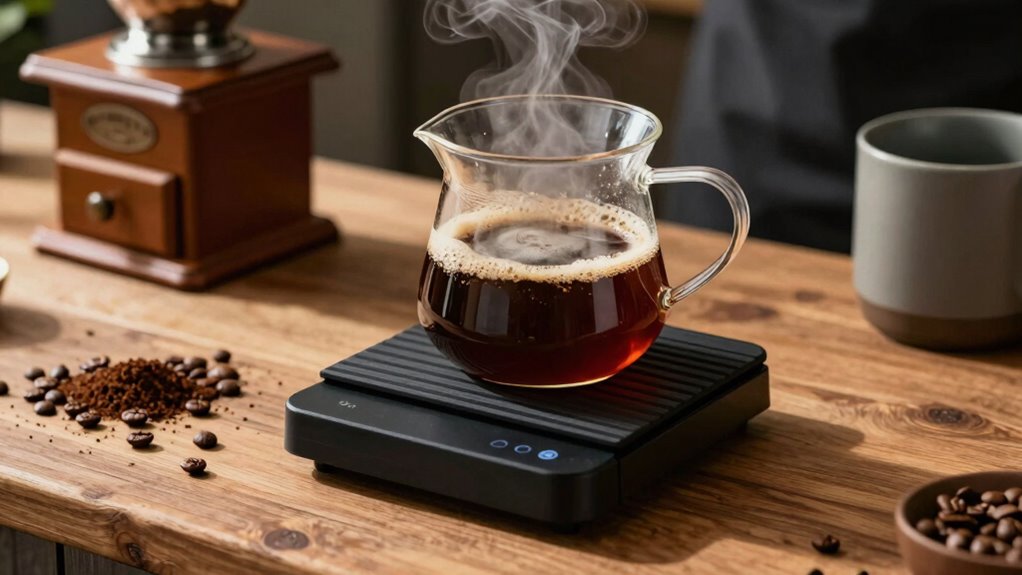
Ever wondered why your coffee doesn’t taste quite right? You might be making some common brewing mistakes. First, check your coffee-to-water ratio; too much coffee can lead to bitterness, while too little can make it weak. Here’s a quick guide for flavor adjustments:
| Issue | Possible Cause | Solution |
|---|---|---|
| Bitter flavor | Over-extraction | Reduce brew time |
| Weak taste | Under-extraction | Increase brew time |
| Sour notes | Too fast brewing | Grind coffee finer |
Additionally, remember that the coffee-to-water ratio is crucial for achieving the perfect brew.
Experimenting With Brew Ratios: Finding Your Sweet Spot
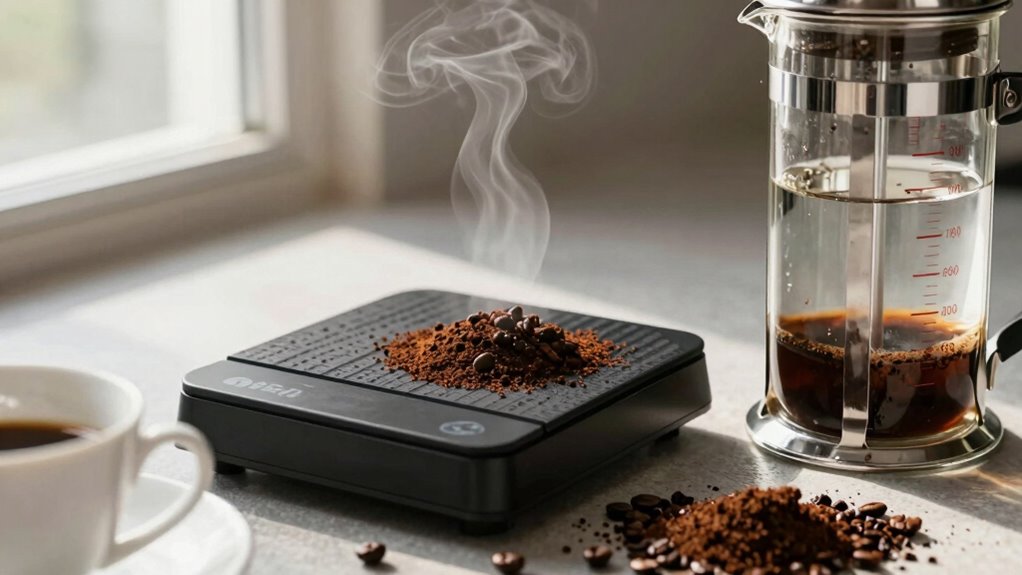
Finding your ideal coffee brew ratio can transform your morning ritual. By experimenting with different ratios, you can discover what truly satisfies your taste preferences. Here are some tips to guide your flavor exploration:
- Conduct brewing experiments: Try various ratios to see how they affect coffee strength.
- Make personal adjustments: Tweak measurements based on your sensory evaluation.
- Explore method variations: Different brewing techniques can yield unique coffee profiles.
- Engage in taste testing: Invite friends to join in and share their insights for brew consistency.
As you navigate through these brewing experiments, you’ll find that small changes can lead to the perfect cup. Additionally, understanding your risk tolerance can help you make informed choices about your coffee preferences. Enjoy the journey of discovering your sweet spot!
Best Tools for Measuring Brew Ratios
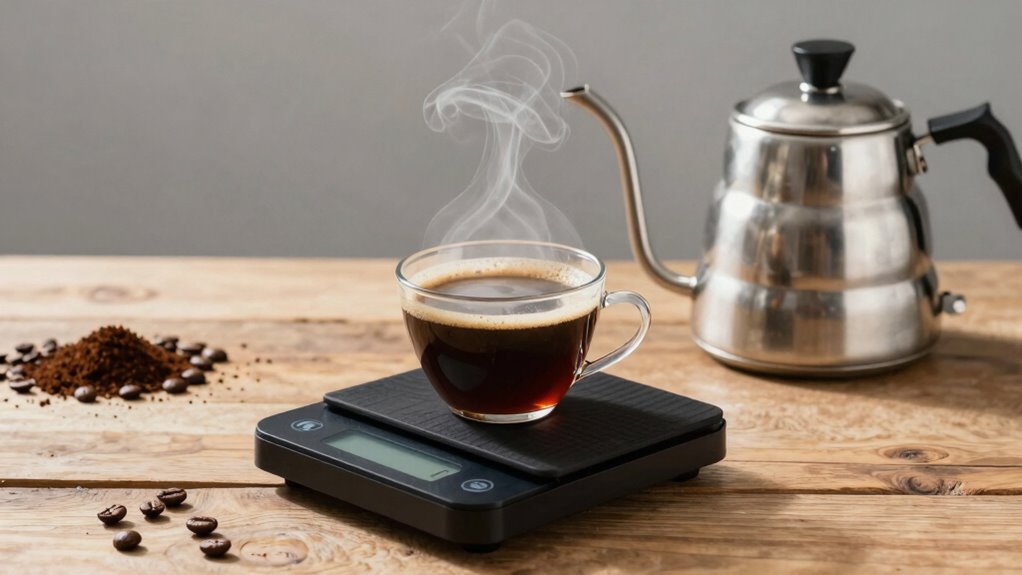
Measuring your coffee brew ratios accurately can elevate your brewing game considerably. Start with digital scales; they’re vital for precise measurements. You’ll want to weigh your coffee and water instead of relying on volume. Measuring cups can work in a pinch, but they lack the accuracy of scales. Use brewing calculators or ratio charts to find your ideal mix, and don’t forget about coffee scoops for convenience. Precision tools like brewing timers help you control water temperature and grind size, essential for ideal extraction. Smartphones & Mobile can be handy for finding brewing apps and calculators. Keeping a coffee journal allows you to track your experiments, noting what works best for you. With these tools, you’ll brew consistently delicious coffee every time.
Frequently Asked Questions
Can I Use Any Coffee Bean for Any Brew Ratio?
You can’t use any coffee bean for any brew ratio. Different bean types have unique flavor profiles that affect how they interact with water. For example, a light roast might require a different ratio than a dark roast to bring out its best flavors. Experimenting with ratios helps you discover what works best for your chosen beans. So, adjust your brew ratio based on the specific beans you’re using to get the most delicious results.
How Often Should I Change My Brew Ratio?
You should change your brew ratio whenever your taste preferences shift. If you find your coffee too strong or weak, it’s time for brew adjustments. Experimenting every few weeks can help you discover what you really enjoy. Don’t hesitate to tweak the ratio based on the beans you’re using or the method you’ve chosen. The goal is to enjoy your cup, so feel free to adjust until it’s just right for you!
Do Brew Ratios Affect Caffeine Content?
Yes, brew ratios definitely affect caffeine content. When you adjust the ratio, you’re changing how much coffee grounds you use, which influences caffeine extraction. A higher brew strength means more grounds, leading to a stronger cup with more caffeine. Conversely, a lower ratio can weaken both the flavor and the caffeine kick. So, if you want that extra boost, play around with your brew ratio until you find your perfect balance!
What’s the Best Brew Ratio for Cold Brew?
The best brew ratio for cold brew is typically around 1:4 to 1:8, depending on your taste. If you want a stronger flavor profile, go for 1:4; for a milder sip, try 1:8. Experimenting with these ratios lets you customize your cold brew to match your preferences. Just remember, the longer you steep, the more concentrated the flavor, so adjust the water accordingly to get that perfect balance!
Can Brew Ratios Impact Health Benefits of Coffee?
Absolutely, brew ratios can impact the health benefits of your coffee. Picture yourself savoring a rich cup, where the balance of coffee to water enhances antioxidants and reduces acidity. Different brewing methods extract various compounds, influencing how beneficial your brew can be. A well-measured ratio not only boosts flavor but also maximizes those health perks—energizing you without the jitters. So, when you’re brewing, remember that precision matters for both taste and wellness!
Conclusion
In the world of coffee, your brew ratio is like a compass guiding you to the perfect cup. By understanding and experimenting with these ratios, you can reveal flavors that dance on your palate. Remember, consistency is key, and even small adjustments can lead to a remarkable transformation. So, grab your scale, tweak your measurements, and enjoy the journey to your ideal brew. Your next favorite cup is just a ratio away!