
To quickly reduce clumping in your espresso grounds, focus on using a high-quality burr grinder and adjusting its settings for consistency. Grind in small batches and maintain a slow grinding speed to avoid excess heat. Implement a distribution tool to evenly spread grounds in the portafilter, and consider using a sifter to separate clumps after grinding. Paying attention to moisture control in beans also helps. Discover more effective techniques to enhance your espresso experience.

Get coffee and tea gear delivered free with Prime
- Fast, free delivery on millions of items
- Prime Video, Amazon Music and more included
- Member-only deals all year
Key Takeaways
- Use a high-quality burr grinder to achieve a consistent grind size and minimize clumping effectively.
- Adjust grinder settings and experiment with grind sizes to find the optimal consistency for your espresso.
- Grind in small batches and maintain a slow grinding speed to promote uniformity and reduce static.
- Tap the grinder gently after grinding to break up any clumped grounds before distribution.
- Store coffee beans in airtight containers in cool, dark places to maintain freshness and prevent moisture-related clumping.
Products Worth Considering

Ninja Luxe Café Premier 3-in-1 Espresso Machine, Drip Coffee & Cold Brew

Breville Barista Pro Espresso Machine with Grinder, Brushed Stainless Steel

De’Longhi Classic Matte Black Espresso Machine with Milk Frother
As an affiliate, we earn on qualifying purchases.
What Causes Clumping in Espresso Grounds?
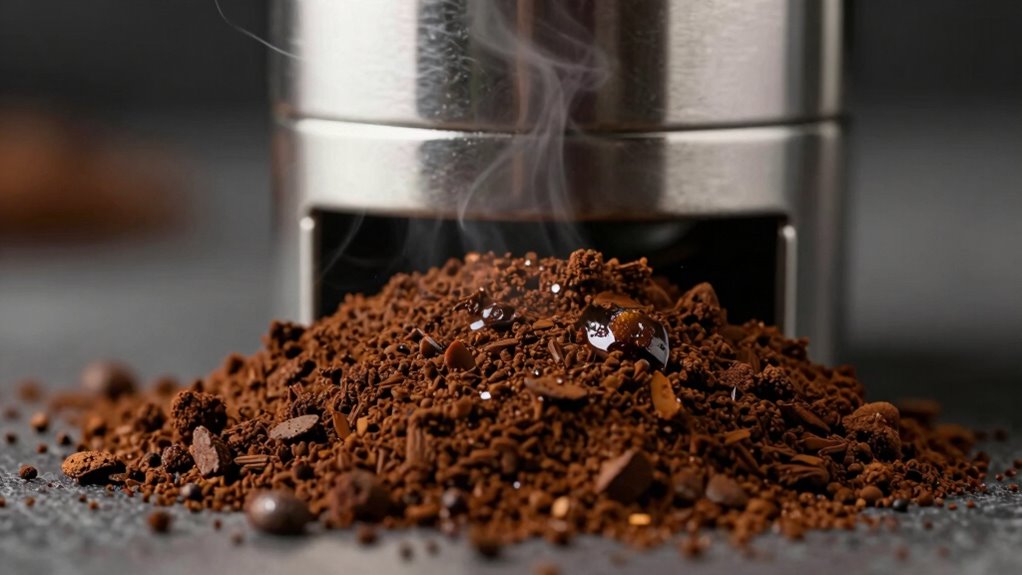
When you grind coffee beans for espresso, several factors can lead to clumping in the grounds. One of the main causes of clumping is the moisture content in the beans; humid conditions can make them stick together. Additionally, the grind size affects espresso ground texture; if it’s too fine, the particles are more likely to clump due to increased surface area. Static electricity can also play a role, causing the grounds to cling to each other and your grinder. Finally, grinding too quickly can create uneven textures, leading to inconsistent extraction. By understanding these causes of clumping, you can take steps to achieve a more uniform espresso ground texture, ensuring a better brewing experience.
How Freshness Impacts Grind Consistency
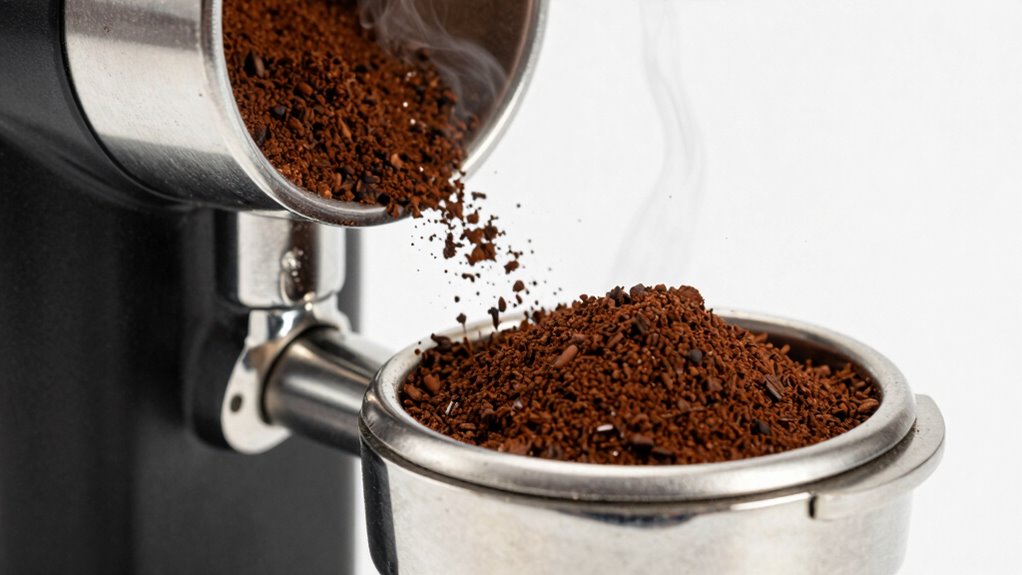
While you might not think about it, the freshness of your coffee beans greatly affects grind consistency. Fresh beans have a higher moisture content, which can lead to uneven grinding and clumping. When beans sit for too long, they lose their oils and moisture, impacting the freshness effects that contribute to grind stability. This means stale beans can create inconsistent particle sizes, making it harder for your espresso to extract properly. To achieve a uniform grind, always aim to use freshly roasted beans. By prioritizing freshness, you enhance your grind consistency, which ultimately leads to a better espresso experience. Additionally, essential oils like eucalyptus can help in maintaining the freshness of your coffee beans. Proper storage techniques are also crucial to preventing moisture loss and ensuring that each shot is as good as the last. Furthermore, understanding what matters in your choice of coffee gear can further improve your grinding process. Using science-informed guidance can help you select the right tools for optimal results.
The Role of Grind Size in Espresso Quality
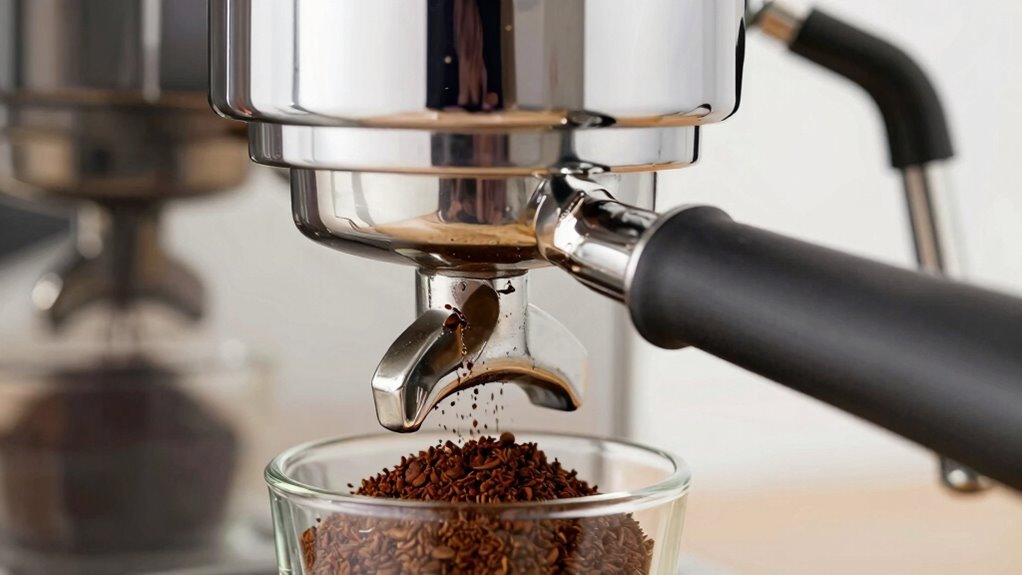
Grind size plays a crucial role in determining the quality of your espresso, as it directly influences extraction rates and flavor profiles. The right grind size guarantees ideal extraction efficiency, enhancing the richness of your brew. When you focus on grind uniformity, you’ll achieve a more consistent flavor, allowing the unique characteristics of your beans to shine through.
| Grind Size | Impact on Flavor |
|---|---|
| Coarse | Under-extracted, sour |
| Medium | Balanced, bright |
| Fine | Over-extracted, bitter |
| Very Fine | Intense, but harsh |
| Uniform | Rich, full-bodied flavor |
Paying attention to grind size not only elevates your espresso experience but also transforms your coffee ritual into a delightful journey.
Essential Tools to Reduce Coffee Clumping
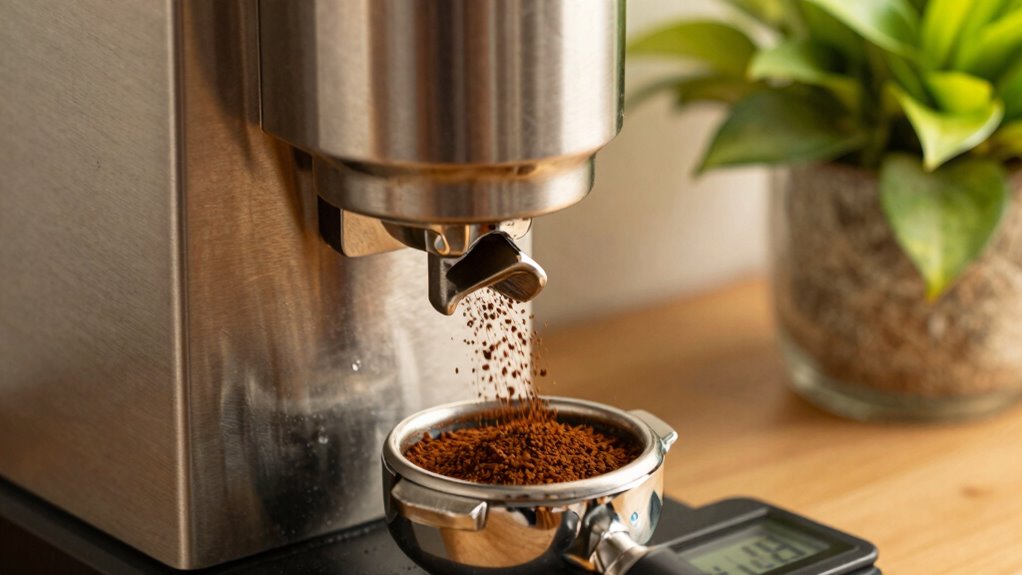
Clumping in coffee grounds can hinder your espresso experience, leading to uneven extraction and compromised flavors. To tackle this issue, you’ll need the right tools. First, consider investing in a high-quality burr grinder; these grinder types produce a more consistent grind size, which greatly aids in clumping prevention. Another effective tool is a distribution tool, which helps evenly spread coffee grounds in the portafilter before tamping, reducing the chance of clumps forming. You might also explore using a sifter to separate any clumped grounds after grinding. By equipping yourself with these essential tools, you’ll enhance your espresso-making process, ensuring a uniform grind and ultimately a richer, more flavorful cup. Additionally, understanding grind size consistency is crucial for achieving optimal extraction in your espresso brewing.
Techniques for Achieving a Uniform Grind
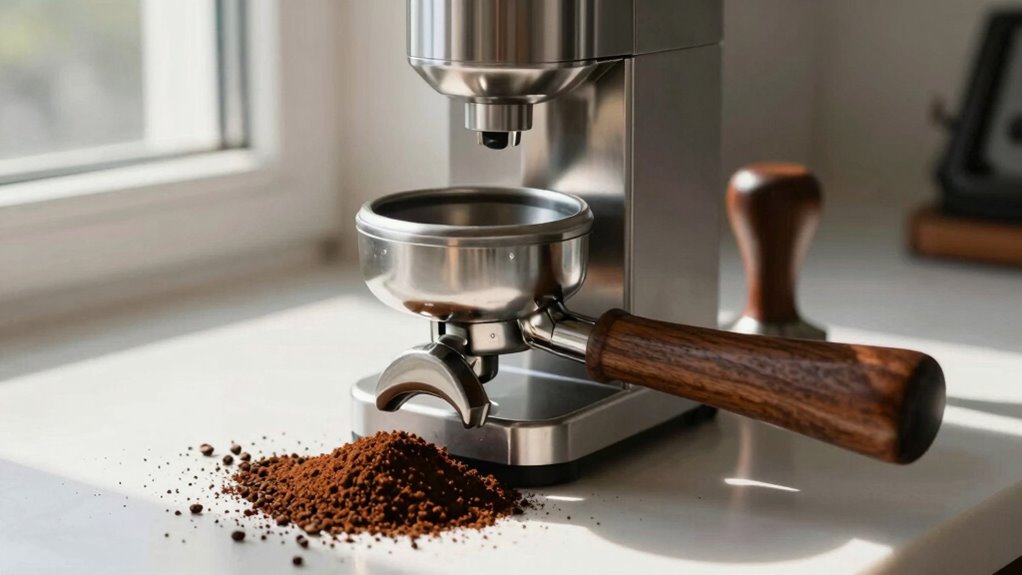
Having the right tools sets the stage for achieving a uniform grind, but employing effective techniques is just as important. Start by adjusting your grinder’s settings to guarantee grind consistency. Experiment with different grind sizes, as a finer grind may clump more than a coarser one. Pay attention to the grinding speed; a slow and steady pace often yields better results and helps with clumping prevention. Additionally, consider grinding in small batches to maintain freshness and reduce static. After grinding, gently tap the grinder to break up any clumps that formed. Finally, using a distribution tool can help you achieve a more even texture, ensuring your espresso extraction is both smooth and flavorful.
Using a Sifter for Uniform Espresso Grounds

Using a sifter can greatly enhance the uniformity of your espresso grounds. It helps eliminate clumps, ensuring a more consistent extraction during brewing. Let’s explore the benefits of sifting, how to choose the right sifter, and effective sifting techniques.
Benefits of Sifting Grounds
While many baristas focus on grind size and tamping pressure, sifting your espresso grounds can greatly enhance your brewing experience. By employing effective sifting techniques, you can achieve grind uniformity, which is essential for consistent extraction. When grounds are uniform, water flows evenly through them, leading to a balanced flavor profile. Sifting also helps eliminate clumps that can create channeling during extraction, resulting in a bitter or under-extracted shot. Additionally, it promotes optimal extraction by ensuring that all particles are evenly sized. Plus, it allows you to easily identify and remove any larger particles that may affect your brew. Incorporating this simple step into your routine not only improves the quality of your espresso but also makes the brewing process more enjoyable. Embrace sifting and elevate your coffee game! Additionally, using a baking steel can provide a more stable surface for your espresso-making setup, further enhancing your results. Remember, maintaining consistent habits in your coffee preparation can lead to better overall performance and satisfaction. Moreover, investing in quality grinders ensures that your grounds are consistently sized, making the sifting process even more effective. Furthermore, understanding the mechanics of French press coffee can offer valuable insights into achieving the ideal brew consistency.
Choosing the Right Sifter
To achieve uniform espresso grounds, selecting the right sifter is essential. The right choice can elevate your brewing experience and guarantee that each cup is as flavorful as possible. Consider these factors when choosing your sifter:
- Sifter materials that are durable and easy to clean
- Sifter sizes that fit your workspace without cluttering it
- Sifter efficiency to minimize time spent preparing your grounds
- Sifter design that promotes airflow and reduces clumping
- Sifter brands known for quality and reliability
Sifting Techniques for Espresso
Sifting your espresso grounds can considerably enhance the consistency and flavor of your brew. By using effective sifting methods, you can break up clumps and guarantee a uniform texture, which is essential for ideal extraction during espresso preparation. Start with a fine-mesh sifter to catch even the smallest particles. Pour your ground coffee into the sifter and gently shake it back and forth, allowing the grounds to fall evenly. This process not only helps eliminate clumps but also aerates the grounds, improving their flow through the espresso machine. Incorporating this simple technique into your routine can elevate your espresso game, leading to a more balanced and flavorful cup every time. Enjoy the difference a little sifting can make!
Best Storage Practices to Keep Espresso Grounds Fresh
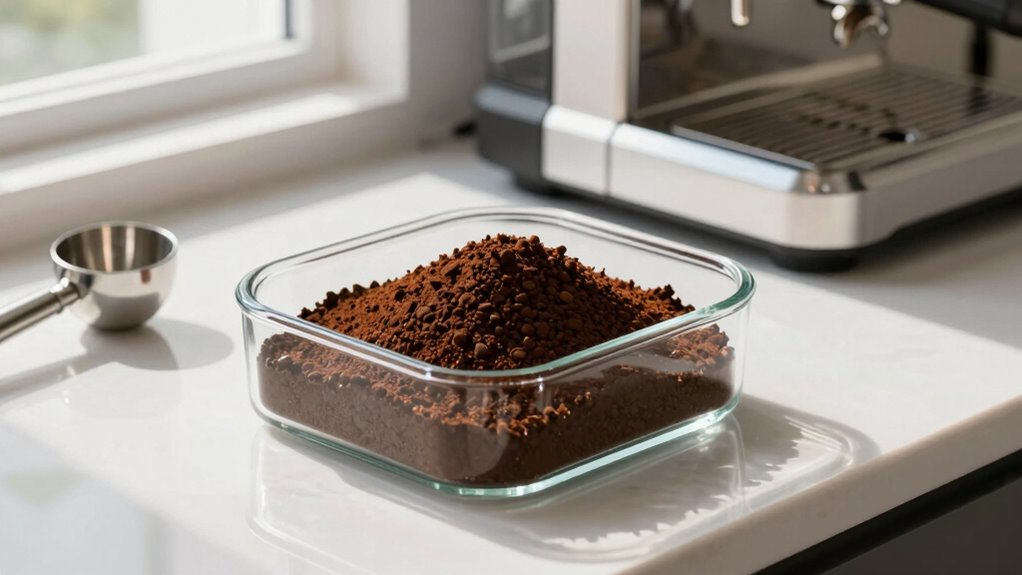
Storing espresso grounds properly is essential if you want to maintain their freshness and flavor. To keep your grounds from clumping and losing their rich taste, follow these best practices:
Properly storing espresso grounds is key to preserving their freshness and flavor, ensuring a rich taste in every cup.
- Use airtight containers to lock in flavor.
- Keep them in a cool, dark place to prevent heat exposure.
- Avoid moisture; even a little ground moisture can ruin your grounds.
- Only grind what you need to guarantee maximum freshness.
- Label your container with the date to track freshness.
Common Mistakes to Avoid When Grinding Espresso
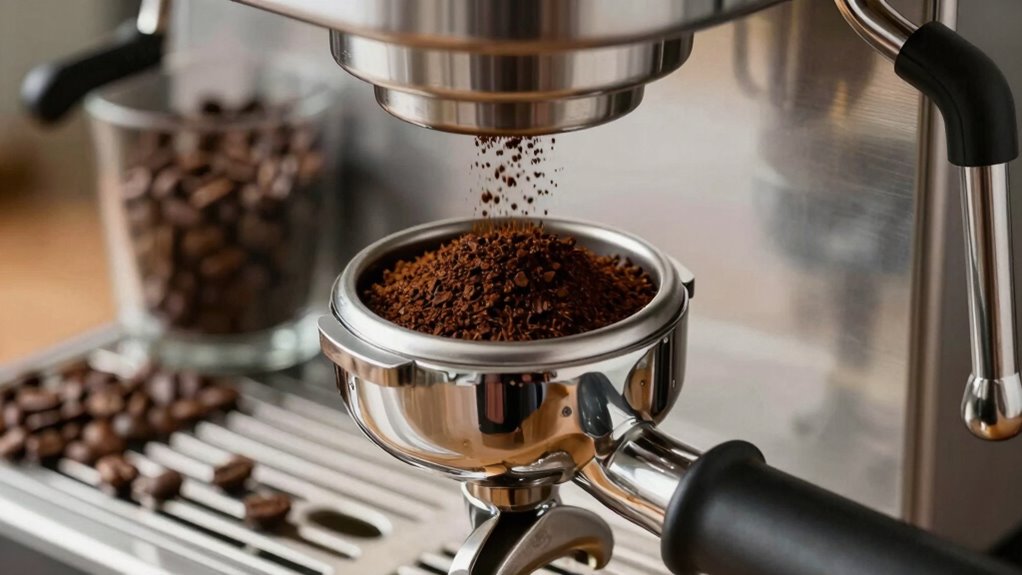
When grinding espresso, it’s easy to make a few common mistakes that can ruin your brew. You might choose the wrong grind size, neglect your grinder’s maintenance, or skip using fresh beans. Let’s explore how to avoid these pitfalls for a better espresso experience.
Choosing Wrong Grind Size
Choosing the wrong grind size can lead to significant issues in your espresso extraction, affecting both flavor and texture. If you want a rich, balanced shot, achieving grind consistency and proper particle distribution is essential.
Here are some common mistakes to avoid:
- A gritty mouthfeel that ruins your experience
- Bitter notes overpowering the delicate flavors
- Weak, watery shots that leave you disappointed
- Inconsistent crema, diminishing your espresso’s allure
- Wasting beans due to trial and error
Ignoring Grinder Maintenance
Neglecting grinder maintenance can severely impact your espresso’s quality, leading to off-flavors and inconsistent extraction. Different grinder types require specific care, and a regular maintenance schedule is essential for peak performance.
| Grinder Type | Maintenance Tips |
|---|---|
| Blade Grinders | Clean blades weekly; check for dullness. |
| Burr Grinders | Clean burrs monthly; calibrate regularly. |
| Manual Grinders | Inspect for wear; clean after each use. |
Skipping Fresh Beans
While it might be tempting to use whatever beans are on hand, skipping fresh beans can greatly compromise your espresso’s flavor and aroma. The difference between fresh and stale beans is stark, affecting every sip you take. If you’re serious about your coffee experience, prioritize fresh bean storage and quality.
Consider the impact of using stale beans:
- Diminished flavor complexity
- Unpleasant bitterness
- Flat aroma
- Lack of sweetness
- Uninspired crema
How to Fix Clumping Problems in Your Espresso?
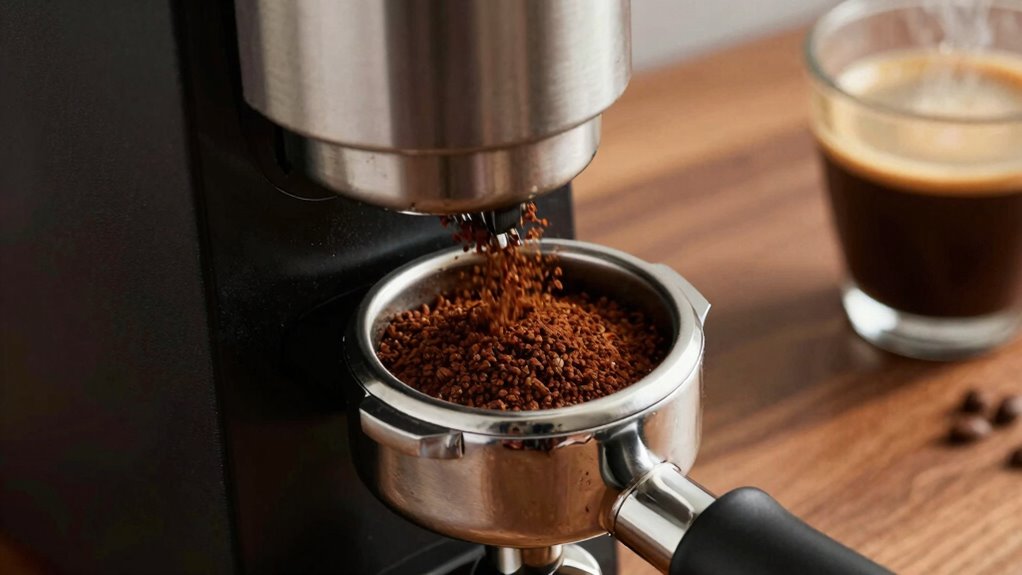
To overcome clumping problems in your espresso, it’s important to examine your grinding technique and equipment. First, consider the clumping factors at play. Humidity can cause grounds to stick together, so try to grind in a dry environment. If you’re using a blade grinder, switch to a burr grinder for more consistent grind size, which helps reduce clumping. Adjusting your grind settings can also make a difference; finer grinds tend to clump more, so experiment with slightly coarser settings. Additionally, give your grinder a gentle shake during grinding to help break up clumps. Finally, make sure you’re using fresh beans, as older beans are more prone to clumping. By refining your grinding techniques, you can enjoy a smoother espresso experience.
Frequently Asked Questions
Can I Use Pre-Ground Coffee for Espresso?
Yes, you can use pre-ground coffee for espresso, but the quality matters. If the pre-ground coffee is fresh and finely ground, you’ll still get decent espresso flavor. However, many find that freshly ground beans provide a richer taste and aroma. Pre-ground coffee often lacks the same robust qualities, so always check the grind size and freshness to guarantee you get the best possible espresso experience. Enjoy your brewing!
How Does Water Temperature Affect Espresso Extraction?
Water temperature greatly impacts espresso extraction. If you think hot water just means stronger coffee, you’re missing the nuances. Too hot can scorch the grounds, leading to bitter flavors, while too cold might under-extract, leaving your shot weak and sour. Ideal temperatures help balance water chemistry, enhancing the espresso flavor. Aim for 195°F to 205°F for the best results. This precision guarantees you’re savoring every rich, aromatic note in your cup.
What’s the Ideal Brewing Time for Espresso?
The ideal brewing time for espresso is about 25 to 30 seconds. During this time, you’ll want to verify your espresso grind consistency is fine and uniform to achieve the best extraction. With the right espresso dosage, usually around 18 to 20 grams, you can extract rich flavors and balance acidity. If you find your shot’s pulling too fast or slow, adjusting grind size and dosage can help you hit that sweet spot.
Does the Type of Espresso Machine Influence Clumping?
Absolutely, the type of espresso machine can influence clumping like a magician pulling a rabbit from a hat. Different machines create varying pressure and temperature, affecting how the grind size interacts with humidity. If you’re using a machine that generates more heat, it might lead to more moisture in the grounds, causing clumping. So, keep an eye on your grind size and adjust your brewing setup to minimize those pesky clumps!
How Often Should I Clean My Grinder?
You should clean your grinder every few weeks for peak performance. Regular grinder maintenance prevents oil buildup and clumping, ensuring a consistent grind. If you use your grinder daily, aim for a thorough cleaning every two weeks. For lighter use, once a month might suffice. Always check for residue buildup after each use, and keep your grinder in top shape to enhance your espresso experience. Consistency is key!
Conclusion
Imagine pouring a rich, velvety shot of espresso, the aroma swirling around you like a warm embrace. By tackling clumping, you’re not just improving your grind; you’re releasing a symphony of flavors waiting to burst forth. With the right tools and techniques, each cup becomes a masterpiece, smooth and inviting. So, embrace these strategies, and let your espresso journey transform into a delightful ritual, ensuring every sip is as perfect as the last.