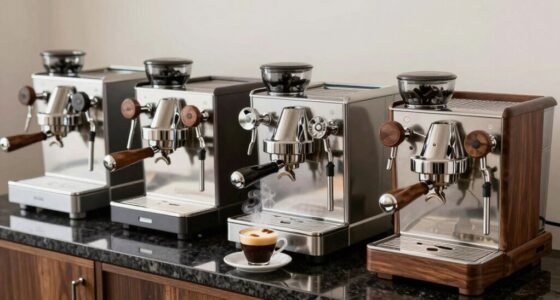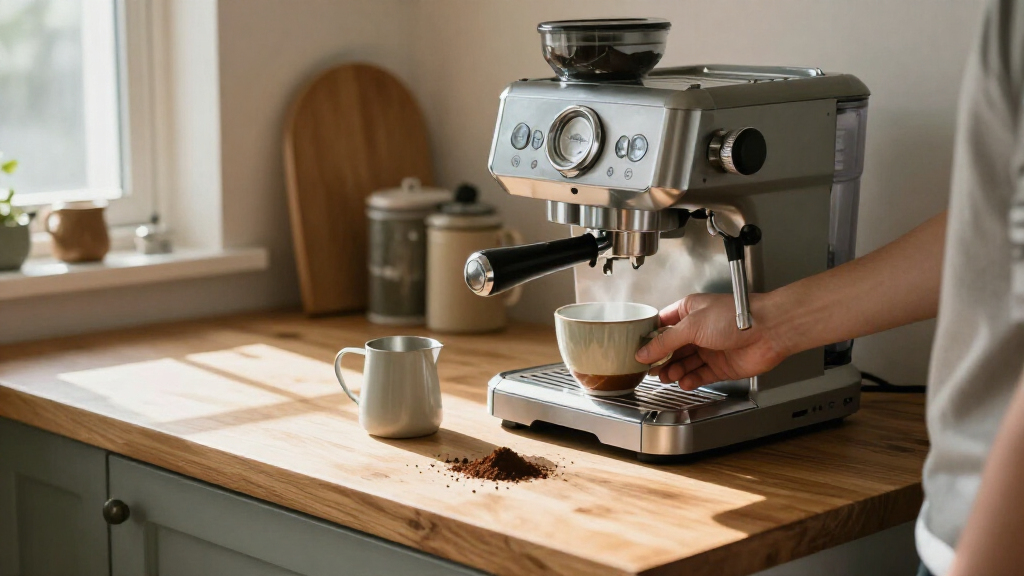

For most home baristas, I’d make the Breville Barista Pro my best overall pick: its built-in grinder and quick-heating design balance hands-on espresso making with a manageable routine. The Rancilio Silvia with PID suits buyers who want a more traditional, upgrade-friendly machine, while the Breville Barista Touch makes guided drink preparation a priority. The main tradeoff is between manual control and built-in convenience, with grinder quality, milk workflow, and room to grow separating the options. Read on for how all 11 machines compare and which one fits your way of making coffee.

Get coffee and tea gear delivered free with Prime
- Fast, free delivery on millions of items
- Prime Video, Amazon Music and more included
- Member-only deals all year
Complete the kit

Key Takeaways
- The Breville Barista Pro is the most balanced all-in-one pick: it pairs an integrated grinder with a quicker, more hands-on workflow than the more guided Barista Touch.
- The Rancilio Silvia with PID favors long-term control over convenience: it is better suited to buyers willing to build barista skills than to anyone seeking a one-touch routine.
- The two Gaggia Classic E24 listings are the same core model in different finishes: choose between Cherry Red and Brushed Stainless Steel based on appearance and availability, not a brewing distinction.
- Built-in grinders and automatic milk systems reduce setup work, but limit some choices: the all-in-one Breville, De’Longhi, Gemilai, and AMZCHEF options trade component flexibility for convenience.
- The Fellow Espresso Series 1 stands apart for pressure profiling: that added control is most valuable to curious espresso drinkers, while beginners may prefer a more guided machine.
| Rancilio Silvia Espresso Machine with PID, 67 oz, Black |  | Best for Hands-On Shot Control | Water reservoir capacity: 67 oz | Dimensions (D × W × H): 11 × 9.5 × 13.5 in | Materials: Alloy steel and brass | VIEW LATEST PRICE | See Our Full Breakdown |
| Breville Barista Touch Espresso Machine, Brushed Stainless Steel (BES880BSS) |  | Best for Guided, Customizable Convenience | Model: BES880BSS | Grinder: Integrated precision conical burr grinder | Bean hopper capacity: 1/2 lb | VIEW LATEST PRICE | See Our Full Breakdown |
| Breville Barista Express Espresso Machine with Grinder, Black Sesame |  | Best Value for Learning the Full Workflow | Machine type: Semi-automatic espresso machine | Grinder: Integrated conical burr grinder | Bean hopper capacity: 1/2 lb | VIEW LATEST PRICE | See Our Full Breakdown |
| Breville Barista Pro Espresso Machine with Grinder, Brushed Stainless Steel |  | Best for Fast, Hands-On Brewing | Model: BES878BSS | Grinder: Integrated precision conical burr grinder | Heating system: ThermoJet; 3-second heat-up | VIEW LATEST PRICE | See Our Full Breakdown |
| Fellow Espresso Series 1 Espresso Machine with Pressure Profiling |  | Best for Guided Pressure Profiling | Coffee input: Ground coffee | Water capacity: 2 L | Dimensions (D × W × H): 23.07 × 14.57 × 12.6 in | VIEW LATEST PRICE | See Our Full Breakdown |
| Gaggia Classic E24 Semi-Automatic Espresso Machine, Cherry Red |  | Best for Hands-On Espresso Practice | Machine type: Semi-automatic espresso machine | Extraction pressure: 9 bar | Portafilter: 58 mm | VIEW LATEST PRICE | See Our Full Breakdown |
| Gemilai G3028A Semi-Automatic Espresso Machine with Automatic Milk Frother |  | Best for Guided Milk Drinks | Machine type: Semi-automatic | Boiler capacity: 550 ml | Water tank: 57 oz | VIEW LATEST PRICE | See Our Full Breakdown |
| AMZCHEF Semi-Automatic Espresso Machine with Built-In Grinder |  | Best Built-In Grinder Value | Model: CM1626 | Machine type: Semi-automatic espresso machine | Grinder settings: 44 | VIEW LATEST PRICE | See Our Full Breakdown |
| De’Longhi La Specialista Opera Espresso Machine with Built-in Grinder |  | Best for Assisted Barista Workflow | Machine type: Semi-automatic espresso machine | Grinder: Built-in Italian-made burr grinder | Grinder settings: 15 | VIEW LATEST PRICE | See Our Full Breakdown |
| Gaggia Classic E24 Semi-Automatic Espresso Machine, Brushed Stainless Steel | 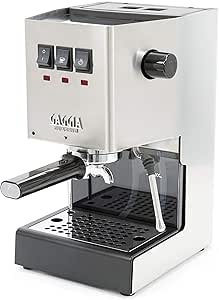 | Best for a Larger Reservoir and Classic Workflow | Model number: RI9380/46 | Machine type: Semi-automatic | Extraction pressure: 9 bar | VIEW LATEST PRICE | See Our Full Breakdown |
| De’Longhi La Specialista Touch Semi-Automatic Espresso Machine with Grinder |  | Best for Guided Customization | Machine type: Semi-automatic espresso machine | Display: 3.5-inch high-resolution touchscreen | Preset drink recipes: 10 | VIEW LATEST PRICE | See Our Full Breakdown |
| prosumer espresso machine | Machine type | Dimensions |
|---|---|---|
| Rancilio Silvia Espresso Machi | — | — |
| Breville Barista Touch Espress | — | — |
| Breville Barista Express Espre | Semi-automatic espresso machine | 13.8 × 12.5 × 15.9 in |
| Breville Barista Pro Espresso | — | — |
| Fellow Espresso Series 1 Espre | — | — |
| Gaggia Classic E24 Semi-Automa | Semi-automatic espresso machine | 8 × 9.5 × 14.2 in (D × W × H) |
| Gemilai G3028A Semi-Automatic | Semi-automatic | 10.43 × 14.8 × 13.18 in (D × W × H) |
| AMZCHEF Semi-Automatic Espress | Semi-automatic espresso machine | 12.5 × 10.82 × 13.38 in |
| De’Longhi La Specialista Opera | Semi-automatic espresso machine | 17.72 × 17.83 × 21.38 in (D × W × H) |
| Gaggia Classic E24 Semi-Automa | Semi-automatic | 8 × 9.5 × 14.2 in (D × W × H) |
| De’Longhi La Specialista Touch | Semi-automatic espresso machine | — |
More Details on Our Top Picks
Rancilio Silvia Espresso Machine with PID, 67 oz, Black
The Rancilio Silvia with PID suits buyers who want a traditional, durable espresso machine with more control over brewing than a basic single-boiler setup. Its degree-level temperature adjustment, programmable pre-infusion, and shot timer give repeatable starting points for dialing in beans. A brass boiler, steel case, commercial-grade portafilter, and three-way solenoid add substance for someone planning regular upkeep and long-term use.
Unlike the Breville Barista Express, the Silvia has no integrated grinder, so you’ll need a separate grinder and must manage dosing yourself. That makes it a less convenient first setup, but a better fit for buyers who want to choose their grinder independently. Its compact listed dimensions help, though the machine still needs dedicated counter space, and the supplied weight figure appears unusually low for this class of machine.
Pros:- PID temperature control and programmable pre-infusion support repeatable shot preparation.
- Brass boiler and steel case offer a durable construction approach.
- Three-way solenoid supports cleaner pucks and backflushing.
- Includes single- and double-shot baskets and a double-spout portafilter.
Cons:- No built-in grinder; a separate grinder adds cost, counter space, and workflow steps.
- Manual operation requires skill and attention for grinding, brewing, and milk steaming.
- The listed weight of 4.2 lb seems inconsistent with the machine’s materials and should be verified.
Best for: Espresso hobbyists who already own a capable grinder and want PID adjustments, programmable pre-infusion, and a durable traditional machine.
Not ideal for: Buyers seeking an all-in-one setup, automatic milk preparation, or a machine ready to use without a separate grinder.
- Water reservoir capacity:67 oz
- Dimensions (D × W × H):11 × 9.5 × 13.5 in
- Materials:Alloy steel and brass
- Color:Black
- Temperature control:PID
- Included baskets:9 g single-shot and 17 g double-shot
- Included portafilter:Double-spout
- Included tamper:Wood-handle tamper
Our verdict“Choose the Silvia if you value hands-on brewing control and already have a grinder; skip it if convenience is your priority.”
Breville Barista Touch Espresso Machine, Brushed Stainless Steel (BES880BSS)
The Breville Barista Touch is the most guided choice in this group for households that want espresso drinks without managing every step manually. Its touchscreen pairs an integrated conical burr grinder with adjustable coffee strength and an automatic steam wand, then lets you save up to eight customized drinks. The ThermoJet system reaches extraction temperature in three seconds, which helps when different people want drinks back to back.
Compared with the Barista Pro, the Touch puts more drink selection and milk adjustment on screen, while the Pro keeps a more hands-on workflow and LCD interface. That convenience comes with less direct involvement in milk texturing, and buyers who want to develop manual steaming technique may prefer the Pro or Barista Express. The half-pound hopper may need frequent refills in a busy household. Product information lists both 110–120 V and 220 V, so confirm the version’s voltage before purchase.
Pros:- Integrated conical burr grinder handles fresh grinding within the machine.
- Touchscreen supports drink adjustments and storage of up to eight personalized settings.
- Automatic steam wand adjusts milk temperature and texture.
- ThermoJet heating reaches extraction temperature in three seconds.
Cons:- Automatic milk preparation offers less hands-on control than the Barista Pro or Barista Express wand.
- Half-pound bean hopper may require regular refilling with frequent use.
- Voltage details are inconsistent in the supplied product information.
Best for: Households that want an integrated grinder, guided touchscreen drink preparation, automatic milk texturing, and saved recipes.
Not ideal for: Espresso purists seeking fully manual milk work, buyers who want a larger bean hopper, or anyone unable to confirm the correct voltage version.
- Model:BES880BSS
- Grinder:Integrated precision conical burr grinder
- Bean hopper capacity:1/2 lb
- Water tank capacity:67 fl oz
- Heating system:ThermoJet; reaches extraction temperature in 3 seconds
- Temperature control:Digital PID
- Milk texturing:Automatic steam wand with adjustable temperature and texture
- Dimensions (D × W × H):12.7 × 15.5 × 16 in
- Drink settings:5 pre-programmed favorites and up to 8 custom settings
Our verdict“Pick the Barista Touch for guided, customizable drinks and easy milk preparation, provided you verify the voltage and accept a smaller hopper.”
Breville Barista Express Espresso Machine with Grinder, Black Sesame
The Breville Barista Express makes a strong case for buyers who want one machine to cover grinding, espresso extraction, and manual milk steaming. Its built-in conical burr grinder doses into the portafilter, while PID temperature control and low-pressure pre-infusion provide useful support as you learn to adjust grind and shot preparation. The manual wand leaves room to practice microfoam and latte art rather than handing milk texturing over to an automatic program.
Against the Barista Touch, the Express asks more of you: there’s no touchscreen recipe guidance or automatic steam wand. In return, it keeps the workflow tactile and offers an approachable all-in-one alternative to the grinder-dependent Rancilio Silvia. Its 67 oz tank and half-pound hopper can mean replenishing during frequent use, and the one-year limited warranty is shorter than the Touch and Barista Pro warranties listed here.
Pros:- Integrated conical burr grinder doses fresh coffee into the portafilter.
- PID control and low-pressure pre-infusion support more controlled extraction.
- Manual steam wand allows practice with microfoam and latte art.
- Includes a portafilter, baskets, tamper, milk jug, and cleaning accessories.
Cons:- Manual milk texturing takes practice and adds work to each milk drink.
- Half-pound hopper and 67 oz tank may need frequent replenishment in heavier-use homes.
- One-year limited warranty is shorter than the listed warranties for the Barista Touch and Barista Pro.
Best for: New home baristas who want an integrated grinder and the chance to learn manual espresso and milk texturing without buying separate equipment.
Not ideal for: People who want automatic milk drinks, touchscreen guidance, a larger bean supply, or more time before refilling and cleaning.
- Machine type:Semi-automatic espresso machine
- Grinder:Integrated conical burr grinder
- Bean hopper capacity:1/2 lb
- Water tank capacity:67 oz
- Temperature control:PID
- Pre-infusion:Low-pressure
- Power and voltage:1600 W; 120 V
- Dimensions:13.8 × 12.5 × 15.9 in
- Warranty:1-year limited
Our verdict“Choose the Barista Express if you want a grinder-equipped machine that teaches hands-on espresso skills without moving to a separate grinder setup.”
Breville Barista Pro Espresso Machine with Grinder, Brushed Stainless Steel
The Breville Barista Pro is aimed at people who want an integrated grinder and manual espresso workflow but don’t want a long heat-up wait. Its ThermoJet system reaches extraction temperature in three seconds, and the LCD displays grinding and extraction progress so you can follow the process without the Barista Touch’s recipe-focused interface. PID temperature regulation and a manual steam wand keep the core brewing and milk tasks in your hands.
Compared with the Barista Express, the Pro’s headline advantage is speed, with a listed two-year warranty rather than the Express’s one-year limited warranty. The tradeoff is still a hands-on routine: you grind, pull, and texture milk yourself. Buyers who want guided drink presets and automatic steaming may find the Barista Touch a better match, while the Pro’s half-pound hopper also calls for regular refills in high-volume kitchens.
Pros:- ThermoJet heating system reaches extraction temperature in three seconds.
- Integrated grinder with dose control keeps grinding within the espresso workflow.
- PID regulation and low-pressure pre-infusion support controlled shots.
- LCD shows grinding and extraction progress, and the listed warranty is two years.
Cons:- Grinding, extraction, and milk texturing remain manual tasks.
- Half-pound bean hopper may require frequent refilling in busy households.
- Buyers seeking touchscreen recipes and automatic steaming may prefer the Barista Touch.
Best for: Daily espresso drinkers who want quick startup, an integrated grinder, and direct control over extraction and milk steaming.
Not ideal for: Buyers who prefer automated milk preparation, touchscreen drink recipes, or a larger hopper for frequent entertaining.
- Model:BES878BSS
- Grinder:Integrated precision conical burr grinder
- Heating system:ThermoJet; 3-second heat-up
- Temperature control:PID, ±2°C
- Bean hopper capacity:1/2 lb
- Water tank capacity:67 oz (2 L)
- Dimensions (D × W × H):13 × 14 × 16 in
- Interface:LCD display with buttons
- Warranty:2-year limited product warranty
Our verdict“Choose the Barista Pro if fast startup and a manual, grinder-equipped workflow matter more than automated drink preparation.”
Fellow Espresso Series 1 Espresso Machine with Pressure Profiling
The Fellow Espresso Series 1 combines accessible prompts with controls that appeal to more experienced home baristas. On-screen guidance and presets lower the barrier to pulling a first shot, while temperature control and pressure profiling give you ways to shape extraction beyond a basic preset routine. The assisted steam wand stops at the selected milk temperature, a practical middle ground for buyers who want help steaming without giving up every adjustment.
Unlike the grinder-equipped Breville Barista Pro, this machine accepts ground coffee only, so you’ll need a separate grinder for fresh beans and consistent dosing. Its two-liter water capacity and under-two-minute heat-up support regular home use, but the listed dimensions call for checking available counter depth. Buyers seeking a self-contained setup should favor the Pro or Barista Express; the Fellow makes more sense when guidance and pressure control matter more than an all-in-one footprint.
Pros:- On-screen guidance and presets make the manual espresso process more approachable.
- Pressure profiling and temperature control offer room to adjust extraction.
- Assisted steam wand stops at the target milk temperature.
- Heats in under two minutes and has a two-liter water capacity.
Cons:- Uses ground coffee and has no built-in grinder, adding a separate purchase and counter requirement.
- Listed dimensions are deep, so the machine may not suit shallow counters.
- Wood-finish options are limited to walnut or maple, according to the supplied product details.
Best for: Home baristas who want guided operation and pressure-profile control, and who already own or plan to buy a separate grinder.
Not ideal for: Buyers looking for an all-in-one machine with a built-in grinder or those with limited counter depth.
- Coffee input:Ground coffee
- Water capacity:2 L
- Dimensions (D × W × H):23.07 × 14.57 × 12.6 in
- Milk frothing:Assisted steam wand with temperature sensor
- Brew control:Adjustable brew strength and pressure profiling
- Programmable:Yes
- Self-cleaning:Supported with cleaning tablets
- Materials:Stainless steel, brass, silicone, and food-grade plastic
- Warranty:2-year standard
Our verdict“Pick the Fellow if guided brewing and pressure profiling are priorities and you’re comfortable pairing it with a separate grinder.”
Gaggia Classic E24 Semi-Automatic Espresso Machine, Cherry Red
The Gaggia Classic E24 in cherry red suits buyers who want a traditional machine that leaves brewing decisions in their hands. Its 58 mm portafilter and commercial baskets give it a more familiar café-style workflow than the built-in-grinder convenience of the De’Longhi La Specialista Opera. A pressurized basket also gives newcomers a more forgiving option for pre-ground coffee or ESE pods, while the steam wand supports manual milk texturing and latte art. The tradeoff is that dosing, tamping, brewing, and frothing all take practice; there are no one-touch drink routines to smooth out the process. At 1.3 liters, its reservoir is also smaller than the brushed stainless E24’s listed 2.1-liter capacity. I’d choose this version for hands-on learning and its distinctive finish, not for minimal effort.
Pros:- 58 mm portafilter and commercial single- and double-shot baskets support a conventional espresso workflow.
- Pressurized basket accommodates pre-ground coffee and ESE pods.
- Manual steam wand allows users to practice milk texture and latte art.
- Compact listed footprint and cherry-red finish distinguish it from the brushed stainless E24.
Cons:- Manual brewing and steaming require practice and hands-on attention.
- The 1.3-liter reservoir is smaller than the brushed stainless E24’s listed 2.1-liter capacity.
- At 20 lb, it is not especially convenient to move often.
Best for: Espresso learners who want a commercial-style portafilter, manual milk steaming, and a colorful machine for a compact coffee station.
Not ideal for: People who want automatic drink preparation, built-in grinding, or a larger water reservoir for frequent back-to-back drinks.
- Machine type:Semi-automatic espresso machine
- Extraction pressure:9 bar
- Portafilter:58 mm
- Water capacity:1.3 liters
- Power:1200 W
- Coffee input:Ground coffee and pods
- Dimensions:8 × 9.5 × 14.2 in (D × W × H)
- Weight:20 lb
- Color:Cherry red
Our verdict“Choose the cherry-red Classic E24 if you want to learn a manual 58 mm workflow and do not need a built-in grinder or automated milk drinks.”
Gemilai G3028A Semi-Automatic Espresso Machine with Automatic Milk Frother
The Gemilai G3028A is the most automation-forward pick here for buyers who still want control over espresso parameters. Its dual PID temperature control, adjustable 6–11 bar extraction pressure, and customizable pre-infusion settings offer more tuning than the simpler Gaggia Classic E24, while the touchscreen and one-touch frother reduce the work of making milk drinks. The frother’s temperature range gives users a way to tailor results without learning a manual steam wand from scratch. That convenience comes with a clear limitation: it accepts ground coffee only, so whole-bean drinkers need a separate grinder. Its 57 oz tank and broad listed dimensions also call for planned counter space. I’d favor this over the AMZCHEF when automated milk preparation matters more than an integrated grinder.
Pros:- Dual PID control manages brew and steam temperatures independently.
- Adjustable 6–11 bar extraction pressure and customizable pre-infusion provide brewing control.
- One-touch frother with a temperature sensor simplifies milk drinks.
- Removable tank, detachable drip tray, and descaling reminders support routine upkeep.
Cons:- Ground-coffee-only input means whole-bean users need a separate grinder.
- Listed dimensions require a dedicated counter area.
- Touchscreen and automatic frothing offer less direct manual practice than the Gaggia Classic E24’s steam wand.
Best for: Home baristas who want adjustable brewing parameters and one-touch milk drinks, and who already own or plan to buy a grinder.
Not ideal for: Buyers seeking an all-in-one bean-to-cup setup or a compact machine with a small counter footprint.
- Machine type:Semi-automatic
- Boiler capacity:550 ml
- Water tank:57 oz
- Extraction pressure:Adjustable from 6 to 11 bar
- Temperature control:Dual PID
- Brewing system:58 mm
- Power:1450 W
- Dimensions:10.43 × 14.8 × 13.18 in (D × W × H)
- Coffee input:Ground coffee
Our verdict“Pick the Gemilai G3028A if you want adjustable espresso settings and convenient milk drinks, and are comfortable supplying a separate grinder.”
AMZCHEF Semi-Automatic Espresso Machine with Built-In Grinder
The AMZCHEF CM1626 makes a practical case for an integrated grinder: its 44 grind settings let users adjust whole beans without adding a separate grinder to the counter. That gives it a simpler all-in-one setup than the Gemilai G3028A, which takes ground coffee, and more grind adjustment than the De’Longhi La Specialista Opera’s 15 settings. Adjustable brew temperature from 190°F to 201°F adds another way to adapt extraction to different beans, while the touchscreen includes one-touch brewing and cold brew modes. The compromise is a more hands-on process than a fully automatic machine, and the listed 12.5 × 10.82 × 13.38-inch footprint still needs room. Its 13.9 lb weight is lighter than the Opera’s, but I’d choose it for integrated grinding rather than a café-style manual workflow.
Pros:- Built-in grinder with 44 settings accommodates a wide range of grind adjustments.
- Adjustable 190°F–201°F brew temperature offers control for different beans.
- Touchscreen includes one-touch brewing and cold brew modes.
- Removable 60 oz tank and descaling function support routine maintenance.
Cons:- Semi-automatic operation still requires user involvement rather than fully automatic preparation.
- The listed footprint may be difficult to fit on a crowded counter.
- Its feature set emphasizes integrated convenience over the commercial-style basket workflow of the Gaggia Classic E24.
Best for: Whole-bean coffee drinkers who want an integrated grinder, broad grind adjustment, and multiple brewing modes without a separate grinder purchase.
Not ideal for: Baristas who prioritize a clearly specified commercial-style portafilter and traditional manual espresso workflow, or anyone short on counter space.
- Model:CM1626
- Machine type:Semi-automatic espresso machine
- Grinder settings:44
- Brew temperature:190°F–201°F
- Water tank:60 oz
- Steam wand:8 mm stainless steel
- Power:1500 W
- Dimensions:12.5 × 10.82 × 13.38 in
- Weight:13.9 lb
Our verdict“Choose the AMZCHEF if you want whole-bean convenience and extensive grind adjustment in one machine, and have room for its countertop footprint.”
De’Longhi La Specialista Opera Espresso Machine with Built-in Grinder
The De’Longhi La Specialista Opera is the better fit for buyers who want built-in grinding and practical help with the messier parts of manual espresso. Its Smart Tamping Technology aims to make tamping more consistent, while the Italian-made burr grinder offers 15 settings and the commercial-style steam wand leaves milk texturing in the user’s hands. Compared with the AMZCHEF, it has fewer listed grind settings but adds assisted tamping and named beverage presets, including Americano and cold brew. Cold Extraction Technology also broadens its menu beyond hot espresso. The tradeoff is size: at 28.1 lb and roughly 17.72 × 17.83 × 21.38 inches, it is much less suited to a tight counter than the smaller Gaggia Classic E24. I’d pick it for a guided workflow, not a compact setup.
Pros:- Built-in Italian-made burr grinder offers 15 settings.
- Smart Tamping Technology is designed to make tamping more consistent and less messy.
- Commercial-style steam wand supports manual milk texturing and latte art.
- Cold Extraction Technology and beverage presets add options beyond standard espresso.
Cons:- Large listed dimensions demand substantial counter space.
- At 28.1 lb, it is harder to move or store than the 13.9 lb AMZCHEF.
- Semi-automatic brewing and manual milk steaming still require user participation.
Best for: Home baristas who want an integrated burr grinder, assisted tamping, manual milk steaming, and several preset drink options.
Not ideal for: Small-kitchen owners, frequent movers, or buyers who want the highest number of listed grind settings rather than assisted workflow features.
- Machine type:Semi-automatic espresso machine
- Grinder:Built-in Italian-made burr grinder
- Grinder settings:15
- Temperature settings:3
- Pump pressure:19 bar
- Power:1450 W
- Weight:28.1 lb
- Dimensions:17.72 × 17.83 × 21.38 in (D × W × H)
- Beverage presets:Espresso, Americano, Cold Brew, Espresso Cool, hot water
Our verdict“Choose the La Specialista Opera if assisted tamping and a broad drink menu matter more to you than compact size or maximum grinder adjustment.”
Gaggia Classic E24 Semi-Automatic Espresso Machine, Brushed Stainless Steel
The brushed stainless Gaggia Classic E24 keeps the same hands-on, commercial-style approach as its cherry-red sibling but is the stronger fit for buyers who value fewer reservoir refills. Its listed 2.1-liter water capacity exceeds the red model’s 1.3 liters, while both share a 58 mm portafilter, 9-bar extraction, and manual steam wand. Commercial and pressurized baskets let owners choose between a more traditional workflow and a more forgiving option for pre-ground coffee or ESE pods. The updated boiler is designed to resist scale buildup and corrosion, but this remains a straightforward semi-automatic machine—not an all-in-one setup like the De’Longhi La Specialista Opera, which has a built-in grinder and assisted tamping. I’d take the stainless E24 for a classic, serviceable workflow; skip it if you want automation.
Pros:- 58 mm commercial-style portafilter includes commercial single- and double-shot baskets.
- Listed 2.1-liter reservoir is larger than the cherry-red E24’s 1.3-liter capacity.
- Pressurized basket supports ground coffee and ESE pods.
- Updated boiler is designed to resist scale buildup and corrosion.
Cons:- Manual brewing and milk frothing require practice and attention.
- No built-in grinder, unlike the De’Longhi La Specialista Opera.
- At 20 lb, it is not an especially portable countertop machine.
Best for: Hands-on espresso drinkers who want a 58 mm portafilter, a larger listed reservoir than the cherry-red E24, and compatibility with ground coffee or ESE pods.
Not ideal for: Buyers who want a built-in grinder, automated milk frothing, or a machine that handles brewing with minimal manual input.
- Model number:RI9380/46
- Machine type:Semi-automatic
- Extraction pressure:9 bar
- Portafilter:58 mm commercial-style
- Water capacity:2.1 liters
- Power:1200 W
- Coffee input:Ground coffee and pods
- Dimensions:8 × 9.5 × 14.2 in (D × W × H)
- Weight:20 lb
Our verdict“Pick the brushed stainless Classic E24 if you want a traditional manual espresso workflow with a larger listed reservoir, and skip it if you expect built-in grinding or automated drinks.”
De’Longhi La Specialista Touch Semi-Automatic Espresso Machine with Grinder
The La Specialista Touch is a strong fit for home baristas who want room to tune their drinks without starting from a blank slate. Its Bean Adapt guidance helps adjust grind, dose, pre-infusion, and brewing temperature, while six saved bean profiles make it easier to return to preferred setups. That gives it a more guided, recipe-focused feel than the Rancilio Silvia, which favors manual control over touchscreen assistance. The automatic and manual milk options also let beginners follow settings or practice technique, and cold extraction adds quick cold drinks to the menu.
The tradeoff is complexity: 15 grind settings and numerous drink and milk adjustments take time to learn, and this remains a hands-on semi-automatic, not a push-button substitute for preparation. Buyers seeking a simpler guided touchscreen workflow may prefer the Breville Barista Touch; this De’Longhi makes more sense for people who value saved profiles and broader adjustment choices.
Pros:- Bean Adapt guidance helps connect grind, dose, pre-infusion, and brewing temperature adjustments.
- Six saved bean profiles and customizable recipes make it easier to repeat preferred drinks.
- Automatic and manual frothing modes support both convenience and hands-on milk practice.
- Cold Extraction Technology prepares cold brew drinks in under five minutes.
Cons:- Semi-automatic preparation still requires hands-on dosing, tamping, and workflow management.
- The many settings and guided features can take time to learn and configure.
Best for: Home espresso drinkers who want guided setup, saved bean profiles, customizable milk drinks, and both hot and cold recipes in one machine.
Not ideal for: Buyers who want a fast, low-adjustment workflow or prefer a traditional machine with fewer electronic prompts and settings.
- Machine type:Semi-automatic espresso machine
- Display:3.5-inch high-resolution touchscreen
- Preset drink recipes:10
- Saved bean profiles:6
- Grinder:Italian-made conical burr grinder with 15 grind settings
- Maximum dose:20 g
- Milk adjustment:5 froth levels and 4 temperature settings
- Cold brew time:Under 5 minutes
- Included accessories:Precision tamper, portafilter, two single-wall filter baskets, dosing and tamping guide, tamping mat, stainless steel milk jug
Our verdict“Choose the La Specialista Touch if you want guided espresso customization and saved drink profiles, but skip it if simplicity matters more than adjustability.”
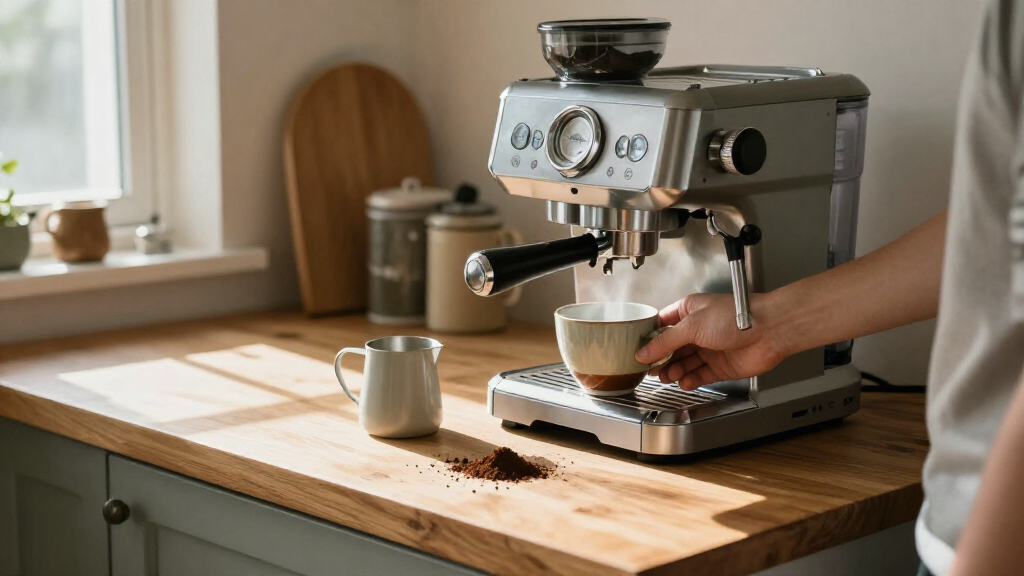
How We Picked
I ranked these machines around the decisions that matter in a home prosumer setup: espresso control, day-to-day workflow, milk preparation, grinder integration, build and maintenance demands, and room to develop skills. A built-in grinder can simplify a first setup, but it is not an automatic quality advantage; separate equipment can give experienced users more freedom to adjust or replace parts. I also distinguished manual steaming and dialing-in from guided or automatic drink preparation, since those approaches suit different households.
The order reflects how well each machine balances those needs for its intended buyer, not a claim that one design suits everyone. The Barista Pro leads for its blend of integrated workflow and hands-on control; machines with more specialized strengths, such as the Silvia’s traditional format or the Fellow’s pressure profiling, rank for narrower priorities. The two Gaggia entries are treated as finish variants of the same model, and the more convenience-focused or less-established all-in-one options rank lower where versatility, control, or long-term service confidence may be harder to judge.
| prosumer espresso machine | Machine type |
|---|---|
| Rancilio Silvia Espresso Machi | — |
| Breville Barista Touch Espress | — |
| Breville Barista Express Espre | Semi-automatic espresso machine |
| Breville Barista Pro Espresso | — |
| Fellow Espresso Series 1 Espre | — |
| Gaggia Classic E24 Semi-Automa | Semi-automatic espresso machine |
| Gemilai G3028A Semi-Automatic | Semi-automatic |
| AMZCHEF Semi-Automatic Espress | Semi-automatic espresso machine |
| De’Longhi La Specialista Opera | Semi-automatic espresso machine |
| Gaggia Classic E24 Semi-Automa | Semi-automatic |
| De’Longhi La Specialista Touch | Semi-automatic espresso machine |
Factors to Consider When Choosing Best Prosumer Espresso Machines
Before choosing a machine, I’d map the purchase to the coffee routine you actually want, not the feature list that sounds most impressive. These factors help separate a useful home setup from one that is cumbersome, limiting, or more involved than you expected.
Decide How Much of the Process You Want to Control
Prosumer can describe a wide range, from guided machines to equipment that expects you to manage each shot. Think about whether you want to adjust grind, dose, tamp, and extraction yourself or have the machine simplify those steps. More control gives you room to experiment, but it also makes consistency your responsibility. A touchscreen or automatic program can make repeated drinks easier without making every cup taste identical. A common mistake is buying for a future hobby while underestimating how often you’ll want coffee quickly. Choose for your normal weekday routine, then treat extra control as a bonus.
Treat the Grinder as Part of the Espresso System
Espresso needs fine, repeatable grind adjustments, so a machine’s grinder matters as much as its brewing features. An integrated grinder saves counter space and removes a separate purchase from the setup, but it ties you to that grinder’s adjustment range and service path. A standalone grinder gives you more options to upgrade independently, though it adds cost, space, and another workflow step. Don’t assume a built-in grinder is automatically better than an external one, or that any grinder labeled for espresso will suit your beans and preferences. If you already own a capable grinder, a machine without one may be the more sensible choice. If not, compare the whole setup rather than the espresso machine alone.
Match Milk Workflow to the Number of Drinks You Make
Milk preparation can shape the pace of a morning as much as shot brewing. A manual steam wand gives you control over texture for cappuccinos and latte art, but it takes practice and requires active attention. Automatic frothing can reduce the learning curve and make multiple household drinks more consistent, though it may offer less control over texture. Consider how many milk drinks you make back to back, since reheating or switching between brewing and steaming can slow service on some machine designs. Buyers who mostly drink straight espresso should not pay for milk features they rarely use. For a mixed household, ease of cleaning the milk system deserves as much attention as the frothing method.
Check Counter Space, Setup, and Daily Cleanup
Measure the space where the machine will sit, including room above it for filling a water tank and room beside it for a grinder or knock box. All-in-one machines can reduce the number of appliances, but their footprint may still be substantial and their integrated parts can make maintenance more involved. A compact machine is not convenient if its controls or water access are awkward in your kitchen. Think through the full routine: clearing grounds, emptying the drip tray, wiping the wand, and cleaning any milk components. Skipping those tasks can affect both hygiene and performance. Choose a layout you can maintain comfortably, not one that only fits on paper.
Pay More for Capabilities You Will Use
Extra features make sense when they remove a recurring frustration or support a skill you plan to practice. Pressure profiling can give experienced users more ways to shape extraction, but it does little for someone who prefers repeatable presets. Guided recipes and automatic milk functions are more useful when convenience is the priority. Before paying for added control, ask whether you have the grinder, beans, and time to make use of it. Also check how easily the machine can be serviced and whether common maintenance parts are accessible. The best upgrade is the one that improves your daily coffee routine, not the one with the longest feature list.
Plan for a Learning Curve and a Changing Setup
Dialing in espresso takes adjustments as beans age and conditions change, so expect some trial and error even with a capable machine. New buyers often blame the machine when the grind, dose, or puck preparation needs attention. A guided machine can help establish a repeatable starting point, while a traditional setup rewards patience with more direct control. If your interest grows, consider whether you can replace or supplement the grinder and accessories without replacing the whole system. If your interest stays casual, a more integrated workflow may prevent the machine from becoming a project. Be honest about which future you are buying for.
Frequently Asked Questions
Is a machine with a built-in grinder the right choice for my first prosumer setup?
It can be, especially if you want one appliance and a shorter path from setup to your first espresso. Integrated grinders reduce counter clutter and simplify buying decisions, but they also limit your ability to change grinder models independently. If you already own an espresso-capable grinder, paying for another one inside the machine may not make sense. A separate grinder is a stronger fit when you want to fine-tune or upgrade each part of the setup over time. Choose based on the whole workflow you want, not on the assumption that integrated always means easier or better.
Should I choose the Breville Barista Touch or Barista Pro?
I’d choose the Barista Touch if guided drink preparation and a more assisted workflow matter more than direct control over every step. The Barista Pro is a better match if you want an integrated grinder but prefer a more hands-on approach to making espresso. Neither is automatically the better machine for every household: the right fit depends on whether you value assistance or participation. Consider who will use the machine, since a guided interface can help a shared kitchen while hands-on controls may appeal to someone building skills. Also compare the milk workflow you expect to use most often.
Do the two Gaggia Classic E24 listings perform differently?
The listed difference is the finish: one is Cherry Red and the other Brushed Stainless Steel. The product names identify both as the Gaggia Classic E24, so I would not choose between them on an assumed brewing advantage. Check the exact seller listing for included accessories, warranty terms, and model details before ordering, since those can vary independently of color. Pick the finish that fits your kitchen and is easier to keep clean in your setup. If you want a different workflow, compare the machine type rather than treating the two finishes as separate performance tiers.
Is pressure profiling useful if I am still learning espresso?
Pressure profiling can be useful for exploring how extraction changes when pressure varies during a shot, but it does not replace sound fundamentals. Beginners may get more immediate value from learning to dose consistently, adjust grind, and prepare the coffee bed well. A more capable control system can add possibilities while also making troubleshooting less straightforward. If experimenting with extraction is part of why you want a prosumer machine, the added control may suit you. If you mainly want dependable daily drinks, a simpler workflow may be easier to live with.
What should I check before buying an automatic milk-frothing machine?
Check how the milk system is cleaned, what parts need regular rinsing, and whether the frothing texture suits the drinks you make. Automatic preparation can make repeat drinks less demanding, but convenience only helps if cleanup is manageable. Think about whether you want dense foam for certain drinks or more control for textured milk and latte art. If multiple people will use the machine, a straightforward cleaning routine can matter more than a long menu of presets. For occasional milk drinks, a manual wand may be simpler overall.
Conclusion
For the broadest mix of integrated convenience and hands-on espresso making, I’d pick the Breville Barista Pro as best overall. The Breville Barista Express is my best value-style choice for buyers who want an all-in-one grinder setup without prioritizing the Pro’s faster workflow, while the Rancilio Silvia with PID is my premium fit for traditional control and skill-building. Beginners who want more guidance should look first at the Breville Barista Touch; the Fellow Espresso Series 1 makes more sense for curious users drawn to pressure profiling. For a shared kitchen that favors assisted milk preparation, compare the De’Longhi, Gemilai, and AMZCHEF options closely. The right choice comes down to whether your priority is control, guided convenience, or a compact all-in-one routine.
Black Friday Picks

Instant Pot Pro 8-Quart 10-in-1 Electric Pressure Cooker, Black
As an affiliate, we earn on qualifying purchases.