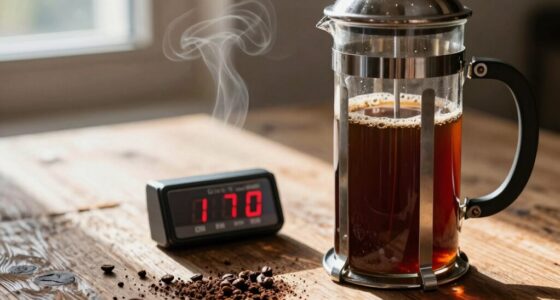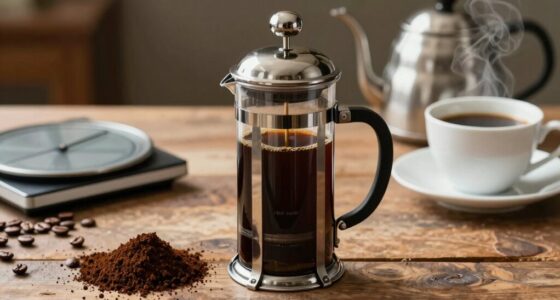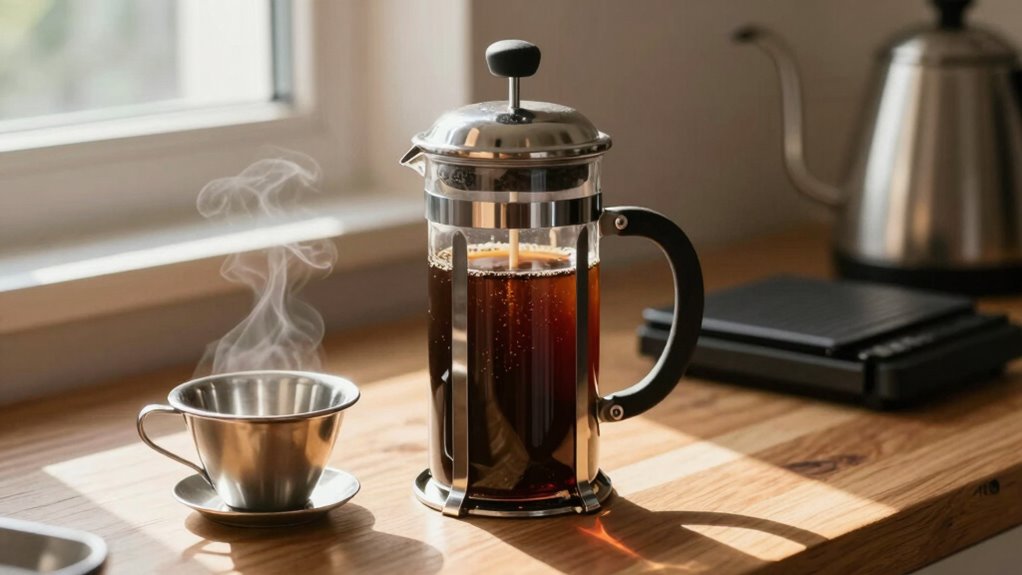
To reduce sludge in your French press, use coarser coffee grounds and adjust your steeping time to 3-4 minutes. A good coffee-to-water ratio of 1:15 will enhance flavor without increasing sediment. Make sure to use a burr grinder for consistent grind sizes, and consider filtering with paper or metal filters to catch fine particles. Regularly cleaning your press helps maintain the brew’s quality. There’s even more you can do to enjoy a cleaner cup.
Open a free Amazon Business account
Business pricing, bulk buying and tax-exempt orders.
As an affiliate, we earn on qualifying purchases.
Key Takeaways
- Use coarser coffee grounds to minimize sludge and enhance flavor extraction in your French press.
- Experiment with brewing times of 3-4 minutes to avoid over-extraction and bitterness.
- Maintain a coffee-to-water ratio of 1:15 for balanced flavor, adjusting as needed for grind size.
- Employ filtering techniques, such as secondary paper filters, to trap fine particles and reduce residue.
- Clean your French press thoroughly after each use and consider alternative brewing methods for a grit-free cup.
French press coarser coffee grinder
As an affiliate, we earn on qualifying purchases.
As an affiliate, we earn on qualifying purchases.
Identifying and Solving the Sludge Problem in French Press Coffee
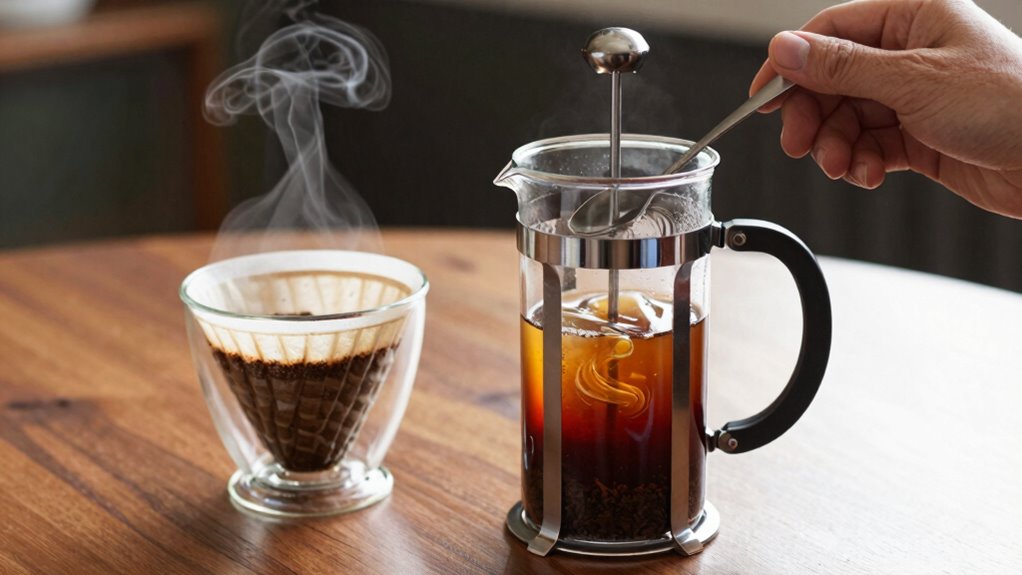
When you brew coffee with a French press, you might notice that pesky sludge settling at the bottom of your cup. This sludge causes a less enjoyable drinking experience, but understanding its origins can help you tackle the issue. Many brewing myths suggest that using finer grounds can improve flavor, but this often leads to more sludge. Instead, try sticking to coarser grounds to minimize sediment. Additionally, steeping time plays an essential role; over-brewing can exacerbate sludge formation. Experiment with shorter steeping times to find your sweet spot. By addressing these common misconceptions and adjusting your brewing technique, you can greatly reduce sludge and enjoy a cleaner, more satisfying cup of coffee.
metal coffee filter for French press
As an affiliate, we earn on qualifying purchases.
As an affiliate, we earn on qualifying purchases.
Choosing the Right Grind for French Press Coffee Clarity
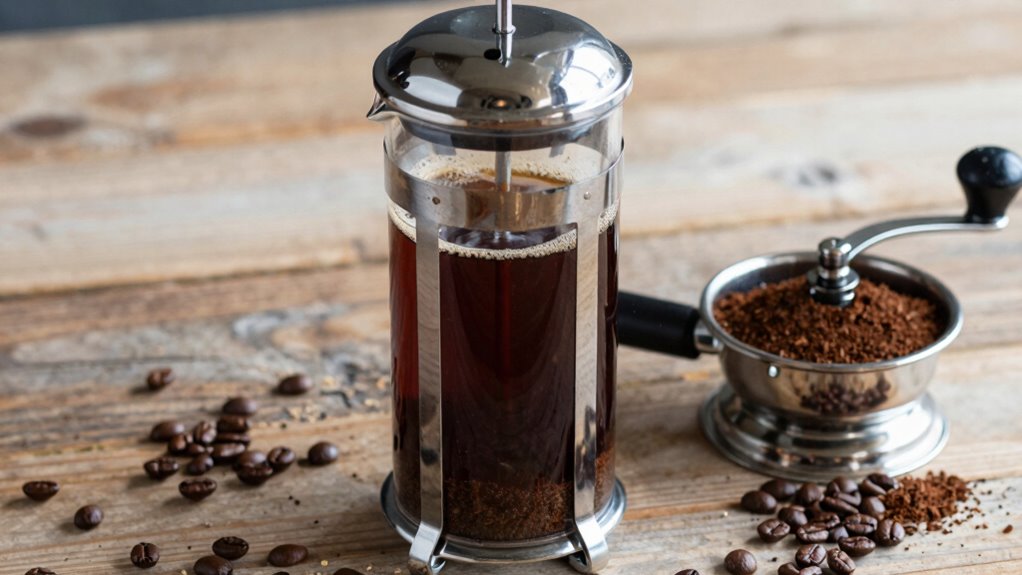
When it comes to French press coffee, choosing the right grind size is essential for clarity. You’ll want a coarse grind to minimize sludge while still extracting rich flavors. Consistency in your grind is key, so invest in a good grinder to guarantee every cup is as clear and vibrant as possible. Additionally, understanding grind size importance can greatly enhance your brewing experience and overall coffee quality. A consistent grind helps ensure optimal filtration/suction basics, allowing for better extraction without excess residue. A well-chosen grinder can enhance your ability to achieve café-quality results, making your French press experience even more satisfying. Furthermore, using a burr grinder instead of a blade grinder can significantly improve grind consistency, leading to a clearer cup. Higher contrast ratios in your brewing process can also enhance flavor depth, ensuring a more enjoyable coffee experience.
Ideal Grind Size
Ideal Grind Size (Choosing the Right Grind for French Press Coffee Clarity)
Choosing the right grind size is essential for brewing a clear cup of French press coffee. A coarse grind is your best friend here, as it helps minimize sludge while allowing for proper extraction. If your coffee’s tasting overly bitter or gritty, it might be time for some grind adjustments. Additionally, using a burr grinder can enhance the consistency of your grind, leading to a better brewing experience. Ergonomics in brewing can also play a role in your overall coffee enjoyment and comfort. Understanding knife techniques can further improve your kitchen skills, making coffee preparation more efficient. Furthermore, using a coarse grind can help reduce the amount of sludge left in your cup.
Consider these tips:
- Use a burr grinder for consistent results.
- Experiment with coarseness until you find the sweet spot.
- Adjust steeping time based on your grind size; coarser grinds benefit from longer steeping.
- Sift your grounds to remove finer particles if you prefer a cleaner cup.
- The ideal grind size can significantly impact both flavor and clarity, so don’t hesitate to make adjustments based on your taste preference.
Grind Consistency Matters
To achieve a clear cup of French press coffee, grind consistency plays an essential role. You’ll want to focus on using a coarser grind type—this helps prevent excessive sludge. If your grind varies too much in size, you’ll end up with more fine particles, leading to that muddy texture you want to avoid. Additionally, poor indoor air quality can affect your overall health and well-being, making it important to create a clean brewing environment. The ideal grind size ensures optimal extraction rates for a balanced flavor profile.
Consider your grind storage. Keeping your coffee grounds in an airtight container can help maintain consistency and preserve flavor. Furthermore, using an aroma diffuser in your brewing space can enhance the overall experience, making the environment more inviting. Air quality systems can also play a role in ensuring a pleasant brewing environment. Grind your beans just before brewing, as this maximizes freshness and guarantees even size. By paying attention to grind types and maintaining proper storage, you’ll elevate your French press experience, resulting in a clean and delicious cup every time. Moreover, properly cleaning your French press ensures that old coffee oils do not contribute to unwanted flavors or sludge.
As an affiliate, we earn on qualifying purchases.
Why Your Coffee-to-Water Ratio Matters
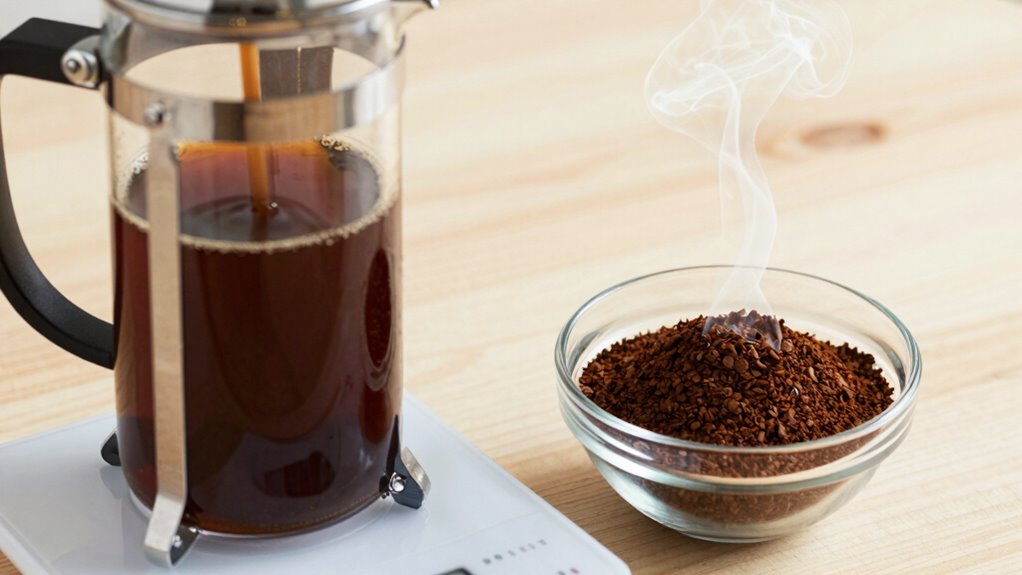
Your coffee-to-water ratio plays a vital role in your brew’s quality. A balanced ratio not only enhances flavor but also affects brewing time, helping you avoid over-extraction or under-extraction. Get this right, and you’ll enjoy a cleaner cup with less sludge. Understanding extraction principles can further elevate your brewing technique, ensuring each cup is perfectly crafted. Additionally, different brewing methods can lead to varying caffeine levels, impacting the overall experience of your coffee.
Optimal Ratio Essentials
Finding the right coffee-to-water ratio can greatly impact your French press experience. Balancing these coffee ratios helps you achieve your desired brew strength without overwhelming your palate. Here are some essentials to keep in mind:
- Aim for a standard ratio of 1:15 (coffee to water) for a balanced brew.
- Adjust the ratio based on your taste preferences; use more coffee for a stronger flavor.
- Experiment with different grind sizes; coarser grinds can help reduce sludge.
- Remember that water temperature also plays a role; aim for about 200°F for ideal extraction.
Impact On Flavor
The coffee-to-water ratio directly influences the flavor profile of your brew. When you find the right balance, you enhance flavor intensity, making each sip more satisfying. Too much coffee can lead to an overpowering brew, while too little may leave it flat and lifeless. Additionally, the importance of selecting the right cold medication can be likened to finding the perfect coffee ratio, as both require careful consideration for optimal results. A well-measured ratio can be compared to training concepts that help you achieve your fitness goals, as both rely on precise adjustments for maximum effectiveness.
Pay attention to your aroma profile, as it’s just as vital; the right ratio guarantees that the enticing scents of your coffee come through beautifully. Experimenting with different ratios lets you discover how subtle changes affect your drink. You’ll notice a richer, more complex flavor with the perfect balance, elevating your coffee experience. So, tweak that ratio, and enjoy the delicious results that follow! Additionally, a well-balanced coffee can promote emotional resilience, making your morning ritual even more beneficial. To achieve this balance, consider optimal brewing techniques that enhance your overall coffee quality.
Brewing Time Considerations
While brewing coffee, timing plays an essential role in balancing flavor and minimizing sludge. The right coffee-to-water ratio combined with appropriate steeping times can enhance your brewing techniques considerably. If you’re not careful, over-extraction can lead to bitterness and unwanted sediment.
Consider these tips for ideal results:
- Use the right grind size: Finer grinds can increase sludge.
- Adjust steeping times: Experiment with 3-4 minutes for balanced flavors.
- Monitor water temperature: Aim for 195°F to 205°F for the best extraction, as interest rates can affect costs of coffee equipment. Keeping your kitchen child-safe and organized can also improve your overall brewing experience.
- Stir before steeping: This helps evenly saturate the grounds.
- Consider using carrier oils for dilution: This can help reduce bitterness if you add flavored oils to your coffee.
As an affiliate, we earn on qualifying purchases.
Optimal Water Temperature for French Press Coffee Clarity
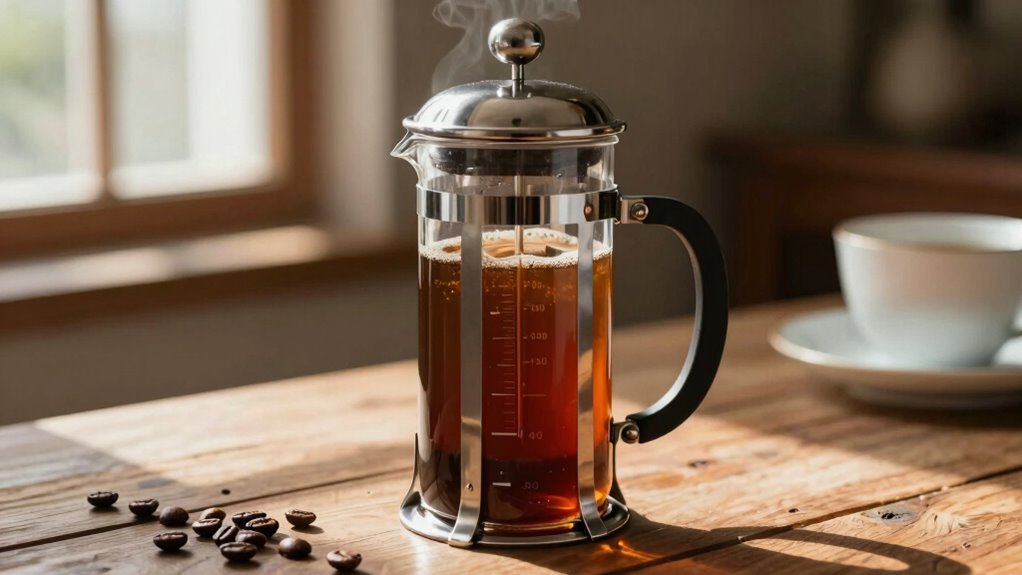
To achieve a clear brew in your French press, you need to pay attention to the water temperature. Ideal water infusion happens between 195°F to 205°F. If the water’s too hot, it can over-extract, leading to bitterness and increased sludge. On the flip side, cooler water won’t extract enough flavor, resulting in a weak cup.
Temperature control is essential; using a thermometer can help you hit that sweet spot. If you don’t have one, just boil the water and let it sit for about 30 seconds before pouring it over your coffee grounds. This simple adjustment can greatly improve clarity, reducing unwanted particles and creating a smoother, more enjoyable coffee experience. Additionally, using smart controls for your kettle can help maintain the perfect temperature for brewing. Enjoy your brewing!
Brewing Times for Minimal Sludge
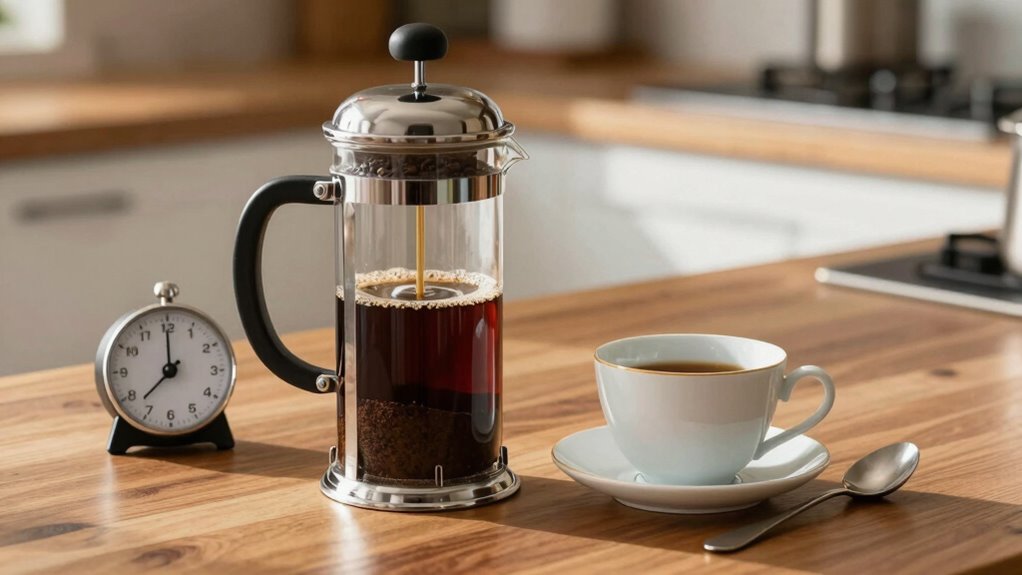
Achieving minimal sludge in your French press relies heavily on your brewing time. To strike the perfect balance between brew strength and avoiding excess sludge, pay attention to your steep time.
- Keep your steep time between 3 to 4 minutes for ideal extraction.
- Shorter steep times yield lighter brews with less sediment.
- If you prefer a stronger flavor, stick to the upper limit but avoid exceeding 4 minutes.
- Experiment with grind size; coarser grinds reduce sludge while maintaining flavor.
Filtering Techniques to Reduce Residue in French Press Coffee
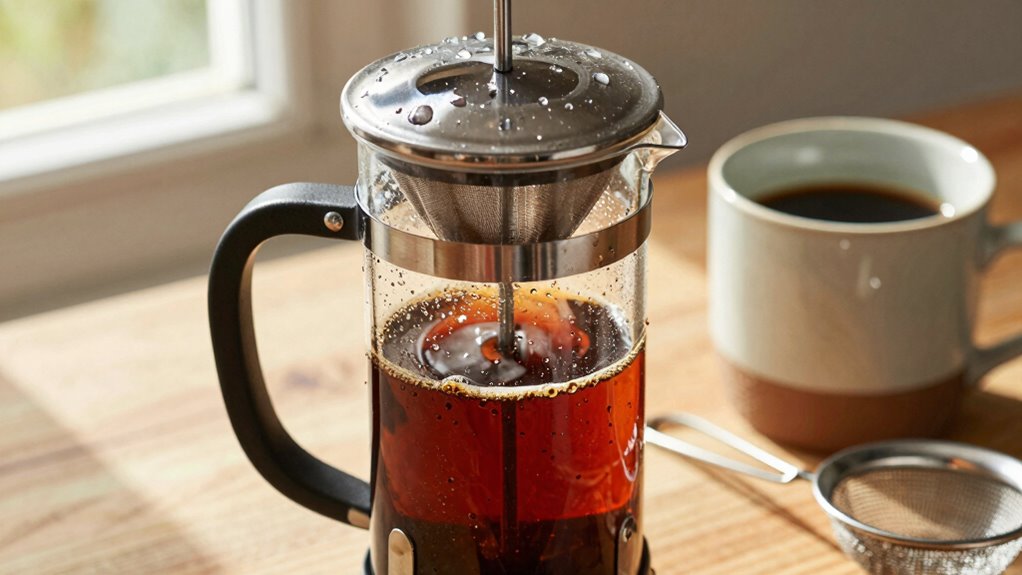
If you want to enjoy a cleaner cup of coffee from your French press, employing effective filtering techniques is essential. Start by experimenting with different filter types. Consider using metal or cloth filters, which can trap more fine particles than standard mesh filters. Additionally, using a secondary filter, like a paper filter, can further reduce residue.
Don’t forget about brewing accessories! A fine mesh sieve can help catch those stubborn coffee grounds before they end up in your cup. You might also want to pre-wet your filters to improve their efficiency. By combining these techniques, you’ll greatly cut down on sludge, letting you savor a smoother, more enjoyable coffee experience.
Cleaning Your French Press for Better Brews
Even with the best filtering techniques, a dirty French press can still compromise your coffee’s flavor. Regular cleaning is essential for maintaining that rich taste. Here are some effective cleaning techniques and maintenance tips to keep your French press in top shape:
- Disassemble the press after each use to clean all parts thoroughly.
- Use warm, soapy water and a soft sponge; avoid abrasive materials that can scratch the glass.
- Rinse all components well to remove soap residue, ensuring no flavors linger.
- Deep clean weekly by soaking in a mixture of vinegar and water to tackle stubborn stains.
Alternative Brewing Methods for Grit-Free Coffee
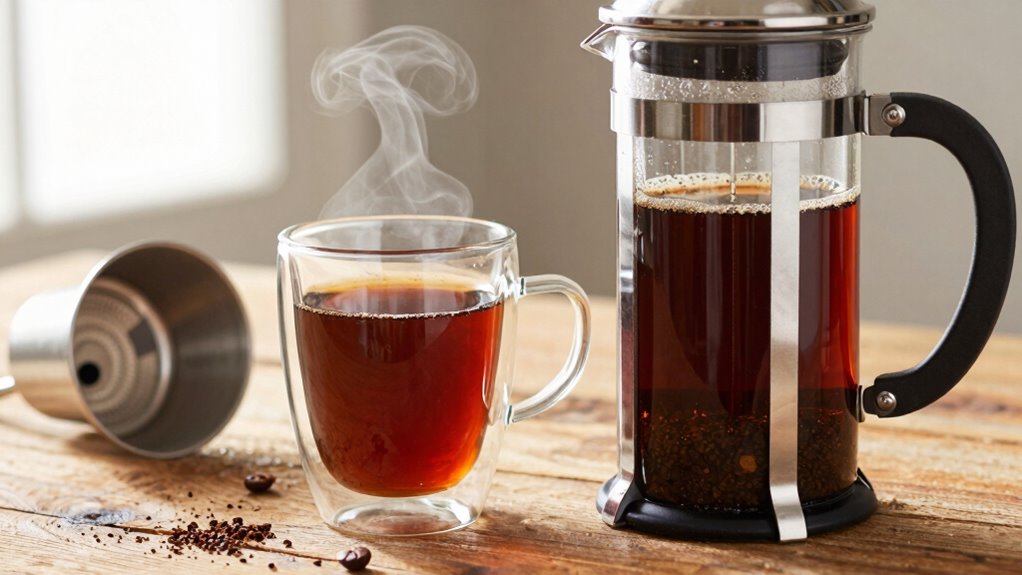
Looking for ways to enjoy coffee without the sludge that often comes with a French press? Try switching to alternative brewing methods like cold brew or pour over. Cold brew is a fantastic option; it involves steeping coarsely ground coffee in cold water for an extended period, which results in a smooth, grit-free cup. Just strain it through a fine mesh or a paper filter to catch any sediment.
Pour over brewing offers precision and control, allowing you to extract flavorful notes without the grit. Use a quality filter and a medium grind for the best results. With these methods, you can savor every sip of your coffee, free from the annoying sludge that can ruin your experience.
Frequently Asked Questions
Can I Use Flavored Coffee Beans in a French Press?
Yes, you can definitely use flavored coffee beans in a French press! Just remember that the brewing techniques might need slight adjustments. Since flavored beans often have added oils, you might want to experiment with a coarser grind and a shorter steeping time to prevent excess sludge. Enjoy the aroma and taste, but keep an eye on the grind size to guarantee a smooth cup. Happy brewing!
How Often Should I Replace My French Press Filter?
You should replace your French press filter every 3 to 6 months, depending on usage and filter maintenance. Regularly check for wear and tear; a damaged filter can affect your brewing techniques and the quality of your coffee. Cleaning your filter after each use helps extend its life, but don’t hesitate to swap it out if you notice any issues. Fresh filters guarantee a smooth brew and enhance your coffee experience!
Does Water Hardness Affect French Press Coffee Quality?
Absolutely, water hardness can dramatically affect your French press coffee quality! If you’re brewing with hard water, you might as well be making mud pie. High mineralization can alter the flavor and extraction, making your coffee taste off. Aim for a balanced mineral content and maintain a brewing temperature around 195°F to 205°F. This way, you’ll enhance the richness and clarity of your brew, ensuring every sip is pure bliss.
Can I Use a Coarse Grind for Other Brewing Methods?
Yes, you can use a coarse grind for alternative brewing methods, but it’s best suited for specific techniques like cold brew or certain pour-over styles. Coarse grind benefits include a smoother taste and reduced bitterness, which can enhance your coffee experience. Just remember, using a coarse grind in methods that require finer grinds might lead to under-extraction, affecting flavor. Experiment and find what works best for your palate!
What’s the Best Way to Store My French Press Coffee?
“Out of sight, out of mind.” To keep your French press coffee fresh, store it in an airtight container away from light and moisture. Avoid the temptation to leave it out in the open. For the best flavor, only brew what you’ll drink in one sitting, and never let it sit for too long. Follow these freshness tips, and you’ll enjoy rich, flavorful coffee every time you pour!
Conclusion
By tweaking your grind size, water temperature, and brewing time, you can enjoy a cleaner cup of French press coffee. Did you know that nearly 60% of coffee drinkers prefer a less gritty brew? With a few simple adjustments and proper cleaning, you can join that statistic and savor your coffee without the sludge. So, grab your French press and start brewing a clearer, more enjoyable cup today!
NFL season / tailgating Picks
team gear
As an affiliate, we earn on qualifying purchases.